%20Link%20Building.svg)
%203rd-Party%20Listicles.svg)
%20Reddit.svg)
%20Youtube.svg)








SaaS Content Audit: The 2026 A to Z Guide (+ Template)


- A SaaS content audit evaluates every content asset against traffic, rankings, conversions, pipeline contribution, and AI search visibility so you can decide what to keep, update, merge, or remove
- Most mid-market and enterprise SaaS companies don't need more content. They need better allocation of attention. Pruning and consolidating what you have often drives bigger gains than publishing another quarter of blog posts.
- In 2026, auditing for traditional SEO isn’t enough. You also need to evaluate AI citation potential, topical authority, Reddit and community visibility, and whether your content is structured to be cited in ChatGPT, Perplexity, Gemini, Claude, and Google AI Overviews.
If your content library has grown but your pipeline hasn't, a SaaS content audit is usually the place to start.
It helps you figure out exactly what deserves more investment, what needs updating, what should be merged, and what should disappear altogether.
In this guide, we'll show you how to do a SaaS content audit from start to finish, including the scoring framework, decision matrix, AI search evaluation criteria, and the template we use to assess SaaS content libraries across SEO, AEO, and demand generation initiatives.
What Is a SaaS Content Audit?
A SaaS content audit is the process of evaluating every content asset on your website against business goals, search performance, buyer intent, and content quality to determine what should be kept, updated, merged, repurposed, or removed.
A B2B SaaS content audit needs to account for longer sales cycles, evolving product positioning, feature releases, competitive markets, and multiple acquisition channels. A page that was accurate in Q1 can be obsolete by Q3. A blog post that drives only a few hundred visits per month may still be valuable if it influences demos, pipeline, or AI search visibility.
Generic SaaS content marketing advice misses this entirely.
People confuse this with an SaaS SEO audit all the time. While the two do overlap, they answer different questions:
You need both.
Your traditional SEO audit tells you whether Google can find and understand your content. Your content audit tells you whether the content deserves to rank. And both should ladder up to a unified SaaS content strategy, not run in separate lanes.
When Should SaaS Companies Run a Content Audit?
You usually don't need a calendar reminder. The signs show up on their own.
Here are the signals we tell clients to watch for:
- Organic traffic has plateaued or declined: Rankings drop gradually across dozens of pages rather than disappearing overnight. This usually points to content decay, outdated information, or stronger competitor content.
- You're publishing regularly but seeing little business impact: New content goes live every month, but demo requests, trials, and pipeline remain flat. The issue is content quality rather than production volume.
- Your product positioning has changed: New features, ICP shifts, pricing changes, or category repositioning create content misalignment. Older content may now attract the wrong audience or communicate outdated messaging.
- Multiple pages compete for the same keyword: Several articles rank poorly for similar topics. This is a common sign of cannibalization and usually points toward consolidation opportunities.
- You can't tie content to revenue: Traffic reports look healthy, but nobody knows which assets influence opportunities or demos. An audit connects content performance to business outcomes.
- AI search visibility is weaker than expected: Competitors appear in ChatGPT, Perplexity, Gemini, and AI Overviews while your brand is missing.
- A core update rattled your rankings. A drop is a signal to re-check quality, not to panic-publish ten new posts.
For mid-market SaaS companies, we recommend a full content audit every 6-12 months. Larger content libraries, enterprise SaaS sites, and teams publishing weekly should review performance quarterly and run a comprehensive audit at least twice a year.
{{protip="/pro-tips/content-audit-1"}}
Why Content Audits Matter More in 2026
A few years ago, content audits were mostly about SEO hygiene. Today they're a growth requirement.
The free traffic you banked on is disappearing
In 2026, fewer than one in three Google searches still sends a click to the open web, per SparkToro's latest study. AI Overviews appear on more than 20% of searches and cut click-through on the top organic result by 58% when they show up, according to Ahrefs.
The free traffic you used to bank on is getting absorbed into the answer itself.
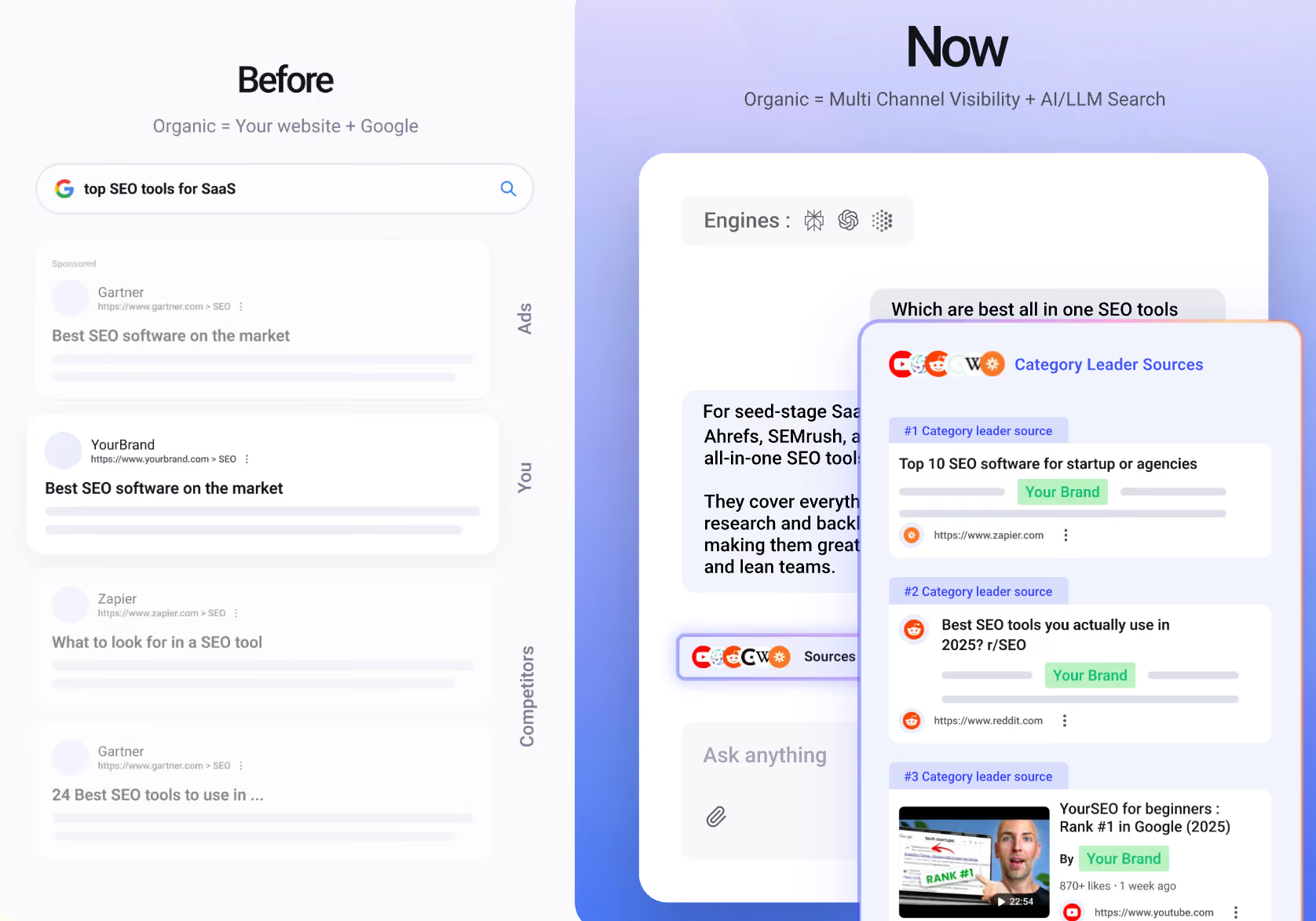
Your buyers are now discovering software not only through Google, but also LLMs and AI search engines, Reddit discussions, YouTube reviews, comparison sites, analyst reports, and third-party listicles. Content created even 18 months ago may no longer be optimized for everywhere your buyers search and how they evaluate software today.
Publishing more won't fix a quality problem
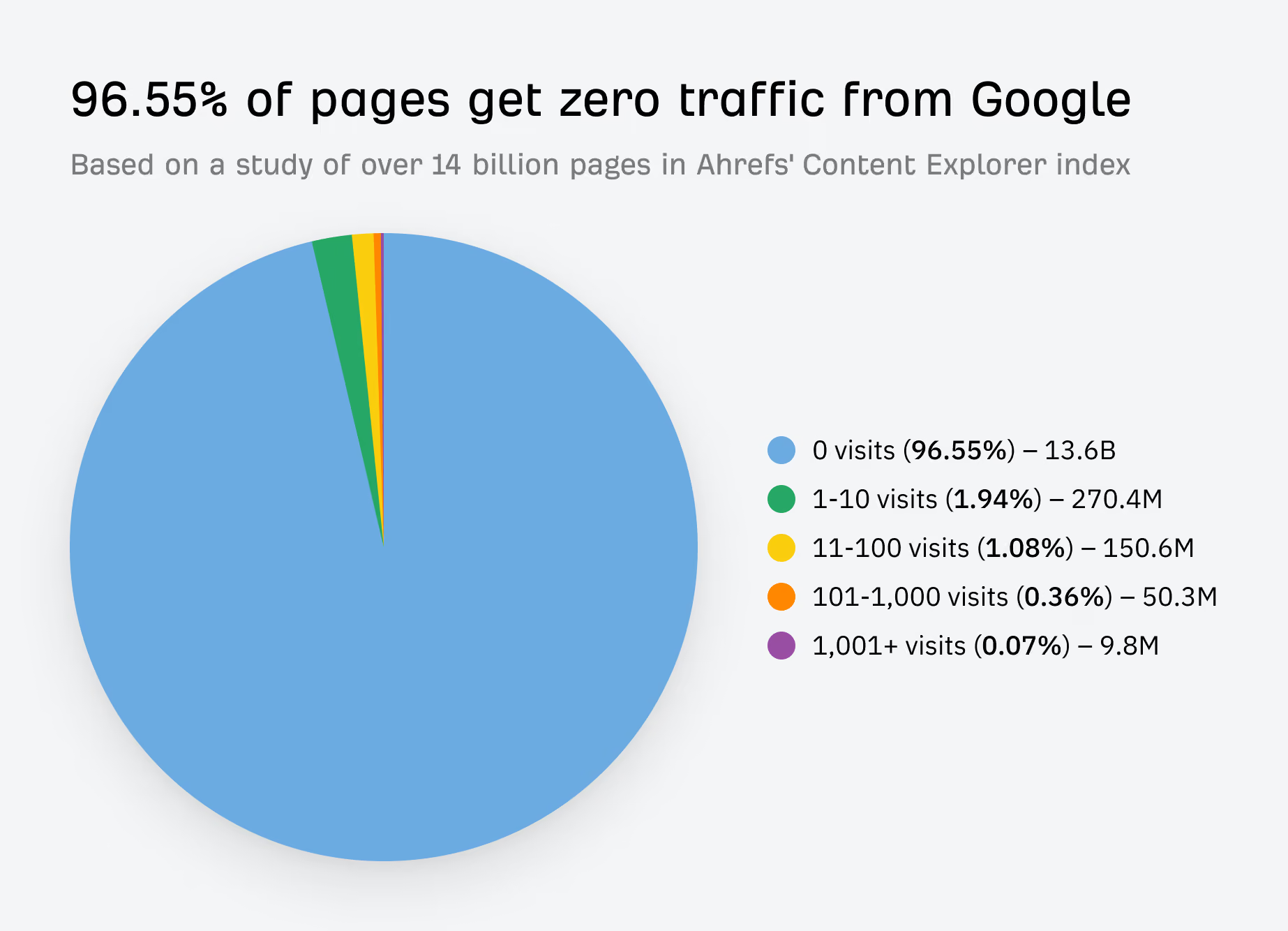
Ahrefs studied 14 billion pages and found 96.55% get zero organic traffic from Google. In a pre-AI world, those pages just sat there. Now they dilute your topical authority and feed AI models a muddier picture of your expertise. Content debt of low-quality assets becomes a tax on everything else you publish.
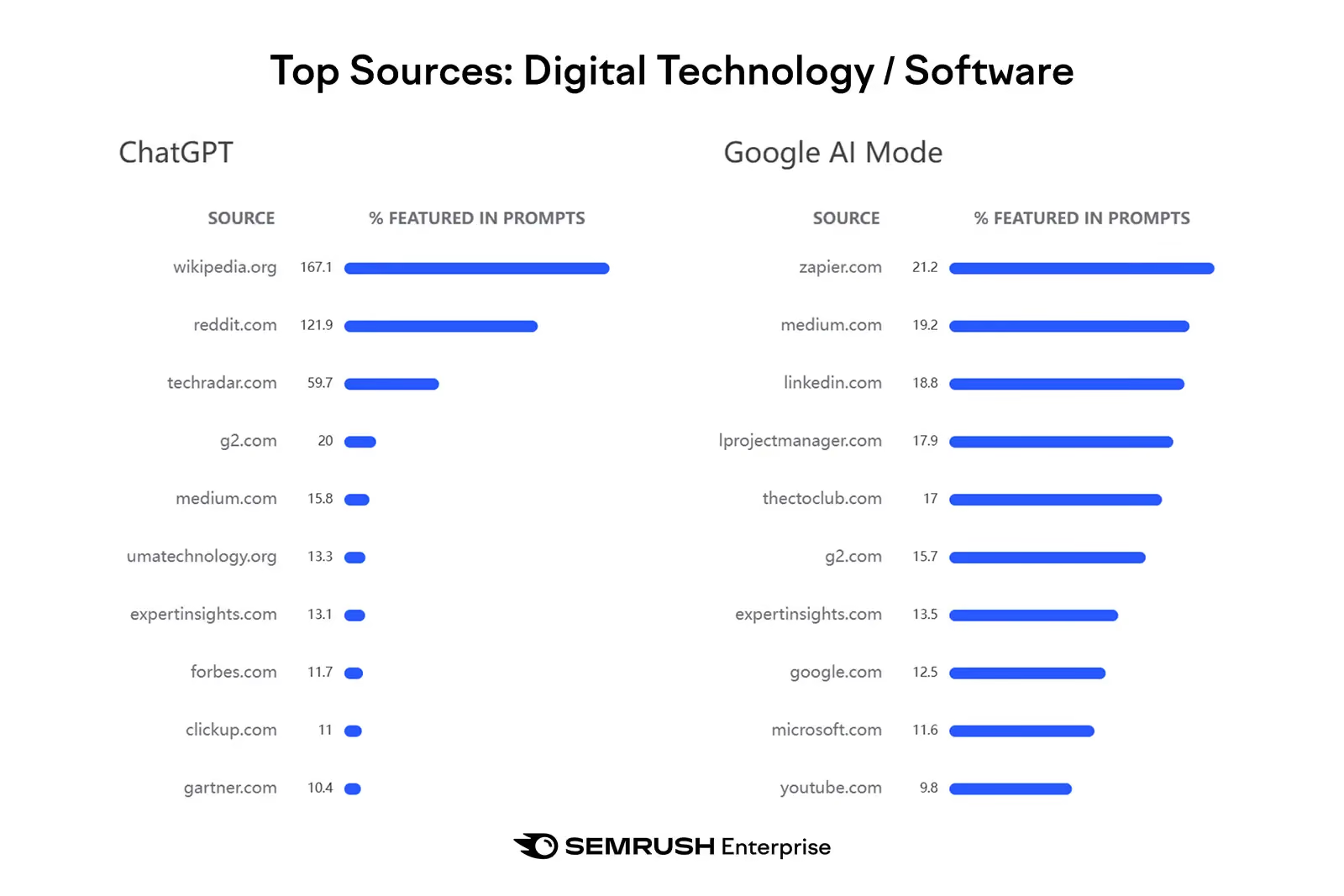
AI search rewards the best answer, not the biggest library. Semrush's AI Visibility Study found that LLMs favor sources they view as authoritative, trustworthy, and easy to extract information from. If your content is outdated, thin, or poorly structured, adding more of it won't improve your chances of being cited.
The pages most likely to earn citations tend to include original research, customer stories, expert perspectives, product expertise, and clear answers.
SaaS products change faster than content calendars
As a SaaS company, you most likely ship product updates far more often than you revisit existing content.
Feature pages become outdated. Comparison articles reference old competitors. Use cases evolve. Pricing discussions become inaccurate.
Over time, your content library starts describing a company that no longer exists.
This is especially dangerous for bottom-of-funnel assets where buyers expect current information before requesting a demo.
Content debt compounds like technical debt
Every article creates future maintenance obligations.
The larger your content library becomes, the harder it gets to identify what's working, what's obsolete, and what's actively hurting performance.
A content audit surfaces the assets that already have the right qualities and identifies where they're missing before things compound further.
{{protip="/pro-tips/content-audit-1-2"}}
Content audits are now visibility audits
More than discovering weak content, the more valuable output of a content audit in 2026 is a map of everywhere your buyers look and everywhere you're missing.
Your buyers don't research software in one place. They search Google, ask ChatGPT, scroll Reddit, watch YouTube reviews, and check G2 before they ever fill out a demo form. An audit that only looks at your blog tells you nothing about your visibility on any of those surfaces.
You're not just trying to rank. You're trying to be present everywhere your category is discussed, so that when a buyer asks "what's the best [your category] tool," your name comes up whether they're on Google, inside an AI tool, or reading a Reddit thread.
That's the approach we use for auditing SaaS content at Scalerrs. Instead of simply asking, "Which articles should we update?", we also ask, "Which conversations, surfaces, and buying moments are we absent from?"
We help B2B SaaS companies own their category across every surface their buyers use—SEO, AEO, Reddit, YouTube, Wikipedia, and the third-party listicles and comparison pages that LLMs pull from when recommending products.
Curious what that looks like for your brand? Book a free strategy call and we’ll walk through it together!
The Full SaaS Content Audit Process (Step by Step)
A good SaaS content audit follows a sequence.
You can't score content before inventorying it. You can't decide what to remove before understanding business value. And you shouldn't start pruning until you've looked at both SEO and conversion data.
Here's the process we use when auditing SaaS content libraries for our clients:
Step #1: Decide What "Business Value" Means
Before you open a spreadsheet, define what you're optimizing for. Pipeline? Signups? AI citations? The answer changes which pages count as winners.
A post pulling 50 visits a month that sources two demos beats a 5,000-visit guide that converts no one. If you can't connect a page to revenue within three clicks, it probably isn't pulling its weight.
How to execute it: Write one sentence at the top of your tracker. "This audit succeeds if it grows ___." Then segment your content by topic and funnel stage before scoring individual pages. Don't review pages one at a time. You'll miss cannibalization and gaps.
{{protip="/pro-tips/content-audit-3"}}
Step #2: Build Your Content Inventory
You can't audit what you can't see. Build a master list of every content asset on your site: blog posts, landing pages, solution pages, comparison pages, case studies, help center content, orphan pages, old gated assets. They all count.
For B2B SaaS sites at scale, Screaming Frog is the fastest way to export these URLs.
You'll also want to pull supporting data from Google Search Console (GSC), Google Analytics 4 (GA4), and Ahrefs or Semrush.
How to execute it: Run a crawl in Screaming Frog. Enter your domain, click "Start," and let it map every indexable URL. Cross-check against your sitemap (type yourdomain.com/sitemap.xml, or grab it under "Indexing" > "Sitemaps" in Search Console) so you catch orphan pages the crawler misses. Export everything into one sheet. Add tabs for help docs and product pages if they're in scope, plus any PDFs and video pages, since those get cited too.
Capture these columns for every published piece:
- URL
- Content type
- Publish date
- Last updated date
- Organic sessions
- Conversions
- Ranking keywords
- Backlinks
- Primary topic
- Notes/observations
{{protip="/pro-tips/content-audit-4"}}
Step #3: Collect Performance Data
Now it’s time to bring in the evidence that will influence your content strategy decisions.
Review each asset against four dimensions:
How to execute it: Use three tools, each of which answers a different question.
- Google Search Console: Which pages are losing visibility or failing to earn clicks?
Open the Performance Report by clicking on Search results (or Discover) under the Performance section on the left sidebar.
Add a New Filter: Click the + NEW button located next to your existing date and search type filters at the top of the page
Select Page: Choose Page... from the dropdown list.
Compare the last three months’ data with the same period a year ago. Export clicks, impressions, and average position.
Pages with high impressions but low click-through rates are often the first warning sign.
- GA4: Which pages still drive business value?
Go to Reports → Engagement → Pages and screens and pull sessions, engagement metrics, and conversions. This helps separate pages that merely attract traffic from pages that actually contribute to pipeline, revenue, or other business goals.
- Ahrefs: Which pages are steadily losing traffic?
In Site Explorer → Top pages, set traffic direction to Declining over the last 12 months. This quickly surfaces pages experiencing organic traffic decay. Then review keyword rankings and backlink data to identify common issues, such as declining rankings, lost links, or multiple pages competing for the same keyword.
{{protip="/pro-tips/content-audit-5"}}
Step #4: Add the AI-visibility layer
Ranking is only half the picture in 2026. A page can sit on page one and still never get pulled into an AI answer, and that gap is invisible in GSC.
How to execute it: Take your category's core questions and run them through ChatGPT, Perplexity, and Google AI Mode. For each, log three things: where you're cited, where a competitor is cited instead, and where nobody is. The "nobody" rows are your easiest AEO wins. The "competitor" rows tell you which pages need restructuring for retrieval.
To do this across a big library instead of by hand, tools like Ahrefs Brand Radar and Profound track brand mentions and citations across LLMs.
AirOps analyzed 21,311 brand mentions across ChatGPT, Claude, and Perplexity and found brands are 6.5x more likely to be cited through third-party content than through their own domain. Your content audit has to account for what's happening off your site as much as on it.
{{protip="/pro-tips/content-audit-6"}}
If your audit uncovers an AI visibility gap, that's where Scalerrs comes in. We help you get cited in third-party listicles and comparison pages that influence recommendations in both SERPs and LLMs.
{{protip="/pro-tips/content-audit-7"}}
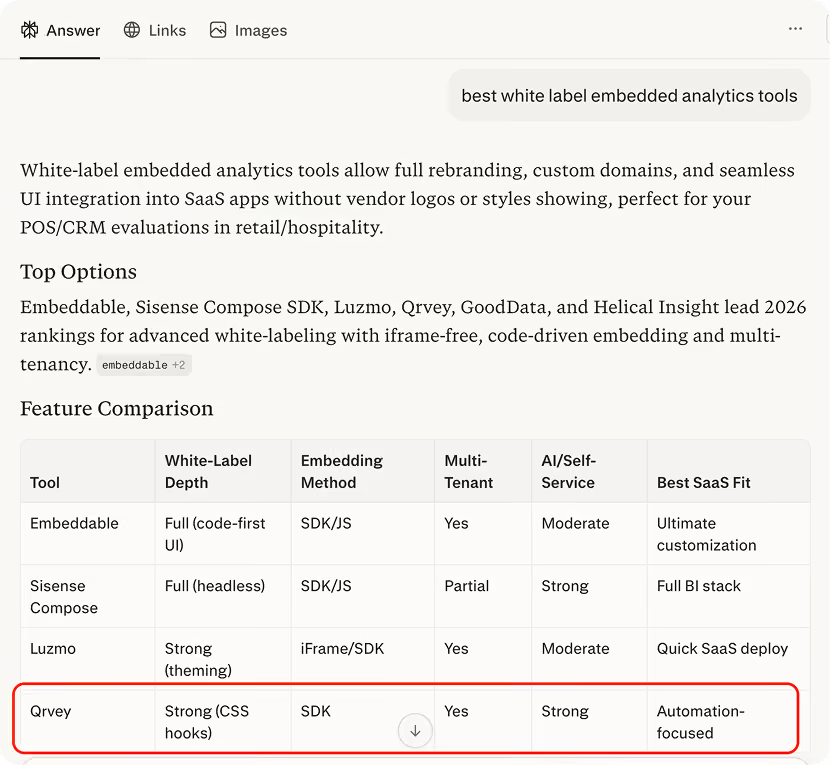
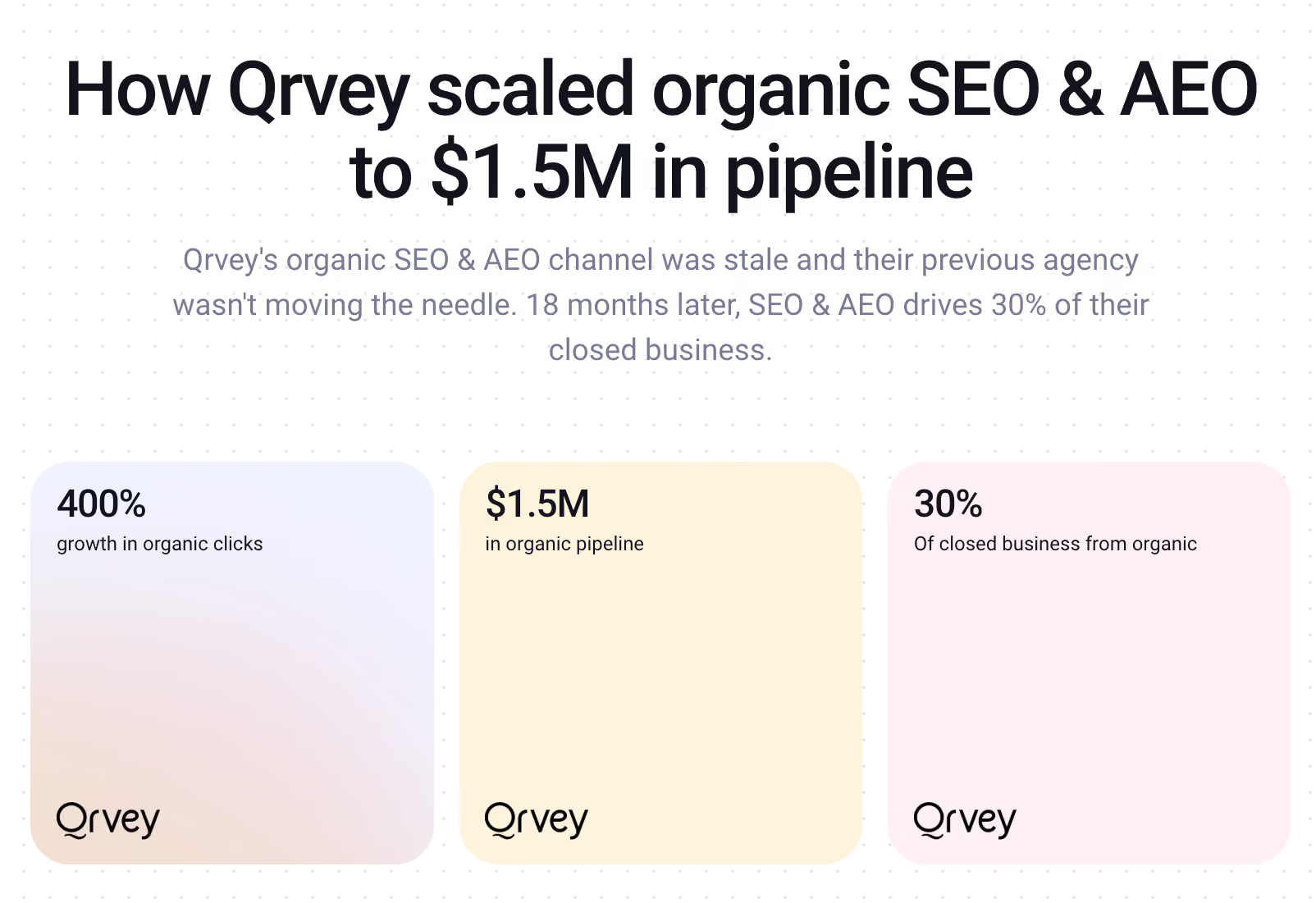
It meant buyers researching embedded analytics were far more likely to encounter Qrvey across ChatGPT, Perplexity, and other AI-powered search experiences. And it translated into $1.5M in organic pipeline, with 30% off closed business coming in from SEO and AEO.
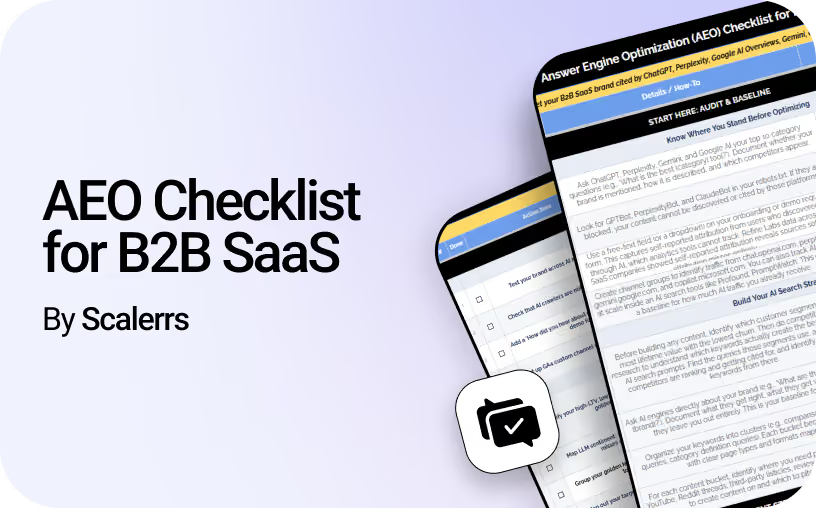
Ready to go beyond rankings? Download our AEO Checklist for B2B SaaS to see the exact framework we use to help SaaS brands earn visibility in ChatGPT, Perplexity, Gemini, Claude, and Google AI Overviews—so your brand owns the category not just the SERPs.
Step #5: Evaluate Content Quality and Intent
This is where human judgment enters the process.
Ask five questions:
- Is the content still accurate?
- Does it match current product positioning?
- Does it align with search intent?
- Would you be comfortable sending a prospect to it today?
- Is it better than the pages currently ranking above it?
Pay particular attention to product references, screenshots, pricing mentions, competitor comparisons, and statistics older than two years. Fixing broken internal links is also a quick win we've seen across dozens of audits.
Step #6: Assign a Content Score
Once performance and quality data are collected, score every asset.
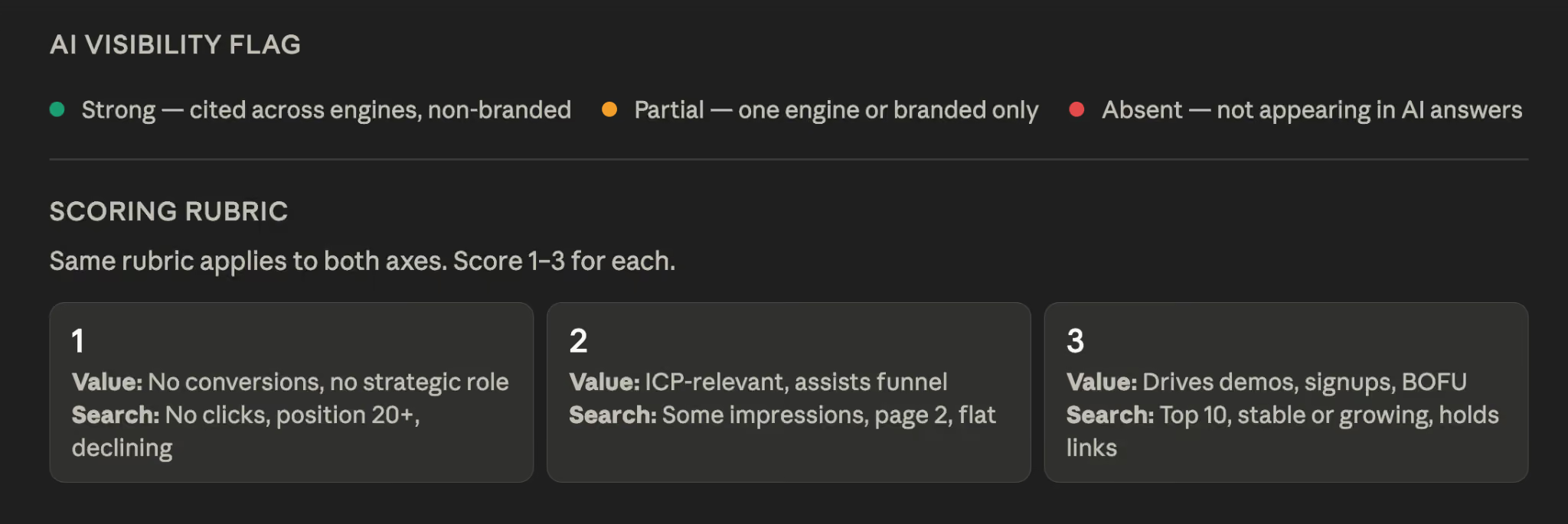
How to execute it: Score each page on three criteria, business value (1 to 3, lowest to highest) and search performance (1 to 3, lowest to highest), and AI-cited (yes, partial, or no).
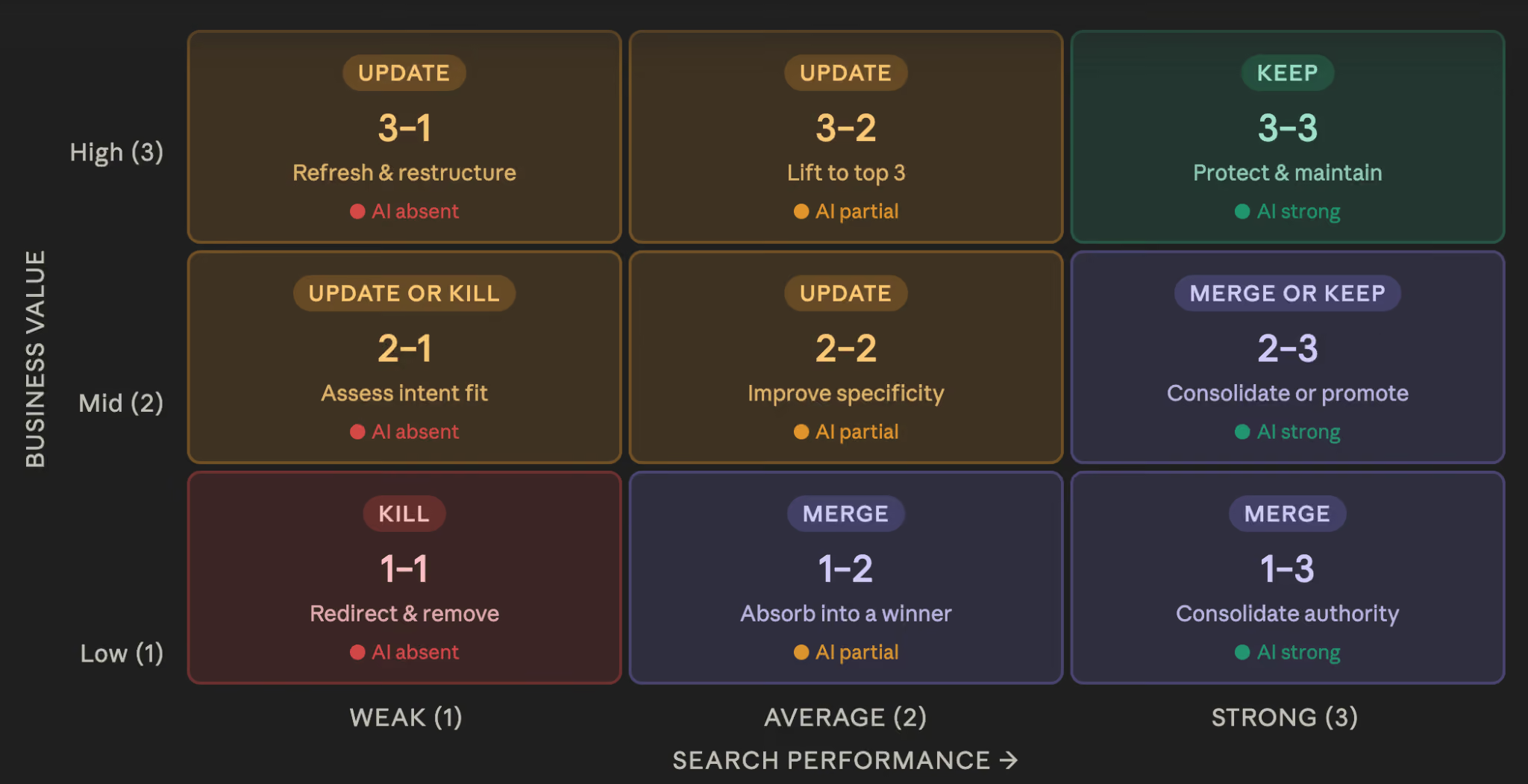
Once every page is scored, sort the list into action buckets (more detail on this in the SaaS Content Audit Decision Matrix):
- Pages with high business value but weak search performance become refresh candidates
- Pages with low business value and poor performance should be consolidated, redirected, or removed
- The remaining pages typically require a refresh, monitoring, or merge decisions
- The AI-citation score shows which ones need AEO updates on top of everything else
{{protip="/pro-tips/content-audit-8"}}
Auditing hundreds of URLs manually is time-consuming, and executing the fixes takes even longer. Many teams choose to outsource part or all of the audit and remediation process so they can capture the gains without pulling internal resources away from other priorities. Our SaaS content team runs the audit and the execution end to end, so you keep the wins without losing the bandwidth.
Book a free strategy call with us to get started.
Step #7: Execute
Every content asset should fall into one of four buckets: Keep, Update, Merge, or Kill.
How to execute it:
- Update in place, on the same URL, so you keep its history and links. Refresh the data, re-front-load the answer, restructure for AI. Never republish a refresh under a new URL.
- Merge by moving the best sections into your strongest page, then 301-redirecting the losing pages to it. Rewrite internal links to point at the page that survives.
- Kill by 301-redirecting dead pages to the nearest relevant page. Not the homepage, and never a bulk-delete that leaves 404s behind.
Roll changes out in stages. Annotate the change date in GA4 and re-check in 30 to 45 days. When we ran this for our client, Lyssna, tightening and refreshing the library lifted organic traffic 37%.
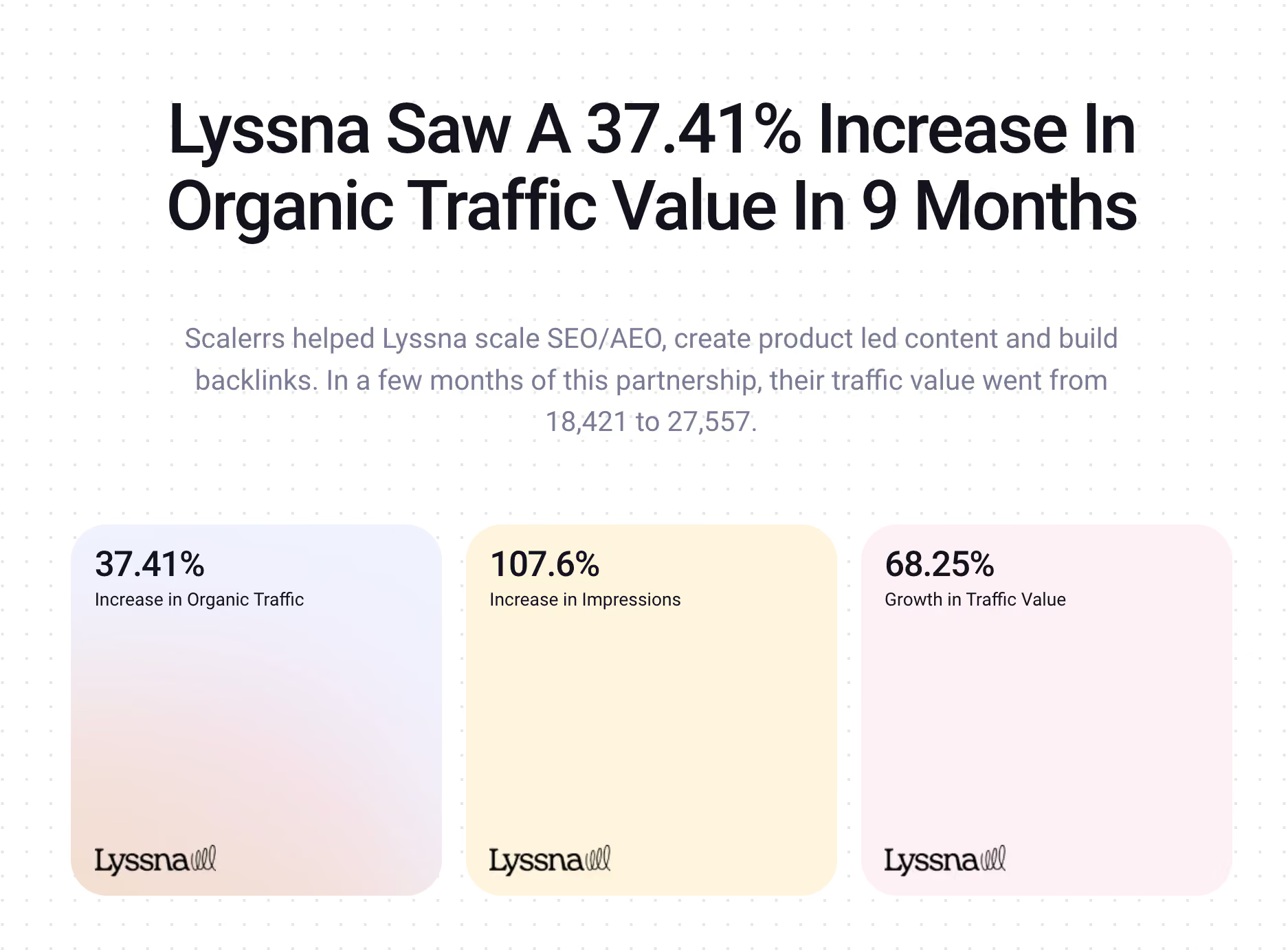
Similarly, Qwilr saw their blog go on to drive 10x qualified signups.
The SaaS Content Audit Decision Matrix
After scoring your content, the next question becomes simple: What should happen to each page?
Here’s the framework based on business value and search performance, outlined as a 2x2 Content Audit Decision Matrix:
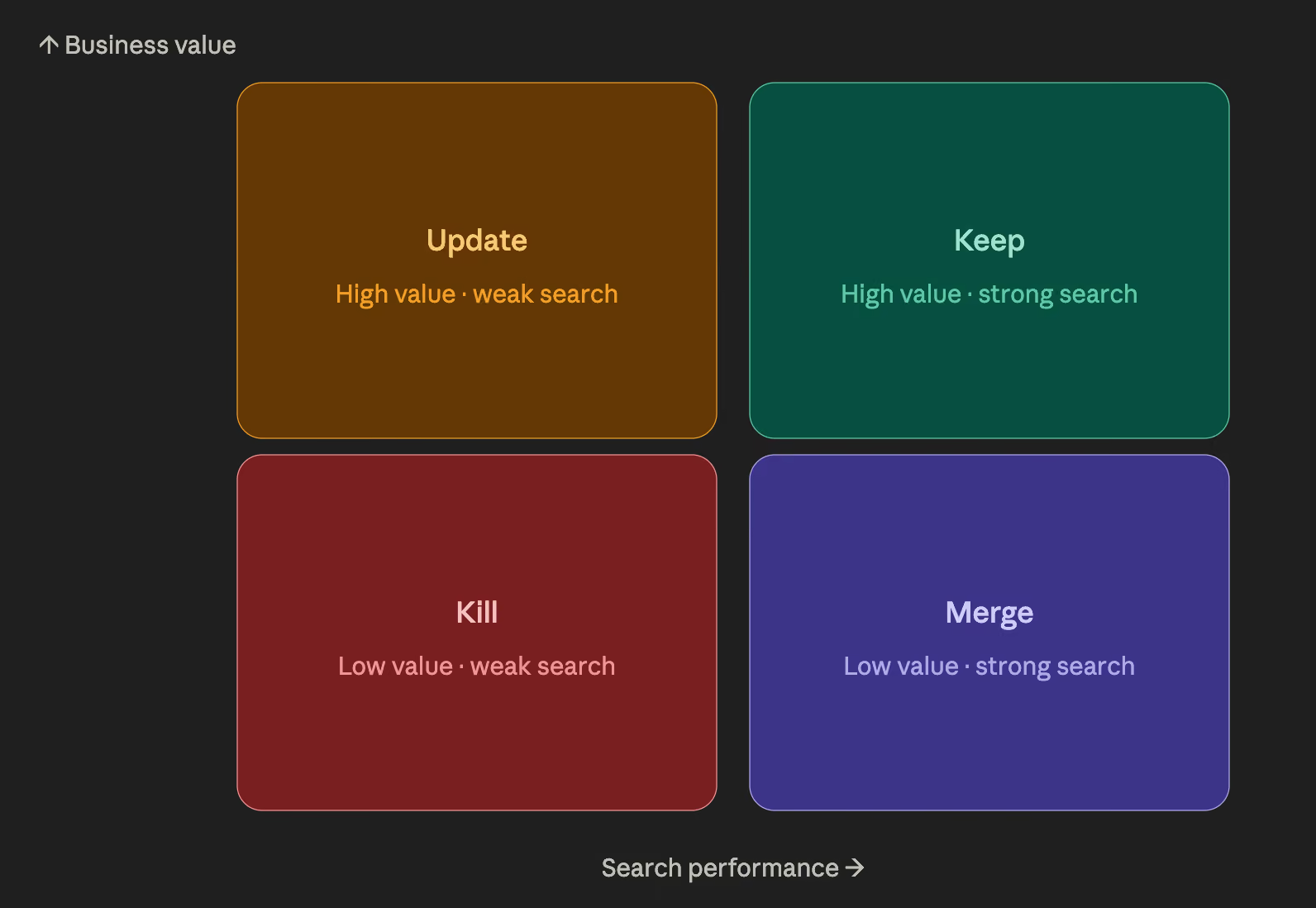
In a nutshell, this is what you need to do:
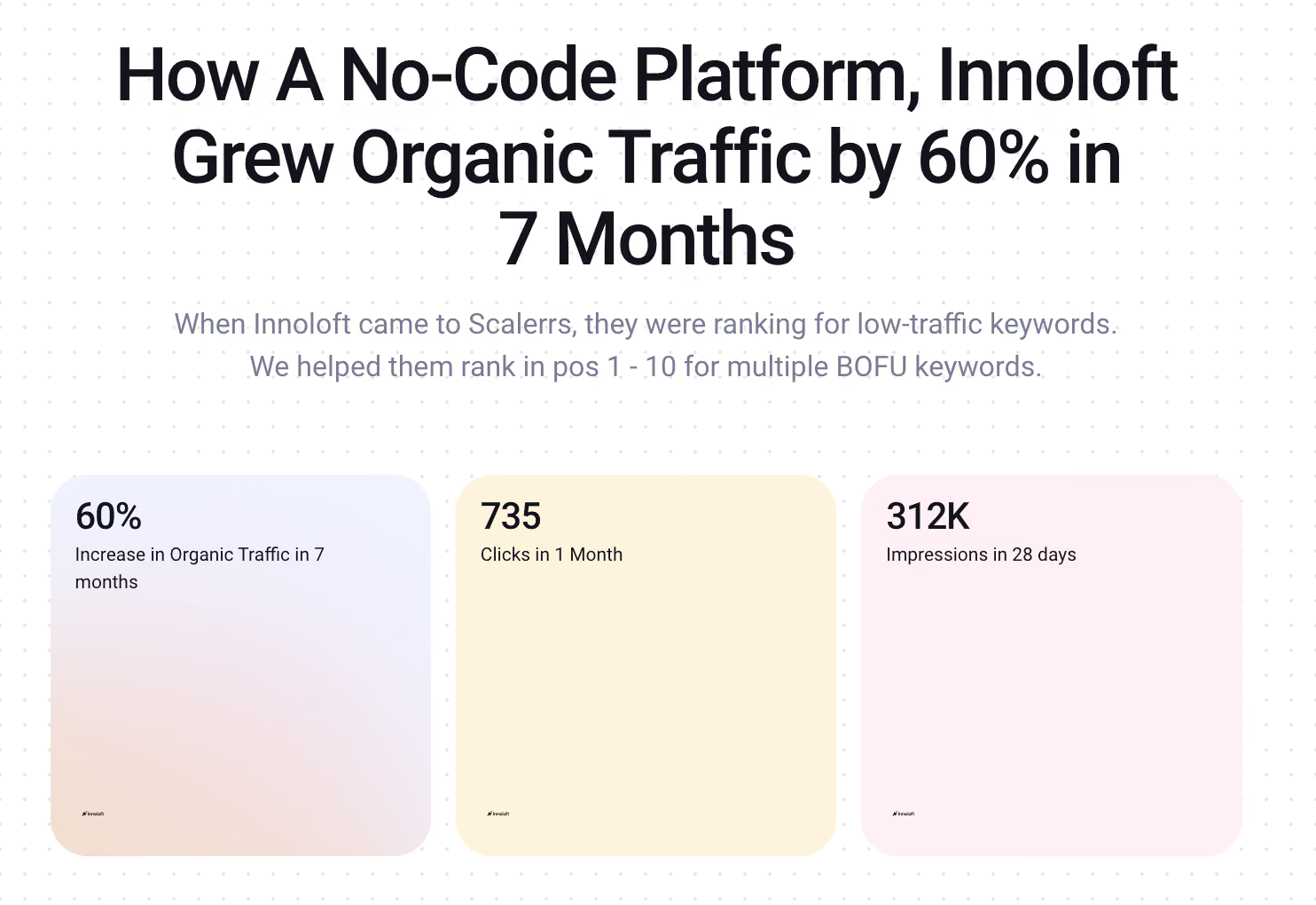
This is the framework we applied at Innoloft, a B2B SaaS platform connecting startups, corporates, and investors. We ran the full audit, applied the Keep / Update / Merge / Kill framework, and rebuilt their content prioritization around bottom-of-funnel intent.
The result: A 60% increase in organic traffic over seven to eight months.
Auditing SaaS Content for AI and LLM Search
While traditional audits focus on rankings and traffic, optimizing for AI search introduces a new question: Would an LLM trust this page enough to cite it?
That changes what "good content" looks like.
Evaluate every important asset against these criteria:
- Clear passage structure: Does each section answer its question in the first sentence? Can key answers be extracted from the page in a single paragraph or section? LLMs cite pages that offer direct answers for the search intent early on in the content.
- Self-contained chunks: Can a passage be quoted without the rest of the page for context? AI tools pull passages, not whole pages.
- Citation-worthiness: Does the page include original insights, expert commentary, data, examples, or unique observations? Generic rehashing won’t get you cited.
- Factual accuracy: Are statistics current and sourced from original publishers? Outdated claims and wrong product details get filtered out fast as improved AI models lean toward current, verifiable information.
- Entity clarity: Does the content clearly explain products, concepts, categories, and relationships between them?
- Topical completeness: Does the page answer the full question or only part of it?
- Off-site presence. Are you mentioned on G2, Reddit, and third-party listicles? Those feed AI answers heavily.
That last point is why an audit can't stop at your own pages. Owning your category in 2026 means showing up across every surface your buyers use to research and evaluate software—not just Google. So, the fix isn't always writing more blog posts.
Sometimes it's a presence on r/SaaS where your buyers are already asking category questions. Sometimes it's a YouTube walkthrough that feeds AI transcripts and surfaces in Gemini. Sometimes it's a Wikipedia entry that gives LLMs a neutral, citable definition of what your product does. Sometimes it's a placement in the "best of" listicles for your product category.
These aren't separate strategies. They're the off-site layer that makes your on-site content trustworthy enough to cite. And that’s what our AEO service is built around.
We map exactly where your brand shows up (and where it's missing) across ChatGPT, Perplexity, Gemini, Claude, and Google AI Overviews. From there, we build the multi-surface presence that gets you into the answer, not just the index.
We offer:
- Retrieval-ready content that AI models can easily understand, extract, and cite
- Third-party listicle placements on trusted "best software" and comparison pages AI frequently references
- Reddit marketing that earns authentic mentions in the discussions buyers trust and AI models cite
- YouTube SEO to create authoritative video content and transcripts that feed AI search
- Wikipedia page creation that builds a neutral, citable source for AI systems
- Traditional SEO and authority building to strengthen the signals that support AI citations
{{protip="/pro-tips/content-audit-9"}}
If earning citations across third-party sources is a gap your audit surfaces, our SaaS link building playbook walks through the exact approach we use to build off-site presence across the sources LLMs cite most. Download it for free!
AI Citation Readiness Score
As part of your SaaS blog audit, score important pages from 1-5 across these categories:
Pages scoring below 20 out of 35 are usually strong candidates for a refresh. This isn't a perfect predictor of AI visibility. But it creates a repeatable process for evaluating whether content is likely to be useful to both human readers and AI systems.
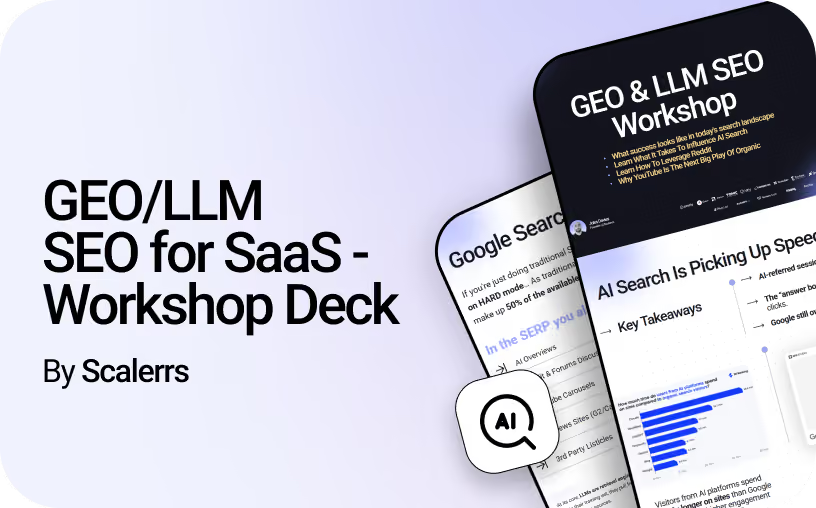
If your scores are surfacing gaps, the next question is what to actually do about them. Our GEO + LLM SEO Workshop Deck shares the exact framework we use to restructure content for AI retrieval. Get tips on how to optimize passage clarity, entity coverage, citation triggers, and the off-site presence that makes on-site content trustworthy enough to cite. The best part? It’s built to work alongside your audit output. Get it for free!
The SaaS Content Audit Template
The SaaS Content Audit Template we’ve created at Scalerrs is a ready-to-use spreadsheet that covers every signal that matters, from search performance to business value and AI visibility, in one place.
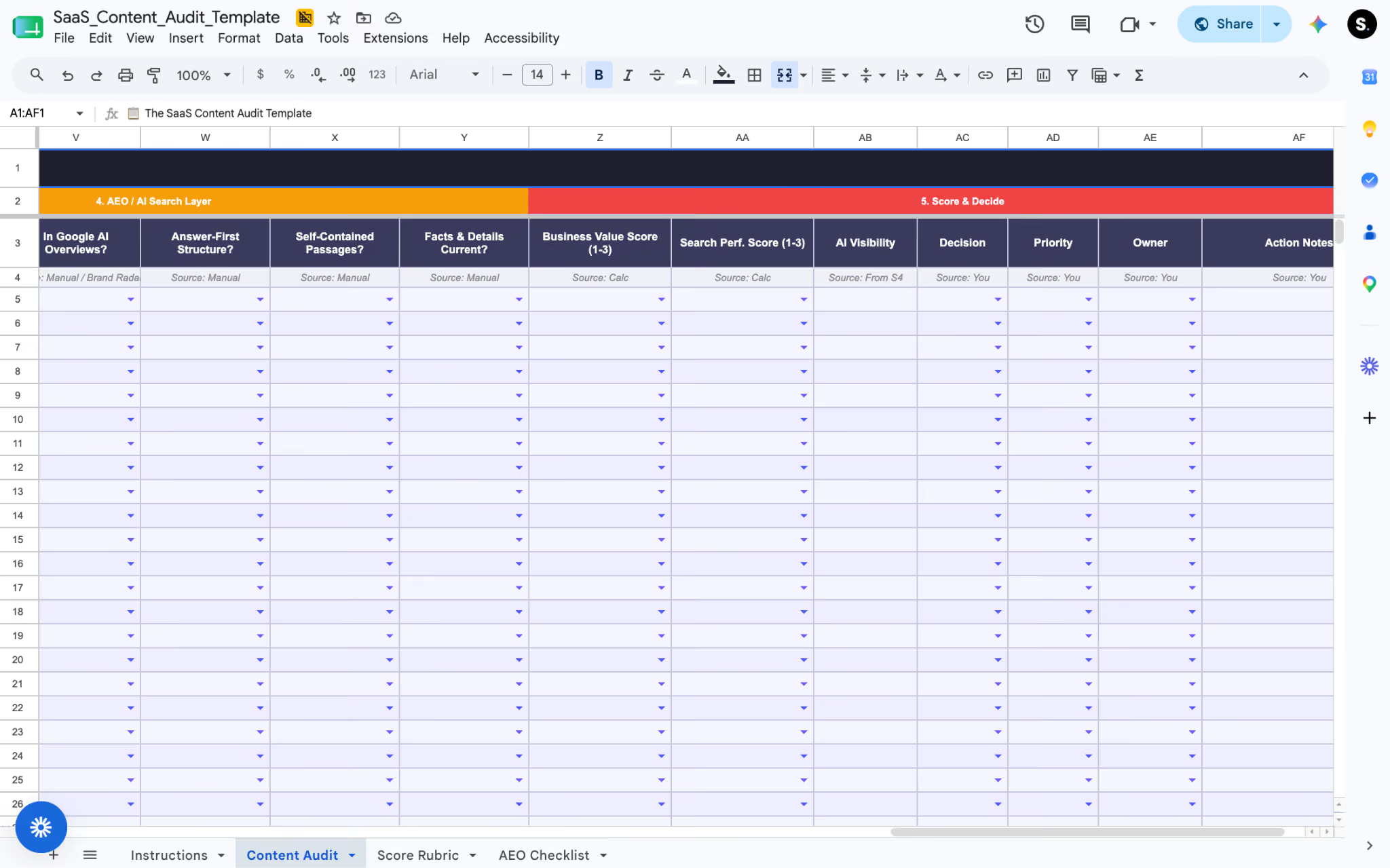
It gives you 32 pre-built columns across five sections: page identification, GSC and Ahrefs data, GA4 conversions, AEO/AI search flags, and a scoring rubric that maps straight to a Keep / Update / Merge / Kill decision.
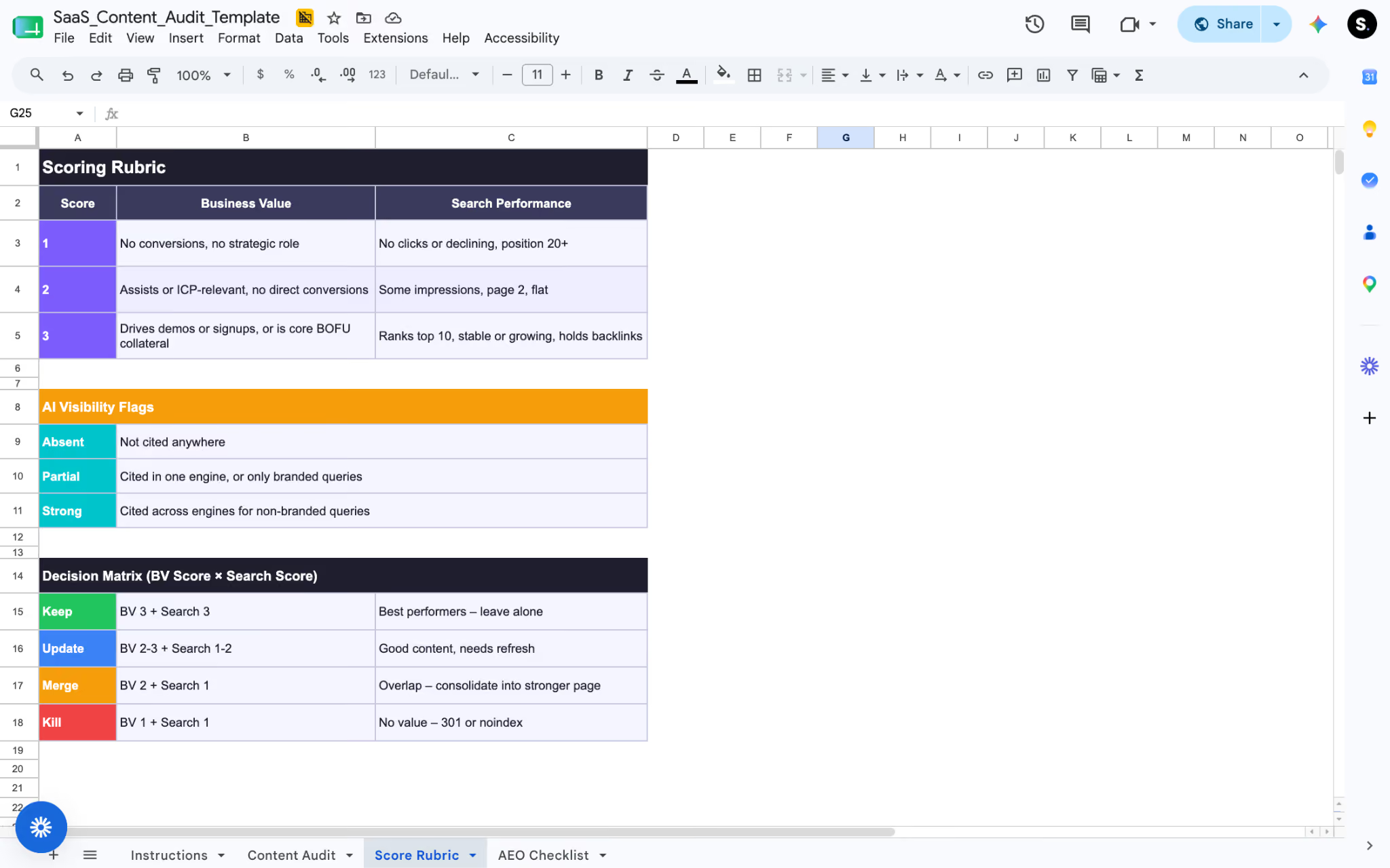
Drop in your URLs, fill the columns from left to right, and the Decision column color-codes itself.
It also includes an AEO checklist to run on every page you refresh, so nothing ships without being structured for AI search:
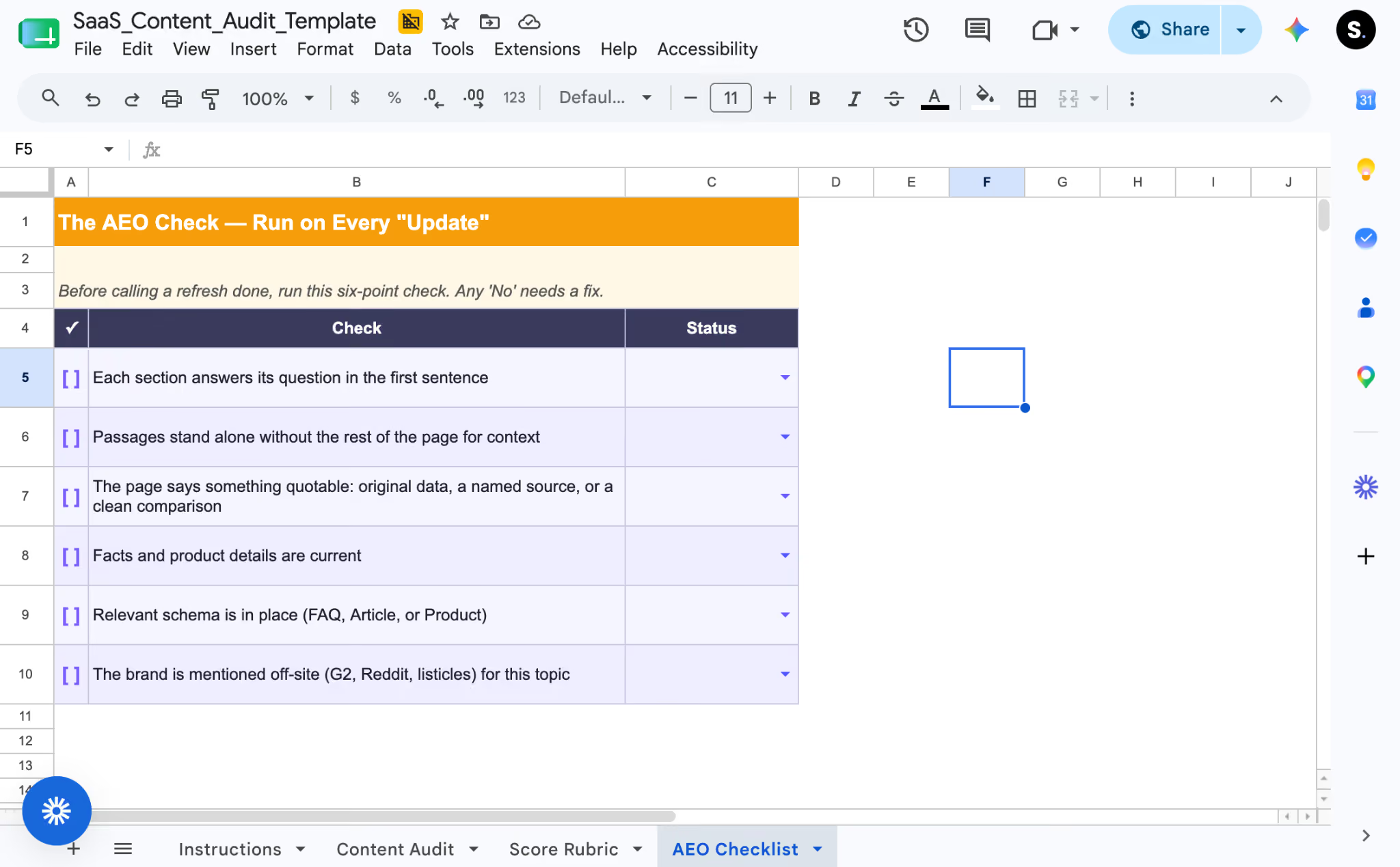
Get the free template here. Make a copy and it’ll be ready for you to use right away.
The decision is straightforward once your scores are in. The harder part is turning a list of 200+ pages into a sequenced execution plan your team can actually ship.
We built the SaaS Content Workshop Deck to solve exactly that. It's a free working session framework that takes your audit output and turns it into a prioritized roadmap—refresh sprint vs. merge vs. kill—so nothing sits in a spreadsheet forever.
Download our SaaS Content Workshop Deck for free today!
Tools You'll Need for a SaaS Content Audit
You don't need an enterprise tech stack to run a strong SaaS content audit.
You can uncover 80% of the opportunities using a handful of tools below, many of which are also free to use:
If you're working with a limited budget, start with Google Search Console, Google Analytics 4, Screaming Frog, and a spreadsheet. That's enough to run a meaningful content audit for SaaS sites and identify most update, merge, and deletion opportunities.
Real SaaS Content Audit Examples and Results
The easiest way to understand a SaaS content audit is to see what happens when companies actually act on the findings. Here’s an example from our own client roster:
TuxCare: 40% Traffic Increase Before Publishing a Single New Article
TuxCare, a security solution for open-source stacks, came to us after cycling through seven SEO agencies over three years.
By that point, they'd almost written content marketing and SEO off.
Traffic had plateaued. Commercial keywords weren't moving. Their blog had grown to more than 3,000 articles, but very little of that content was helping buyers discover the product or driving meaningful business results.
Publishing another 50 articles wasn't going to solve that. So we started with a full SaaS content audit.
Fixing content hygiene
- Using Screaming Frog, Google Search Console, Google Analytics 4, and Ahrefs, we crawled and evaluated all 3,000+ URLs
- The audit surfaced patterns almost immediately:
- Entire topic clusters were cannibalizing one another
- Some articles targeted identical keywords
- Others hadn't generated meaningful traffic, rankings, backlinks, or conversions for years
Instead of adding more content, we consolidated overlapping pages, redirected obsolete URLs, removed low-value content, and strengthened internal linking around the pages that mattered most.
The result surprised even the client.
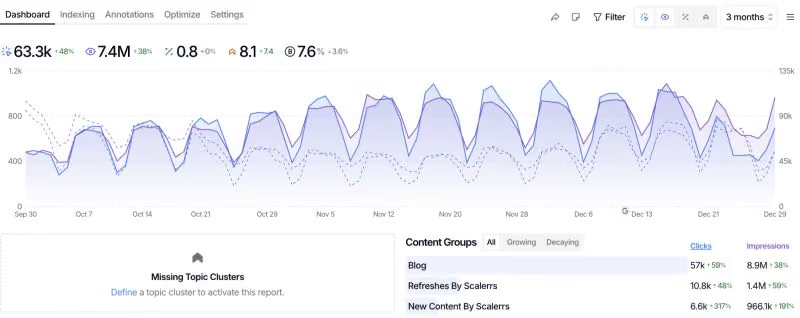
Before publishing a single new article, organic traffic increased by roughly 40%.
That's the power of improving the quality of a content library before expanding it.
Refreshing money pages
With the foundation cleaned up, we turned our attention to the pages buyers actually use when evaluating software.
The site already contained comparison pages, commercial landing pages, and bottom-of-funnel content. The problem was that much of it had become outdated.
We rewrote these pages around current buyer questions, strengthened their structure, improved internal linking, refreshed supporting evidence, and aligned them with modern search intent.
Within weeks, multiple commercial keywords moved onto the first page of Google.
Building fresh content around buying intent
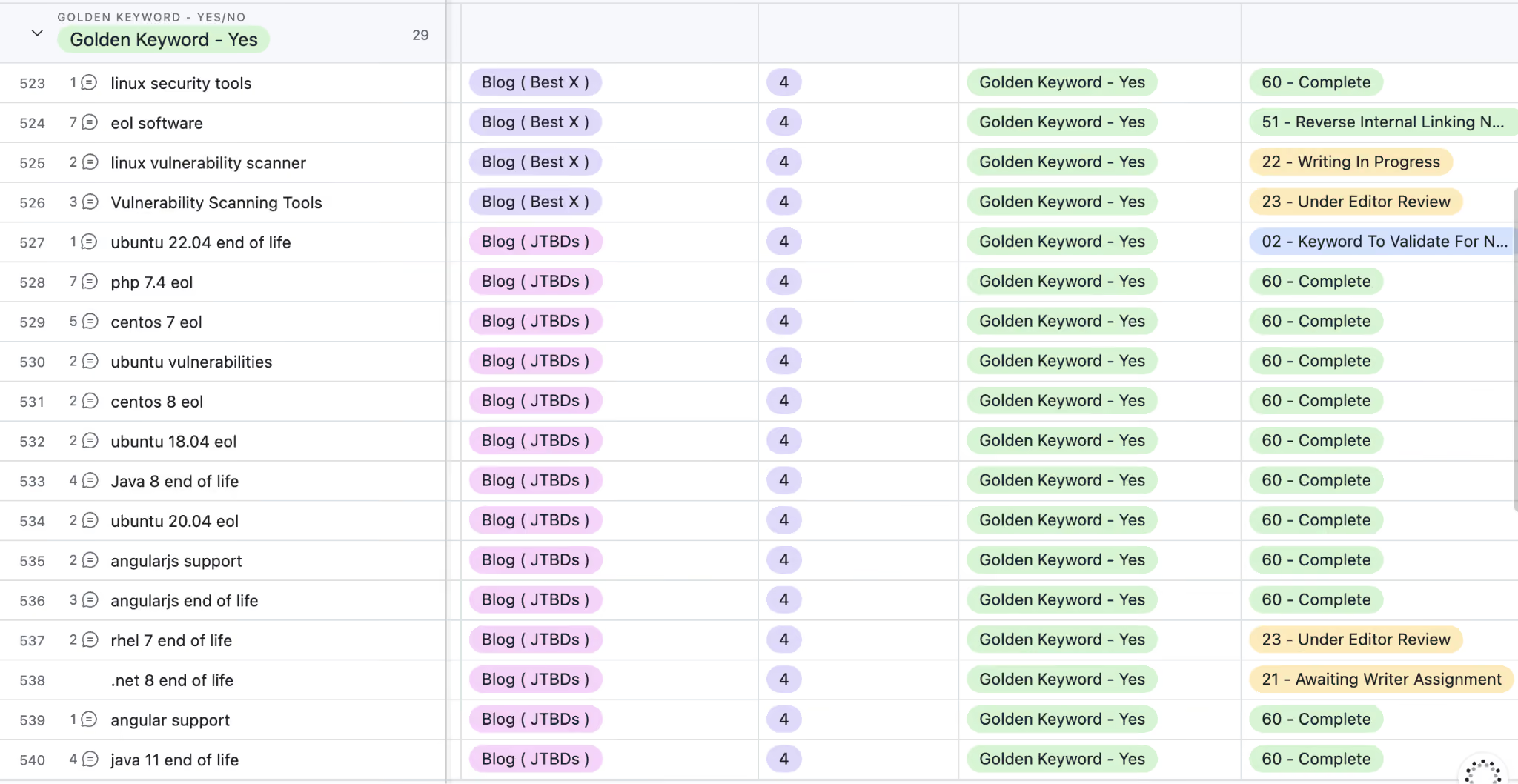
Only after the audit and refresh work was complete did we begin publishing new content.
Instead of chasing broad informational traffic, every topic mapped directly to commercial intent.
The strategy focused on searches like:
- "[Competitor] alternative"
- "[Competitor A] vs [Competitor B]"
- "Best [category] software"
- High-intent use-case queries buyers search before requesting a demo
Each article had a clear purpose within the buying journey rather than simply targeting search volume.
The results
Over the following quarter, the site delivered measurable improvements across almost every content KPI:
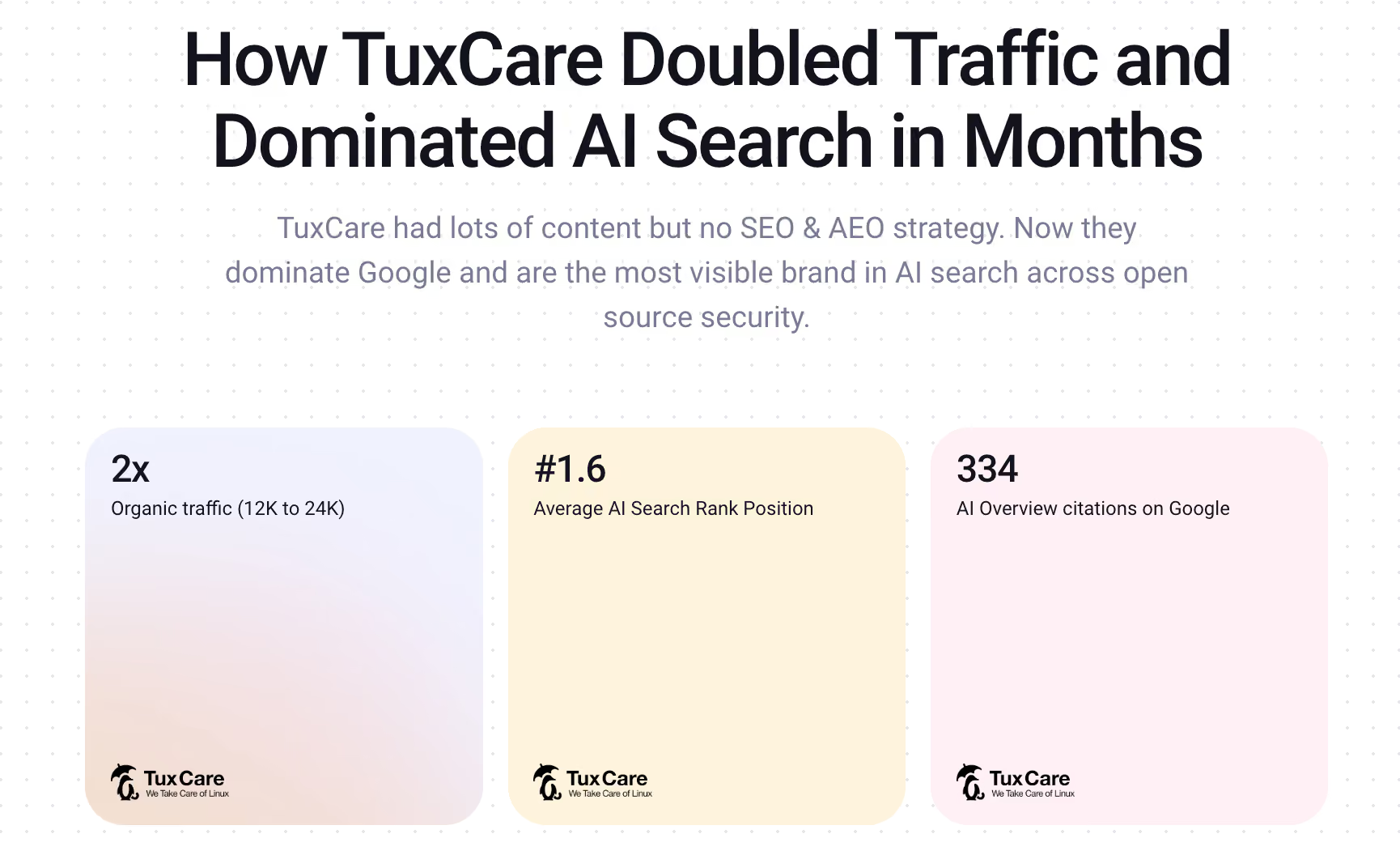
- Overall organic traffic: +48%
- Blog traffic: +59%
- New content performance: +317% compared to the previous content strategy
- Refreshed content performance: +48%
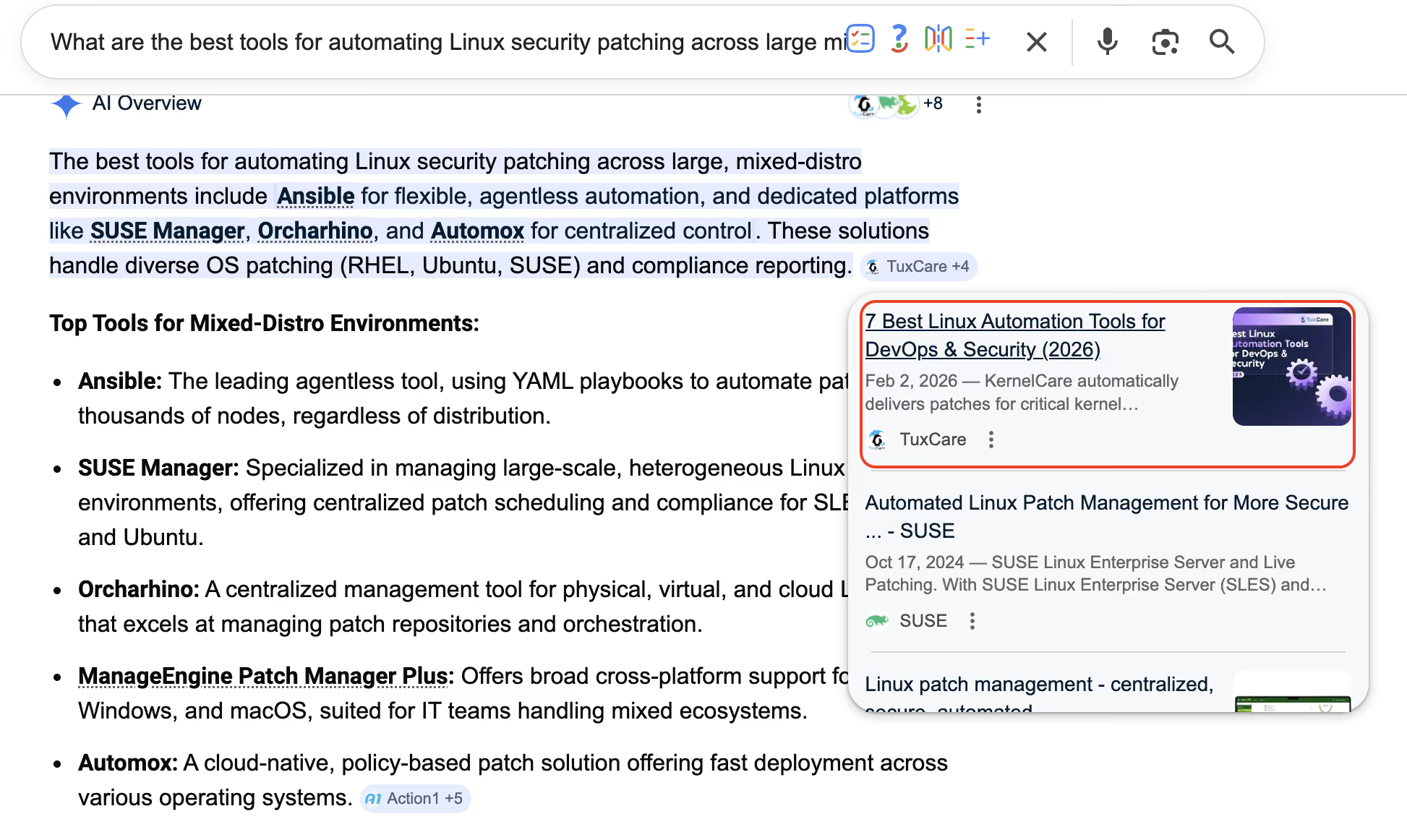
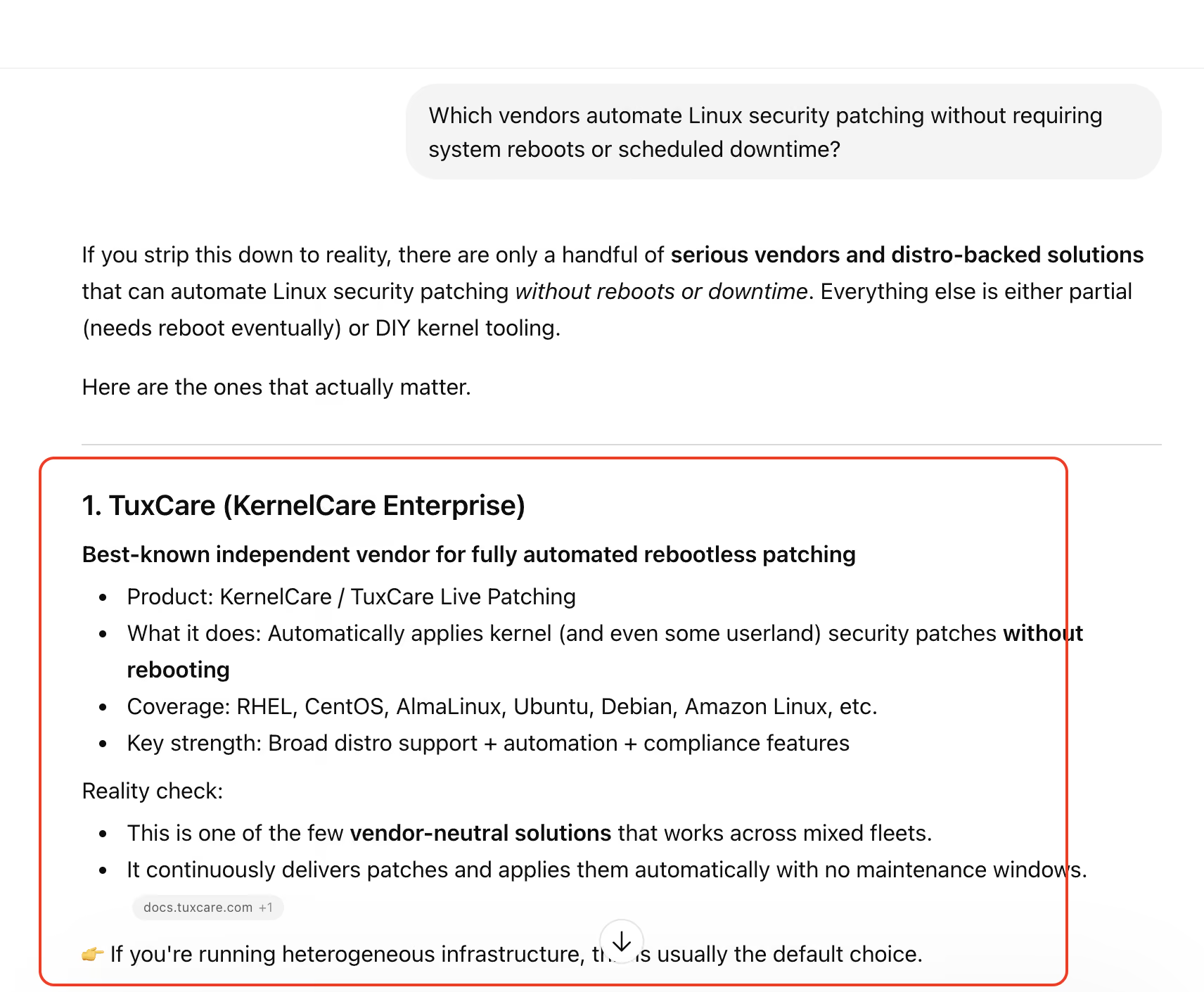
The strongest validation came from the client themselves, who said:
"You guys are one of the best SEO agencies I've ever worked with, and I've worked with seven other agencies. The results speak for themselves."
What this means for your own content audit
The biggest takeaway from this project wasn't that better content wins.
As a marketer, you already know that. The lesson was that the audit created the growth.
That's why we recommend every SaaS company start with an audit before investing heavily in net-new content. Until you understand what's already in your content library, you're making roadmap decisions with incomplete information.
FAQs
- How long does a full SaaS content audit usually take?
It depends. Smaller or newer SaaS sites can often be audited in a few days. Mid-market companies with established content libraries should budget one to three weeks. Larger enterprise sites with hundreds of URLs typically require several weeks to properly inventory, score, and prioritize.
- Should I audit my SaaS help docs and product pages or only the blog?
Yes. Product pages, help documentation, comparison pages, and resource centers often influence conversions more directly than blog content and should be included.
- What percentage of SaaS content typically gets pruned in a first audit?
It depends. Many first-time audits identify 10-30% of content as candidates for consolidation, redirection, or removal, but the right number varies by site quality and content history.
- How do I audit content if I do not have access to Ahrefs or Semrush?
You can still run an effective audit using Google Search Console, Google Analytics 4, Screaming Frog, and a spreadsheet. Paid tools mainly improve depth and speed.
- Will Google penalize me for deleting too much content at once?
No. Removing low-quality or obsolete content won't trigger a penalty by itself. The important part is using proper redirects and ensuring you're removing content that genuinely lacks value.