%20Link%20Building.svg)
%203rd-Party%20Listicles.svg)
%20Reddit.svg)
%20Youtube.svg)






SaaS Content Strategy: 7 Steps to Drive Pipeline in 2026


- Your SaaS content strategy lives or dies based on how closely it’s tied to revenue. For the highest impact, map content to your buying committee and pipeline, not to keyword volume.
- SaaS buyers research across ChatGPT, Google AI Mode, Reddit, YouTube, and G2 before they ever hit your site. Single-channel strategies miss most of this customer journey.
- Bottom-of-funnel content (alternatives, comparisons, use cases) drives demos. Top-of-funnel drives traffic. Avoid over-indexing on the latter.
- AI search is changing how buyers discover software. But it’s not changing the fundamentals of good content: earning trust, proving expertise, and providing value.
- Ignore surface level KPIs. Focus on influenced revenue, demo bookings, AI citation share of voice, and branded search lift.
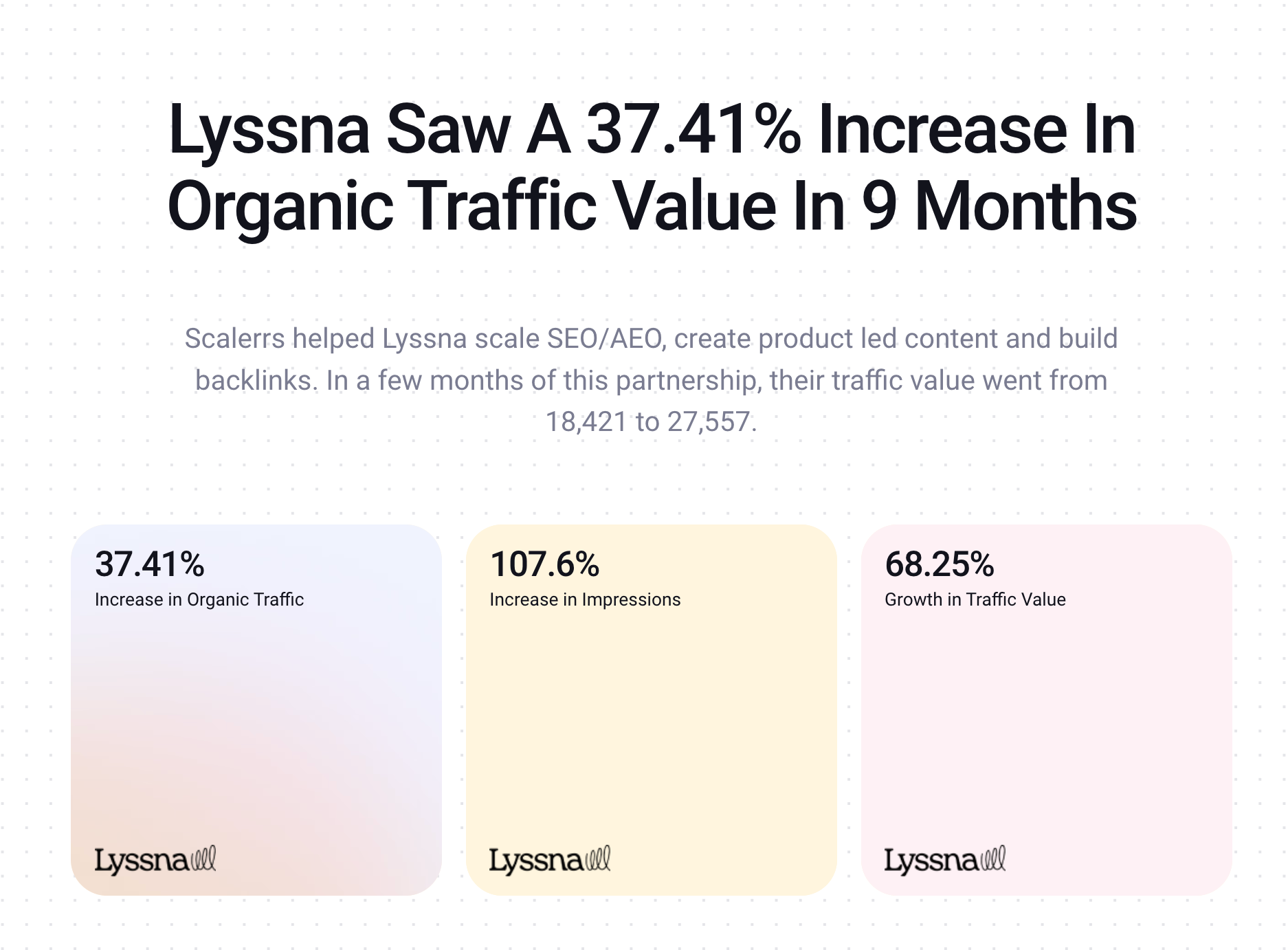
Across 45+ SaaS engagements, our team has watched the same pattern play out: the best SaaS content programs look less like editorial calendars and more like revenue systems.
If your content is underperforming, chances are your strategy is built around keyword volume instead of buying committees, single channels instead of multi-surface visibility, and traffic instead of pipeline.
This guide breaks down what high-performing SaaS content systems look like in practice. You'll learn how SaaS content strategy differs from traditional content marketing, the pillars behind programs that drive demos, how AI search is reshaping content discovery, and the six-step framework we use to turn content into a pipeline channel.
What Is a SaaS Content Strategy?
A SaaS content strategy is the plan that decides what content your team produces, who it speaks to, which channels it ships through, and how it ties back to the pipeline.
It covers six things:
- Audience and buying committee mapping. Who are the daily users, technical evaluators, budget owners, and security reviewers in your deals?
- Topic and keyword universe. Including zero-volume BOFU terms and the prompts your buyers feed ChatGPT, Claude, and Perplexity.
- Channel mix. Owned blog, Reddit, YouTube, third-party listicles, G2, and AI search.
- Production system. How you run briefs, SME interviews, QA, internal linking, and more, and whether it’s all run by your in-house team, a SaaS content agency, or both.
- Distribution plan. How each piece reaches the channels that buyers are using to evaluate, compare, and finalize vendors.
Measurement framework. What you report, what you ignore, and how each piece contributes to ARR.
How SaaS Content Strategy Differs from Traditional Content Marketing
Traditional content marketing is often optimized for traffic, engagement, and brand awareness. Content marketing for SaaS goes a step further by aligning content with the buyer journey and revenue goals, helping attract, educate, and convert prospects throughout longer, more complex buying cycles.
Here are the eight dimensions where SaaS content strategy diverges from traditional content marketing:
| Dimension | Traditional content marketing | SaaS content strategy |
|---|---|---|
| Revenue model | One-off purchase, transactional checkout | Subscription, expansion revenue, multi-year LTV |
| Buyer | Single decision-maker | Buying committee, often five or more stakeholders per deal |
| Sales cycle | Days to weeks | 3-12 months, longer for enterprise |
| Primary KPI | Traffic, social engagement, brand reach | Pipeline-influenced revenue, demos, MQL/SQL quality, ARR |
| Content focus | Heavy top-of-funnel/awareness content | Heavy bottom-of-funnel/decision content: comparisons, alternatives, ROI |
| Channels | Owned media (blog, social channels, podcasts, YouTube) + PR | Owned media + PR + Third-party listicles + Reddit + G2 + Wikipedia + LLMs and AI Search |
| Product role | Mentioned at the end of articles | Product-led pages that rank for use-case and JTBD queries |
| Lifecycle | Acquisition-only | Acquisition + activation + retention + expansion |
The New Reality for SaaS Content Marketing: Search Is Fragmenting
One of the biggest challenges facing SaaS marketers right now is that search isn't limited to one thing anymore. For years, content teams focused almost entirely on Google's organic results.
Now buyers are discovering information across a growing number of surfaces:
| Research Channel | What Buyers Look for | Best Content Format |
|---|---|---|
| Google Search | Solutions, comparisons, education | SEO content, landing pages |
| AI Search and LLMs | Recommendations, summaries, comparisons | Expert-led content, original research |
| Real experiences and peer recommendations | Non-promotional community participation, discussion-worthy content | |
| YouTube | Product evaluation, reviews, and tutorials | Product demos, educational videos |
| Industry expertise and thought leadership | Founder content, SME content | |
| Review Sites | Validation and social proof | Customer reviews, case studies |
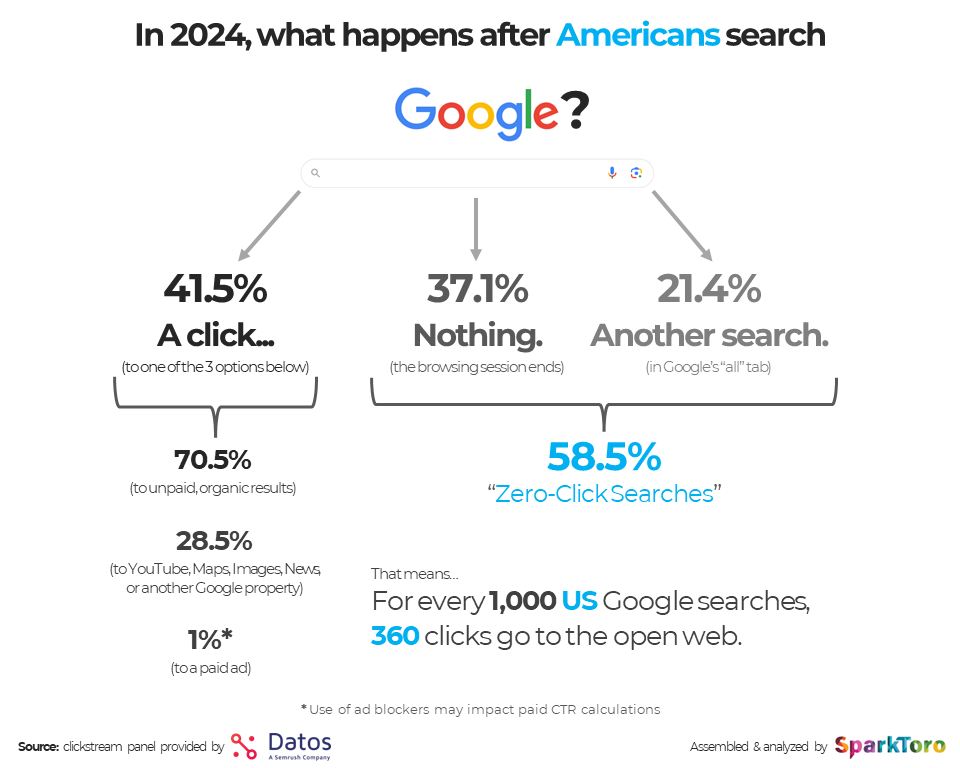
SparkToro's 2024 Zero-Click Search Study found that 58.5% of Google searches in the United States ended without a click to the open web. People increasingly get answers directly from search results instead of visiting websites.
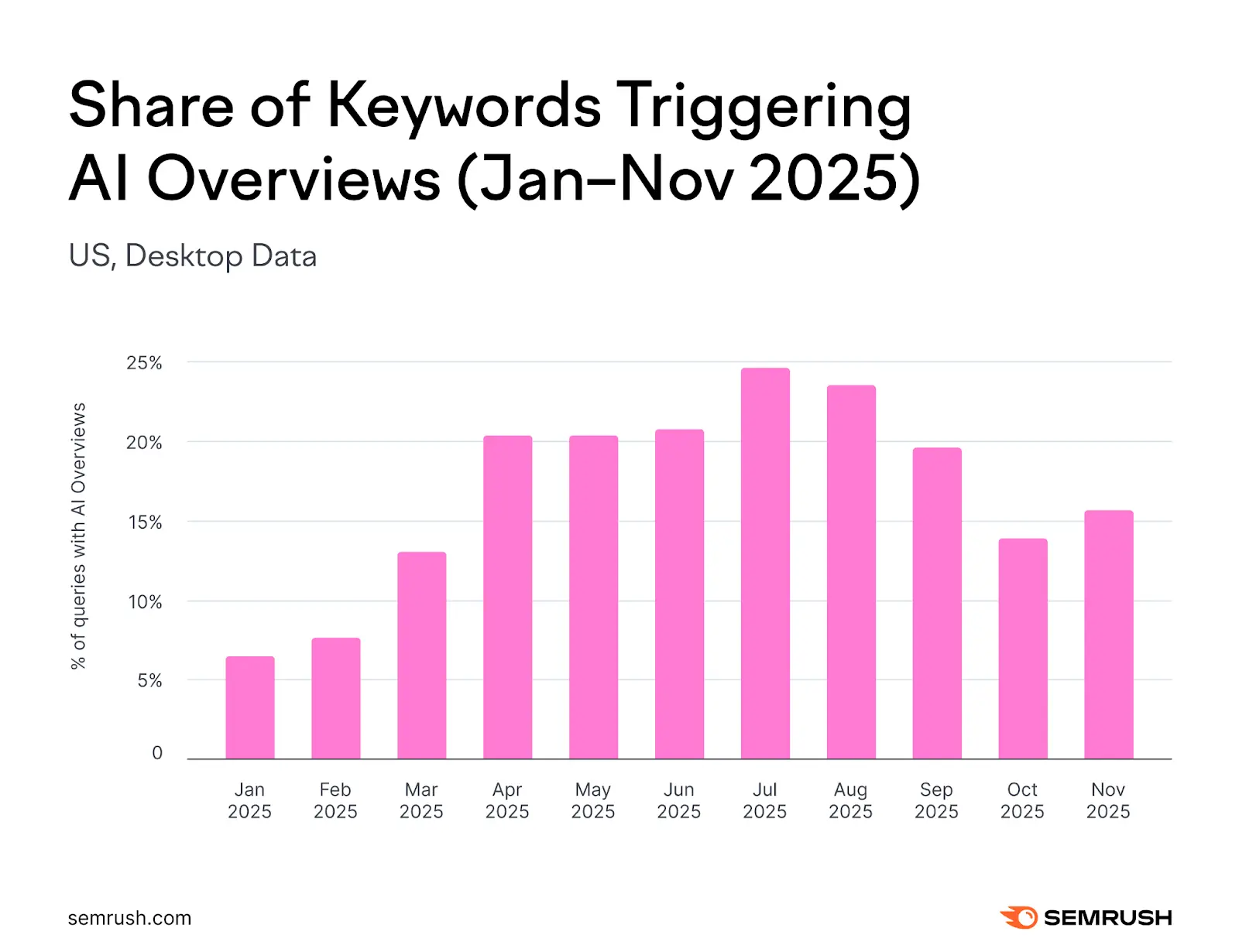
At the same time, Semrush's analysis of more than 10 million keywords found Google's AI Overviews appearing across a growing share of search results, including commercial queries that historically sent traffic to publishers.
And then there's AI Search.
Research analyzing more than 55,000 queries found that as many as 30% of the domains cited in AI-generated answers weren't ranking at the top of traditional search results.
Visibility and rankings are becoming different things, and that's a signal worth paying attention to. Your content strategy needs to think beyond Google, not because SEO is dead, but because your buyers aren't loyal to one platform. They'll use whatever source helps them make a better decision.
We've been operating in this reality for two years.
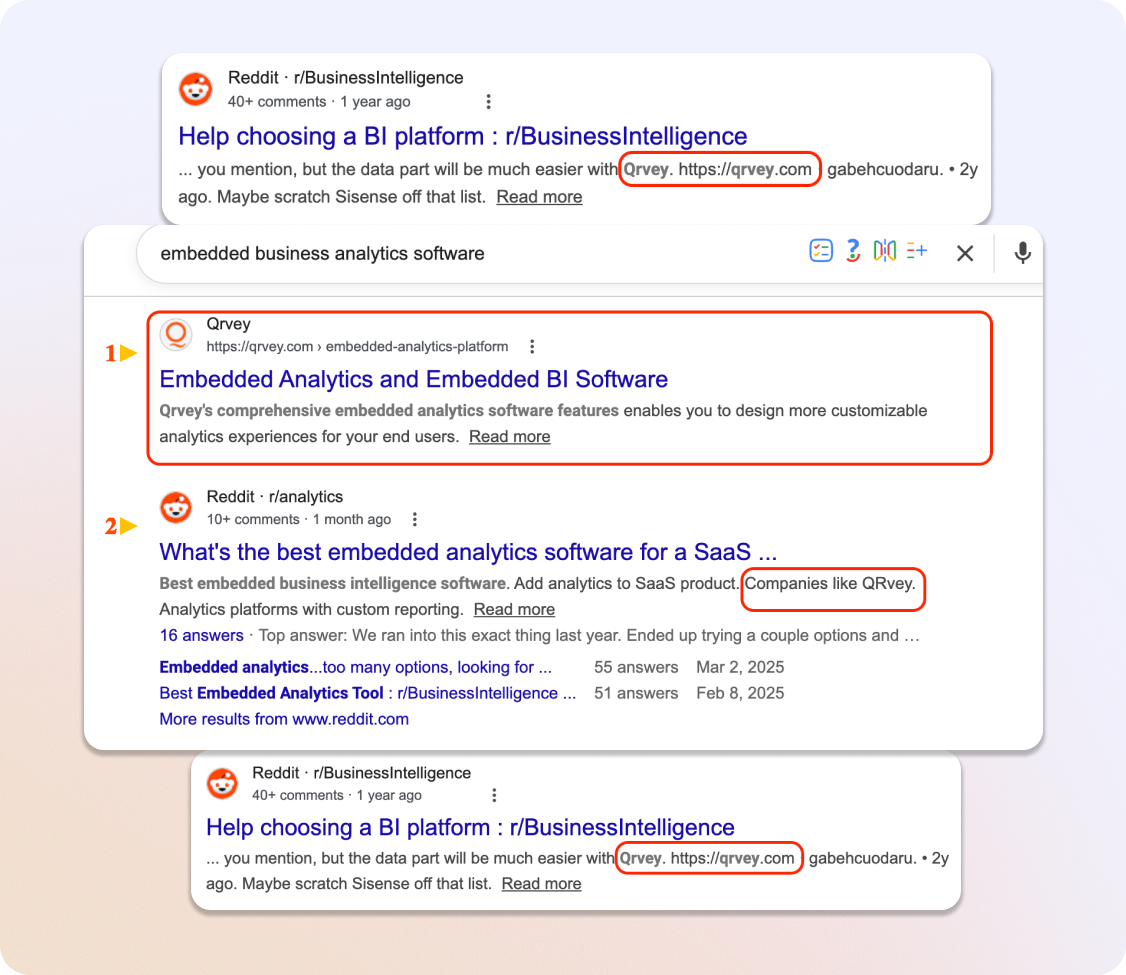
- Our Reddit marketing service runs value-first community participation (no fake accounts, no vote manipulation) which has helped brands like Qrvey source 100% of their organic social demos from Reddit
- Our AEO program helps you produce LLM-friendly content, earns third-party listicle placements with your brand mentions, and builds community visibility for your company. We also track brand citations in ChatGPT, Perplexity, and AI Overviews monthly.
Most agencies are still treating multi-surface visibility as a trend to write about. We've been building the systems that make it your strongest competitive advantage.
Melissa Rosenthal, Editor-in-Chief at State of Brand, echoes why this is important:
{{protip="/pro-tips/saas-content-strategy-tip-1"}}
Core Pillars of a High-Impact SaaS Content Strategy
The tactics behind a SaaS content marketing strategy keep changing.
A few years ago, everyone was chasing featured snippets. Then it was topical authority. Now it's AI visibility, Reddit, and citations inside ChatGPT.
Regardless of these trends, the strongest content programs share these five pillars:
Pillar 1: Content That’s Aligned to Revenue
Your leadership team doesn’t care about your publishing goals or traffic targets. Your CEO isn't asking whether a blog post ranked. Your sales team isn't celebrating pageviews. They're looking at pipeline, opportunities created, and revenue.
That's why the best SaaS content strategies start with commercial goals and work backwards.
What does content need to do for the business over the next 12 months?
Generate demos? Increase self-serve signups? Support expansion revenue? Shorten sales cycles?
Those answers should shape the content strategy long before keyword research begins.
{{protip="/pro-tips/saas-content-strategy-tip-2"}}
Pillar 2: Content for Buying Committees, Not Individual Personas
Gartner's research on the B2B buying journey identifies four jobs buyers complete before deciding on a solution: problem identification, solution exploration, requirements building, and supplier selection. Each involves different stakeholders.
Personas were built for B2C and stuck around in B2B because they're easy. They're also wrong for SaaS. A mid-market deal typically has a daily user, a team lead, a technical evaluator, a finance owner, and a security reviewer. Since your content has to speak to all of them, your strategy also needs to factor all of them in.
What does this look like in practice?
Don’t stop at creating a comparison page for the end user. Build a security one-pager for IT approval. And an ROI calculator for finance. Now, you’ve got three doors for the same use case!
Pillar 3: Search Everywhere Optimization > Search Engine Optimization
Your buyer has already researched you on five surfaces before they hit your site.
As per TrustRadius, 72% of B2B buyers encounter AI Overviews while researching software, and roughly 90% click through to a cited source. Plus, AI Overviews have expanded beyond informational queries into commercial, transactional, and navigational intent.
If your content strategy caters only to one channel (such as SaaS SEO), you're losing to competitors throughout most of the journey.
That doesn't mean publishing everywhere for the sake of it. Understand where your buyers research and make sure your expertise appears there.
{{protip="/pro-tips/saas-content-strategy-tip-3"}}
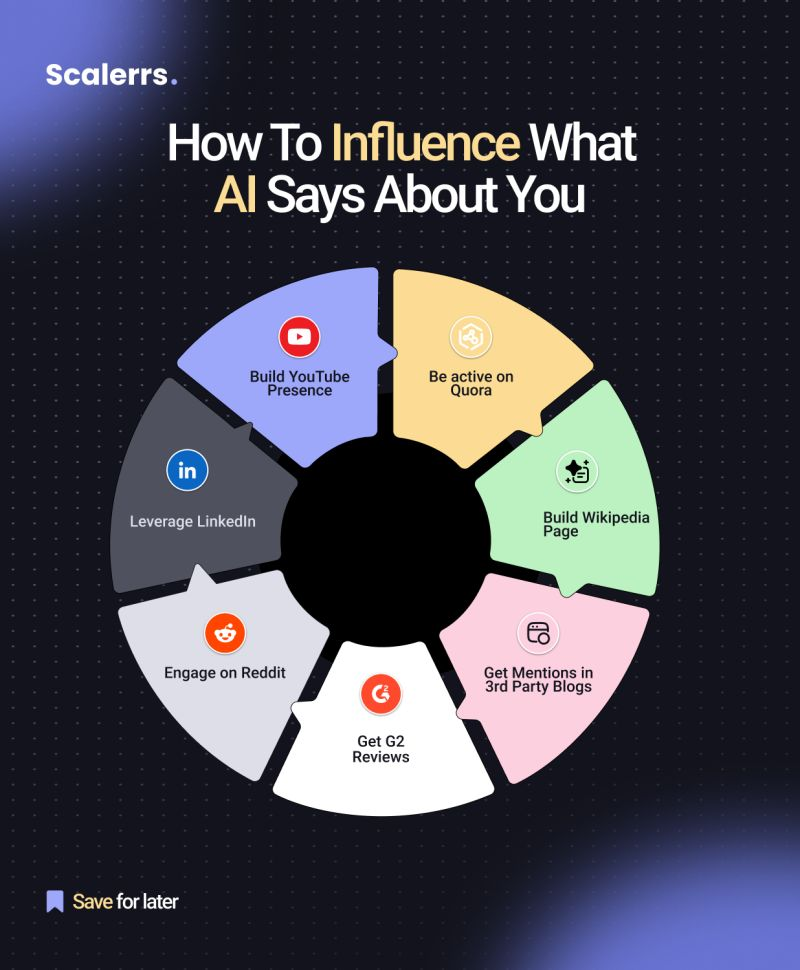
The companies gaining visibility in AI search are often the same companies already earning mentions across these channels. That's not a coincidence.
This is also why we built our service stack the way we did—as one multi-surface engine.
We run SaaS SEO for Google, Reddit marketing for community trust, YouTube SEO, third-party listicle placements, Wikipedia page creation, and overall AEO for LLM citations. Each channel feeds another. And together, they put your brand in front of prospects who are ready to buy.
A buyer asks ChatGPT for category recommendations and sees you cited from a Reddit thread. They Google your name, land on your comparison page, check G2, and book the demo. Four surfaces, one closed-won.
So, if you want a partner who runs all of these inside one strategy instead of stitching them together across vendors, see how Scalerrs works.
Pillar 4: Authority and Trust Signals
HubSpot's 2025 AI Trends for Marketers report found 80% of marketers now use AI for content creation, and 53% struggle to differentiate their content in an AI-saturated market.
When everyone can publish more, only the teams adding original, trustworthy information get cited and remembered. Because AI search can now easily summarize and skip commodity content.
That’s why, at Scalerrs, we run this information gain checklist for every piece of content we produce for our clients:
- Original data. A customer survey, internal benchmark, or proprietary study.
- Named expert quotes. Your CEO, an analyst, a customer with attribution.
- Specific use-case framing. "Best for SaaS doing $1M to $10M ARR" beats "best for all SaaS growth stages.”
A comparison or pros/cons treatment that doesn't exist elsewhere.
{{protip="/pro-tips/saas-content-strategy-tip-4"}}
Pillar 5: Distribution as a Competitive Advantage
The era of "publish and rank" is over. The gap between average and exceptional content marketing often comes down to what happens after publishing. That’s exactly why the strongest SaaS content strategies treat distribution as part of content creation.
You can take one solid insight and turn it into a webinar, newsletter issue, YouTube video, Reddit discussion, PR story, sales asset, and founder post. This way you get to build higher visibility, authority, and pipeline without constantly creating something new.
Comment
by u/Electronic-Disk-140 from discussion
in SaaS
How to Build a SaaS Content Strategy Step by Step
The pillars above explain what successful content programs have in common. Now let's look at how to build one.
Here’s a video walkthrough of the same:
The steps below are how we build a strategy with a new SaaS client over the first 60 to 90 days.
| Step | Output | Owner |
|---|---|---|
| 1. Start with revenue, not keywords | A map of your highest-LTC customer segments and buying committees | Marketing + sales |
| 2. Audit current search footprint | Visibility scorecard across Google, AI search, Reddit | SEO or content lead |
| 3. Build the topic universe | Keyword + AI-prompt + BOFU intent map | SaaS content strategist |
| 4. Map content to funnel and channel | Editorial plan with channel per piece | Content team |
| 5. Create a sustainable production system | Brief template, SME process, QA gate | Content team |
| 6. Build the distribution engine | Multi-surface playbook for every piece | Marketing + agency partner |
| 7. Measure, attribute, iterate | Pipeline-tied dashboard, monthly cadence | Marketing ops |
Step 1: Start with Revenue, Not Keywords
If your content strategy begins inside a keyword tool, it’s probably optimized for how people searched five years ago, not how SaaS buyers evaluate software today.
We recommend our SaaS clients to start somewhere else: identifying your highest LTV customers.
Imagine you're a CRM company.
You might discover that:
- Small businesses generate the most traffic for you
- Mid-market companies generate the most revenue
- Enterprise customers have the highest lifetime value and lowest churn
If you build your content strategy around search volume alone, you'll likely create content for the small-business audience because that's where the keywords are.
But if enterprise customers stay 3x longer, expand faster, and generate 5x the revenue, should they really get the same amount of content investment?
That's why starting with customer economics before keyword research makes sense. To do this, identify:
| Question | Why it matters |
|---|---|
| Which customers stay the longest? | Content can attract more of them |
| Which customers expand accounts? | Higher long-term revenue |
| Which customers churn less? | Better CAC payback |
| Which customers close fastest? | Faster pipeline generation |
| Which use cases drive adoption? | Better content opportunities |
Once you have these customer segments in place, work backwards.
- What problems do they face?
- What questions do they ask before buying?
- What competitors do they evaluate?
- What triggers their search for a solution?
Those answers tend to produce better content opportunities than search volume alone.
Keyword research still matters. It just shouldn't be the first step.
{{protip="/pro-tips/saas-content-strategy-tip-5"}}
Step 2: Audit Your Current Footprint across Google, AI Search, and Reddit
Before you produce a single new piece, know where your buyers are forming their opinions about you and run a visibility audit.
We break the audit into three layers: Google visibility, AI-search visibility, and community visibility.
Layer 1: Google Visibility
Pull a complete keyword inventory for your domain in Ahrefs or Semrush. Split rankings into two groups:
- Positions 1-3. Your winners. Protect them. As competitors refresh content, these pages need regular updates to maintain their position.
- Positions 4-20. Where the fastest growth opportunities live. A page ranking seventh has already proven relevance. Often a refresh, stronger internal linking, or a handful of targeted backlinks pushes it into the top results.
For every page ranking four through 20, document the primary keyword, current traffic, CTR, when the page was last updated, and whether it has a clear conversion path. That list becomes your refresh queue.
Layer 2: AI Search Visibility
{{protip="/pro-tips/saas-content-strategy-tip-6"}}
With AI search trends changing by the day, this is where a lot of SaaS companies have the biggest blind spots today.
The objective is simple: understand whether your brand appears when buyers ask AI tools about your category
If you have access to platforms like Profound, Peec AI, or Semrush's AI visibility tools, start there. Run your most important commercial keywords through the platform and compare your citation rate against two or three direct competitors. The gap is your starting point.
If not, run a manual audit. Open ChatGPT, Perplexity, Gemini, and Google AI Overviews and test prompts like:
- What is the best [category] software?
- Compare [your product] vs [competitor]
- Best [category] software for [industry or ICP]
Look for patterns.
- Does your brand appear?
- How are competitors positioned?
- Are there commercial queries where you don't show up at all?
Create a simple scorecard with one column for your brand and one column for each major competitor. Revisit monthly.
Layer 3: Reddit and Community Visibility
Community discussions show you how buyers talk about your category when vendors aren't controlling the narrative.
Start by identifying the communities where your audience actually spends time.
For many B2B SaaS companies, that includes places like r/SaaS, r/startups, r/entrepreneur, r/marketing, and industry-specific communities aligned with your ICP. If you're unsure where to begin, ask your sales team. They're much closer to buyer conversations.
Then search for:
- Your brand
- Key competitors
- Category recommendations
- Alternative requests
- The core job your product solves
Pay attention to three things.
- How often your brand appears and whether the sentiment is positive, negative, or neutral
- Why competitors are being recommended (the reasoning reveals positioning gaps)
- Which questions go unanswered (those are your content opportunities)
The language matters too. If prospects say "we keep losing track of approvals" or "our lead routing is a mess," those phrases belong in your content.
{{protip="/pro-tips/saas-content-strategy-tip-7"}}
Pull everything into a simple visibility scorecard:
| Surface | Current Status | Biggest Gap | Priority Action |
|---|---|---|---|
| X pages ranking 4–20 | High-intent keyword cluster | Content refreshes | |
| AI Search | Appears in X% of prompts | Competitor dominates category prompts | AEO content development |
| Reddit & Communities | Mentioned in X discussions | Recurring unanswered questions | Community participation + content |
This scorecard will tell you where to invest first.
Step 3: Map Content to the Funnel and to the Channel
This is where most content strategies fall apart. Teams pick topics, then pick formats, but never decide which channel each piece should live on.
If you don’t want your content strategy to fail, decide four things for every topic you landed on in step 3:
- Funnel stage. BOFU (alternatives, comparisons, pricing, migration guides). MOFU (JTBD queries, category education, workflow comparisons). TOFU (problem-framing posts, industry reports, original research). Include zero-volume long-tail BOFU terms. They're some of the highest-converting URLs we build for SaaS clients.
- AI-search prompts. The conversational queries buyers type into ChatGPT and Perplexity.
- Primary channel. Owned blog (for Google SEO + AI citations), Reddit thread, YouTube video, G2 or listicle placement, or Wikipedia.
- ICP. Which role in the buying committee is this for?
- Repurposing plan. What three derivatives can you ship to get more out of each piece?
{{protip="/pro-tips/saas-content-strategy-tip-8"}}
Step 4: Create a Production System Your Team Can Sustain
Whether you build internally or partner with an agency, documented processes can help you publish consistently without sacrificing quality.
Here’s the system we follow and recommend to our clients:
| Stage | What Happens | Why It Matters |
|---|---|---|
| Research & Briefing | Build briefs around information gain, customer insights, content gaps, competitor analysis, and credible sources | Prevents generic, me-too content |
| SME Input | Interview a product expert, customer, founder, or sales rep | Adds expertise, examples, and original perspectives |
| Drafting | Create the first draft using the brief, research, and SME insights | Ensures the piece is rooted in real-world knowledge |
| Editorial QA | Review for accuracy, originality, voice, and strategic alignment | Improves quality before publication |
| Distribution Planning | Repurpose key insights into channel-specific assets | Extends reach beyond a single blog post |
A program publishing 15-20 high-quality pieces per month needs strategy, research, writing, editing, SEO oversight, subject matter expertise, and project management working together.
This is usually the point where SaaS companies decide whether to build an in-house team, rely on freelancers, or partner with a specialist agency.
There's no universal right answer.
The important thing is having a repeatable system that produces at the same high standards month after month.
To give you a sense of what this looks like in practice, we run this system across 45+ SaaS clients:
- Each engagement has its own brief templates
- Every piece is backed by SME interviews and deep research inputs
- Every asset is tracked in Airtable against a topic, channel, and KPI for our team of writers and editors
- The clients track the suggested and approved keywords, briefs, drafts, and optimizations inside a custom client portal that we update week-on-week
No Google Sheets. No endless Slack threads asking, "Where's that doc again?"
We built this infrastructure because it's almost impossible to publish 15+ pieces a month without having this kind of accountability in place.
Step 5: Build a Distribution Engine That Turns Every Asset into Ten
The sentiment in SaaS founder communities right now: ads interrupt, conversations convert. Early traction comes from showing up in conversations buyers are already having, before paid acquisition makes economic sense.
And the best way to tap into these conversations across channels is to repurpose your best content. For every piece that you publish, the engine should produce:
- A Reddit thread or comment on a relevant subreddit. Focus on real participation, not link-dropping.
- A LinkedIn post from the founder or marketing leader. Builds trust and authority while simultaneously creating a personal connection.
- A YouTube short or full video for any topic where buyers want to see the workflow
- Listicle outreach to publishers running "best [category]" articles. Earns AI citations and BOFU trust simultaneously.
The mindset: create once, distribute forever. That's how small SaaS marketing teams compete with bigger ones.
Step 6: Measure, Attribute, and Iterate
While traffic and rankings still matter to some extent, if you can't tie content back to the pipeline, you can't defend the budget.
Measure the impact of your content strategy using these four KPIs:
- Pipeline-influenced revenue. First-touch and multi-touch attribution from your CRM, plus self-attribution surveys for AI-search referrals.
- AI citation share of voice. How often does your brand surface for category prompts versus two named competitors?
- Branded search lift. When AEO and SEO compound, branded search rises. If it isn't trending up quarter over quarter, top-of-funnel isn't compounding.
- Content-specific conversion. Demo requests per piece and signup rate by content type.
It pays to be patient. Content needs four to six weeks to find its position in search before these signals become meaningful.
{{protip="/pro-tips/saas-content-strategy-tip-9"}}
SaaS Content Types That Actually Drive Pipeline
One of the biggest myths in SaaS marketing is that more content automatically leads to more growth. It doesn't.
The content types that drive the pipeline aren't always the ones that drive traffic.
That's why we recommend thinking about content through the lens of buyer intent rather than format.
Here’s a quick cheat-sheet:
| Content type | Funnel stage | Primary job | Best for stakeholder |
|---|---|---|---|
| Alternatives and "vs" pages | BOFU | Win the shortlist | All buyers |
| Pricing pages | BOFU | Reduce decision friction | Finance, daily user |
| Migration guides | BOFU | Lower switching cost | Technical evaluator |
| Customer stories and case studies | BOFU | Prove industry fit and product value | Exec, team lead |
| JTBD how-to posts | MOFU | Teach workflow + position product | Daily user, team lead |
| Use-case landing pages | MOFU | Map product to a specific job | Daily user |
| Integration pages | MOFU | Answer "does it work with X?" | Technical evaluator |
| Product-led landing pages | Cross-funnel | Rank and convert in one URL | Daily user |
| Reddit threads | MOFU + BOFU | Community trust + AI citations | All buyers |
| Third-party listicles | BOFU | Buyer trust + AI citations | Finance, exec |
| YouTube walkthroughs | MOFU | Watch-time intent + AI transcripts | Daily user, team lead |
| Original research / POV | TOFU | Earn links + category authority | Exec, marketing leader |
Four types of content do most of the heavy lifting:
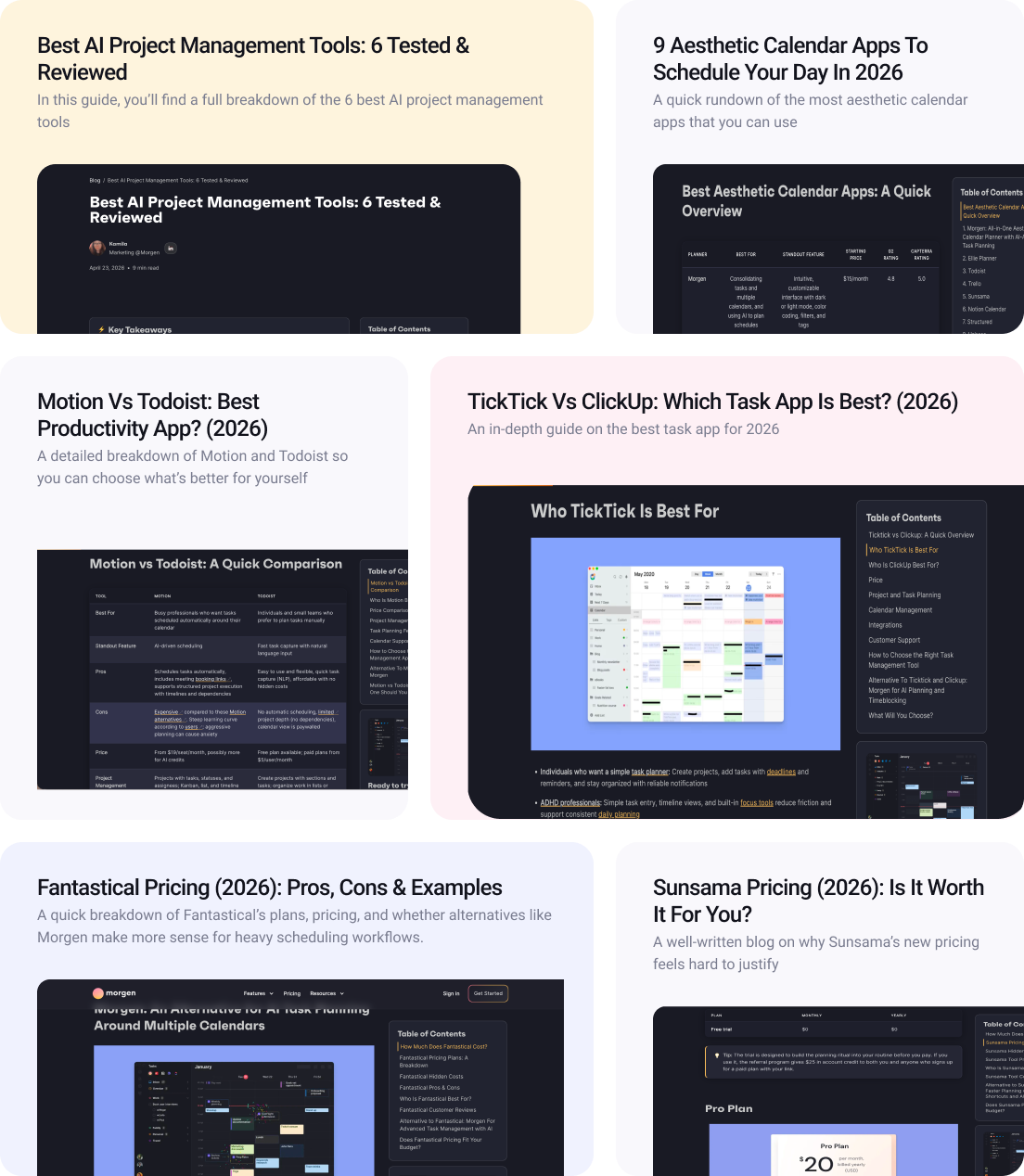
Alternatives and Comparison (Versus) Pages
When a buyer types "Salesforce alternatives" or "Notion vs Asana," they're shortlisting vendors. Your job is to be on the shortlist.
A well-built "Best [competitor] alternatives" page might pull 200 to 800 organic visits a month. Even a 3-5% demo-click rate yields up to 40 demo requests per page per month from one evergreen piece.
Alternatives pages also feed AI citations heavily. When ChatGPT or Perplexity gets a "best alternative to X?" prompt, the LLM synthesizes from listicles, Reddit threads, and alternatives’ content.
Quick tip? Frame it honestly: talk about the pros and cons of each competitor, including your own product's weak spots. AI search filters out content that reads as one-sided.
Jobs-to-Be-Done (JTBD) Content
JTBD content sits in the middle of the funnel where buyers are comparing approaches, but not vendors yet. They usually follow the format: "How to [outcome] without [pain point]."
Examples: "How to forecast revenue without spreadsheets." "How to onboard remote employees without Slack."
The strongest JTBD content helps buyers understand:
- Why the problem exists
- What approaches are available
- What good outcomes look like
- Which solutions support those outcomes
Your job here is to teach the workflow, position your product as one of two or three legitimate options, and capture the signup.
JTBD content feeds LLMs disproportionately because ChatGPT and Claude pull from how-to content when buyers ask "what's the best way to X."
{{protip="/pro-tips/saas-content-strategy-tip-10"}}
Product-Led Content
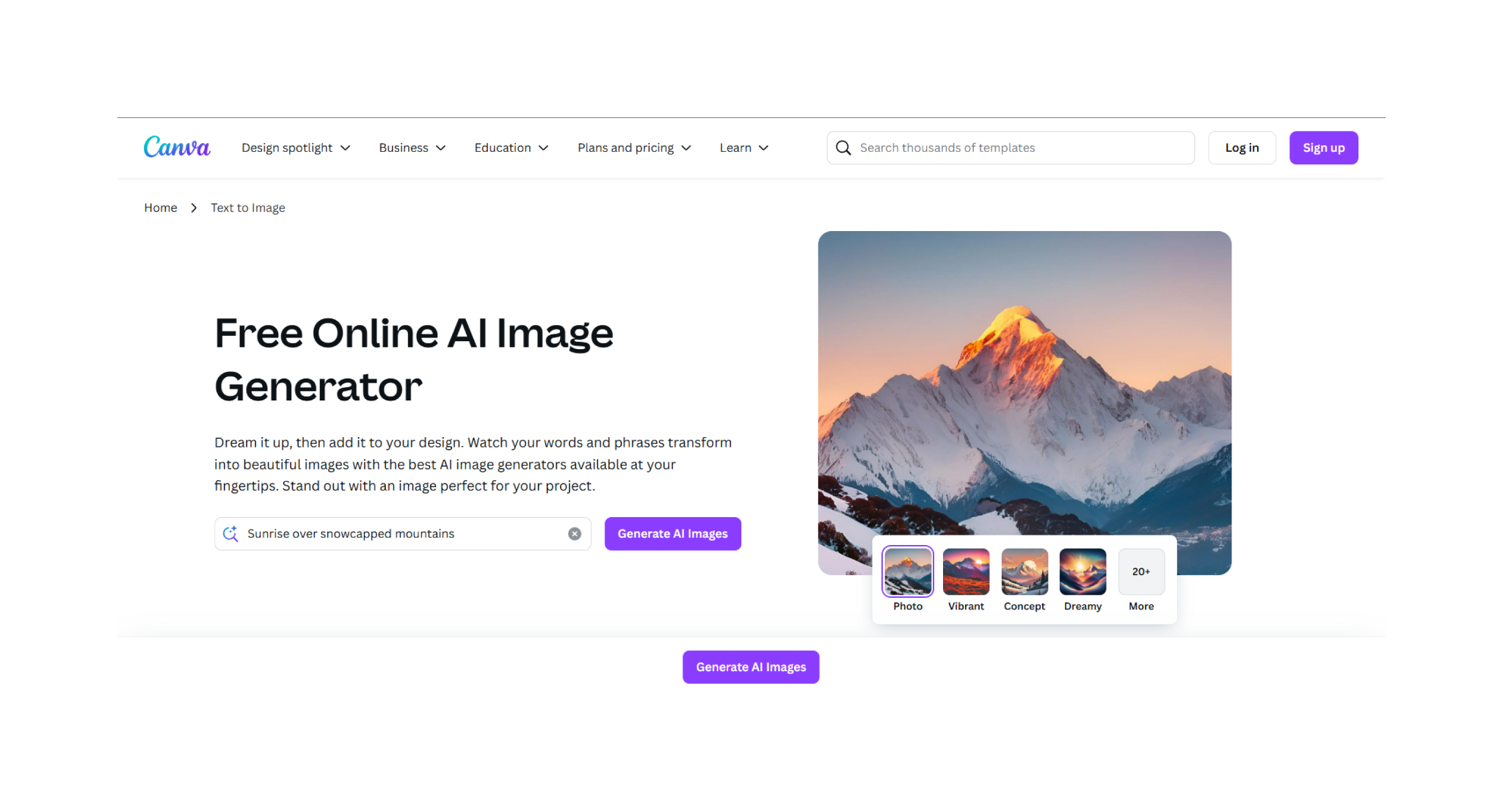
Product-led landing pages rank for use-case queries where your product is the answer. The page functions as both the SEO target and the product walkthrough.
🎯 For example, Canva's AI image generator page ranks for "AI image generator" and lets the user generate creatives inside the page.
{{protip="/pro-tips/saas-content-strategy-tip-11"}}
🎯 Loom's screen recorder page ranks and embeds the tool. These pages collapse the entire buyer journey into one URL.
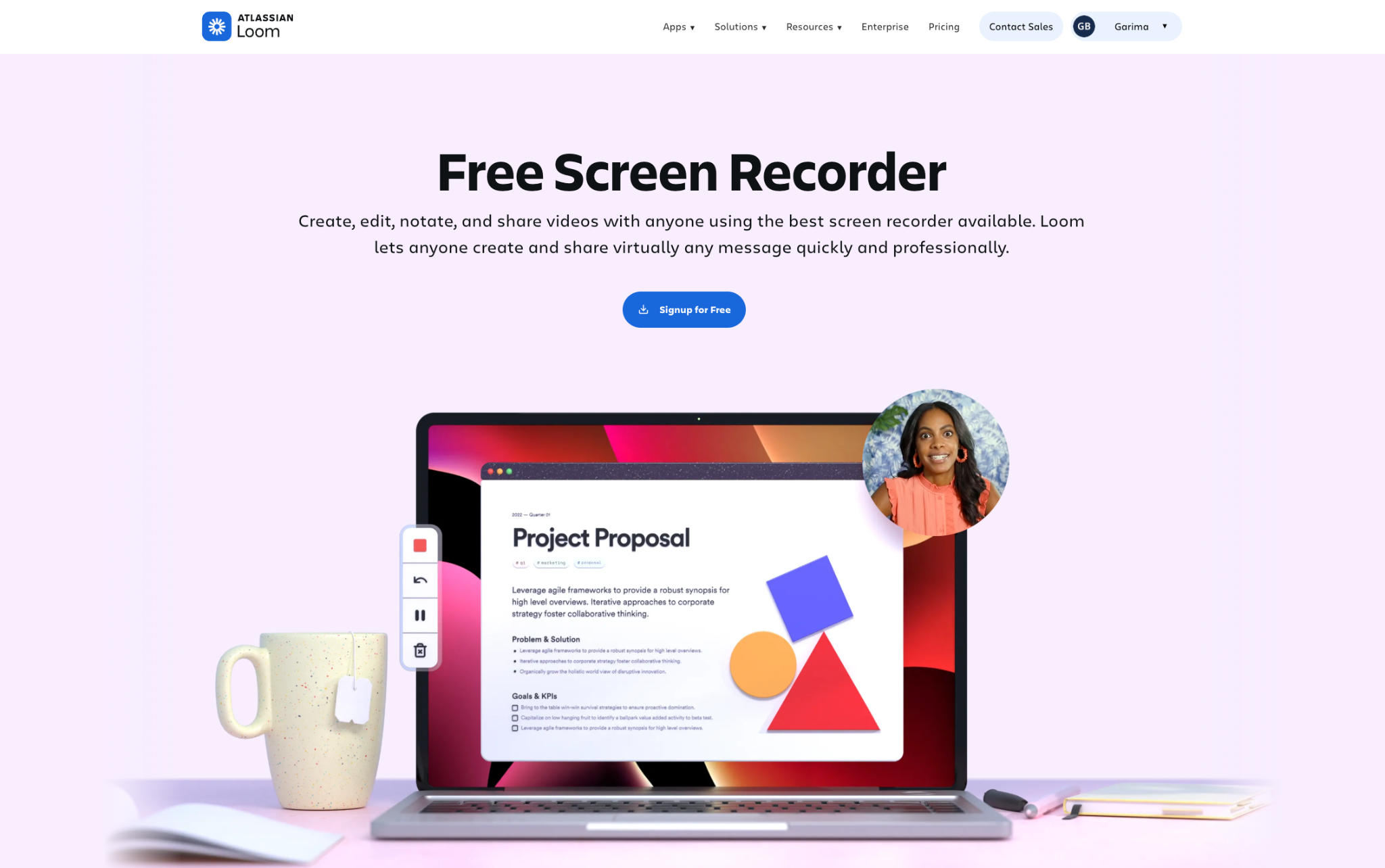
If your product can directly answer the query, build a product-led page, not a blog post.
Some ideas include:
| Content Type | Purpose |
|---|---|
| Feature pages | Explain capabilities |
| Solution pages | Connect features to business outcomes |
| Industry pages | Show relevance to specific verticals |
| Integration pages | Capture ecosystem demand |
| Use-case pages | Match real-world workflows |
Customer Stories and Proof Assets
Trust is expensive. Particularly in B2B SaaS.
Your buyers are making decisions that affect budgets, processes, and careers. They want evidence that your solution works in environments similar to their own.
That's why case studies continue to outperform in content marketing for SaaS companies. When someone asks us what content has remained effective through SEO updates, AI search changes, and shifting buyer behavior, customer stories are always near the top of the list.
To create strong case studies, explain:
- What was the problem?
- What changed?
- What outcome did the customer achieve?
- How those results happened
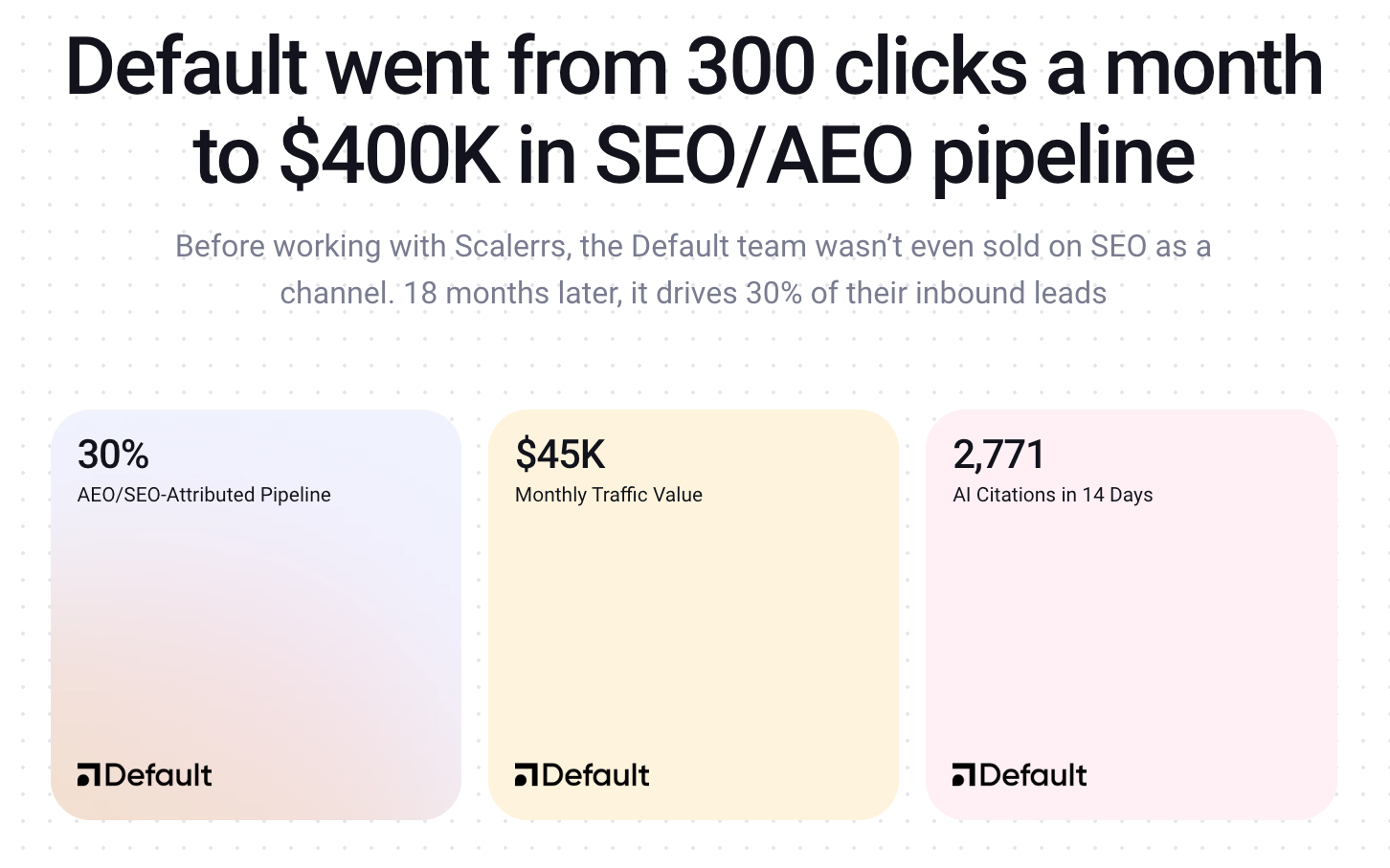
SaaS Content Strategy in Action: How AutoRFP Doubled AI-Search Referrals With a Multi-Surface Content Strategy
Overview. AutoRFP is an AI-powered RFP response platform serving sales, RevOps, and proposal teams at mid-market and enterprise B2B companies. Their category is dominated by larger incumbents like Loopio and Responsive.
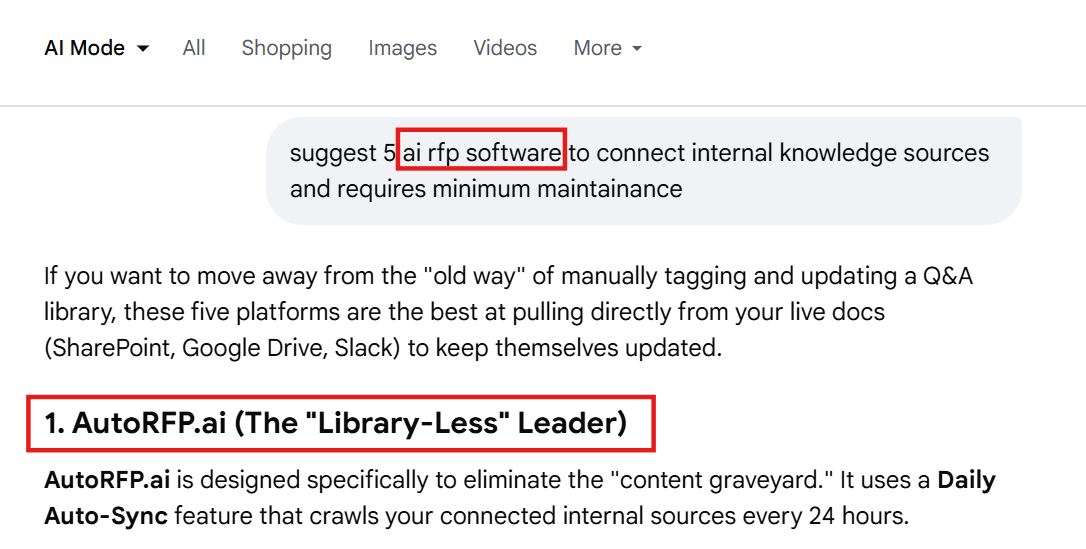
Challenge. AutoRFP came in with a strong product and a thin organic footprint. Their blog pulled 1,412 monthly visits. Worse, they were invisible in AI search. When buyers asked ChatGPT, Perplexity, or Claude for RFP automation recommendations, the incumbents got cited. Being absent from the AI answer meant being absent from the deal.
Strategy. We ran a five-channel content program with AEO as the central organizing pillar:
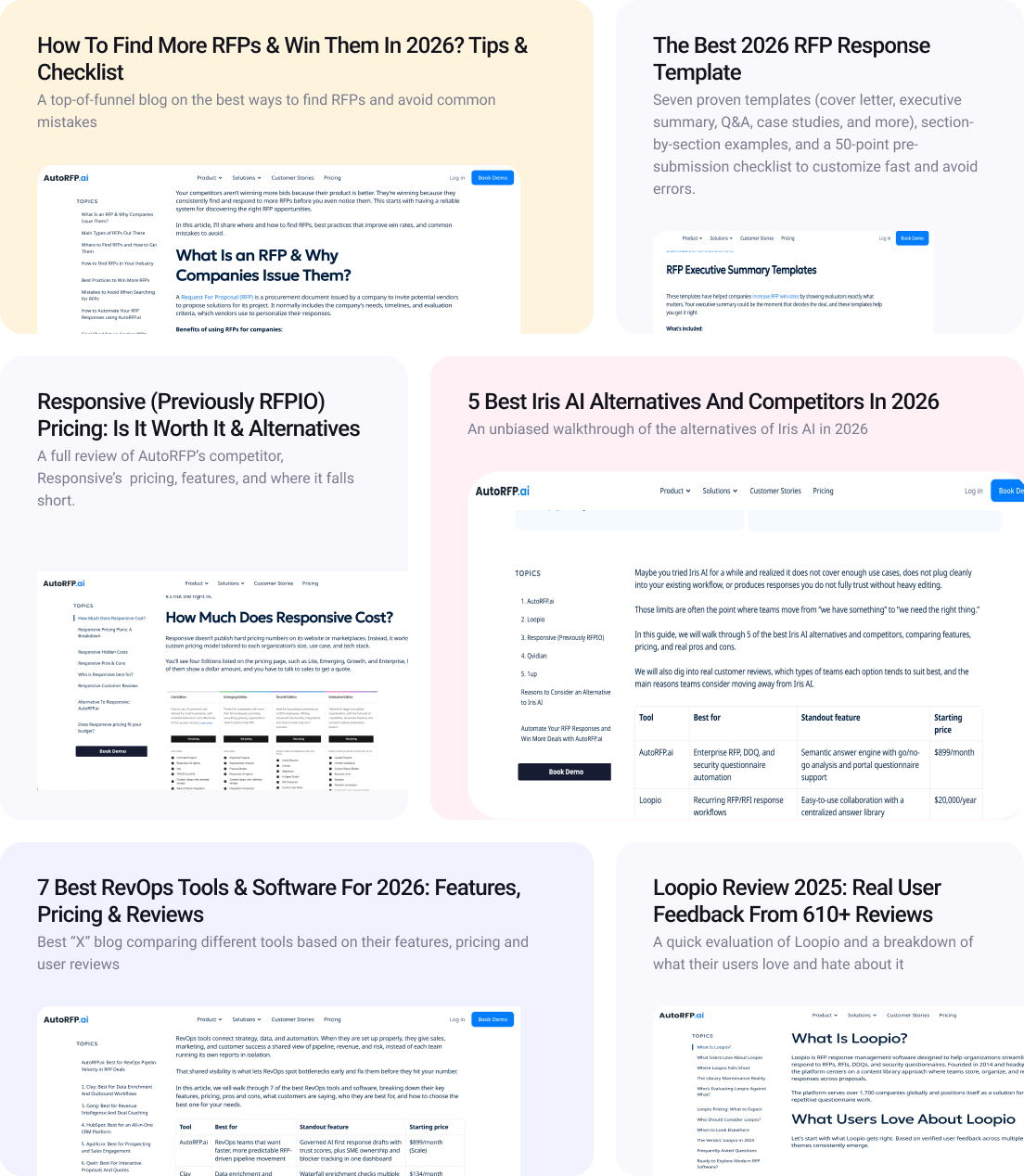
- Owned content. Rebuilt the BOFU layer with alternatives pages, vendor comparison content, and use-case landing pages. Every brief was built for both Google ranking and LLM extractability.
- Reddit. Authentic participation in subreddits where RFP and proposal conversations happen. Real answers, no spam.
- Third-party listicles. Outreach to publishers running "best RFP software" and "Loopio alternatives" articles. Each placement compounded a backlink, a brand mention, and an AI citation source.
- Link building. Backlinks from SaaS-relevant domains pointed at the BOFU pages doing the conversion lifting.
- Production cadence. Consistent publishing on BOFU and MOFU, paired with monthly AI citation tracking against named competitors.
Results (six months).
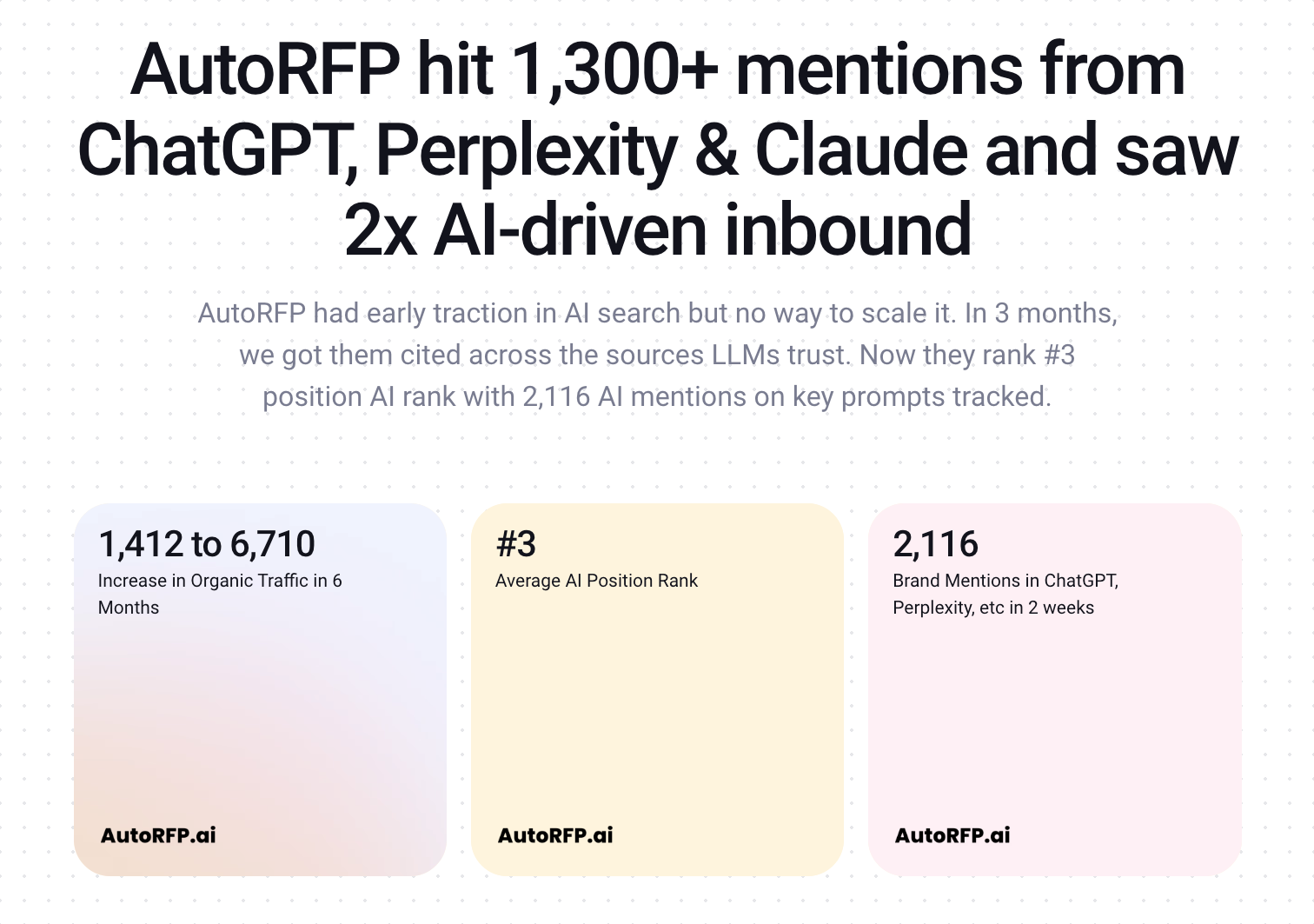
- Organic traffic grew from 1,412 to 6,710 monthly visits. A 4.7x increase.
- 2,116 brand mentions earned across ChatGPT and Perplexity.
- Self-attributed AI-search referrals doubled. Buyers on sales calls now name ChatGPT, Perplexity, and Claude as where they first heard about AutoRFP.
"The team at Scalerrs we're really early on LLM search. And that was one of the reasons we really wanted to work with them. And since we did, people self-attributing that they heard about us on ChatGPT, Perplexity, Claude has doubled," says Robert Dickson, Demand Gen/RevOps Manager at AutoRFP.
Takeaway. Multi-surface content compounds. AutoRFP's growth came from publishing the right content types and distributing across the surfaces buyers actually use. You can't get cited by an LLM if your content isn't in the pool the LLM pulls from.
What's Next for SaaS Content Strategy
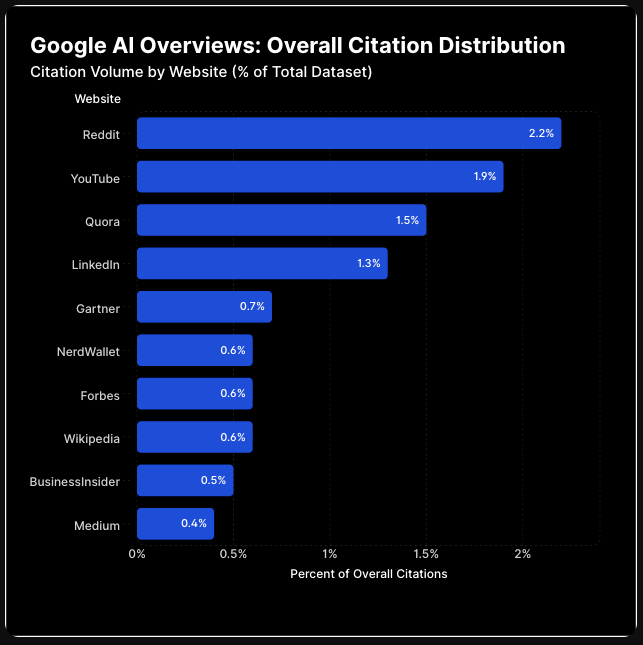
The AEO and AI Search space contradicts itself weekly. Owned media was hot, then borrowed media was the play. Reddit dominated AI citations, then LinkedIn rose. FAQ schema was removed from Google's guidelines but LLMs still need it. No single playbook is holding up.
So, how do you respond?
Chasing every new tactic isn’t sustainable.
You’ll need to anchor on the principles that remain true even while the tactics shift:
- Owned, earned, and paid media work together. Pipeline comes from a brand showing up across all the surfaces buyers use, with each playing a different role.
- Reddit matters even when AI citation patterns shift. Buyers actively append "reddit" to search queries to filter for community recommendations. That behavior holds.
- Content written for humans works for AI. Clean, skimmable, structured-around-the-answer content reads better for both. Writing "for AI" and "for humans" aren’t separate disciplines.
- Original research always wins. Generic AI content is cheap. You need distinctive research, customer data, and expert insight to survive the flood of commodity content.
{{protip="/pro-tips/saas-content-strategy-tip-12"}}
AI visibility and Google rankings are decoupling. Your content strategy can't be Google-only, and it can't be tactic-first. It has to be principle-first.
Key KPIs to Measure SaaS Content Strategy Success
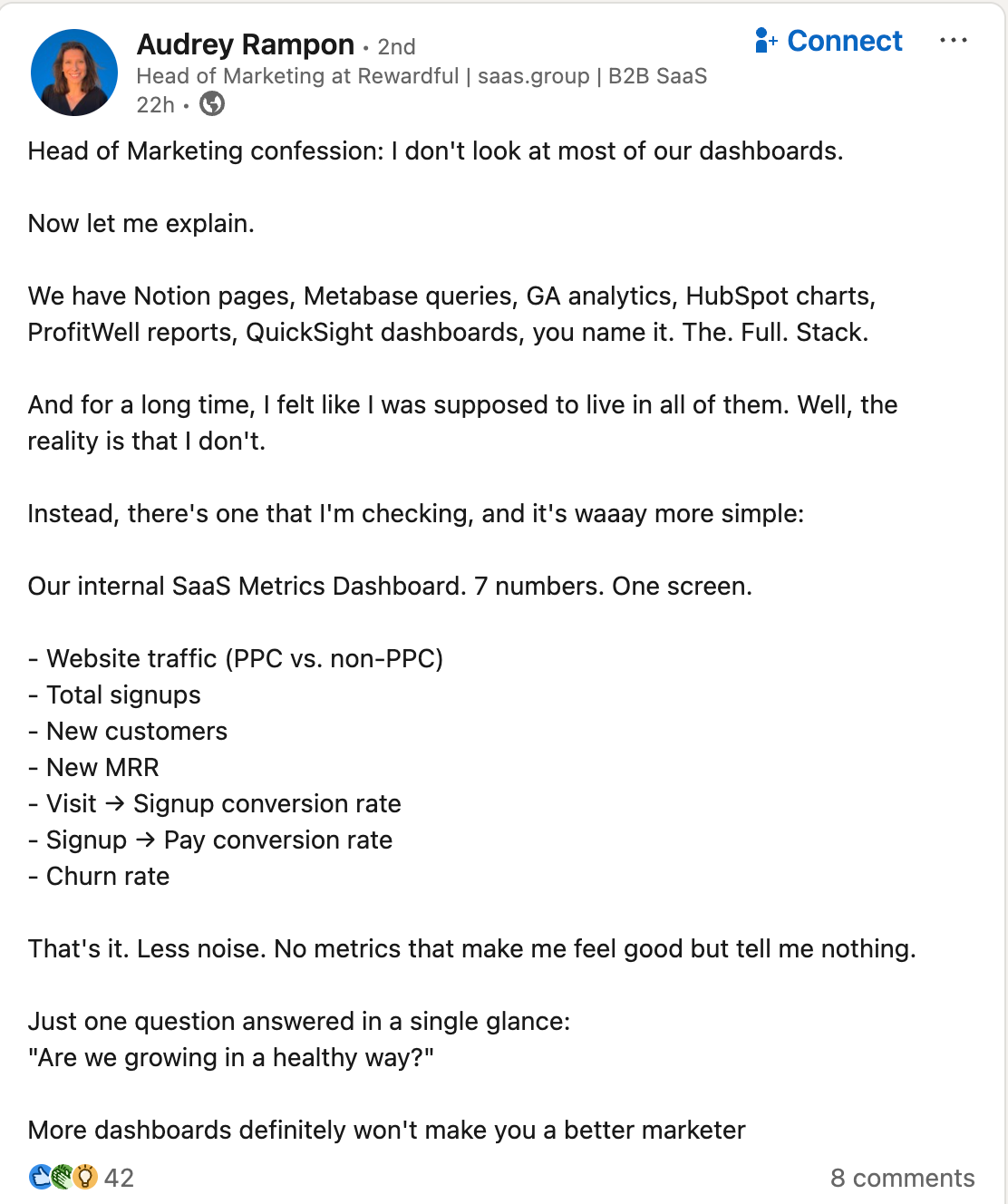
Most content reporting dashboards tell you how much content was produced. Some tell you how much traffic that content generated. Very few tell you whether content is helping the business grow.
The SaaS SEO KPIs below are the ones that survive a board review.
| KPI | Why It Matters | Common Mistake |
|---|---|---|
| Pipeline Influenced Revenue | Shows business impact | Only measuring traffic |
| AI Visibility/AI Citation Share of Voice | Measures discovery across AI platforms | Tracking rankings but not citations |
| Branded Search Growth | Indicates growing awareness | Looking only at non-branded traffic |
| Demo Requests | Measures buying intent | Treating all conversions equally |
| Product Signups | Tracks acquisition efficiency | Ignoring signup quality |
| Opportunities Created/SQLs | Connects content to sales | Stopping at MQL reporting |
Pipeline-Influenced Revenue
Tie organic and AI-search leads to closed-won deals.
CRM attribution and self-attribution can help you do this well. Tools like Dreamdata, HockeyStack, and Factors.ai help connect organic and AI signals to pipeline.
AI Citation Share of Voice
Track how often your brand surfaces in ChatGPT, Perplexity, Claude, Gemini, and Google AI Mode for category prompts, measured against two or three named competitors. Tools like Promptwatch, Peec, and Profound make this easier.
A simple manual version: pick 20 high-intent prompts your buyers would type, run them across the major LLMs monthly, and log who gets cited. The delta is your AEO scoreboard.
Branded Search Growth
When SEO and AEO compound, branded search rises. Buyers see your brand in ChatGPT, on Reddit, in YouTube comparisons, on G2, and then they Google your name. Track it in Search Console, filtered for branded queries, monthly.
Conversion by Content Type
Conversion by content type pairs with it. Group your content into buckets and measure demo-click rate, signup rate, and pipeline contribution per bucket. The pattern is consistent: BOFU types convert higher than TOFU guides. Production capacity should follow the conversion data, not the traffic data.
Experts agree:
FAQs
How is content strategy for SaaS different from B2C content marketing?
Three ways. Sales cycles are longer (three to 12 months versus days). Deals involve a buying committee of five or more, not a single shopper. And the KPI is pipeline-influenced revenue, not traffic.
How long does it take for a SaaS content strategy to show results?
It depends. SaaS companies with an established domain (DR 50+) typically see meaningful pipeline movement at four to six months. Lower-DR or earlier-stage companies should plan for six to nine.
Should SaaS companies hire a content agency or build in-house?
It depends on stage and scope. In-house gives control and product context. Agencies add speed, specialized AEO and multi-channel expertise, and distribution systems most internal teams can't build. Most teams running content at scale end up with both.