

SaaS Content Marketing: Complete Roadmap for Growth in 2026

Key Takeaways
- SaaS content marketing is no longer a traffic game. The brands winning in 2026 are the ones owning their product category across every surface buyers use: ChatGPT, Reddit, LinkedIn, YouTube, and third-party review sites.
- Focus less on top-of-funnel content and more on buyer-stage content like comparisons, alternatives, use cases, and case studies, to turn traffic into revenue
- AI content lowered the barrier to publishing. The new moat is original insights, customer proof, and distribution, things you can't prompt your way into.
- Plain pageviews are out as a metric. The strongest KPIs to track are pipeline influenced, demos booked, MQL and SQL quality, and AI citation visibility
Most SaaS content teams are doing content marketing. Very few are doing it where buying decisions actually happen.
Buyers now research inside ChatGPT, scan Reddit threads, watch YouTube breakdowns, compare tools on G2, and ask peers before they ever hit your demo page.
Which means your content strategy has to change, too.
This guide breaks down the SaaS content marketing playbook we’re seeing work in 2026, plus the mistakes killing ROI for otherwise strong content teams.
What Is SaaS Content Marketing?
SaaS content marketing is the process of creating and distributing content that helps potential buyers discover, evaluate, and build trust in your software before they decide to buy.
What makes it different from traditional SEO and content work? Three things.
- First, the cycle. B2B sales cycles run roughly ten months with six to ten stakeholders per deal. Your content speaks to a marketer, a CFO, and an IT lead at once.
- Second, the goal. SaaS content needs to tie to ARR. If a piece can't show a path to demos, it's a cost line.
- Third, the surface. 61% of B2B buyers prefer to self-educate rather than talk to a rep. 72% encounter AI Overviews during research, and 90% click through to a cited source. If you're not in those citations, you’re invisible during the most important part of the buyer journey: before they ever contact a vendor.
All of this changes what good content looks like.
This is especially true for mid-market and enterprise SaaS companies, where buying committees regularly include five or six stakeholders; a marketing leader, a finance decision-maker, a technical evaluator, and often security and legal. Your content needs to speak to all of them simultaneously.
The SaaS Content Marketing Funnel
The funnel is where your buyers go from problem to solution to vendor shortlist. Your content guides them at each stage.
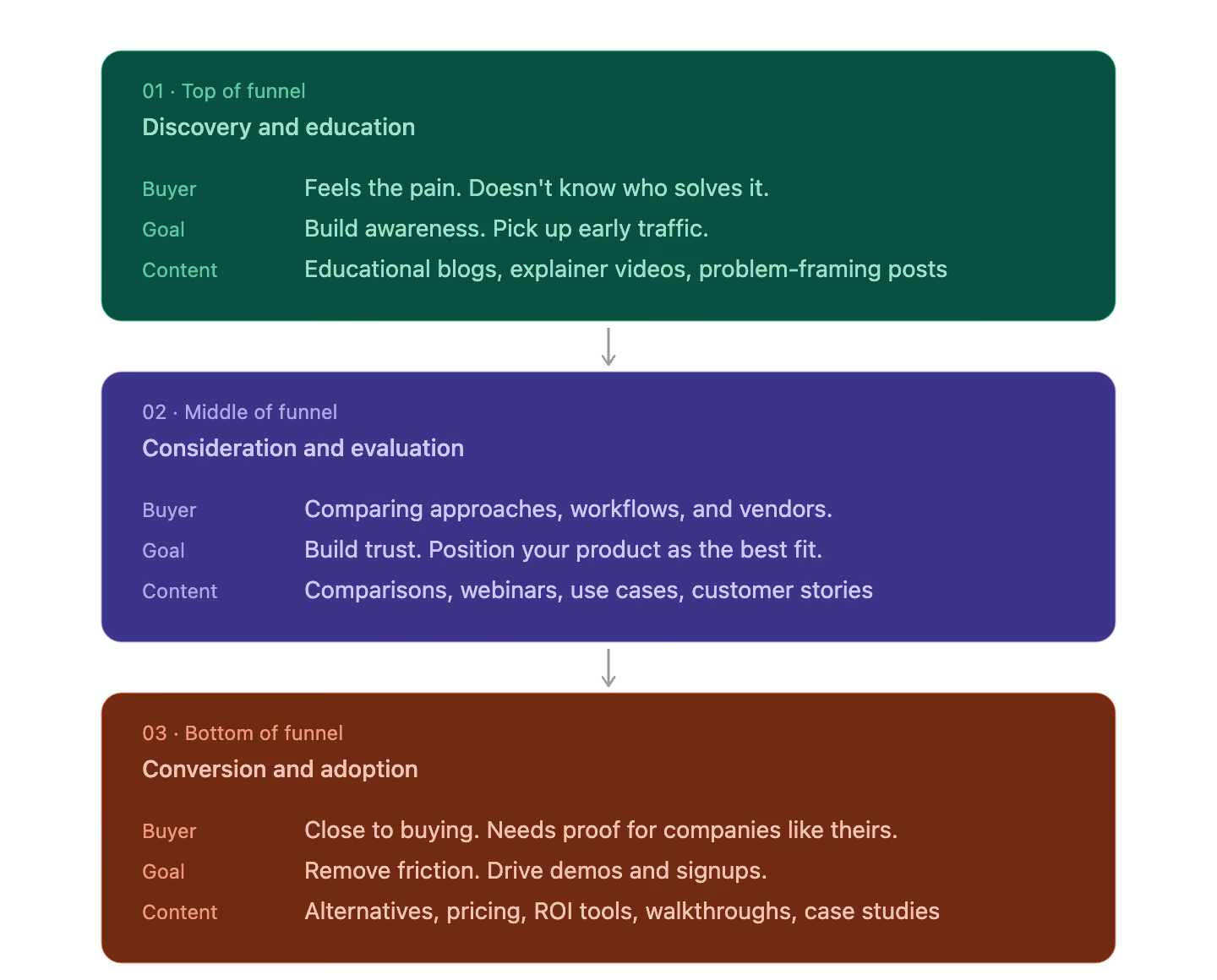
Top of Funnel (TOFU): Discovery and Education
Your buyer is experiencing a pain point. But, they don't know who solves it.
- Your goal: Build awareness around your solution and pick up this traffic
- Target content types: Educational blogs, problem-framing posts, and explainer videos
Middle of Funnel (MOFU): Consideration and Evaluation
At this stage, your buyer is comparing approaches, workflows, and vendors.
- Your goal: Build trust, reduce uncertainty, and position your product as the strongest fit
- Target content types: Comparison pages, use-case content, webinars, implementation guides, and customer stories
Bottom of Funnel (BOFU): Conversion and adoption
BOFU content is what builds your pipeline. Your buyer is close to buying. They need proof your product works for companies like theirs. Content alone doesn't close deals though, it needs to sit inside a coordinated SaaS marketing strategy to move pipeline reliably.
- Your goal: Remove friction, answer final objections, and drive demos or signups
- Target content types: Alternatives pages, pricing pages, ROI calculators, product walkthroughs, and case studies
{{protip="/pro-tips/saas-content-marketing-tip-1"}}
How to Build a SaaS Content Marketing Strategy
If you want the full planning framework before diving in, our guide to SaaS content strategy covers the six steps we use across all 45+ client engagements. At Scalerrs, we build content as a revenue system
Step 1: Nail Your ICP (and the Buying Committee)
Most SaaS companies write content for “their ICP”: singular. But a real buying committee has five or six decision-makers, each with a different objection. You need content for all of them, or you're leaving deals on the table.
Content that converts needs to account for these roles, their objections, and decision criteria. Our SaaS keyword research playbook optimizes for all of these, not just content calendars alone.
Steal our ICP to content-mapping cheat sheet:
{{protip="/pro-tips/saas-content-marketing-tip-2"}}
Step 2: Map Content to the Actual Buying Journey
Are you over-investing in awareness content because it’s easier to scale? You’re wasting capacity.
Buyers typically complete four jobs during the buying process: problem identification, solution exploration, requirements building, and supplier selection.
Each piece should naturally push buyers toward the next stage.
Step 3: Build BOFU Content Before TOFU Content
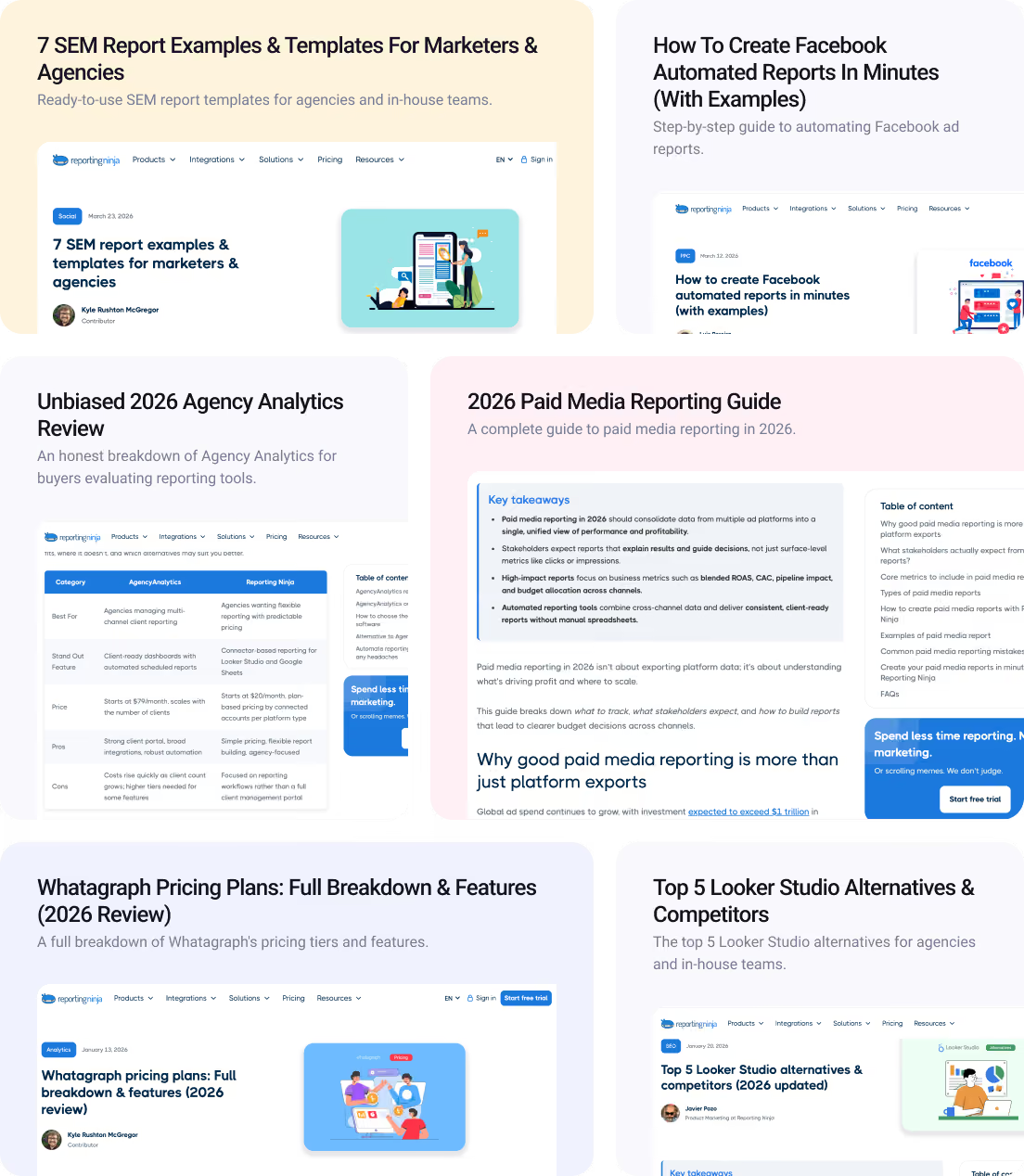
Bottom-of-funnel (BOFU) content converts because the buyer already knows they need a solution. We’ve seen these content types convert most when it comes to content marketing for software companies:
- “[Competitor] alternatives”
- “[Tool A] vs [Tool B]”
- “Best [category] software for [use case]”
- Pricing pages
- Migration guides
- Industry-specific use cases
{{protip="/pro-tips/saas-content-marketing-tip-3"}}
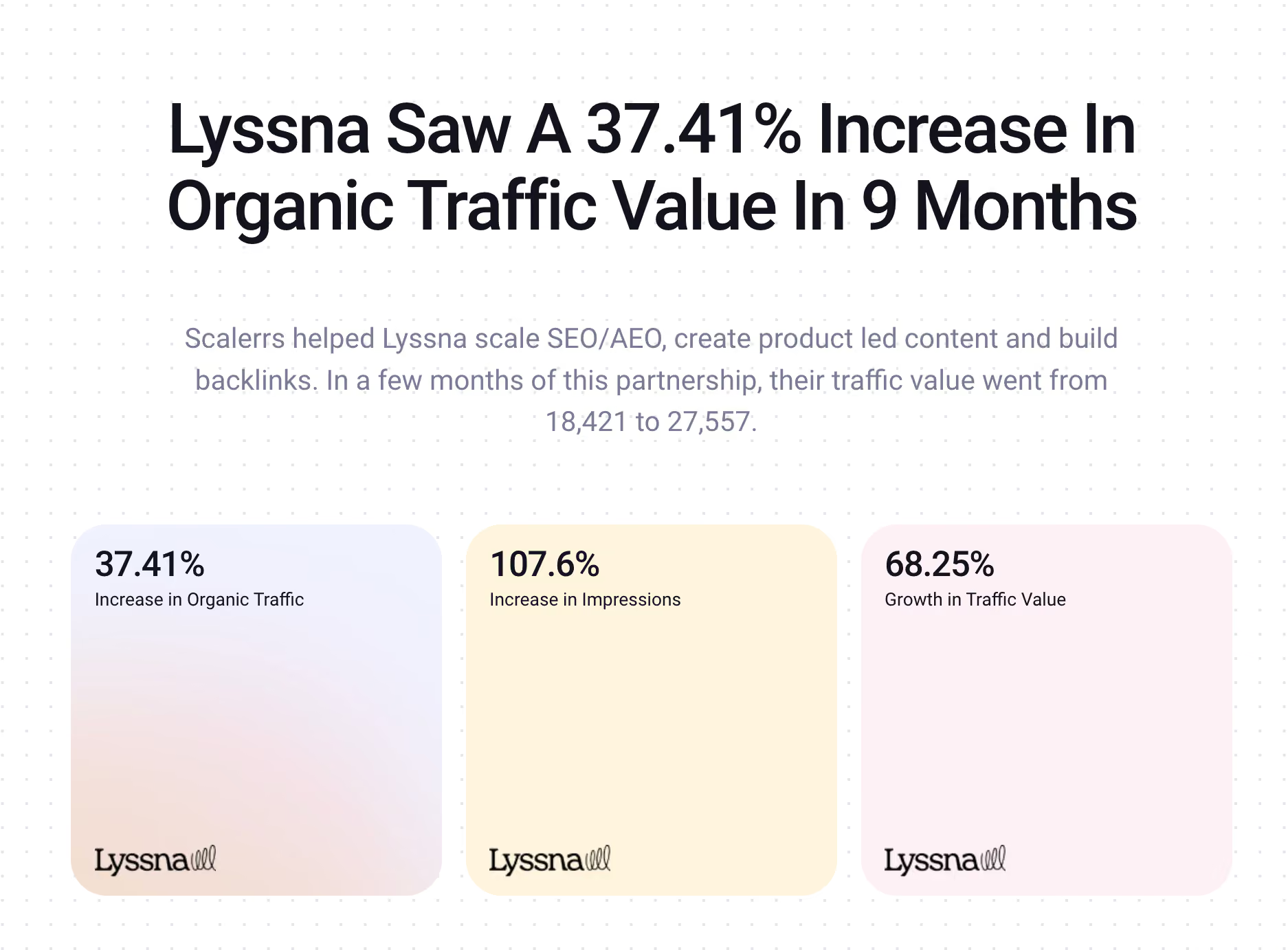
Over our engagement, monthly organic traffic grew 3x (from ~4.2K to ~12K) within four months, and its value increased from ~$19K to ~$50K/month.
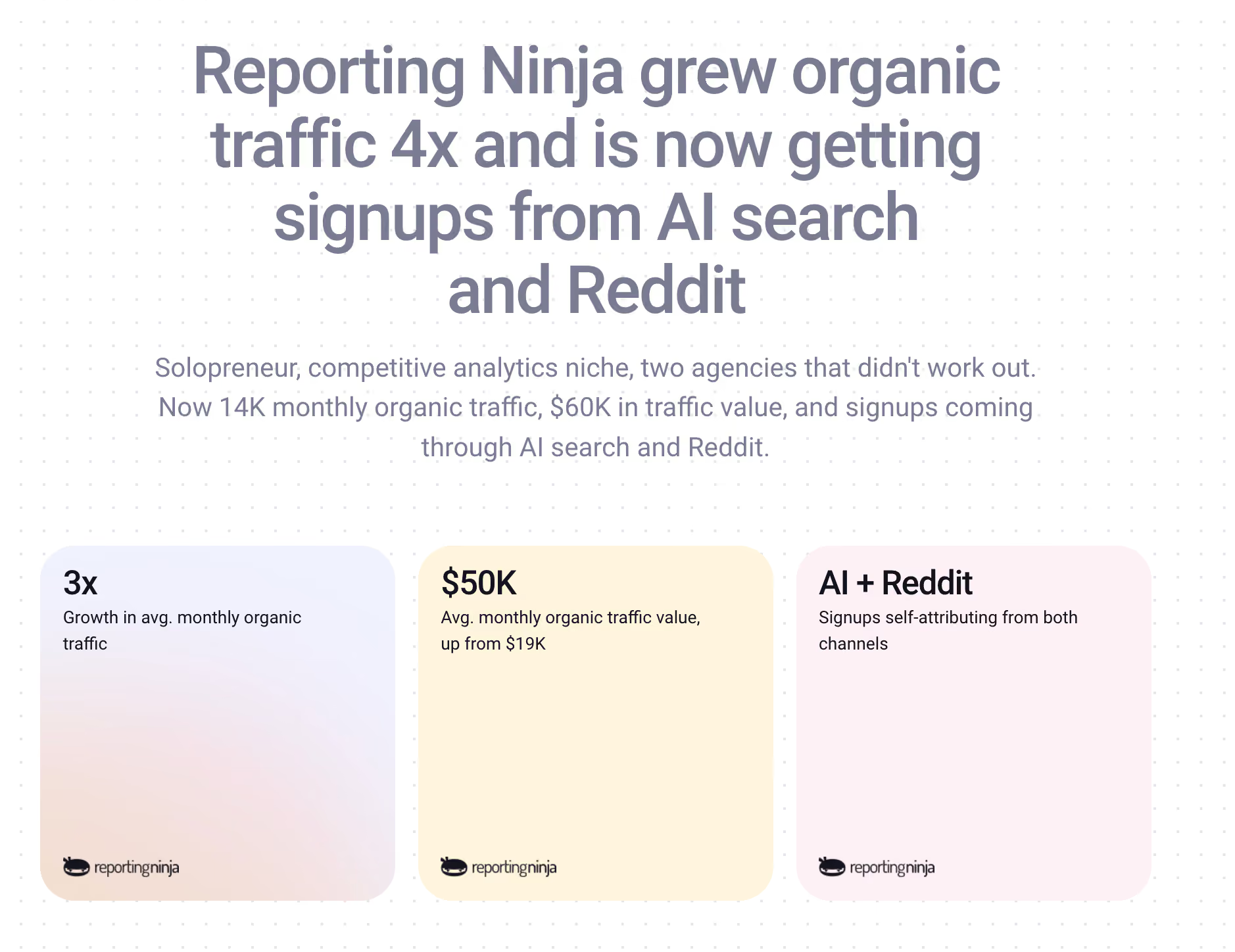
More importantly, signups started self-attributing from AI search and Reddit, where decision-makers were evaluating options. That’s the difference between traffic SEO and revenue SEO.
Once your BOFU layer exists, your TOFU content has somewhere meaningful to send buyers next.
Step 4: Create Content AI Can’t Commoditize
Only 22% of B2B marketers considered their content marketing “very successful.”
Thanks to AI, there’s more content than ever—and less differentiation than ever. Your content needs texture that’s harder for AI-generated commodity content to replicate.
So now the moat is no longer “who publishes most.” It’s:
- Original insights
- Strong opinions
- Proprietary data
- Customer proof
- Distribution
- Community presence
- Real workflows and experiences
{{protip="/pro-tips/saas-content-marketing-tip-4"}}
Step 5: Build Distribution alongside Content Creation
Nearly six in every ten Google searches end without a click.
Your buyers increasingly consume information without ever visiting your website. That’s why the SaaS brands growing fastest are showing up across multiple surfaces—from YouTube and Reddit to LinkedIn and LLMs.
{{protip="/pro-tips/saas-content-marketing-tip-5"}}
Step 6: Optimize for Google and LLMs
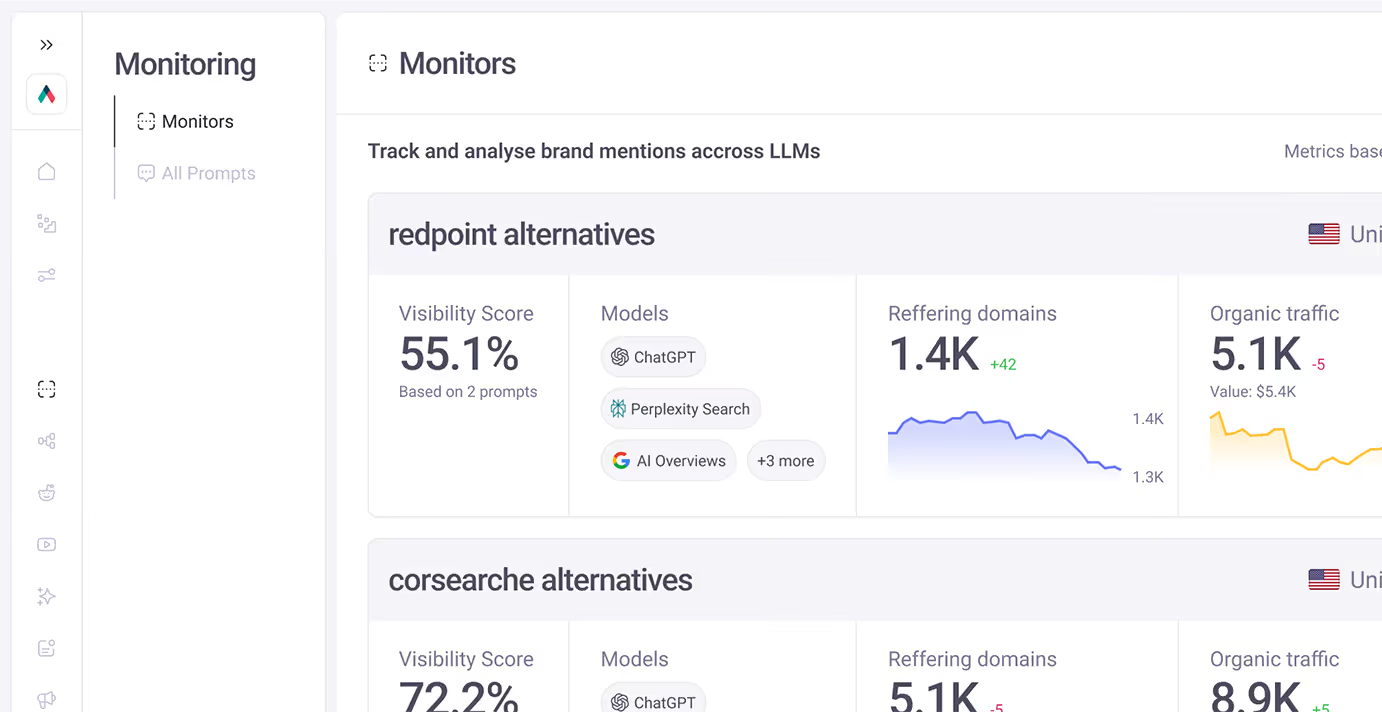
The SaaS brands we see compounding fastest are owning their product category across every surface a buyer might use, appearing in AI overviews, surfacing in Reddit threads, cited on G2, and showing up in YouTube results. When a buyer searches your category anywhere, your brand should be part of the answer.
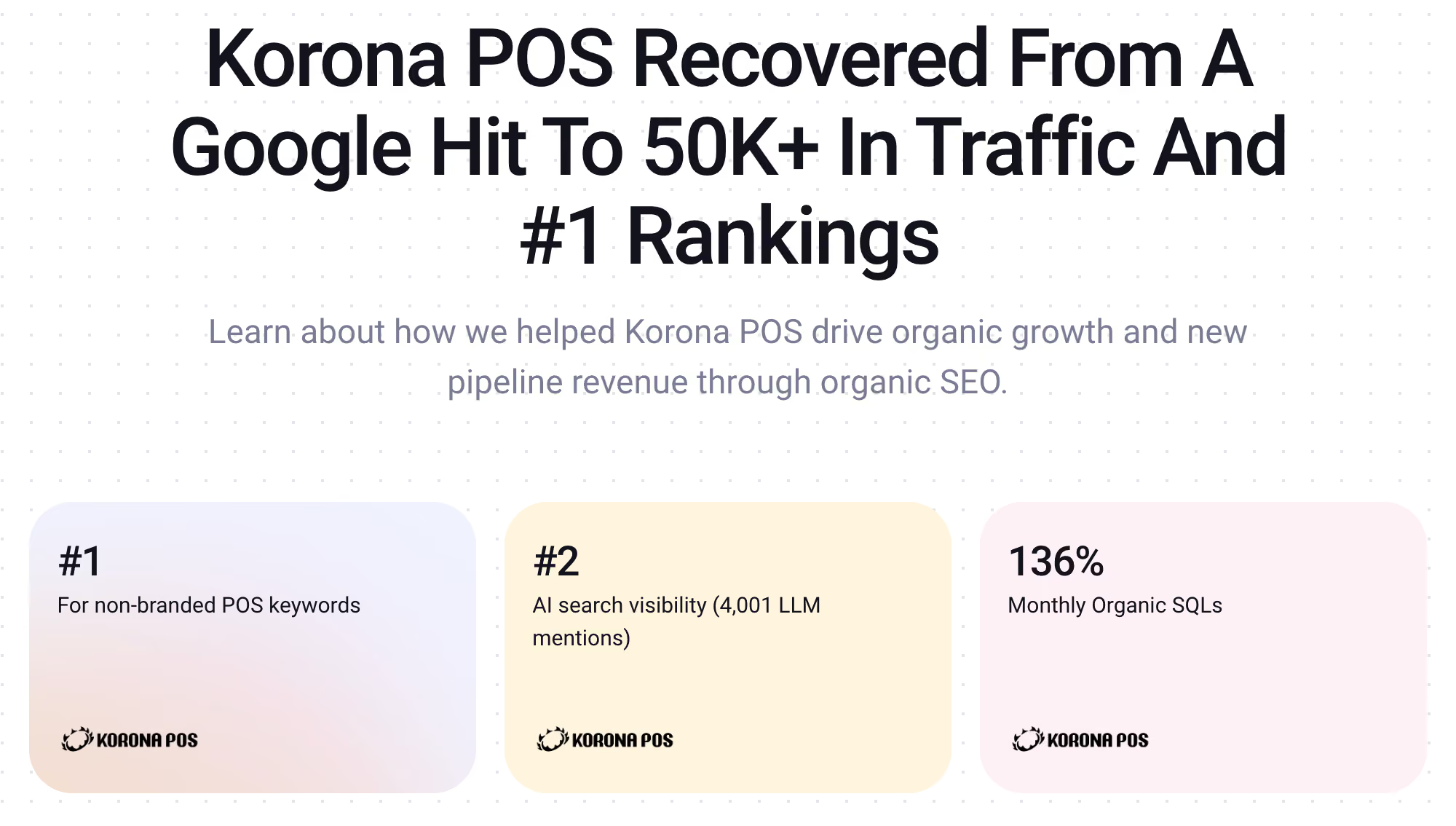
That’s the strategy we chose for Korona POS, a point-of-sale platform competing against Square, Shopify, and Lightspeed. We combined SaaS SEO, AEO, Reddit marketing, and link building around high-intent comparison and alternatives keywords.
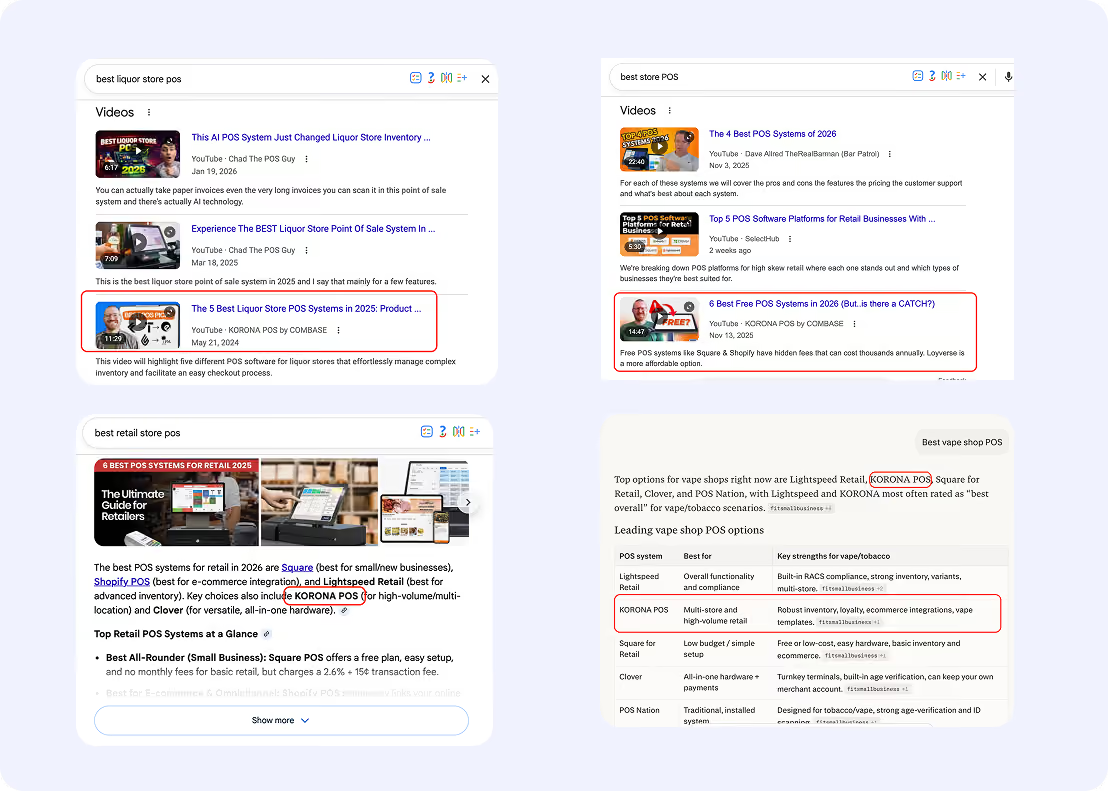
The results:
- Ranked #1 for non-branded POS keywords against Square and Shopify
- Reached #2 in AI search visibility with 4,001 LLM mentions
- Earned citations in Google AI Overviews
{{protip="/pro-tips/content-marketing-tip-6"}}
The key difference to note here between Google SEO and LLM optimization: LLMs synthesize answers. If your content isn’t cited by other sources (Reddit threads, G2 reviews, YouTube transcripts, Wikipedia), you don't exist in that answer. Traditional SEO gets you a blue link. AEO gets you cited as the source of truth.
Step 7: Pull Content Ideas Directly from Sales Conversations
The best SaaS content programs pull directly from:
- Gong call transcripts
- Customer onboarding questions
- Win/loss analysis
- Support tickets
- Reddit discussions
- G2 reviews
These are the only sources that contain language your buyers actually use, not the language you assume they use. Keyword tools can't replicate that.
That’s where truly differentiated content comes from.
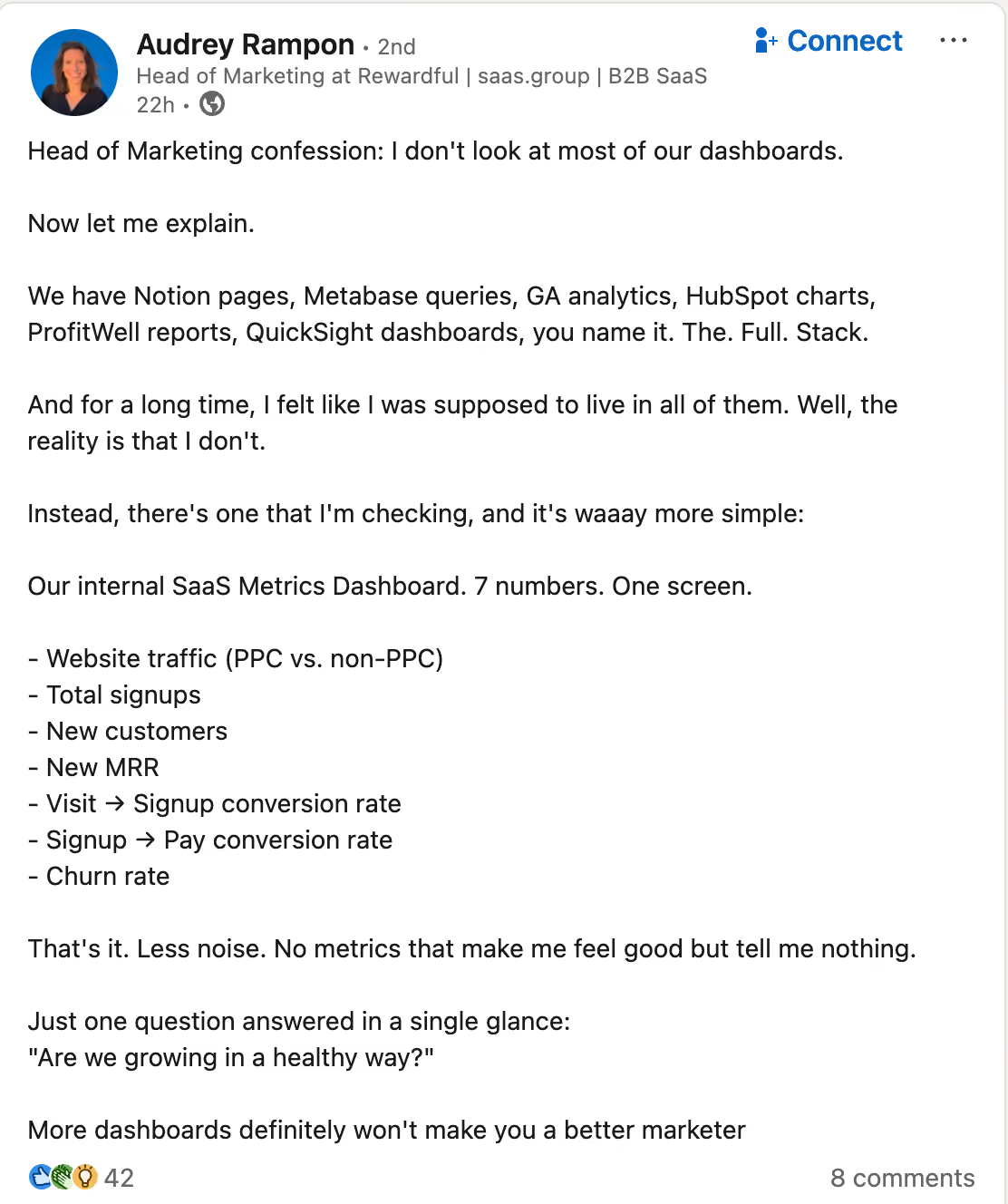
Step 8: Measure Pipeline, Not Just Traffic
Traffic alone tells you almost nothing about content ROI. Especially in SaaS.
These metrics matter more:
- Pipeline influenced
- Demo requests
- Self-attributed attribution
- Branded search lift
- AI citation visibility
- MQL and SQL quality
- Conversion rates by content type
Experts agree:
{{protip="/pro-tips/saas-content-marketing-tip-7"}}
How to Structure SaaS Content for User Signals and LLMs in 2026
Publishing good content isn't enough anymore. Google and LLMs are now evaluating how users engage with it.
If people land on your page and bounce immediately, Google takes note. If they stay, click through, or take action, that's a positive signal.
Your content needs to earn these five signals to matter:
- Page interaction: Are users clicking, scrolling, and engaging with your content?
- Dwell time: Are they staying long enough to actually read it?
- Goal completion: Are they taking the next step (signing up, clicking to another article)?
- Speed to value: Are they finding what they came for fast?
- No pogo sticking: Are they going back to Google to find a better answer?
For LLMs, the problem is slightly different. LLMs don't crawl your site; they retrieve context from web content, pass it through a reformulation model, and synthesize a summary. This means your content needs to be extractable. Clear structure makes LLMs' job easier. Walls of text get skipped.
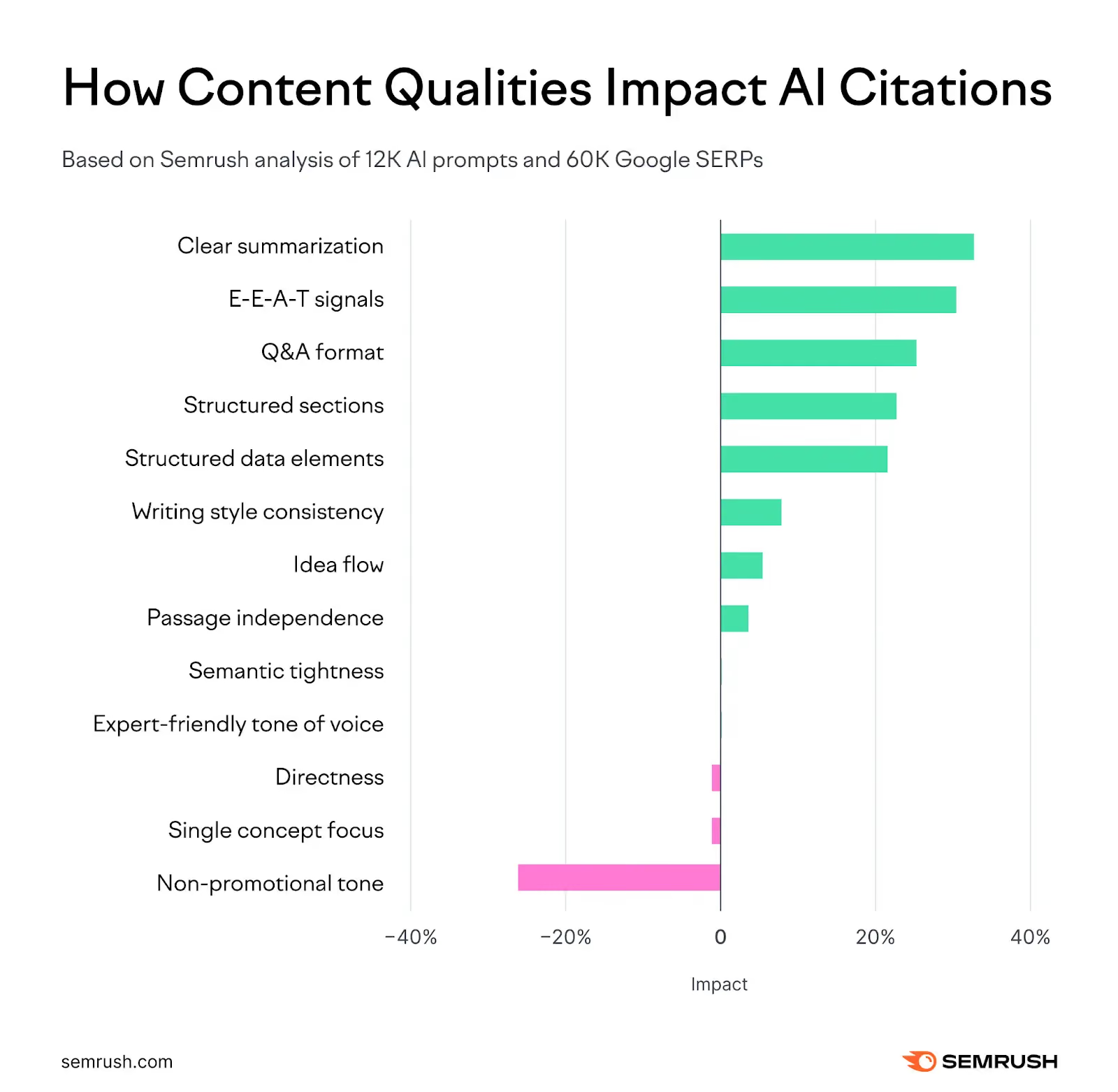
In our experience, these tips work best for structuring SaaS content:
Write with the Inverted Pyramid
Start with the most important point. Follow with context, reasoning, and examples.
Every section of your article should open with the answer. Nice-to-have details come after. This improves dwell time (readers get value fast and stay to learn more) and LLM citations (Semrush's content optimization study shows LLMs pull from the first one to two sentences of a section more than the rest).
Add a Key Takeaways Box at the Top
A Key Takeaways box at the start of the article addresses the reader's search intent in seconds. This improves speed to value, reduces pogo sticking, and earns AI citations because the summary is easy to extract. Notice how we’ve done it for this article, too.
Keep Intros Short and Specific
Long-winded intros kill dwell time before the reader even reaches your content. Open with the MIP (Most Important Point), follow it with a specific stat or result, and close with a preview of what's coming.
Use Structural Elements That Break Up the Page
Callout boxes (Pro Tip, Common Mistake, Did You Know), comparison tables, and product screenshots all count as visual breaks. They serve two purposes at once: improving readability for humans and improving extractability for LLMs. Again, this article is a good example of implementing them!
Match Content to What the User Actually Came to Do
Goal completion is a ranking signal. If a user searches "how to choose project management software" and your page just explains what project management software is, they'll bounce. They came for a decision framework, not a definition.
One way to think about it: does your content help the reader complete the task that led them to the search? If your article sends buyers to a comparison page, a demo request, or a deeper guide, you're completing the journey. If it just ends, you're not.
{{protip="/pro-tips/saas-content-marketing-tip-8"}}
Use Internal Links to Signal Topical Authority
Internal links aren't just for SEO. They're signals to both Google and LLMs that your site is the authoritative home for a topic. Link to relevant content naturally. Use descriptive anchor text (five words or fewer). Most importantly, don't force it.
Want Scalerrs to audit your SaaS content audit for stronger user signals and AI retrieval?
Best Channels for SaaS Content Marketing in 2026
The days of single-channel content marketing for SaaS are over. Your B2B SaaS content marketing strategy needs to account for platforms outside traditional search engines.
Owned Blog Optimized for SEO and AEO
Your blog has to rank in Google AND get cited by LLMs. Comparison pages, use case pages, and original-research content do the conversion lifting.
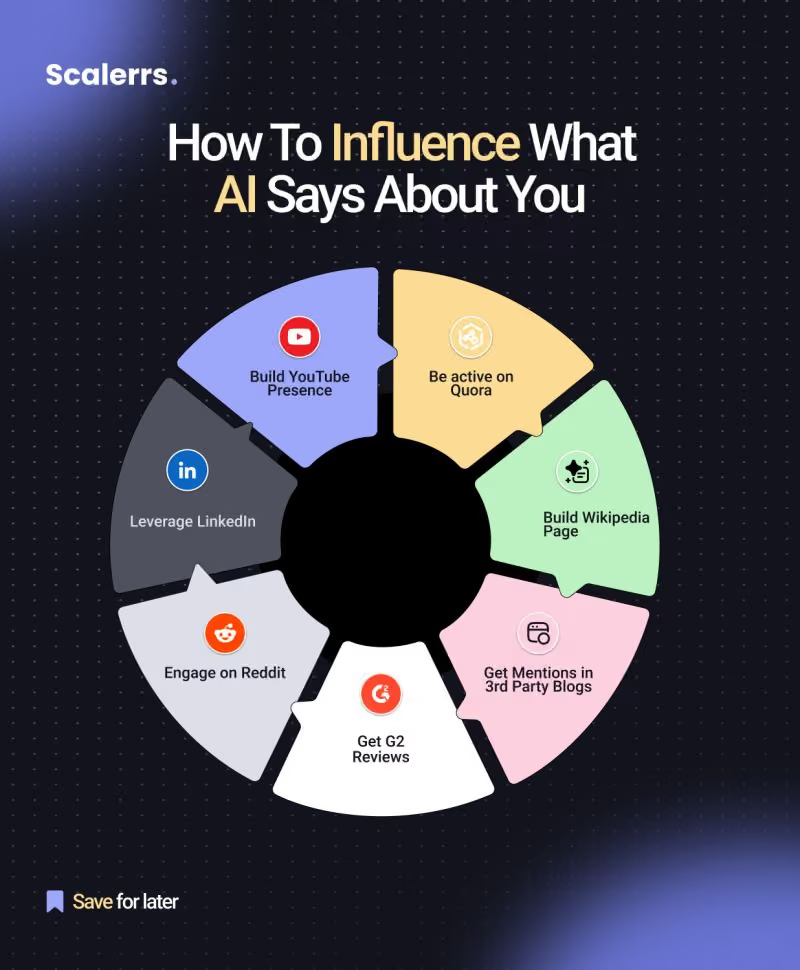
Authentic participation in subreddits builds buyer trust and feeds AI citations. Run Reddit SEO without spam or fake accounts.
{{protip="/pro-tips/saas-content-marketing-tip-9"}}
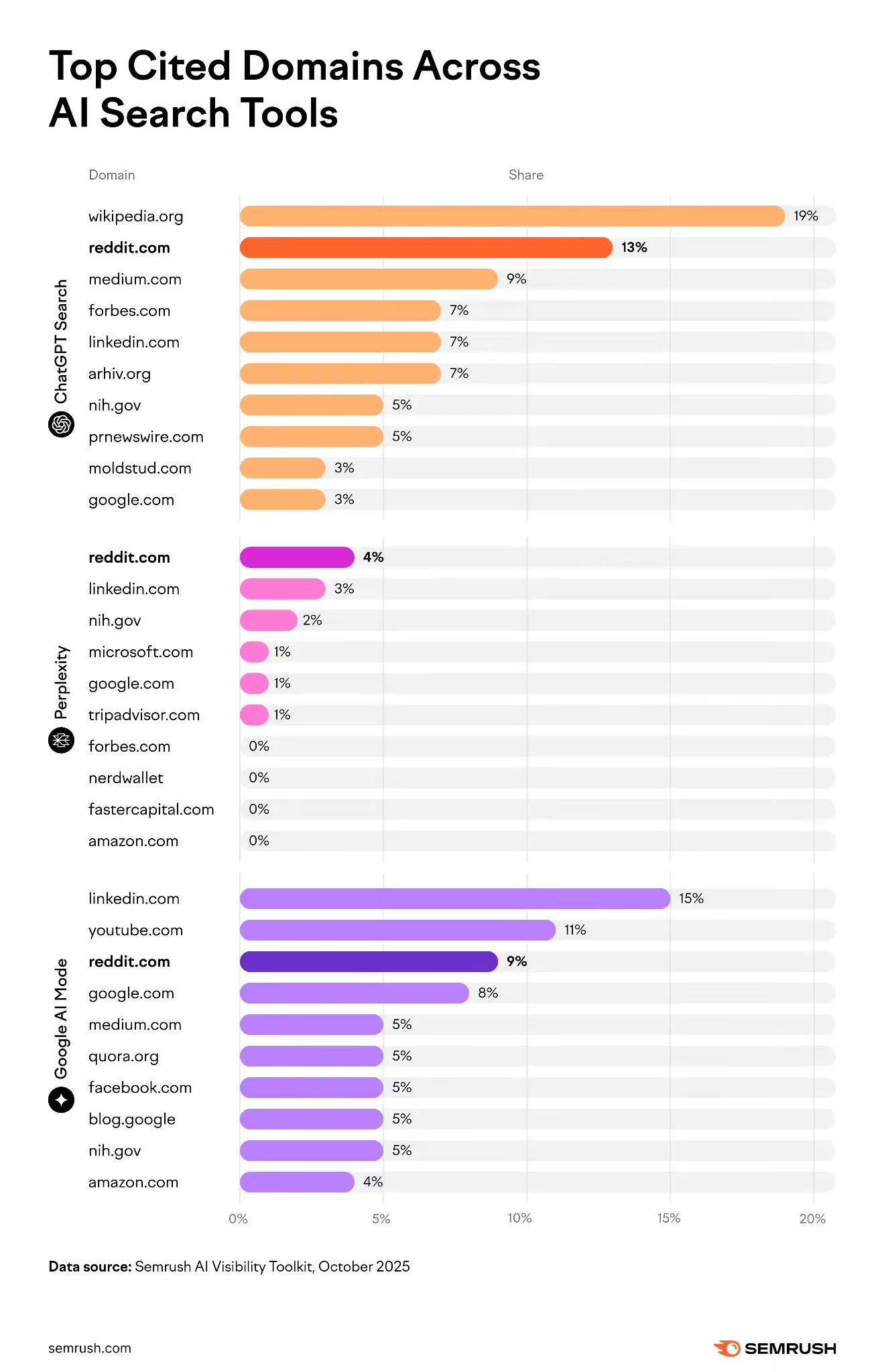
YouTube
Videos rank in Google carousels, feed AI transcripts, and outlast most text. Demo walkthroughs, vs videos, and tutorials hit BOFU intent. YouTube SEO for SaaS is underused.
The SaaS brands doing this best aren't just uploading product demos. They're treating YouTube like a second search engine and building content around the keywords their buyers actually type.
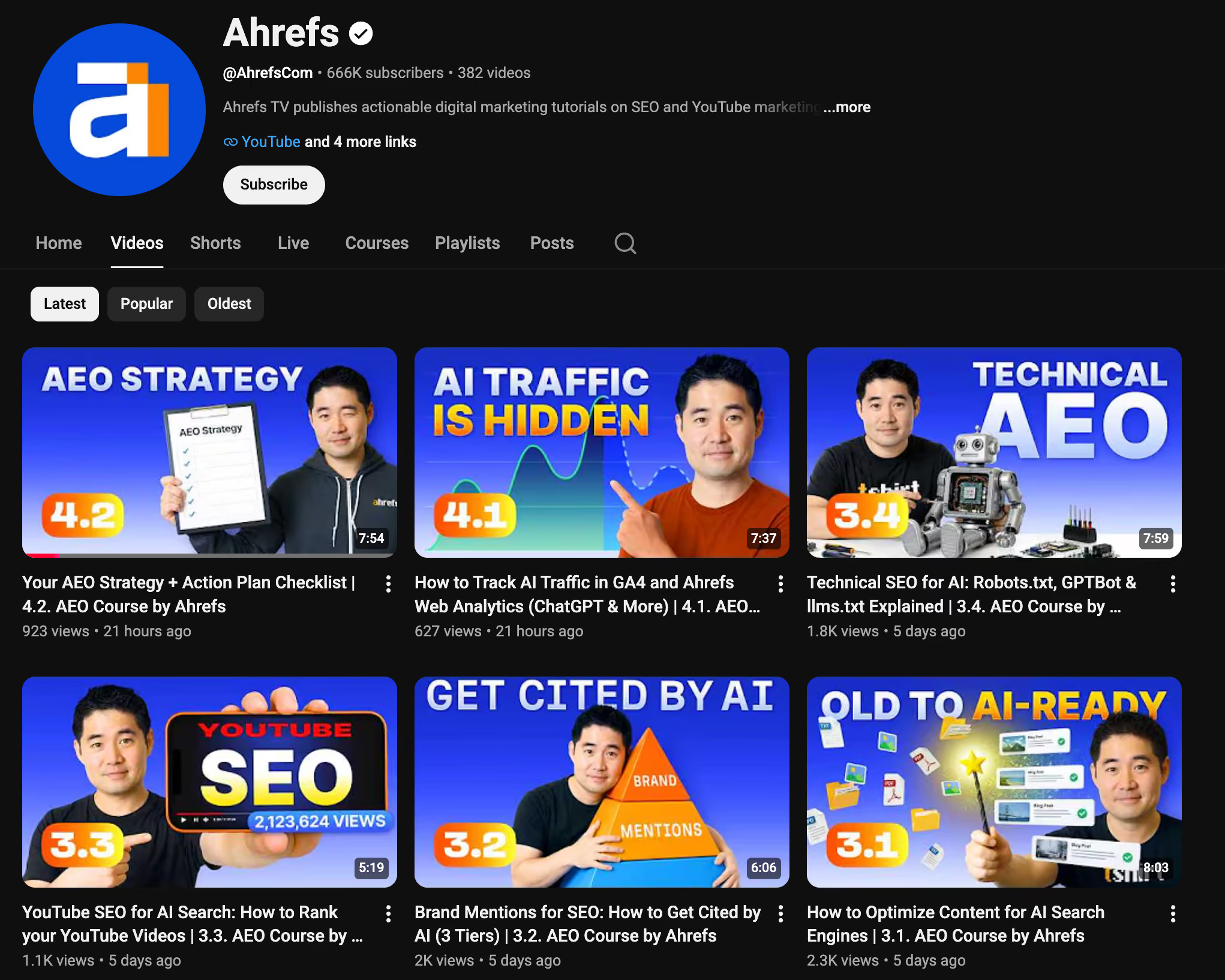
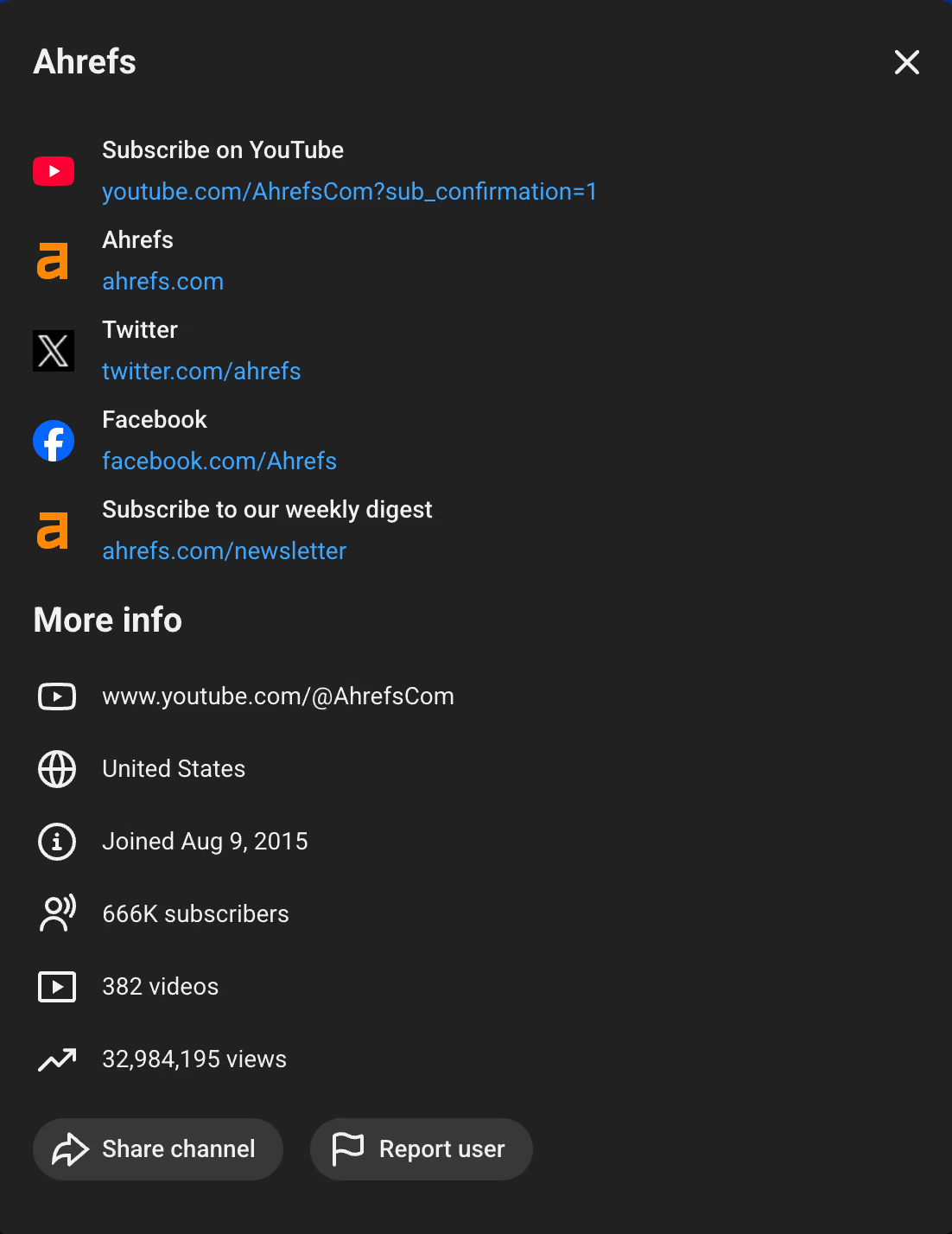
Ahrefs is one of the biggest examples of brands following this strategy. Their YouTube channel, Ahrefs TV, has crossed 660K subscribers and generated 32M+ organic views since launch.They publish SEO and marketing tutorials that target specific search queries in YouTube's own search engine. Every video functions as a top-of-funnel acquisition channel, pulling prospects into their product ecosystem.
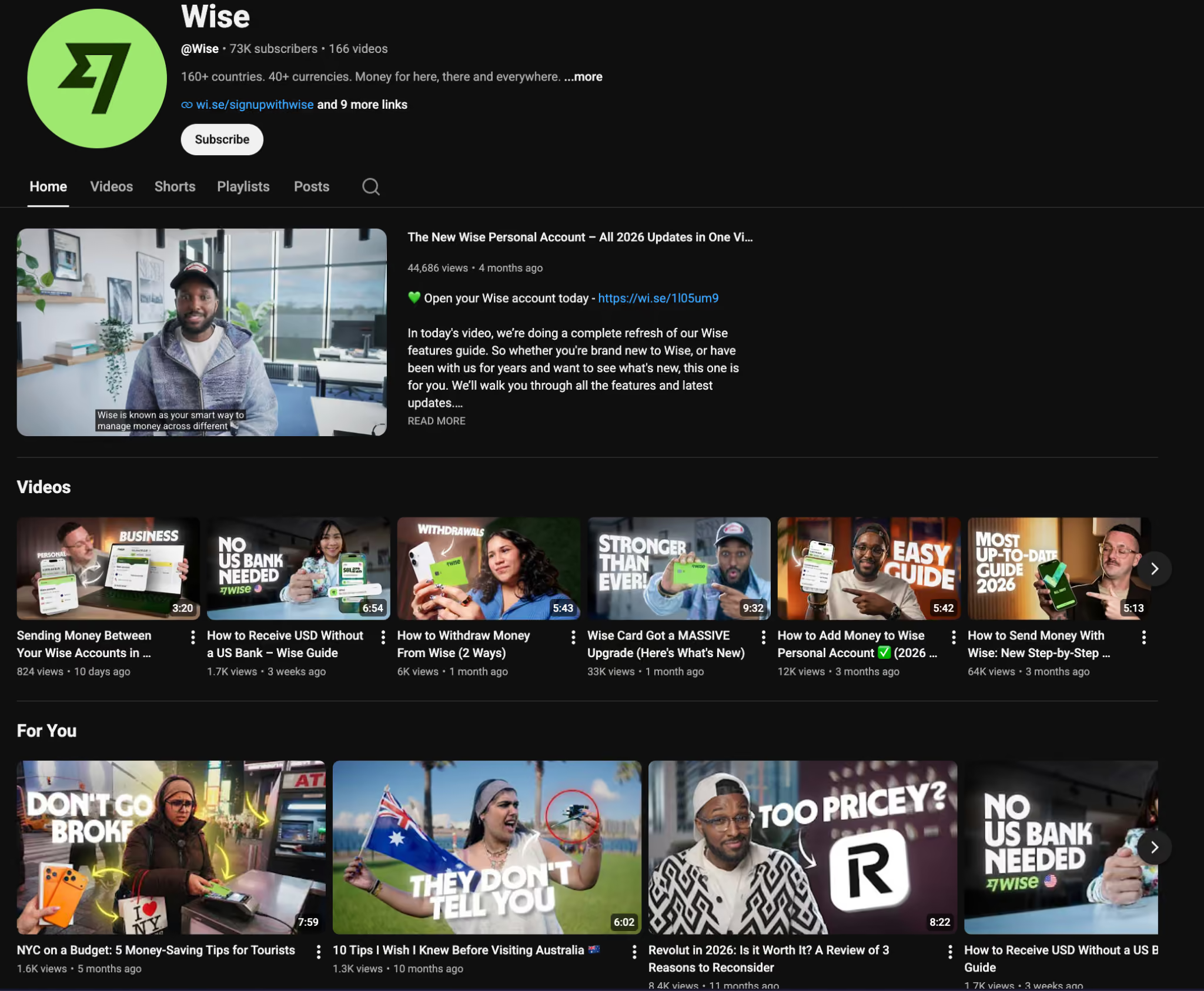
Wise, the fintech platform, takes a different angle. The Wise YouTube channel is a strong example of a fintech brand using YouTube as a trust and lifestyle channel rather than a traditional product marketing engine.
Instead of focusing heavily on app features or exchange rates, Wise publishes content around moving abroad, international work, travel, and managing money across borders. These topics that naturally attract their target audience: expats, freelancers, remote workers, and global professionals.
Their videos feel more like mini-documentaries or creator-led lifestyle content than fintech ads, helping the brand build long-term trust and emotional relevance while steadily capturing evergreen search demand around international living and cross-border finance.
Third-party Reviews and Listicles
Third-party review platforms are no longer a nice-to-have for SaaS buyers. They're the first stop.
G2's 2024 Buyer Behavior Report found that public product review sites have become the single most consulted information source for B2B software buyers. They were referenced by 31% of buyers, up from just 13% in 2021. A separate Clutch study found that 94% of B2B buyers have used an online review to help make a purchase decision.
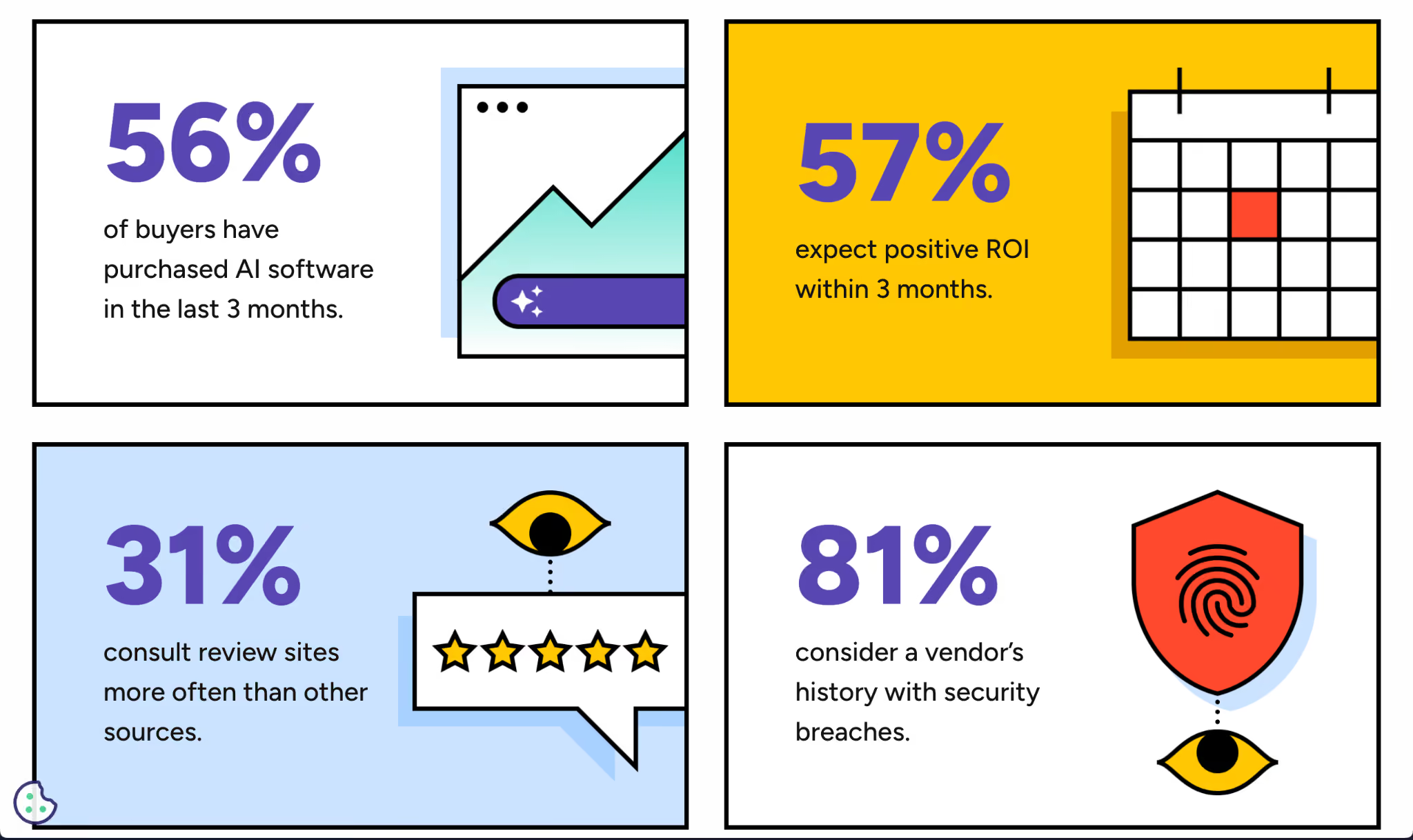
Why that matters for your content strategy: LLMs are already pulling from these platforms. When a buyer asks ChatGPT to recommend a category of software, the AI synthesizes data from G2 reviews, Reddit discussions, and listicles.
More reviews on G2 means higher organic rankings within G2's own search—which drives more buyer traffic to your profile without ad spend. And G2 profiles now feed directly into AI recommendation engines. Your review count, recency, and sentiment all become inputs in AI-generated software recommendations.
The same logic applies to "best of" listicles. Appearing in the top three of a high-authority "best [category] software" article earns you backlinks, brand mentions, and AI citations simultaneously.
Want Scalerrs to manage your presence across G2, high-authority listicles, and AI citation sources?
SaaS Content Marketing Examples
Here are playbooks from SaaS companies that drove massive brand equity and pipeline through scaled content marketing:
SEO: Monday.com
What they did: Built hub pages for every keyword type SaaS buyers search (products, industries, templates, alternatives, comparisons), tightly cross-linked into topic clusters Google can crawl in a single pass. Then released forms.monday.com. Every form a customer creates and embeds on their site is a live backlink back to Monday.
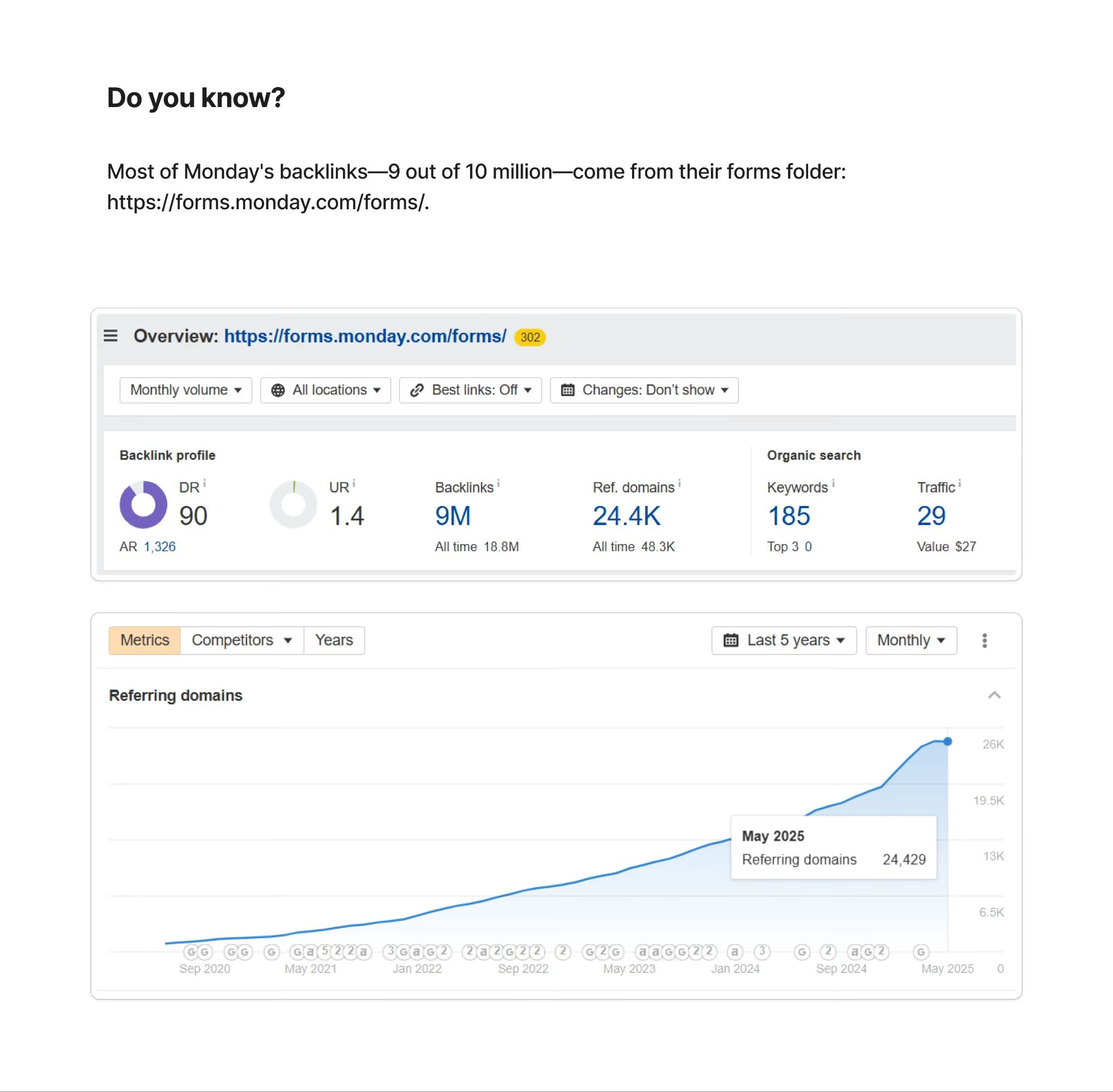
Results: 624K monthly organic visits, 194K ranking keywords, $1.3M monthly traffic value at DR 90. About nine in every ten of Monday's backlinks come from one folder: forms.monday.com.
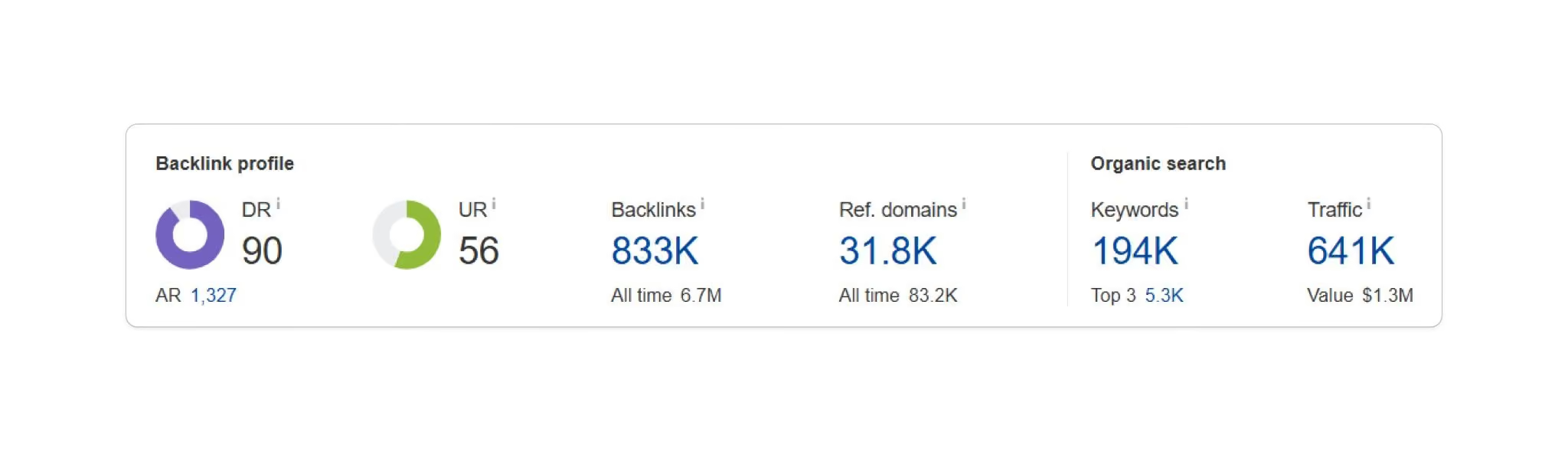
Why it worked: Hub pages capture intent at every funnel stage, not just BOFU or TOFU. And a form's product is naturally shareable. Every use case requires the form to live somewhere public.
Lesson: Build content surface for every keyword type your buyers search. Then ship at least one product feature that creates shareable, public artifacts. That's where the link-building flywheel starts.
{{protip="/pro-tips/saas-content-marketing-tip-10"}}
Product-led content: Canva
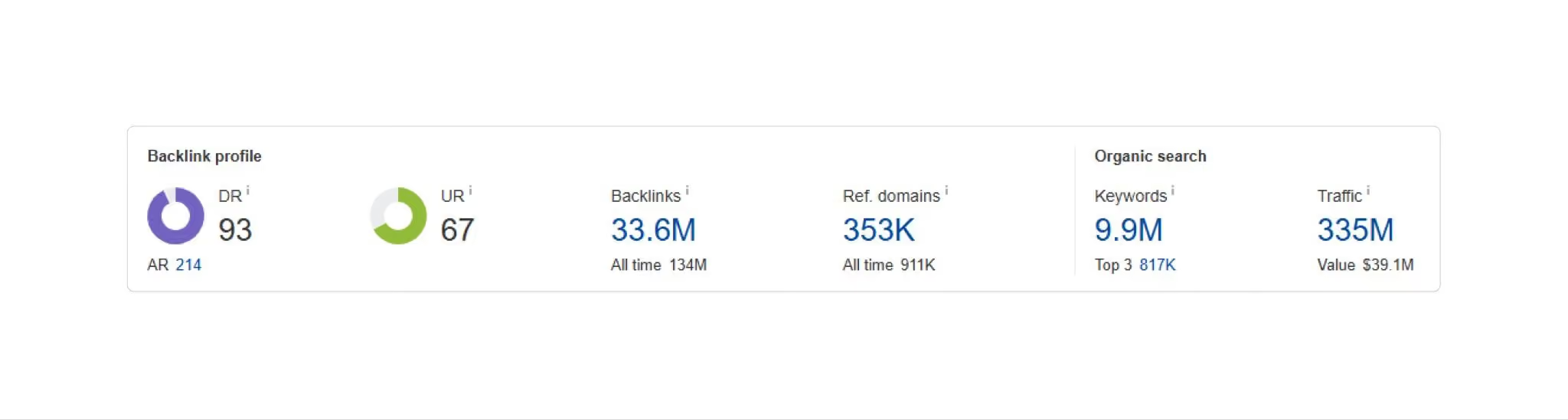
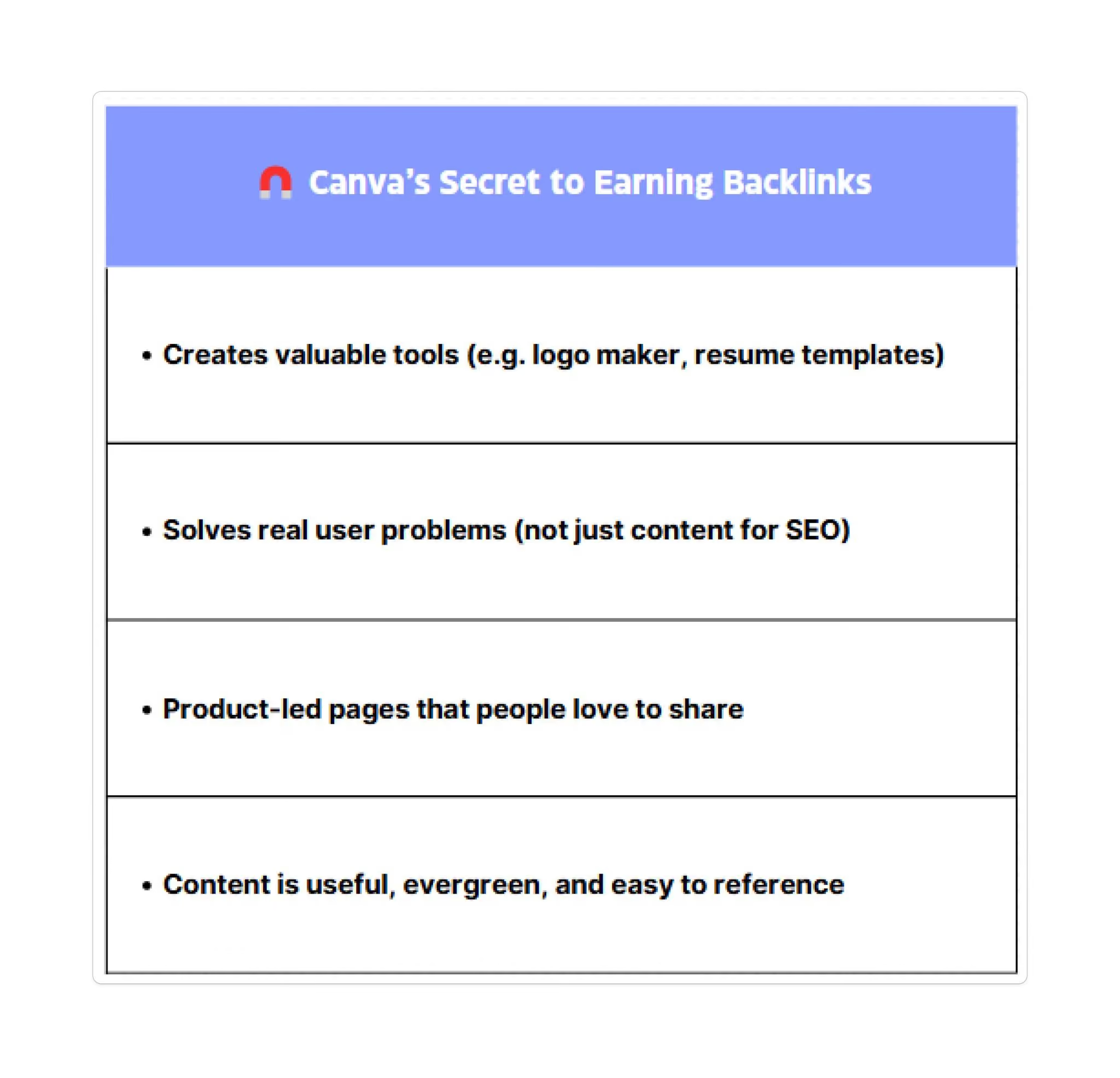
What they did: Built product-led landing pages where the tool itself ranks for the search query (AI image generator, photo enhancer, logo maker, resume templates). Localized those pages across 100+ languages. Then acquired SEO-rich properties like Pexels, Pixabay, Smartmockups, and Kaleido AI, redirecting or linking them back to canva.com.
Results: 335M monthly visits, 9.9M ranking keywords, $39.1M monthly traffic value at DR 93. The AI image generator page alone pulls 4M monthly visits.
The multilingual folders—Portuguese and Spanish alone—also bring in 22M and 20M monthly visits respectively.
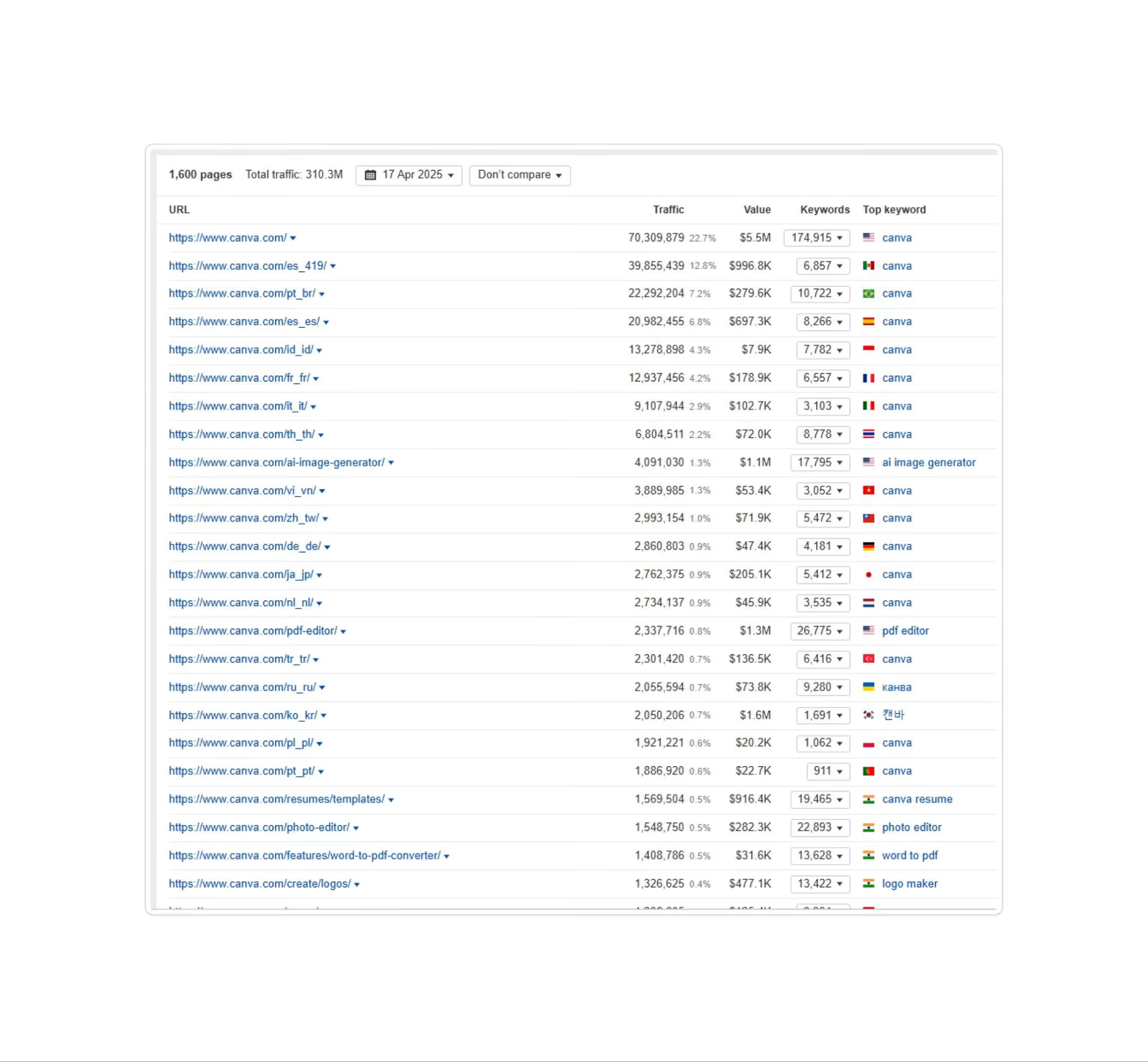
Why it worked: Someone Googling "AI image generator" wants to use one, not read about one. Canva's tool is the answer. Multilingual scaled because design needs are universal but page copy is light. Acquisitions absorbed existing SEO authority faster than building it organically would have.
Lesson: If your product can directly answer a search query, build a product-led landing page, not a blog post. Once your English playbook works, localize aggressively. And don't ignore acquisitions as an SEO move.
{{protip="/pro-tips/saas-content-marketing-tip-11"}}
YouTube: Ahrefs
What they did: Treated YouTube as a second search engine (not a video hosting platform) and built "Ahrefs TV", publishing SEO and marketing tutorials that target specific keywords buyers search on YouTube. Sam Oh, VP of Marketing at Ahrefs, became the face of the channel. Every video follows a structured keyword-driven approach: pick a specific query, deliver the answer fast, optimize for watch time.
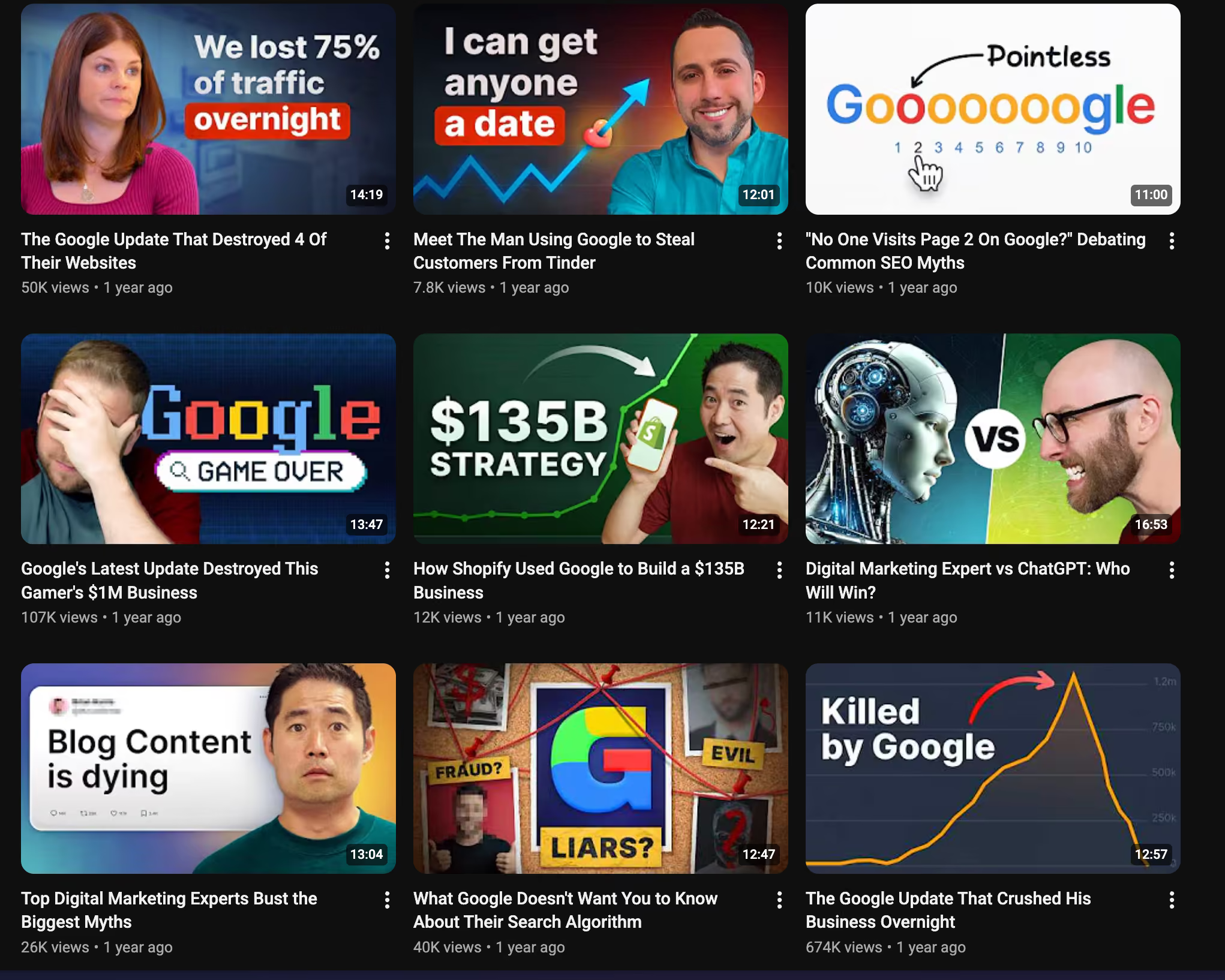
- Thumbnails follow a deliberate formula, too: bold, human, and slightly provocative (examples: "Blog Content is Dying," "No One Visits Page 2 on Google," "We Lost 75% of Traffic Overnight")
- Titles are high-curiosity and slightly controversial, building on strong outcomes, counterintuitive claims, or punchy questions
- Each video hooks with a challenge or loss, then shows what Ahrefs learned from the situation
Cross-promotion is built into the system:
- Every new video triggers an in-app notification to Ahrefs users within hours of release
- An email blast goes out within 24-48 hours
- The video gets shared across social channels the same day
- Ahrefs' blog posts embed matching YouTube videos where topics align
- They've also invested over $1M in creator partnerships (Matt Diggity, Authority Hacker, and others in the SEO and SaaS space) for trust-driven education, as opposed to direct selling
Results:
- 660K+ subscribers. 320 million lifetime organic views on the main English channel.
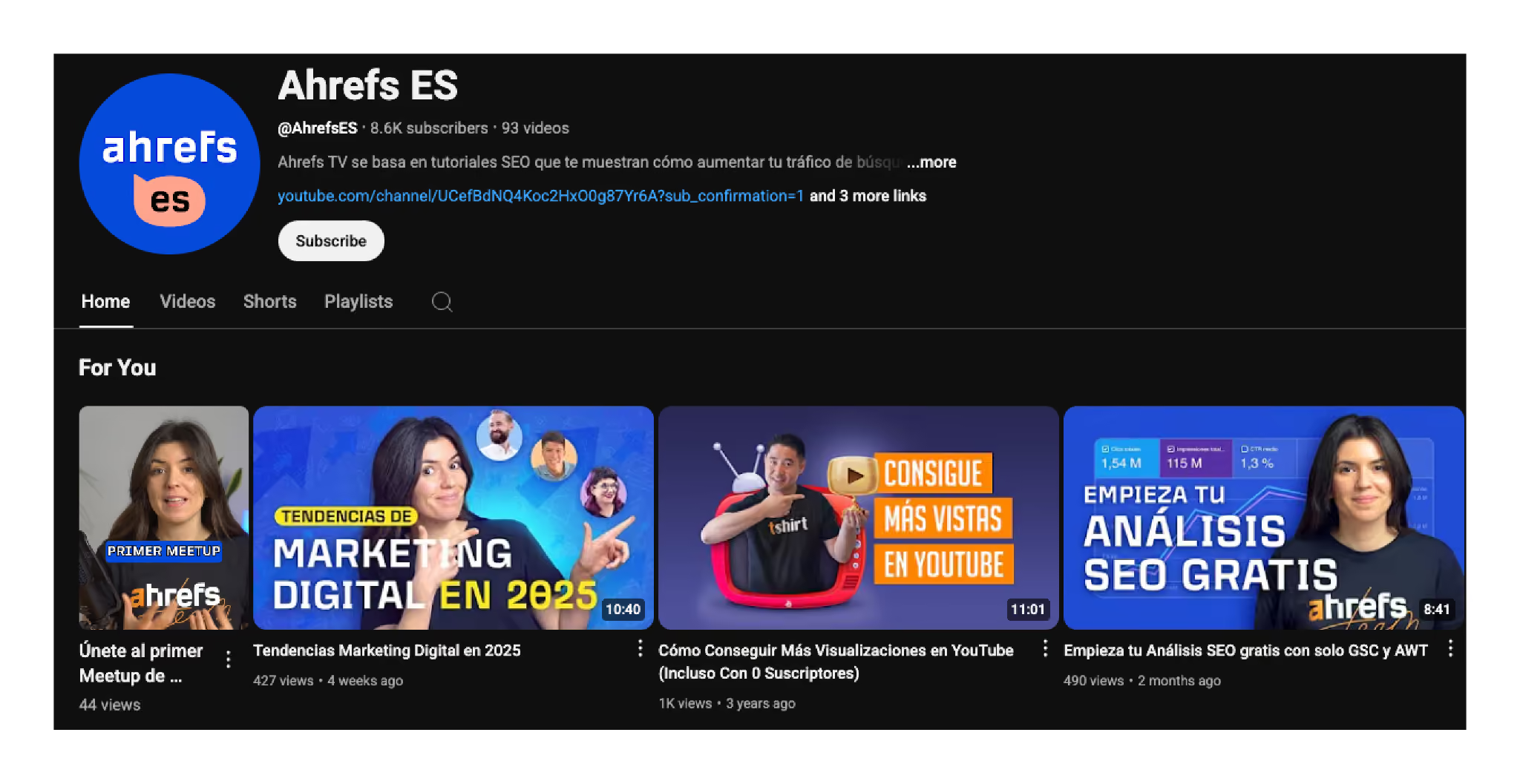
- A Spanish-language channel (AhrefsES) expanding the audience with localized content
- Ahrefs' podcast launched in Season 4 (hosted by CMO Tim Soulo) and crossed 29.48 million total views
- Blog embeds alone generate ~275K additional video views per year — without running a single ad
Why it worked: Ahrefs made YouTube into a customer education and acquisition channel. Every video teaches a skill their ICP wants, shows data that proves the lesson, and naturally reinforces why the Ahrefs product exists. The channel functions as a top-of-funnel acquisition channel that pulls organic traffic into Ahrefs' product flywheel without paid spend.
Lesson: YouTube content that targets specific search queries compounds like blog SEO. Start with the bottom-of-funnel queries first (how to do X with [product category]), then move up. Don’t forget to cross-promote across every channel you own. The distribution system matters as much as the video itself.
Key SaaS Content Marketing KPIs
Skip the traffic dashboard. Three metrics survive a board review.
SEO and AEO-Attributed Pipeline
Tie organic and AI-search leads to closed-won revenue. Self-attribution surveys ("How did you hear about us?") and CRM tagging go a long way. Multi-touch attribution platforms like Factors.ai, HockeyStack, or Dreamdata can help connect SEO and AI-driven discovery to actual pipeline and revenue, especially as more buyers begin their research inside ChatGPT, Perplexity, and AI-powered search experiences.
AI Citation Share of Voice
Closely track how often your brand surfaces in ChatGPT, Perplexity, and AI Overviews against named competitors. Tools like Profound track AI citation data at scale. Their analysis of 30 million AI citations between August 2024 and June 2025 found Reddit to be the most-cited source across major LLMs.
Branded Search Lift
When SEO and AEO compound, branded search rises. Buyers who see you in ChatGPT later Google your name. If branded search isn't trending up quarter over quarter, top-of-funnel isn't compounding.
FAQs
1. Is SaaS content marketing still worth investing in for 2026?
Yes. Strong SaaS marketing content keeps driving traffic, demos, AI citations, and branded searches long after it’s published.
2. How long does content marketing for SaaS companies take to show results?
It depends. Most SaaS companies with an established domain see meaningful pipeline movement at four to six months. Lower-DR companies should plan for six to nine.
3. How is content marketing for software companies different from regular content marketing?
Three ways: longer sales cycles, more stakeholders per deal, revenue attribution. Generic content marketing optimizes for traffic. SaaS optimizes for pipeline.
4. Should we hire in-house or work with an agency?
It depends. In-house gives control and product context. Agencies add speed, specialized expertise, distribution systems, and broader SaaS experience. Compare in-house vs agency models before deciding, and shortlist from the best SaaS content marketing agencies if you lean toward outsourcing.
Build a SaaS Content Machine That Converts with Scalerrs
If your content program is generating traffic but not pipeline, the strategy isn't broken — the targeting is.
Scalerrs works with 45+ SaaS companies to build content that ties directly to ARR while adapting playbooks for AI search by building SaaS content strategies around revenue impact, AI visibility, and buyer-stage intent.
Book a free strategy call to see how we can help.
Book a Discovery Call
Turn Organic Search Into Your #1 SaaS Acquisition Channel.

Let us scale your SEO channel for you.
reviewed onClutch
4.9 rating







Get Free Resources In Your Inbox
Get all of our FUTURE playbooks such as Figma files, checklists and SOPs directly into your inbox.

.avif)