


SaaS FAQ Page SEO Optimization Guide & Best Practices (2026)

Key Takeaways
- FAQ pages still earn real SEO value in 2026. A section built around the questions your buyers actually ask can rank in classic search, feed AI Overviews, ChatGPT, and Perplexity, and cut repeat support tickets, all from content you write once.
- Google deprecated FAQ rich results on May 7, 2026, ending the expandable Q&A dropdown beneath organic listings. FAQPage schema is still valid structured data worth keeping for SEO clarity, while AI engines pull answers from your visible content and the markup mainly adds technical clarity.
- Source your questions from conversations with your ICP before you validate with keyword research. Lead with the answer in 40 to 60 words, one question per self-contained block, so AI engines and featured snippets can quote it cleanly. Skip the preamble.
- Don't reuse the same FAQ block across multiple pages. When Google sees the duplicate copy, it can bury all of them.
How FAQ Pages Fit Into Your SaaS SEO Strategy
When FAQ pages pull in site traffic, they can become tools for organic growth. By strategically linking to your money pages, contact forms, and pillar content, you funnel that interest towards a conversion.
This strategy not only strengthens your site’s overall SEO value by signaling deep topical authority to Google, but it also speeds up your sales process.
Also, providing an answer to common questions upfront helps you clear buyer objections and get more value from every site visitor.
SaaS sites often answers FAQs with these three approaches:
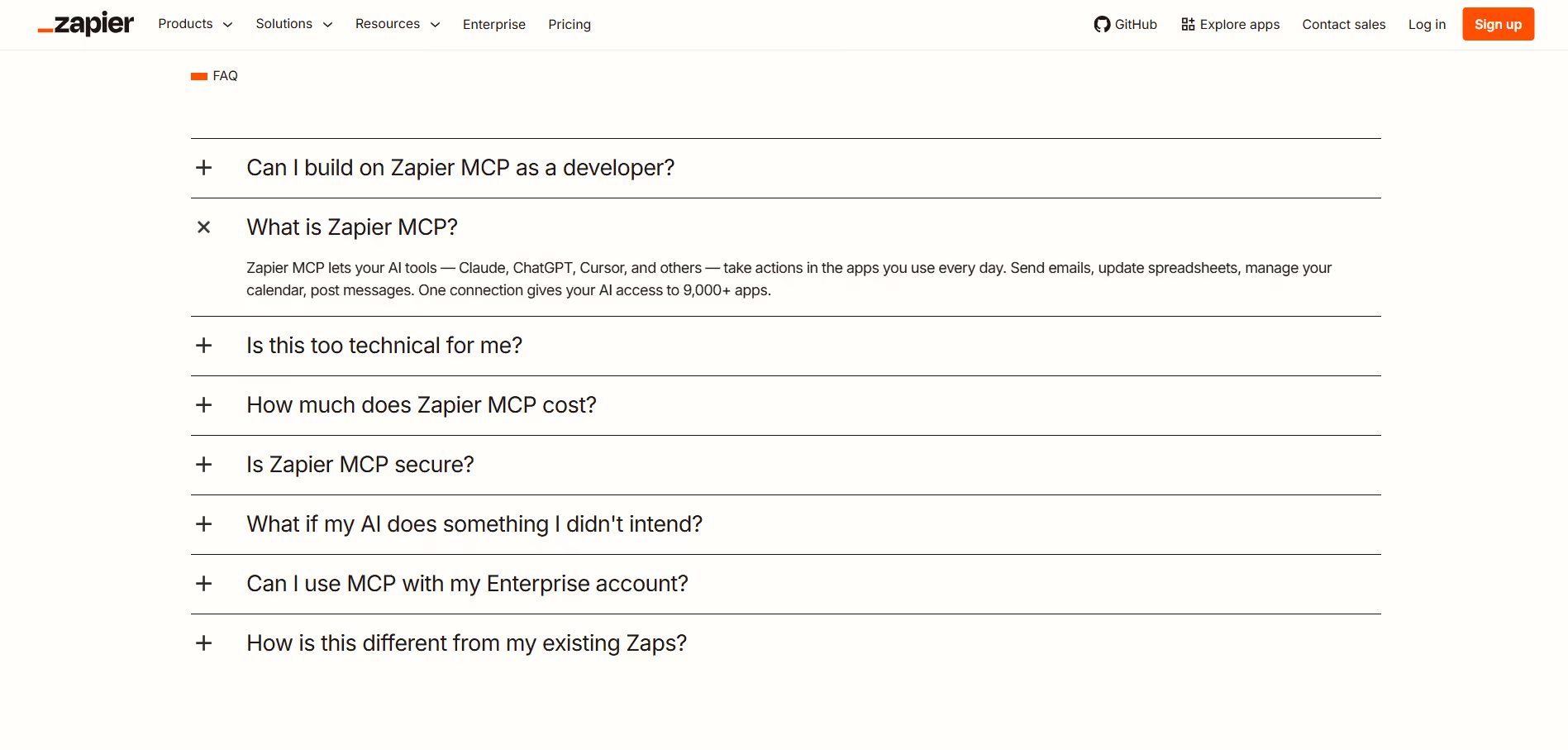
#1. Inline FAQ blocks on product, pricing, and feature pages. These answer the objections a buyer has right before they convert.
Example of an inline FAQ block from Zapier:
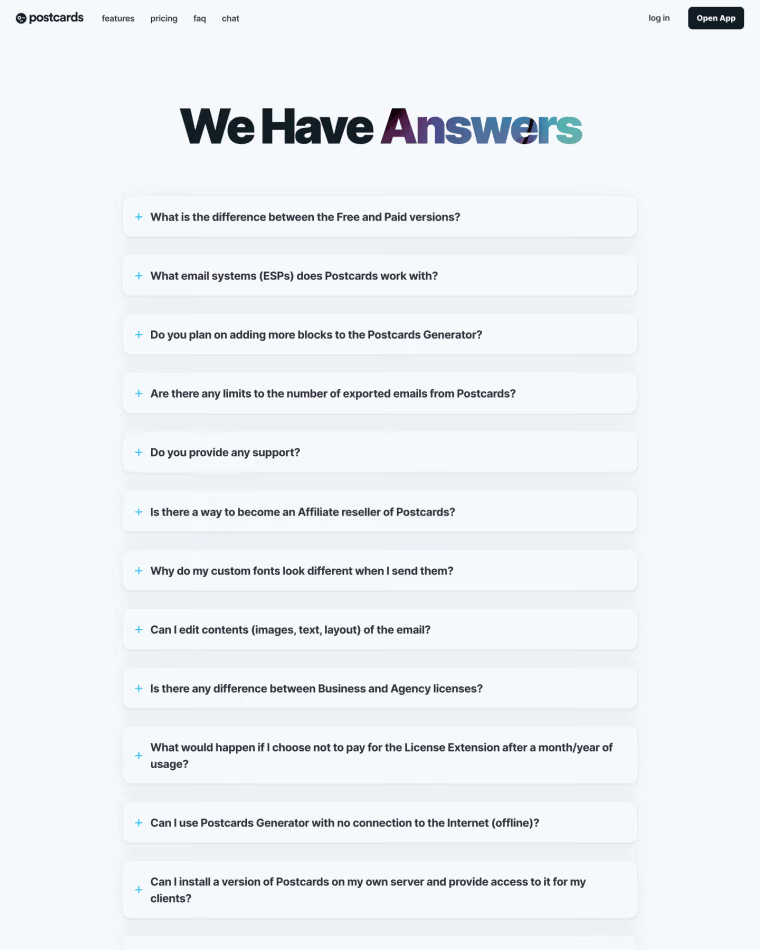
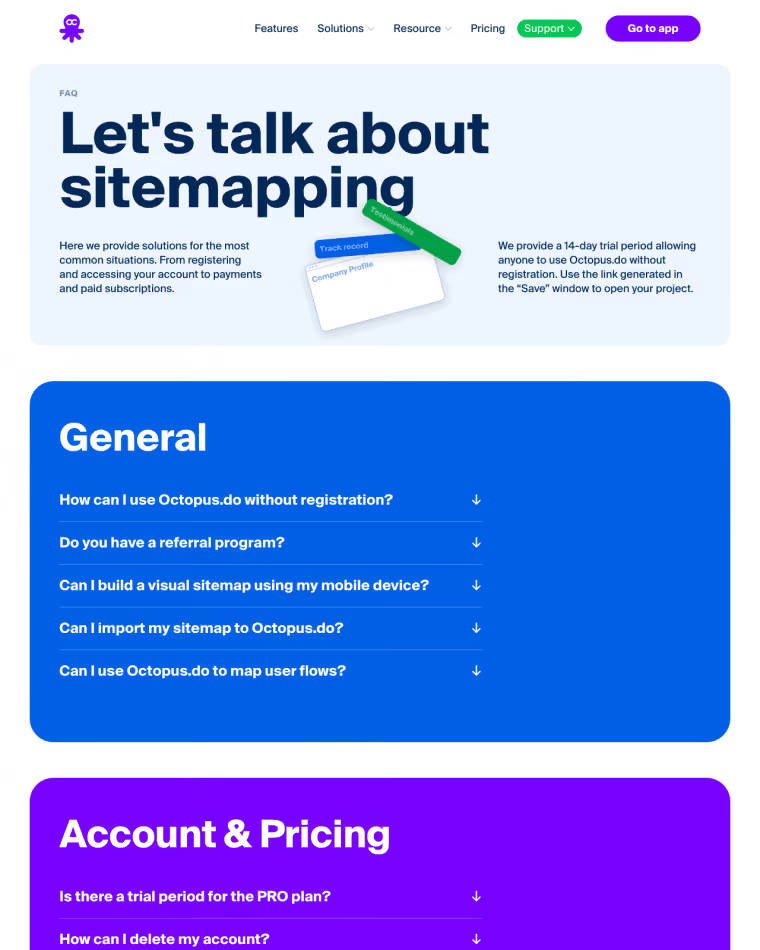
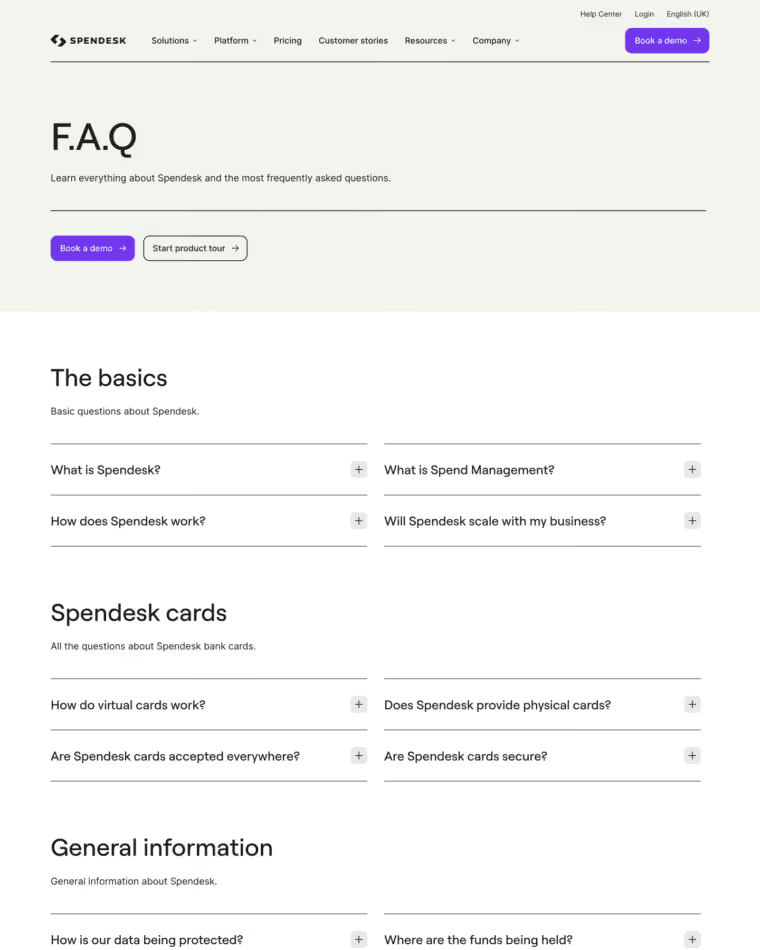
#2. A standalone FAQ page for broad, top-of-funnel questions about your brand and category.
Example of a standalone FAQ page from postcards:
Example of a standalone FAQ page from Octopus:
Example of a standalone FAQ page from Spendesk:
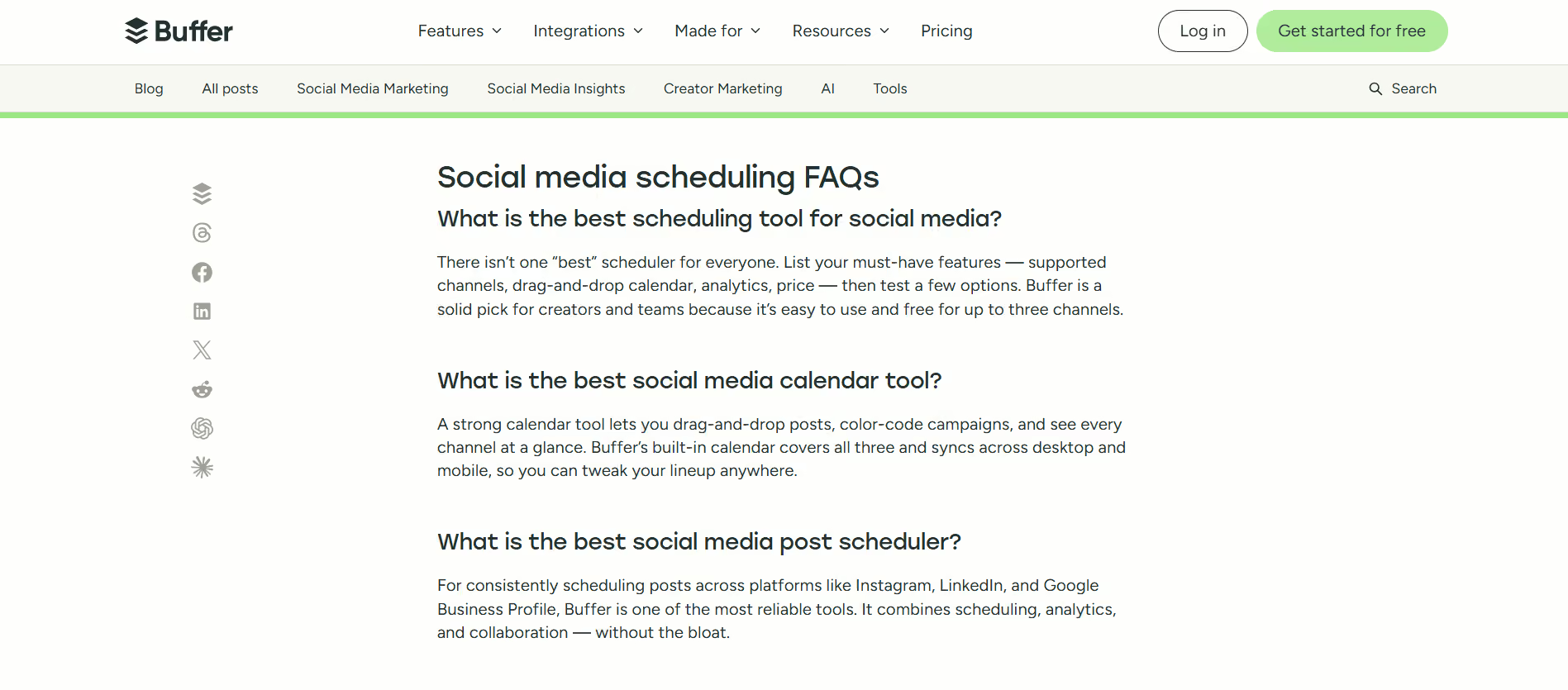
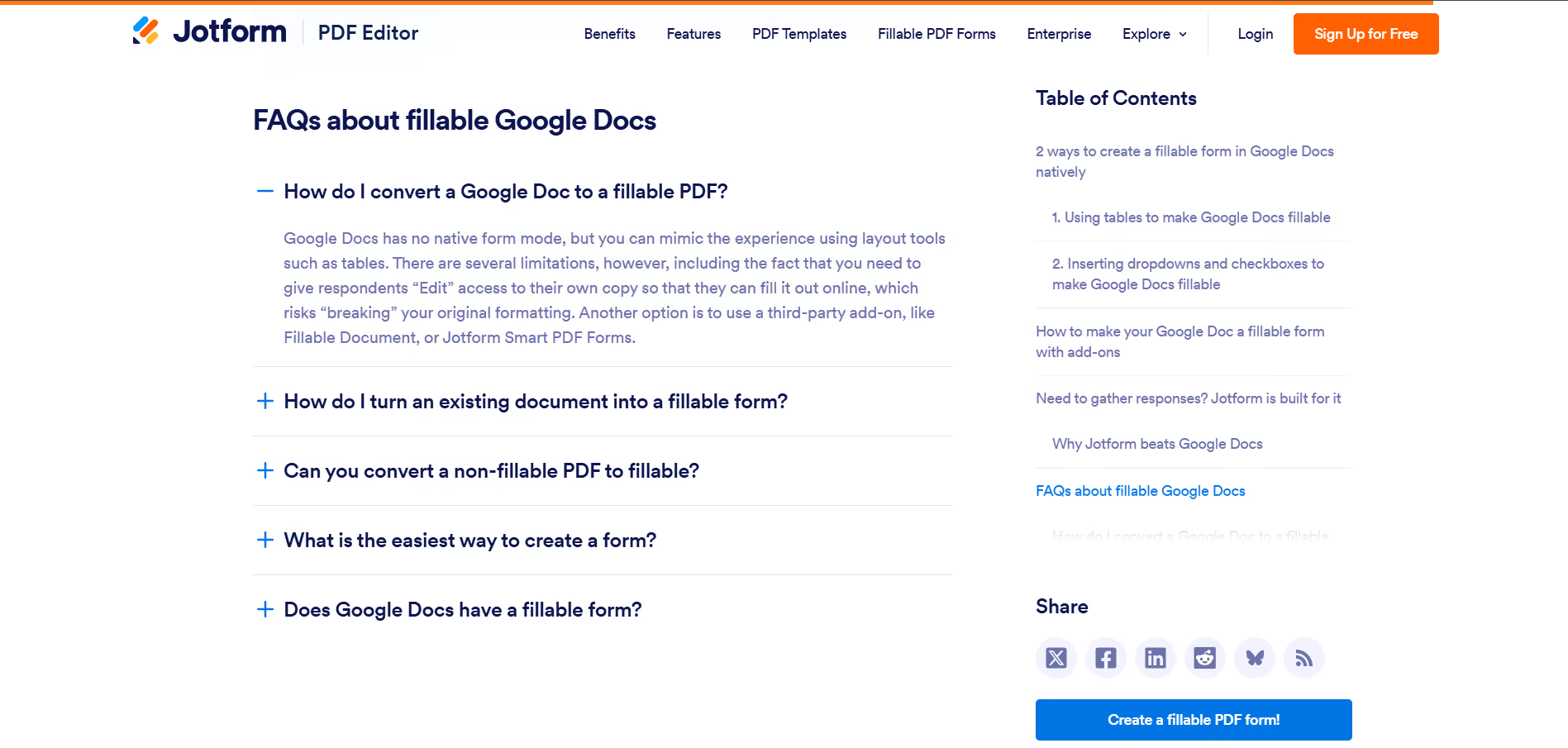
#3. Question–Answer sections inside blog posts that capture long-tail and "how does X work" searches.
Example of a blog post FAQ section from Buffer:
Example of a blog post FAQ section from Jotform:
Each placement does a different job. Inline blocks reduce friction when site visitors are about to make key decisions. The hub deepens topical coverage. Blog FAQs pull in early-stage searchers and feed AEO.
That's why, at Scalerrs, we don't treat FAQ pages as an SEO-only asset. We build them as part of a multi-surface organic strategy, creating content that can rank in Google, earn AI citations, answer questions that surface in Reddit discussions, and reinforce messaging wherever B2B buyers are researching.
Here's the part we see teams miss most. Your buyers research across ChatGPT, Google AI Overviews, Reddit, and YouTube before they ever reach your site. FAQ content is some of the easiest content for those surfaces to quote, because it already pairs a clear question with a direct answer.
That's why FAQ pages earn a place across your whole SaaS SEO program. They connect the pages that rank to the pages that convert.
{{protip="/pro-tips/saas-faq-page-seo-tip-1"}}
Benefits of FAQ Pages in SaaS SEO
FAQ content drive search visibility, AI citations, conversions, support load, and site authority. Skim the table, then dig into the five that matter most for SaaS.
#1. Rank for Long-tail Keywords
FAQs rank for specific questions too miniscule to target with a full SEO-optimized page. Ahrefs found that keywords with fewer than 10 monthly searches make up almost 93% of its US database, while Google reconfirmed in 2025 that roughly 15% of daily searches have never been searched before.
For B2B SaaS, buyers ask highly specific questions like "Does this tool integrate with HubSpot on the Starter plan?" Adding these as FAQs gives each query its own opportunity to rank without creating dozens of standalone pages.
#2. Win Featured Snippets
Question-and-answer formatting closely matches what Google surfaces in featured snippets and People Also Ask boxes. A concise answer of around 40–60 words directly below the question is the format Google most often rewards.
One caveat: this is separate from FAQ rich results, which Google retired in May 2026. Featured snippets and PAA boxes are still active, making well-written FAQ content valuable for earning additional SERP visibility.
#3. Get Cited via AI Search
AI assistants quote FAQ content because it already pairs a question with a direct answer. This gets more important every quarter. SparkToro's 2026 study found 68% of US Google searches now end without a click.
Bain & Company found 80% of consumers rely on zero-click AI answers for at least 40% of their searches, which is cutting organic traffic 15% to 25%.
Your buyers get answers without ever reaching your site. To show up in that answer, you have to be the source the model pulls from. FAQ content, with named entities and clean answers, is some of the easiest material for ChatGPT, Perplexity, and AI Overviews to cite.
At Scalerrs, we treat FAQ content as a useful starting point within a broader AEO strategy. That's why we pair FAQ optimization with Reddit marketing and other off-site authority signals, helping clients build visibility across the same surfaces their buyers and AI engines use to research software.
Our AEO checklist for B2B SaaS walks through the setup.
#4. Reduce Support Ticket Volume
A strong FAQ section answers repeat questions before they turn into support tickets. Pricing, onboarding, security, and integration questions hit your queue over and over. Publish clear answers once, and customers self-serve.
Gartner's August 2025 survey found self-service portals and knowledge management are becoming the most valuable support technologies, set to overtake phone and email by 2027.
That's real money for a SaaS team. Every deflected ticket frees your support staff for the complex cases that need a human. SEO-friendly FAQ content does double duty because it ranks for prospects and serves existing customers from the same page.
#5. Strengthen Internal Linking and Conversions
FAQs give you natural anchor points to route readers toward your money pages. Every answer is a chance to link to a feature page, a comparison, or pricing with descriptive anchor text. That spreads link equity and signals topical depth to Google.
FAQs also remove friction at the decision. A buyer reading your pricing page with a nagging question about contracts or data privacy can get the answer right there, then convert.
Address the objection on the page, and you shorten the path to a demo. Strong FAQ sections improve conversion rates, so you get search and conversion value from one block.
5 Frameworks for Building a SaaS FAQ Page That Gets Cited by AI
FAQ content earns AI citations when it's organized around real questions and structured for machines to read. Here's the five-step process we run with SaaS clients, the same way we approach any SaaS content project, from sourcing the right questions to keeping each answer quote-ready.
#1. Source Questions From Real Buyer Data
Start with the questions your buyers actually ask, not the ones a keyword tool guesses at. Pull from your sales call notes, support tickets, site search logs, and the People Also Ask boxes for your category.
Then add the prompts buyers type into ChatGPT and Perplexity. Tools like AlsoAsked and AnswerThePublic surface question variations at scale.
Don't rely solely on keyword research to find FAQ topics. One of the richest sources of buyer questions is Reddit, where prospects ask the questions they wouldn't type into Google or submit through a demo form.
At Scalerrs, we use Reddit conversations alongside search data to uncover recurring objections, integration questions, and purchase concerns, then turn those into FAQ content that performs across Google, AI search, and the communities where buyers are already researching.
{{protip="/pro-tips/saas-faq-page-seo-tip-2"}}
#2. Lead With the Answer
Put the answer in the first sentence of every response. No throat-clearing. This is the inverted pyramid applied to FAQs. AI models and featured snippets grab the first clear, self-contained statement that answers the question. Bury that answer under setup, and you lose the citation.
Compare these two:
- Weak: "Great question. Pricing depends on a number of factors, and there are several things to consider before..."
- Strong: "Our Starter plan is $49 per month, billed annually. It includes up to five seats and core reporting."
Keep each answer to 40-60 words where you can. One question, one answer. Don't merge two topics into a single block.
#3. Map FAQs to the Right Page
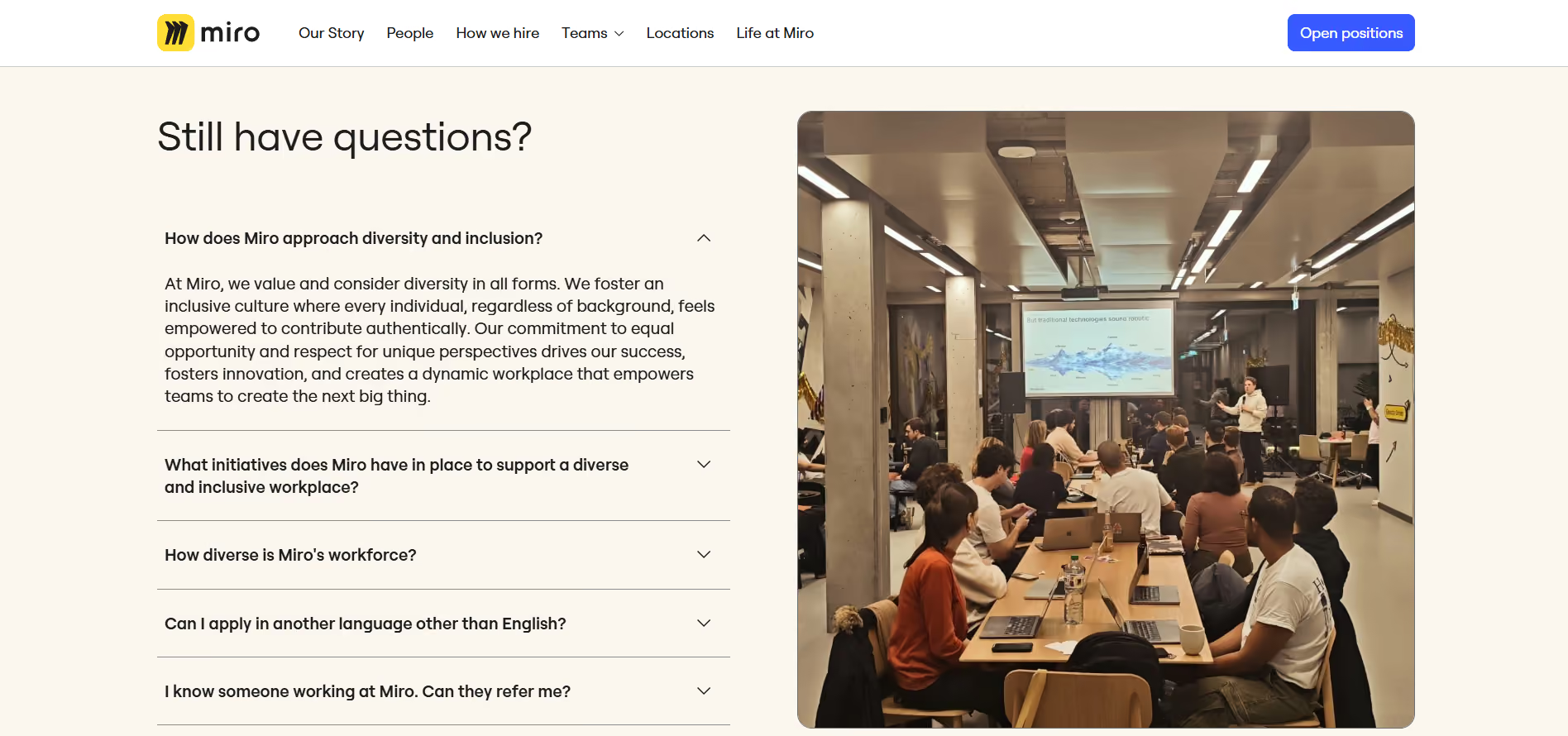
Put each FAQ where its intent lives. Pricing questions on pricing pages, security questions on the trust page, broad category questions on a hub, company culture questions on the careers page.
Don't dump every question into one giant /FAQ page and ignore the rest. Spread them to the pages where they support intent.
Below is an example of company culture questions answered on Miro’s career page. Here, Miro uses an inline FAQ block structure:
A pricing question answered on the pricing page does more for conversion rate optimization than the same question lost in a list of 80.
#4. Write for Machine Extraction
Format every answer so a crawler or an LLM can lift it cleanly.
- Use semantic HTML. Real question headers, answers in plain paragraph text, nothing buried in JavaScript accordions that only load on click.
- Add FAQPage schema where it fits. It no longer produces a rich result (more on that below). It's still valid structured data that helps machines map your question-and-answer pairs.
- Keep entities explicit. Name your product, the integration, the competitor, the standard. "Does [Product] integrate with Salesforce?" reads more clearly to an LLM than "Does it work with your CRM?"
If your FAQs are built on a JavaScript accordion that renders only on click, crawlers and AI tools may never see the answers.
To reiterate, it’s best practice for your FAQs to be contained within the initial HTML.
#5. Avoid Cannibalization
Before you publish an FAQ, check that it isn't competing with a page you already rank with. If you answer "what is programmatic SEO" in an FAQ when you already have a blog post ranking for that term, the two pages split signals and both can slip.
The fix/avoid cannibalization from FAQ pages, answer questions briefly in the FAQ, then link to the in-depth page with descriptive anchor text. Reserve full answers for questions that don't have their own URL yet.
A common mistake SEO content writers make is copy-pasting answers from your product docs or a ranking blog post into the FAQ. Google sees the duplication, and neither version performs. Write each FAQ answer fresh, or link to the original.
{{protip="/pro-tips/saas-faq-page-seo-tip-3"}}
Why SaaS FAQ Pages Fail SEO and How to Avoid It
Most SaaS FAQ pages underperform for the same handful of reasons. None of them are hard to fix once you spot them. Here are the four we see most, and what to do about each.
#1. Writing Questions No Human Asks
The most common failure is phrasing questions to chase keywords. You end up with stiff entries like "SaaS FAQ page SEO best practices?" that nobody types and no AI wants to quote.
Real buyers ask "do I even need schema for my FAQ page anymore?"
Write questions in your buyer's voice and read each one aloud. If it sounds like a search query jammed into a sentence, rewrite it.
Natural phrasing matches the conversational queries people use in ChatGPT and voice search, which is exactly where you want to surface. Our SaaS content writers writes FAQs the way people speak.
#2. Answers That Never Commit
Vague answers that hedge and never land a clear statement give AI nothing to quote and give buyers a reason to leave. An LLM can't cite a non-answer, and a buyer comparing three tools will move on. Commit to something specific. If pricing varies, give the starting number and the variable: "Our Growth plan is $99 per month for up to 10 seats, and scales from there."
If the honest answer really is "it depends," say what it depends on in one sentence. Only use "It depends"if that is the *only* answer to a specific question. Else, say yes or no.
Specific answers earn AI citations and buyer's trust.
#3. Letting FAQs Go Stale
Outdated FAQ answers lose visibility in both search and AI results. Old pricing, deprecated integrations, or outdated feature information erode trust and make your content less likely to be cited.
In practice:
- Set a quarterly review.
- Check every pricing figure, integration claim, and compliance statement against what's true today.
- Add a visible "Last updated" date so both readers and crawlers can see the page is actively maintained.
A FAQ page that hasn't been updated in over a year is a red flag. Check the dates on your live FAQs—if the newest answer is from 2024, AI tools have likely moved on to fresher sources.
#4. Orphaning the FAQ Page
An FAQ page that isn't integrated into your site architecture becomes an orphaned page, signaling to search engines that the content is less important or potentially outdated.
To maximize SEO value, give the page a permanent home in your navigation or footer and strategically link to specific answers from your product pages, blog posts, and help center.
For example, a B2B SaaS company might link its FAQ page from the main navigation and footer, reference pricing FAQs from its pricing page, and point to integration or security FAQs from blog posts comparing competitors or explaining SOC 2 compliance. That internal linking helps search engines discover the content while making it easier for buyers to find answers wherever they enter your site.
How to Get Your SaaS FAQs Cited in AI Search
Getting cited by ChatGPT, Perplexity, or Google AI Overviews comes down to three things: phrasing answers the way buyers ask, structuring them so they're easy to lift, and earning trust signals around them.
- Start with retrieval. AI tools pull the passage that most directly answers the query. So write each answer to stand on its own. No "as we covered above," no "see the section below." If a model lifts that paragraph out of your page, it should still make complete sense.
- Match the question to real language. Buyers ask AI specific, conversational questions: "what's the cheapest analytics tool that does SSO?" Mirror that phrasing in your FAQ headers, and your content lines up with the query.
- Then earn trust. AI models synthesize across sources before they answer. When your FAQ, a Reddit thread, and your G2 reviews all land on the same answer, you become the consensus the model repeats. Named entities help too. Spell out the product, the integration, the standard, and the number, so there's nothing ambiguous for the model to trip on.
That's the principle behind Scalerrs' AEO strategy. Rather than optimizing your website in isolation, we help you own your product category across multiple surfaces that AI engines already use for retrieval and validation.
Your FAQ page provides structured, quotable answers. Reddit participation reinforces those answers through authentic community discussions. Third-party listicle placements establish independent credibility.
Together, these assets create the cross-source consensus that AI models use to decide which brands to cite.
Pro Tip: Search your own top questions in ChatGPT and Perplexity right now. See who gets cited. If it's a competitor or a review site, that's the gap your FAQ content needs to close. That's exactly the gap our AEO service closes for B2B SaaS clients.
Does FAQ Schema Still Help SEO in 2026?
FAQ schema no longer earns you a rich result in Google Search. The expandable Q&A box it used to trigger is gone, and the reporting around it is winding down.
Here's the timeline, straight from Google's FAQ structured data documentation:
- May 7, 2026: FAQ rich results stopped appearing in Google Search.
- June 2026: the FAQ report and Rich Results Test support leave Search Console.
- August 2026: FAQ support exits the Search Console API.
Should you remove your FAQPage markup? No. It's still a valid Schema.org type that helps search engines and AI systems parse your question-and-answer pairs, even though it no longer generates a rich result.
Just don't treat it as an AI citation strategy—Google hasn't documented FAQ schema as a signal for AI Overviews, so your effort is better spent creating accurate, well-structured answers that earn trust across multiple sources.
FAQs
- What is SaaS FAQ page SEO?
SaaS FAQ page SEO is the practice of structuring a software company's frequently asked questions so they rank in search and get cited by AI. It targets question-shaped queries about pricing, features, integrations, and security with clear, self-contained answers.
- What type of SaaS companies benefit most from FAQ page SEO?
SaaS companies with complex products, long sales cycles, or heavy buyer research benefit most. Tools with technical questions around integrations, security, and compliance see the biggest gains, because buyers ask specific questions before they commit, and FAQ content answers them at the moment of doubt.
- Should SaaS FAQ pages target keywords or just answer customer questions?
Both. Start with the real questions your buyers and prospects ask, then phrase them in the natural language people search. Use keyword tools to refine the wording, and let actual buyer questions decide what you answer.
- How many questions should a SaaS FAQ page include for SEO?
There's no magic number. Include every question with genuine search demand or one that comes up in your sales and support conversations, and stop there. Quality and relevance matter more than count. Ten sharp, well-answered questions beat 40 thin ones.
- Can FAQ pages help increase SaaS demo or trial conversions?
Yes. A well-placed FAQ answers the objection a buyer has right before they sign up. Address questions about pricing, contracts, data security, and onboarding on the page where the decision happens, and you remove friction on the path to a demo or trial.
Build SaaS FAQ Pages That Rank, Get Cited, and Convert with Scalerrs
FAQ pages still earn their keep in 2026 and Scalerrs knows how to make them work.
Scalerrs helps B2B SaaS companies own their product category across traditional search, AI engines, and Reddit; not just rank, but get cited where your buyers are already looking.
If you want a content program that ranks and gets cited by AI, book a demo to understand our process.
Book a Discovery Call
Turn Organic Search Into Your #1 SaaS Acquisition Channel.

Let us scale your SEO channel for you.
reviewed onClutch
4.9 rating






Get Free Resources In Your Inbox
Get all of our FUTURE playbooks such as Figma files, checklists and SOPs directly into your inbox.

.avif)