

.png)
SaaS SEO: 6 Strategies & the Ultimate Guide for 2026 + Use Case

Key Takeaways
- SaaS SEO in 2026 is a multi-surface game. Ranking on Google alone leaves real pipeline on the table.
- Bottom-of-funnel content (alternatives, comparisons, pricing) drives demos. Top-of-funnel drives traffic. Avoid over-investing in the latter.
- AEO is mandatory. 45% of B2B buyers used AI during their last purchase, and your brand needs to show up in those answers inside ChatGPT, Perplexity, and AI Overviews before they hit your site.
- Pipeline attribution beats vanity metrics. If you can't tie your SaaS SEO budget to ARR, you can't defend it.
- Multi-surface visibility is the new moat. Google rankings alone won't win your category. Scalerrs clients show up across Reddit, AI tools, and third-party listicles, and that's what drives pipeline at scale.
If you're running marketing or growth for a SaaS company, you've probably been told SEO is dying. It isn't. It just doesn't look like it did in 2022.
What's actually dying is the approach: blog posts targeting high-volume keywords, measured by pageviews, with no connection to demos. That version of SEO has a short shelf life. The version that ties organic to pipeline, across Google, AI tools, Reddit, and third-party mentions, is compounding faster than paid. That starts with a solid SaaS content strategy before a single keyword is targeted.
Your buyers are researching across multiple surfaces before they ever talk to your team and the wrong keyword choices will burn your budget on traffic that never converts.
That’s why we’re sharing the SaaS SEO guide from Scalerrs for 2026, and how it drives actual pipeline—not just clicks—for our clients.
What Is SaaS SEO?
SaaS SEO refers to search engine optimization efforts tailored to companies that sell software via a subscription model. The goal is to attract qualified buyers searching for solutions, comparisons, or alternatives in your category, then move them through the funnel—from discovery toward a trial or demo.
SEO for SaaS breaks down into:
- Keyword strategies mapped to buyer intent
- Content that ranks AND converts visitors to signups or demos
- Technical SEO that makes your product pages crawlable and indexable
- Link building from SaaS-relevant publications (See our breakdown of the best SaaS link building agencies if you're evaluating outside help).
- AEO (Answer Engine Optimization) and AI search optimization
In 2026, SaaS SEO also means getting your brand cited inside AI tools (ChatGPT, Perplexity, and Google AI Overviews) before buyers ever hit your site. That's AEO, and it's now a required layer of any SaaS SEO strategy.
Why SaaS SEO Is Different from Traditional SEO
Your buyers don't want to talk to you yet. They want to figure things out on their own, across whatever sources they trust.
67% of B2B buyers prefer a rep-free buying experience, and 45% used AI during their last purchase. That's the world your SEO has to win in.
But there's more to it than buyer psychology. SaaS SEO targets a fundamentally different set of keyword types from general SEO. Here's what that looks like in practice:
Jobs to Be Done (JTBD) Keywords (the backbone of SaaS SEO). Every keyword type in SaaS SEO traces back to a job a buyer is trying to get done. Before they compare tools, before they search for alternatives, before they even know your category exists, they have a job. Understanding those jobs is what separates SaaS keyword strategy from generic SEO.
JTBD keywords are the direct expression of that job: "how to send a contract for signature," "how to track team availability," "how to reconcile invoices faster."
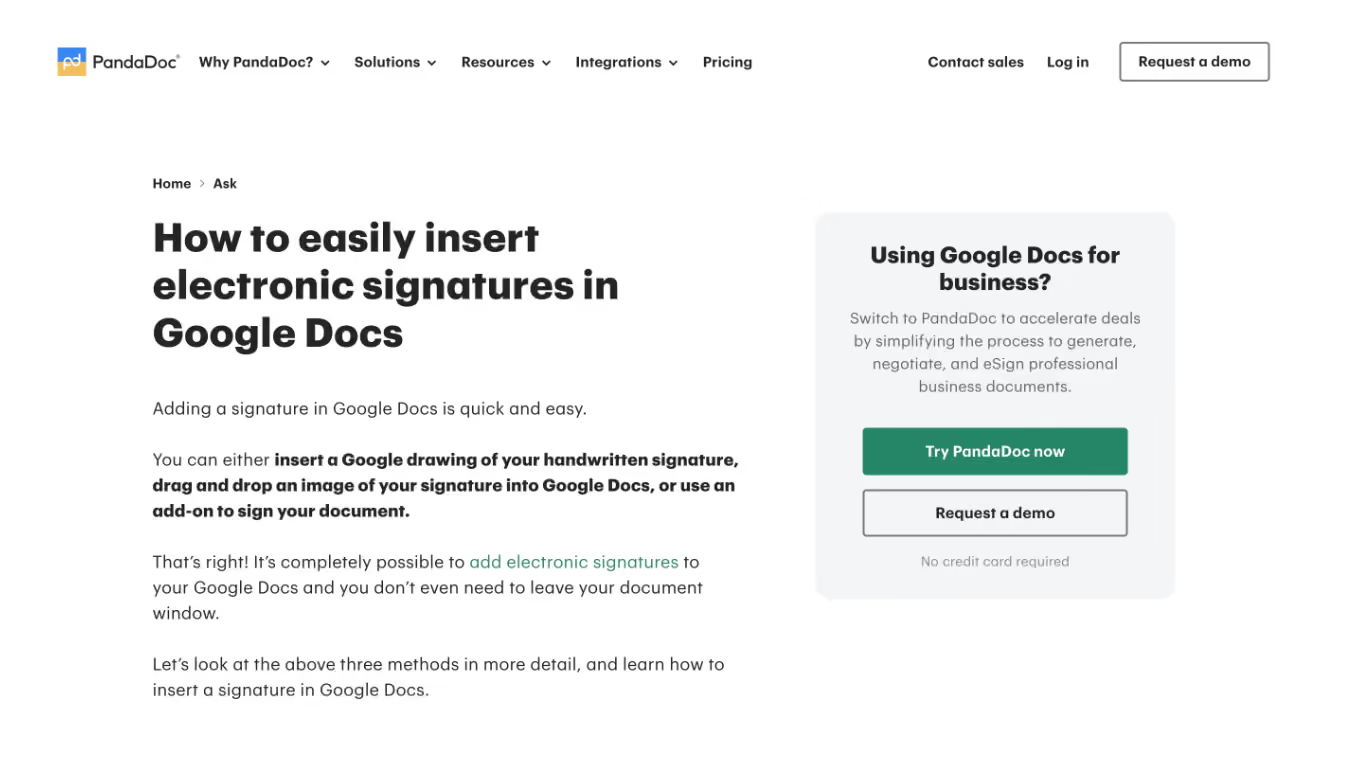
Switch Moment Keywords are what happens when a buyer realizes the tool they're currently using to do that job isn't working. They're still Googling "how to insert an electronic signature in Google Docs". The person searching hasn't bought an e-signature tool yet. They're still using Google Docs, but they're frustrated enough that a sidebar CTA or a well-placed comparison will move them. That's the perfect moment to intercept them.
PandaDoc owns this moment deliberately. The job is the same. The buyer is just closer to switching.
BOFU Keywords. The commercial-intent set: "[competitor] alternative," "[Tool A] vs [Tool B]," "best [category] software," "[product] pricing." These are the terms buyers search at the moment of decision. They're what drives demos. Most SaaS teams still under-invest here and over-invest in TOFU content that pulls unqualified traffic.
MOFU Keywords sit between JTBD and BOFU. The buyer knows something is broken ("how to reduce churn," "how to automate proposal generation") and is researching fixes. They're problem-aware but not yet solution-aware. Your content earns trust here before the pitch.
Integration Keywords serve buyers who've already decided on a solution and are now making sure it fits their existing stack. "Salesforce + [your category]," "HubSpot integration for [use case]." If your product has integrations, every one of them is a keyword opportunity.
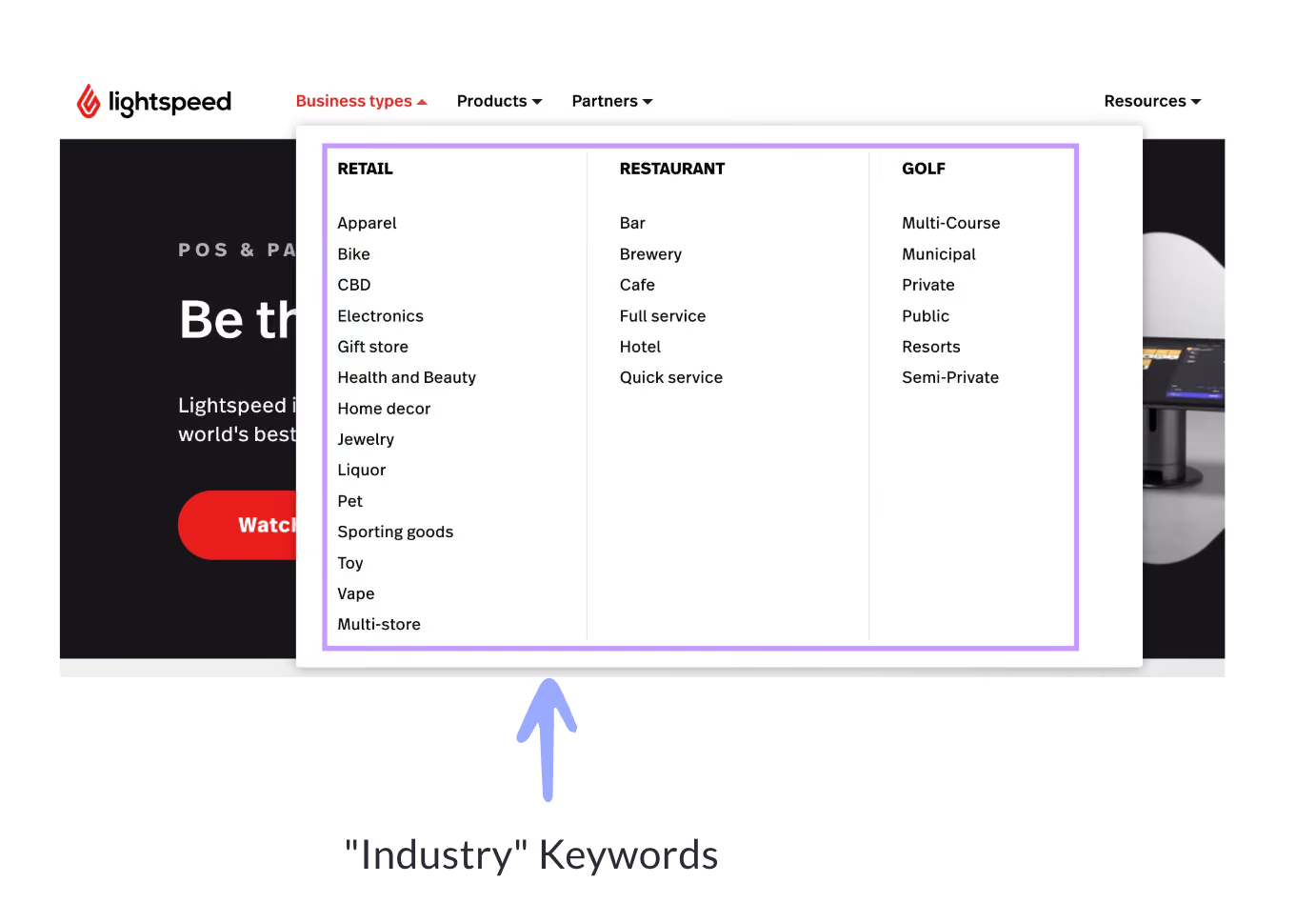
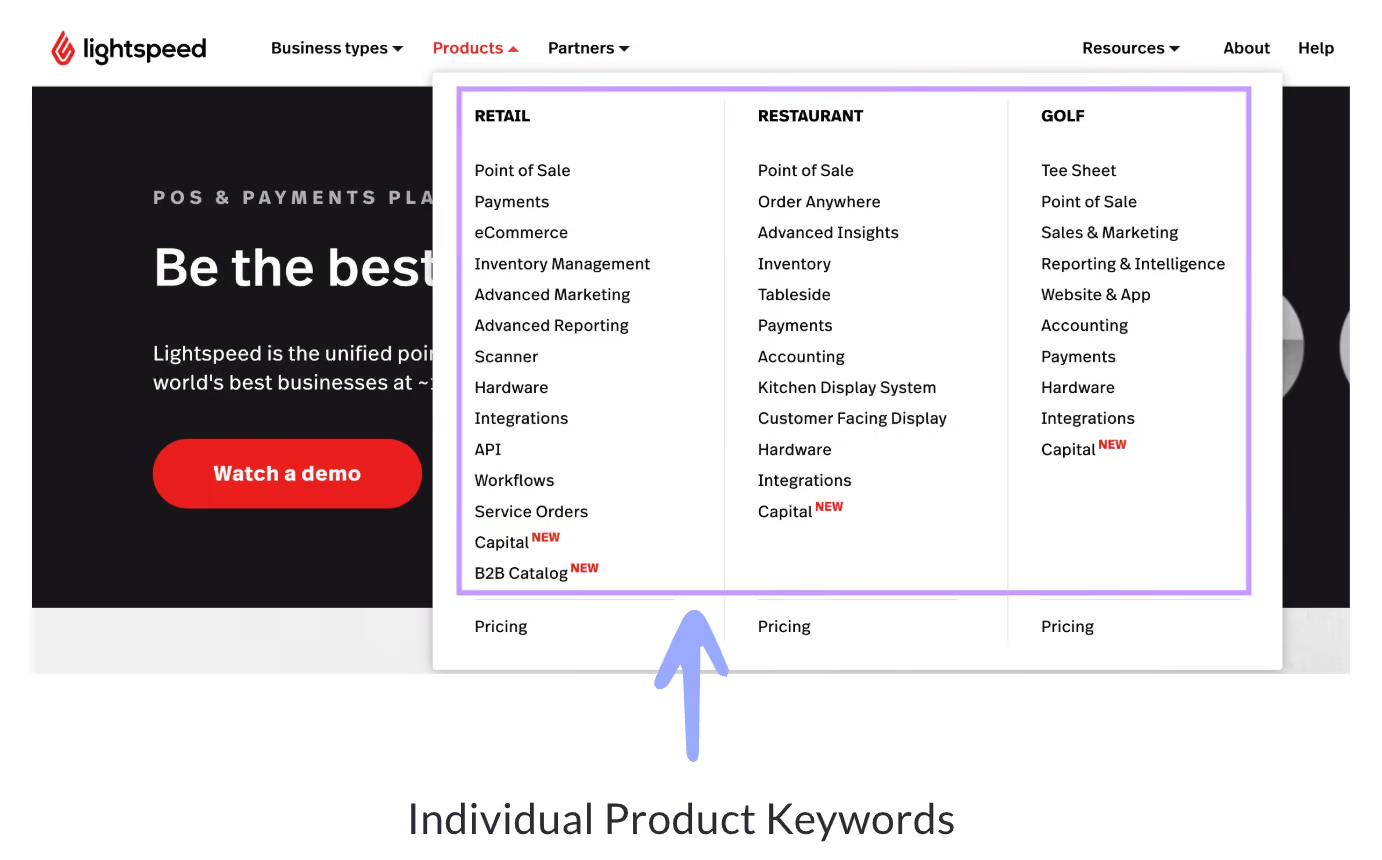
Product and Industry Keywords are the vertical-specific expressions of the job. These are combinations of your product features ("POS," "e-signature") with product or industry modifiers ("retail POS," "apparel store POS," "CBD POS").
Lightspeed's product nav is a masterclass in this. They have dedicated pages for every vertical-feature combination their ICP would search for.
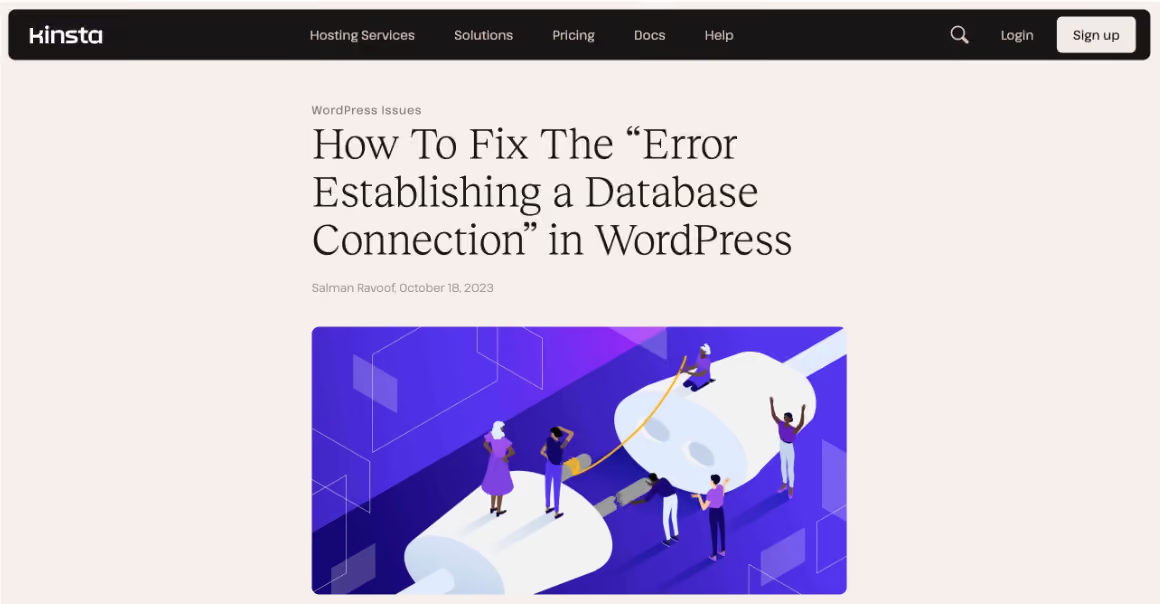
Error Keywords. Error Keywords are a specific variant of JTBD. Buyers trying to complete a job and hitting a technical wall. "WordPress database connection error," for example. If your product category has a predictable set of technical frustrations buyers run into before they switch, those error queries are yours to own.
Kinsta built an entire content moat around these.
Beyond keyword type, the underlying metrics are different too:
The practical shift: stop chasing search volume. Start chasing JTBD and BOFU keywords that pull buyers already comparing options.
{{protip="/pro-tips/saas-seo-tip-1"}}
How to Plan SEO for Your SaaS Product
Before you research keywords or write a single brief, your SaaS SEO strategy needs three inputs:
- Your ICP and product category: Think about who your buyer is, what problem they're solving, and what alternatives they're considering
- Your sales motion: Self-serve, SMB, mid-market, and enterprise motions map to different keyword priorities
- Your current organic baseline: Consider your domain rating, indexed pages, ranking distribution, and what's already converting
From there, reverse-engineer a pipeline forecast:
- How many qualified visits do you need to hit your demo target?
- Which keywords drive those visits?
- What kind of backlink outreach plus AEO work need to happen for the content to actually rank?
We've watched SaaS teams skip this step and jump straight to publishing. Six months later, they've burned $50K and have nothing to show.
Run this SaaS SEO checklist before building your strategy.
6 Steps to Building the Best SaaS SEO Strategy
These six steps are the playbook we run across our 45+ SaaS engagements.
Step 1: Technical SEO for SaaS
Before keywords. Before content. Before links.
If your product pages aren't indexed properly, nothing else compounds. Technical SEO is the foundation—and SaaS sites have specific failure modes that general websites don't.
Focus on fixing these first:
- XML sitemap: Your site's page index. Submit it to Google Search Console and confirm your money pages (product, pricing, alternatives, comparisons) are included, not accidentally blocked.
- Schema markup: Structured labels that tell Google what type of content is on a page: software listing, review, FAQ, breadcrumb. AI Overviews and rich SERP features pull from this directly, so add it where it fits.
- Canonical tags: Especially important if you run feature pages, integrations directories, or templated landing pages. Without them, Google may treat near-identical pages as duplicates and split their ranking power. Canonicals designate the authoritative version.
- 301 redirects. When a URL changes, a redirect passes authority to the new destination. But chains (A → B → C) leak power at every hop. Audit and collapse every chain to a single redirect.
- Crawlable navigation. Single-page apps load content via JavaScript, which crawlers often can't read. Server-side rendering (SSR) or pre-rendering fixes this by serving Google the full page on arrival.
Technical SEO issues compound quietly. If you'd rather have an expert catch them early, see how we approach SaaS SEO.
Need SaaS on-page SEO help? See how we approach it.
{{protip="/pro-tips/saas-seo-tip-2"}}
Step 2: Keyword Strategy for SaaS
Start with intent, not volume.
SaaS keyword research breaks into three layers, each with a different role in your funnel.
- Bottom of funnel (BOFU) is where your pipeline lives:
- Alternatives queries: "[Competitor] alternative" (e.g., "Zapier alternative," "Intercom alternative for startups")
- Versus queries: "[Tool A] vs [Tool B]" (e.g., "HubSpot vs Salesforce," "Intercom vs Zendesk")
- Review queries: "[Product] review," "best [category] software"
- Pricing queries: "[Product] pricing"
{{protip="/pro-tips/saas-seo-tip-3"}}
- Middle of funnel (MOFU) keywords are JTBD-style. Your job is to answer the problem and establish your category as the obvious fix.
Examples:
- "How to reduce customer churn" → for a customer success platform
- "How to automate proposal generation" → for a proposal tool
- "How to reduce SaaS support ticket volume" → for a help desk product
{{protip="/pro-tips/saas-seo-tip-4"}}
- Top of funnel (TOFU) keywords are demand-gen: industry trends, frameworks, broad educational topics. These build authority and feed retargeting. Treat them as fuel, not foundation, and deprioritize them until your BOFU and MOFU gaps are closed.
How to Execute SaaS Keyword Research: A Quick Workflow
Primary tools: Ahrefs or Semrush. Sanity check: Google Search Console.
1. List 3–5 direct competitors. The companies your prospects are actually comparing you against. Pull these from sales call notes and your G2 or Capterra category page.
2. Run a keyword gap report. In Ahrefs, use the Content Gap tool. In Semrush, use Keyword Gap. Enter your domain vs. those competitors and export every keyword at least two competitors rank for in the top 10 that you don't.
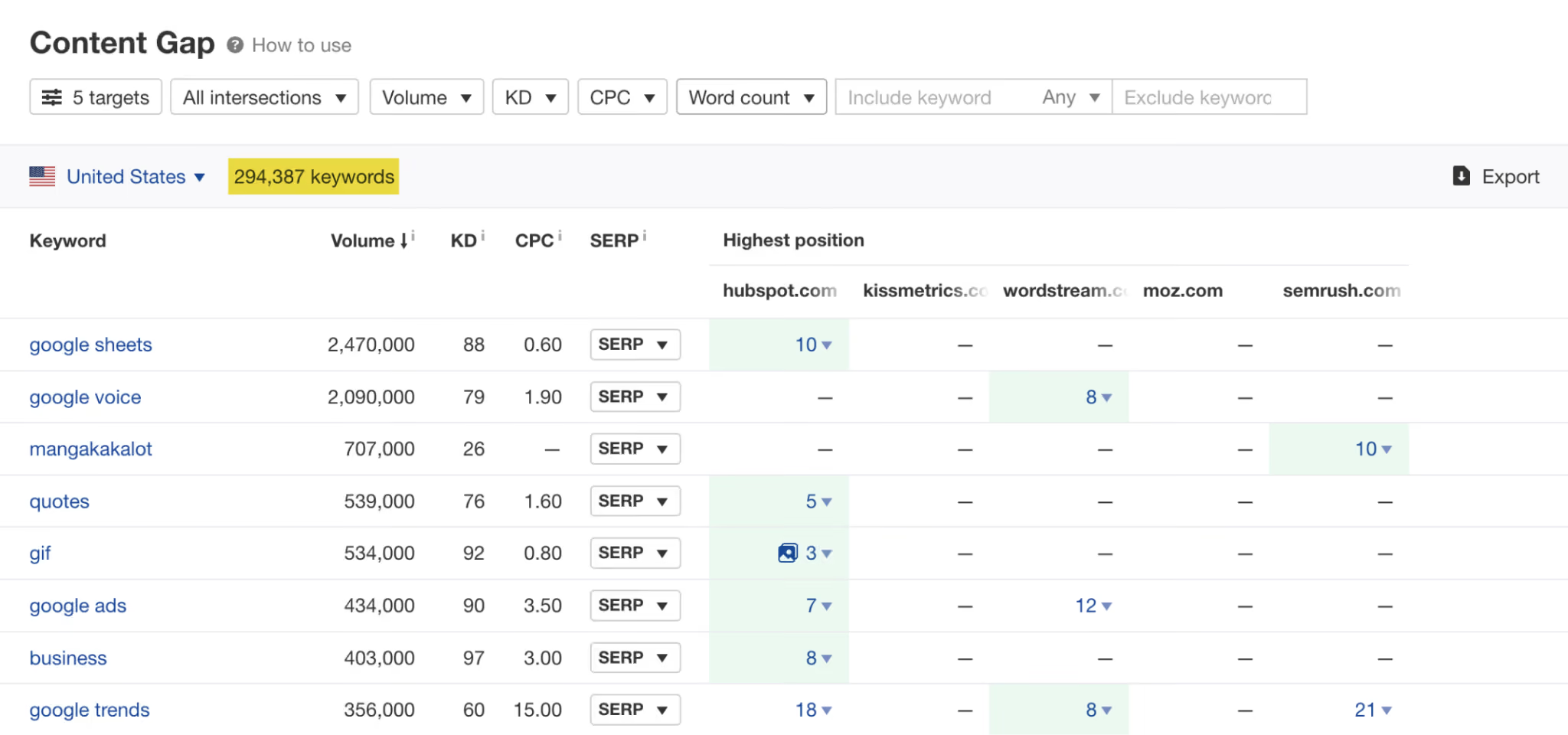
3. Filter for commercial modifiers first. In the export, isolate terms containing: "alternative," "vs," "best," "pricing," "review," "top," "compare." These are your BOFU priority list.
4. Check SERP intent before committing. Open each candidate in Ahrefs Keywords Explorer or Semrush. Look at what's actually ranking: blog posts, product pages, or comparison articles? Your page format has to match the intent signal Google is already rewarding.
5. Score by business value, not volume. A simple heuristic: high CPC + low keyword difficulty + a clear commercial modifier = priority one
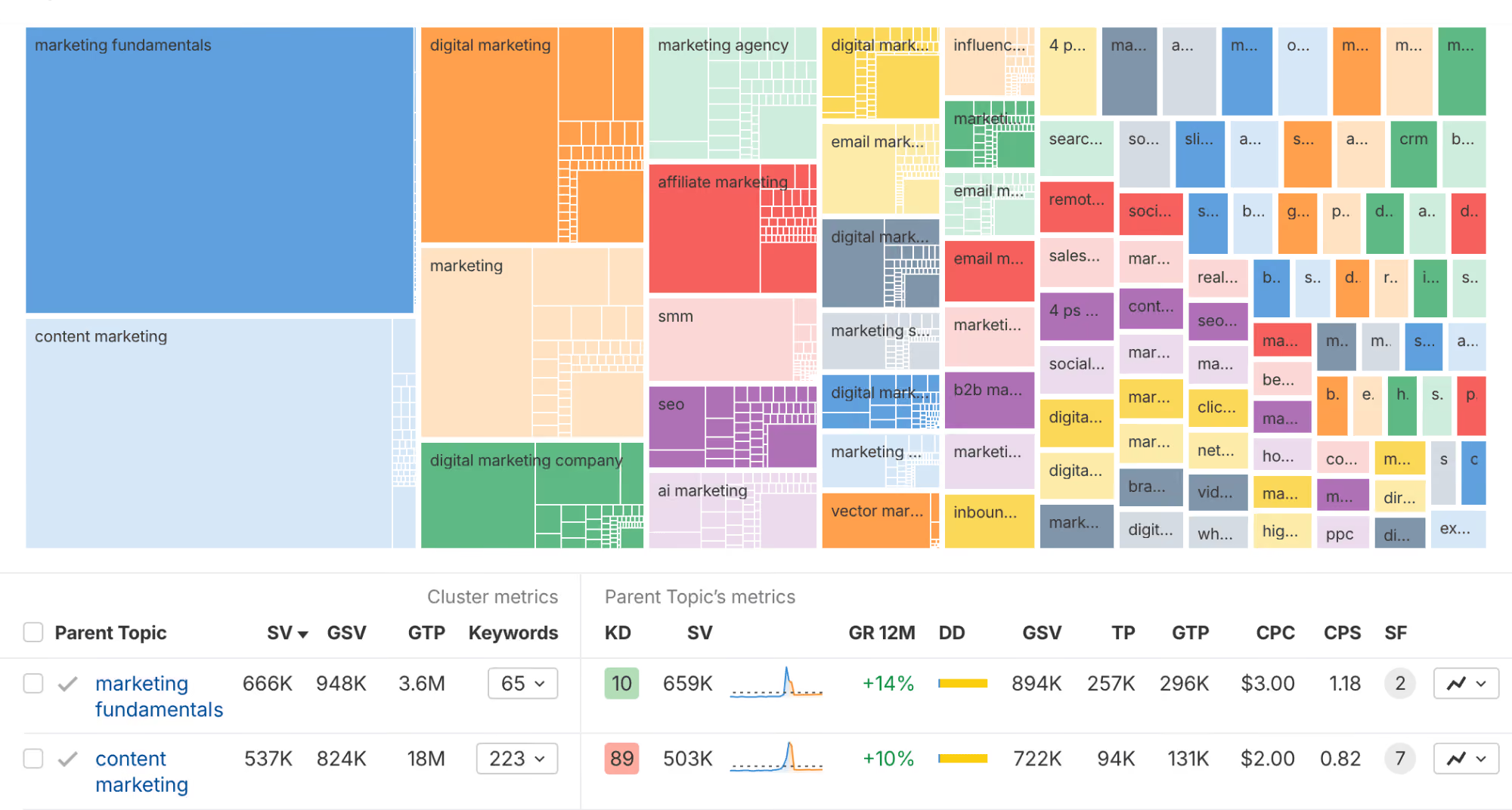
6. Check the parent topic before building a page. In Ahrefs Keywords Explorer, click the parent topic for each keyword. If multiple keywords share one and the SERPs look identical, one strong page covers all of them. Five thin pages targeting the same parent topic will cannibalize each other.
Step 3: Content That Converts and Feeds LLMs the Right Signals
Content that ranks isn't enough. It has to convert ranked visitors into demos or signups, and it has to be structured to get cited in AI answers—otherwise the rankings don't pay you back on either front.
Prioritize these five content types:
- Comparison pages ("X vs Y"). High commercial intent, often easier to rank than category terms.
- Alternatives pages ("Alternatives to X"). Steal demand from competitors actively losing customers.
- Best-of listicles ("Best [category] software for [use case]"). Win the bake-off, become the obvious answer.
- JTBD content. Problem-solving guides that land you MOFU traffic that's still qualified.
- Customer-led case studies. Convinces with numbers. Doubles as social proof for sales.
Treat your content as evergreen by default. For example, a seasonal piece makes sense when you're targeting a trend with a clear search spike—"best project management software for remote teams" during a remote-work surge, for example—but evergreen alternatives pages compound for years. Don't sacrifice one for the other.
Writing content that LLMs actually cite
This is the part most SaaS content teams still miss. AI tools like ChatGPT, Perplexity, and Google AI Overviews don't just index your page. They decide whether it's worth summarizing and surfacing to buyers who ask about your category.
Here's what gets content cited:
- Clear, scannable structure. Every section opens with a clear summary, key takeaway, or direct answer. Semrush's content optimization study showed that LLMs pull from the first one to two sentences of a section more than the rest.
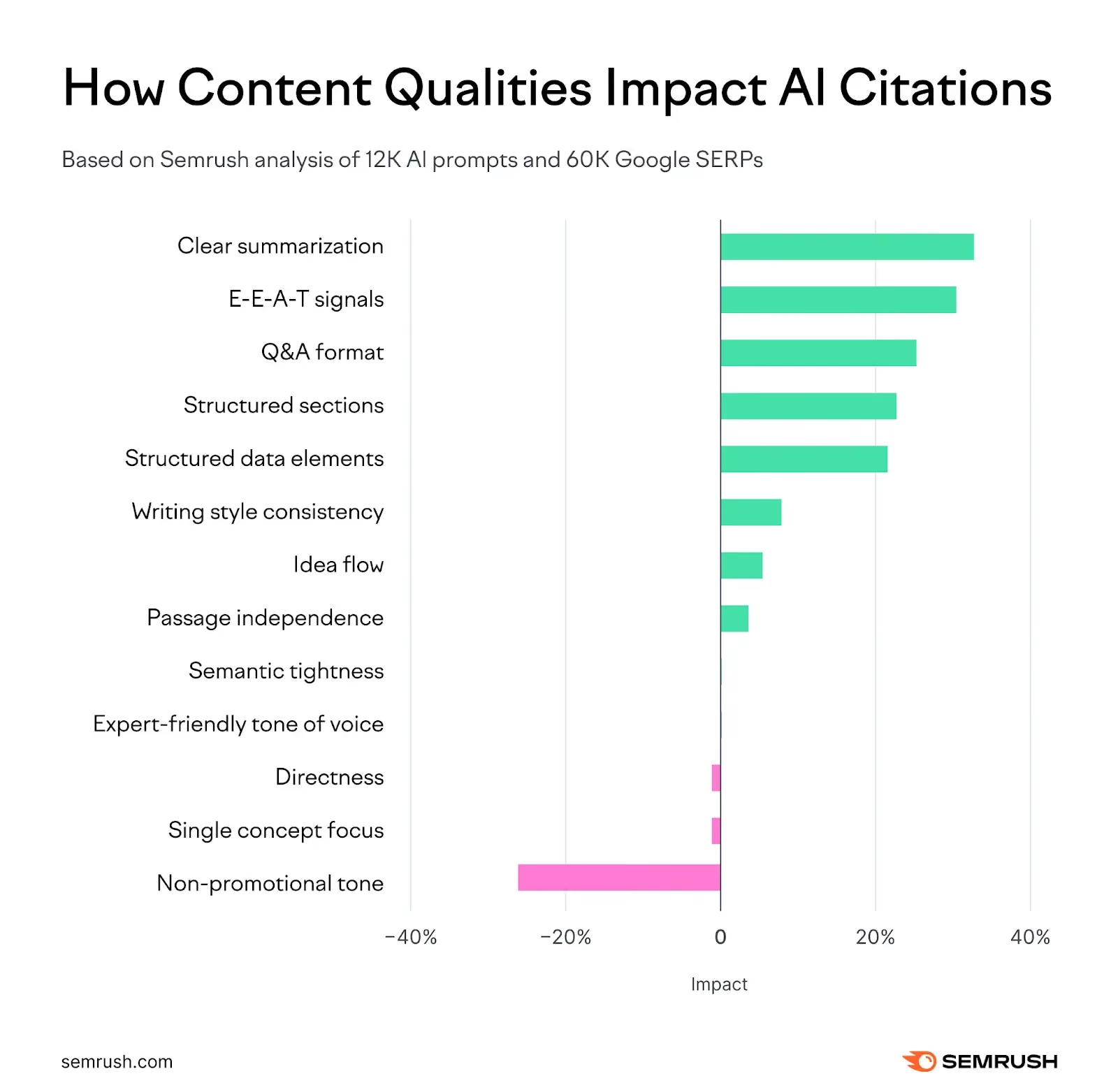
- Concrete data. "Organic traffic grew 312% over eight months" gets cited. "Significantly improved results" gets ignored. Research from Princeton/Georgia Tech/IIT Delhi showed that adding statistics improved AI visibility by 41%, while adding direct quotations from named sources improved it by 28%.
- Specific comparisons, not vague descriptions. If your content says "our tool is better," it gets ignored. If it says "here's how [Tool A] and [Tool B] differ on pricing and data exports," it gets cited. Comparison tables, pros/cons treatments, and use-case framing all help.
- Avoiding self-promotion. LLMs prefer neutral, editorial comparisons over brand-led rankings. Analysis by Wix Studio showed third-party listicles accounted for 80.9% of citations in professional services, versus 19.1% for self-promotional lists.
- Community and social proof signals. Summaries of G2 sentiment, Reddit thread themes, or real client quotes all push content toward what LLMs treat as high-trust sources.
If your CEO or RevOps lead has asked why you’re not showing up in ChatGPT, this is where you start. Watch our free SaaS AEO webinar recording—previously attended by 260+ SaaS marketers—and see exactly how brands in your category are getting cited in AI tools.
Step 4: Link Building for SaaS
Backlinko’s analysis found that top-ranking pages on Google have nearly four times as many backlinks as those in positions #2-#10.
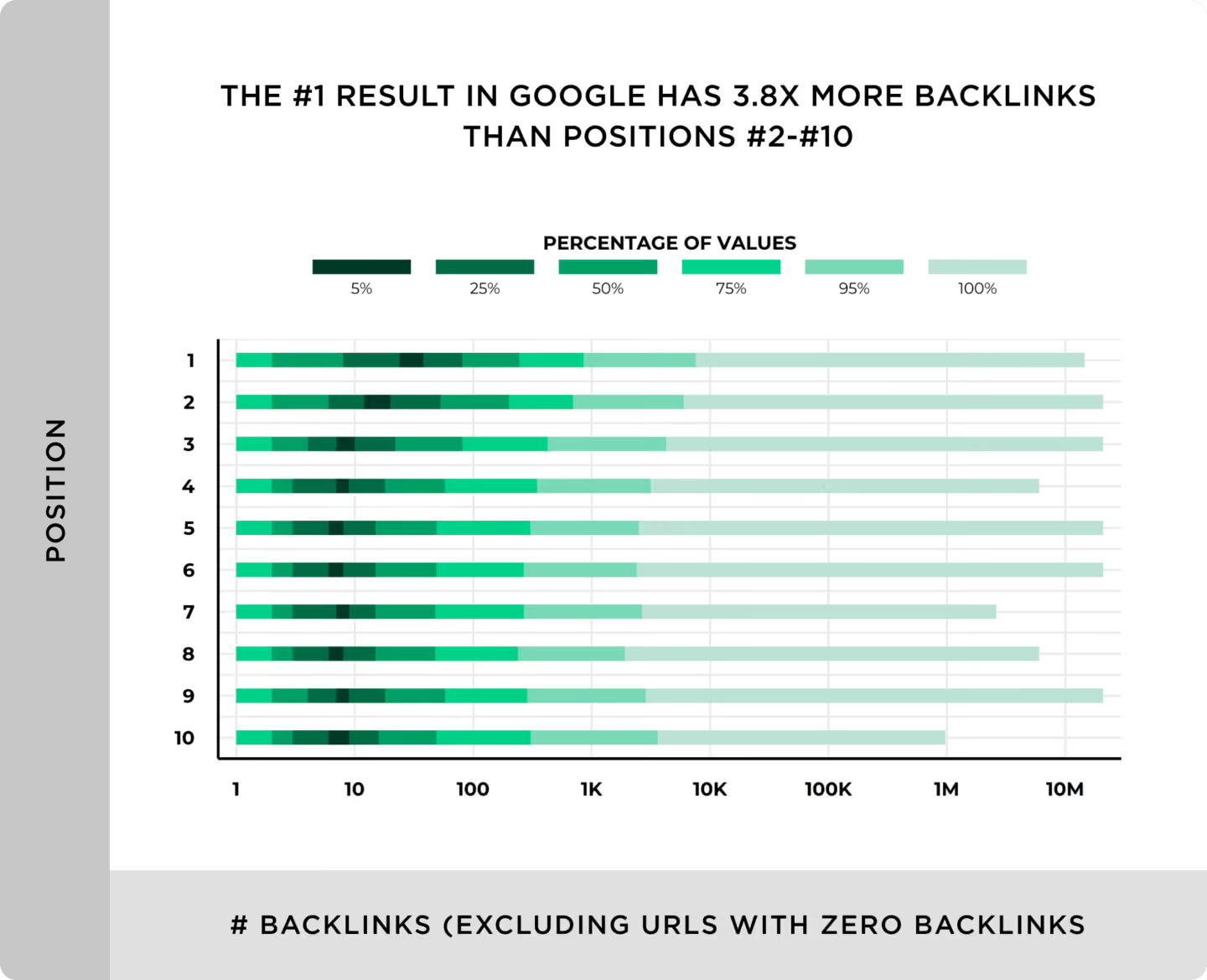
They matter more for SaaS, where domain authority shapes how aggressively you can target competitive keywords. If your DR sits below the average of who's already ranking, no amount of clever on-page work gets you there. Link building closes that gap.
Our founder, Jules Davies, puts it succinctly in this LinkedIn post:
Strategies that work for us in 2026:
- Guest posts on real SaaS publications with audited audiences and editorial standards
- Third-party listicles and review roundups, such as "Best [category] software" articles that drive backlinks AND citations from AI tools
- Digital PR aka earning mentions from industry publications by sharing original data or strong takes
- Statistics pages and original research. If you publish proprietary data about your category, other SaaS writers cite it. Those inbound links compound for years without active outreach.
- Building brand presence everywhere your buyers look. When your brand appears consistently across Reddit threads, G2 reviews, industry listicles, YouTube, and podcast mentions, writers in your category start linking to you naturally. Links follow presence, not the other way around.
{{protip="/pro-tips/saas-seo-tip-5"}}
Watch this video for a complete, expert breakdown of SaaS content strategy:
Step 5: Repurposing Content for LinkedIn Pulse and Medium
As a SaaS team, you’re likely sitting on a goldmine of blog content that you publish once and forget. Repurposing this content on LinkedIn Pulse and Medium does two things:
First, it builds topical authority signals from high-DR platforms that AI tools already trust heavily. A Medium post that summarizes your comparison page or case study, with a link back to the original, is a citation source you control. LinkedIn Pulse articles indexed by Google add a second URL for the same keyword cluster, reinforcing your category relevance.
Second, it extends content shelf life without new production work. A blog post that took four hours to brief, write, and edit can become three LinkedIn articles, a Medium piece, and a carousel. Each surfaces in different feeds and search contexts.
Practical rules for this to work:
- Don't publish identical content. Summarize, reframe, or take content one section deeper. Duplicate content won't rank and won't get traction in feeds.
- Link back to the canonical. Always point to the original page on your domain. The goal is to drive the authority signal back, not split it.
- Use LinkedIn Pulse for thought leadership takes, not product pitches. The posts that perform are the ones with a clear point of view, rathe than the ones that read like brand content.
- Use Medium for tutorial-style content where the platform's reader base is likely to encounter it organically
Step 6: AEO and Multi-Surface Visibility
Your buyers research across ChatGPT, Perplexity, Claude, AI Overviews, Reddit, YouTube, G2, and third-party listicles before they talk to your sales team.
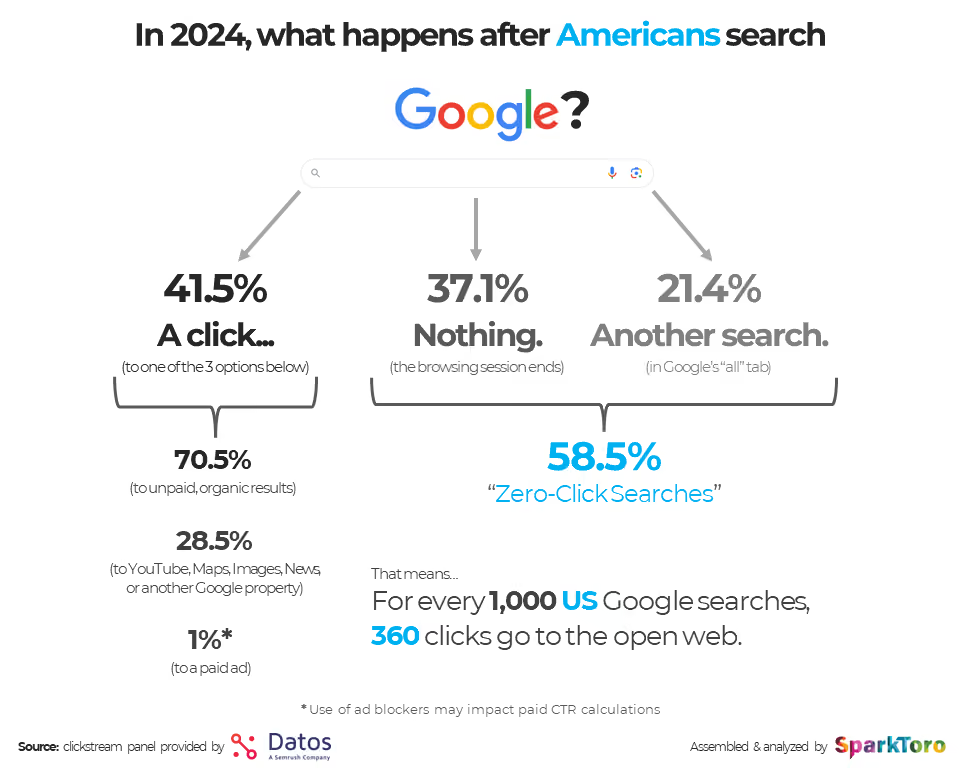
- 58.5% of US Google searches end without a click to the open web
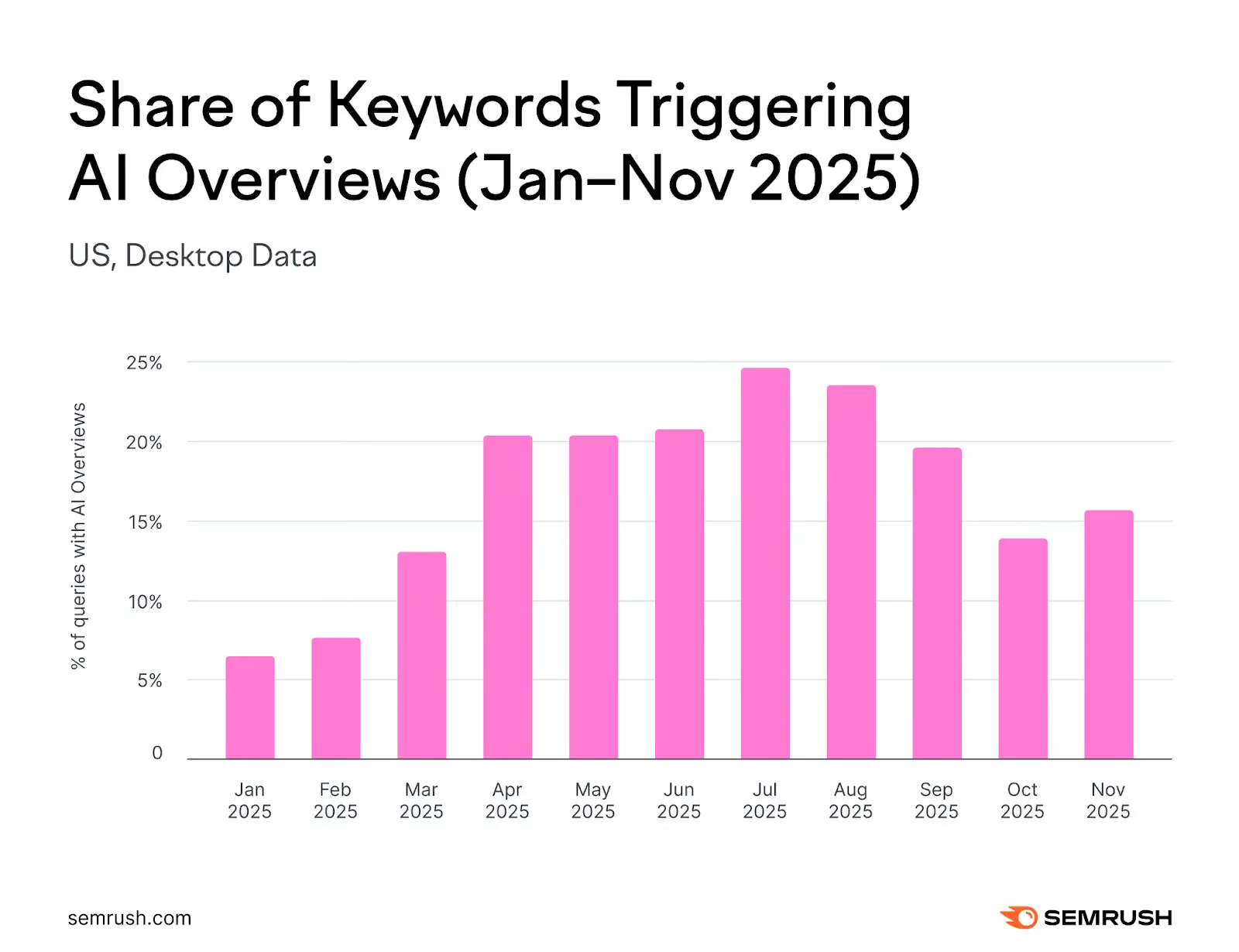
- AI Overviews appeared in ~16% of US queries by November 2025, after peaking near 25% in July
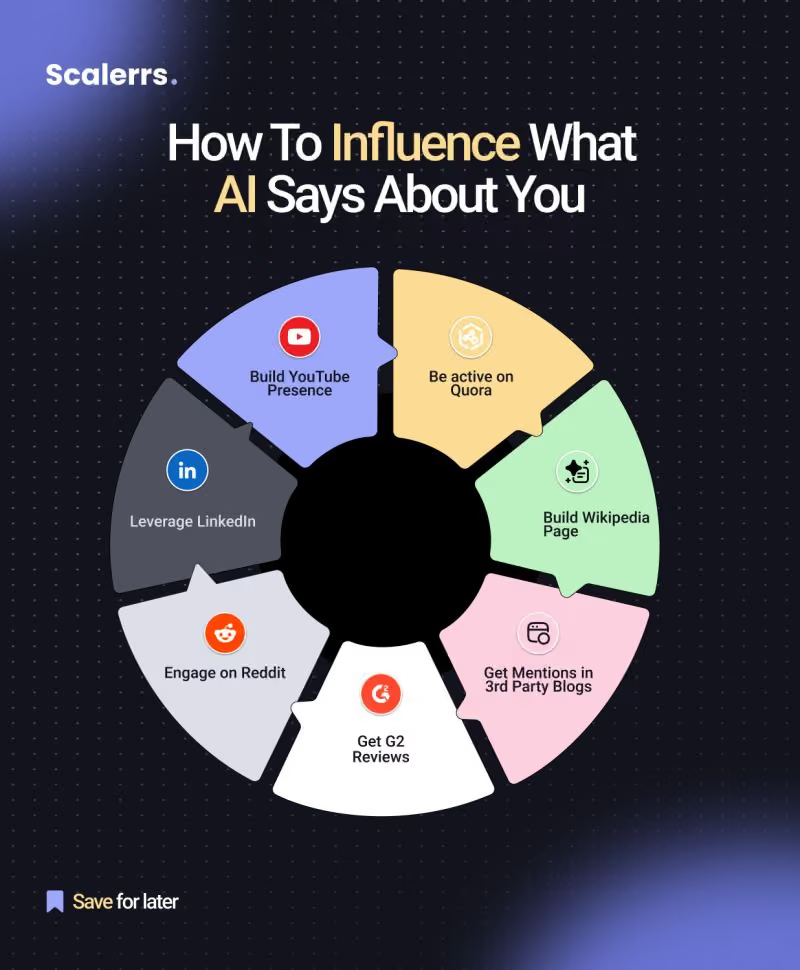
The five surfaces that matter most outside of Google:
- AI SEO or AEO: ChatGPT, Perplexity, Claude, Gemini, AI Overviews. Citation is the new featured snippet.
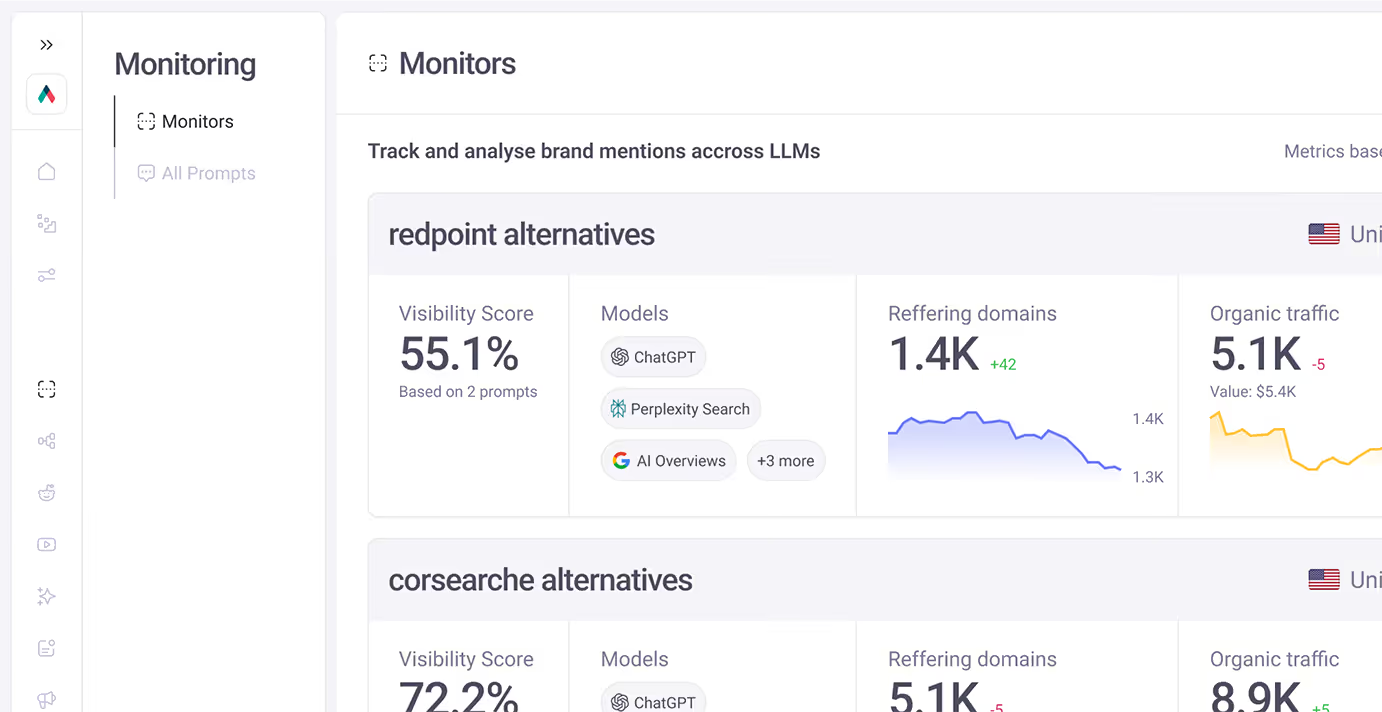
- Reddit SEO: Buyers pull recommendations from r/SaaS, r/marketing, and vertical subs. Reddit also feeds AI tools heavily.
- YouTube SEO: Video reviews and product walkthroughs rank in Google AND get pulled into AI training
- Third-party listicles. "Best CRM for SaaS" articles get cited by AI tools as the authority source
- Wikipedia pages: Compliant, neutral pages that survive editorial review and become a citation source for LLMs
{{protip="/pro-tips/saas-seo-tip-6"}}
If you don't know where your brand currently shows up across these surfaces, book a free AEO audit and we'll map your visibility gaps.
Step 7: 3rd-Party Listicle Placements
"Best [category] software" articles are where your audience is making purchase decisions. Buyers read them. Sales reps share them. And AI tools cite them as authority references for category queries.
Getting placed on the right listicles drives more than PR. It drives your pipeline.
The playbook:
- Identify the top 10–15 "best [category]" articles ranking in the top five for your target queries. These are your placement targets.
- Audit which ones already include your competitors and don't include you. Those gaps are costing you deals since buyers reading those articles aren't considering you.
- Pitch placements proactively. For organic editorial pieces, this means outreach with a genuine value prop. For sponsored placements, vet the site for real traffic and ICP relevance before you invest.
- Track whether being added to a listicle correlates with brand search volume increases. That's your signal that the placement is actually reaching buyers, not just adding a backlink.
📋Side Note: Third-party listicles are also heavily cited in ChatGPT and Perplexity. A placement on a "Best CRM for SaaS" article with 50K monthly visits doesn't just drive referral traffic; it increases the probability your brand shows up when a buyer asks an AI tool to recommend options in your category.
Step 8: CRO and Lead Conversion Integration
If organic traffic converts to trial at 2%, and only 3% of those trials become paying customers, you need roughly 17,000 organic visitors to close 10 customers.
That's why attribution matters. You need to know which pages and keywords are driving trials that actually convert, not just trials.
That’s why you must tie SEO performance to product analytics, not just GA. You need to know which organic-acquired users became trials, which trials became paid, and what their LTV looks like.
Start with these three CRO basics:
- Sticky CTAs in your blog content: On long-form content especially, if your CTA disappears after the intro, most readers never see it again
- Exit-intent popups with a real lead magnet: When you give visitors something they actually want—a checklist, a benchmark report, a calculator—conversion lifts. Plus, SaaS popups perform strongest when focused on free-trial or demo-request CTAs shown after the visitor explores product details, not on arrival.
- Social proof inline: Place reviews and testimonials next to pricing tables and CTAs to reassure prospects at the final conversion point
Step 9: Reporting aka Tying SEO to Pipeline
Most SaaS teams have SEO data. Few have SEO reporting that actually defends the budget.
The difference is attribution. Organic sessions and ranking improvements feel like progress in a dashboard. They don't answer the question your CMO or board is actually asking: is this channel producing revenue?
Here's how to build reporting that does.
Start with self-attribution at the demo stage. Add a single open-text field to your demo request form: "How did you hear about us?" You'll be surprised how often buyers write "ChatGPT," "saw you on Reddit," or "found your blog." This data costs nothing to collect and is often more accurate than any UTM model for top-of-funnel organic.
Connect your CRM to organic acquisition. UTM parameters get you halfway there. The full picture requires linking GA4 acquisition data to CRM records, so you can see which organic-acquired leads became opportunities, which became closed-won, and what their ACV looks like.
Report on pipeline value, not page views. The number your leadership cares about is the ARR value of deals where SEO was a first touch or assist. Build that number.
Cadence matters. Weekly: flag ranking movements on BOFU terms and any notable traffic shifts. Monthly: full pipeline attribution report, organic-to-demo conversion by page, AI citation visibility update. Quarterly: review which content is actually producing SQLs, kill or refresh what isn't.
Measuring Success in SaaS SEO
The metrics that matter for your SaaS SEO are different from blog-traffic-and-rankings dashboards. You're measuring whether SEO drives revenue for your business. Focus on these numbers:
Vanity metrics to deprioritize: total organic sessions, average ranking position, total page views. They feel productive to report but rarely tie back to revenue.
The right tools by use case:
- For traditional SEO tracking and keyword research: Ahrefs or Semrush
- For indexing and click data: Google Search Console
- For on-site conversion behavior and heatmaps: Hotjar or Microsoft Clarity
- For AI citation tracking: Promptwatch, Profound, or Semrush's AI visibility features
- For pipeline attribution from organic: Your CRM (HubSpot, Salesforce, Attio) combined with UTM tracking and self-attribution surveys at the demo stage
SaaS SEO in Action: The Korona POS Case Study
Overview: Korona POS is a point-of-sale platform serving retail and hospitality, competing against Square, Shopify, and Lightspeed.
Challenge: Korona had a strong product but limited organic visibility on the high-intent keywords driving POS buyers. Traditional SEO alone wasn't enough to outrank competitors with higher domain authority. They also had no presence in AI search, where retail and hospitality buyers were starting to research solutions.
Strategy: A multi-surface campaign combining traditional SaaS SEO with AEO, Reddit marketing, and link building. Focus: commercial-intent keywords (alternatives, comparisons, vertical use-case pages) plus structured AEO work to get cited in Google AI Overviews against bigger competitors.
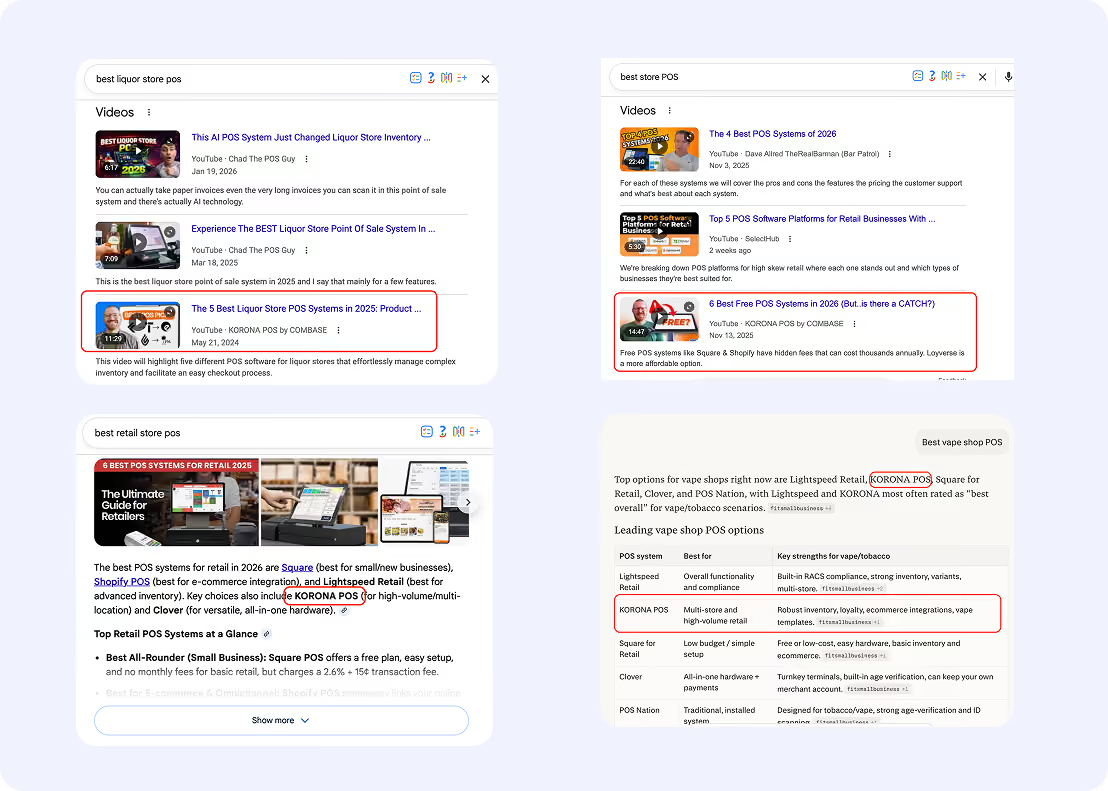
Results:
- Ranked #1 for non-branded POS keywords against Square, Shopify, and Lightspeed
- #2 in AI search visibility in their category, with 4,001 LLM mentions
- Cited in Google AI Overviews for their most important terms
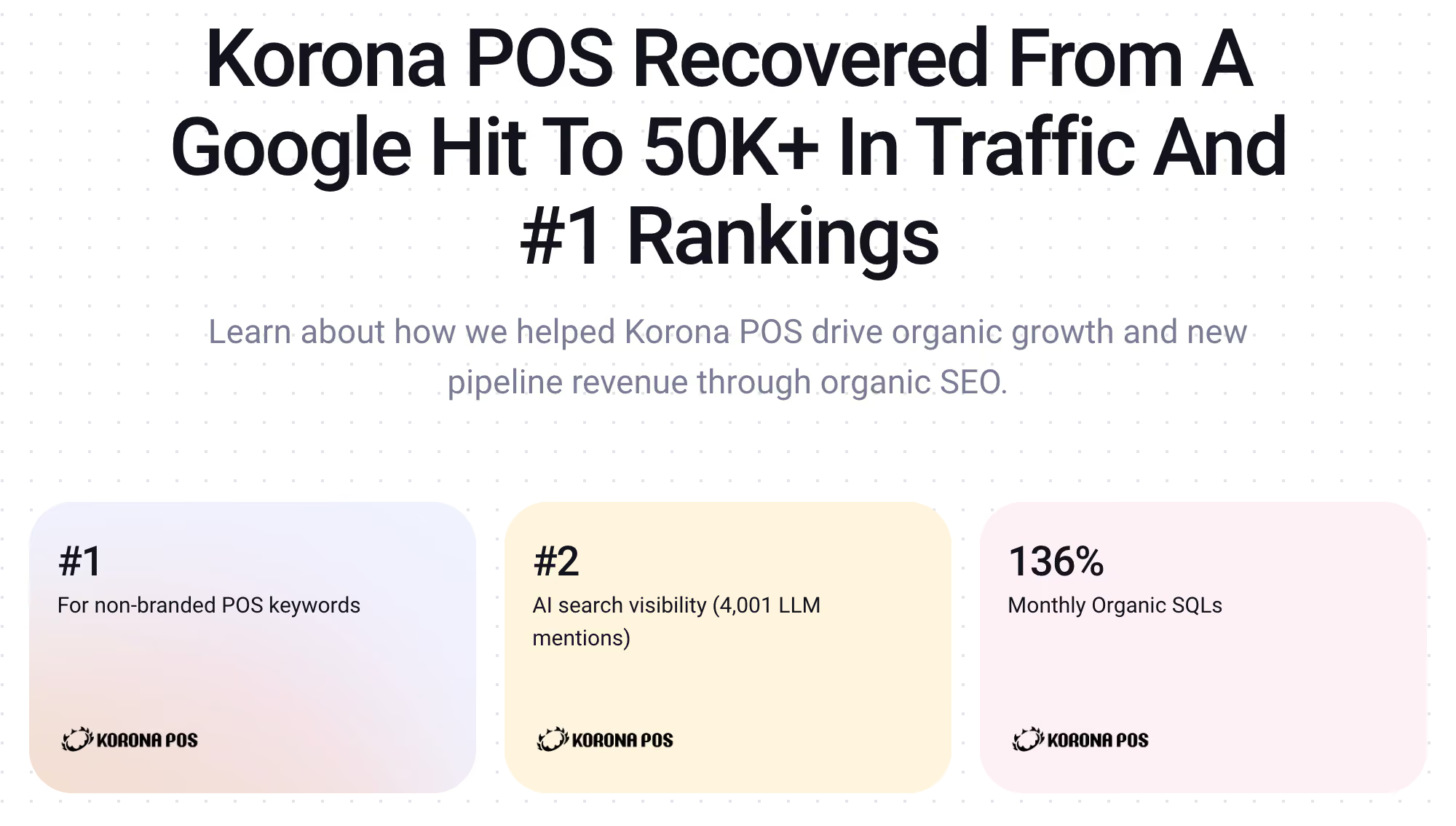
Takeaway: Multi-surface visibility, not just Google rankings, lets smaller SaaS players punch above their domain weight.
As CMO Michael Calberg put it:
"With the help of Scalerrs, we got Cited in Google AI Overviews for our most important terms. Seems unreal, especially cause we compete with big players like Square, Shopify, and Lightspeed."
Common Mistakes SaaS Teams Make with SEO
Some of the avoidable errors we see SaaS teams make with SEO include:
Targeting TOFU Before BOFU is Covered
The instinct is to write educational content first. But if you don't have alternatives pages, comparison pages, and pricing content indexed and ranking, you're burning budget pulling in readers who will never convert. Get the commercial-intent content right first, then build the educational layer on top.
Chasing Volume Over Intent
A keyword with 15,000 monthly searches and a $0.40 CPC is usually an awareness play. A keyword with 400 searches and a $14 CPC is a buyer. We see SaaS teams routinely over-index on the former and then wonder why organic traffic doesn't produce demos.
Skipping the Technical SEO Foundation
Content on a technically broken site is content that doesn't rank. JavaScript-heavy SPAs that search engines can't render. Product pages accidentally blocked in robots.txt. Missing canonical tags on integration directories generating near-duplicate URLs. These kill ranking potential before your first word gets published.
Not Involving Sales in Content Briefs
Your SDRs hear the actual buyer questions every day. If your content team isn't pulling those into briefs, you're guessing at what to publish, and no SaaS content marketing program survives on guesswork. The best-converting SaaS content comes from friction points your sales team already knows about.
Ignoring AI Search Entirely
In 2026, ignoring AEO means being invisible to buyers who research inside ChatGPT, Perplexity, and Google AI Overviews before they ever hit your site. Your brand not showing up in AI answers is the same problem as not ranking on page one—except it's harder to spot because it doesn't show up in your Google Search Console.
Publishing and walking away
A page published in January 2024 is stale by mid-2025. Comparison pages especially need quarterly refreshes as competitors update pricing and features. One of the highest-ROI SEO moves for most SaaS teams is refreshing existing content, not publishing new articles.
Measuring the wrong things
Organic sessions and average ranking position feel like progress. They're not. If your SEO reporting doesn't tie to demos, trial signups, or pipeline value, you're flying blind.
FAQs
1. Do SaaS companies need SEO?
Yes. Even with paid acquisition working, SEO compounds over time and lowers your blended CAC. For SaaS specifically, organic also drives demo requests at a fraction of paid cost per lead, and organic-attributed pipeline is one of the most defensible numbers a marketing leader can take to leadership.
2. How long does SaaS SEO take to show results?
It depends on your starting position. With an established domain and clear ICP, you'll usually see meaningful ranking movement in 4-6 months and stronger pipeline impact at 9-12 months. Earlier-stage companies with lower-DR domains should budget closer to 6-9 months.
3. What's the difference between SaaS SEO and AEO?
SaaS SEO is optimizing to rank in traditional search engines. AEO is optimizing to get cited inside AI tools like ChatGPT, Perplexity, and Google AI Overviews. The signals overlap, but the playbook differs.
4. Should I hire a SaaS SEO agency or build in-house?
It depends on your budget and stage. Building an in-house SEO team can run $200K+ annually before tools. For most SaaS companies under 100 employees, an agency gets you a full team of specialists for less. Compare that against freelancers and in-house teams before you decide.
See Why Leading SaaS Companies Choose Scalerrs
SaaS SEO isn't getting easier but most agencies are still playing the old game. Scalerrs is built specifically for B2B SaaS companies that need to own their product category across multiple surfaces: Google, Reddit, ChatGPT, Perplexity, AI Overviews, and third-party listicles.
That’s the model: category ownership that shows up everywhere your buyers actually research.
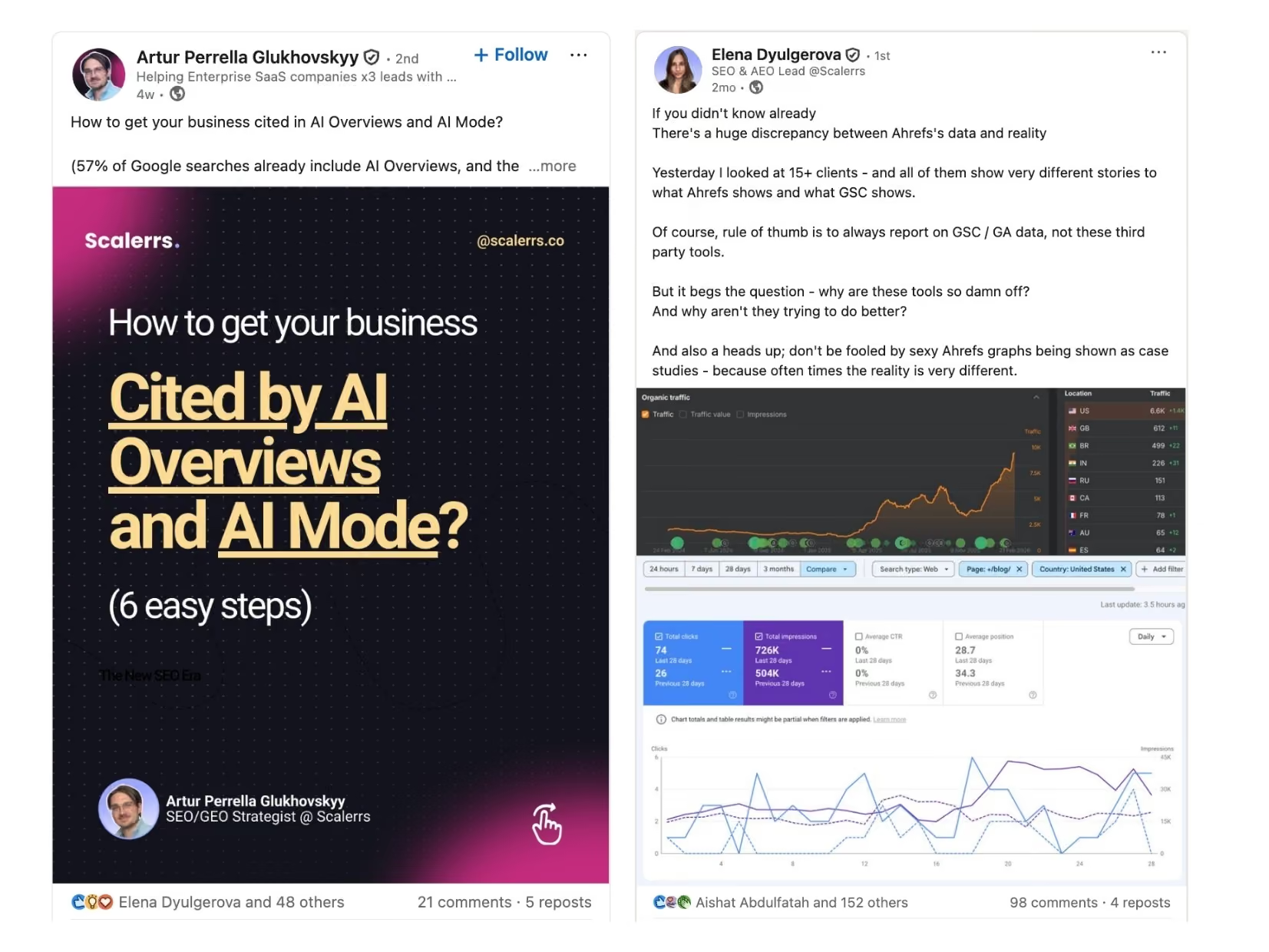
Our team consists of well-known SaaS SEO and content specialists who own their expertise and share daily tips on LinkedIn for free!
Jules Davies, Artur Perrella Glukhovskyy, Bill Gaule, Elena Dyulgerova, Leigha Henderson, and Beatrice Manuel have years of hands-on experience and domain expertise, which they use to elevate results for our clients.
Book a free strategy call and we'll walk through our process together.
Book a Discovery Call
Turn Organic Search Into Your #1 SaaS Acquisition Channel.

Let us scale your SEO channel for you.
reviewed onClutch
4.9 rating






Get Free Resources In Your Inbox
Get all of our FUTURE playbooks such as Figma files, checklists and SOPs directly into your inbox.

.avif)