


SaaS Keyword Research: 7 Steps & Strategies for 2026

Key Takeaways
- SaaS keyword research identifies and prioritizes the search terms your buyers use across their entire journey, from first problem search to purchase decision
- Unlike traditional keyword research, which chases high rankings, volume, and traffic, SaaS keywords map to commercial intent and move someone closer to booking a demo
- The best strategy targets keywords across all three funnel stages: TOFU, MOFU, and BOFU
- Use tools like Ahrefs, Semrush, or Google Search Console to identify your "golden keywords," then build your full-funnel keyword list around them
- Winning SaaS keyword strategy requires owning your product category across every surface buyers use to research software: Google, Reddit, YouTube, third-party listicles, Wikipedia, and AI search. Scalerrs builds and deploys that strategy end-to-end
What Is SaaS Keyword Research?
A good SaaS keyword strategy maps buyer intent across the funnel and identifies the searches most likely to generate pipeline. Ask yourself:
- What problems are my buyers searching to solve?
- What keywords signal they're actively comparing software?
- Which terms connect to pipeline?
- Where do I have a realistic chance of ranking or getting cited?
How SaaS Keyword Research Differs from Traditional Keyword Research
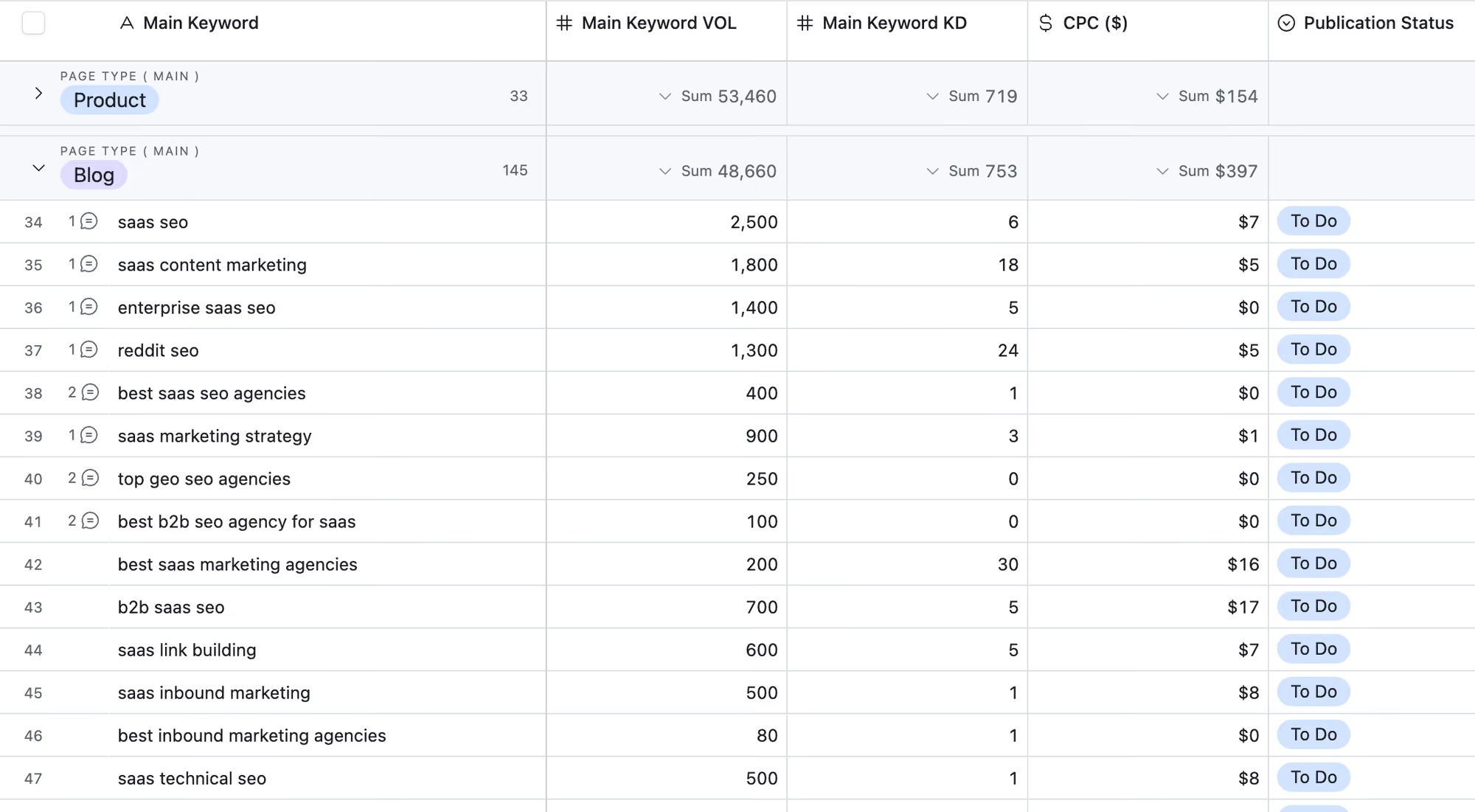
Traditional keyword research prioritizes traffic. SaaS keyword research prioritizes commercial intent across a long buying journey involving 8-12 decision-makers, according to Small Business Expo.
Here are six main differences:
{{protip="/pro-tips/saas-keyword-research-tip-1"}}
The 3 Types of SaaS Keywords You Need to Target
Before getting into each type of SaaS keyword, remember how keywords are generally structured. Most fall into two categories:
- Short-tail keywords (1-3 words): the broad, high-volume terms that define your category and anchor your seed list
- Long-tail keywords (4+ words): the specific, intent-rich terms that map to funnel stages and tell you how to convert
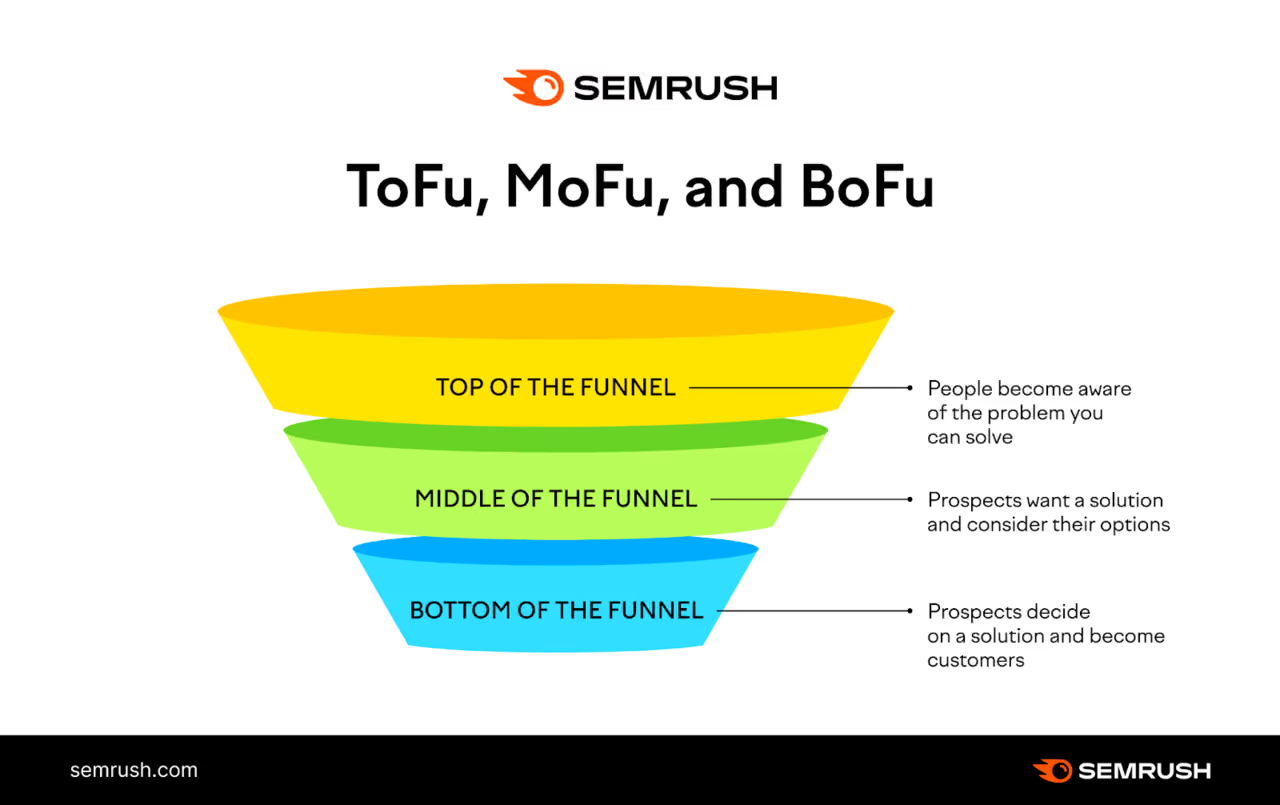
In practice, your keyword list will contain both. For SaaS, they break down further into three types, mapped to each stage of the buyer journey
TOFU: Top of Funnel
TOFU keywords capture buyers who've identified a problem and are searching for answers. They're not evaluating tools yet.
Three keyword types to target at this stage:
- Industry keywords: terms buyers use when researching their space before they know what solution they need. Example: "SaaS churn benchmarks."
- JTBD (Jobs-to-be-Done) keywords: search terms tied to a specific task or outcome. Example: "How to automate sales outreach."
- Error keywords: used when something is broken, and the buyer needs a fix. Example: "Why is my trial conversion rate low?"
Most TOFU keywords are long-tail, specific problem queries with lower competition that are easier to rank for early. Use them to build topical authority and get your brand into their world.
MOFU: Middle of Funnel
MOFU keywords signal a buyer who understands their problem and the type of solution they need. Now they're figuring out which tool is the right fit.
Target:
- Product keywords: what buyers search when evaluating what a specific tool does. Example: "Best CRM for SaaS startups."
- Template keywords: for buyers looking for a faster path to solving a problem. Example: "SaaS onboarding checklist template."
- Integration keywords: checking whether a tool fits their existing stack. Example: "Best CRM that integrates with Outreach."
- Switch moment keywords: for buyers done with their current tool. Example: "Alternatives to Salesforce for small teams."
A single well-ranked comparison page can drive more qualified pipeline than 20 TOFU posts. The buyer arriving here is already sold on the category. You just need to help them pick a tool.
BOFU: Bottom of Funnel
BOFU keywords are searched by buyers ready to decide. These skew short-tail, like named tools, direct comparisons, and pricing reviews. They're competitive, but they convert at the highest rate because the buyer arriving here knows what they need.
Two keyword types dominate:
- Alternative keywords: buyers who've evaluated a competitor and want to know what else exists. Example: "Intercom alternatives for startups."
- Direct BOFU keywords: final decision-point terms covering comparisons, pricing, and reviews. Example: "HubSpot vs Salesforce for SaaS" or "[Your product] pricing."
When targeting these keywords, your content has to be honest and specific, plus built around the actual criteria your buyers use to decide.
{{protip="/pro-tips/saas-keyword-research-tip-2"}}
How to Perform Keyword Research for SaaS Products: Step-by-Step Process
Jules Davies called it on LinkedIn a while back: "SaaS SEO keyword research will make or break revenue creation."
We use the same principles, expanded into the seven-step framework below.
Step 1: Define Your ICP and Buyer Journey
Get clear on who you're targeting and how they buy. Map your ICP's job titles, company size, and the pain points that trigger them to start searching.
Then trace their journey: what do they search for when they first feel the problem? What do they search for when comparing tools? What's the last search before they book a demo?
Without this mapping, keyword lists end up built around product features instead of buyer problems.
At Scalerrs, every campaign starts by mapping the full ICP journey before we touch a keyword tool. We then map that buyer intent across Google searches, AI prompts, Reddit discussions, YouTube, and other discovery surfaces, because today's buyers don't research software in just one place.
Step 2: Build Your Seed Keyword List
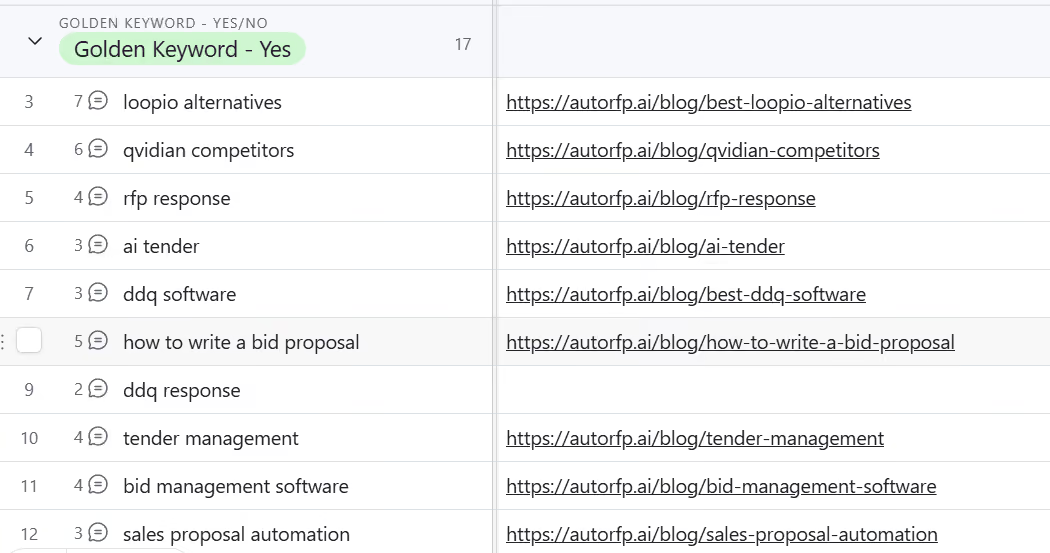
Seed keywords are your starting point: 50 to 100 core terms that define your category, the problems your product solves, and the alternatives buyers compare it against.
Pull from three sources:
- Problem keywords: pain points your product solves. Example: "Reduce churn rate SaaS."
- Category keywords: what buyers call your product type. Example: "Sales engagement platform."
- Competitor keywords: your named alternatives. Example: "Salesloft alternatives."
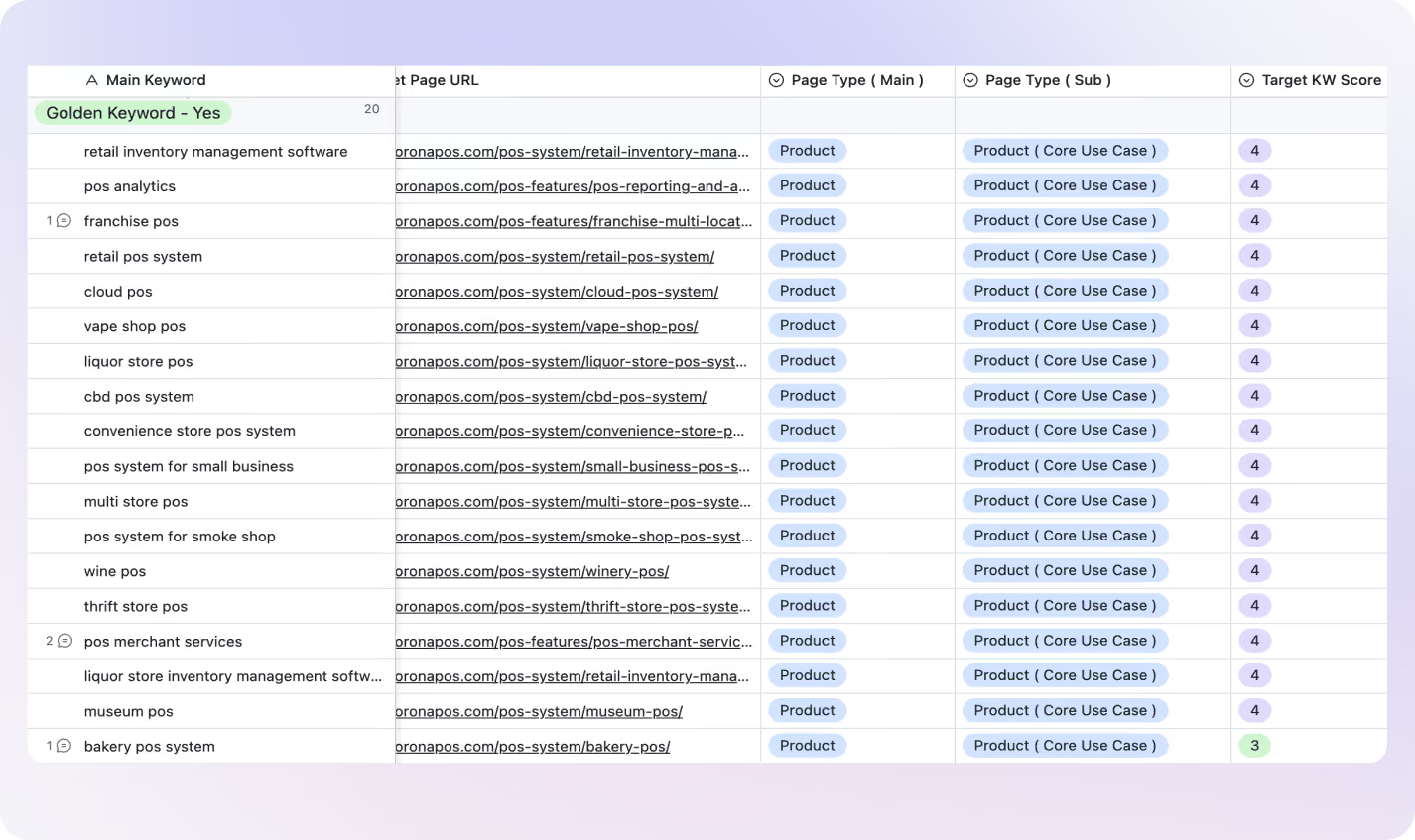
Then cross-reference Ahrefs or Semrush with Google Search Console. GSC shows where you already have relevance, which is often more useful than starting from scratch.
{{protip="/pro-tips/saas-keyword-research-tip-3"}}
Step 3: Run a Competitor Gap Analysis
Your competitors have spent years building keyword coverage. Use it as a shortcut.
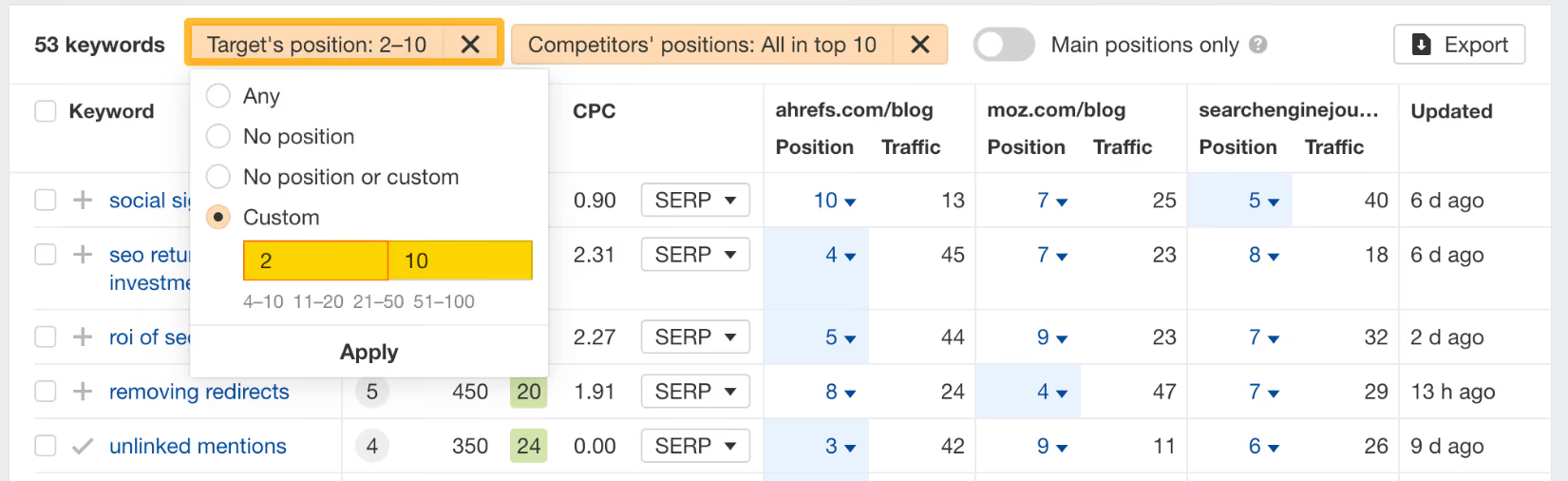
In Ahrefs or Semrush, run a Content Gap analysis: input your domain against two to four direct competitors. Filter for commercial and transactional intent, and skip informational terms with no pipeline connection at this stage.
Focus on:
- Alternative and comparison keywords your competitors rank for
- BOFU category terms sitting in positions 1 to 10
- Keywords where multiple competitors rank, but you don't appear
{{protip="/pro-tips/saas-keyword-research-tip-4"}}
Step 4: Validate Intent by Reviewing SERPs
Volume and difficulty scores tell you what's popular. SERPs tell you what Google actually thinks a keyword means. Search every keyword you're considering.
If blog posts dominate, it's informational, and your landing page won't rank there. Comparison pages signal commercial intent. Pricing pages and G2 listings signal BOFU.
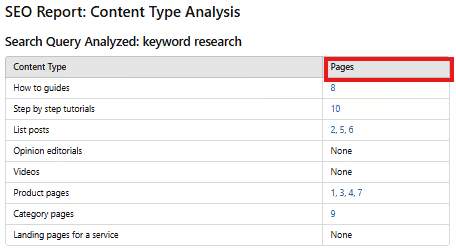
And if a keyword's difficulty score is higher than your domain authority can realistically compete with, cut it from your list.
Step 5: Score and Prioritize by Funnel Stage and Business Impact
Not every keyword deserves the same attention or timeline, so score your list across three dimensions:
- Funnel stage: BOFU first if you need pipeline fast. TOFU and MOFU for compounding authority over time
- Conversion proximity: "Best [category] software for [ICP]" drives more demos than "what is [category]"
- Ranking probability: a keyword with 2,000 searches and KD 25 beats one with 10,000 searches and KD 80 every time for early-stage SaaS
This scoring process, sometimes called a keyword difficulty and value score, weights each keyword by how close it sits to a conversion and how realistic it is to rank for, given your current domain authority. The output is a ranked list that tells you exactly what to build first.
Step 6: Cluster Keywords and Map to Content Types
Keyword clustering prevents cannibalization and builds topical authority faster. Group keywords with the same intent under one page.
For example, "Best CRM for SaaS startups," "CRM software for early-stage SaaS," and "startup CRM tools" should map to a single page, not three competing posts.
Match each cluster to the right format:
- TOFU clusters: educational blog posts and guides
- MOFU clusters: comparison pages, category roundups, use-case pages
- BOFU clusters: alternative pages, competitor comparisons, pricing pages
Build one pillar page per major cluster with 8 to 12 supporting articles linking back to it.
{{protip="/pro-tips/saas-keyword-research-tip-5"}}
Step 7: Deploy Across Multiple Surfaces
Some SaaS SEO agencies stop after building keyword clusters. But at Scalerrs, we treat keyword research as a search visibility strategy, not just a content strategy.
Once we identify your highest-intent keywords, our goal isn't simply to rank on Google, but to build visibility across every surface buyers use to research software like yours.
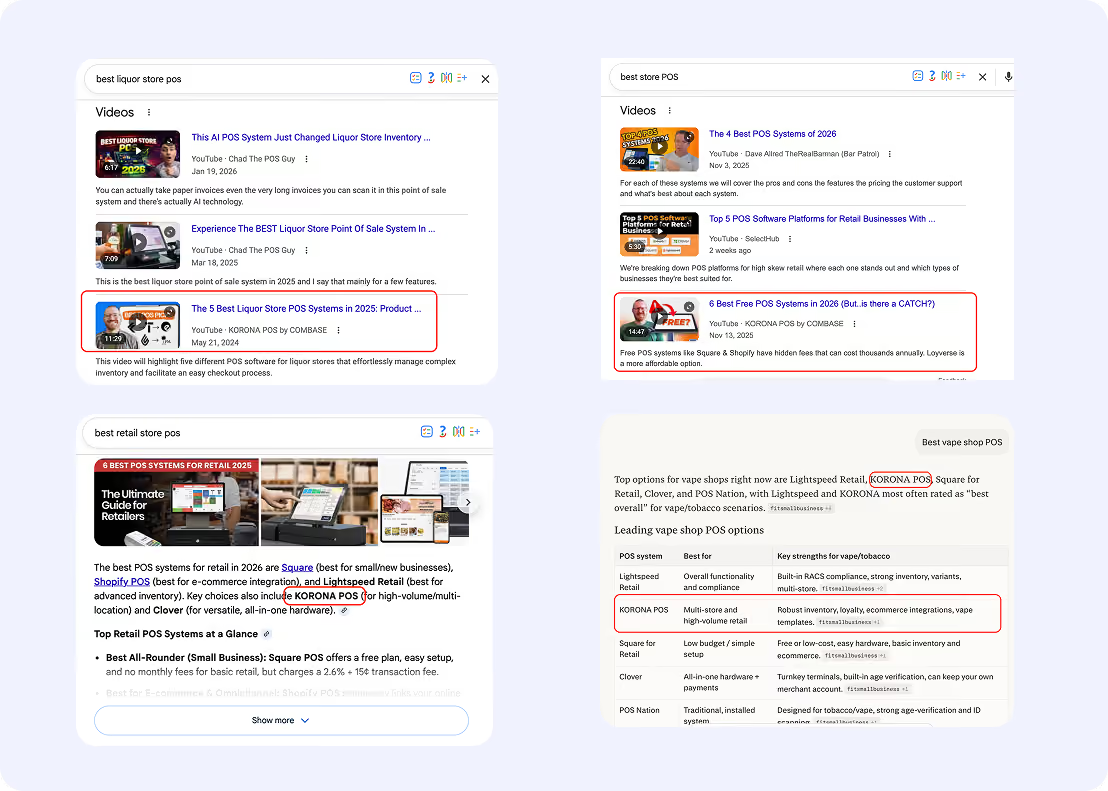
In 2026, buyers discover SaaS tools through ChatGPT, Claude, Perplexity, AI Overviews, Google AI Mode, Reddit, YouTube, and other trusted sources long before they ever land on your site.
So, deploy keywords across:
- Your site: in blog posts, comparison pages, and landing pages built around your clusters
- Reddit: find threads already ranking for your target keywords, then engage authentically. At Scalerrs, we use proprietary Reddit playbooks designed to add value to existing discussions, because spammy promotion gets ignored by communities and AI systems alike. Read more in our Reddit SEO guide
- YouTube: target the same BOFU and MOFU queries your written content covers. Buyers watch comparison and how-to videos before booking demos. See the best YouTube marketing agencies
- Third-party listicles: identify the BOFU keywords where comparison and roundup pages dominate the SERP, then get your product featured on those pages
- Wikipedia and entity pages: build your Wikipedia entity around your core category keywords so AI systems associate those terms with your brand when generating answers. Wikipedia is also one of the most frequently cited sources in AI-generated responses, which is why it forms a core part of our AEO stack at Scalerrs
Then, your keywords also map to the prompts your buyers type into LLMs. For instance, "What's the best CRM for SaaS startups" is both a Google keyword and a ChatGPT prompt.
The intent behind each prompt tells you which sources to target.
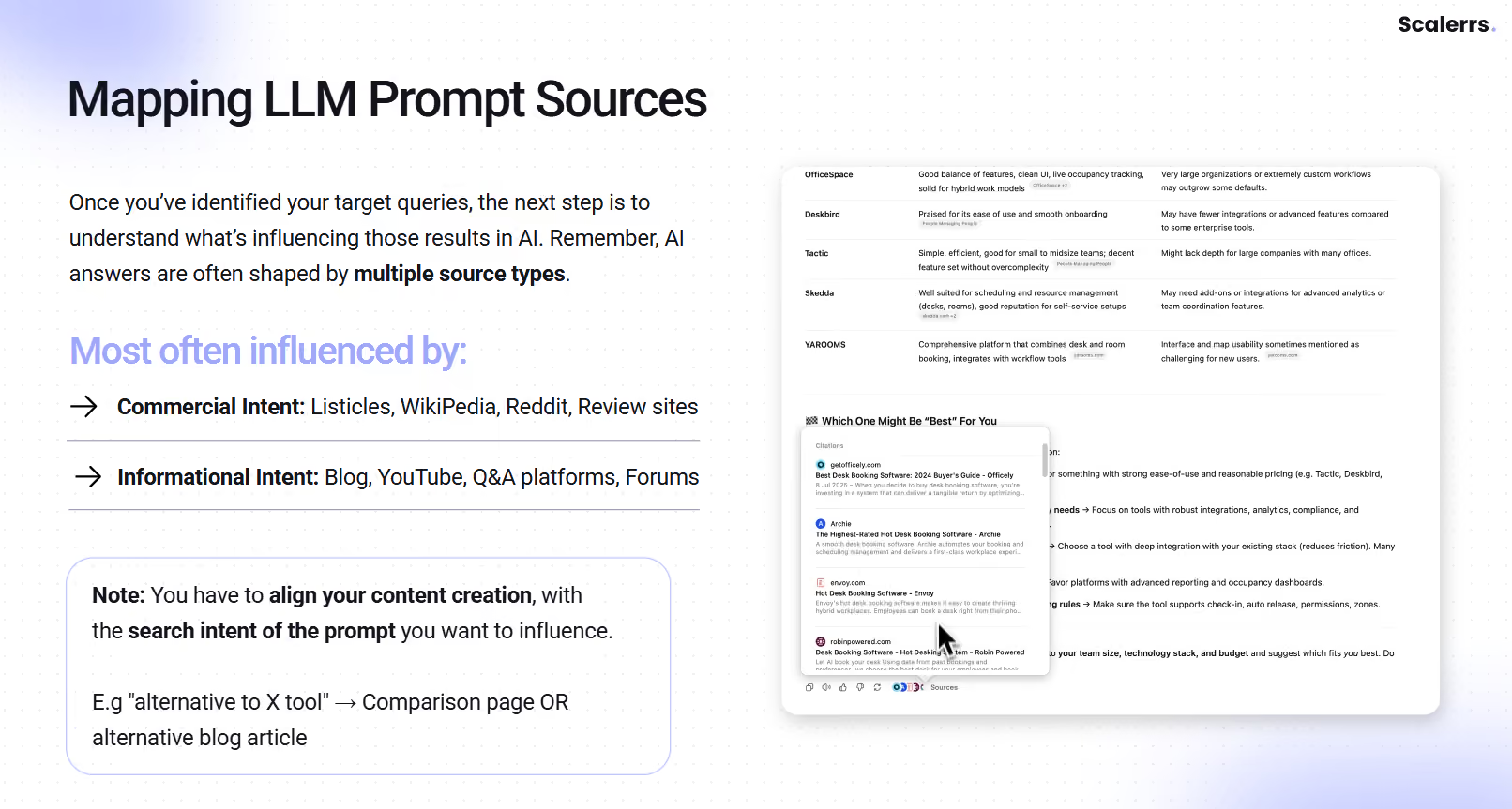
At Scalerrs, we use keyword research and prompt generation to optimize performance on Google and LLMs. We cover the complete process in our GEO and LLM SEO Workshop.
Common SaaS Keyword Research Mistakes to Avoid
Most SaaS keyword lists fail the same way: they chase traffic instead of pipeline. Here are the mistakes we see most often.
Targeting Keywords With No Pipeline Connection
SaaS keyword lists can be full of terms that generate traffic from people who will never buy. High-volume informational terms rank well and convert nobody.
Ask yourself: Does someone searching this term have a problem your product solves?
At Scalerrs, every keyword we target maps to a buyer pain point before it makes it into a brief.
{{protip="/pro-tips/saas-keyword-research-tip-6"}}
Ignoring Competitor and Alternative Keywords
A buyer searching "[Competitor] alternatives" has already decided they want a tool in your category. Skipping these terms because they feel aggressive is one of the most expensive mistakes in SaaS keyword research.
Scalerrs builds dedicated alternative and comparison pages for every major competitor in a client's space. These pages serve two purposes: they capture decision-stage buyers on Google and get cited in AI-generated answers.
{{protip="/pro-tips/saas-keyword-research-tip-7}}
Keyword Cannibalization
Cannibalization happens when multiple pages on your site target the same keyword or intent. Google picks one, splitting ranking signals across pages that should be consolidated.
In SaaS, this happens most often when teams produce TOFU content at volume without a cluster strategy in place. Three blog posts targeting slightly different versions of the same query end up competing against each other instead of reinforcing one authoritative page.
At Scalerrs, we run a full content audit as part of onboarding to identify and resolve cannibalization. Our SaaS SEO checklist covers cannibalization as a core audit step.
{{protip="/pro-tips/saas-keyword-research-tip-8"}}
Treating Google as the Only Search Surface
SaaS buyers search beyond Google, where they ask ChatGPT which tool to use, read Reddit threads to validate decisions, and watch YouTube comparisons before booking demos.
A keyword strategy that only maps to Google SERPs misses a growing share of where buying decisions happen.
That’s why we map keyword targets across Google, Reddit, YouTube, and AI search as part of a holistic SaaS marketing strategy.
{{protip="/pro-tips/saas-keyword-research-tip-9"}}
SaaS Keyword Research in Action: Case Study
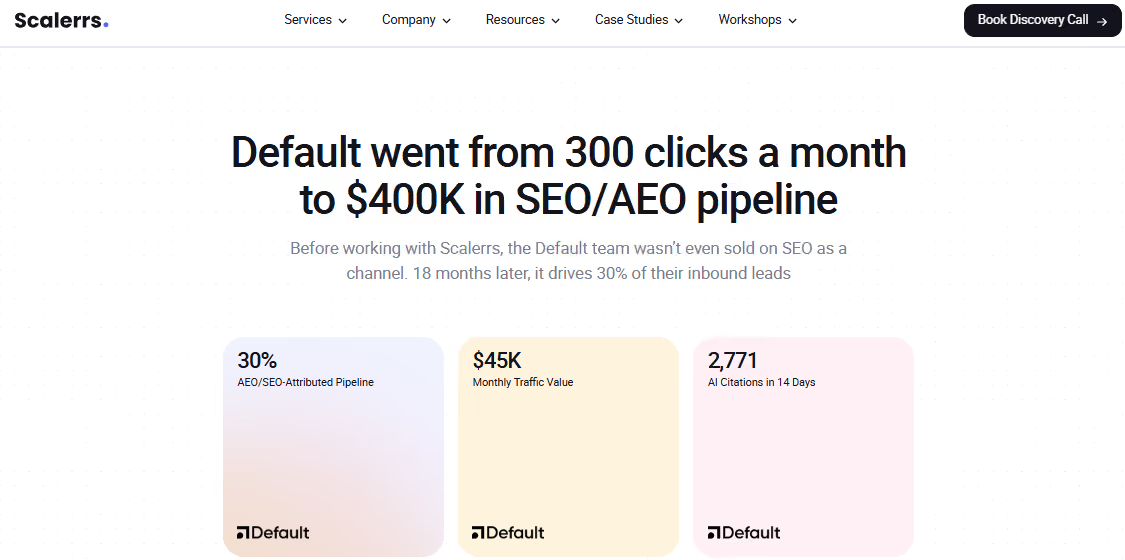
Default competes in one of the most crowded SaaS categories, going up against well-funded incumbents like Chili Piper and LeanData.
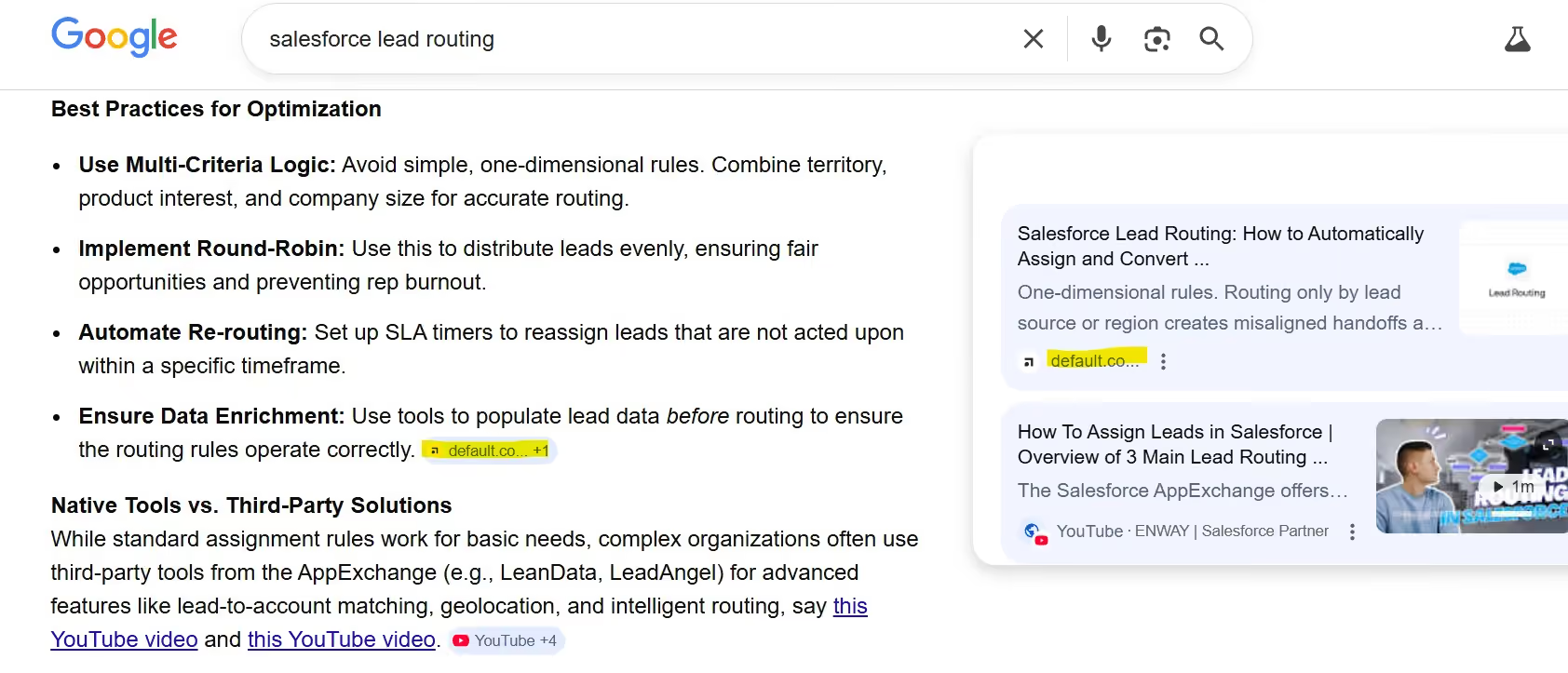
Within 18 months, Scalerrs helped grow organic traffic from 300 to more than 4,000 monthly clicks while making Default the most-cited domain in AI search for its target topics, with 2,771 citations in just 14 days.
When Stan Rymkiewicz, Head of Growth, came to us, organic traffic sat at 300 clicks per month, and he wasn't even sold on SEO as a channel yet.
The challenge: Default had no keyword strategy connected to buyer intent. Their content wasn't built around what revenue operations leaders actually search before buying.
What we did: We mapped Default's ICP and identified their highest-intent keywords.
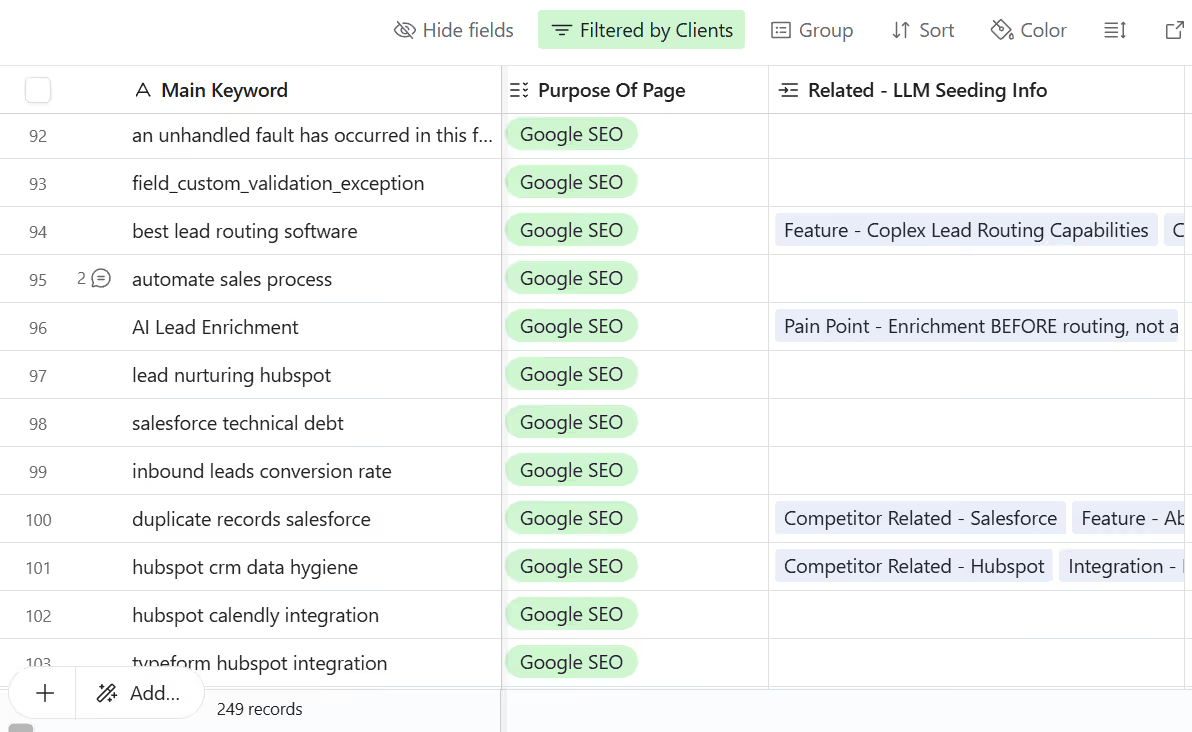
We led with BOFU keywords, built competitor alternative and comparison pages, then layered in AEO to earn citations in AI search for the same queries.
The results we got:
"I can confidently say about 30% of our pipeline comes from AEO/SEO. In the last month, we got over $300K in pipeline for really no additional work." Stan Rymkiewicz.
{{protip="/pro-tips/saas-keyword-research-tip-10"}}
Key Metrics to Track Your SaaS Keyword Research ROI
These are the metrics that tell you whether your SaaS keyword strategy is driving pipeline.
Organic Trial Signups and Demo Requests
If organic traffic grows but trial signups don't move, you have a keyword intent problem. You're ranking for terms that attract the wrong people.
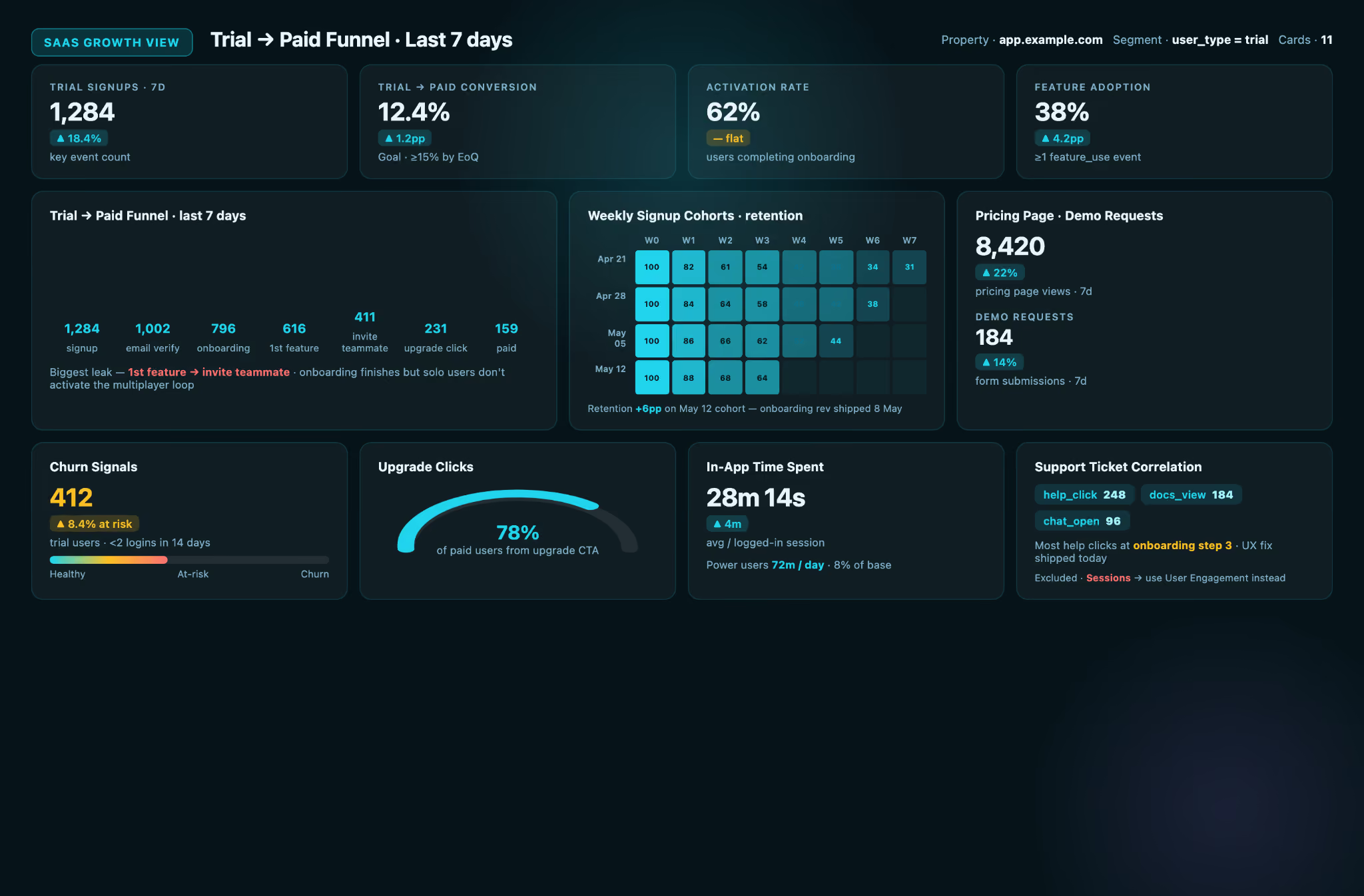
Track signups and demo requests by source in GA4 and connect it to your CRM.
Multi-touch attribution also matters here. A buyer might land on a TOFU post first, then return three weeks later via a BOFU comparison page before booking a demo. Both keywords contributed.
Expect initial MQL signals at months 3 to 6 for BOFU-focused content. Broader pipeline contribution typically follows at months 6 to 9.
Non-Branded Organic Keyword Growth
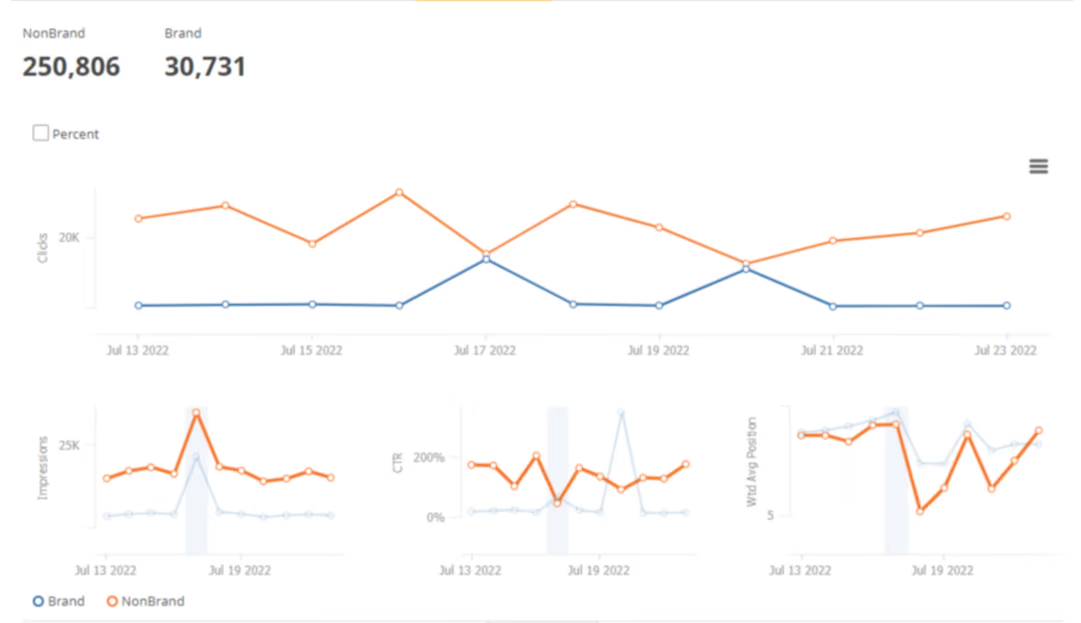
Non-branded keyword growth tells you whether you're reaching buyers who don't know your product yet. Filter out branded queries in Google Search Console and track positions 1 to 10 month over month.
Flat non-branded growth means your keyword coverage isn't expanding into new buyer intent territory.
{{protip="/pro-tips/saas-keyword-research-tip-11"}}
AI Citation Rate for Target Keywords
HockeyStack data shows it takes an average of 266 touchpoints to close a B2B SaaS deal. A growing share of those now happen in Claude, Gemini, AI Overview, ChatGPT, Perplexity, and Google AI Mode, not on your website.
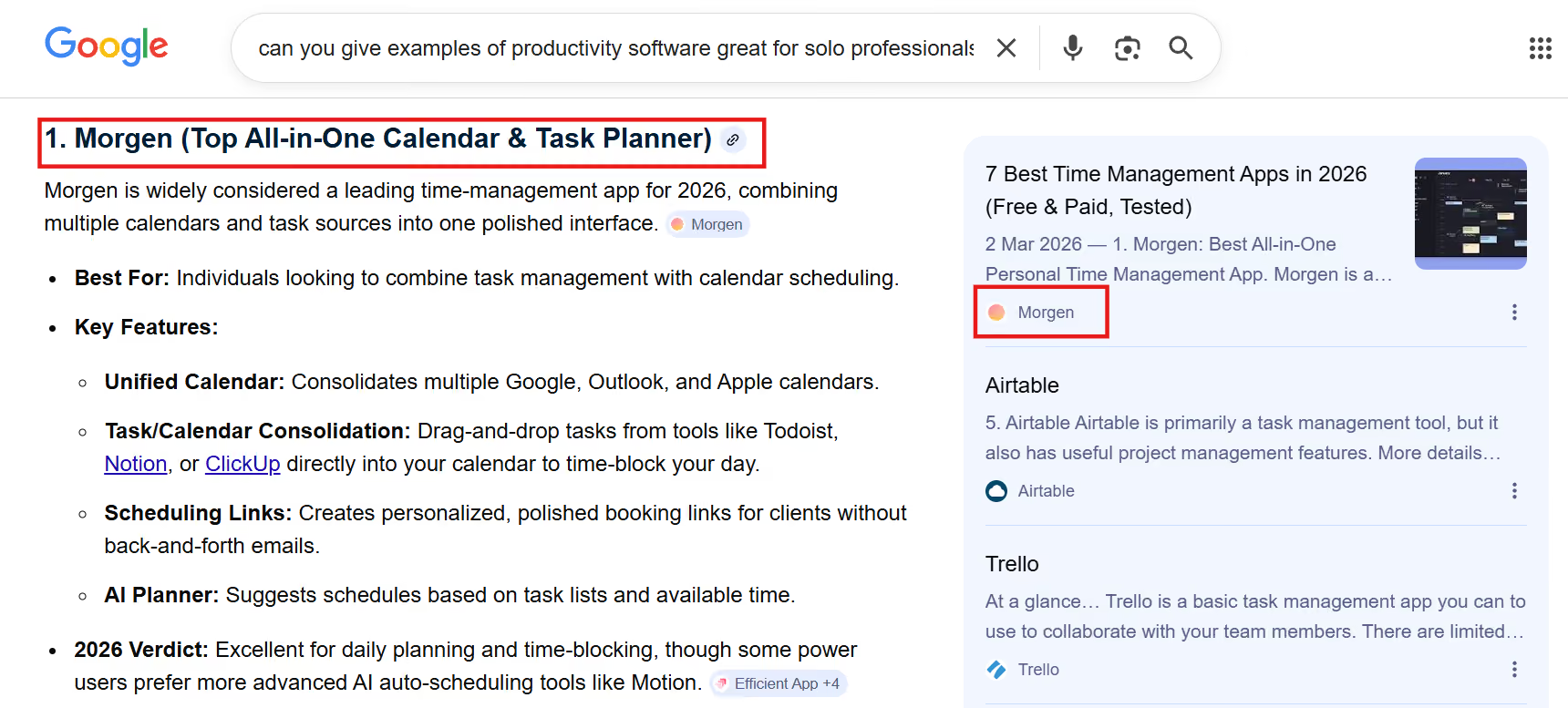
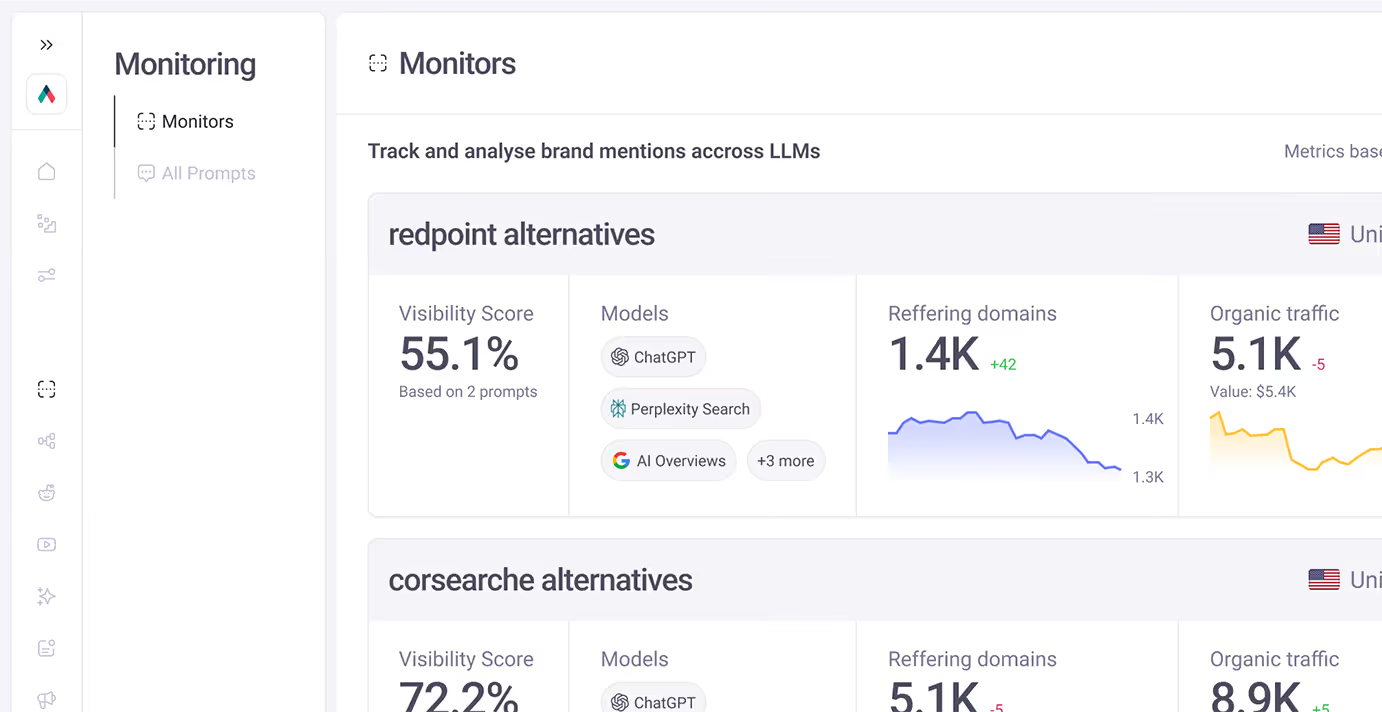
Track which of your target keywords your brand appears for in AI-generated answers using tools like Profound or PromptWatch, with the priority being your highest-intent BOFU and MOFU keywords.
At Scalerrs, we share AI citation results alongside traditional keyword rankings in every client's weekly and monthly reports. That gives clients ongoing visibility into what's changing, allowing us to refine strategy continuously rather than just waiting for the quarterly review to make changes.
FAQs
1. What is SaaS keyword research?
SaaS keyword research identifies and prioritizes search terms your buyers use across the funnel and helps you drive demos and trials, not just traffic.
2. How is keyword research different for SaaS vs. e-commerce?
SaaS buyers have longer sales cycles, multiple decision-makers, and research across comparison and alternative searches before purchasing.
E-commerce keyword research targets one-time buyers with direct purchase intent.
3. What are the best tools for SaaS keyword research?
Ahrefs and Semrush for keyword discovery and competitor gap analysis, Google Search Console for first-party query data, and AI citation trackers like PromptWatch for monitoring visibility in LLM search results.
If you'd rather have the strategy executed for you, Scalerrs combines traditional SEO, AI citation tracking, and multi-surface search optimization into one managed service.
4. Should SaaS companies prioritize BOFU or TOFU keywords first?
BOFU first.
Comparison pages, alternative pages, and category-level decision-stage content convert at the highest rate and signal to Google what your product does.
Build TOFU and MOFU authority after your BOFU foundation is in place.
5. How often should SaaS companies refresh their keyword research?
Every quarter. Competitor content shifts, buyer language evolves, and the keywords that get your brand cited in AI answers keep changing.
Build a SaaS Keyword Strategy That Drives Demos, Not Just Traffic
The companies winning organic pipeline in 2026 map keywords to buyer intent, cover the full funnel, and show up across every surface where buyers research software: Google, Reddit, YouTube, Wikipedia, and AI search.
That's the keyword strategy Scalerrs builds for 45+ SaaS clients. See how we compare to in-house teams, freelancers, and other agencies.
If you want a keyword strategy tied to ARR growth, book a discovery call with us.
Book a Discovery Call
Turn Organic Search Into Your #1 SaaS Acquisition Channel.

Let us scale your SEO channel for you.
reviewed onClutch
4.9 rating






Get Free Resources In Your Inbox
Get all of our FUTURE playbooks such as Figma files, checklists and SOPs directly into your inbox.

.avif)