

Enterprise SaaS SEO: Strategy, Framework & Case Studies

Key Takeaways
- Enterprise SaaS SEO isn't a content channel. Teams winning at scale (Zapier, ClickUp) treat it like revenue infrastructure.
- Pipeline economics favor SEO over reps and paid ads, especially since the former compounds
- BOFU content, AEO, technical governance, and programmatic SEO are the four pillars that keep your enterprise SEO engine humming
- Traffic is a vanity metric in enterprise SEO. For defensible KPIs, track SEO-attributed pipeline, branded search lift, and AI citation share.
- Winning enterprise SaaS SEO in 2026 means owning your category across multiple surfaces such as Google, AI chatbots, Reddit, and YouTube, not just ranking on page one.
"It takes too long" is the standard objection against SEO. But, compare its lower CAC and compounding ROI, and you’ll see why industry leaders such as Zapier and ClickUp invest heavily in it.
Let’s decode the framework, strategy, and case studies that show you how to run enterprise SaaS SEO in 2026.
What Is Enterprise SaaS SEO?
Enterprise SaaS SEO is the practice of building organic and AI-search visibility at scale for SaaS companies operating across multiple products, regions, and stakeholder groups.
When you're publishing thousands of pages at an enterprise level—coordinating across product, brand, legal, and dev—SEO needs to become a system that ties directly to revenue.
That’s what makes it different from mid-market SaaS SEO.
In addition, security and trust content is now part of the enterprise SaaS SEO surface area. According to ISC2's 2025 Supply Chain Risk Survey, 77% of organizations cite compliance with standards like ISO 27001, NIST, or SOC 2 as their top vendor requirement. This makes trust centers, SOC 2 and ISO 27001 compliance pages, security overviews, and dedicated subdomains (trust.company.com) search-targeted assets.
{{protip="/pro-tips/enterprise-seo-tip-1"}}
Why Does SEO Matter for Enterprise SaaS Companies?
SEO offers a unique moat for enterprise SaaS acquisition:
Pipeline economics favor SEO
B2B Google Ads CPCs jumped 29% in 2025 with CTRs down 26%, thanks to AI Overviews. Organic and AI Search lower blended CAC over time.
Plus, organic compounds. Paid and reps don't. A page that ranks today drives traffic next year, and the year after. Cut your Google Ads budget and traffic stops the same week.
Rep ROI is volatile and buying behavior has shifted
The average SaaS AE spends nearly half a year ramping, leaves in ~2 years, and about one-third still miss quota. Meanwhile, your buyers prefer self-serve research. 61% favor a rep-free buying experience.
94% of buying groups rank their preferred vendors in order of preference before making contact with any sales rep. Among these, 77% go on to purchase from the first vendor they spoke with.
In other words: the shortlist is set before your SDR ever sends an email.
Enterprise buyers research in AI search before they Google your brand
This is the part most enterprise SEO conversations still underweigh. The pre-shortlist research now happens inside AI chatbots, not only Google.
G2's April 2026 Answer Economy report surveyed 1,000+ B2B software buyers and found:
- 71% of B2B software buyers rely on AI chatbots for software research, up from 60% the prior year
- 51% now begin their purchasing process in an AI chatbot rather than traditional search, up from 29% twelve months earlier
- 69% said an AI chatbot led them to select a different software vendor than they initially planned
- One-third purchased from a vendor they had never heard of before the AI surfaced it
Here's why this matters specifically for enterprise SaaS. The enterprise buying journey is long (6-18 months on average), involves 13+ internal stakeholders, and is heavily influenced by what each stakeholder finds during independent research.
The CFO asks ChatGPT about pricing models in your category. The IT director asks Perplexity about security and integration depth. The end user asks Claude about workflow comparisons.
If your brand doesn't show up across these answers, it’s likely you’re not making it to the shortlist.
This is why the most forward-thinking SaaS teams are working to own their category across every surface where a buyer might encounter them: Google, ChatGPT, Perplexity, Reddit, YouTube, and third-party listicles. When your brand shows up consistently across all of these, you become the default answer.
Four Core Pillars of Enterprise SaaS SEO
Companies often architect enterprise SEO SaaS programs around four pillars:
BOFU comparison and alternative content
Bottom-of-funnel content like "X vs Y," "best X for Y use case," and "X alternatives" drives demo requests at a fraction of paid CPL. Enterprise buyers are evaluating vendors when they search these terms, not researching the category.
Comparison and alternative pages routinely convert at multiples of top-of-funnel content because the search intent is so specific. A buyer typing "[your category] alternatives" has already decided to leave a competitor and is now picking who to replace them with.
AEO and AI Search Optimization
AI Overviews now appear in ~16% of Google queries. AI traffic also converts 4.4x better than traditional organic.
But the bigger shift is upstream: buyers are researching in ChatGPT and Perplexity before they ever reach Google. If your brand isn't cited in those answers, you're absent during the decision phase, not just the awareness phase.
{{protip="/pro-tips/enterprise-seo-tip-2"}}
Technical SEO and Governance
Technical SEO gets harder at enterprise scale because crawlability, schema, indexation, and site architecture can break across thousands of pages and teams. If ownership between marketing, product, and engineering is unclear, critical fixes stall or never happen.
At enterprise scale, the bottleneck is rarely knowledge. It’s getting three teams to agree on a sprint priority.
Programmatic Content Systems and Internal Linking
Programmatic SEO uses one page template to create thousands of search-targeted pages, like integrations, location pages, or product comparisons.
Zapier used programmatic SEO to build thousands of integration pages and grow to over 7.3 million monthly visitors. As those pages link to each other, they compound authority across the site, helping more pages rank faster over time.
{{protip="/pro-tips/enterprise-seo-tip-3"}}
How to Build an Enterprise SaaS SEO Strategy
At Scalerrs, we follow these five steps to architect your enterprise SaaS SEO strategies and connect organic content to revenue:
Step 1: Define Revenue KPIs Before Scope
The single most common reason SEO budgets get cut is because SEO was never tied to the numbers leadership cares about. Define what pipeline attribution looks like before scope discussions. If the first stakeholder meeting is about SaaS keyword research, you've started in the wrong room.
Step 2: Audit Infrastructure and SEO Debt
Before scaling content production, ensure you run a technical audit. Crawl errors, duplicate pages from programmatic SEO, weak indexation, and broken internal links suppress rankings and waste content investment.
{{cta-general="/cta/saas-seo-checklist"}}
Step 3: Build Content Architecture (BOFU first)
Map BOFU content (alternatives, comparisons, integrations) before MOFU and TOFU. Most programs invert this and over-invest in top-of-funnel that doesn't convert.
The reason most programs invert this is incentive misalignment: agencies optimize for visible output (published articles) rather than conversion impact (demo requests). BOFU content is harder to produce and slower to pitch. It's also where the money is.
Here’s the sequence we recommend:
- Comparison pages ("CompanyA vs CompetitorB") for every major competitor
- Alternative pages ("CompetitorA alternatives") for each competitor whose customers churn into your category
- Use case pages for the top 5-10 ICP segments
- Integration pages for top integration partners
- MOFU category content (how-to guides, framework posts) that links upward to BOFU pages
- TOFU thought leadership to build domain authority and AI citation share
Programmatic content can layer on top once your BOFU foundation is built, especially when you have structured data (integration partners, use cases by industry, regional landing pages).
Step 4: Set up Multi-Surface Visibility
The most defensible SaaS SEO programs in 2026 don't stop at Google. Layering in AEO, Reddit, and YouTube turns a single-channel strategy into category ownership.
Reddit in particular is underestimated: it's the #1 cited source on Perplexity, #2 on ChatGPT Search, and #3 on Google AI Mode.
Done right, Reddit drives both AI citations and direct community trust. YouTube transcripts similarly feed AI-generated answers and Google carousel placements. Each surface compounds the others.
{{protip="/pro-tips/enterprise-seo-tip-4"}}
Step 5: Measure Revenue Impact, Not Just Traffic
Track branded search lift, self-reported attribution, AI citations, influenced pipeline, and SEO-driven revenue. Dashboards focused only on traffic fail to show business impact, making SEO budgets harder to defend during planning cycles.
Focus on the metrics that survive board review:
- Influenced pipeline (any organic touch within attribution window)
- Sourced pipeline (organic first-touch)
- Organic CAC vs paid CAC
- Branded search volume trend
- AI citation share of voice vs named competitors
- Time-to-demo from organic-first-touch leads
{{protip="/pro-tips/enterprise-seo-tip-5"}}
Top Enterprise SaaS SEO Challenges
Three problems block most enterprise SEO strategies:
Engineering and Dev Bottlenecks
Technical SEO fixes like schema markup, page speed improvements, redirects, crawl controls, and robots.txt updates all compete with product roadmap priorities. Without quick implementation plans, SEO recommendations often sit in the backlog for months. The way out? Create sprint-ready specs devs can ship fast.
CMS Limitations
Dynamic page generation, schema deployment, and scalable internal linking frequently require middleware, custom tooling, or headless CMS architecture. Teams that ignore these limitations early usually face expensive rebuilds later.
Attribution to Revenue
Multi-touch enterprise buying journeys make first-click attribution useless. You'll need self-attribution surveys, blended models, and a willingness to defend SEO with directional data, not perfect numbers.
What works in practice:
- Self-attribution survey on every demo form ("How did you hear about us?") with a free-text "where else" field
- Multi-touch attribution model that gives organic credit for any touch within the buying window
- Sales rep tagging during discovery calls ("Did the prospect mention finding us through ChatGPT, a comparison article, etc.?")
- Branded search lift as a leading indicator of AEO performance
{{protip="/pro-tips/enterprise-seo-tip-6"}}
The Agency Trust Deficit
Many enterprise SEO buyers have been burned, sometimes more than once. Agencies that overpromised on traffic, reported vanity metrics for SaaS SEO, or disappeared after onboarding have made a significant portion of the market skeptical of the entire channel.
This becomes an objection to how SEO has been sold and delivered. The way through it is consistent early wins, transparent reporting, and treating the engagement as a partnership rather than a retainer.
At Scalerrs, we practice this through things like direct Slack access, a 30-minute response guarantee, a custom-built client portal (not a Google Sheets dump), and proactively surfacing wins between formal reports.
Enterprise SaaS SEO Case Study Examples
Find out how leading enterprise SaaS companies turned SEO into a compounding pipeline, product visibility, and long-term customer acquisition.
Example 1: How Zapier Built an Organic Traffic Engine worth $9.2M/Month
Zapier's core category ("automation tool") has barely 200 monthly US searches. They built an organic engine worth $9.2M/month, anyway, by treating SEO as infrastructure rather than output.
- Product-led "backdoor" content. Zapier ranks for keywords that aren't about Zapier. "Best to-do list apps," "best AI image generator," "best free video editing software." Each article delivers the listicle, then introduces Zapier as the automation layer underneath.
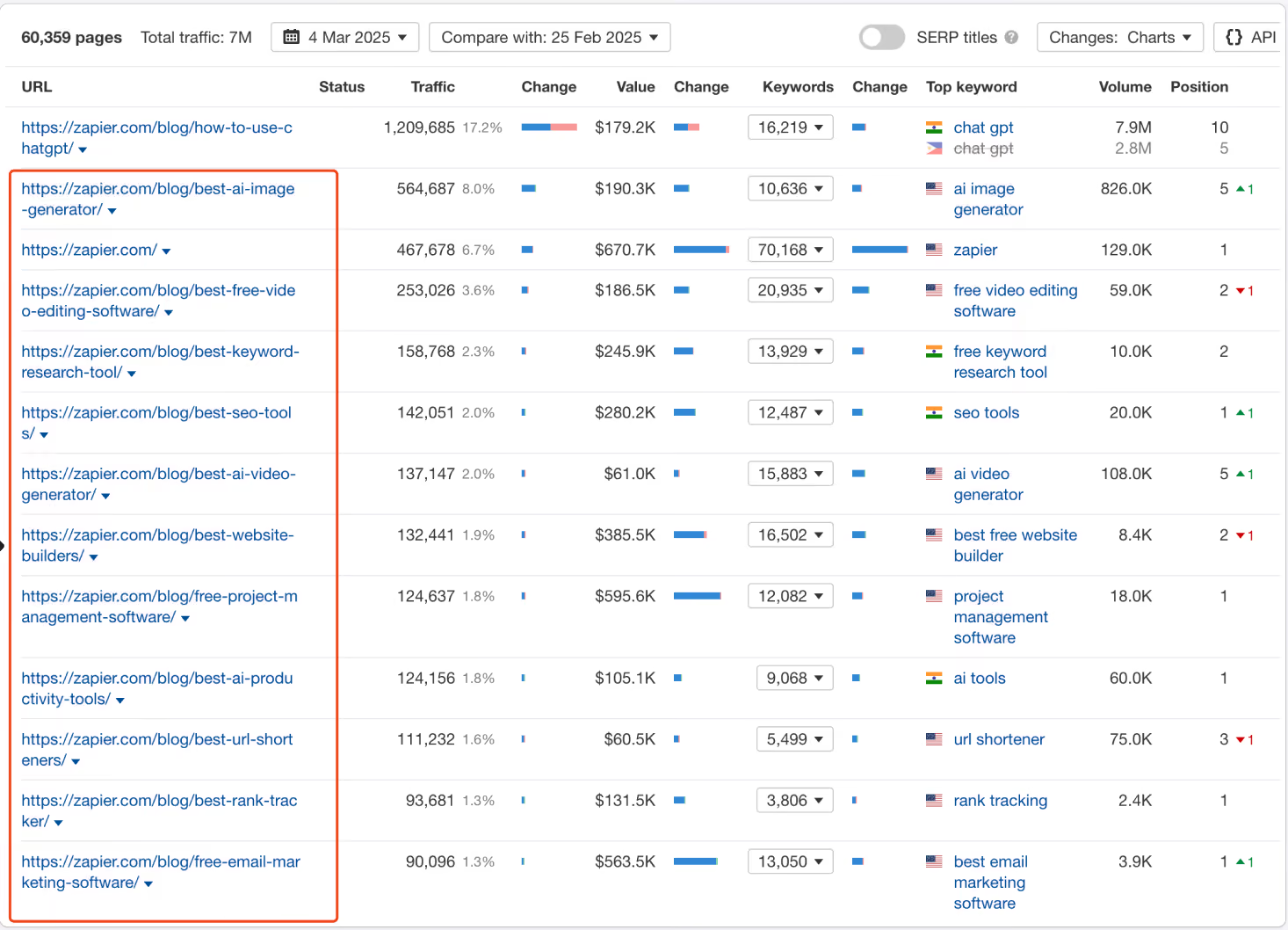
- Three-tier programmatic page architecture: They built tens of thousands of templated pages including app pages (/apps/google-sheets), app-to-app pages (/apps/google-sheets/integrations/trello), and multi-app combinations (Sheets + Slack + Trello)
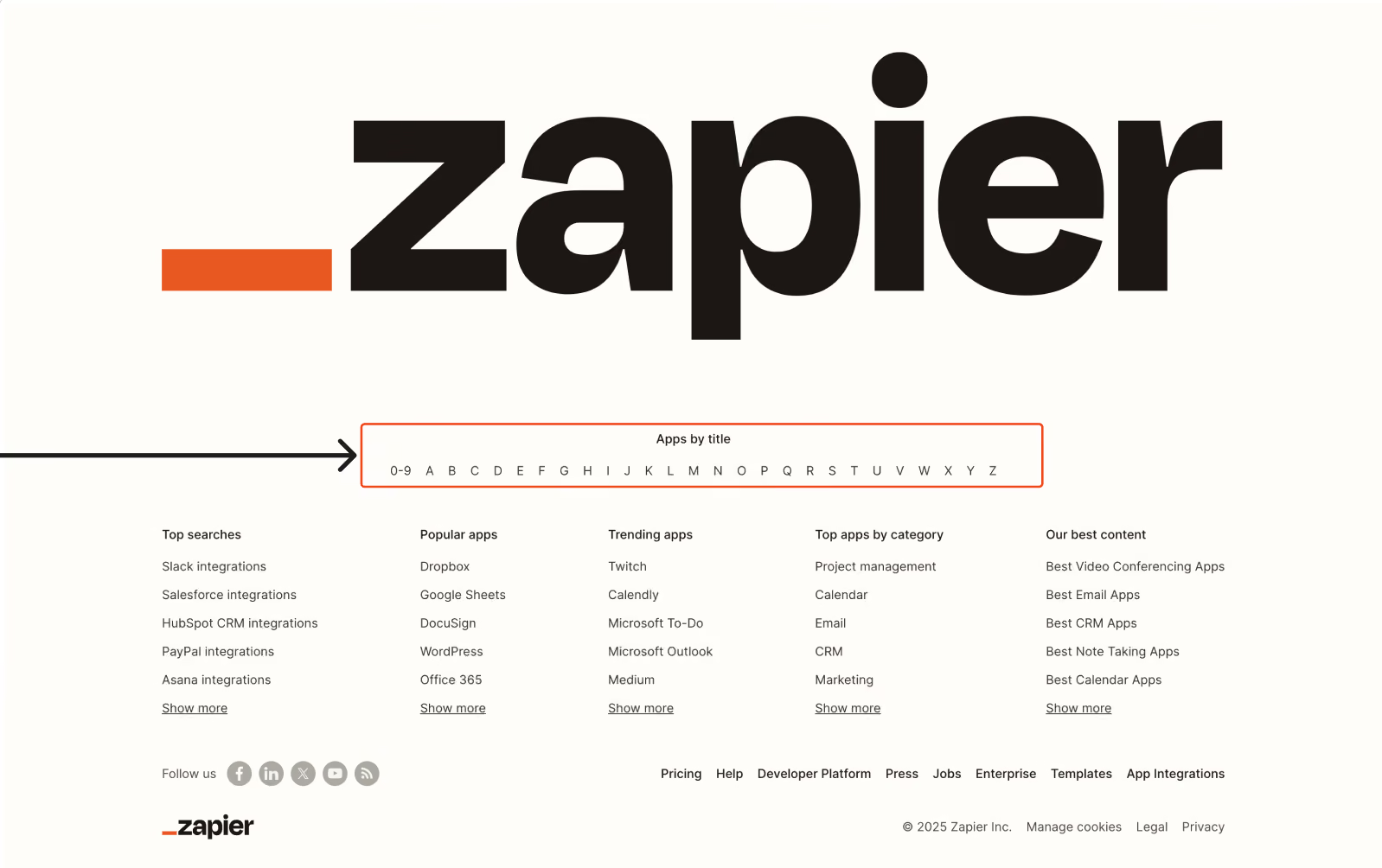
- Homepage as crawl-budget distributor. Below the hero, an alphabet bar (0–9, A–Z) opens an on-page popup linking to thousands of app pages. The homepage is the most-linked URL on most sites. Zapier uses it to push link equity directly into programmatic pages that need indexation.
Want to see how these page templates are planned and scaled? Explore our guide to programmatic SEO for SaaS.
- Backlinks for competitive money terms. Zapier holds 12.4M backlinks from 74.7K referring domains. For competitive BOFU keywords, high-authority link investment is the price of entry.

{{protip="/pro-tips/enterprise-seo-tip-7"}}
Example 2: How ClickUp Drives 2M+ Monthly Visits with Scalable SEO Systems
ClickUp competes against Asana, Notion, and Monday, all with bigger DRs. Their playbook: ruthless comparison content ("ClickUp vs Notion," "ClickUp vs Asana"), feature landing pages that double as product entry points (Mind Mapping, Flowchart Maker), and aggressive content refreshes.
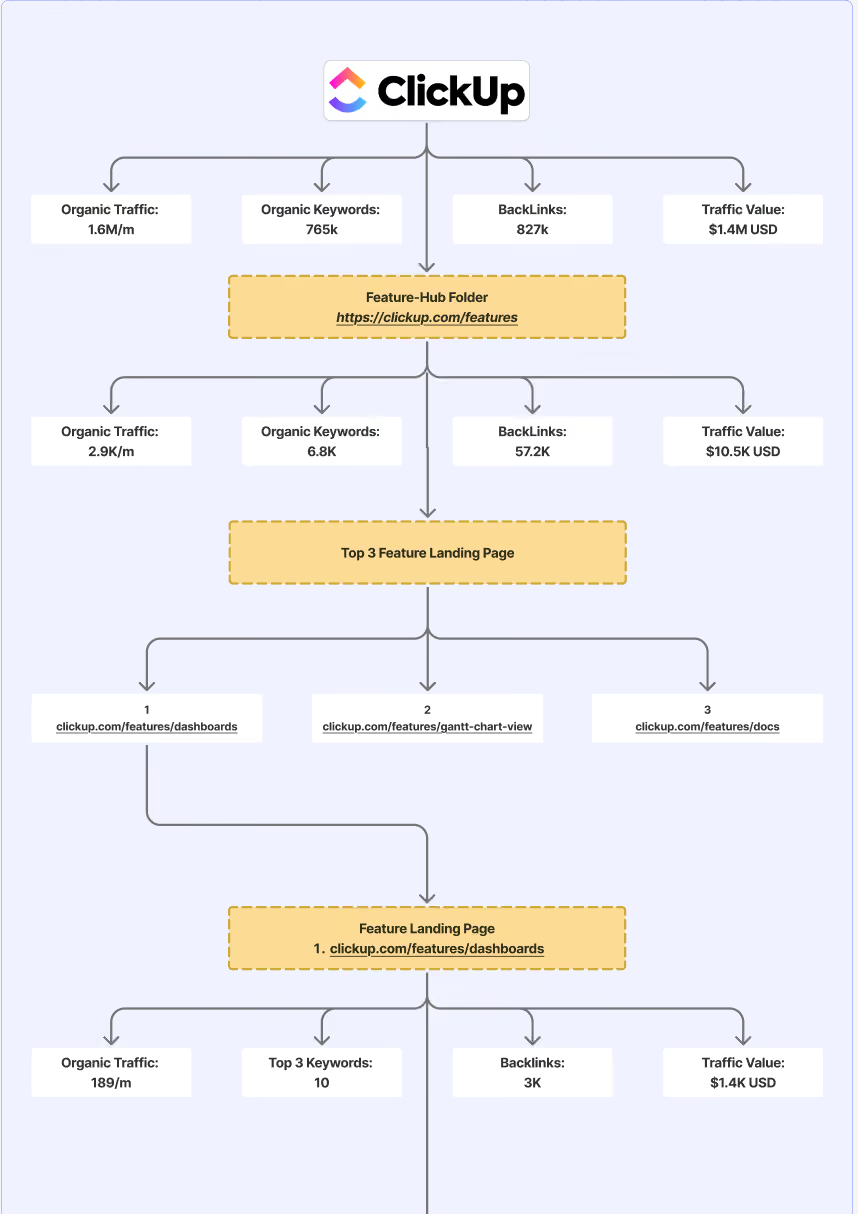
- Hub architecture. ClickUp routes everything through purpose-built hubs. Feature Hub (47+ sub-hubs, $10.5K/month value), Template Hub, Compare Hub, Team Hub, and Blog Hub. The homepage feeds authority to each hub. Each hub feeds its sub-pages.
- Tapping BOFU intent. ClickUp targets every "vs" keyword in their category. ClickUp vs Notion (1.2K monthly visits), vs Asana (690), vs Jira (750), vs Monday (800). Pair this with "alternative" content (ChatGPT alternatives, Excel alternatives, Microsoft Project alternatives) and they capture both compare and alternative search demand at the moment buyers shortlist.
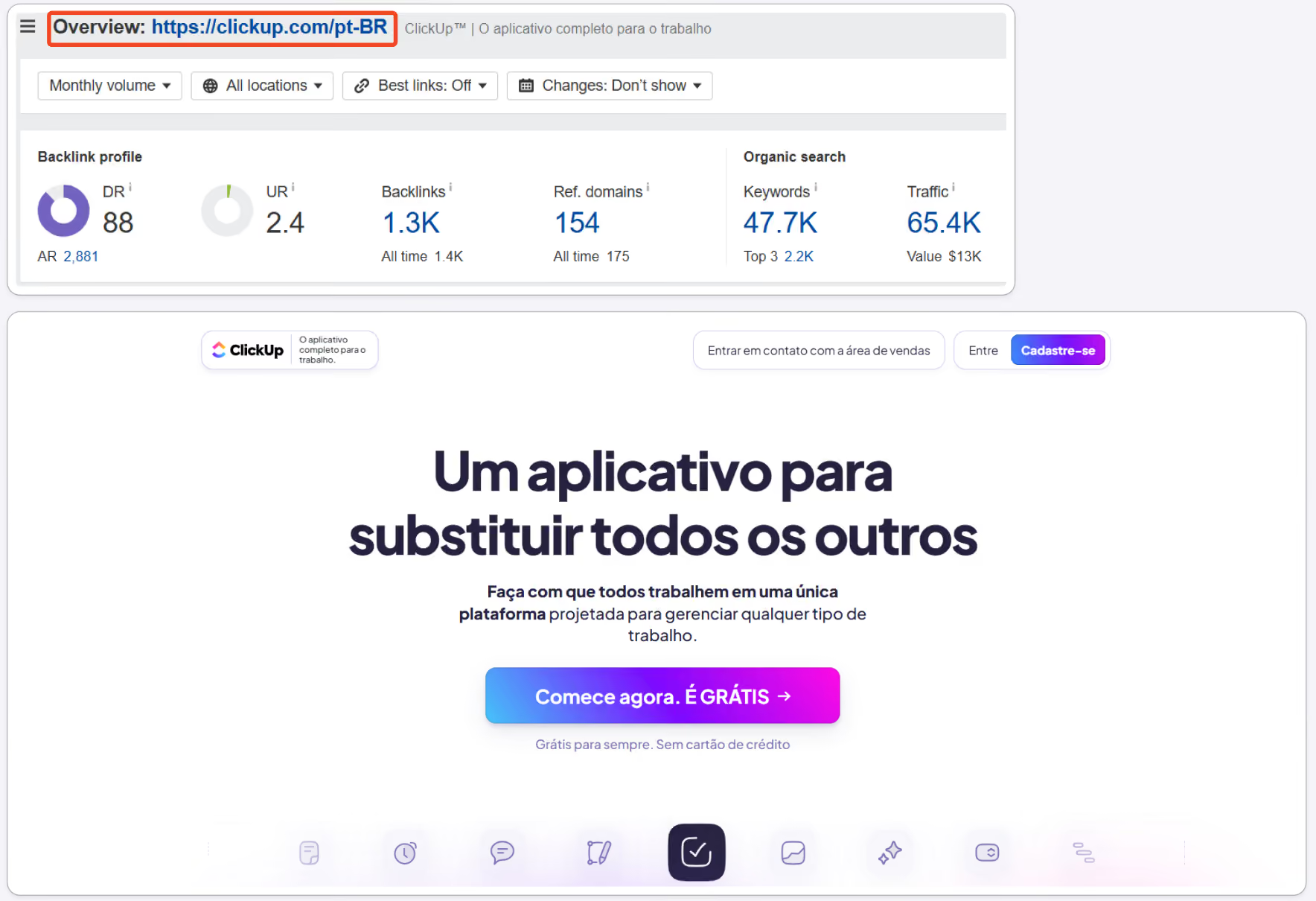
- Content localization. Outside the US, Brazil (13.2% of traffic) and India (9%) drive most of ClickUp's organic growth. Their Spanish folder (clickup.com/es-ES) alone has 87.7K keywords and $22.1K/month traffic value. Playbook: build product-led content in English, then localize through hreflang and country-specific folders.
- Authority through backlinks. ClickUp grew from ~1K referring domains in 2020 to 25K+ in 2025. With 844K total backlinks, 81% of which are do-follow, their authority compounds even when individual pages don't.

{{protip="/pro-tips/enterprise-seo-tip-8"}}
Example 3: How Lyssna Applied Enterprise Tactics for Scaling-SaaS
Lyssna is a mature SaaS in the UX research industry. While not an enterprise, they're the perfect example for any scaling SaaS that wants to operate like one.
Their Director of Marketing, Claire Brown, knew the keywords she wanted to rank for—and she needed a partner to get there.
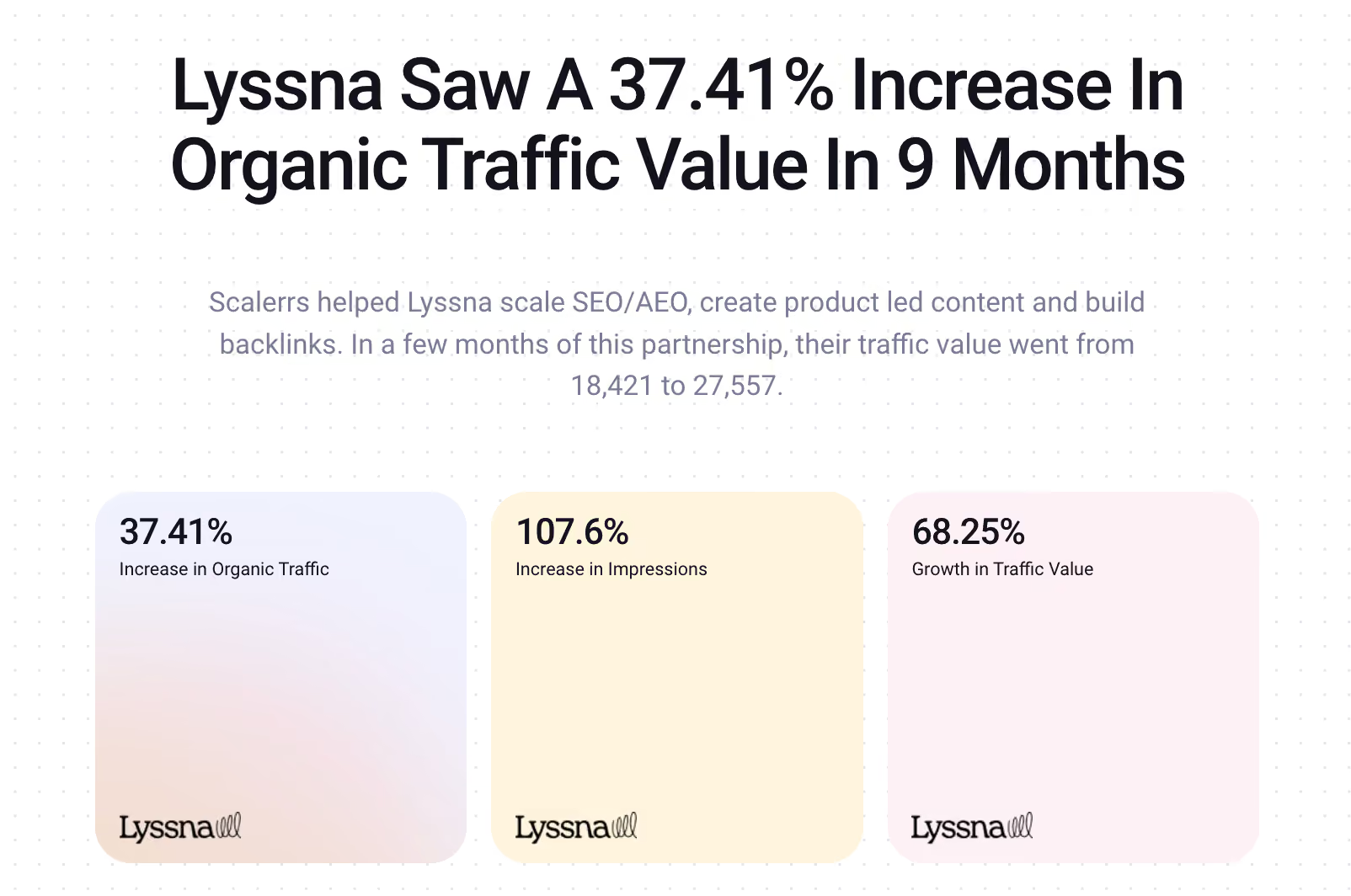
Our team ran a full SEO audit, built a focused content engine for their ICP (researchers, product teams), and layered on consistent backlinks.
In nine months:
- Organic traffic grew 37.41%
- Impressions jumped 107.6%, and
- Traffic value rose 68.25%
Claire called us "hands-on, strategic and results-focused."
{{protip="/pro-tips/enterprise-seo-tip-9"}}
Key KPIs for Enterprise SaaS SEO
Three KPIs that matter most for enterprise SEO:
KPI 1: SEO-Attributed Pipeline and ARR
Tie organic and AI-search-driven leads to closed-won revenue using self-attribution surveys, MQL tagging, and blended models. If your CRM doesn't track SEO as a source, fix that first.
What to report monthly:
- Sourced pipeline (organic first-touch)
- Influenced pipeline (organic anywhere in the buying window)
- Closed-won revenue from SEO-touched accounts
- Organic CAC vs paid CAC trendline
KPI 2: Branded Search Lift
When SEO and AEO are working, branded search volume goes up. Buyers who hear about you in ChatGPT or on Reddit Google your name afterward.
Pull this from Google Search Console monthly. Look at brand impressions and brand clicks, not just non-brand. A 30-50% lift in branded search over six months is a strong signal that AEO and TOFU content are doing their job, even if direct attribution stays messy.
KPI 3: AI Citation Share of Voice
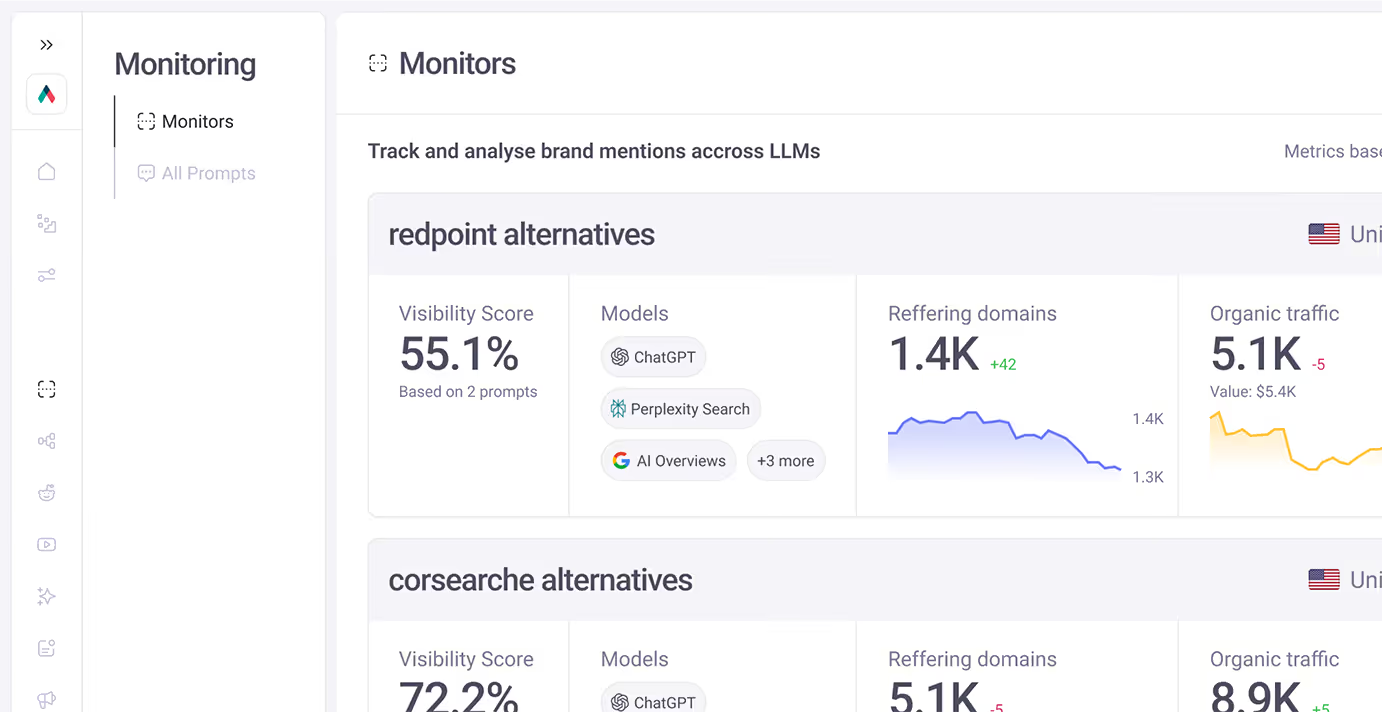
Track how often your brand surfaces in ChatGPT, Perplexity, and Google AI Mode against named competitors. AI citation share moves before pipeline does.
It's a leading indicator.
Tools like Profound, Otterly.ai, and Peec AI automatically monitor LLM citations on predefined queries. Maintain a panel of 30-50 queries relevant to your category, test cyclically across the major chatbots, and track brand and competitor mentions monthly. Repeat the test at least monthly because answers change with every model update.
What good looks like: top-3 citation share for your category's evaluation-stage queries ("best [category] for [use case]," "[category] alternatives," "[competitor] vs alternatives").
FAQs
1. What's the difference between enterprise SaaS SEO and traditional SEO?
Scale and accountability. Traditional SEO focuses on rankings and traffic. Enterprise programs can't survive without revenue attribution. The fundamentals from solid SaaS SEO strategies still apply, but enterprise execution layers on cross-team workflows and pipeline reporting.
2. How long does enterprise SaaS SEO take to show results?
It depends on starting DR, existing technical debt, and category competitiveness. Most enterprise programs see meaningful pipeline contribution at 6 to 9 months, with full compounding at 12 to 18 months.
3. Should enterprise SaaS companies do SEO in-house or hire an agency?
The decision between an in-house team vs an SEO agency, depends on bandwidth. Most teams need both: an internal owner for strategy, and a partner who handles execution at scale.
4. Which KPIs matter most for enterprise SaaS SEO?
SEO-attributed pipeline, branded search lift, and AI citation share of voice. Skip pure traffic and ranking reports. They don't survive board reviews.
5. How does AEO change enterprise SaaS SEO strategy?
Significantly. Enterprise buyers now run pre-shortlisting research inside ChatGPT, Perplexity, and Google AI Mode. AEO needs its own workstream alongside traditional SEO, with its own measurement (AI citation share) and content patterns (citation-friendly listicles, comparison content, third-party validation).
Build a Future-Proof Enterprise SEO Strategy with Scalerrs
Enterprise SaaS SEO doesn't reward effort. It rewards systems.
If you're a SaaS marketing leader who needs SEO and AEO to own your product category everywhere your buyers are doing their research, that’s exactly what we build.
Book a free strategy call and we'll walk through what enterprise-grade SEO could look like for your category.
Book a Discovery Call
Turn Organic Search Into Your #1 SaaS Acquisition Channel.

Let us scale your SEO channel for you.
reviewed onClutch
4.9 rating







Get Free Resources In Your Inbox
Get all of our FUTURE playbooks such as Figma files, checklists and SOPs directly into your inbox.

.avif)