


15 SaaS SEO KPIs You Need to Track in 2026 for Growth

Key Takeaways
- SaaS SEO KPIs measure commercial growth, not just SEO performance. They connect search visibility to pipeline, customer acquisition costs, and recurring revenue.
- Pick 5 to 8 SEO KPIs to track based on your SaaS stage: visibility metrics if you're early-stage, attribution and CAC if you're growth-stage, or recurring revenue and share of voice if you're enterprise
- SaaS brands measure KIPs across different buyer touchpoints, too. Visibility across Google, AI search, Reddit, review sites, and comparison pages shows whether you're expanding category ownership where SaaS buyers actually research software
- Scalerrs helps established B2B SaaS brands measure and grow multi-surface visibility. We connect SEO, AEO, Reddit visibility, attribution, and revenue reporting so teams can track category ownership against pipeline and recurring revenue.
In 2026, organic search generates 44.6% of all B2B revenue and delivers 702% ROI for SaaS, according to 5WPR. Those results come from strong SaaS SEO execution and tracking the right SaaS SEO KPIs.
Why Tracking the Right SaaS SEO KPIs Matters
SaaS SEO KPIs prove whether organic search is generating qualified pipeline, reducing customer acquisition costs, and increasing recurring revenue.
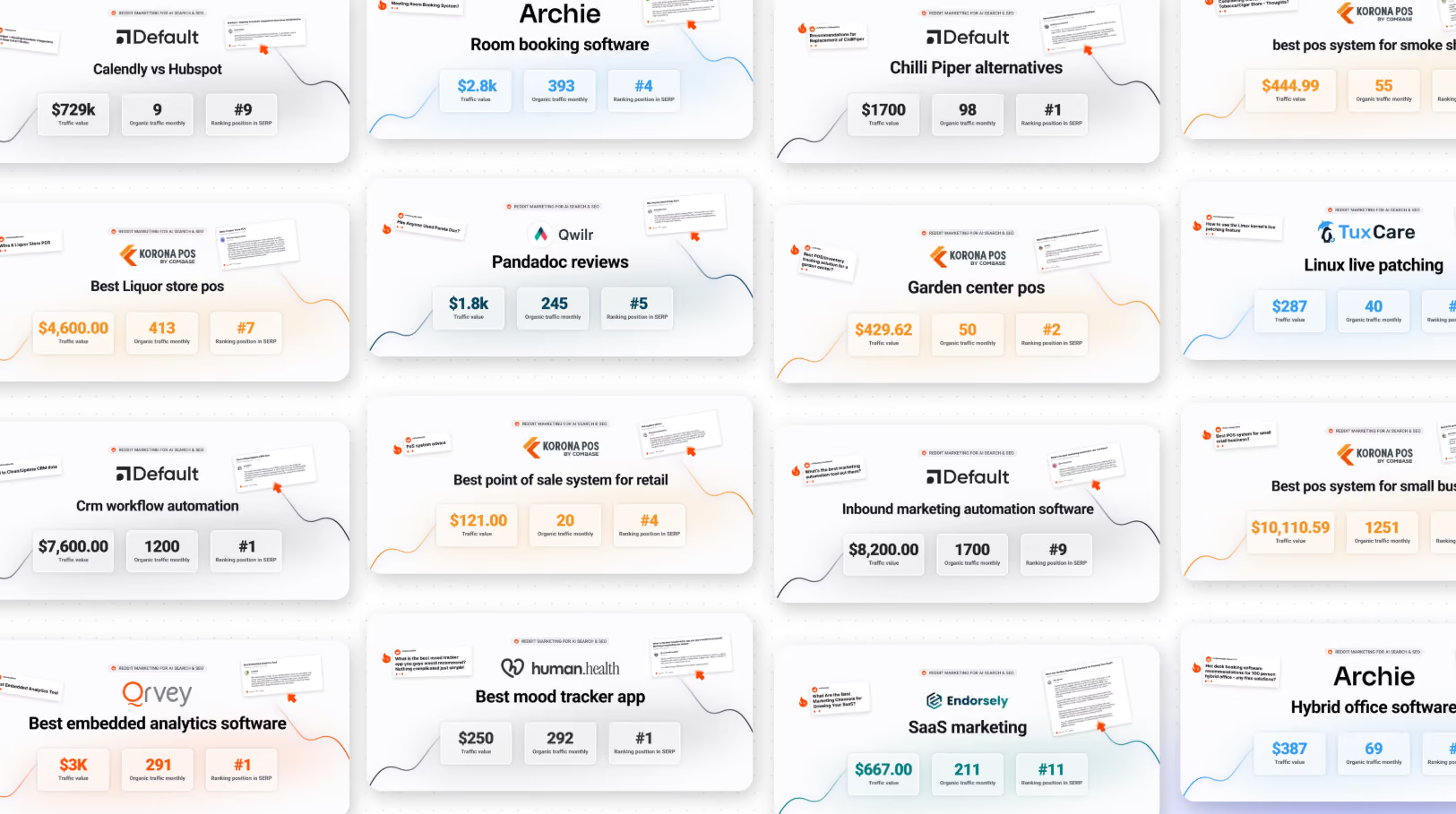
SaaS growth depends on recovering acquisition costs efficiently. With the median customer acquisition cost (CAC) payback period at 23 months, every improvement in organic acquisition helps recover the investment sooner and gives the business more capital to reinvest in growth.
{{protip="/pro-tips/seo-kpi-1"}}
The KPIs we’ll discuss follow the progression Scalerrs uses with every client: from early-stage visibility signals through to pipeline, CAC payback, and recurring revenue.
This isn't the same playbook used for ecommerce or local business SEO, where a sale closes in one session. B2B SaaS SEO has longer buying cycles, multiple stakeholders, recurring revenue models, and, increasingly, AI-assisted research.
Those differences fundamentally change which KPIs matter and how success is reported.
How SaaS SEO KPIs Differ From Generic SEO Metrics
SaaS SEO KPIs shift focus from "traffic volume" to "product-led growth" and compounding revenue.
This isn't the same playbook used for ecommerce or local business SEO, where a sale closes in one session. SaaS buyers move through trials, demos, and multi-touch evaluations before they convert.
These differences matter because SaaS leadership expects SEO to be reported like every other growth channel, using metrics that demonstrate business impact rather than just marketing activity. As a SaaS-only SEO, AEO, and Reddit marketing agency, we report organic growth the way SaaS leadership evaluates it, connecting visibility across Google, AI search, Reddit, and other buyer-research surfaces to pipeline and revenue.
15 SaaS SEO KPIs to Track in 2026
Track these SaaS SEO benchmarks to understand where your growth strategy is succeeding, where buyers are dropping off, and how to improve your overall SaaS marketing strategy over time.
1. AI Citation Rate
AI search has become one of the earliest places SaaS buyers discover and compare software.
If your brand isn't appearing in AI-generated recommendations, you're missing the consideration stage before many prospects ever visit your website.
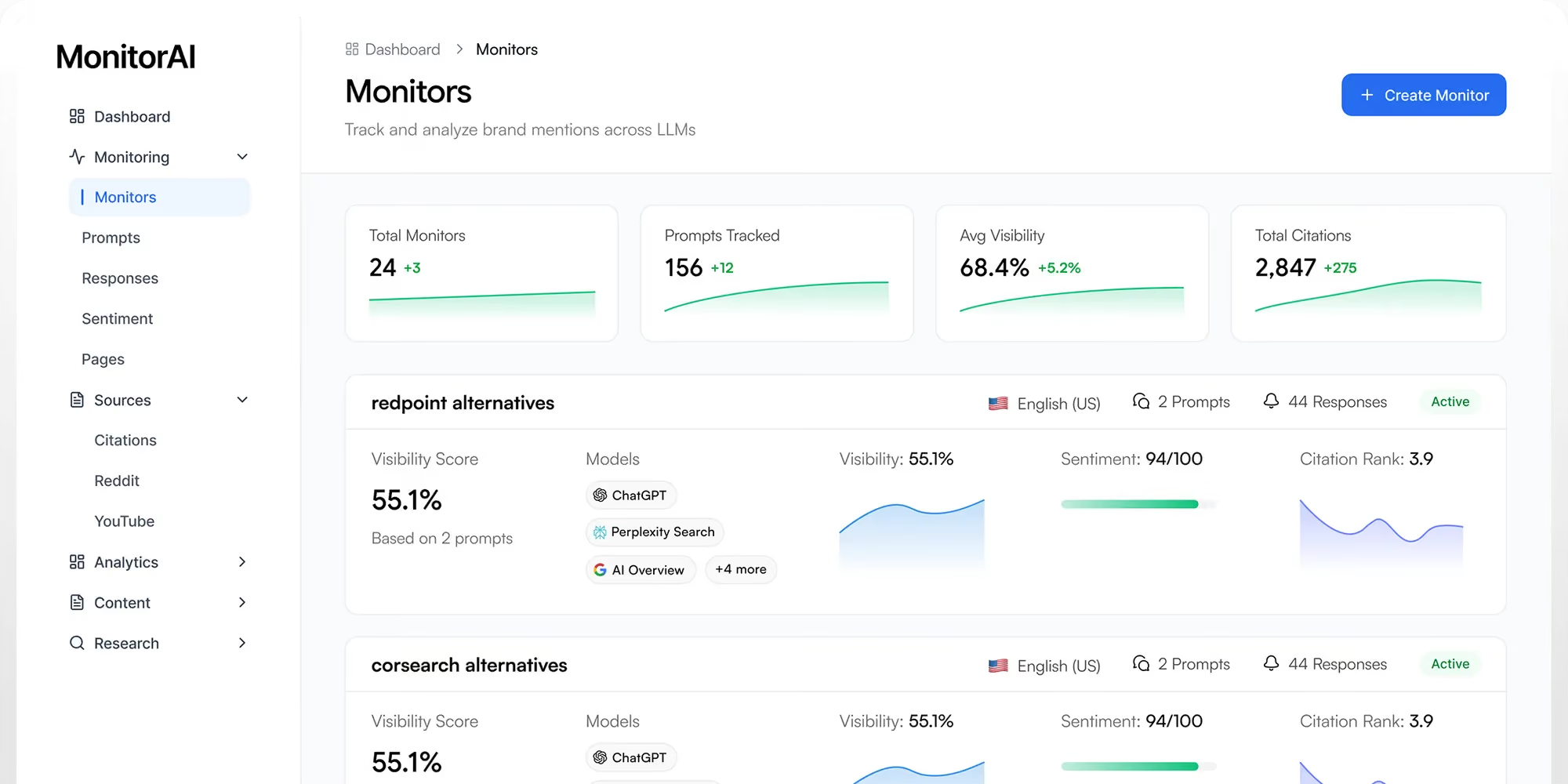
Specifically, it measures how often platforms like ChatGPT, Claude, Perplexity, Gemini, Google AI Overviews, and Google AI Mode cite or mention your brand in response to category queries. A citation rate of 30% means your brand appears in 30 out of every 100 tracked buyer prompts.
In Scalerrs’ AEO service, we review AI citation data every week to identify new opportunities, investigate lost visibility, explain what's driving the changes, and adjust the SEO and AEO strategy as AI search continues to evolve. And, because AI platforms increasingly cite Reddit discussions, we grow our clients' Reddit presence through disclosed, community-native participation and report when those conversations begin contributing to AI citations and overall visibility.
{{protip="/pro-tips/seo-kpi-2"}}
2. AI Share of Voice
AI share of voice measures your brand's percentage of total mentions across a defined set of commercial prompts, relative to competitors.
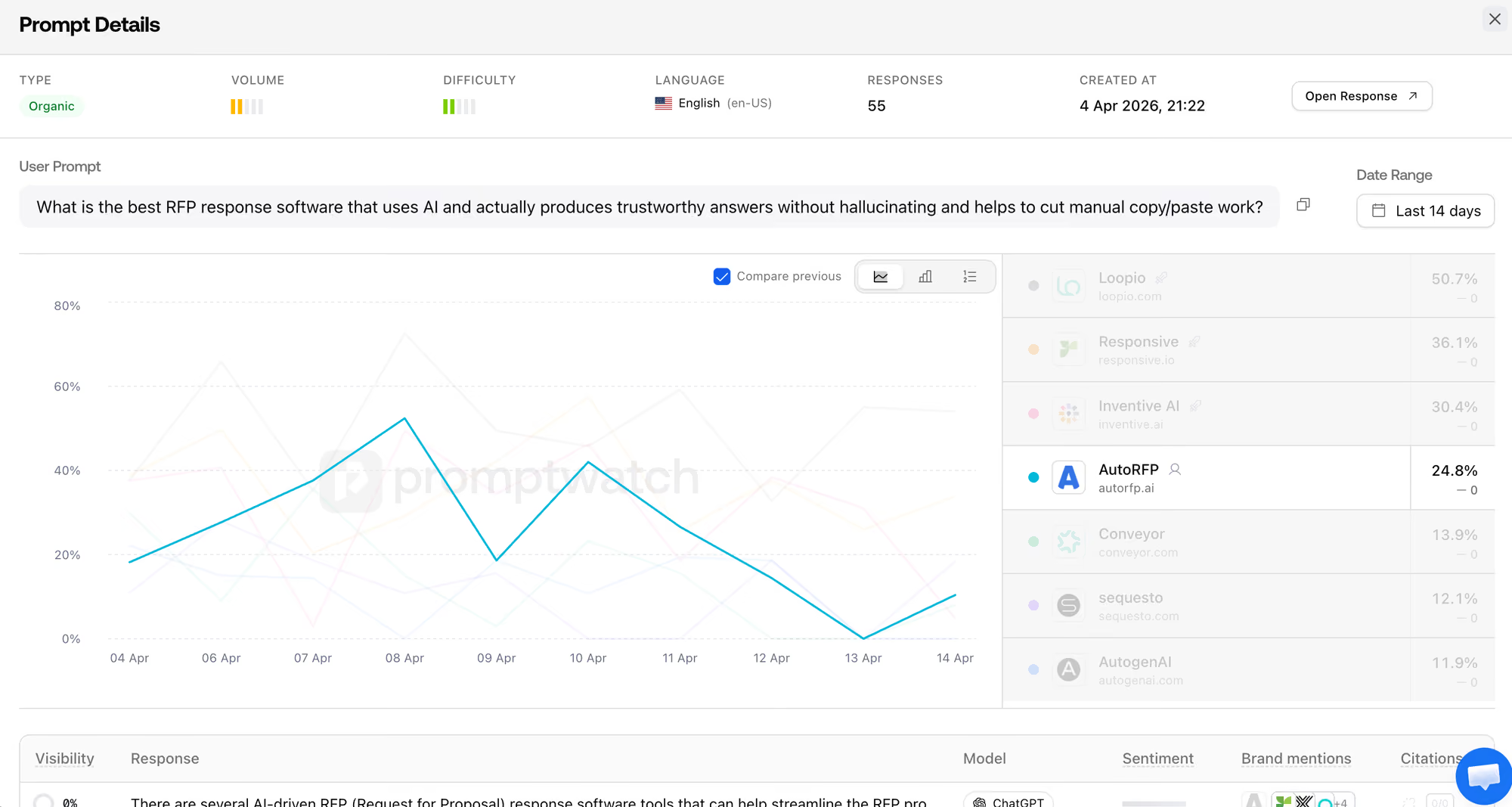
Buyers who ask LLMs to recommend software get a short list of products, and the higher your AI share of voice, the more often you're on it. It’s a clear signal of category ownership in AI search.
As an AI SEO agency, we treat AI share of voice as a competitive intelligence metric. We show how visibility changes week to week, whether the broader monthly trend is strengthening, and how your presence across tracked prompts evolves over time.
{{protip="/pro-tips/seo-kpi-3"}}
3. Commercial Keyword Visibility
Commercial keyword visibility measures how often your SaaS product appears for high-buying-intent searches such as "best CRM software," "HubSpot alternatives," "project management software pricing," or "CRM for startups."
This KPI focuses on the searches most likely to generate demos, trials, and revenue.
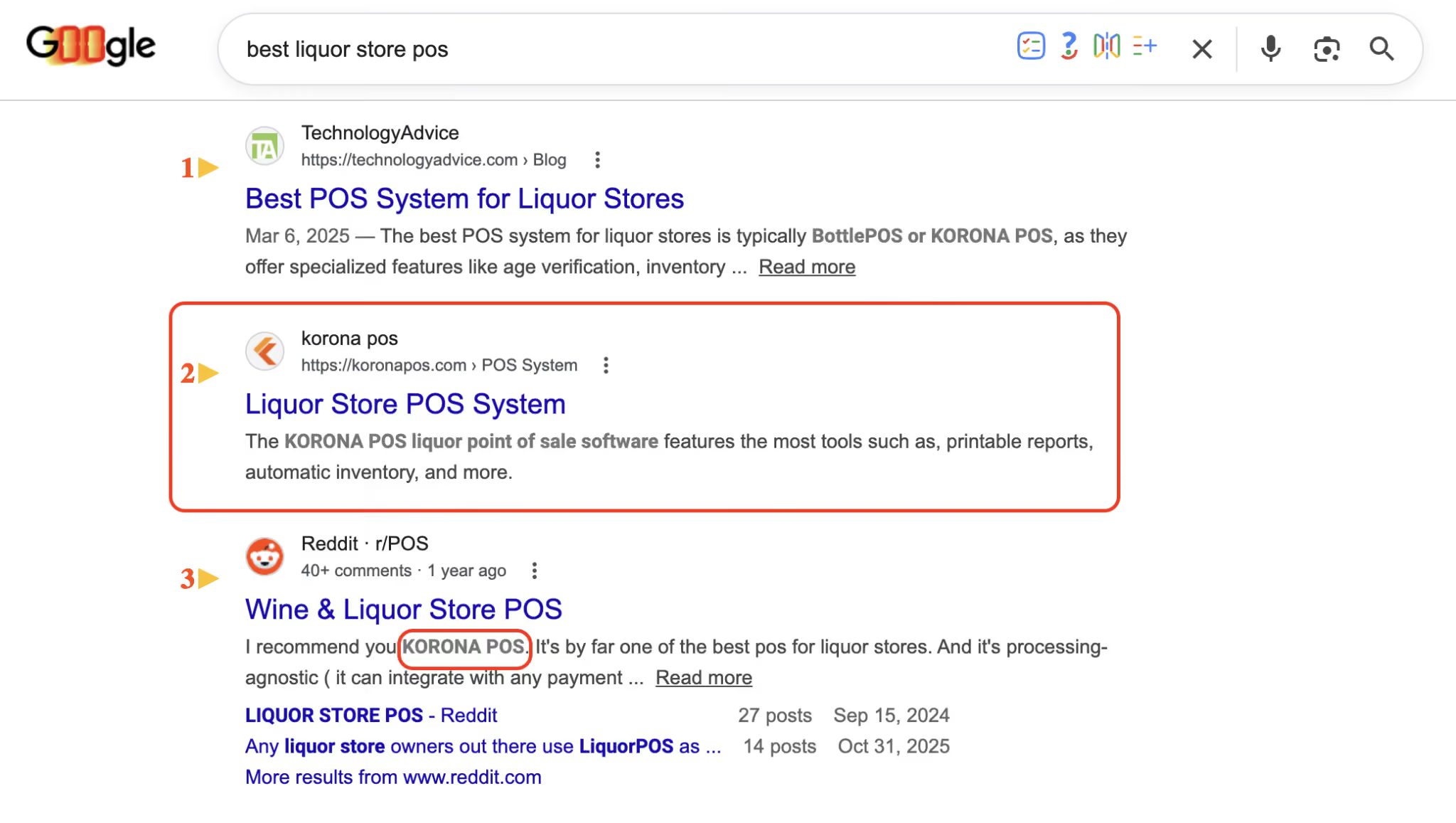
Alongside commercial keywords, also keep an eye on keyword rankings across your broader SaaS content. Consistent ranking improvements show your topical coverage is strengthening, which supports better performance for your commercial pages over time.
{{protip="/pro-tips/seo-kpi-4"}}
4. Non-Branded Organic Traffic
Branded traffic comes from people searching for your company or product name. Non-branded traffic comes from people searching for categories, problems, or competitor comparisons.
The ratio of branded to non-branded sessions shows how well organic is creating new demand vs. capturing existing demand.
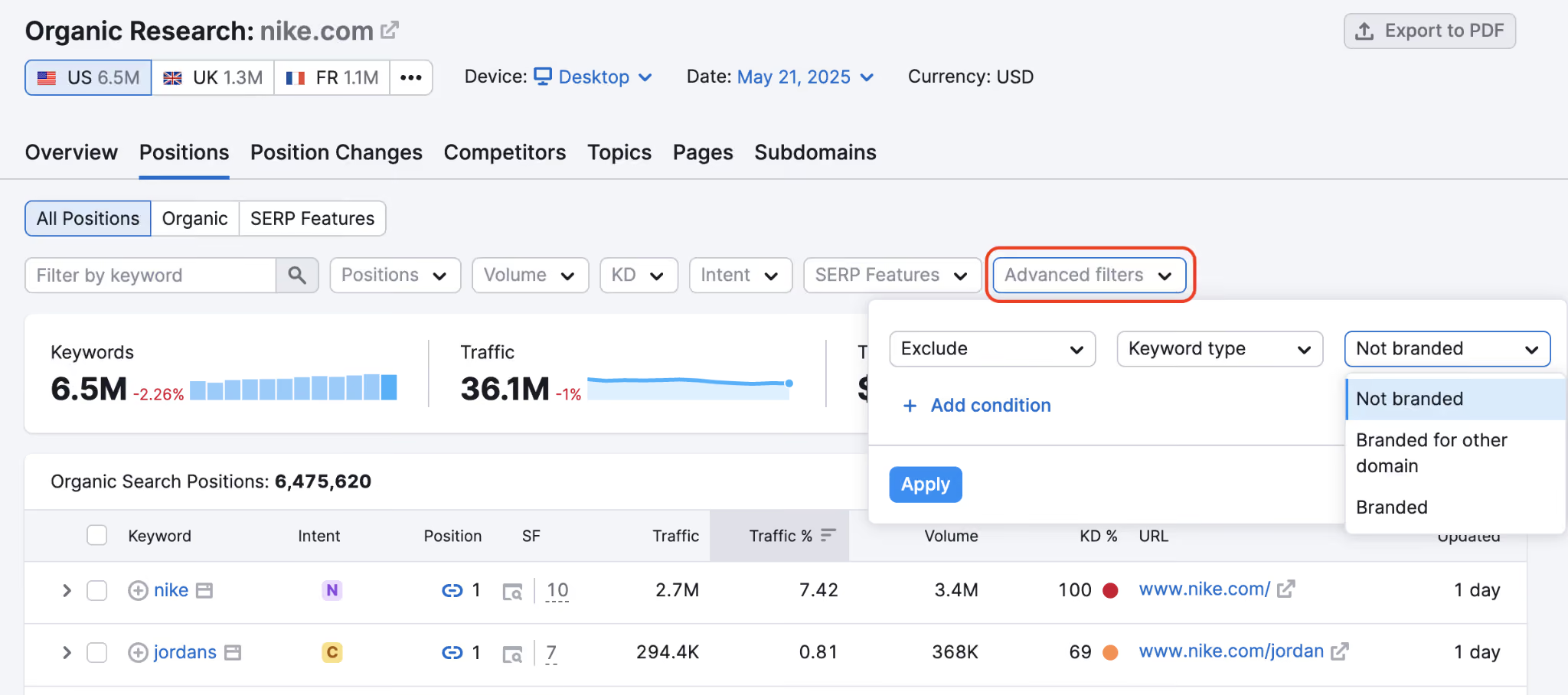
For mature SaaS SEO programs, non-branded traffic growth is the primary pipeline expansion signal. Ahrefs data puts 71% of all online experiences starting with non-branded queries, which means the majority of your addressable organic market isn't searching your name.
5. Organic Trial Starts and Signups
For product-led growth (PLG) SaaS companies, this is the closest organic has to a direct revenue signal.
It measures trial activations, freemium account creations, and product signups sourced from organic search. You calculate it as (organic trial starts / total organic sessions) × 100.
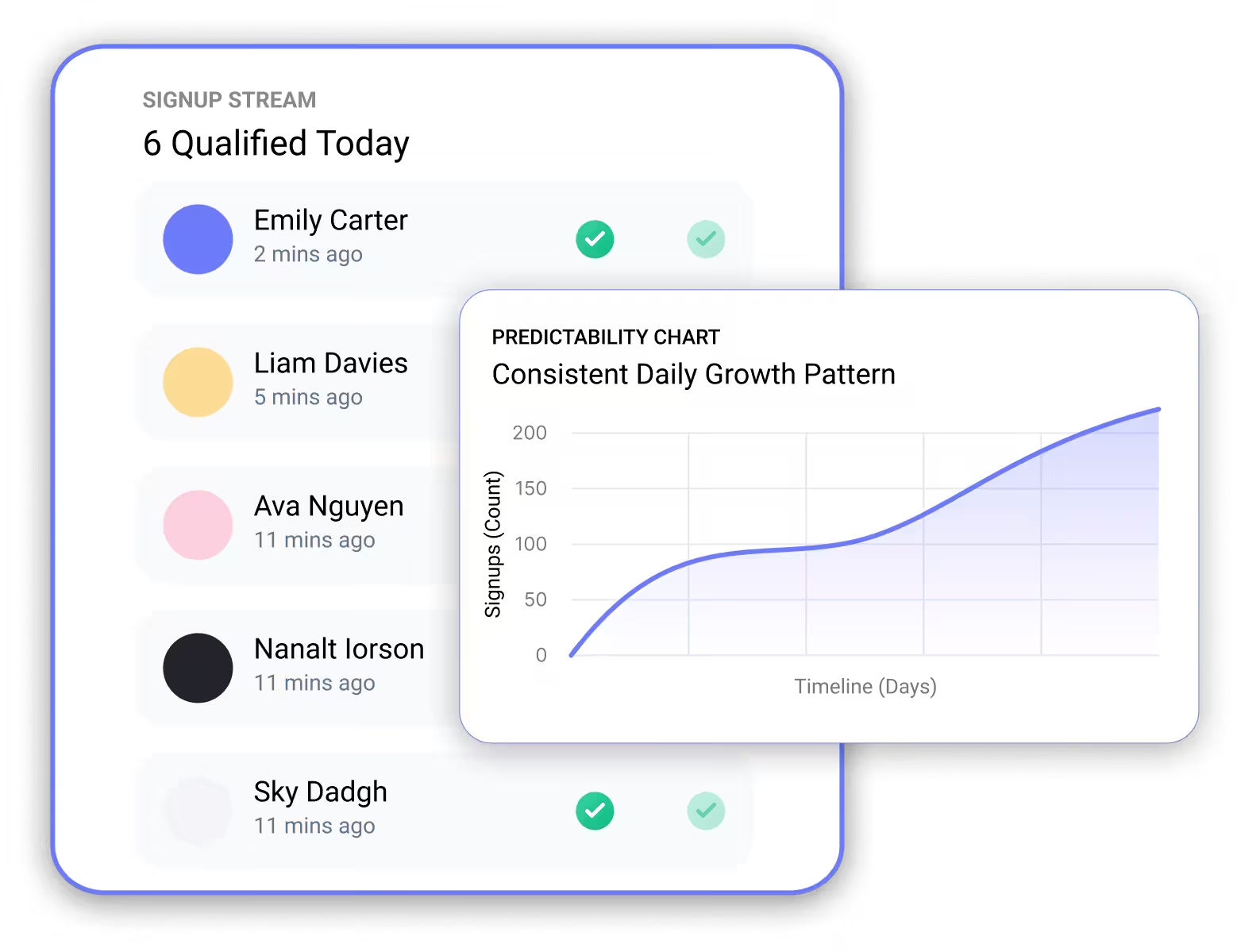
If the rate is lower than your paid or direct channels, the problem is usually one of three things:
- Keyword targeting is pulling in the wrong audience
- The landing page isn't matching search intent
- The CTA isn't converting visitors who do belong there
6. Organic Demo Requests
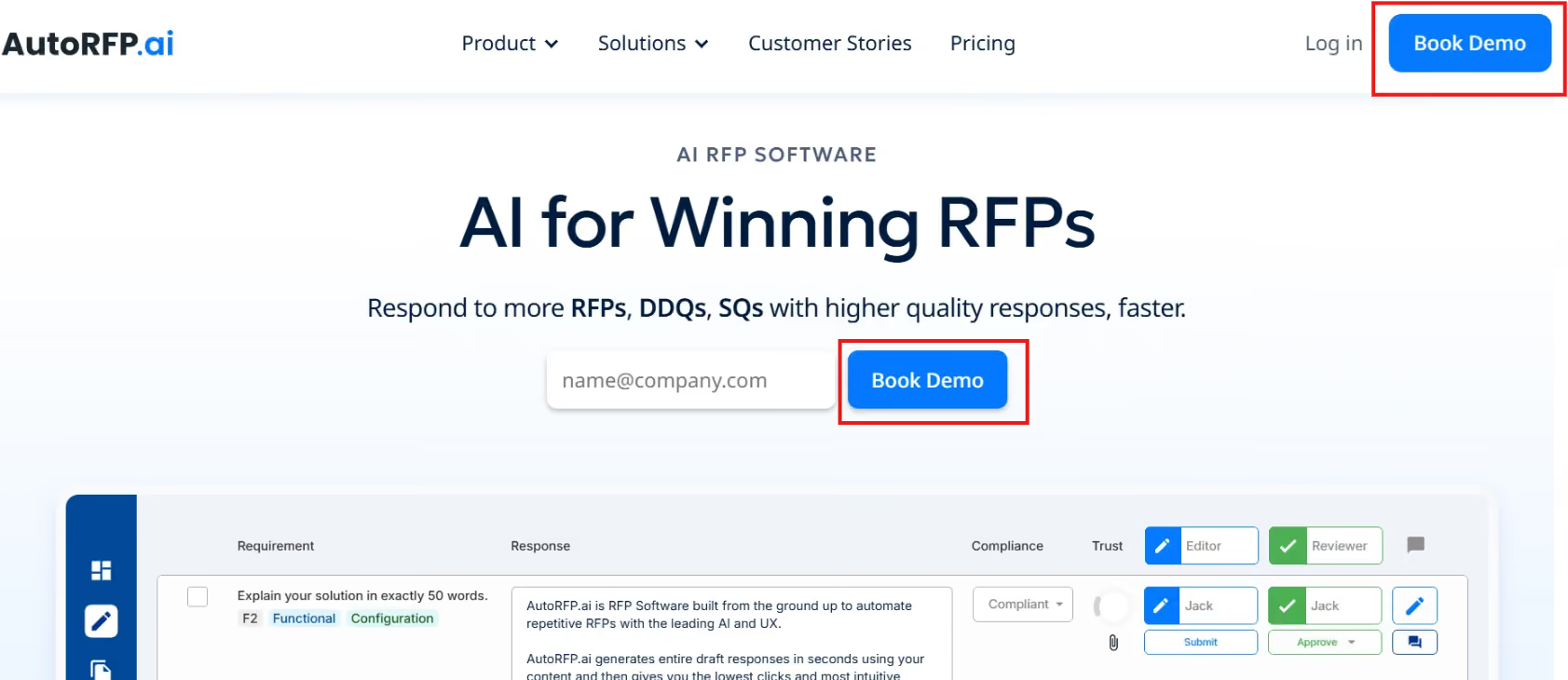
Organic demo requests measure how many prospects book a product demo after discovering your SaaS brand through organic search. Strong performance shows your commercial keywords, comparison pages, pricing pages, and product content are attracting decision-makers who are ready to speak with sales.
For most B2B SaaS websites, demo request conversion rates of around 1%-3% provide a useful benchmark, although results vary by product, pricing, and market.
But improving this KPI rarely comes from SEO alone. Once the right buyers reach your website, your page experience, messaging, and conversion journey determine whether they book a demo.
{{protip="/pro-tips/seo-kpi-5"}}
7. Organic MQLs
An organic marketing-qualified lead (MQL) is a lead from organic search that meets your ICP criteria and has shown purchase intent. They may be visiting a pricing page, downloading a resource, or booking a demo.
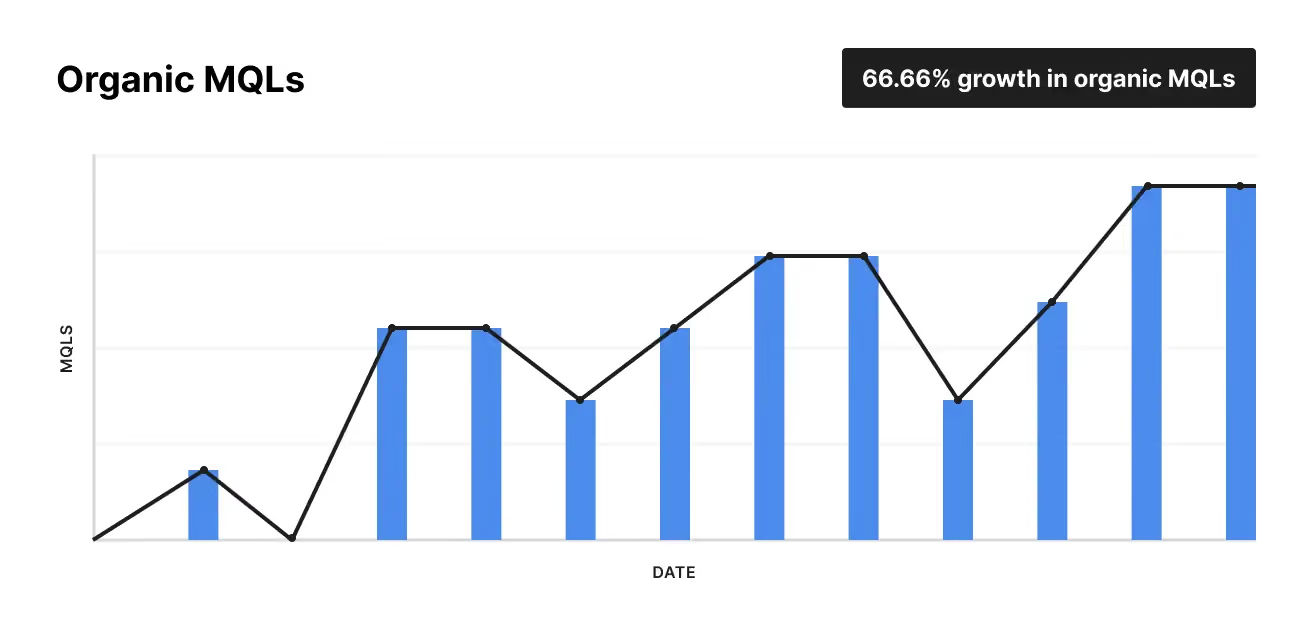
SEO-sourced leads convert from MQL to SQL (sales-qualified lead) at 51%, compared to 26% for PPC traffic. So, teams that track organic MQL volume separately from total MQL volume can prove this advantage in budget reviews.
8. Organic SQLs
An organic SQL is an MQL that sales has reviewed and confirmed as worth pursuing; they've had a qualifying call or met a stricter ICP filter. Sales owns them.
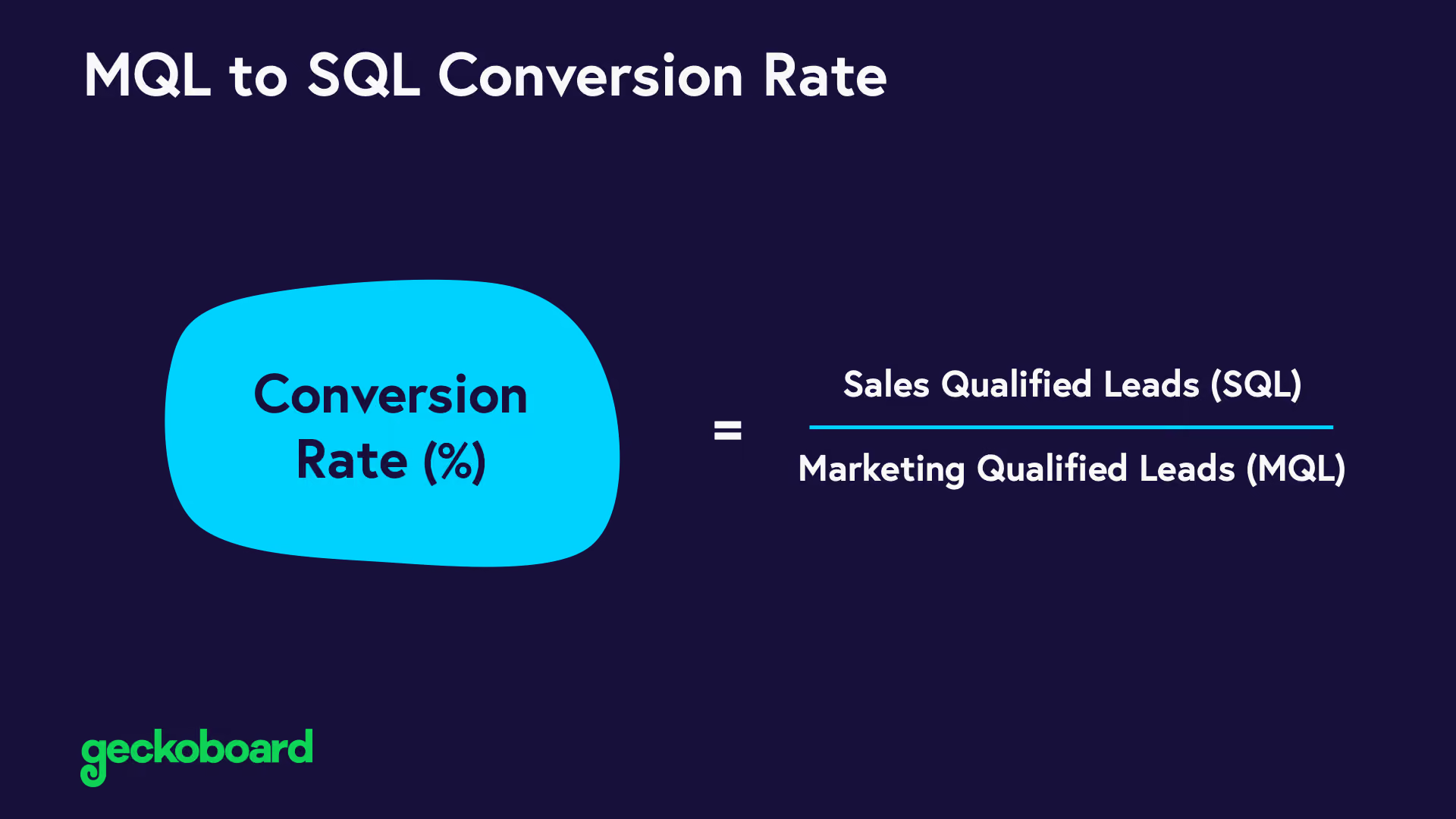
You use the same organic attribution set up for MQLs. If organic consistently underperforms paid here, audit the keywords driving MQLs and check whether they map to your ICP.
9. Pipeline Influenced by Organic
Pipeline influenced is the total dollar value of sales opportunities where organic search played a role: first touch, last touch, or anywhere in between.
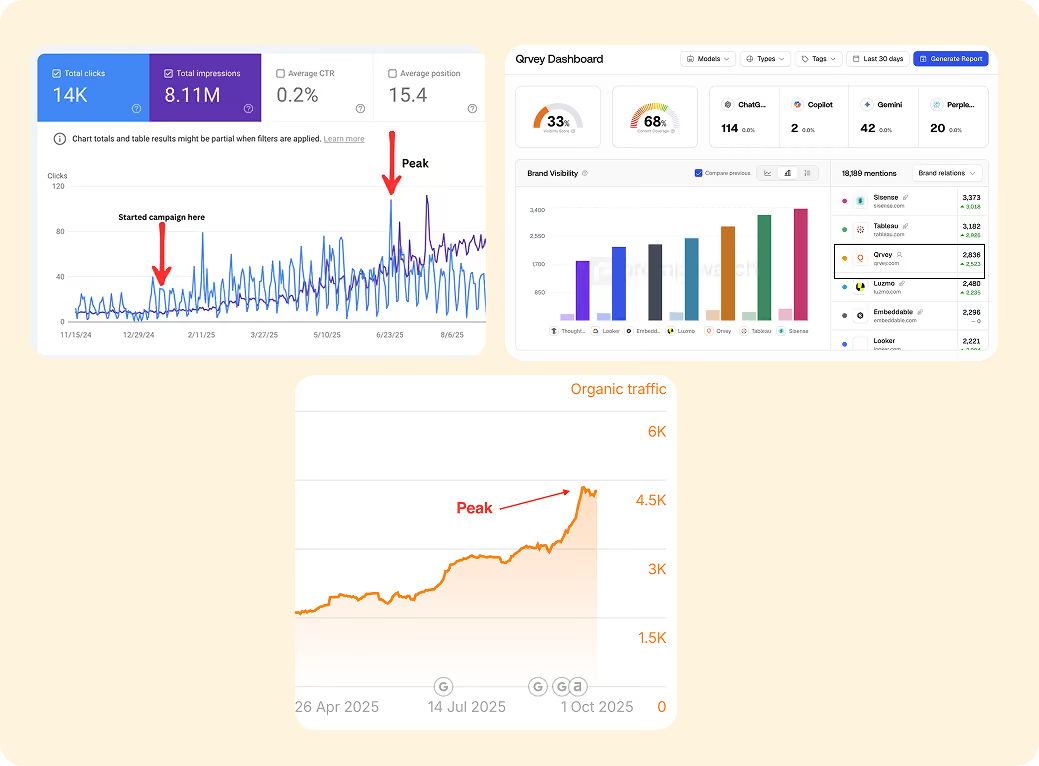
Prospects rarely discover your product, book a demo, and buy in a single session. That’s why measuring pipeline influenced gives SEO credit for the role it plays across the entire buying journey.
10. Organic CAC
Organic CAC (customer acquisition cost) measures how much it costs to acquire a new customer through organic search.
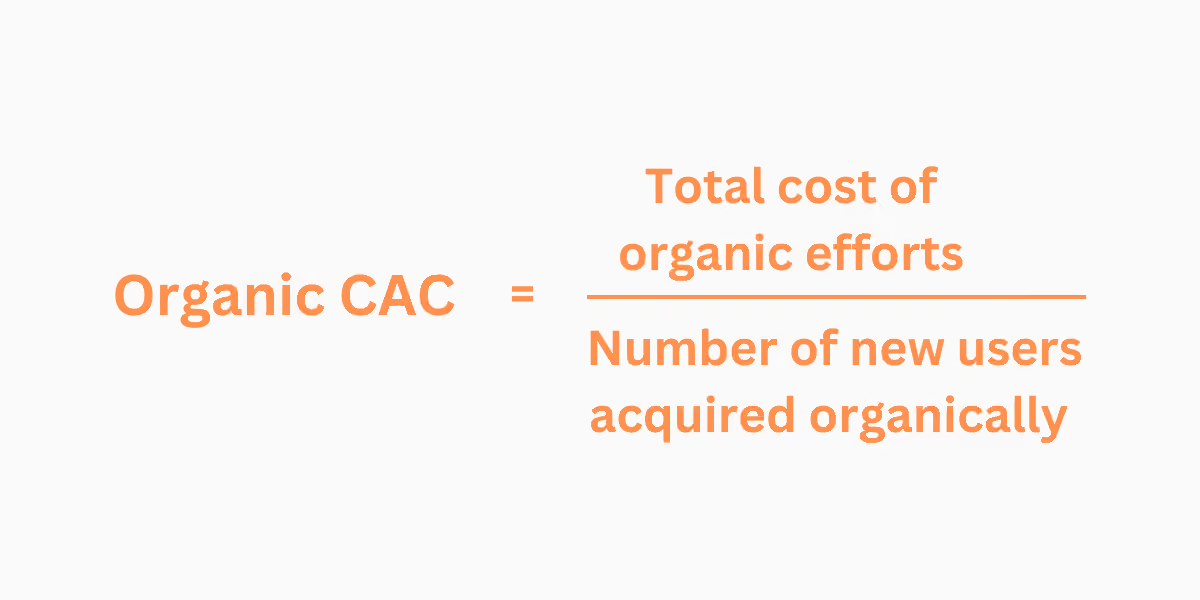
As your SaaS content library grows and continues generating demos and customers, the cost of acquiring each new customer organically should fall, making SEO one of the few acquisition channels that become more efficient over time.
11. Organic CAC Payback Period
Organic CAC payback measures how long it takes for the revenue generated through organic search to recover the cost of acquiring a new customer.
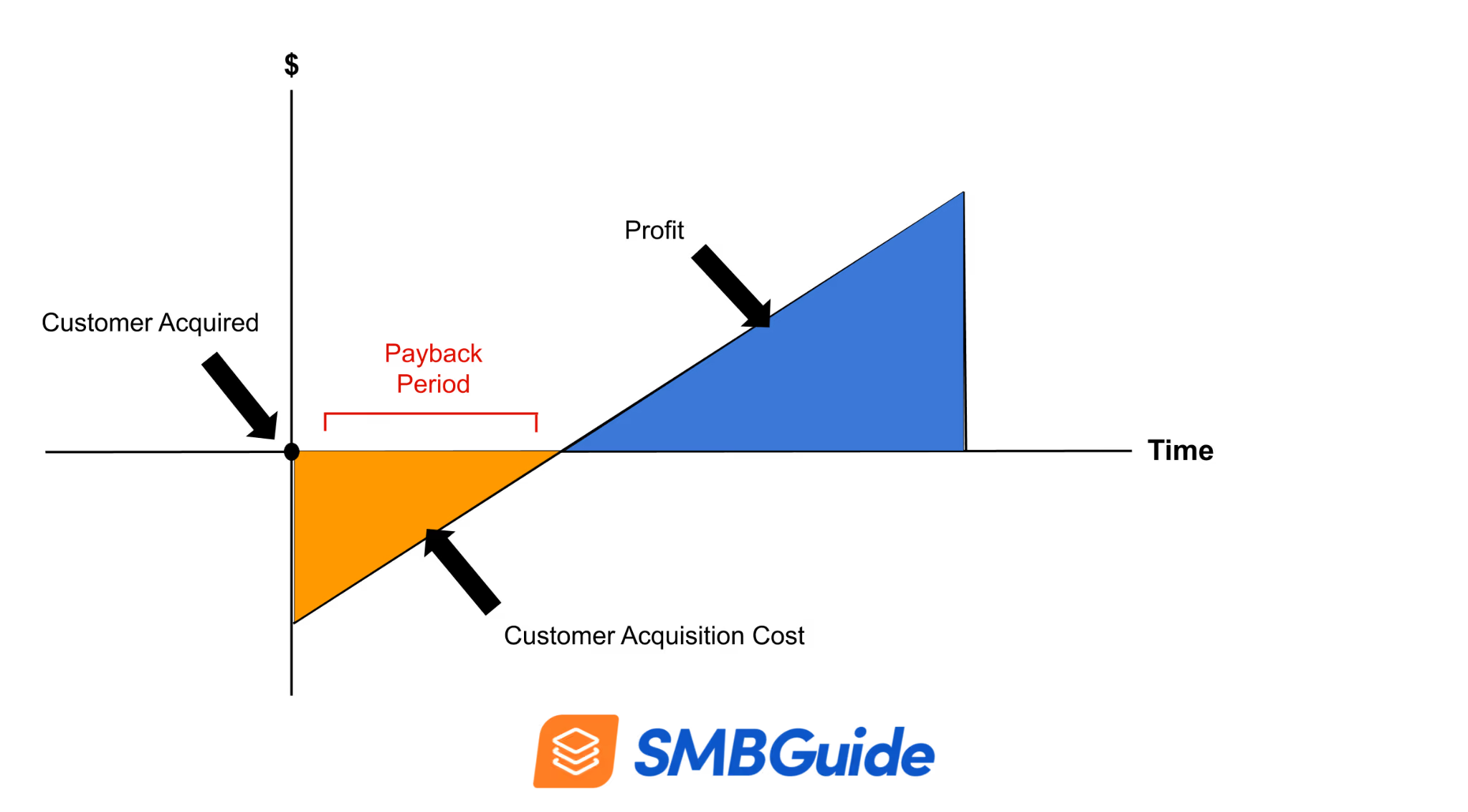
A shorter payback period means organic is becoming a more efficient acquisition channel, freeing up capital that can be reinvested into product development, sales, or further growth. As your organic visibility and customer base grow, CAC payback should also gradually improve.
12. MRR/ARR Influenced by Organic
Organic-sourced monthly recurring revenue (MRR) is the recurring revenue generated by customers who first discovered your business through organic search. Annual recurring revenue (ARR) is the figure annualized.
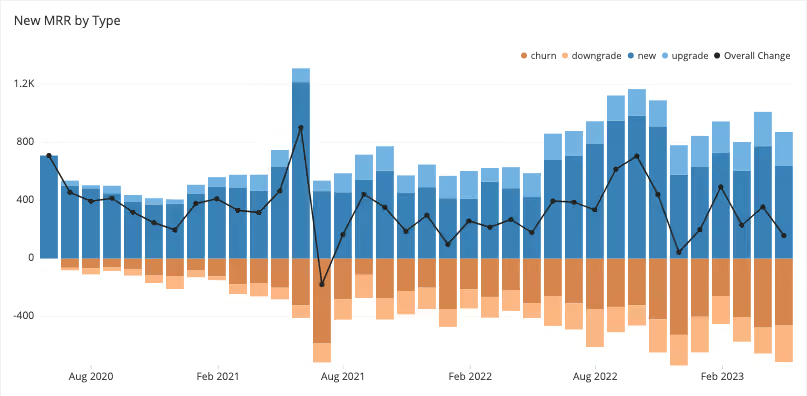
Track both next to paid and outbound MRR. Organic customers churn, upgrade, and downgrade, too. See which channel retains better, and you've got the number that earns SEO its line in the budget.
13. Churn Rate by Organic Cohort
Segmenting churn rate (the percentage of customers who cancel in a given period) by acquisition source highlights a critical business truth: organic customers consistently outperform paid or outbound.
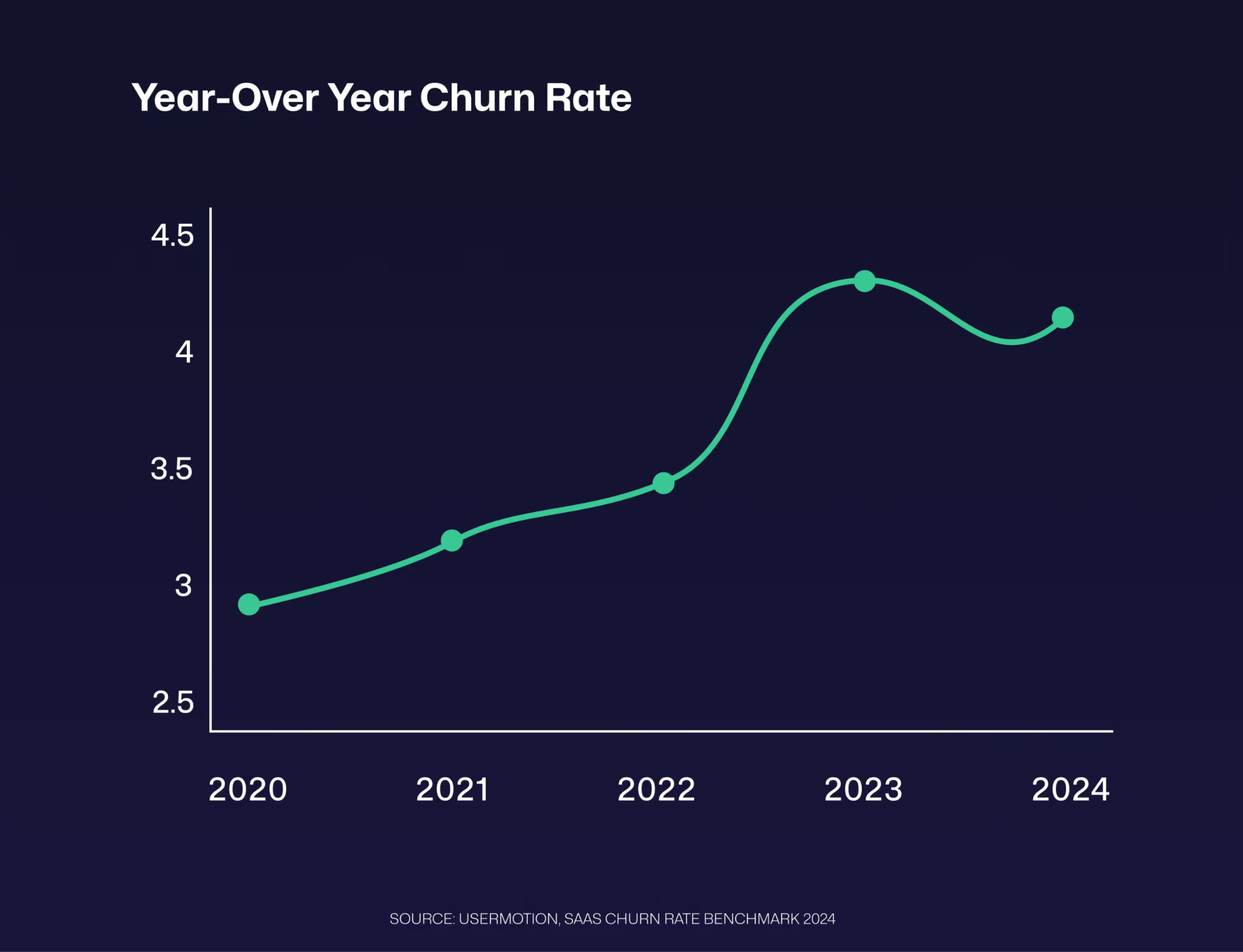
Organic customers find a business by actively researching a solution to a specific problem. They arrive with strong intent, and because of that, organic buyers are highly motivated, they tend to stay longer, resulting in lower churn rates.
Lower churn proves the long-term value of organic growth. This makes a strong financial case for investing in Search Engine Optimization (SEO) or content marketing, independent of the raw number of leads these efforts generate.
14. Organic Share of Voice in Search
Share of voice (SOV) is your brand's percentage of total organic visibility across a defined keyword set, compared to competitors. It’s your share of the search market for the topics that influence buying decisions.
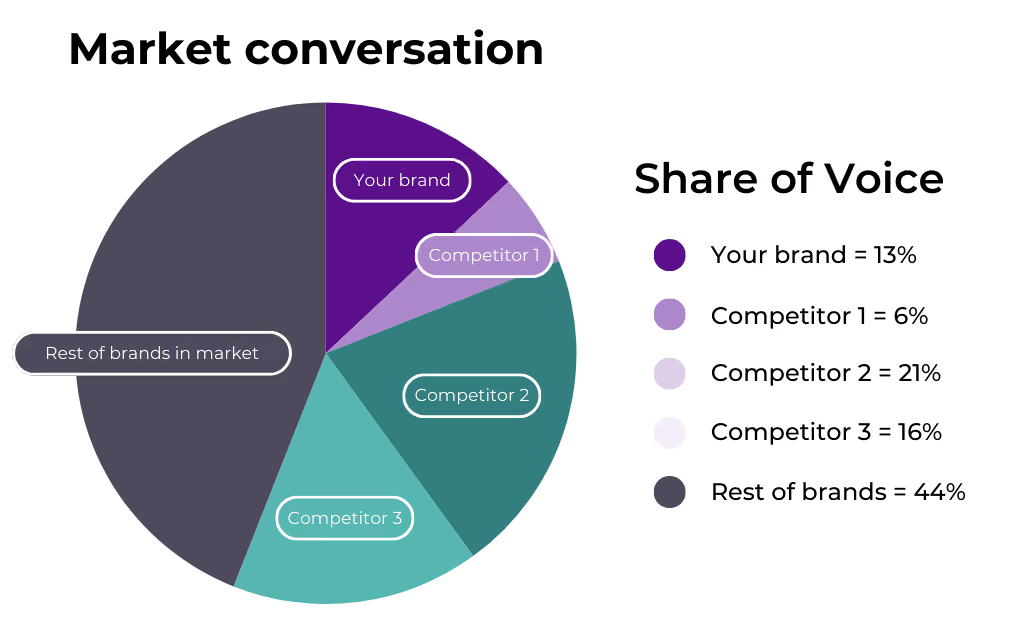
A few ranking gains or losses rarely change the overall trend, but a growing share of voice indicates your brand is becoming more visible across your category.
For SaaS companies competing in crowded markets, that's a much stronger indicator of long-term category ownership than tracking keywords in isolation.
15. Referring Domains and Domain Rating
Referring domains measure the number of unique websites linking to your SaaS, while Domain Rating (Ahrefs) and Authority Score (Semrush) estimate the overall authority of your backlink profile.
Together, they indicate how competitive your website is for commercial search terms.
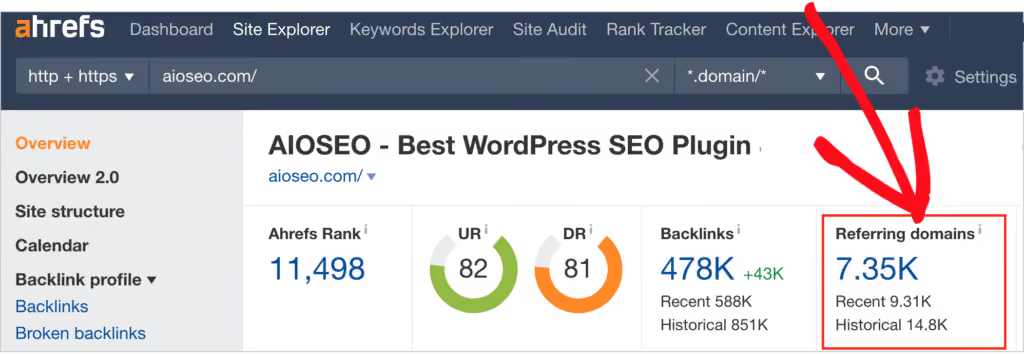
For SaaS companies, links from trusted software directories, industry publications, comparison websites, research reports, and respected brands often contribute far more to long-term authority than a large volume of low-quality links.
You need to earn the kinds of mentions that reinforce your expertise within your category.

Side Note: In our traditional link-building, we focus on earned editorial backlinks that strengthen commercial pages, not just authority scores. Every link we build is selected for its relevance to your category, the quality of the referring website, and its ability to improve the pages that generate recurring revenue. This is distinct from AEO-oriented third-party listicle placements, which we use to strengthen visibility across the external sources buyers and AI systems rely on. Download our free SaaS Link Building Playbook to learn more.
How to Measure SaaS SEO KPIs: Step-by-Step
The KPIs in this guide only become valuable when the measurement system behind them is accurate. These five steps ensure every improvement can be traced back to your organic search strategy.
Step 1: Define Funnel Stages Before You Track Anything
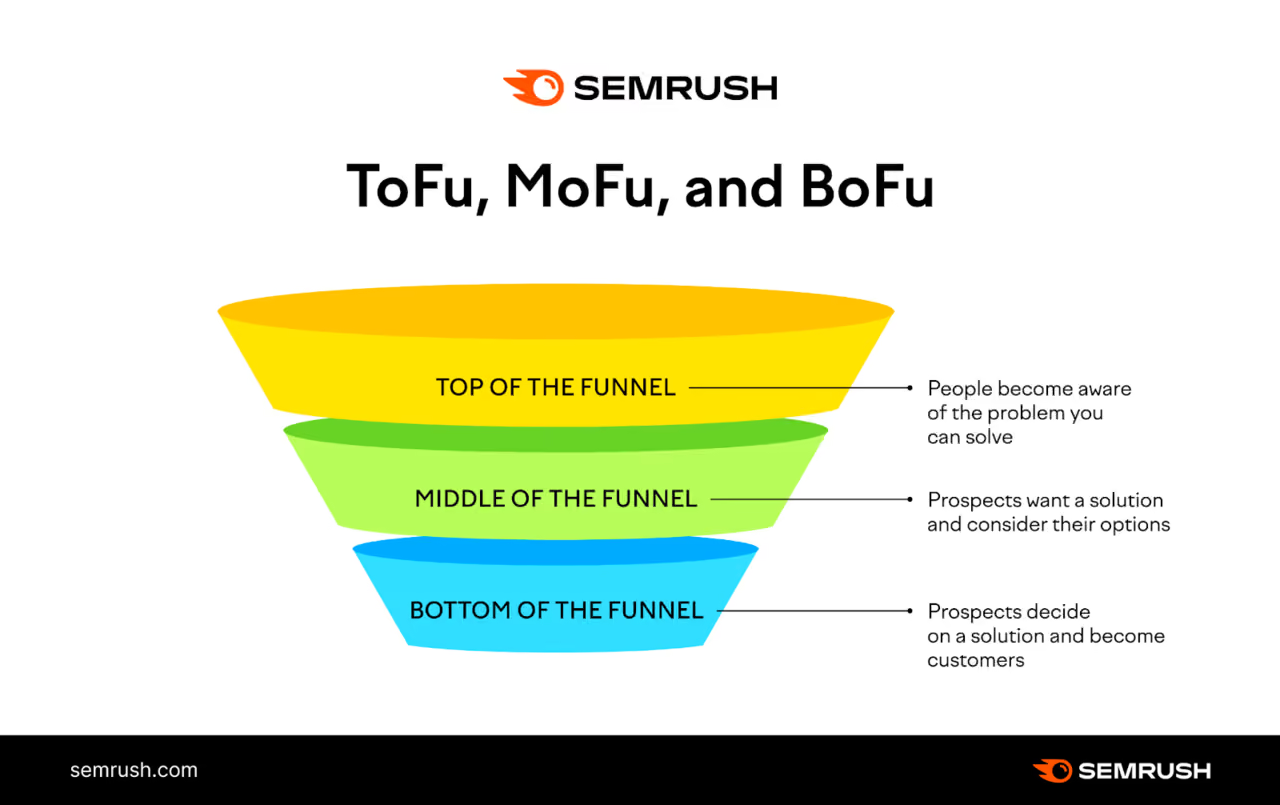
Before tracking anything, map every page to its role in the buying journey: TOFU for problem awareness, MOFU for comparison and evaluation, BOFU for pricing and demos.
Without that foundation, KPI reporting can become misleading. Traffic may increase, but you won't know whether you're attracting new buyers or generating commercial intent.
At Scalerrs, we establish that mapping during keyword research. Every target keyword is assigned a search intent and funnel stage before content is created, so reporting reflects how each page contributes to more revenue generation.
Once every page has a defined purpose, assigning the right KPIs becomes straightforward.
Step 2: Set Up Conversion Tracking in Google Analytics 4
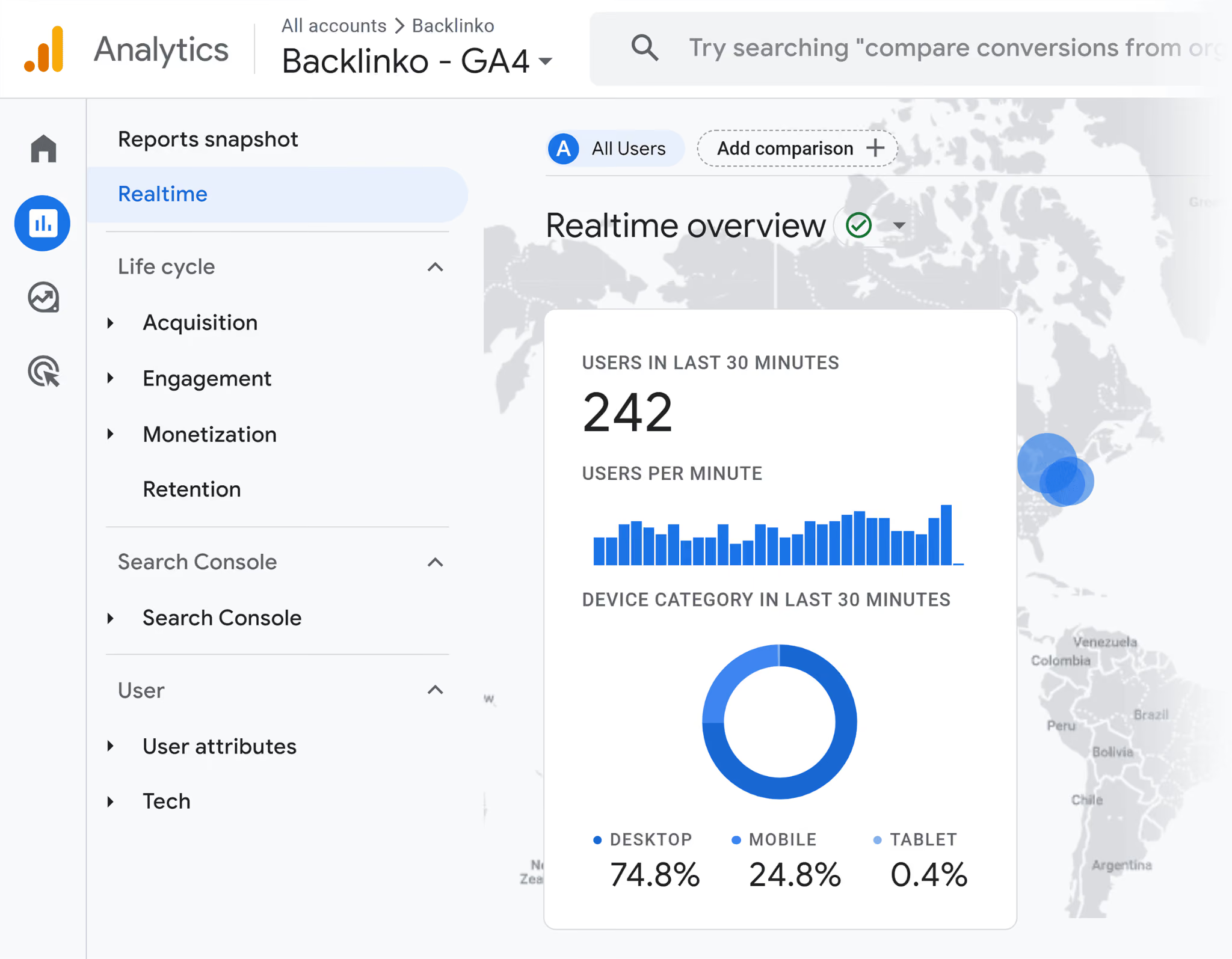
Google Analytics 4 conversion events are the foundation of every KPI on this list. Without them, there's no way to connect organic sessions to business decisions.
Configure GA4 to record every meaningful business action, including trial signups, demo requests, contact forms, newsletter subscriptions, and other conversion events relevant to your SaaS.
{{protip="/pro-tips/seo-kpi-6"}}
Step 3: Connect GA4 to Your CRM
GA4 tracks sessions. Your CRM tracks revenue. The best SaaS SEO agencies build attribution infrastructure by connecting both and learning from the insights they report.
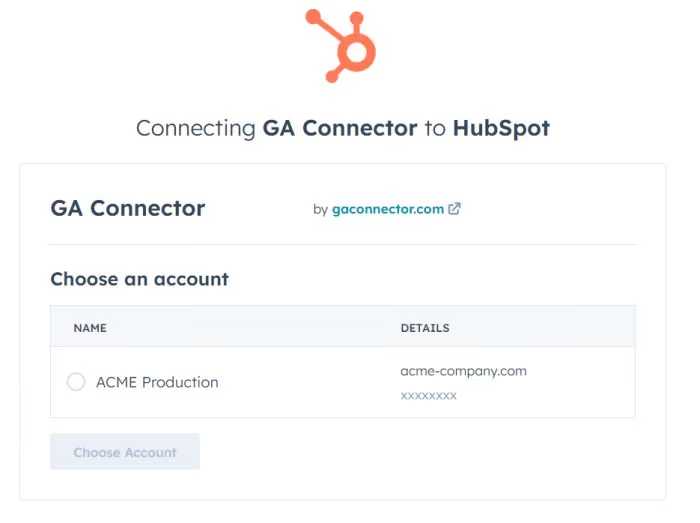
In HubSpot, enable Original Source tracking, and in Salesforce, capture UTM parameters and configure Campaign Influence reporting.
You can then measure Organic MQLs, SQLs, Pipeline Influenced, Organic CAC, CAC Payback, and MRR/ARR from a single attribution model instead of relying on disconnected marketing reports.
Step 4: Configure Search Console and Rank Tracking by Funnel Stage
Search Console gives you keyword-level impressions, clicks, CTR, and average position, and it's more accurate than third-party tools for actual Google data.
Link it to GA4 under Admin > Property Settings > Search Console links.
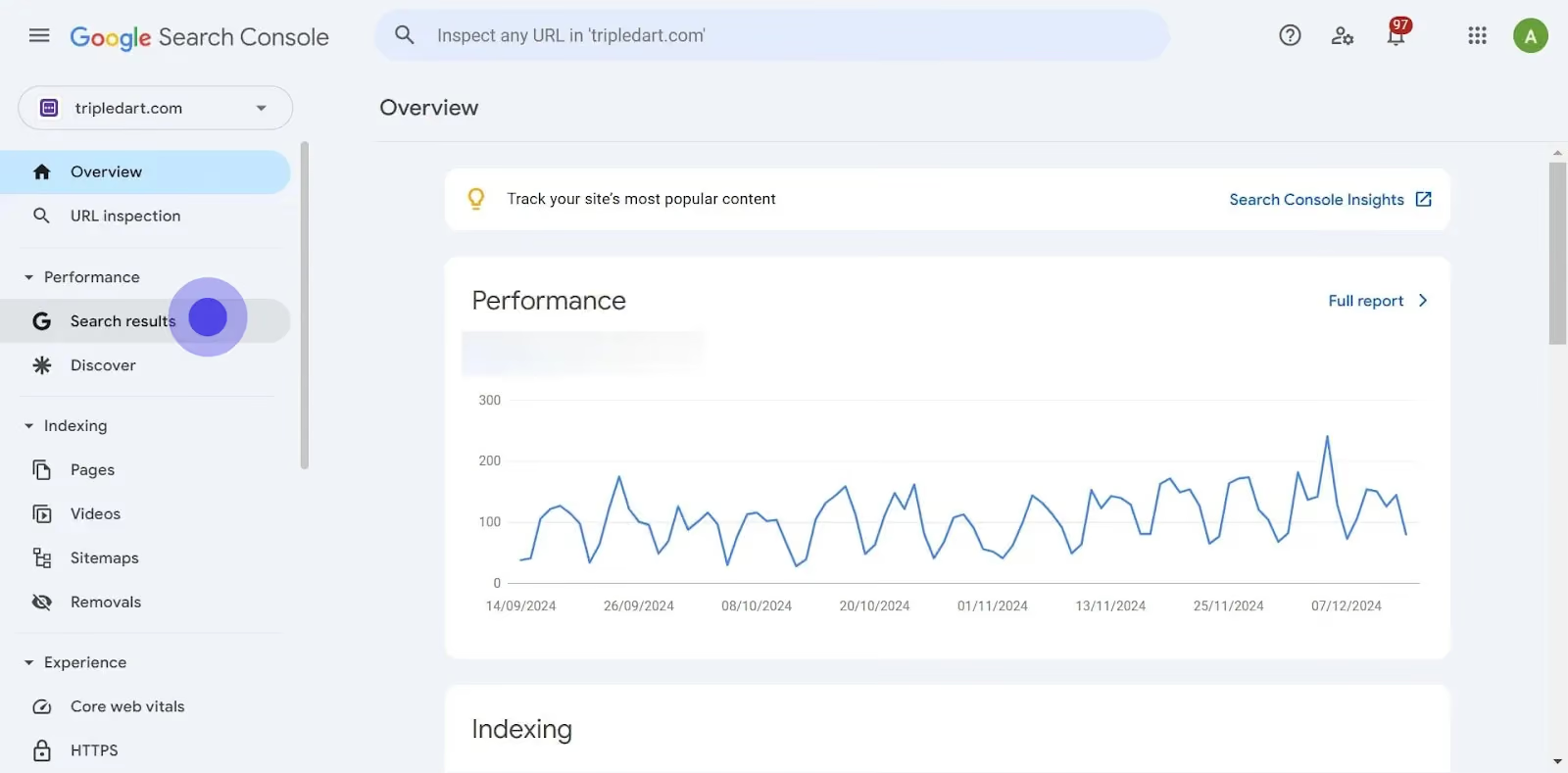
In the Performance report, look for three things first:
- Pages with high impressions but CTR below 2%
- Queries ranking in positions 5 to 20
- Branded versus non-branded query split
Those three checks show where you can improve titles, reclaim near-page-one opportunities, and understand whether organic growth is coming from existing demand or new category discovery.
Then layer in Semrush Position Tracking or Ahrefs Rank Tracker for daily position history, competitor comparisons, and share of voice.
Organize your keywords by funnel stage using the TOFU, MOFU, and BOFU framework from Step 1, then create separate reports for each group. This makes it easier to measure how visibility changes at different stages of the buying journey.
Step 5: Set Up AI Visibility Monitoring
AI search can't be measured with keyword rankings alone. Buyers ask AI platforms different questions throughout the buying journey, so your reporting needs to reflect how your brand appears across those conversations.
Build a prompt library around how prospects actually research software, from problem discovery and solution comparisons to pricing, integrations, alternatives, and implementation. You can use tools such as PromptWatch, Profound, Peec AI, Otterly.ai, or LLMrefs.
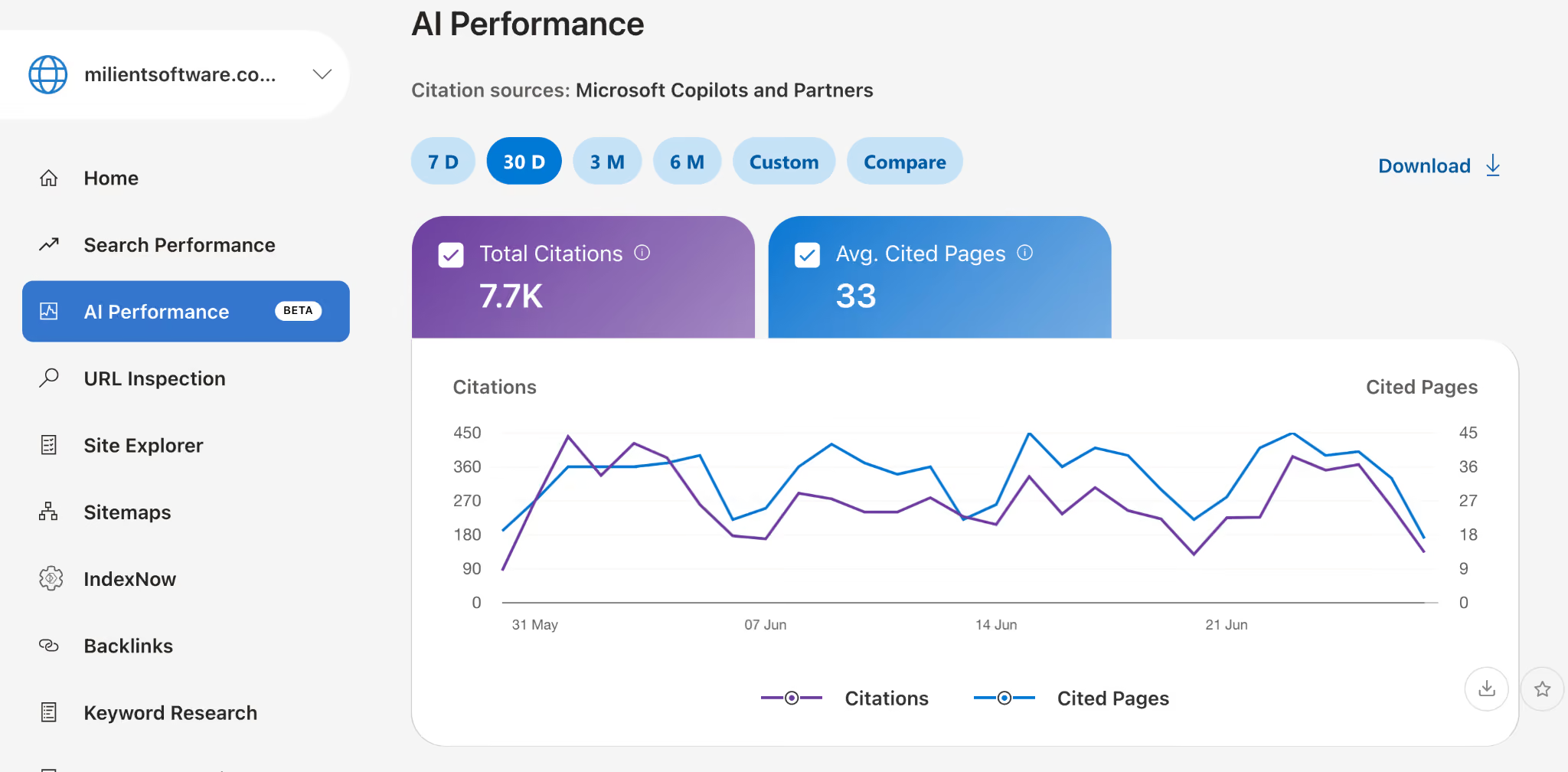
Track AI citations, AI share of voice, and brand mentions across ChatGPT, Google AI Overviews, AI Mode, Gemini, Claude, Perplexity, and other AI search platforms.
At Scalerrs, we review AI search performance every week, tracking how visibility changes across buyer prompts, where new citations appear, and how those trends develop over time. That ongoing reporting helps us identify meaningful shifts in AI search long before they become visible in traditional SEO metrics.
{{protip="/pro-tips/seo-kpi-7"}}
How to Choose the Right SaaS SEO KPIs for Your Stage
You want to align your metrics with your specific growth stage to track impact effectively.
Prioritize 5-8 core indicators rather than tracking everything, working backward from business goals like qualified leads, sign-ups, and ultimately Annual Recurring Revenue (ARR)
Here’s a framework you can follow depending on your SaaS stage:
{{protip="/pro-tips/seo-kpi-8"}}
Side Note: As your SaaS grows, so does the complexity of measuring SEO performance. That’s why, at Scalerrs, we combine deep technical SEO, AEO, and AI-search expertise, attribution, and revenue reporting into one growth framework. Our workflows increasingly draw on internal tooling and automation to keep client work consistent and fast at scale, while strategy and judgment remain human-led. Compare how that approach differs from building an in-house team, hiring a freelancer, or working with a traditional SEO agency to find the right fit for your business.
FAQs
1. What are the most important SaaS SEO KPIs?
Early-stage SaaS companies focus on visibility metrics like AI citation rate, commercial keyword visibility, and non-branded traffic.
Growth-stage companies add MQLs, SQLs, and pipeline influenced, while enterprise teams also prioritize recurring revenue metrics like MRR, ARR, and Organic Share of Voice.
2. Should SaaS companies still track keyword rankings as a KPI?
Yes, but not in isolation. Track commercial keywords separately from informational keywords and group them by TOFU, MOFU, and BOFU so ranking improvements can be tied to buyer intent, conversions, and revenue.
3. How do you measure SEO ROI for a SaaS company?
By connecting Google Analytics 4, your CRM, and billing data to ensure every customer retains their original acquisition source. That allows you to attribute pipeline, customers, MRR, and ARR back to organic search.
4. What KPIs should SaaS teams track for AI search visibility?
Track AI citation rate, AI Share of Voice, brand mentions, and citation trends across ChatGPT, Google AI Overviews, AI Mode, Gemini, Claude, and Perplexity.
Review these alongside traditional organic KPIs to understand how AI visibility contributes to broader search performance rather than treating AI as a separate channel.
5. How often should SaaS SEO KPIs be reported?
Review leading indicators every week so you can respond quickly to changes. Report conversions, pipeline, and revenue metrics monthly to understand how improvements in search visibility are contributing to business growth over time.
Build a SaaS SEO Program Around the Right KPIs with Scalerrs
Successful B2B SaaS brands don't track these SEO KPIs to improve individual metrics. They use them to understand whether they're becoming the brand buyers discover first, trust most, and ultimately choose across every stage of the buying journey.
That means building category ownership wherever buyers research software. For SaaS, that's Google Search, AI search, Reddit, YouTube, third-party listicles, and Wikipedia.
That's our approach at Scalerrs. We combine SaaS SEO, including deep technical work, with AEO, Reddit marketing, multi-platform visibility, attribution, and revenue reporting to help established B2B SaaS brands measure and expand category ownership over time.
Book a discovery call with us to see where and how your SaaS can win next.
Book a Discovery Call
Turn Organic Search Into Your #1 SaaS Acquisition Channel.

Let us scale your SEO channel for you.
reviewed onClutch
4.9 rating







Get Free Resources In Your Inbox
Get all of our FUTURE playbooks such as Figma files, checklists and SOPs directly into your inbox.

.avif)