%20Link%20Building.svg)
%203rd-Party%20Listicles.svg)
%20Reddit.svg)
%20Youtube.svg)






SaaS Link Building Tips to Earn Quality Backlinks


- SaaS link building points to pages that close deals, not just rank. Pricing, comparison, and alternative pages decide deals and are usually the ones starved of backlinks, so send your authority there first
- Relevance beats volume. Vet every prospect on traffic and topical fit before you pitch. A DR45 SaaS blog your buyers read passes more value than a DR75 site they've never opened
- Backlinks now feed AI search, too. The same links that lift Google rankings teach LLMs which brand to cite, so build them to earn visibility on both
- For SaaS, category ownership ties it together. Brands that want to own their category build links as one surface among many: Google, AI search, third-party listicles, Reddit, YouTube, and Wikipedia. Scalerrs runs that full suite, so every link compounds across all of them
Why SaaS Link Building Is Different
Link building for SaaS helps buyers discover, compare, and trust your product before they book a demo. With 67% of B2B buyers preferring a rep-free buying experience, your links need to support independent vendor research, not just rankings.
Here’s how that works out:
Foundational Tips Before You Start Outreach
Successful outreach starts long before you send the first email. Get these four fundamentals right first, or you'll spend time earning links that never move rankings or pipeline.
As Vladi Kriulin, Senior SEO Strategist at Scalerrs, says on LinkedIn, "Backlinks are what tell Google the rest of the internet trusts you. And in competitive spaces, that trust is the last mile."
Point Links at Pages That Close Deals, Not Just Pages That Rank
Build links to the pages that generate revenue first. Pricing, comparison, alternative, and integration pages are where buyers decide, and they're usually the ones missing backlinks because nobody thinks to point outreach at a "vs" page.
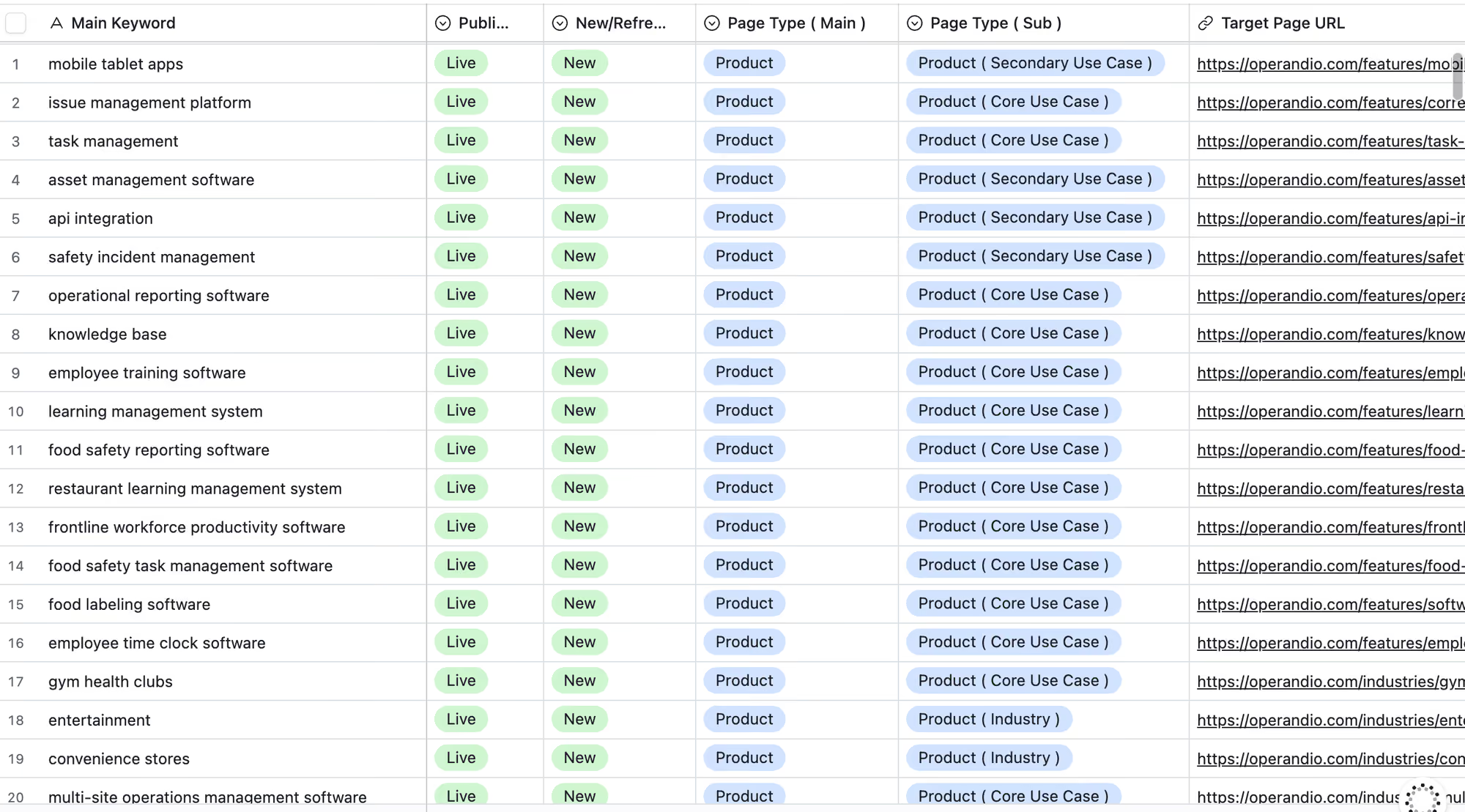
Pull these from Search Console. Filter for pages ranking positions 4 to 15 that already show conversions. That shortlist is what you build links to.
Free resources: Use our SaaS Comparison / VS Page UI Kit and Alternative Product playbooks for structure to ship your pages fast, then point to them.
Decide Your Anchor Mix Before the First Email
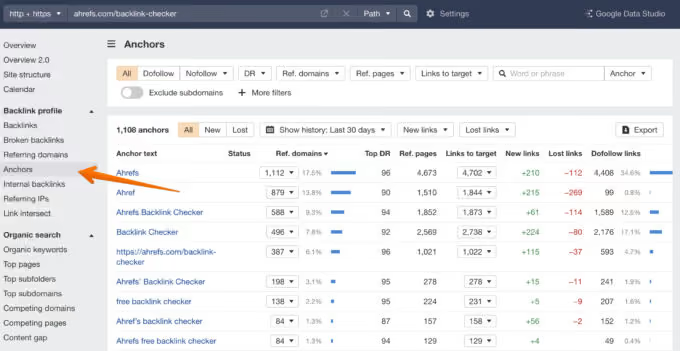
Create an anchor map for each target page using branded, partial-match, generic, and exact-match variations before you contact a single publisher.
Keep exact-match anchors to a minimum and prioritize natural variations, since over-optimized anchor profiles can look manipulative.
Use Domain Rating (DR) to Filter Prospects
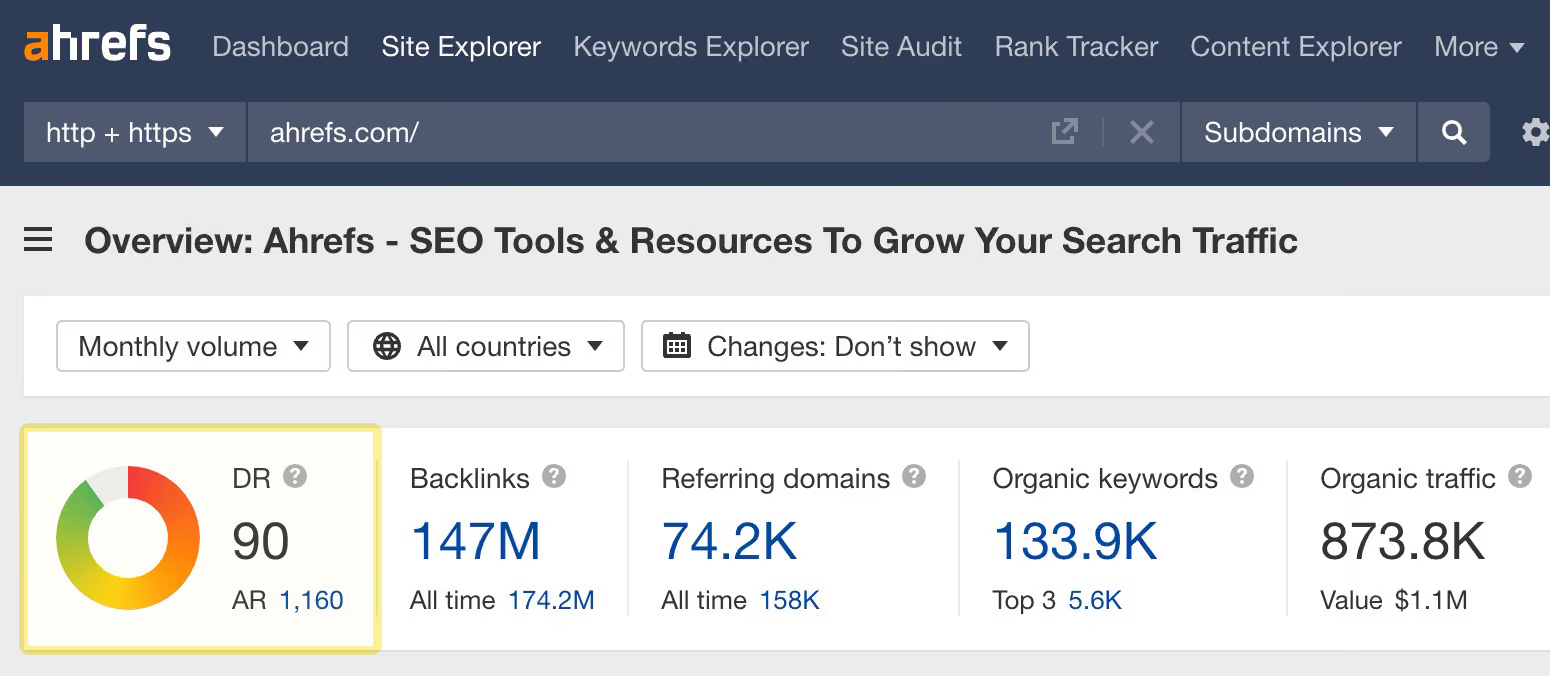
A minimum DR helps eliminate obvious link farms, but from there, prioritize organic traffic, topical relevance, and whether your buyers actually visit the site.
As Vladi recommends, filter competitor backlink profiles to DR20+, dofollow, and non-spammy links first.
You're left with the links actually influencing rankings.
Have One Asset Worth Linking To
Outreach with nothing behind it is a favor request. So, give editors something worth citing before asking for a backlink.
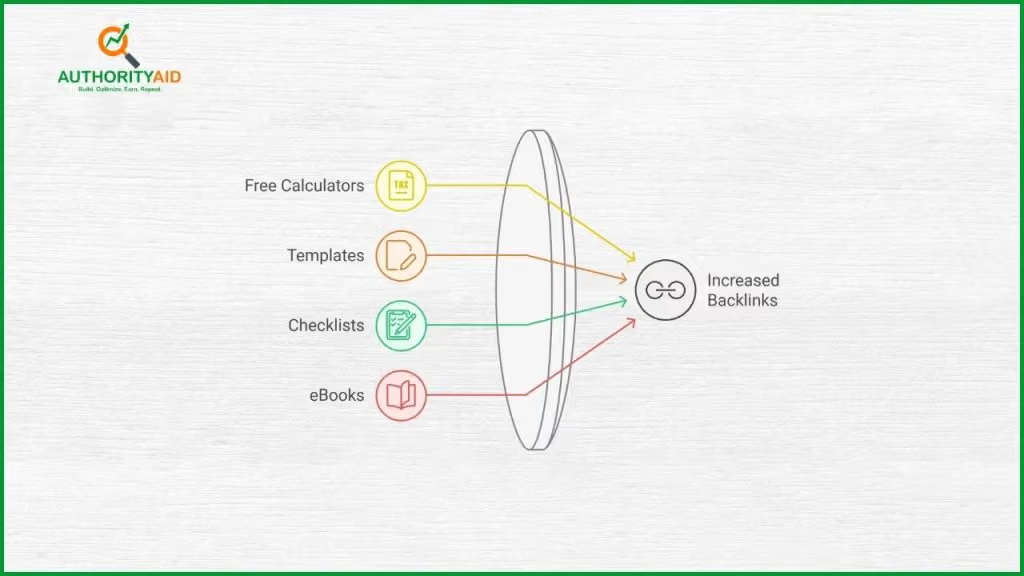
Original research, free tools, benchmarks, calculators, and practical templates all create a reason to link because they solve a problem for the reader.
Prospecting Tips: How to Build Lists That Convert
Some SaaS teams call "export Ahrefs" a prospect list, but that's just a data dump.
A list that converts is filtered down to sites that already link to SaaS content like yours, publish in your category, and have a reason to add you.
Four ways to build one.
Pull Competitor Backlinks With Ahrefs Link Intersect
Run your top three competitors through Ahrefs' Link Intersect. It returns every domain linking to them but not to you, which is a pre-qualified list by definition.
These sites already link to products in your space and just haven't found yours.
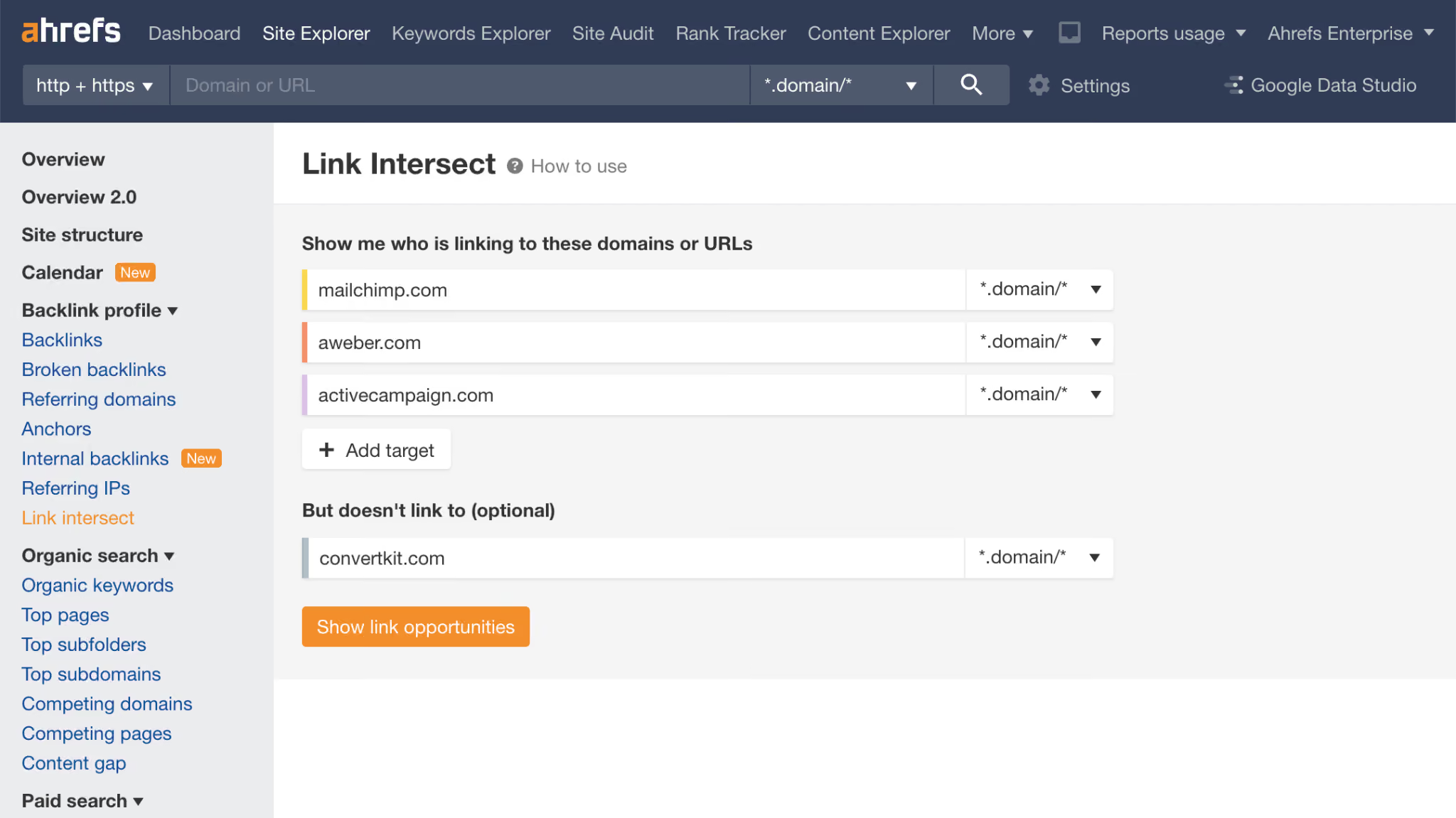
Drop the competitor URLs in, set "linking to" as any of them and "but not to" as your domain, and export. Then cut the list twice: first by whether the site published anything in your category in the last 12 months, second by real traffic to the linking page.
What's left is a list of sites with a proven habit of linking to tools like yours.
Find Listicles and Alternatives Pages With Search Operators
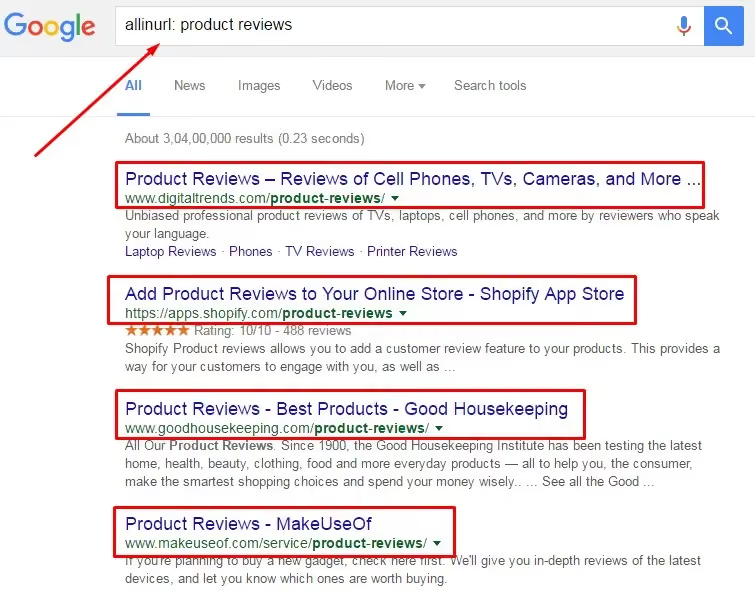
Google operators surface the exact pages your buyers read when comparing vendors, faster than any tool.
To find "best of" and comparison lists that mention rivals but not you, you can search:
{category} software intitle:"best of" -yourbrand
{competitor} intitle:alternatives -yourbrand
Every page that ranks here already earns traffic for the search your buyer types, so a placement does double duty: link equity, plus a spot on the shortlist.
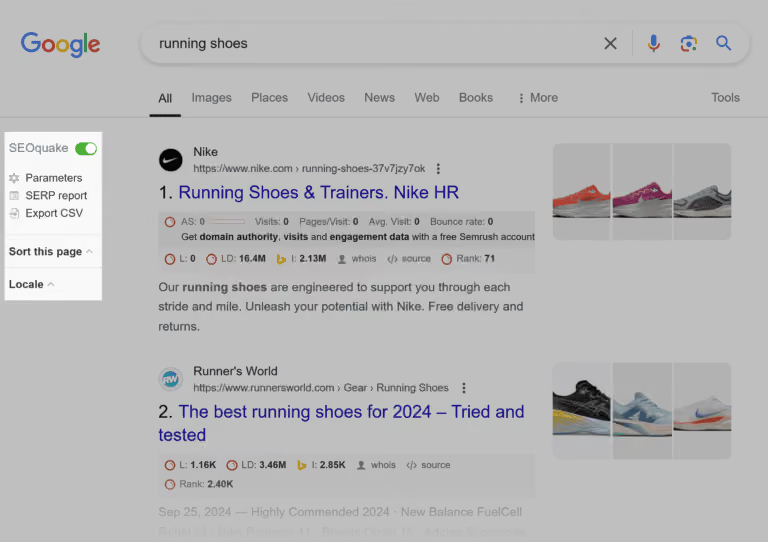
Export the ranking URLs with the SEOquake Chrome extension and add them to your list.
Build an Unlinked Mention List With Ahrefs Content Explorer
Search your brand name in Ahrefs Content Explorer, then filter to "highlight unlinked" and "one page per domain."
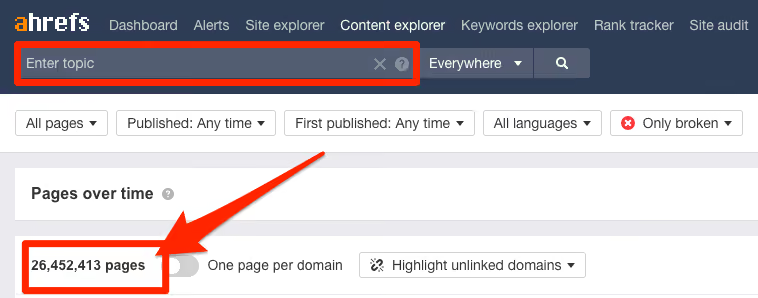
You get every site that named your product without linking to it. This is the highest-conversion list you'll build because the site already decided you're worth a mention.
Segment the List by Why They'd Link
A list converts when you sort it by the reason a publisher would say yes, because that reason decides the whole pitch later.
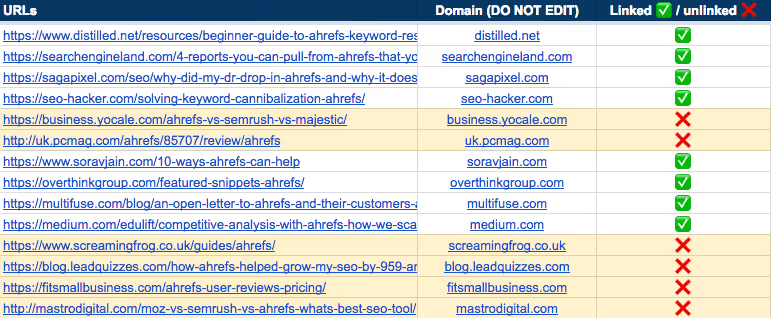
Tag each prospect in your sheet: competitor-link site, unlinked mention, listicle, resource page, or data-hungry blog.
Segment now, and each group gets one reusable template you run again and again, instead of writing every pitch from scratch.
Outreach Tips: Emails That Actually Get Replies
The average cold email reply rate is 3.43%. At that rate, sending more emails just scales the silence, so personalization and targeting are what carry the channel now.
Personalize the First Line
Personalized campaigns reply at up to 18% vs about 9% for generic templates, roughly double.
You don't need a research paragraph per prospect. You need one specific line proving you read their site: a recent post, a stat they cited, a gap in their existing list.
Keep Guest Post Pitches Short
Example:
Subject: Quick addition to your [topic] guide
Hi [Name],
Read your piece on [specific article title] and saw you covered [specific point]. I run [role] at [Company], and we published data on [specific angle] that would slot into the [specific section].
Happy to draft a short addition, or if you're open to a full guest piece on [related angle], I'll send an outline.
Either way, thanks for putting together a useful resource.
[Name]
Every line here either proves you read the page or hands the editor an easy yes. Nothing asks for a favor; offer to make their page better.
Make Unlinked Mention Outreach Barely Read Like a Pitch
Example:
Subject: Saw the mention in [Article Title]
Hi [Name],
Came across your article on [topic] and appreciated the shoutout to [Your Product] in the section on [specific context].
Small ask: would you link that mention to [specific page URL]? Happy to return the favor with a quote or a data point for a future update.
Thanks either way,
[Name]
This converts because you're asking for almost nothing. The mention already exists. You're removing friction, not adding a demand.
Open With Their Gap, Not Your Ask
Find the hole first, whether that's a missing stat, a comparison they skipped, or a use case they didn't cover.
Subject: The [specific topic] section in your guide
Hi [Name],
Your guide on [topic] covers [what they did well], but it doesn't touch [the specific gap]. We pulled data on exactly that: [one-line result, e.g. "reply rates across 4,000 SaaS outreach campaigns"].
Want me to send the chart? Happy to write a two-line addition for that section if it's useful.
[Name]
Follow Up Twice, Then Stop
Two follow-ups, spaced five to seven days apart, catch most delayed replies without tipping into spam. A third rarely converts and starts costing you the relationship for future pitches.
How to Vet a Backlink Before You Chase It
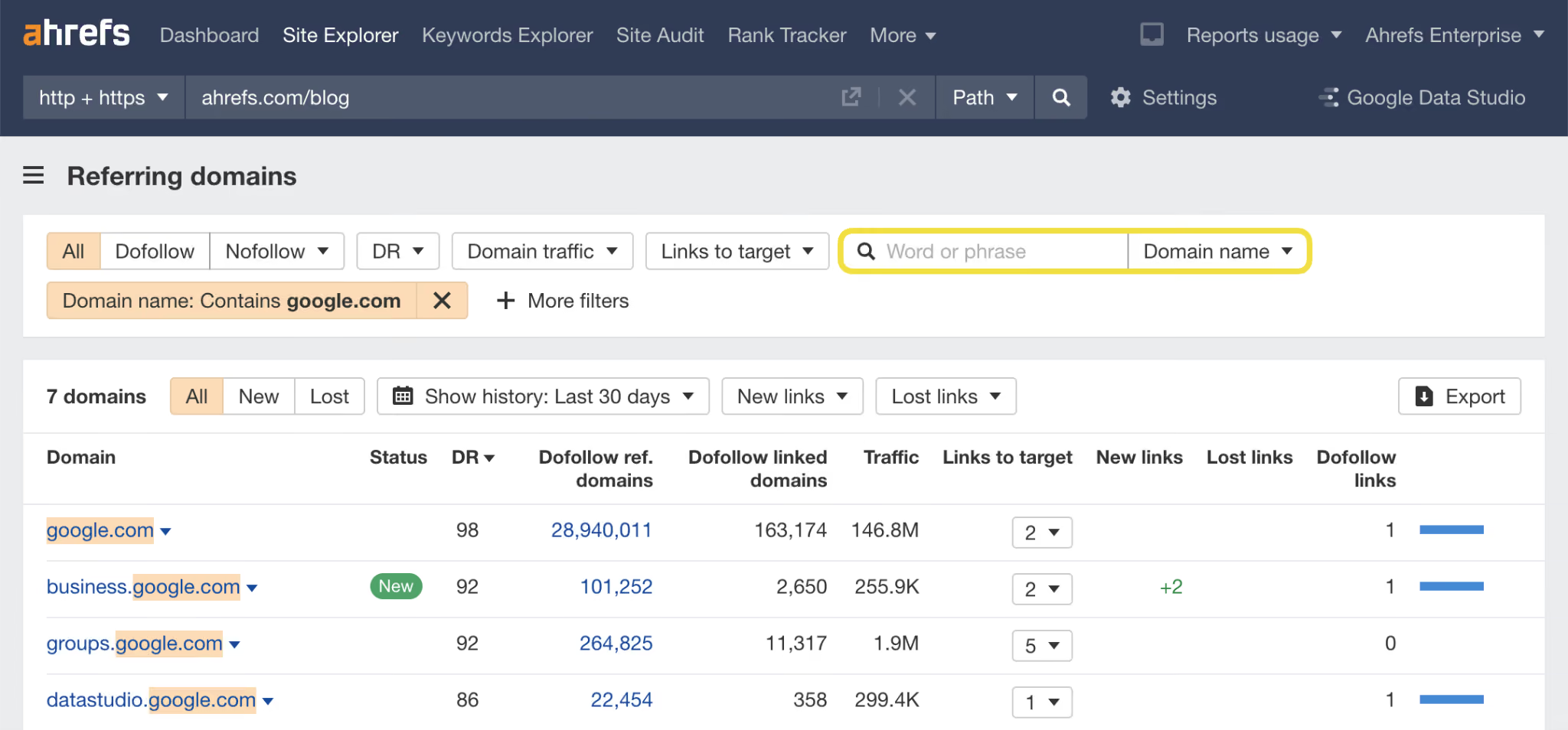
Ahrefs found that 66.5% of links created since 2013 are already dead. Run every prospect through these checks before you chase it, or you'll spend outreach earning links that rot.
- Domain Rating. Floor of DR30 for a standard target, DR50 for premium. Below DR20, the signal is too weak to move rankings, and the site is statistically more likely to be an AI-spam farm
- Organic traffic to the site. Require 1,000+ monthly organic visitors, 5,000+ for premium. High DR with near-zero traffic is the signature of an inflated link farm
- Traffic to the linking page. Check the specific page, not just the domain. A page with no keyword rankings and no visitors passes a dead link even from a healthy site
- Topical relevance. The site should cover your category, the article should cover your subtopic, and the paragraph should give the link a reason to exist. Three layers, not one
- Outbound link pattern. A page stacked with unrelated outbound links is a link farm tell. If your link would sit next to a payday loan and a casino, walk
- Indexed page count vs traffic. Thousands of indexed pages pulling almost no traffic signal auto-generated filler, not a real publication
- Anchor freedom. Confirm you can place a natural, non-exact-match anchor. A site that forces exact-match keywords on everyone is building a footprint you don't want to join
- Content pulse. Read three recent posts. Real dates, refreshed stats, current internal links. If every article reads auto-updated with no real change, the site has no editorial standards worth borrowing
Side by side, the call gets obvious:
Free resource: Want the full workflow, including the vetting sheet we run on every prospect? Grab the free SaaS Link Building Playbook.
What's Changing in 2026: Backlinks Now Feed AI Search
Backlinks still move Google rankings. But buyers now ask ChatGPT, Gemini, Claude, Google AI Mode, Perplexity, and Google AI Overviews "what's the best tool for X," and those engines answer from a wider pool than your own site.
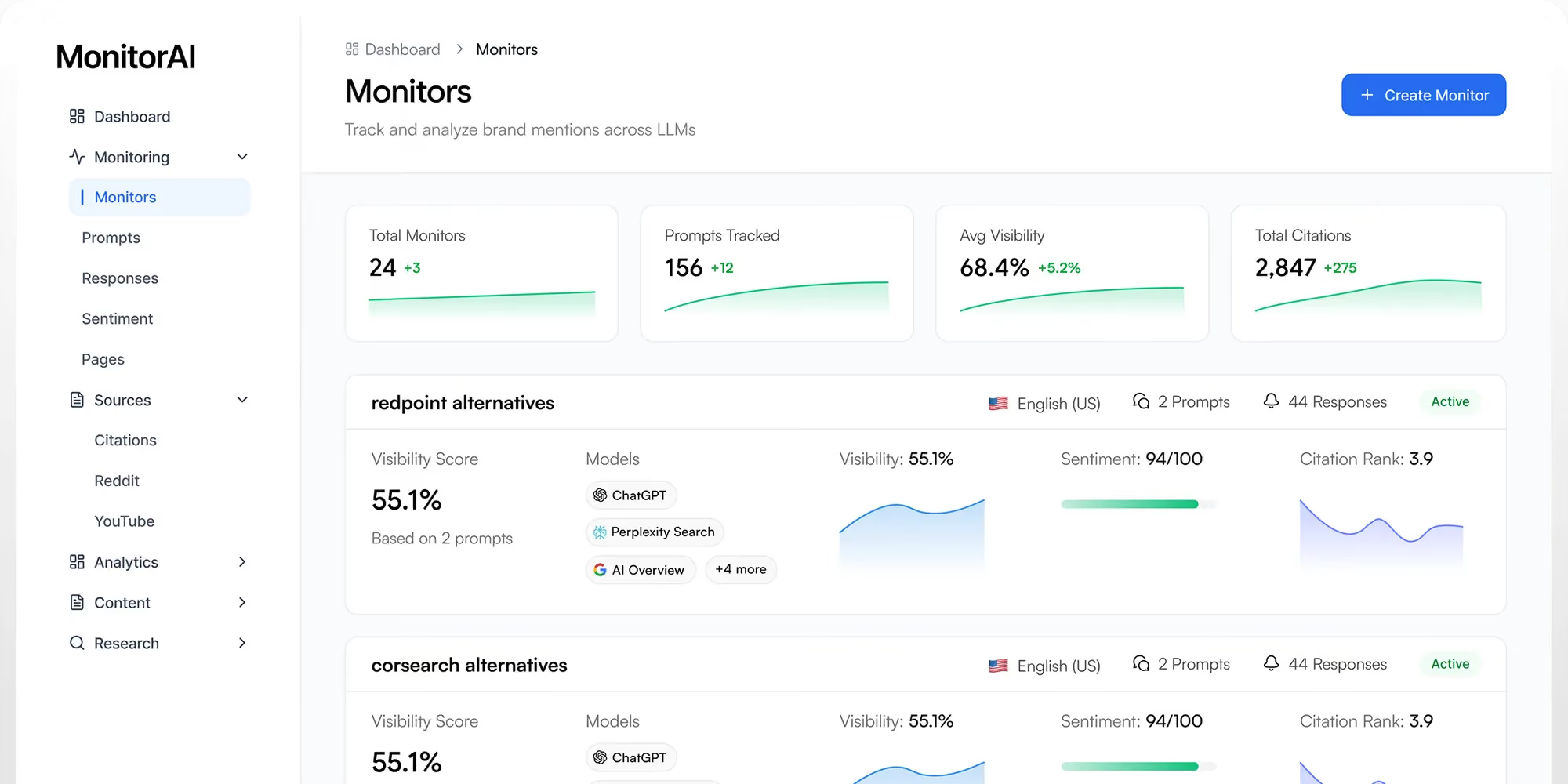
Ahrefs studied 75,000 brands and found branded web mentions correlate with AI Overview visibility at 0.664, versus 0.218 for backlinks, about three times stronger.
The same authority you build for Google now decides whether an LLM names you at all. Three moves earn those citations alongside your links:
- Get named in third-party listicles. When a buyer searches "best [category] software," the pages that rank are almost always "best of" and comparison lists, and LLMs cite those same pages when they answer
- Show up in the sources LLMs pull from. Reddit, YouTube, and Wikipedia are among the most-cited domains in AI answers. A presence there teaches models to associate your brand with your category
- Build entity consistency. Get named the same way, in the same context, across independent sites so AI systems learn what you do and who you're for.
At Scalerrs, we research which "best of" pages already rank and which ones LLMs cite, pitch editors for inclusion, write the positioning copy so you're framed as the obvious pick rather than a filler entry, then track how your placement moves in both Google and AI answers over time.
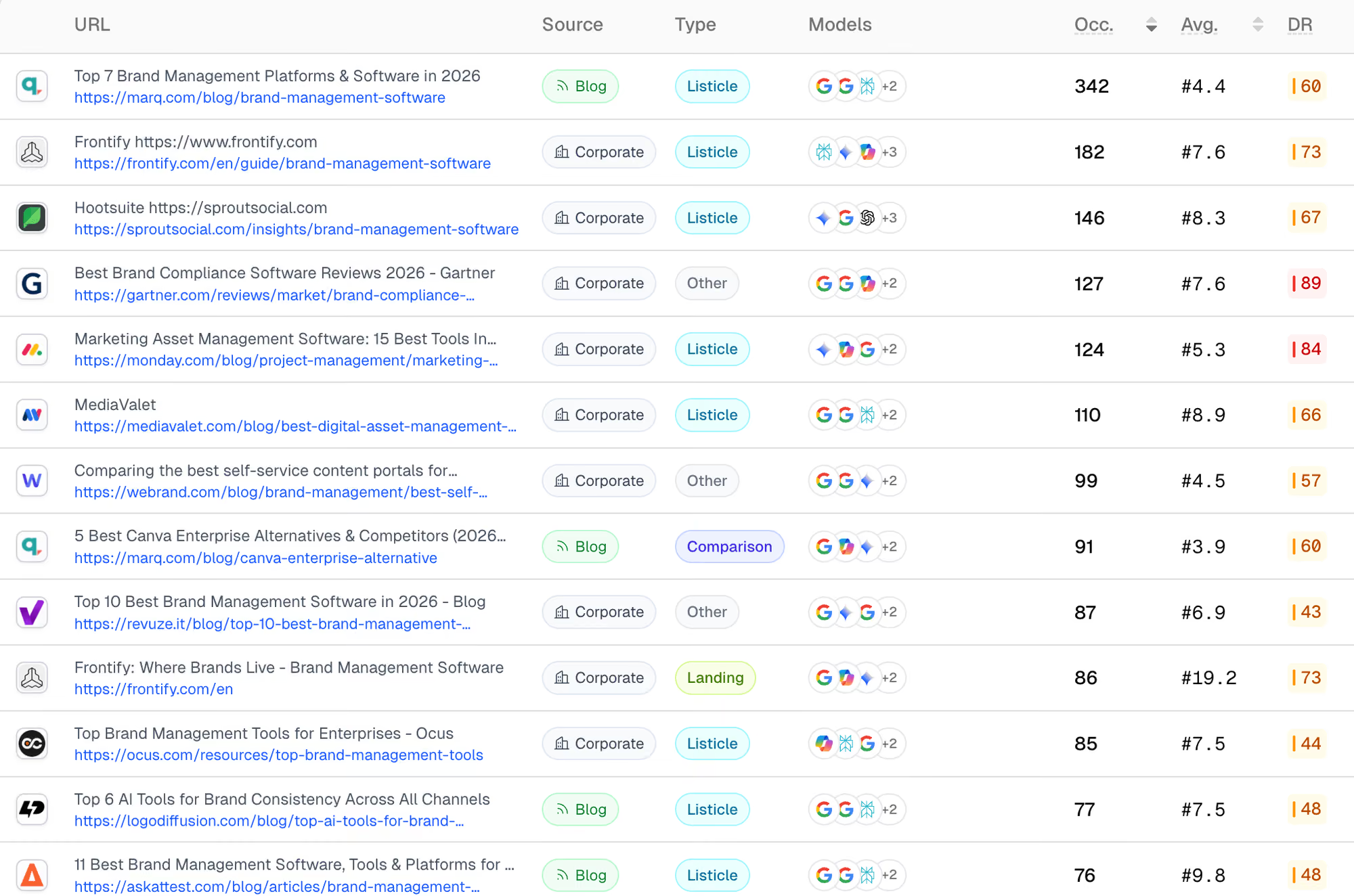
That last step closes the loop back to AEO: a placement on a page an LLM already cites is a link and an AI citation at once. That's category ownership.
None of this replaces traditional link building. It layers on top. A backlink from a relevant SaaS site still earns a Google ranking today, and now that same link teaches AI which brand to trust when a buyer asks.
SaaS Link Building Mistakes to Avoid
Every mistake below drains budget and returns nothing:
- Building links only to your homepage. Homepage links feel safe but rarely lift the commercial pages that convert. Point authority at the comparison, alternative, and feature pages buyers actually land on
- Treating link count as the report. "We built 14 links this month" tells leadership nothing about pipeline. Report against target-page rankings and the qualified actions those pages drove, or the whole program looks like activity without outcome
- Ignoring link decay. Two-thirds of links die within a decade, so an unaudited profile quietly loses the authority you paid for. Audit quarterly and reclaim or redirect lost links
- Letting founders run volume outreach. A founder's time is worth more on ten high-value relationships than on 200 cold sends. Delegate the volume, reserve the founder for the placements that need a name behind them
- Skipping post-publish verification. Editors strip anchors, swap target URLs, or add a nofollow tag during publishing. Check every live link against what you agreed, within days
- Buying bulk packages by DR. A "DR70, 50 links" package almost always sits on the same network that Google's spam systems flag. A white hat link building agency should prioritize relevant editorial links over bulk placements, because one relevant link beats fifty from a marketplace.
Most of these mistakes come from not having the time, the publisher relationships, or the tracking to do it right at volume. Scalerrs helps with all three. See how we compare to in-house, a freelancer, or another agency.
Tools You'll Need for a SaaS Content Audit
On a budget, free tools get you far, especially for picking target pages and tracking whether links move pipeline, which Search Console and GA4 both handle. Paid tools like Ahrefs or Semrush add competitor research and prospect traffic, the numbers that tell you who's actually worth pitching.
Free resource: Want to see where link building fits in the wider SaaS SEO picture? The SaaS SEO & AEO Checklist maps authority-building alongside every other ranking factor, with a downloadable template.
FAQs
1. What is a realistic reply rate for SaaS link-building outreach?
Around 3-5% for cold outreach. The 2026 average across all cold email sits at 3.43%, and B2B SaaS runs 2 to 4%. Pitches built on a genuine data hook or an existing brand mention reply far higher.
2. Should SaaS founders do outreach themselves or delegate it?
Delegate the volume. A founder's name opens doors on a handful of high-value targets, so reserve them for those. Cold, list-based outreach is a systems job better handled by a dedicated person or team.
3. How many backlinks does a SaaS site need to rank?
It depends on the keyword. Pull the top three ranking pages in Ahrefs, filter their backlinks to DR20+ dofollow links, and match that count. Relevance and page-level authority matter more than a fixed number.
4. Are paid guest posts considered white hat for SaaS link building?
Not really. Google treats paid links passing PageRank as a violation of its link spam policies. Sponsored placements need a nofollow or sponsored tag to stay compliant.
5. What is the best anchor text ratio for SaaS link building?
There isn't a fixed one. Keep exact-match anchors low, under 10%, and lean on branded, partial-match, and naked-URL anchors. The safest method is to match the anchor distribution of whoever already ranks for your target keyword.