


How to Build a SaaS Marketing Strategy in 2026 [Blueprint]

Key Takeaways
- A successful SaaS marketing strategy connects all the phases of the customer lifecycle, from acquisition and activation to retention and expansion
- Buyers now discover software across Google, ChatGPT, Reddit, YouTube, review sites, communities, and peer recommendations. Your visibility needs to extend beyond traditional search.
- The highest-performing SaaS teams build marketing around their ICP, buyer journey, and revenue goals before choosing channels or tactics.
- Content, SEO, AI search visibility, video, lifecycle marketing, ABM, paid acquisition, and events work best when they operate as one connected growth system rather than isolated campaigns.
Ask ten SaaS marketers where they'd invest their next marketing dollar, and you'll probably get ten different answers. SEO. PPC. LinkedIn Ads. YouTube. Reddit. ABM.
The problem? Knowing which ones deserve your attention right now.
A strong SaaS marketing strategy solves that problem. It helps you identify who you're targeting, where your buyers actually make decisions, which channels fit your growth stage, and how to prioritize investments for maximum impact.
If you're leading marketing at a mid-market or enterprise SaaS company, this guide is for you. We'll break down the marketing strategies driving SaaS growth in 2026, and give you a practical framework to build your own.
What Is SaaS Marketing?
SaaS marketing is the practice of attracting, converting, retaining, and expanding customers for subscription-based software businesses.
Unlike traditional marketing, the goal isn't simply generating a sale.
You're marketing a subscription product, which means success depends on the entire customer lifecycle:
- Acquiring qualified prospects
- Converting them into free trials, demos, or customers
- Helping them reach value quickly
- Retaining them over time
- Expanding revenue through upgrades, additional seats, or new products
While you can choose among dozens of different strategies, from content marketing to event marketing, the core idea remains the same: Creating enough trust for prospects to choose your product over every alternative available to them.
How SaaS Marketing Differs from Traditional Marketing
B2B SaaS purchases involve deep research, comparison, internal discussions, and multiple touchpoints before a decision is made.
Gartner's research shows that B2B buyers spend much of their purchasing journey independently researching solutions before engaging with vendors. As a result, SaaS marketers need to support buyers across the entire decision process.
This is why instead of focusing exclusively on traffic or lead generation, SaaS marketing teams are often measured on metrics like pipeline contribution, product-qualified leads, customer acquisition cost (CAC), retention, and annual recurring revenue (ARR).
Here’s a quick summary of the key differences between SaaS marketing and traditional marketing:
{{cta-general="/cta/content-creation"}}
9 Proven SaaS Marketing Strategies That Work in 2026
The key to building an effective SaaS marketing strategy is to stop treating every marketing channel as a separate initiative.
And this mindset shift is important because you now need a whopping 266 touchpoints on average to close a B2B SaaS deal.
A prospect might discover your brand in a Reddit thread, ask ChatGPT about alternatives, watch a YouTube review during lunch, click a retargeting ad a week later, and finally land on your pricing page before booking a demo.
That's why the best SaaS marketing strategies are built around visibility, trust, and buyer intent rather than individual channels. Here are ten of them to inspire you:
Strategy #1: Build a Revenue-Focused Content Marketing Engine
The highest-performing SaaS companies build content around buying decisions that directly move the pipeline. If you want a step-by-step plan for building that system, our SaaS content strategy guide covers exactly how to do it.
Think:
- Alternatives pages
- Comparison pages
- Pricing-related content
- Product-led use cases
- Customer success stories and case studies
- Industry-specific solution pages
- JTBD (Jobs-To-Be-Done) content
{{protip="/pro-tips/saas-marketing-1"}}
Real-world example:
Canva is one of the strongest examples of product-led content in action. Instead of writing blog posts about design tools, Canva built landing pages around jobs users wanted to accomplish (JTBD content)—creating logos, enhancing photos, generating AI images, or building resumes. In many cases, the product itself became the content.
When someone searches for "AI image generator," they don't want a 2,000-word guide explaining what one is. They want to generate an image. Canva's landing page lets them do exactly that.

Canva then scaled this model globally through localization and strategic acquisitions like Pexels, Pixabay, and Smartmockups, expanding both product reach and organic visibility.
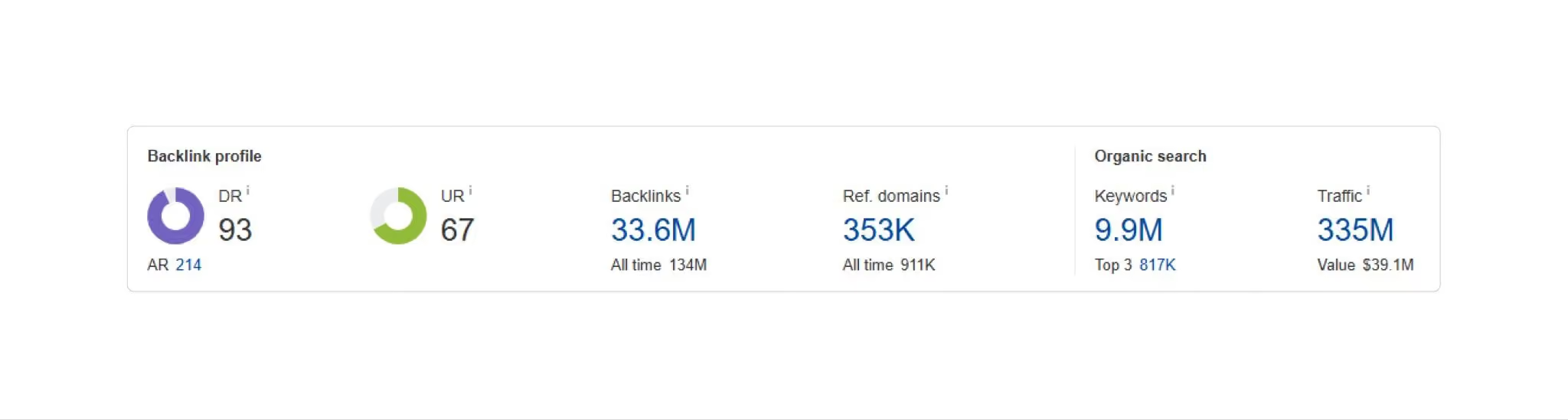
This strategy helped them scale to 335M monthly visits, 9.9M ranking keywords, and $39.1M monthly traffic value at DR 93. The AI image generator page brings in 4M monthly visits by itself.
The lesson: The closer your content is to the user's desired outcome, the easier it becomes to convert traffic into users.
{{protip="/pro-tips/saas-marketing-2"}}
{{cta-img-only="/cta/canva-case-study-playbook"}}
{{protip="/pro-tips/saas-marketing-3"}}
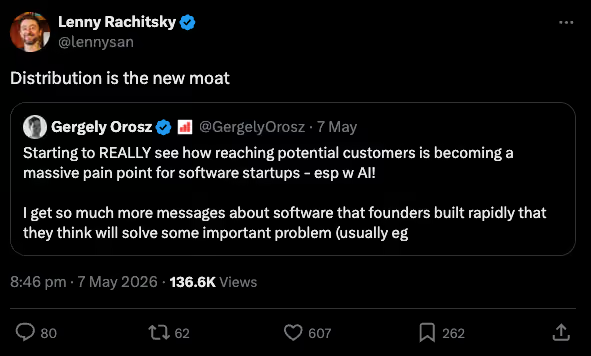
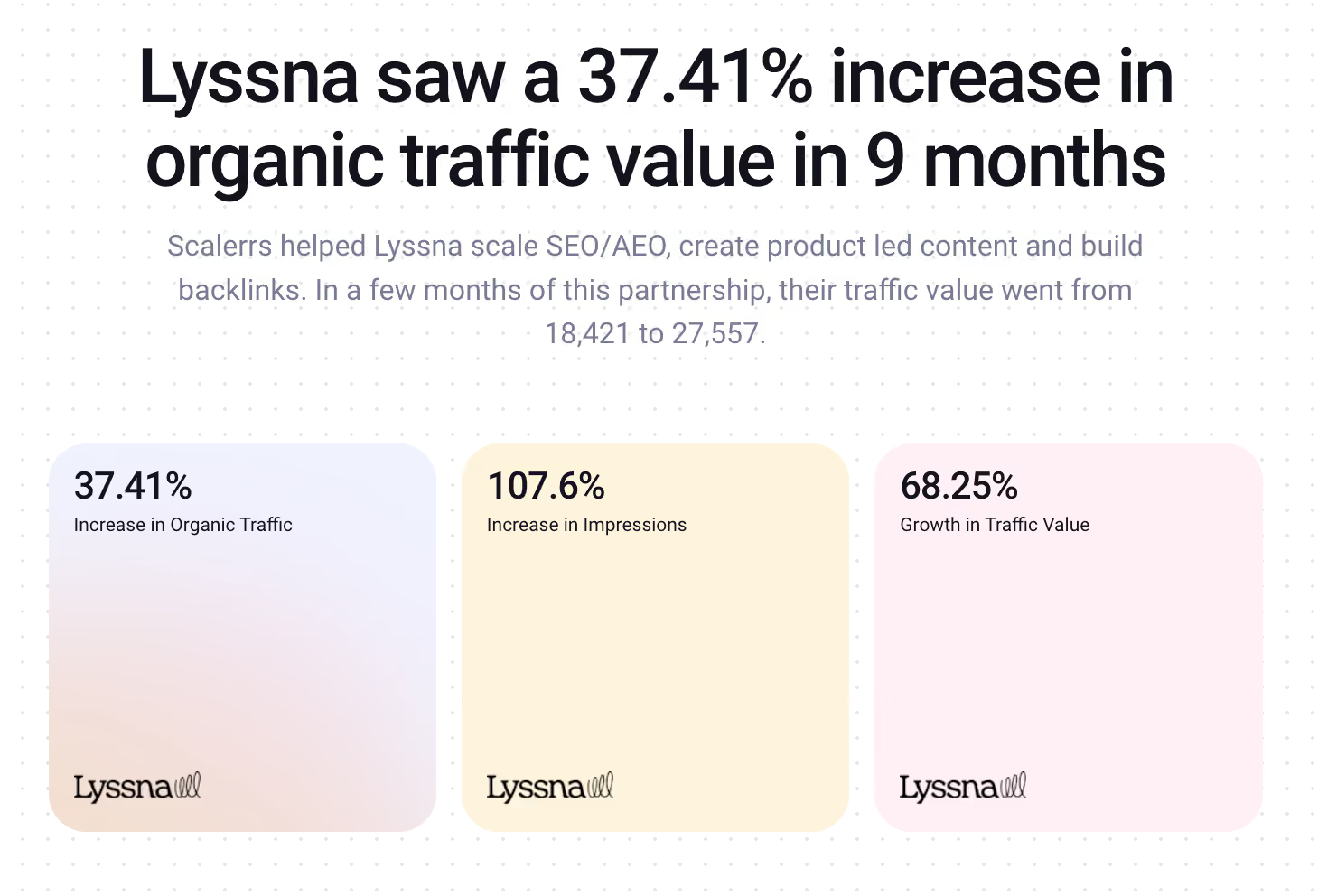
At Scalerrs, we've turned this into a repeatable distribution playbook for SaaS teams. Instead of constantly chasing net-new content, we help clients adapt existing assets into platform-native LinkedIn thought leadership, Medium articles, and AI-search-friendly formats. This way, they get more mileage from the content they've already invested in.
Strategy #2: Invest in Search Visibility Across Google and AI Search
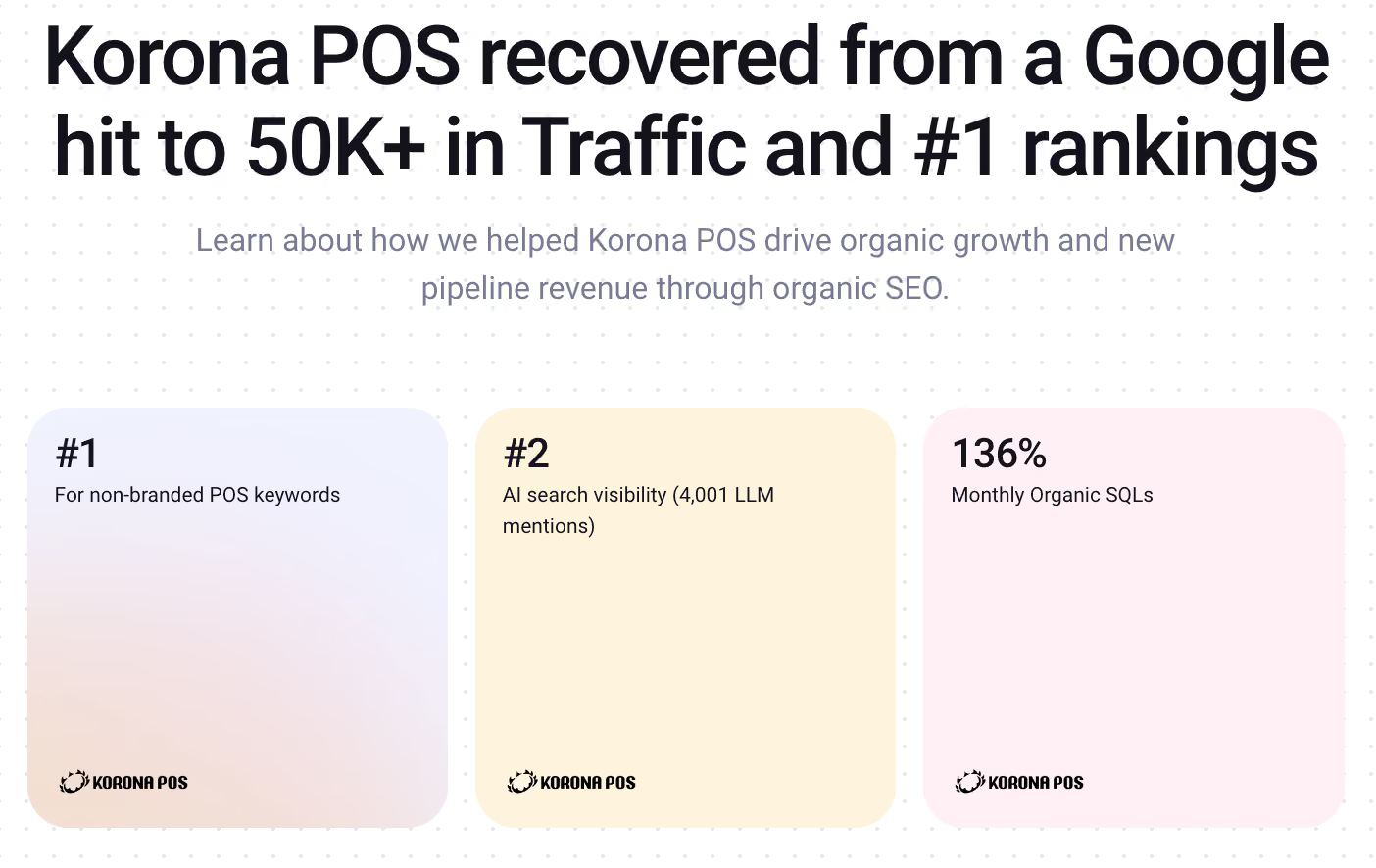
One of our clients, Korona POS, achieved #1 rankings for non-branded POS keywords on Google while becoming the #2 most visible brand across AI search experiences, earning 4,001 LLM mentions across ChatGPT, Perplexity, Claude, and AI Overviews.
How?
By treating SEO, AI search, Reddit, listicles, and authority-building as one connected visibility system.
Despite all the discussion around AI Search, Google's guidance remains surprisingly straightforward:
"From Google Search's perspective, optimizing for generative AI search is optimizing for the search experience, and thus still SEO."
Google’s AI Overviews and AI Mode are powered by many of the same ranking and quality systems behind traditional search. Technologies like retrieval-augmented generation (RAG) and query fan-out still rely on content Google's systems can crawl, understand, and trust.
In practice, the fundamentals of SEO haven't changed for AEO:
- Create content with genuine expertise and a unique point of view
- Maintain a strong technical foundation
- Write for people, not AI systems
- Earn authority instead of manufacturing it
Google has even pushed back on many popular "AEO hacks," including llms.txt files, AI-specific content chunking, and rewriting content for machines.
But SEO alone is no longer enough.
While Google's AI experiences rely heavily on Google's index, other AI platforms pull from a broader set of sources.
{{protip="/pro-tips/saas-marketing-4"}}
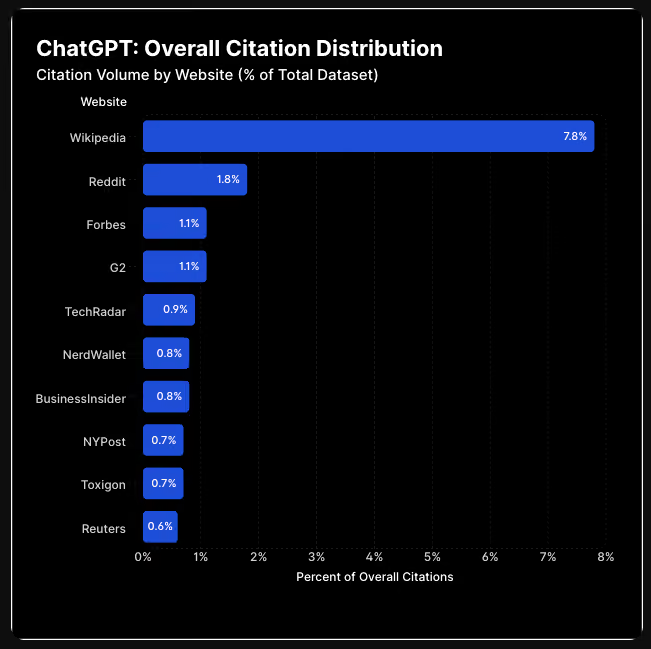
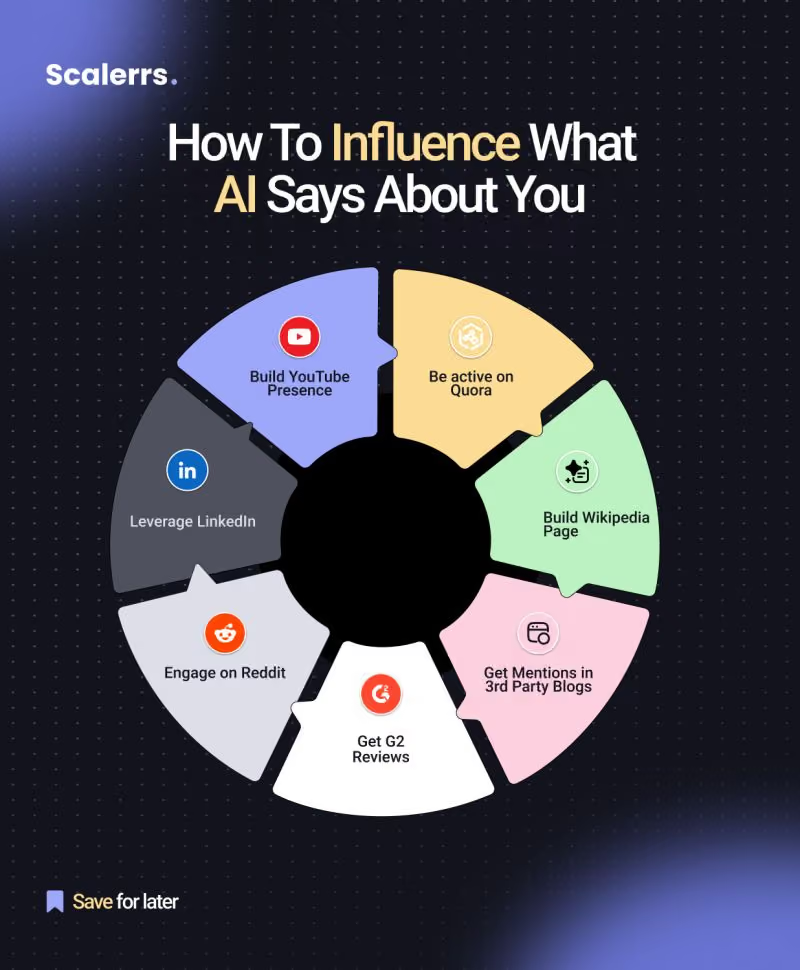
That means winning modern SaaS visibility now takes:
- Traditional SEO: Content depth to support search intent
- AI citations across ChatGPT, Perplexity, Gemini, Claude, and AI Mode: Structure content for LLM retrieval
- Wikipedia pages and entity authority: Build compliant, neutral pages that survive editorial review and get picked up by LLMs
- Reddit marketing and community discussions: Earn trust where buyers are seeking recommendations
💡 Pro Tip: Unlike most SEO agencies, Scalerrs runs a dedicated Reddit practice focused on authentic participation strategies. We promise no fake accounts or force-fitted mentions. Only safe, proven tactics that help clients earn mentions in the conversations buyers are already having—without getting banned.
Jules Davies breaks down this Reddit approach in more detail in this LinkedIn post.
- Third-party listicles, reviews, and comparison sites: Earn placements in "best [category]" articles AI tools cite
- YouTube content and transcripts: Capture high-intent searches, build trust through product education, and create content AI systems can reference and cite
Growth Advisor Kevin Indig summarized the shift in The Great Decoupling:
"Move from keyword-first workflows to ICP-first workflows. SEO is no longer a standalone channel. It's one input in a brand-building system."
The results for Korona POS reinforce that visibility wins before rankings do. Buyers don't arrive neutral. By the time they actively evaluate vendors, many already have a front-runner in mind.
The brands that consistently appear across Google, AI search, Reddit, YouTube, and third-party recommendations are the ones most likely to earn that position.
Explore our AEO services that help SaaS brands earn citations and visibility across ChatGPT, Perplexity, Gemini, Claude, Google AI Overviews, and traditional search.
{{cta-general="/cta/aeo-ai-search-agency"}}
Strategy #3: Build a Video-Led Demand Generation System
Before booking a demo, many prospects want to see your product in action. They want to watch someone use it, hear customer stories, and get proof that your solution works in the real world.
Video delivers all of that via:
- Product tutorials. Buyers search "[product] tutorial" before signing up. Own that video.
- Comparison and "vs" videos. Same intent as a comparison page, higher trust.
- Founder-led explainers. A 3-minute clip from your founder on your category positioning is one of the most-shared assets you can make.
{{protip="/pro-tips/saas-marketing-5"}}
{{cta-img-only="/cta/saas-youtube-playbook"}}
YouTube content, in particular, can power discovery months or years after publication. Because YouTube is the second-largest search engine, video ranks in Google's blended SERP, and AI tools pull transcript content as a citation source.
The long shelf life makes it one of the few channels that can support both demand generation and demand capture simultaneously.
If video is on your roadmap, check out how our SaaS YouTube marketing service handles strategy, scripting, production, and search optimization end-to-end. Book a demo if you’re looking to turn every recording into a discoverable asset, without hiring a full in-house video team.
Strategy #4: Use Account-Based Marketing for High-Value Accounts
If you're selling a $29-per-month product, Account-Based Marketing (ABM) may not be your highest priority. If you're selling six-figure contracts to enterprise teams, it's a different story.
Enterprise buying decisions rarely involve a single stakeholder. The State Of Business Buying 2026 by Forrester shows the average purchasing decision involves 3+ departments, with an average of 13 people inside the buyer's organization and 9 outside.
You might need approval from:
- Department leaders
- Budget owners
- Procurement
- Security teams
- Executive sponsors
- End users
Treating all those people as one lead creates friction.
ABM solves that problem by focusing marketing and sales around target accounts rather than individual contacts.
Rising CAC plus larger buying groups means precision targeting compounds in ways broad-reach campaigns no longer do.
Kyle Poyar, founder of Growth Unhinged, put it directly in early 2026: "I'm extremely bullish on account-based GTM motions in 2026."
The motion that works for SaaS:
- A tight target account list. 100 to 500 ICP-fit accounts, not 5,000
- Multi-thread the committee. Coordinated outreach to economic buyers, champions, and end users at once
- Intent data. Tools like Clearbit, 6Sense, and Demandbase surface accounts already researching your category
- Tie ABM to existing channels. Your BOFU content, retargeting pixels, and SDR sequences should all work the same accounts
{{protip="/pro-tips/saas-marketing-13"}}
That's one reason our content and AEO work at Scalerrs increasingly supports ABM motions: we help clients show up everywhere their buyers research, building familiarity before a rep ever sends the first email.
This is exactly what our founder Jules Davies modeled publicly in a LinkedIn breakdown for Databox, walking through a multi-surface AEO strategy he'd build for their team.
Strategy #5: Pair Paid Acquisition with Retargeting
Paid acquisition still works.
With the new median CAC Ratio at $2.00 per $1.00 of new ARR per Benchmarkit's 2025 data, the challenge is it's become more competitive, and less forgiving.
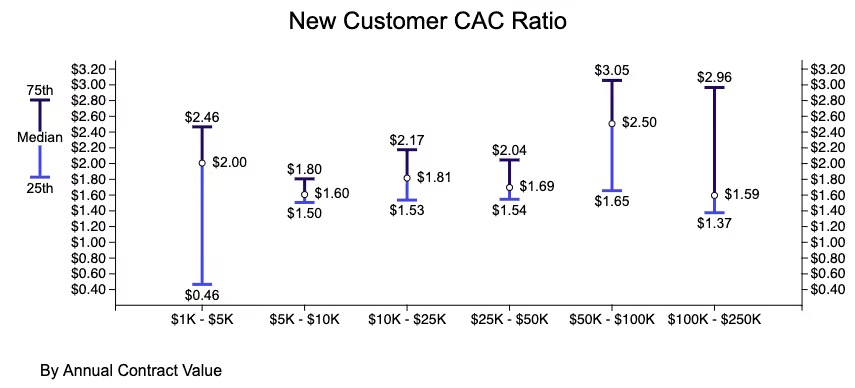
That's why we typically recommend using organic channels and AEO to warm accounts before paid touches them. When prospects already recognize your brand from a comparison article, a Reddit thread, or an AI Overview citation, paid CPL drops and conversion climbs. It helps you identify winning messages first. If a comparison page consistently drives demos, that message deserves a paid budget.
This way, paid becomes an accelerant rather than an experiment.
For SaaS companies, the most common paid channels include:
- Google Search Ads to capture existing demand
- LinkedIn Ads to reach specific roles and accounts
- Review platform (G2) advertising to put you on the buyer shortlist
- Meta retargeting to keep your brand visible during longer buying cycles
{{protip="/pro-tips/saas-marketing-6"}}
Strategy #6: Turn Social Media into an Organic Distribution Channel
Your buyers don't open LinkedIn, X, Instagram, or TikTok hoping to see software advertisements. They’re there to learn, be entertained, or hear interesting perspectives.
The SaaS brands generating meaningful results from social use it to distribute ideas rather than promote products.
For mid-market and enterprise SaaS marketing leaders, LinkedIn is the most important organic social channel by a wide margin. Your buyers, buying committee, hires, and peers all spend more time there than anywhere else during business hours.
The brands generating real results focus heavily on founder-led content, customer story and case study breakdowns, and short-form video to earn attention.
Real-world example
ClickUp is one of the strongest examples of this strategy. Chris Cunningham, Founding Member at ClickUp, leads a social strategy that generates 200 million organic impressions per month and lowers ad CAC by turning viral organic into paid creative.
The company consistently publishes creator-style content, humorous videos via dedicated ClickUp Comedy channel on Youtube and Instagram, educational clips, customer stories, and behind-the-scenes content that earns attention even from people who aren't actively shopping for project management software.
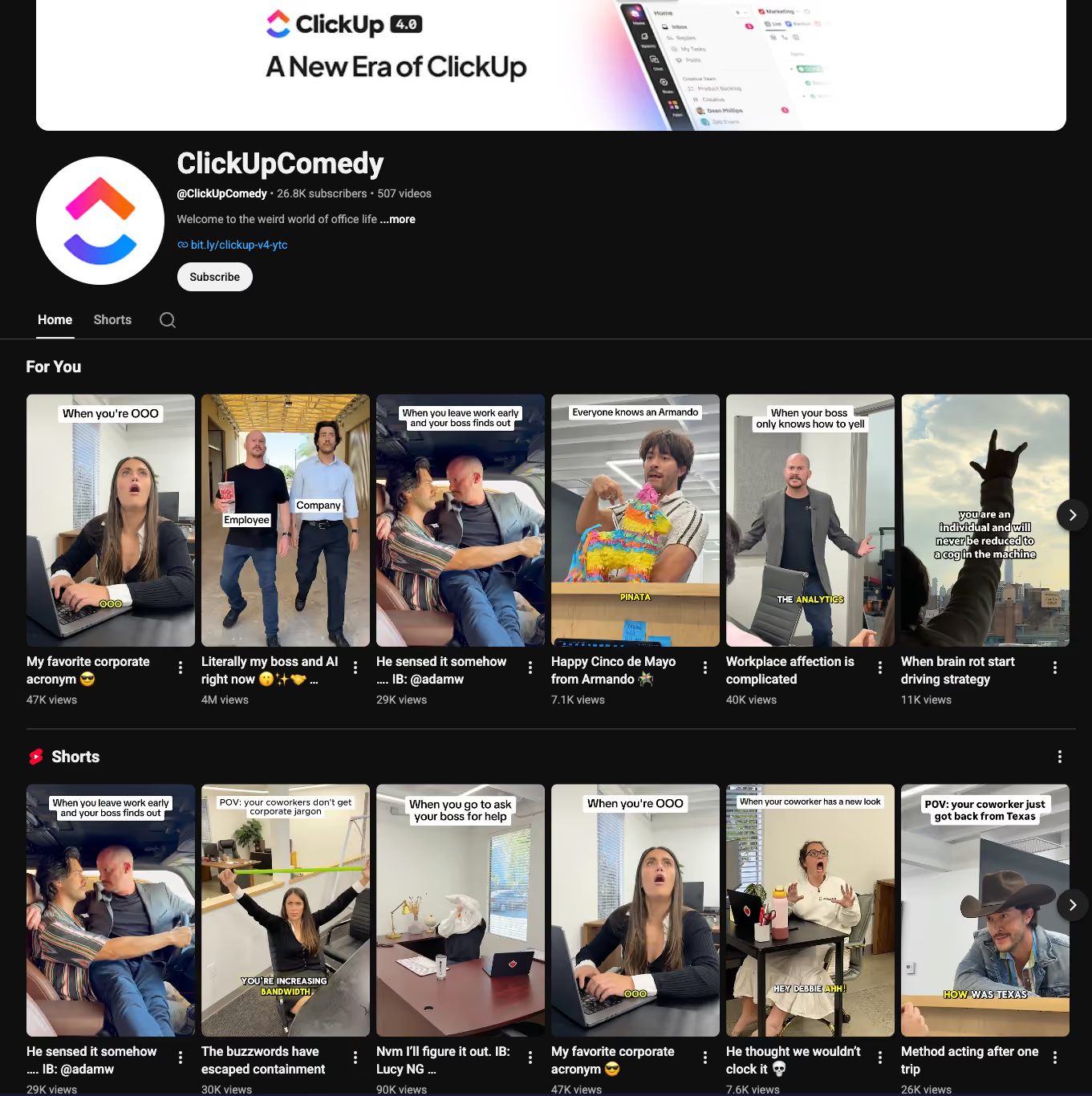
That attention compounds. By the time a prospect enters the market for a solution, the brand already feels familiar.
Strategy #7: Build Lifecycle Marketing Around Retention and Expansion
Lifecycle marketing focuses on what happens after someone becomes a lead or customer.
This includes:
- Onboarding sequences
- Product education
- Activation campaigns
- Usage nudges
- Customer newsletters
- Expansion campaigns
- Referral programs
- Advocacy initiatives
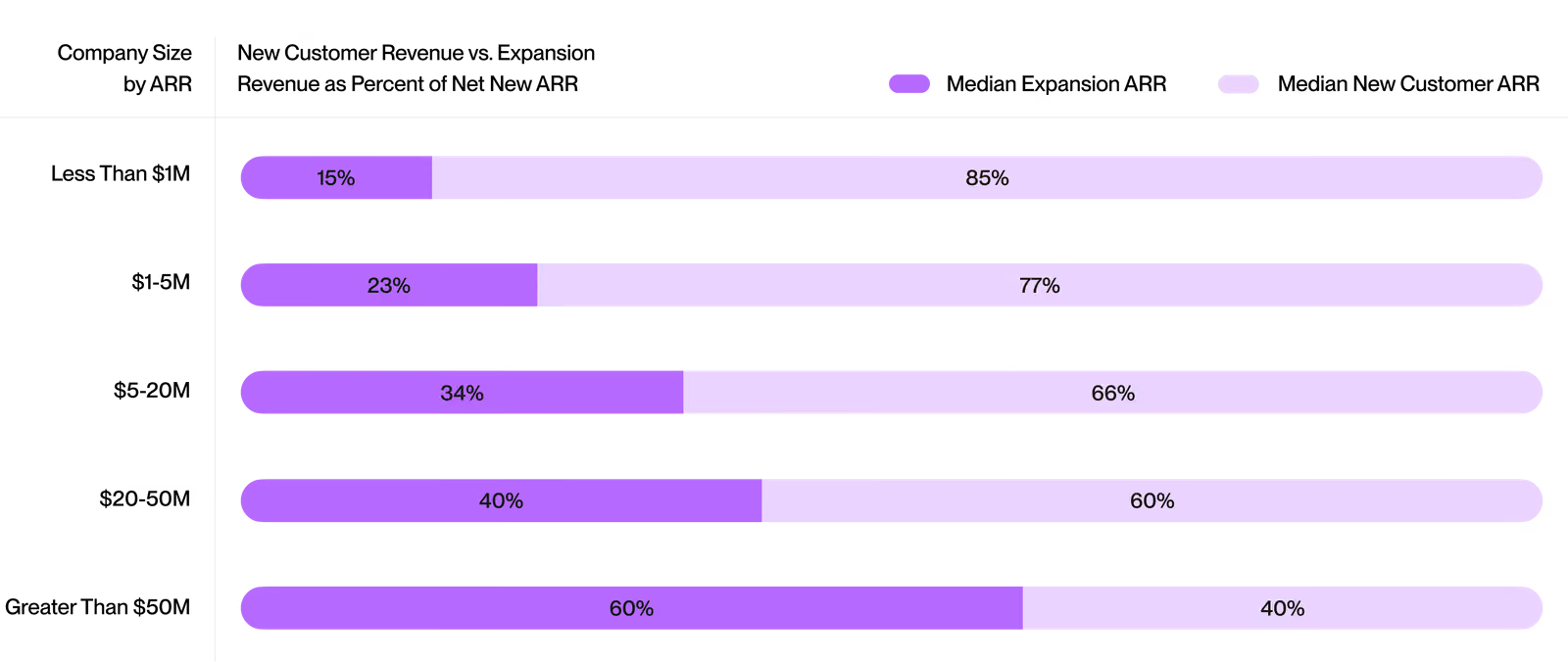
For product-led SaaS companies, lifecycle marketing is often one of the highest-impact tactics available. The High Alpha 2025 SaaS Benchmarks Report shows why: companies above $50M ARR now generate roughly 60% of new ARR from existing customers.
The playbook top SaaS teams run:
- Activation flows triggered by in-product behavior over arbitrary day-X delays
- Re-engagement flows for cold trials, paid users who stopped logging in, and accounts approaching renewal
- Expansion flows triggered by usage signals that suggest readiness for the next tier
- Customer marketing through case studies, advocacy, and referral motions
If your lifecycle program is one welcome sequence and a newsletter, you're leaving NRR on the table. You need content that powers buying journeys and is actually worth sending—product education, expansion playbooks, and advocacy content. And that’s exactly the kind of outcome-driven content our team at Scalerrs creates. Explore our content creation services.
Strategy #8: Build Real-World Relationships via Event Marketing (Industry Events, Webinars, and Field Marketing)
According to the High Alpha 2025 SaaS Benchmarks Report, events, conferences, and in-person interactions dominated as a top go-to-market channel across nearly all ARR bands in 2025.
The reason is simple. In B2B SaaS, trust shortens the sales cycle. A 15-minute conversation at an event like SaaStr or INBOUND moves a deal further than six months of email nurture.
Pick these three formats to start with:
- Customer events, dinners, and roundtables. Small-format gatherings with 10–15 target accounts beat almost everything else at this stage. Lower volume, higher conversion. Pair customers with prospects in the same room and peer advocacy does the closing work.
- Owned webinars and workshops. Recurring monthly or quarterly programs that build a subscriber list over time.
- Industry conferences and field events. SaaStr, INBOUND, Pavilion's CMO Summit, vertical-specific events for your ICP. Speaking slots compound brand authority. Booth presence works when paired with pre-event ABM outreach to target accounts attending.
Strategy #9: Consider Influencer and Affiliate Marketing
The B2B influencer and affiliate motion is where SaaS marketing is heading. Forrester research shows one in every three B2B buyers already consult external influencers during their purchase journey.
For your strategy, consider:
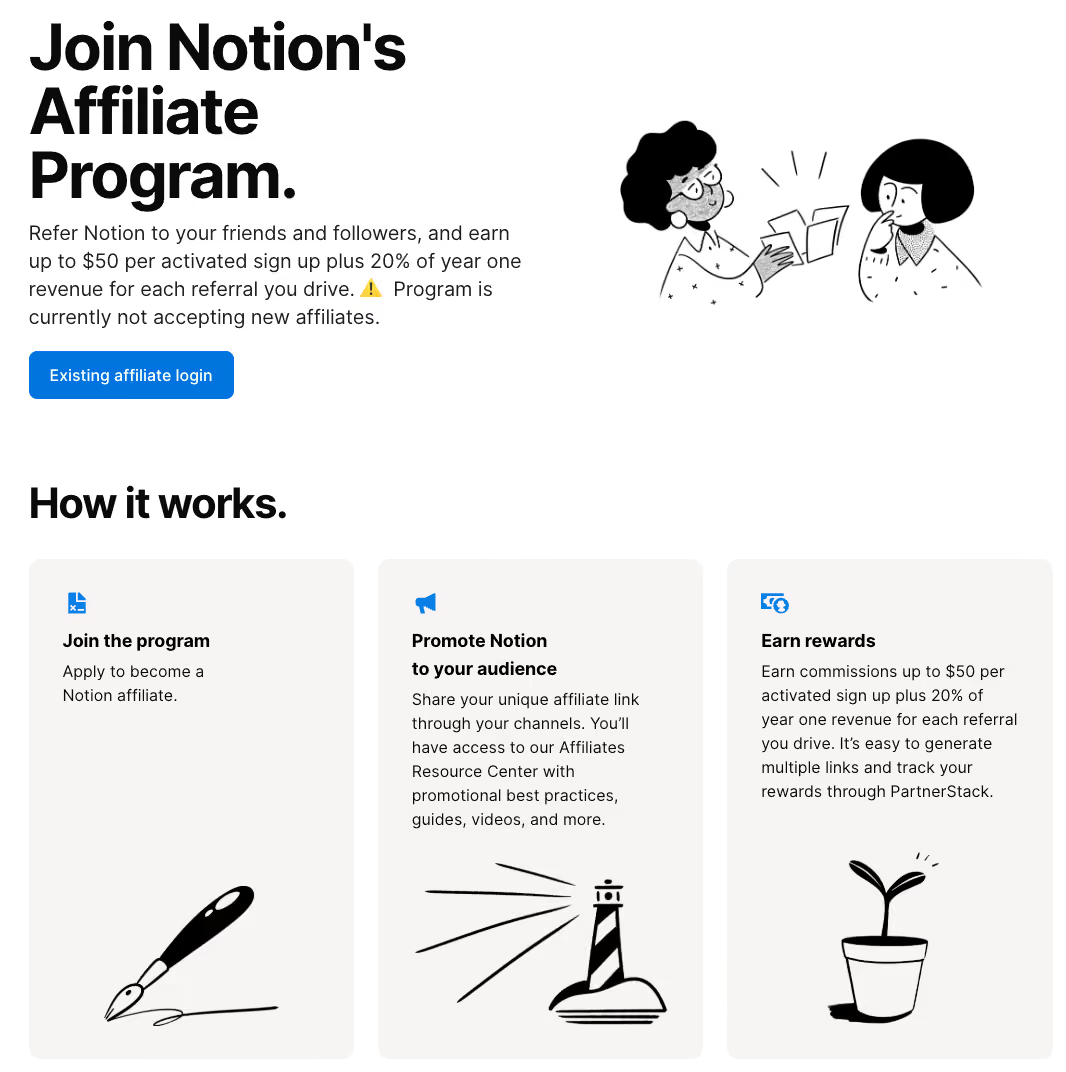
- Partner and affiliate programs. Pay creators, consultants, and complementary SaaS tools for referrals. Notion, Webflow, and Airtable followed this principle to build ambassador programs that compound. Affiliates work especially well for product-led companies where trial-to-paid conversion justifies the commission.
- Creator and analyst partnerships. Sponsoring the newsletters, podcasts, and creators your ICP reads outperforms display advertising at the same budget.
Treat this channel as a brand investment with a long payback.
How to Build a SaaS Marketing Strategy (Step-by-Step)
The nine strategies we shared above don’t do much without a system to prioritize, sequence, and measure them. Here's the five-step framework we recommend to make SaaS marketing planning effective.
Step #1: Define Your ICP and Positioning
A useful ICP goes far beyond company size or job title.
It should include:
- Firmographics
- Buying triggers
- Common pain points
- Existing alternatives
- Budget realities
- Decision-making authority
- Reasons prospects typically buy
- Reasons prospects typically don't buy
{{protip="/pro-tips/saas-marketing-7"}}
Once your ICP is defined, the next job is positioning.
Positioning answers a simple question: Why you?
If your answer sounds similar to five competitors, prospects will struggle to remember you.
This is one reason companies like HubSpot, Notion, Gong, and Canva have spent years refining positioning around specific outcomes rather than feature lists.
{{protip="/pro-tips/saas-marketing-8"}}
Step #2: Map Your Funnel to the Buyer Journey Before Choosing Channels
Once you know who you target, map their journey from "we have a problem" to "we picked a vendor." This gives you a simplified SaaS funnel.
It usually looks like this and helps you decide what kind of marketing content to produce at which stage:
{{protip="/pro-tips/saas-marketing-9"}}
At Scalerrs, this is the thinking behind our AEO strategy. We don't just optimize content for ChatGPT or Google AI Overviews. We help SaaS brands become the frontrunner across the sources AI engines actually cite. We produce high-intent product-led content, third-party listicles, Reddit discussions, YouTube content, Wikipedia pages, digital PR placements, and authoritative brand mentions.
{{cta-general="/cta/3rd-party-listicles-ai-brand-mentions"}}
Step #3: Choose and Prioritize Your Best Channels
Once your positioning, buyer journey, and messaging are clear, channel selection becomes much easier.
The right mix depends on:
- Your growth stage
- Budget
- Sales motion
- Competitive landscape
- Time horizon
A bootstrapped SaaS company can't approach marketing the same way a venture-backed company with a seven-figure budget can. Likewise, a product-led SaaS company will often prioritize different channels than an enterprise sales-led business.
As a starting point, here's how we typically think about channel selection:
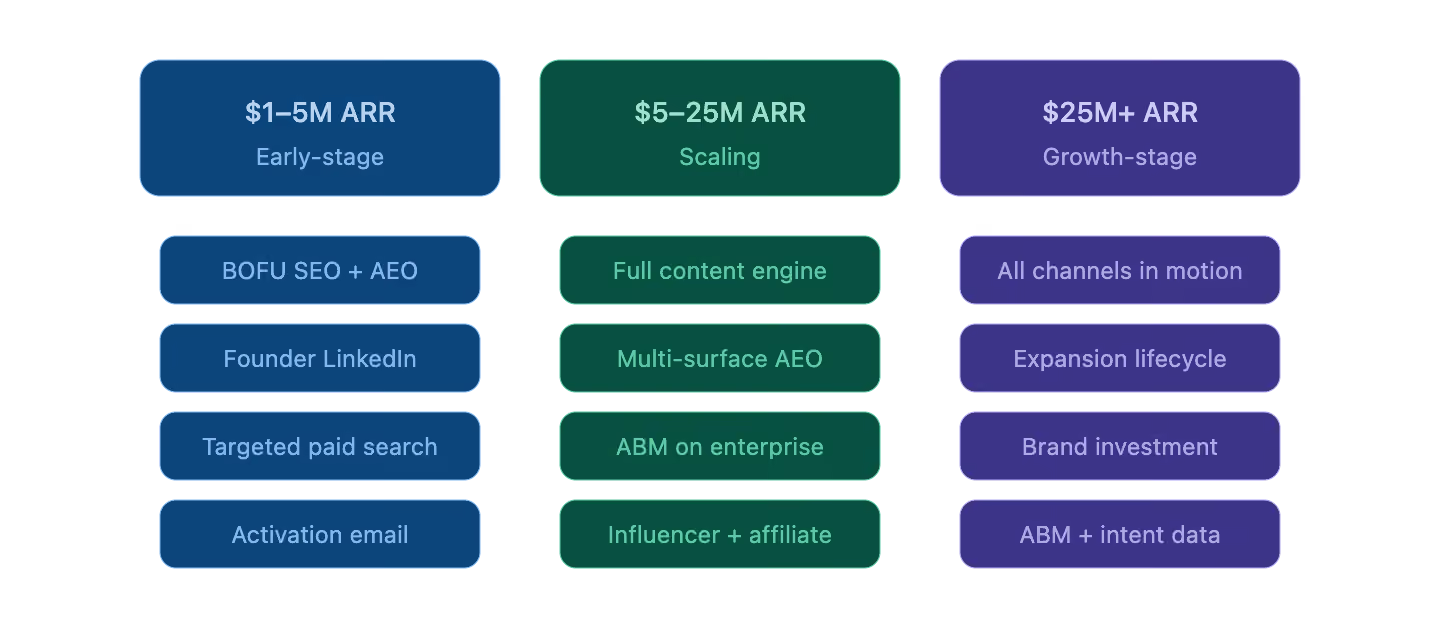
- Early-stage ($1-5M ARR): BOFU SEO and AEO, founder-led LinkedIn, targeted paid on high-intent terms, lifecycle activation email.
- Scaling ($5-25M ARR): Full content engine across BOFU and MOFU, AEO and multi-surface visibility (Reddit, listicles, YouTube), ABM on enterprise accounts, influencer programs starting to compound.
- Growth-stage ($25M+ ARR): All channels in coordinated motion, expansion-focused lifecycle (NRR becomes the lead metric), brand investment (podcasts, creator partnerships, events), sophisticated ABM with intent data.If you're looking for outside help to run any of these, our roundup of the best SaaS marketing agencies breaks down who is built for each stage and motion.
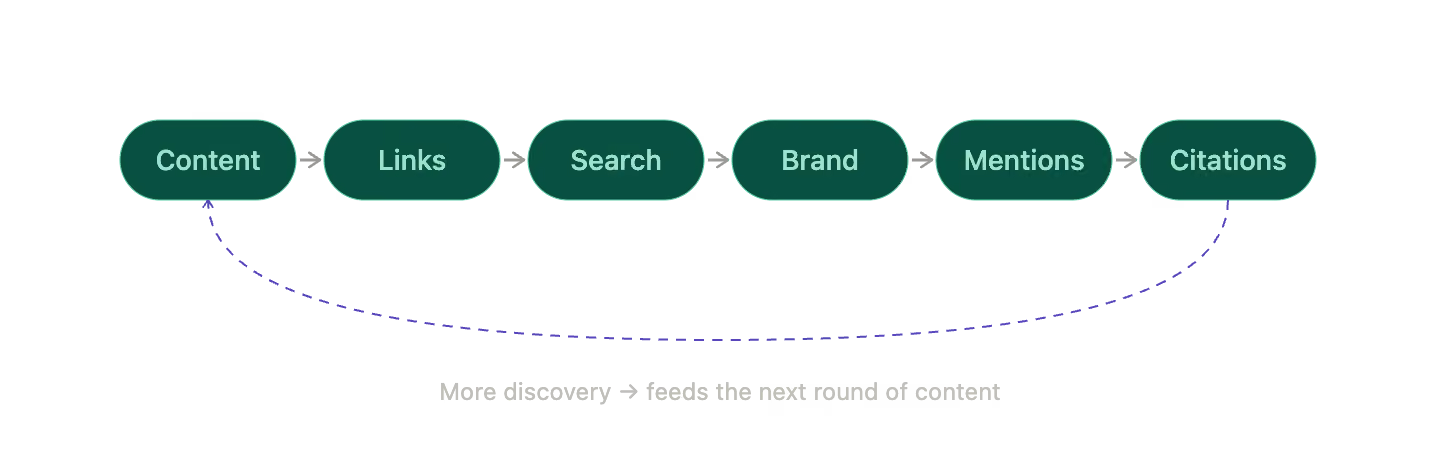
Historically, these were treated as separate functions. Today, they reinforce one another.
A blog post earns links > Links improve search visibility > Search visibility increases brand awareness > Brand awareness generates community mentions > Community mentions increase AI citations > AI citations create more discovery.
{{protip="/pro-tips/saas-marketing-10"}}
Step #4: Build Your Content, SEO, and AEO Engine
Once you've chosen your channels, it's time to build the system that powers many of them.
For most SaaS companies, that's content.
If we were building a SaaS content roadmap from scratch today, we'd prioritize content in this order:
{{protip="/pro-tips/saas-marketing-11"}}
{{cta-img-only="/cta/saas-workshop-deck"}}
AEO introduces another layer.
Getting cited by ChatGPT, Gemini, Claude, Perplexity, and Google AI Overviews increasingly requires content that is:
- Well-structured
- Factually supported
- Specific
- Consistent with external sources
- Supported by strong entity signals
If you're trying to accelerate this process, a specialized SaaS AI SEO agency like Scalerrs can help. Managing content creation, AI visibility, link building, Reddit participation, YouTube optimization, and traditional SEO internally requires significant bandwidth and fixed salary costs. Which is where Scalerrs steps in as an extension of your marketing team—without the overhead.
{{cta-general="/cta/case-studies"}}
Step #5: Define KPIs and Build an Attribution Model You Trust
If there's one challenge almost every SaaS marketing leader mentions, it's attribution.
We already know that modern buying journeys are multi-channel and messy.
So, how do you find out which channel deserves credit? The honest answer is usually: all of them.
That's why we recommend moving beyond single-touch attribution whenever possible. Instead, focus on understanding how marketing contributes to pipeline and revenue across the entire journey.
The metrics we suggest SaaS teams to monitor most closely are:
Notice what's missing: Traffic. Impressions. Follower counts.
Those metrics have their own value. But they rarely help a CMO defend budget allocation during a board meeting. Revenue metrics do.
Ultimately, a SaaS product marketing strategy succeeds when it creates a predictable pipeline and sustainable growth. Everything else is just a means to that end.
Common SaaS Marketing Challenges (and How to Overcome Them)
Across SaaS companies of different sizes and growth stages, we tend to see the same challenges repeatedly. Here they are and the SaaS marketing best practices to overcome them.
Challenge #1: Attribution Gets Messier as You Grow
The hardest problem in B2B SaaS marketing is connecting marketing activity to closed-won revenue. You won't get perfect attribution. The buying committee is too large, the journey too long, and dark social invisible to your tools.
A layered model works better:
- UTM tracking for direct response
- Self-reported attribution on demo forms ("How did you hear about us?") for the dark-social layer
- Multi-touch attribution for complex buying journeys
Imperfect attribution that points in the right direction beats perfect attribution that takes six months to build.
Challenge 2: Long Sales Cycles Test Patience
Due to longer buying journeys, SaaS marketing often influences opportunities long before attribution systems can detect it. Mature teams recognize this reality.
They establish leading indicators such as:
- Pipeline influence
- Share of search
- AI visibility
- Demo quality
- Commercial keyword rankings
while waiting for lagging indicators like revenue to catch up.
{{protip="/pro-tips/saas-marketing-12"}}
Challenge #3: Buyers Are Discovering You in Places You Don't Control
Historically, marketers focused heavily on channels they owned:
- Website
- Blog
- Email list
- Paid campaigns
Those channels still matter.
But buyers increasingly research software through channels you don't own. AI assistants, communities and forums, review platforms, industry newsletters etc.
That means your brand's visibility increasingly depends on signals outside your control.
The solution? Consistently appearing wherever your buyers look for answers.
Optimize not just for Google, but also ChatGPT, Reddit, review sites, and third-party listicles.
The teams that win tend to stay committed longer than their competitors. And because SaaS marketing compounds, that consistency often becomes a competitive advantage that's difficult to catch up to later.
{{cta-general="/cta/saas-aeo-webinar"}}
FAQs
- What marketing channels work best for SaaS companies?
It depends. Most SaaS companies benefit from a combination of content marketing, SEO, AEO, email marketing, video, paid acquisition, and community-driven channels like Reddit. The right mix depends on your growth stage, budget, and sales motion.
- How long does it take for a SaaS marketing strategy to show results?
It varies. Paid acquisition can generate results within weeks, while SEO, AEO, content marketing, and YouTube often take several months before delivering meaningful pipeline impact. The highest-performing channels tend to compound over time.
- What's the difference between SaaS SEO and AEO?
SEO focuses on improving visibility in traditional search engines like Google. Answer Engine Optimization (AEO) focuses on increasing visibility and citations within AI-powered platforms such as ChatGPT, Perplexity, Gemini, Claude, and Google AI Overviews.
- What makes a SaaS SEO agency different from a generalist agency?
A SaaS-focused agency understands recurring revenue models, long buying journeys, and the role marketing plays beyond lead generation.
Partner With Experts in SaaS Growth Strategy
If you're a B2B SaaS company that needs marketing to drive pipeline, not just traffic, the playbook above is what our team runs every day across our 45+ engagements.
We're built specifically for SaaS: AEO, traditional SEO, content, link building, YouTube, Reddit, Wikipedia, and third-party listicles. All under one team that ties every channel back to your pipeline.
If you're trying to improve AI search visibility, or build a more predictable organic growth engine, our team can help. Book a discovery call and we'll show you what a revenue-first, multi-surface SaaS marketing strategy could do for your business.
Book a Discovery Call
Turn Organic Search Into Your #1 SaaS Acquisition Channel.
Let us scale your SEO channel for you.
reviewed onClutch
4.9 rating






Get Free Resources In Your Inbox
Get all of our FUTURE playbooks such as Figma files, checklists and SOPs directly into your inbox.

.avif)