%20Link%20Building.svg)
%203rd-Party%20Listicles.svg)
%20Reddit.svg)
%20Youtube.svg)







The Ultimate Guide to SaaS On-Page SEO (2026 Edition)


- SaaS on-page SEO is no longer just about ranking pages. Every page now needs to satisfy three audiences simultaneously: search engines, AI search systems, and the actual buyers evaluating your software.
- The most critical on-page factors for SaaS are search-intent match, heading and content structure that answers questions directly, internal linking that directs authority to money pages, and schema that makes pages machine-readable.
- The highest-performing SaaS pages balance rankings with conversions. But every SaaS page type (homepage, feature, comparison, pricing, blog) needs a different on-page recipe because each sits at a different point in the funnel.
- Google's AI experiences haven't replaced SEO fundamentals. Clear information architecture, strong internal linking, structured data, and helpful content remain the foundation for visibility across Google Search, AI Overviews, and AI Mode.
Why SaaS On-Page SEO Plays by Different Rules
A publisher wants pageviews. An ecommerce brand wants transactions. But a SaaS company needs to educate someone through weeks, or sometimes months, of evaluation before they finally start a trial or book a demo.
That changes almost every on-page decision you make:
- A feature page isn't just targeting a keyword. It's also answering objections.
- A comparison page isn't just competing in search results. It's helping buyers justify a shortlist.
- Even your pricing page often becomes one of your most important SEO assets because prospects search for it directly before speaking with sales.
Google's own guidance hasn't changed much here. Creating original, people-first content with clear site architecture and helpful page structure is still the foundation of good SEO, regardless of whether someone discovers it through traditional search, AI Overviews, or AI Mode.
The difference is what happens after your page gets discovered.
Most SaaS teams still separate SEO, content marketing, CRO, and product marketing into different workstreams. Your buyers don't. They experience one page.
Which means your SaaS on-page optimization strategy needs to combine all four disciplines instead of treating them independently.
Plus, instead of one search result leading to one click, buyers now jump between AI answers, Reddit discussions, YouTube reviews, G2 comparisons, and your website before making a decision.
That means every page has to perform well across multiple discovery surfaces.
The rest of this guide is built around that philosophy.
👉 Want to build a search strategy that meets your buyers where they are?
As a SaaS SEO agency, Scalerrs is built for AI-first, multi-channel search visibility. Our experts will review how your company appears across Google, AI search, Reddit, YouTube, and other buyer touchpoints, identify the biggest gaps, and show you where the highest-impact opportunities are.
Book a free discovery call with Scalerrs.
The On-Page Foundations Every SaaS Page Still Needs
Contrary to popular narrative, AI search hasn't made title tags, internal links, or Core Web Vitals obsolete. If anything, it's made getting the fundamentals right even more important.
Title Tags & Meta Descriptions
Your title tag shouldn’t only be optimized to earn the click. It’s equally important for it to tell Google and AI systems exactly what the page is about.
Too many SaaS companies try to accomplish both by stuffing product names, marketing slogans, and every keyword variation into these precious 60 characters.
But that’s not how your buyers are searching for you.
If someone is looking for "employee scheduling software," they won’t know what to do with your tagline. All they need is confirmation they've found the right solution.
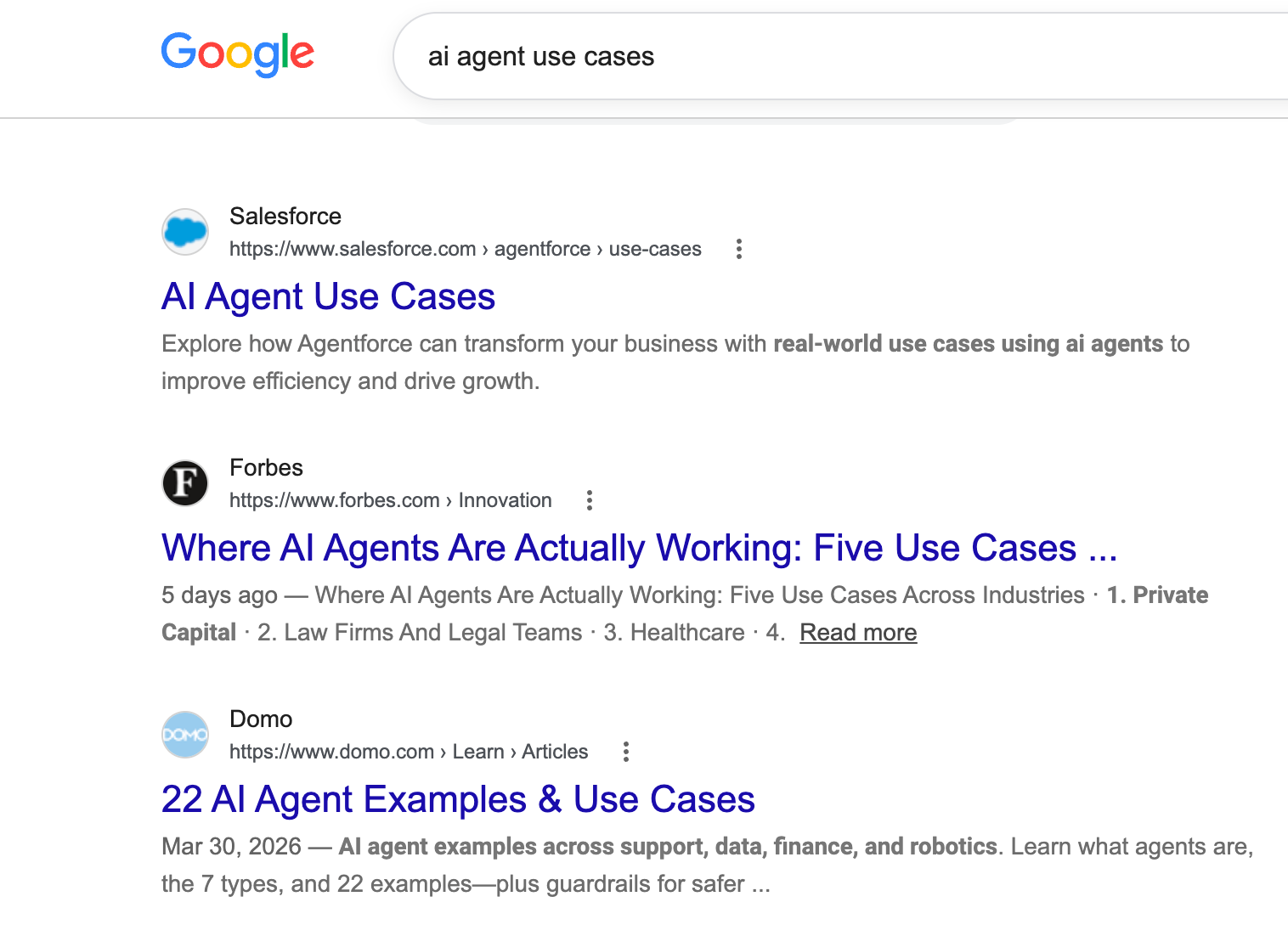
🎯 HubSpot does this consistently well. Its product pages lead with the category first, then reinforce the brand naturally. The search result immediately communicates relevance before asking for attention. (Examples below)
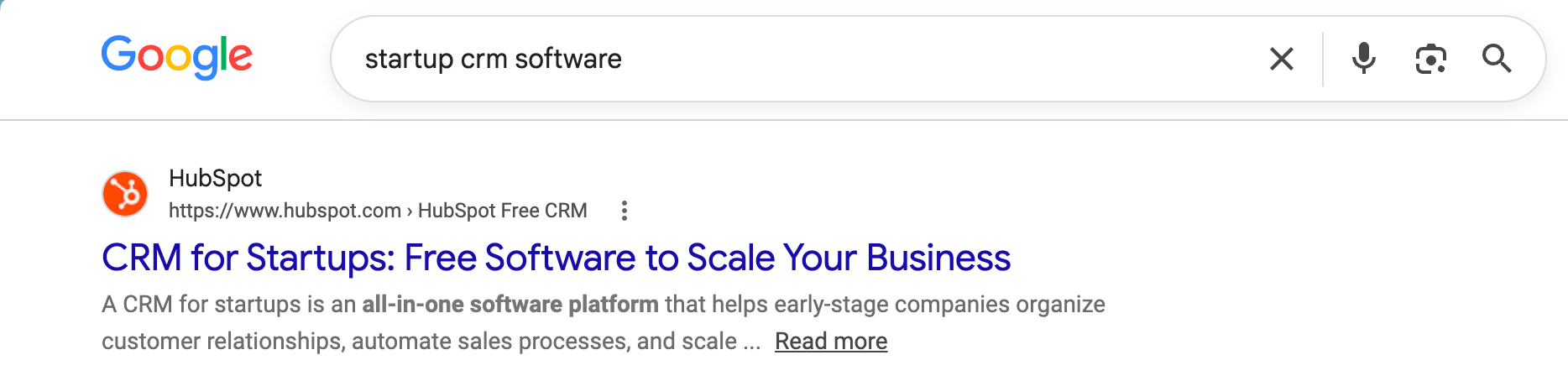
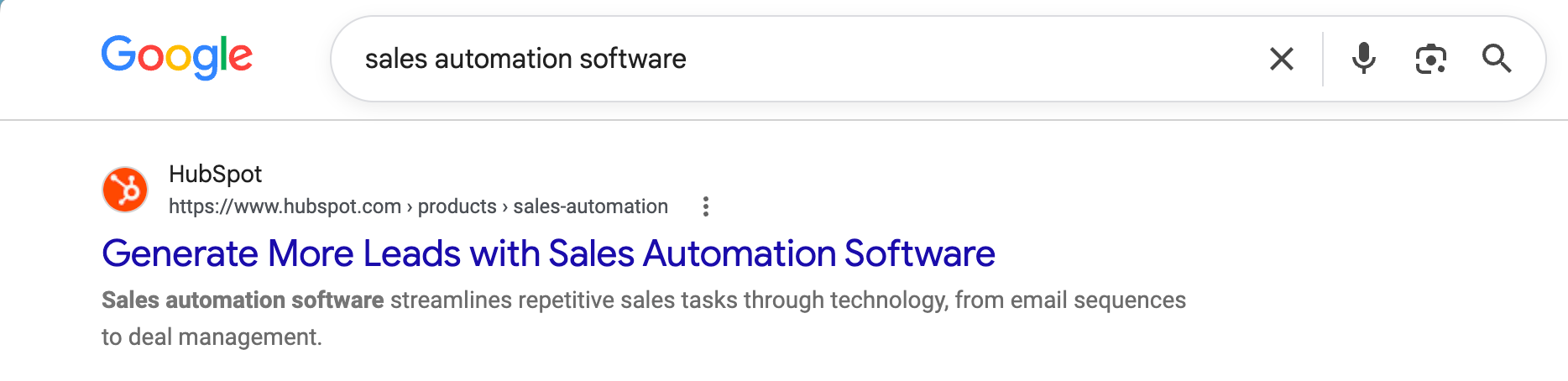
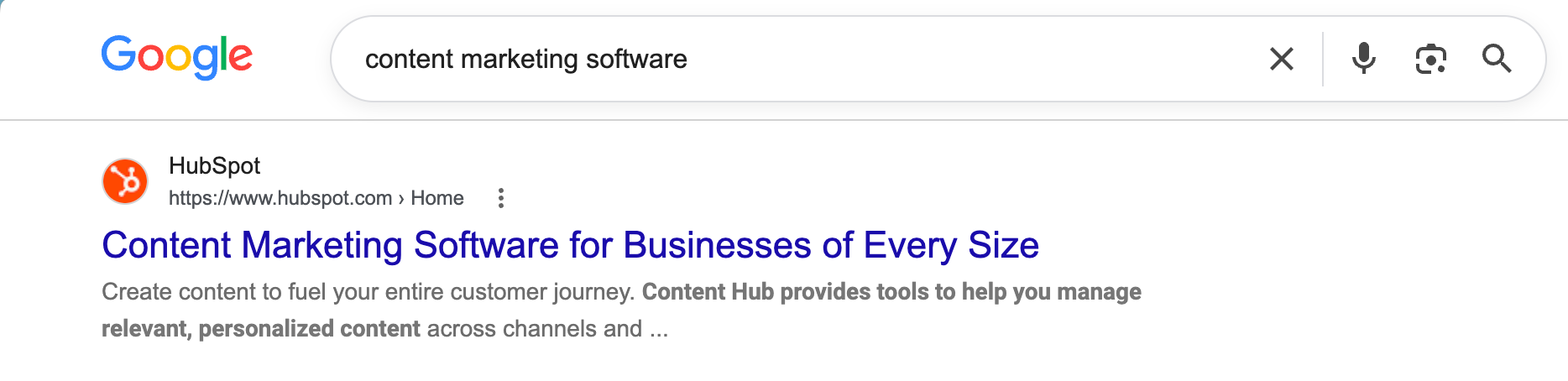
The same principle applies to meta descriptions. Google rewrites many of them, but writing one is still worthwhile because it shapes click-through rate whenever Google does decide to display it.
A strong SaaS meta description should answer three questions:
- What is this page?
- Who is it for?
- Why should someone click instead of the result above it?
🎯 For inspiration, take a look at these three distinct examples of meta descriptions that fulfil the above criteria:
Heading Structure & Content Hierarchy
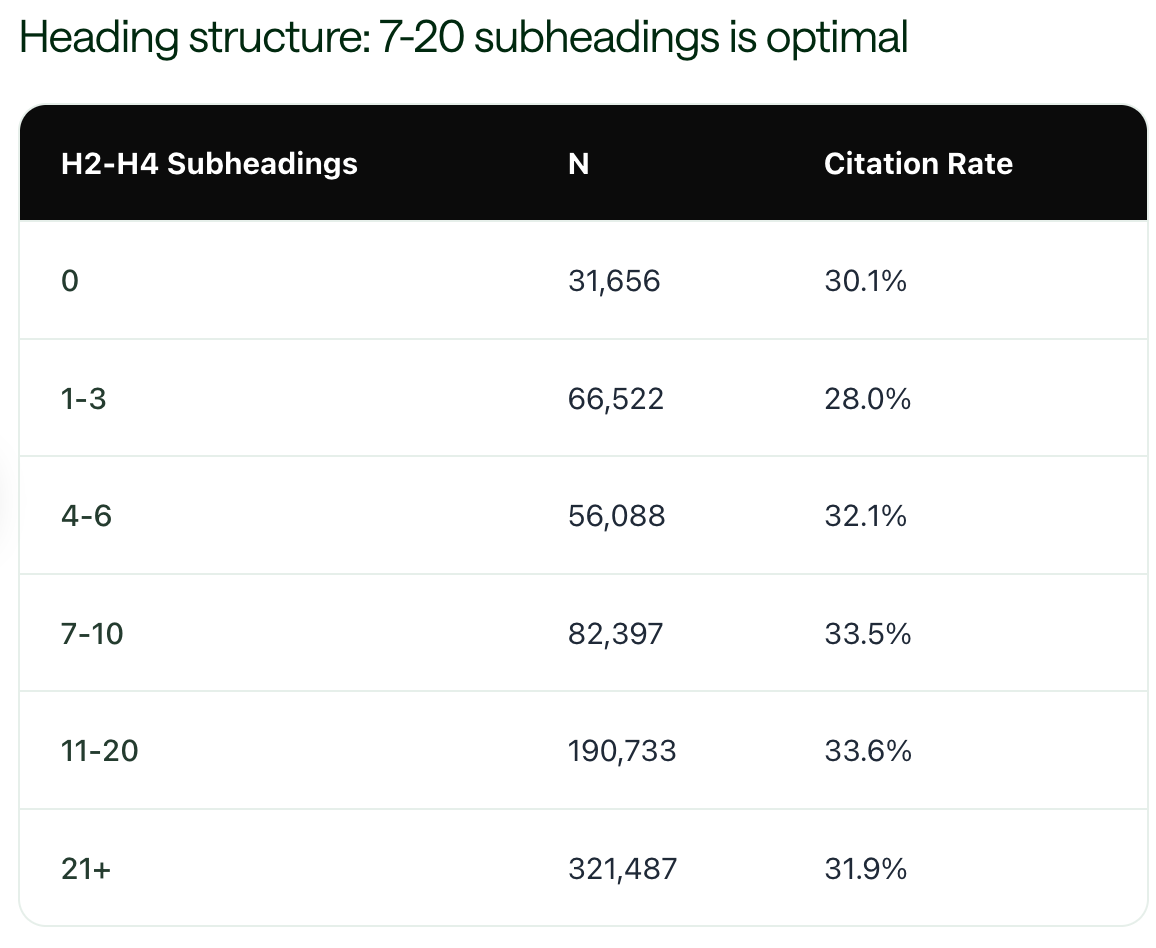
Large language models don't read webpages the way humans do. They identify sections, classify information, and determine whether a heading clearly introduces the answer underneath it.
That's why vague headings like: “Benefits” or “Overview” are becoming less useful than specific ones, such as, “How SaaS Pricing Automation Reduces Revenue Leakage”, or “When Should SaaS Companies Use Usage-Based Pricing?”
Specific headings create cleaner topical boundaries that help your readers skim through the piece and find what matters to them. They also help search engines and AI systems retrieve the right passage when answering a question.
🎯 For a good example, check out these H2s in a blog post on customer onboarding playbook from Userpilot:
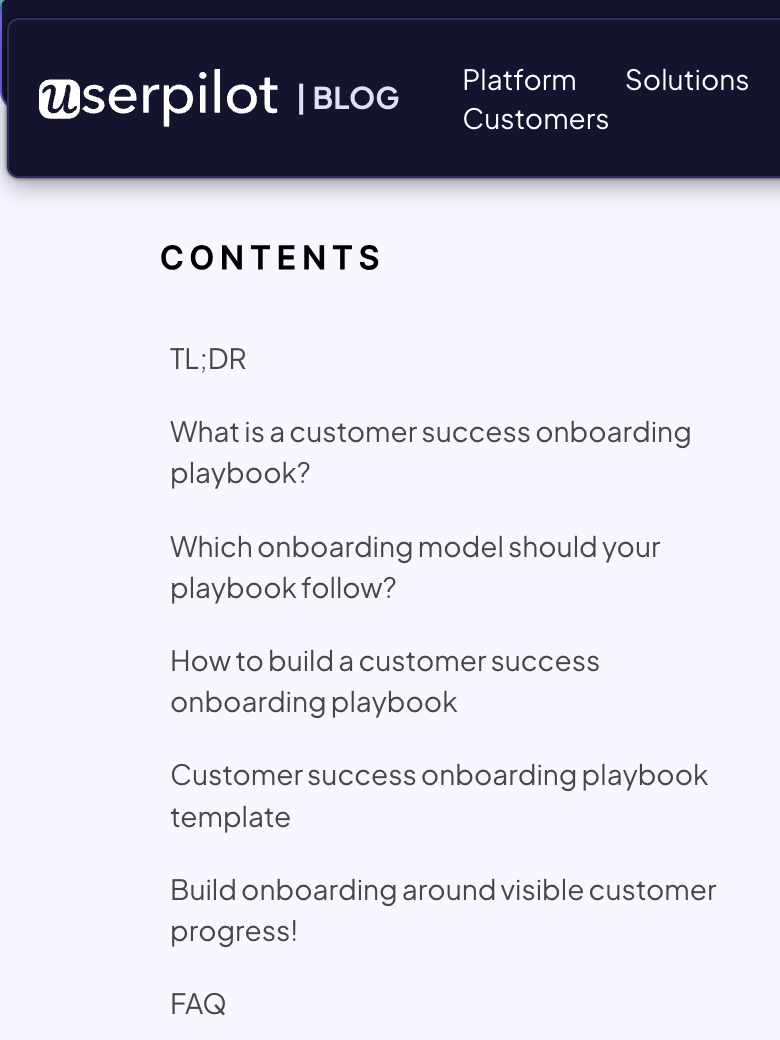
These insights guide our own editorial rules as well:
✅Every H2 should answer a question
✅Every H3 should deepen that answer.
✅Every paragraph should earn its place.
👉 Need help creating content that's built for both humans and AI?
At Scalerrs, our content marketing team combines technical SEO, search intent research, product positioning depth, expert interviews, and high-quality editorial workflows to create SaaS content that earns rankings, citations, and pipeline.
Explore our SaaS content creation services.
URL Structure
Your URLs are a ranking signal and a trust signal, and we’ve SaaS sites make a mess of them at scale.
Keep them short, lowercase, hyphenated, and descriptive. A URL like /features/invoice-reconciliation tells a buyer and a crawler exactly what they'll find. A URL like /features?id=48592 tells them nothing and wastes precious keyword real estate.
Match your URL to your site's logical hierarchy. Feature pages under /features/, comparisons under /compare/ or /vs/, integrations under /integrations/. This is not cosmetic. A clean, predictable structure helps Google understand topical relationships between pages and helps you avoid the sprawl that plagues SaaS sites as they add features and verticals.
Internal Linking & Site Architecture
If we had to pick one SaaS SEO on-page factor that's consistently underestimated, it'd be internal linking.
Your internal links do two jobs at once:
- They tell Google which pages are most important by how often and how prominently you link to them
- They signal topical authority when you use them to build content clusters. Topical authority continues to help brands earn and defend category ownership in AI search, not just Google.
A pillar page on your core category should link out to every supporting feature, use-case, and comparison page, and each of those should link back.
🎯 For example, your "How to automate sales forecasting" article should naturally guide readers toward your forecasting feature. Your integrations page should reinforce related use cases. And, your comparison pages should connect to pricing.
One more thing to remember: Successful SaaS websites intentionally funnel authority toward commercial pages that convert instead of trapping it inside educational blogs that don’t.
That's one reason our own SaaS SEO engagements almost always include an internal linking review before recommending additional content production. Sometimes the fastest traffic gains come from redistributing authority you've already earned.
Page Speed, Core Web Vitals & Rendering
Google continues using Core Web Vitals as part of its page experience evaluation, while emphasizing that good user experience supports both discoverability and satisfaction.
Google's three Core Web Vitals measure the loading speed, responsiveness, and visual stability of your website. Passing these thresholds may help you improve rankings, but the real payoff you get is in terms of higher conversion:
Nobody’s buying your software because your Largest Contentful Paint improved by 300 milliseconds. But your users are absolutely abandoning and bouncing off of slow pages. Especially pricing, comparison, and demo pages.
Deloitte Digital and Google's "Milliseconds Make Millions" study, which analyzed more than 30 million web sessions across 37 brands, found that a 0.1-second improvement in mobile site speed increased retail conversions by 8.4% and average order value by 9.2%.
SaaS websites run into one problem more than almost any other. Many are built as single-page applications (SPAs) that rely on JavaScript to load content. If Google can't fully render that JavaScript, your carefully crafted feature page may look almost empty to search engines.
The fix is usually straightforward. Use server-side rendering (SSR) or pre-rendering so the full page is available as soon as it's loaded.
We recommend tackling this in order.
- First, make sure your revenue-driving pages can be rendered, crawled, and indexed correctly
- Then improve page speed by compressing images, delaying non-essential JavaScript, and fixing Interaction to Next Paint (INP) issues
- Only after those fundamentals are in place should you focus on squeezing out the last few Core Web Vitals improvements
Image, Media & Alt Text Optimization
Your product pages should use interface screenshots, annotated workflows, diagrams, comparison visuals, and interactive elements wherever possible. These help buyers understand your product faster. They also create unique content that competitors can't easily replicate.
But raw, unoptimized media is one of the most common causes of slow-loading pages.
The solution is simple: compress every image and serve modern formats like WebP or AVIF. Lazy-load anything below the fold so your first paint is fast.
Then, write alt text that describes the image for accessibility and gives search engines context. For a dashboard screenshot, "Analytics dashboard showing churn rate by cohort" beats "dashboard-final-v2.png".
👉🏽 Already publishing demos, webinars, tutorials, and product walkthrough videos on YouTube?
We help SaaS companies like yours optimize existing YouTube content for search with better metadata, thumbnails, transcripts, channel structure, and topical authority—so your videos keep generating qualified traffic long after they're published.
Learn more about Scalerrs’ YouTube Marketing Services.
Your SaaS On-Page SEO Scorecard
Here’s a quick recap of the on-page fundamentals you need to get right. Score each element on your most important page from 0 (missing) to 2 (strong). Anything scoring 0 or 1 should be on your priority fix-list.
How to Match Search Intent on SaaS Pages
Your page format has to match the intent signal Google is already rewarding for that query. If the top results for a term are comparison articles and you publish a product page, you won’t rank, no matter how solid your on-page work is.
Another thing to remember is that intent shifts as buyers move down the funnel, and your on-page elements have to shift with it. This is where many on-page SEO strategies for SaaS fall apart. Teams optimize for keywords when they should be optimizing for intent.
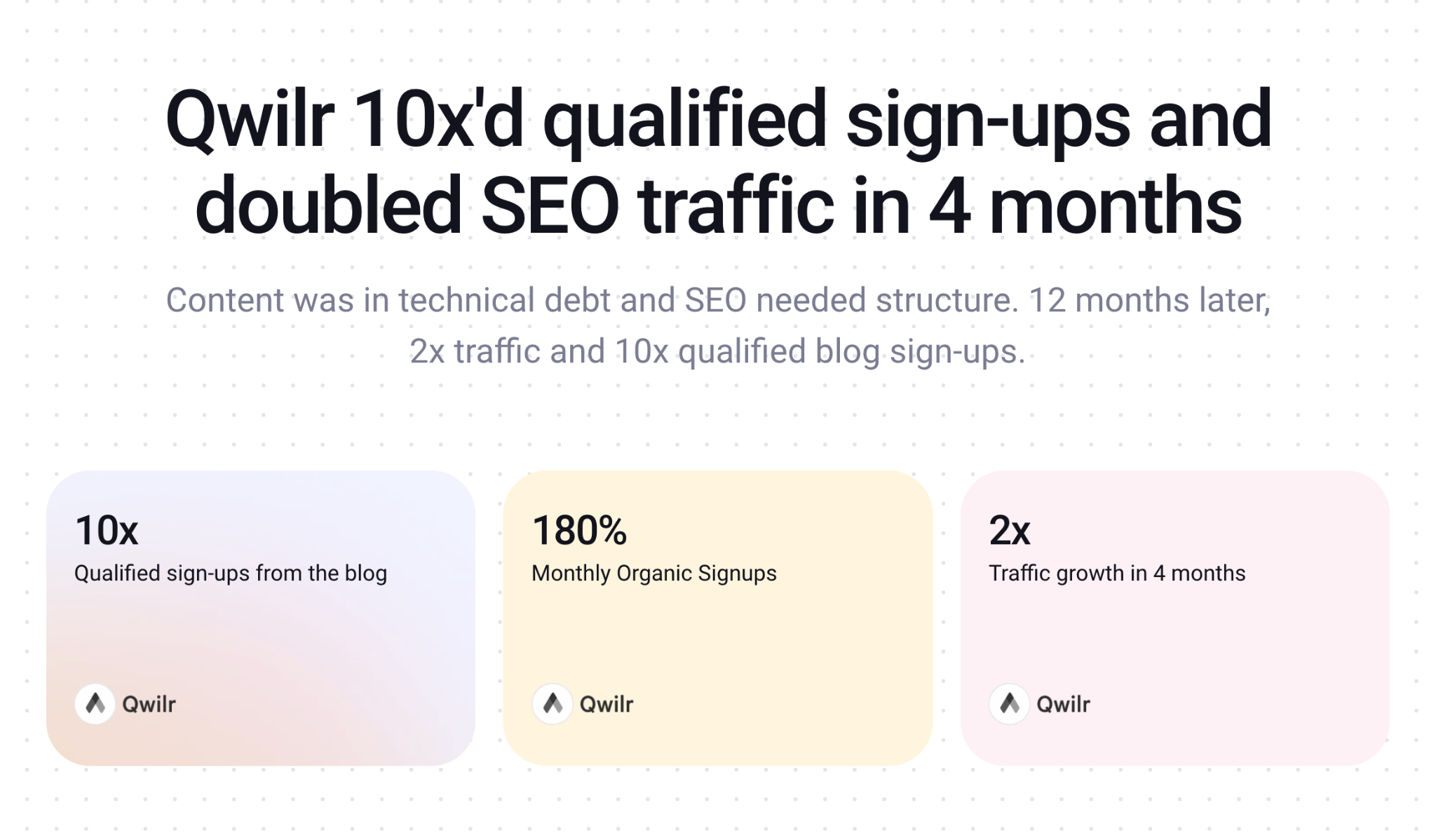
🎯 Take our client Qwilr. We restructured their blog around the exact terms their buyers search during the buying process, not just high-volume traffic terms. The result was 10 times the qualified signups from the blog, because each page matched where the buyer actually was.
Schema Markup Types for SaaS Pages
Schema isn’t a direct ranking factor, but it makes your pages eligible for richer results and easier for answer engines to parse.
Pages with JSON-LD schema markup show a 6.5% higher AI citation rate as compared to pages that lack it.
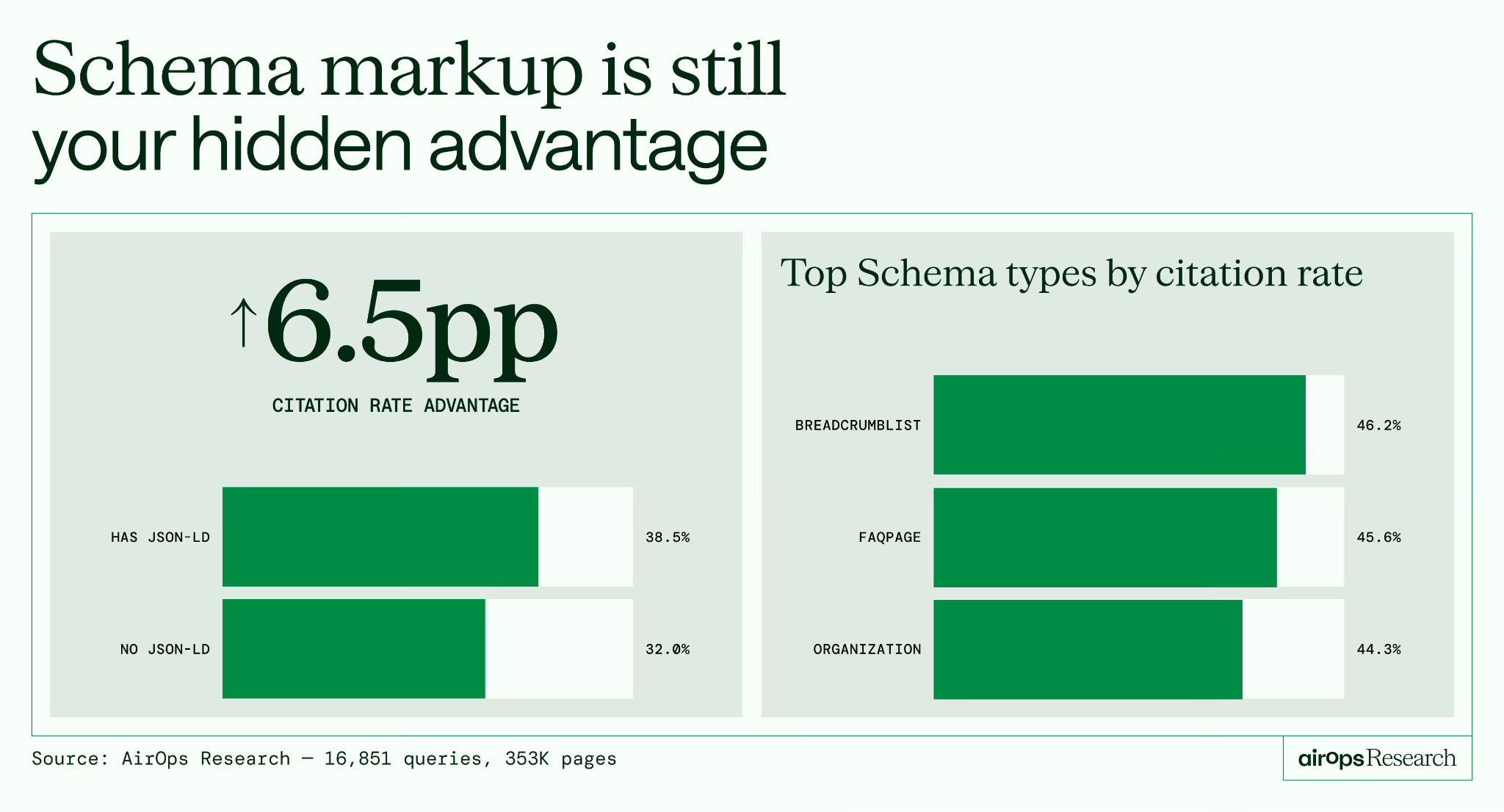
Not only LLMs but Google Search, AI Overviews, and AI Mode also rely on structured information to interpret entities, relationships, products, and organizations. Google also recommends continuing to use structured data as part of an overall SEO strategy, even though no special schema exists specifically for AI search.
For SaaS websites, these schema types usually provide the most value.
Here's a simplified example of SoftwareApplication schema using JSON-LD:
{
"@context": "https://schema.org",
"@type": "SoftwareApplication",
"name": "Acme CRM",
"applicationCategory": "CRM Software",
"operatingSystem": "Web",
"offers": {
"@type": "Offer",
"price": "49",
"priceCurrency": "USD"
}
}
SaaS On-Page Optimization for LLM Citation
For years, on-page SEO asked one question:
Will this page rank?
Now there's another one.
Will an AI system confidently cite this page?
Those aren't always the same thing. Traditional search rewards pages that rank highly. Large language models retrieve passages they consider trustworthy, clearly written, and directly relevant to the question they're answering. To win with the latter, each section should make sense if someone encounters only those 150 words inside an AI-generated answer.
Here's what we've consistently seen across Google's recommendations, recent AEO/GEO research, and our own client work:
Create original content
In our experience, AI systems favor pages containing proprietary research, first-hand experience, and unique perspectives over generic explainers.
That’s one of the reasons why we recommend our SaaS clients to create content that contributes something new rather than rephrasing existing information.
For SaaS companies, original customer data, implementation insights, and product expertise are becoming competitive advantages because they're difficult for competitors—or AI—to replicate.
Ahrefs is a great example of this in practice. Rather than relying on third-party studies, they regularly publish original research using anonymized data from their own index—analyzing billions of webpages, millions of keywords, and real search behavior to answer questions only they can. That's how they've produced widely cited studies on AI Overviews, zero-click searches, backlink trends, and Google's algorithm updates.
Start every important section with the answer
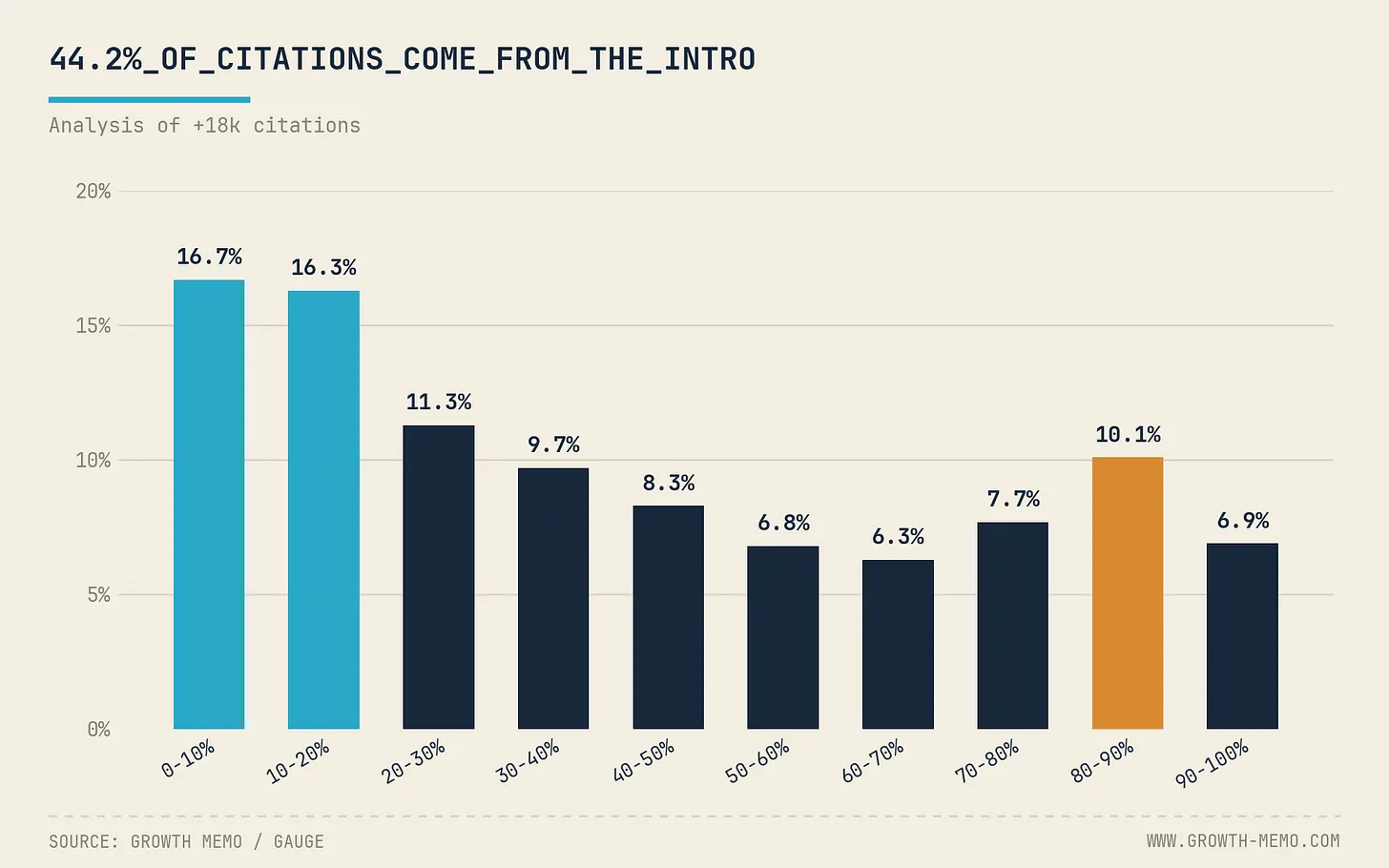
Open every section with a direct, one-to-two-sentence answer to the heading, then expand. Lead with the definition, recommendation, or conclusion.
This inverted pyramid structure helps readers quickly confirm they've found the right information. It also makes extracting passages significantly easier for retrieval systems.
That’s likely why 44.2% of all AI citations can be attributed to the first 30% of a page.
Write headings that answer real questions
Instead of “Features”, write: “Which CRM Features Matter Most for Enterprise Sales Teams?”
The second heading provides context before anyone reads the paragraph underneath it. That improves readability for humans and machines alike.
Use definitional opening sentences
When your heading is a question, answer it using the exact terminology from the heading in the first sentence.
Example: "What is invoice reconciliation? Invoice reconciliation is..."
This pattern gets lifted into an AI Overview.
Semrush's analysis of more than 300,000 AI-cited URLs found that clarity and summarization had the strongest correlation with AI citations (+32.83%), followed by E-E-A-T signals (+30.64%), Q&A formatting (+25.45%), and well-structured sections (+22.91%). In other words, pages that answer questions clearly and organize information logically are significantly more likely to be cited by AI search systems.
Invest in regular content refreshes
Kevin Indig's 2026 State of AI Search Optimization report found that content less than 3 months old is three times more likely to get cited by LLMs, and that pages not updated quarterly are 3 times more likely to lose their citations entirely.
This LinkedIn post from Beatrice Manuel, Content Lead at Scalerrs, summarizes on-page optimization for AI citations perfectly:
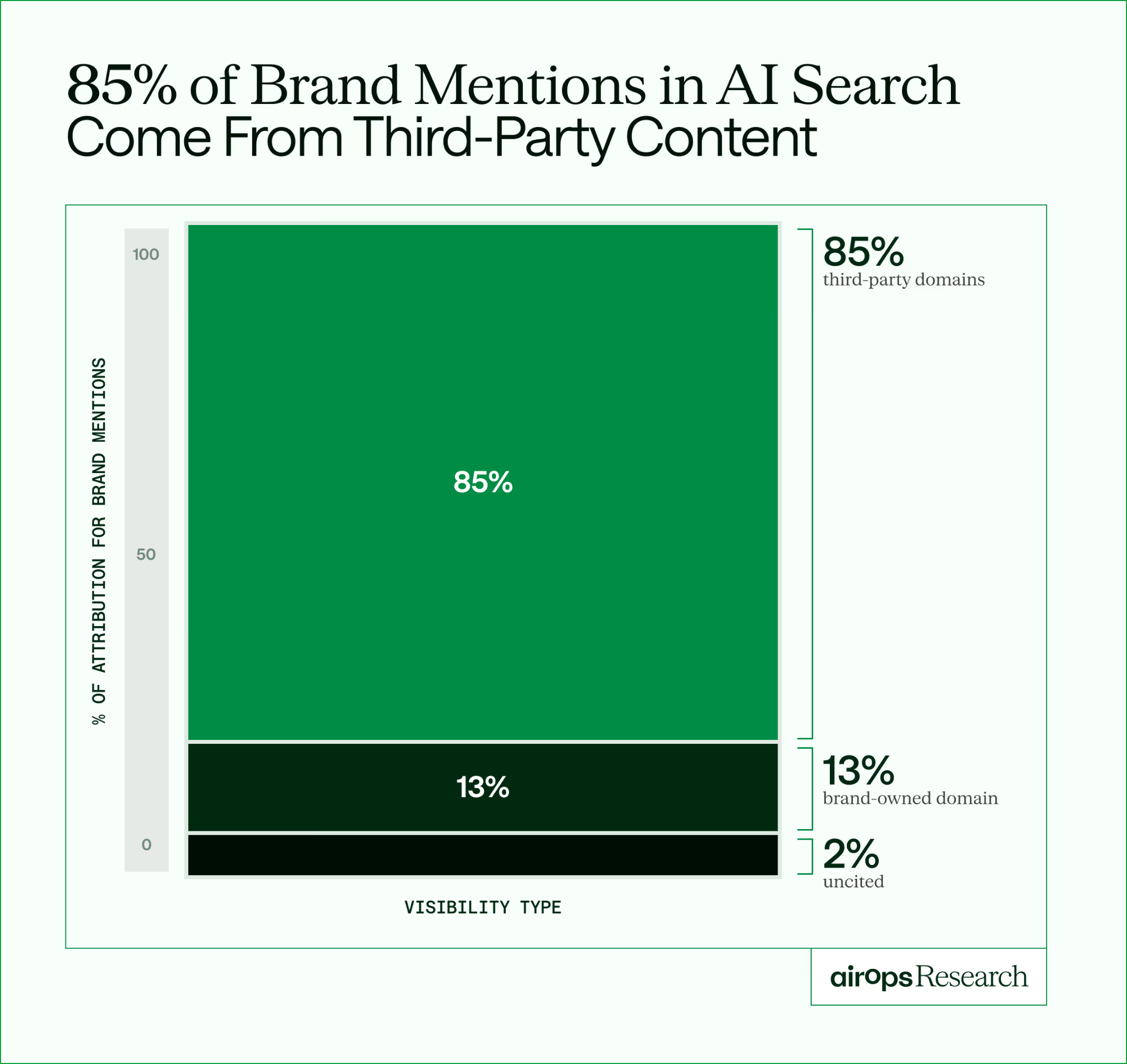
That's why we often pair on-page SEO with AI brand mentions via third-party listicle placements. Optimizing your own pages builds authority; earning mentions across the web gives AI systems the independent validation they increasingly look for.
Book a demo with our AEO experts to to learn how your SaaS website can rank better in search, earn more AI citations, and build the off-site authority that drives multi-surface visibility wherever your buyers are looking.
The SaaS Page Formula: How to Optimize Every High-Value Page on Your Website
Every SaaS website has a handful of pages that influence revenue far more than the rest. Product pages, feature pages, comparison pages, pricing pages, integration pages, and solution pages usually sit closest to a buying decision.
They deserve a different level of attention than an average blog post.
The goal isn't to apply a generic SaaS on-page SEO checklist to every page. It's to understand what each page is trying to accomplish, then optimize it accordingly.
Homepage
Your homepage sits at the top of the funnel for branded and category search, and it carries most of your domain's authority.
What makes it rank is entity clarity: a keyword-aware H1, Organization schema, and clear internal links to your money pages.
What makes it convert is an immediate, specific value proposition above the fold that names who you're for and what job you do. Avoid the trap of a clever tagline that says nothing.
Product Pages
Product pages should answer one question before anything else:
Why should someone believe this product solves their problem?
Too many SaaS product pages jump straight into feature grids. Buyers don't care about features until they understand outcomes.
🎯 To achieve this, structure product pages in the way Canva does:
- Clear value proposition above the fold
- Who the product is for
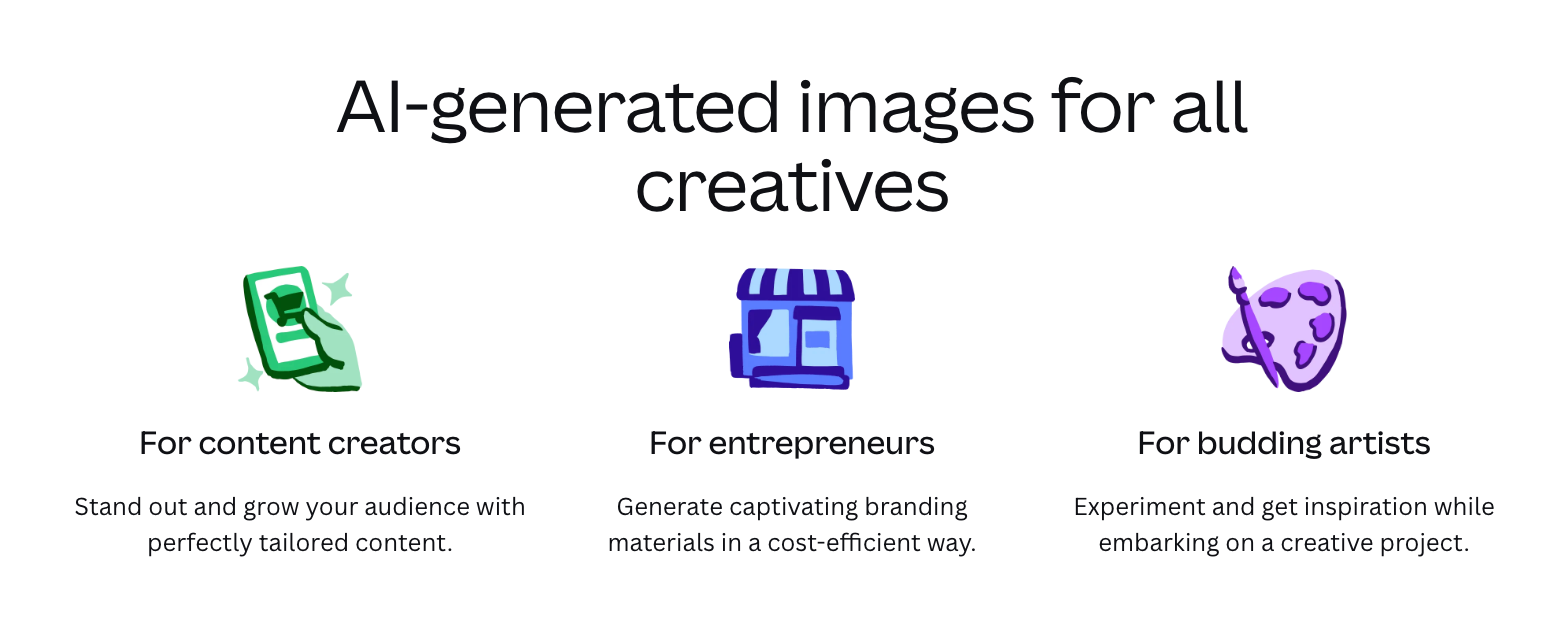
- The problem it solves
- Product walkthrough
- Features grouped by use case
- FAQs
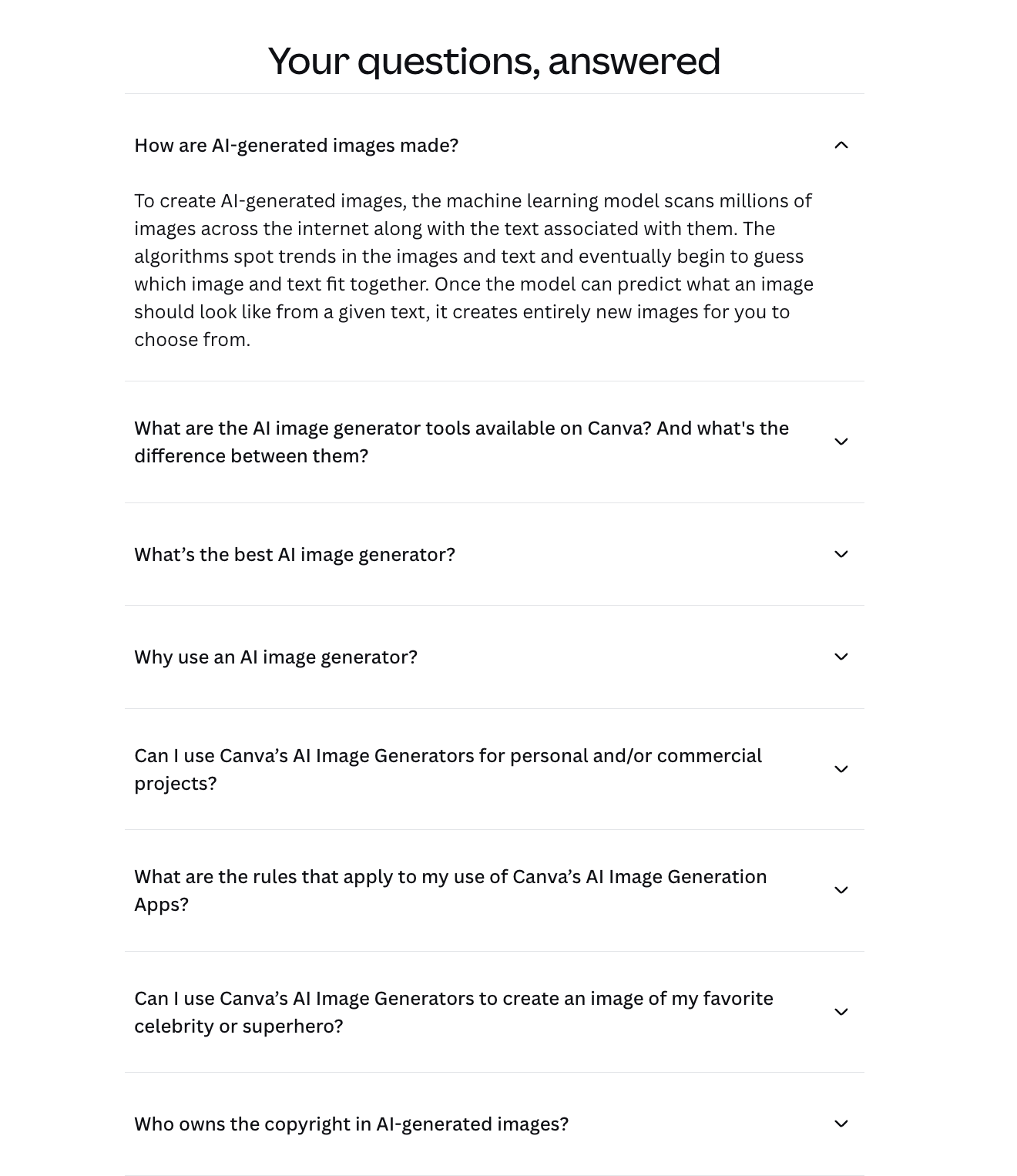
- Clear CTA
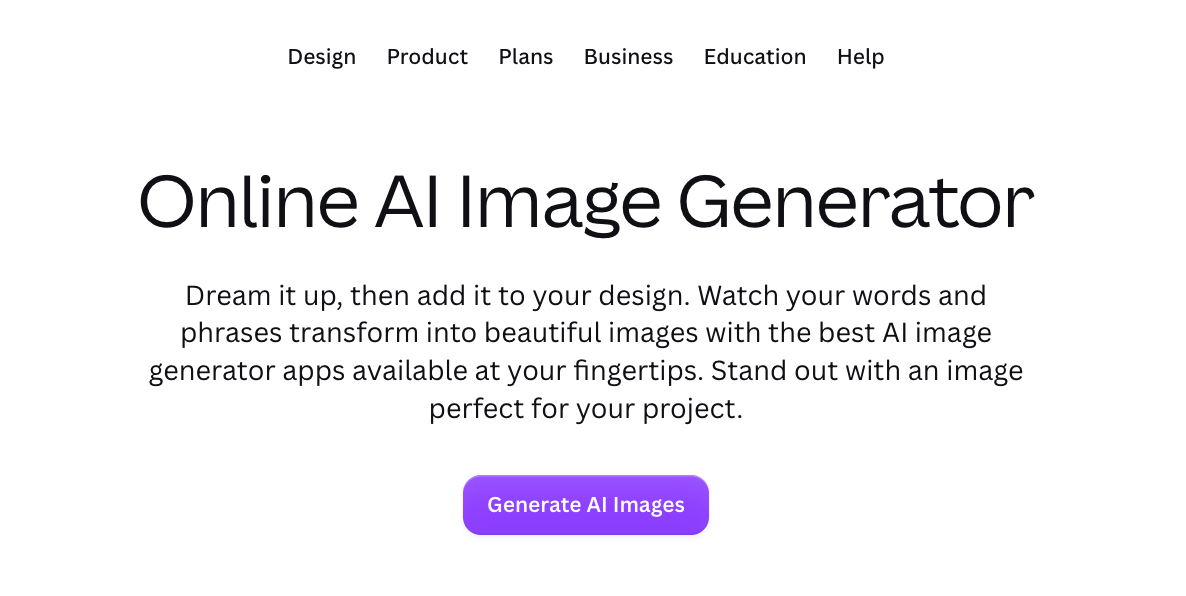
You can also add sections for customer proof and integrations where available. The page should feel like a conversation with a prospect, not a product brochure.
Feature Pages
Feature pages target product-led keywords ("invoice reconciliation software") and sit mid-to-bottom of the funnel.
Optimize your features pages around the outcome your ICP is trying to achieve. Think answer-first copy that explains what the feature does and the job it solves, plus SoftwareApplication schema and internal links from related content.
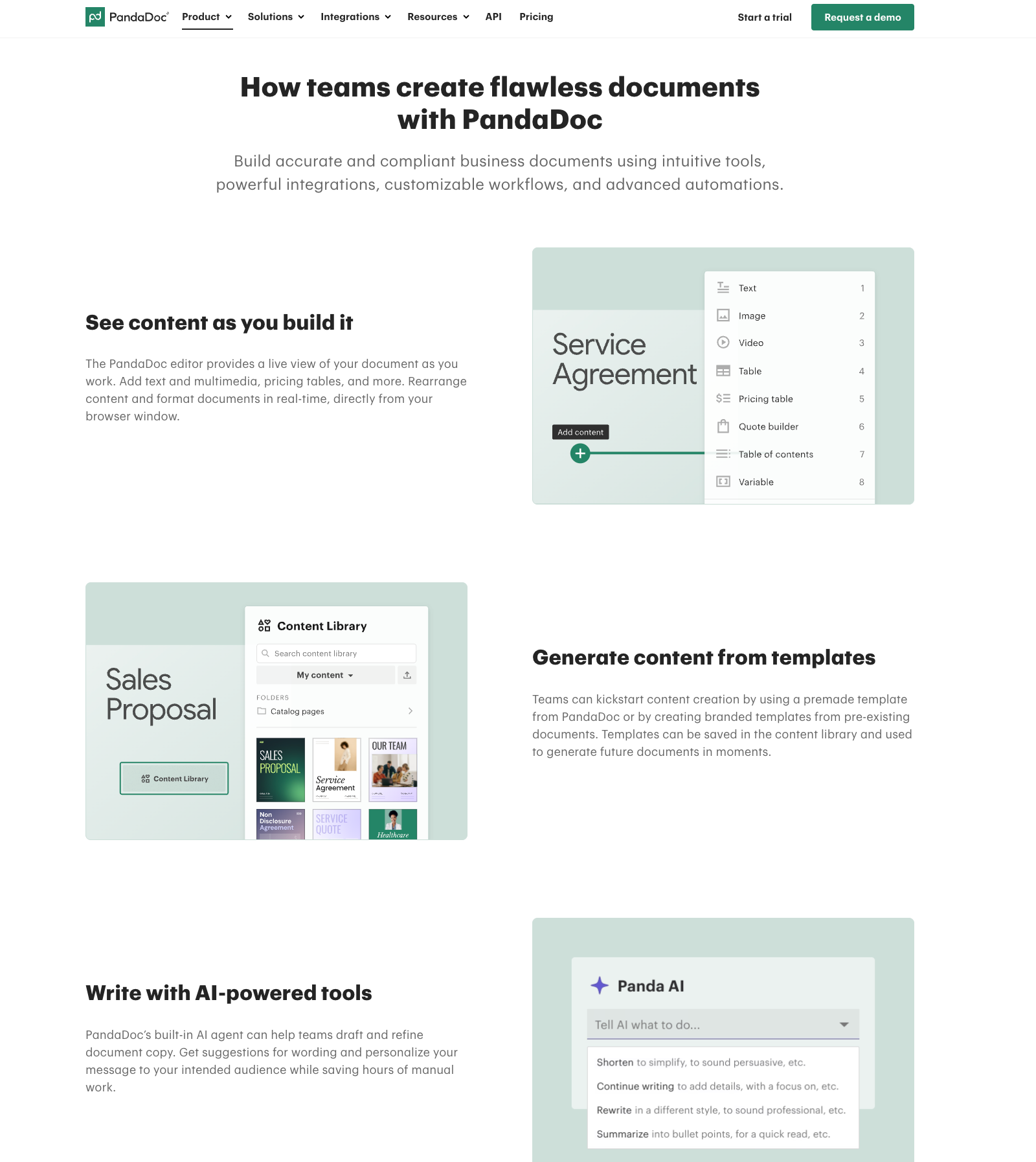
Don’t forget to show the feature in action with screenshots or a short walkthrough, then add a CTA to trial or demo. A feature page has to balance satisfying a searcher's question and selling at the same time.
🎯For example, PandaDoc uses a lof of screenshots and graphics to communicate product capabilities on all of its feature pages.
Use Case/Solution Pages
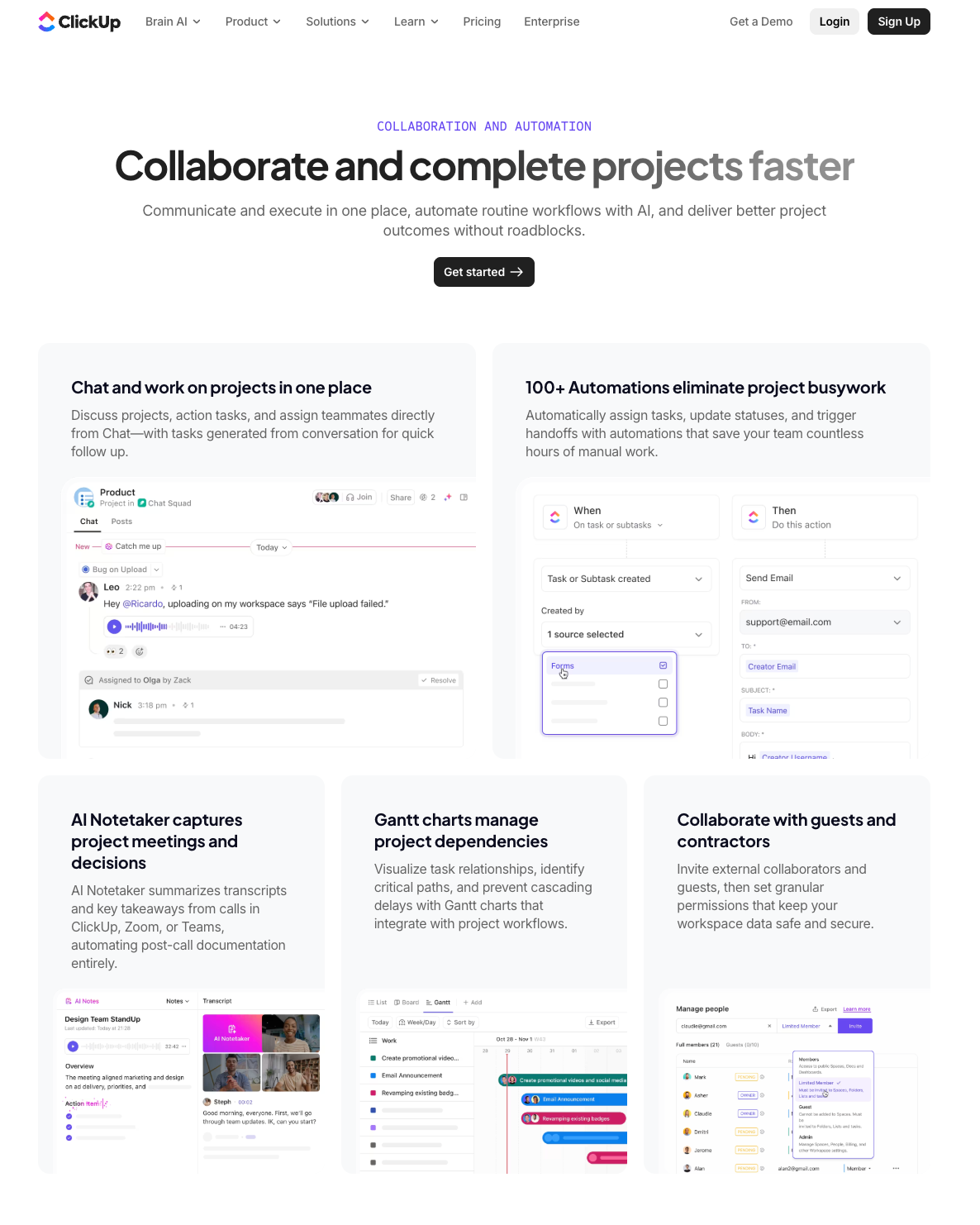
Use-case pages target "how to [do the job]" and "[category] for [audience]" queries in the middle of the funnel. Here, you need to focus on the JTBD framing that answers the problem directly and establishes your category as the fix.
Plus, connecting the use case to your specific capability, with a relevant case study or proof point nearby will help them convert better.
🎯For example, ClickUp’s project management solutions page does a good job of connecting buyer JTBD to product capabilities:
Comparison & Alternative Pages
These are your highest-intent, highest-value pages, targeting "[competitor] vs [you]" and "[competitor] alternative."
What makes them rank is a comparison table, a clear structure, and neutral, credible framing (LLMs and buyers both distrust obvious self-promotion).
What makes them convert is an honest verdict that acknowledges trade-offs and then makes your case, followed by a demo CTA.
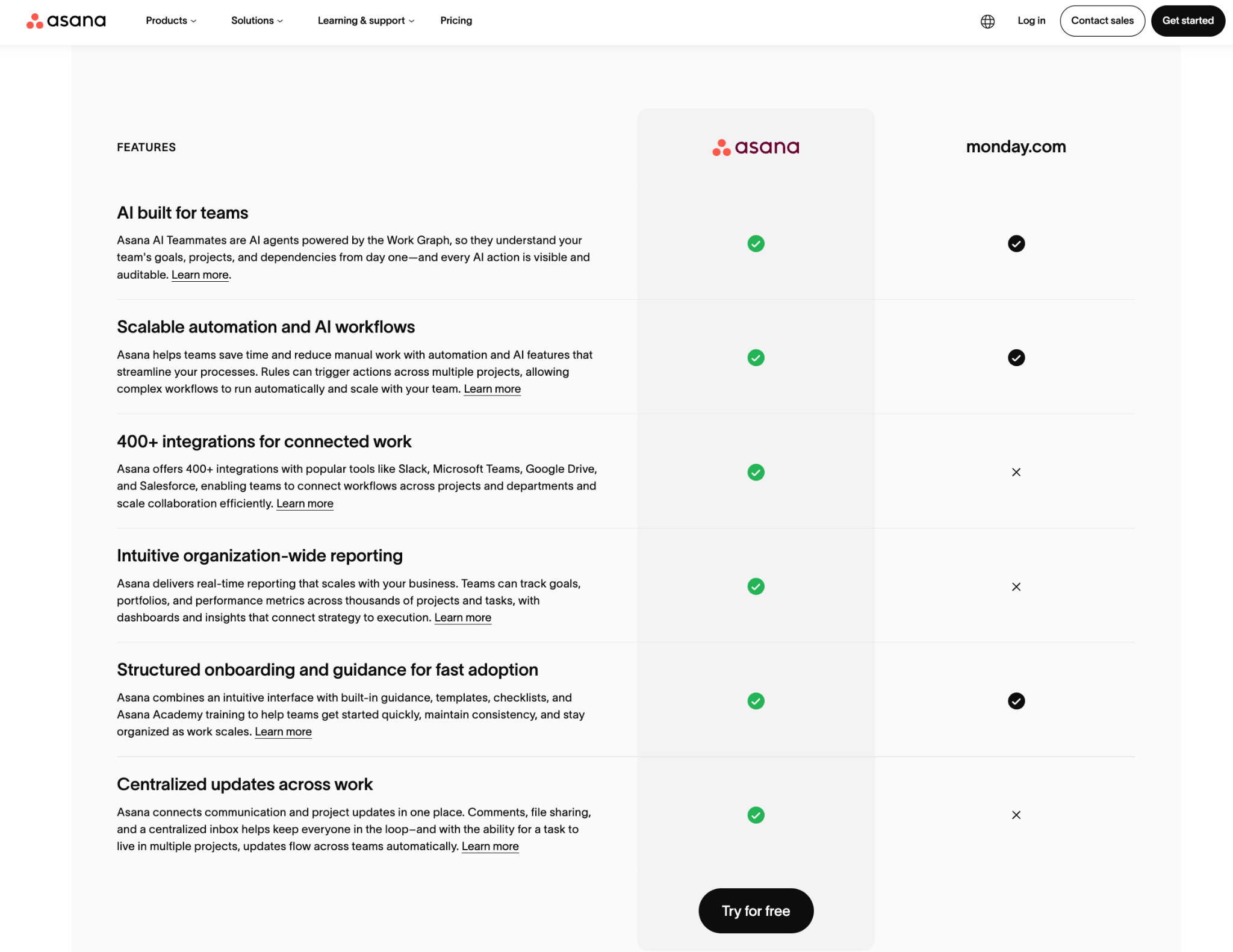
🎯For instance, this is how Asana structures its comparison pages with a clear table measuring itself against its competitors.
Pricing Page
Buyers almost always visit them, AI systems frequently reference them, and sales teams send prospects there every day.
Yet many SaaS pricing pages still hide pricing behind forms or provide almost no context.
Now, you needn’t always publish exact numbers in the name of transparency. But helping buyers understand a few things can go a long way:
- Your product’s pricing model
- Who each plan fits
- Implementation costs
- Onboarding
- Contracts
- FAQs
- Upgrade paths
The easier you make those answers to find, the less friction buyers experience. Buyers who reach this page are close to converting. Don’t make them work harder to do so.
🎯A good example of this structure and clarity is Astra’s pricing page.
Integration & Directory Pages
Integration pages target "[tool] integration for [use case]" and serve buyers making sure you fit their stack. The secret sauce for on-page optimization here is unique, descriptive content on each page rather than a templated shell, correct canonical tags to avoid duplication, and clean internal linking from your integrations hub.
This is the page type most likely to sprawl into near-duplicate thinness, so give every page a genuine reason to exist. If you can’t write something unique about an integration, it probably should not be its own indexed page.
Common On-Page Mistakes We See Across SaaS Websites
Some patterns quietly kill SaaS rankings and conversions. Here are the three we see most, why they hurt SaaS specifically, and what to do instead:
Thin, Templated Feature and Integration Pages
🚩 Red Flag: Hundreds of near-identical pages generated from a template, each with a swapped keyword and nothing unique.
Why it hurts SaaS specifically: These blur into what Google's guidelines describe as low-value pages that "maximize search footprint" without adding value, and they split ranking power across duplicates.
What to do instead: Consolidate with canonical tags where pages truly overlap, and give every page you keep a unique messaging copy tied to a distinct use case. Fewer strong pages beat many weak ones.
Chasing Rankings While Ignoring Conversion
🚩 Red Flag: A page ranks on page one and gets traffic, but the demo requests never come.
Why it hurts SaaS specifically: With long sales cycles and high LTV, a ranking page that does not move buyers toward a demo is pure opportunity cost.
What to do instead: Pair every ranking page with a conversion audit. Add a visible CTA, inline proof, and a clear next step.
Our CRO Checklist for B2B SaaS walks through this page by page.
Ignoring Community Signals That Feed On-Page Performance
🚩 Common Mistake: Treating on-page work as a closed system while Reddit threads outrank your own product pages.
What it looks like: Perfect on-page mechanics, zero presence in the community threads and third-party listicles that increasingly rank and feed AI answers.
Why it hurts SaaS specifically: Modern software buying doesn't happen on your website alone. According to Reddit and SurveyMonkey's latest B2B research, 77% of buyers visit Reddit specifically for social proof, while 27% rate community discussions as one of the most valuable content formats during evaluation. G2's 2025 Buyer Behavior Report also found that generative AI chatbots and software review sites are now the two biggest external influences on vendor shortlists, ahead of vendor websites.
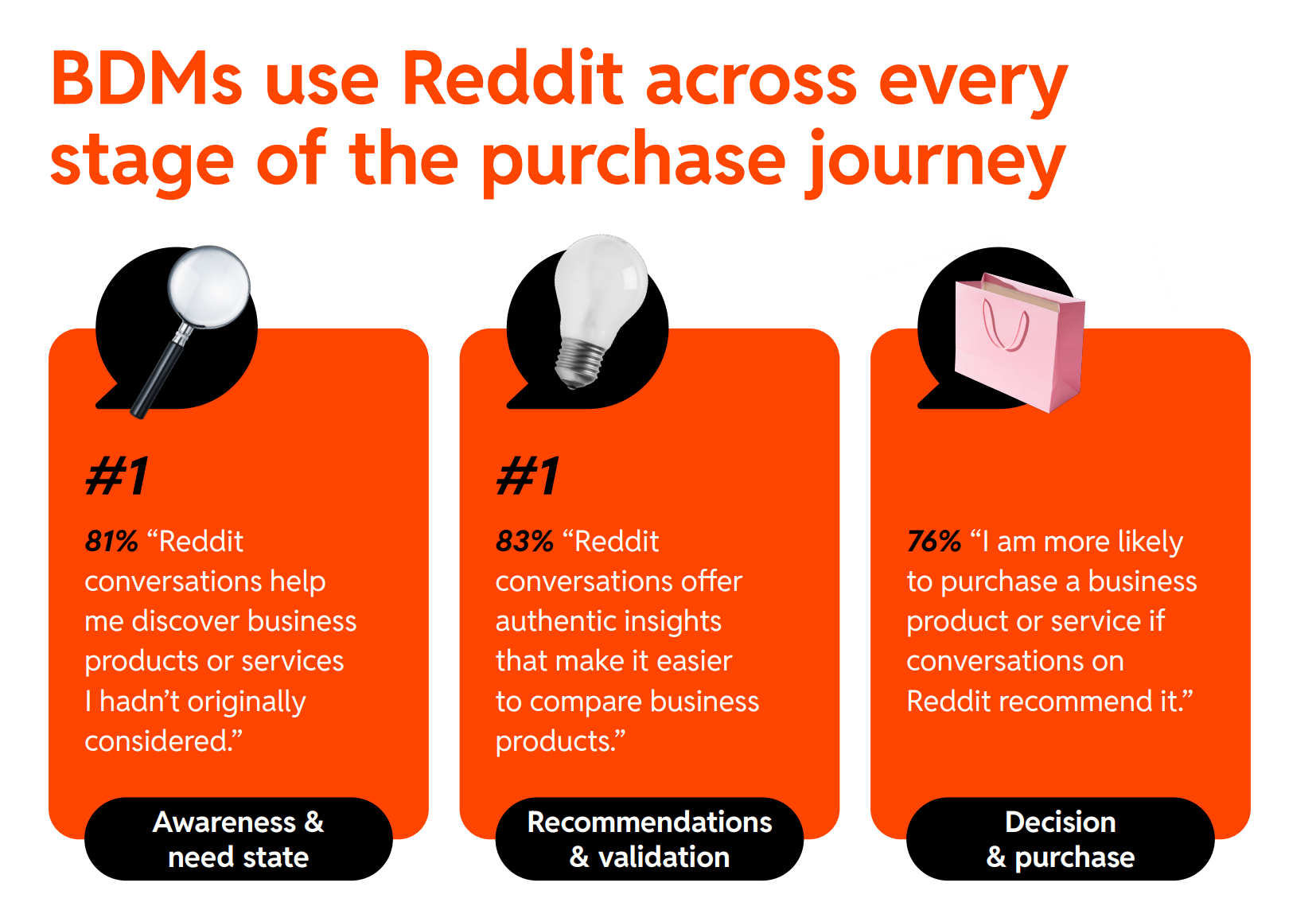
What to do instead: Treat community visibility as an extension of your on-page SEO strategy. Encourage authentic customer participation, earn mentions in comparison discussions, monitor category conversations, and create content that answers the questions buyers are already asking on Reddit and review sites.
And if you want an experienced team to build that presence for you, explore our Reddit Marketing Services, where we help brands identify high-intent conversations, develop community-first engagement strategies, and turn Reddit into a long-term source of trust, traffic, and AI citations.
SaaS On-Page SEO in Action: How Korona POS Built Pages That Beat Bigger Competitors
Overview: Korona POS is a retail point-of-sale platform competing against Square, Shopify, and Lightspeed, brands with far bigger budgets and longer domain histories.
Challenge: Through 2023, Korona had grown organic traffic to around 45,000 monthly visitors by running SEO internally. Then a string of Google updates knocked traffic to under 35,000, and leads fell with it. The core problem was structural. Their content had no topical focus, they were targeting keywords they had no business chasing, and there was no way to diagnose what broke.
On-Page Changes Made: Our team started with an audit, then mapped every page to a plan. We identified 50-plus golden keywords and tied each one to a specific product page: retail POS system, liquor store POS, vape shop POS, and others.
Then we ran two phases of on-page work. Cleanup came first: we went through existing content page by page, cut what did not serve a purpose, and rebuilt what had potential, sharpening the copy around Korona's actual buyer. Next, we created new pages mapped to topical clusters around those golden keywords, each structured to send clear signals about what Korona does and which verticals it serves.
Results:
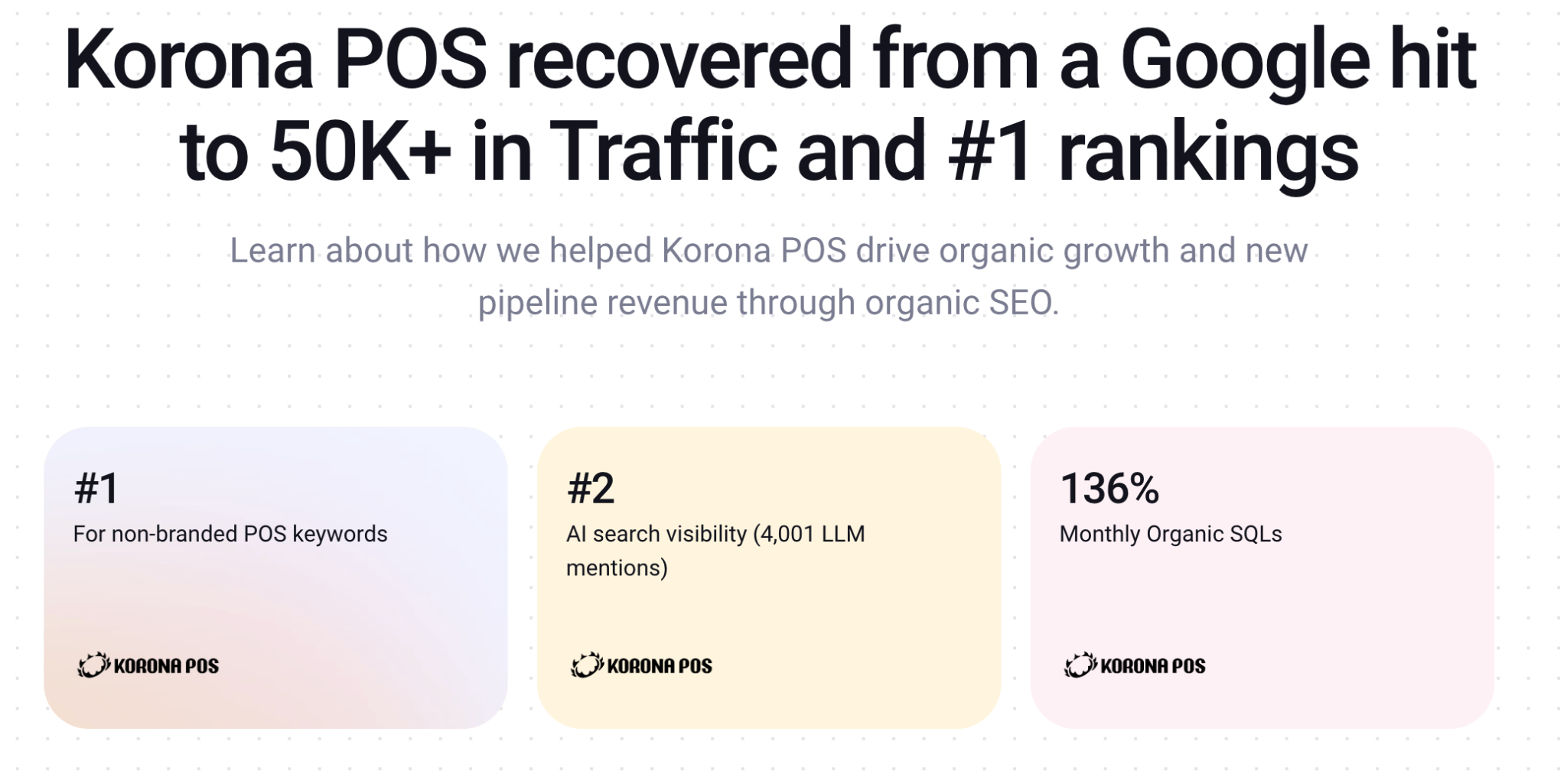
Takeaway: Structured, page-level on-page work, mapping keywords to the right pages and rebuilding weak content, let a smaller player outrank giants and get cited in Google's AI Overviews.
As CMO Michael Calberg put it, "With the help of Scalerrs, we got Cited in Google AI Overviews for our most important terms. Seems unreal, especially cause we compete with big players like Square, Shopify, and Lightspeed."
FAQs
1. What is SaaS on-page SEO?
SaaS on-page SEO is the practice of optimizing individual pages on a software company's site (titles, headings, content structure, internal links, and schema) so they rank on Google, get cited by AI engines, and convert visitors into trials or demos.
2. Which on-page SEO factors have the biggest impact on SaaS rankings?
Search-intent match matters most, followed by heading and content structure that answers questions directly, internal linking that directs authority to money pages, and schema. These SaaS SEO on-page factors work together, and intent mismatch undermines all the others.
3. Should SaaS pages use Product schema or SoftwareApplication schema?
Use SoftwareApplication (or its WebApplication subtype for browser-based tools) for product and feature pages, since it captures software-specific properties like operating system and application category. Product schema fits better where you're marking up a commercial offering with reviews.
4. How often should a SaaS company audit its on-page SEO?
It depends on your size, but quarterly is a sound baseline. Comparison and pricing pages need more frequent refreshes as competitors change, and since fresher content earns more AI citations, regular updates double as a citation strategy.
5. Does on-page SEO still matter with AI search and AI Overviews?
Yes. AI engines can only cite pages that follow the same on-page fundamentals that make them rank. Clear structure, answer-first copy, and schema are exactly what makes your content extractable, so on-page work matters more with AI search, not less.
6. Can SaaS feature pages rank for product-led keywords without sacrificing conversions?
Yes, but it takes deliberate structure. Lead each section with an answer-first explanation of the job the feature does, then show it in action and place a clear CTA. Ranking copy and converting copy are not opposites when the page is built around the buyer's question.