


SaaS SEO Audit: Complete Checklist & Framework (2026)

Key Takeaways
- A SaaS SEO audit should evaluate far more than rankings. The strongest audits examine technical SEO, content quality, site architecture, conversion paths, competitive positioning, and visibility across AI search, Reddit, YouTube, and third-party review sites.
- Audits often reveal that content decay, weak internal linking, and missing bottom-of-funnel pages are holding growth back more than a lack of content production.
- AI search has changed what a modern SEO audit looks like. If your brand isn't appearing in ChatGPT, Google AI Overviews, Perplexity, Reddit discussions, and industry listicles, you're missing visibility throughout the buyer journey.
- The goal of a SaaS SEO audit is to identify the few changes most likely to improve qualified traffic, demo requests, pipeline, and revenue.
A SaaS SEO audit is the fastest way to understand why organic growth has stalled, where opportunities are being missed, and which fixes will have the biggest impact on pipeline.
After working with more than 80 SaaS clients over the last two years, we've found that the biggest growth opportunities come not from publishing more but from fixing broken systems. Content that's no longer aligned with buyer intent. Pages that never convert. Internal linking structures that bury revenue-driving assets. Technical debt that prevents search engines and AI crawlers from accessing the pages that matter most.
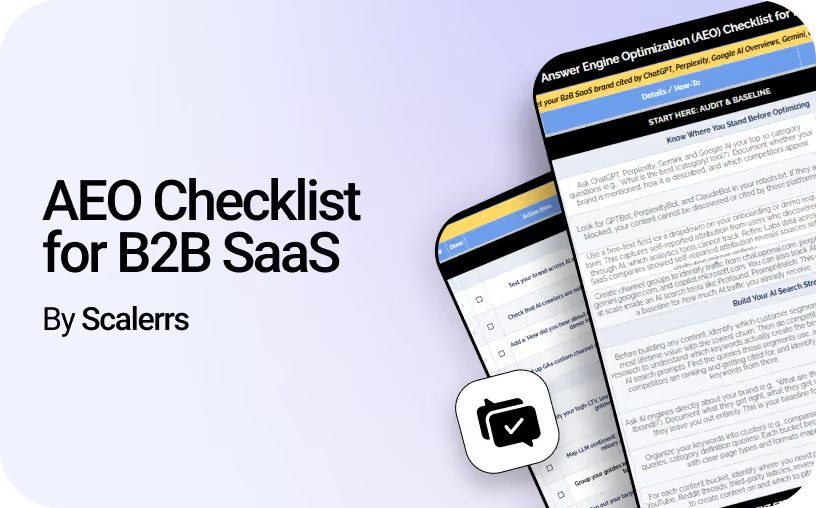
In this guide, we'll walk through the SaaS SEO audit framework we use to evaluate technical health, content performance, AI visibility, conversion readiness, and competitive positioning, plus the checklist and tools we use to turn findings into action.
What Is a SaaS SEO Audit?
A SaaS SEO audit is a complete evaluation of how effectively your website attracts, ranks, converts, and retains organic demand across the entire buyer journey.
This includes traditional SEO elements (crawlability, content, backlinks, and site architecture) plus conversion paths, product positioning, AI search visibility, Reddit discussions, YouTube presence, and whether your organic traffic actually contributes to pipeline.
Why SaaS Companies Need SEO Audits
SaaS SEO is different from SEO for ecommerce, local businesses, or publishers. Your buyers move through a long, complex journey. They compare alternatives, evaluate features, research integrations, read customer stories, and seek validation across AI search, Reddit, YouTube, and third-party review sites before requesting a demo.
Meanwhile, your product evolves constantly. Content, messaging, and site architecture have to evolve with it. That's why audits aren't a one-time project. They're an ongoing process.
How often you run one depends on your stage:
Rapid Product Changes Create SEO Misalignment
As new features launch, product positioning, messaging, and pricing may change. Meanwhile, dozens or hundreds of pages continue targeting outdated use cases, old terminology, or product capabilities that no longer reflect reality.
This hits SaaS harder than most businesses. Your buyers research those pages without ever pinging your team. Gartner found 67% of B2B buyers now prefer a rep-free buying experience. If your feature page still pitches a plan you sunset two quarters ago, that's the impression a buyer walks away with.
{{protip="/pro-tips/saas-seo-audit-tip-1"}}
Site Growth Creates Structural Complexity
As you scale, your website gets harder to manage. Feature pages multiply, integration directories expand, comparison pages grow. What started as a clean 50-page site can become a sprawling site of hundreds or thousands of URLs.
That's where problems appear: orphan pages, duplicates, weak internal linking, crawl inefficiencies, and cannibalization between similar pages.
When you burn your crawl budget on filter pages, old changelogs, and near-duplicate templates, Google pays less attention to the money pages you actually care about. An audit built for enterprise SaaS SEO treats this as a priority. You're hunting for what's indexed that shouldn't be, what's crawled but never updated, and where your internal structure sends crawlers in circles.
Content Decay Erodes Growth
One of the biggest findings we see in SaaS audits is content decay. Pages that ranked well two years ago often lose traffic gradually as competitors update content, search behavior changes, and product categories evolve.
AI search has raised the bar for content freshness and differentiation. Seer Interactive's September 2025 study found organic click-through rate on informational queries with an AI Overview fell 61% between June 2024 and September 2025. Even content that still ranks can lose its clicks, because Google answers the question before anyone reaches your page.
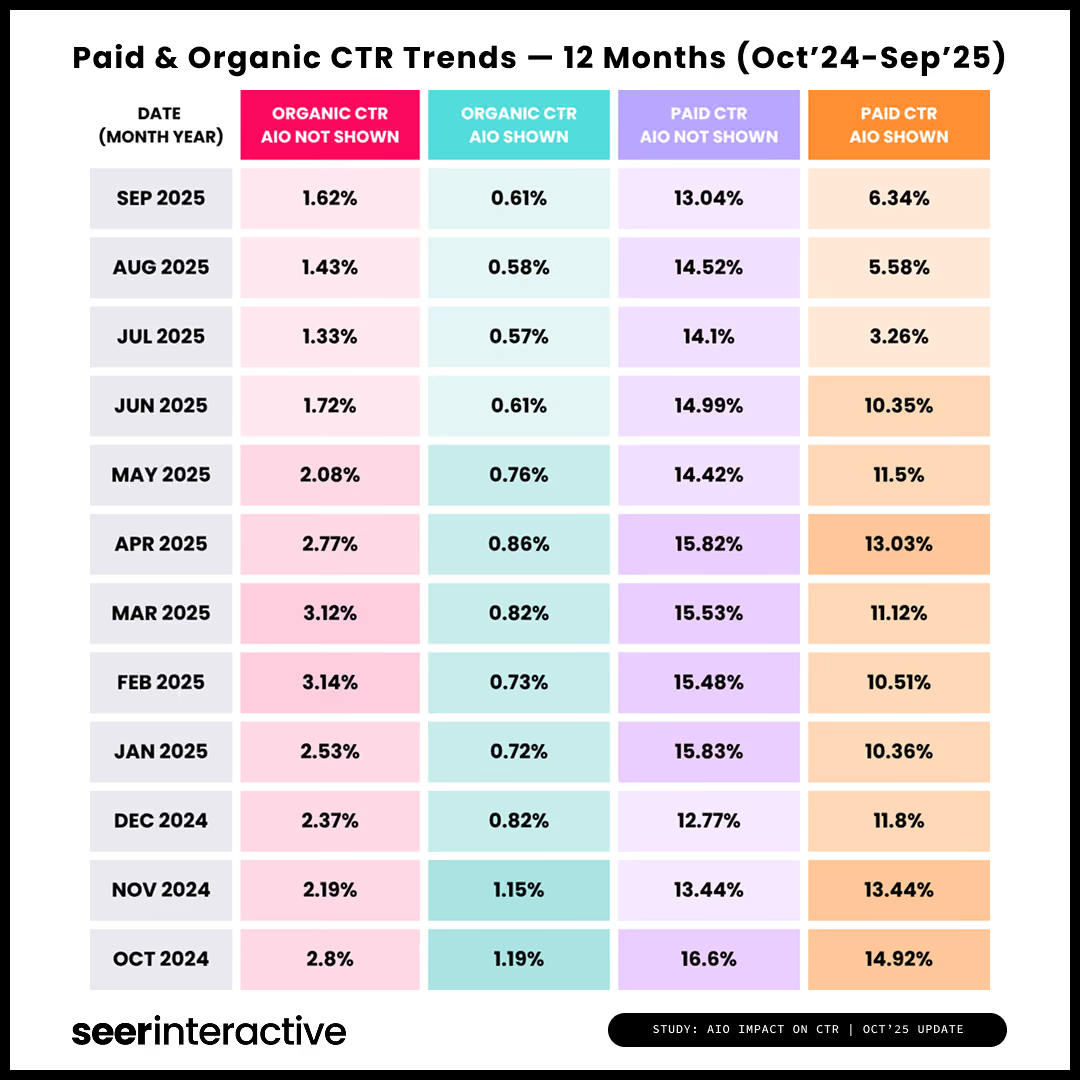
An audit tells you which pages are decaying and which are worth saving. Not every old post deserves a refresh. Spend refresh effort where it returns pipeline.
{{protip="/pro-tips/saas-seo-audit-tip-2"}}
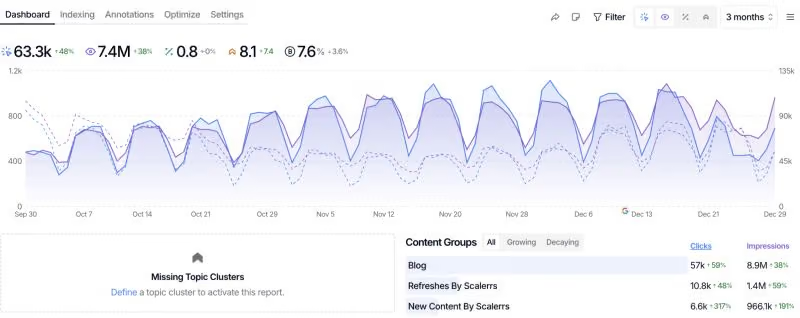
We've watched companies not just recover but increase traffic by updating content libraries before publishing a single new article.
{{protip="/pro-tips/saas-seo-audit-tip-3"}}
{{cta-general="/cta/saas-seo-checklist"}}
Technical Debt Accumulates Faster Than Teams Realize
Every redesign, CMS update, migration, template change, and product launch creates technical debt. Over time, that debt compounds with:
- Redirect chains
- Broken internal links
- Indexation issues
- Slow-loading templates
- Duplicate metadata
- Structured data gaps
- JavaScript rendering problems
This is the unglamorous half of SaaS SEO, and it's where a lot of pipeline leaks out. That's why technical SEO health remains a foundational part of every audit. We'd rather flag a botched deployment in week two than explain a lost quarter in month four. So would your CMO.
Modern Buyer Journeys Extend Far Beyond Google
Traditional audit frameworks still miss that search is now multi-surface. It includes community and AI visibility (AEO), not just SEO.
Companies investing in Answer Engine Optimization (AEO), AI brand mentions, community visibility, and authority-building assets across third-party platforms are increasingly winning attention before prospects ever click a search result.
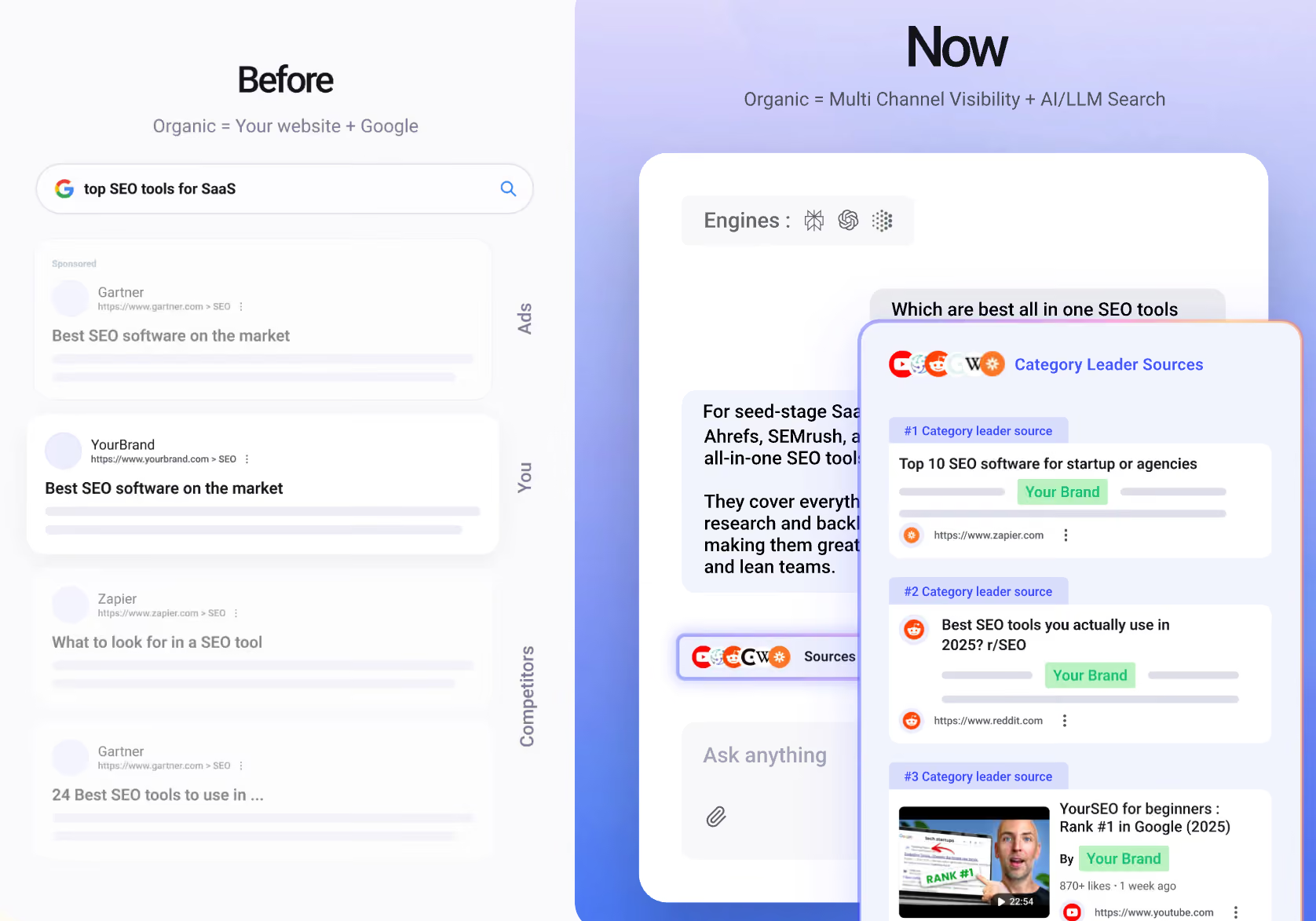
Our SaaS AEO services evaluate the recommendation pathways traditional SEO audits often miss, from Google AI Overviews and ChatGPT to Reddit, third-party listicles, and industry publications.
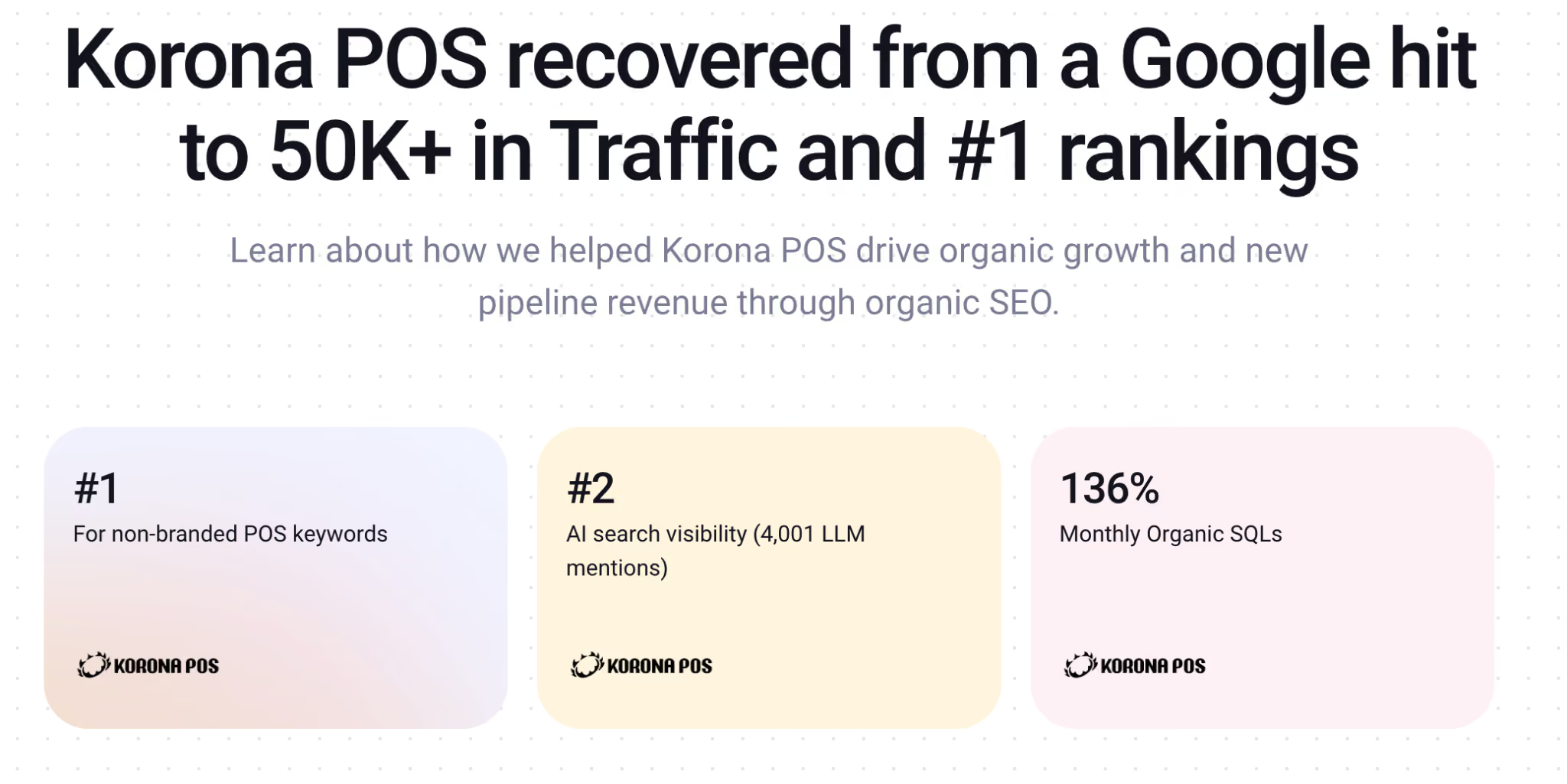
That approach helped our client Korona POS achieve #2 AI search visibility with 4,001 LLM mentions, while another client, AutoRFP, reached #3 AI visibility and generated inbound leads that now self-report discovering the company through AI search and Reddit.
{{cta-general="/cta/book-a-discovery-call-general-catch-all"}}
SaaS SEO Audit Checklist
These are the areas we review in our own audits before making recommendations. Think of it as a simplified version of the framework our team uses during SaaS SEO audit services engagements.
Crawlability and indexation
- [ ] Index coverage matches your intended pages (no bloat, no missing money pages)
- [ ] robots.txt and XML sitemaps are clean and current
- [ ] AI crawlers (GPTBot, ClaudeBot, PerplexityBot) are allowed
- [ ] No accidental noindex tags or misfiring canonicals on key pages
Technical performance
- [ ] Core Web Vitals pass on money pages (pricing, demo, top comparisons)
- [ ] JavaScript renders for crawlers; content isn't hidden behind JS
- [ ] Mobile is clean, with no blocking pop-ups for users or agents
Content and keyword mapping
- [ ] Every priority keyword maps to one clear page (no cannibalization)
- [ ] Bottom-of-funnel coverage exists (alternatives, comparisons, pricing)
- [ ] Decaying pages flagged for refresh, merge, or redirect
- [ ] Content structured for AI citation (answers up top, named stats, clear headers)
Internal linking and site architecture
- [ ] Money pages sit within a few clicks of the homepage
- [ ] No orphan pages; internal links point at commercial pages
- [ ] Topic clusters reinforce each other instead of competing
Conversion path
- [ ] High-traffic pages have a relevant next step or CTA
- [ ] Landing pages match search intent
- [ ] Trial and demo flow friction is documented
Competitive and AI visibility
- [ ] Keyword and backlink gaps versus your top three competitors are mapped
- [ ] Share of AI voice checked across ChatGPT, Claude, Gemini, Google AI Mode, Perplexity, and AI Overviews
- [ ] High-intent best-of, alternatives, and comparison listicles are prioritized by buyer influence and AI citation relevance
- [ ] The third-party sources driving AI recommendations are identified
- [ ] Competitor visibility across Reddit, YouTube, review platforms, and industry publications is documented
Off-site and community
- [ ] Brand presence, sentiment, and unanswered buyer questions are audited on relevant subreddits
- [ ] Opportunities for disclosed participation through branded accounts or identifiable company thought leaders are documented
- [ ] Owned subreddit potential is evaluated where the company can support a genuine community
- [ ] Inclusion in commercially relevant third-party listicles is checked
- [ ] YouTube, Wikipedia, review-site, and industry-publication visibility is reviewed
{{cta-general="/cta/saas-seo-checklist"}}
The 8-Part SaaS SEO Audit Framework We Use at Scalerrs
Most SaaS companies that come to us don't have an SEO problem. They have a system problem.
Rankings, backlinks, mentions, citations, and traffic are indicators. Demo requests, qualified pipeline, ARR influence, and category preference are the outcomes. When those outcomes underperform, the root cause often sits in the technical, content, authority, conversion, or measurement system supporting them.
That is why we do not approach audits as a loose list of technical checks. We evaluate SaaS websites across eight connected frameworks to identify the constraints limiting discoverability, buyer consideration, conversion, and measurable growth.
Framework #1: Crawlability & Indexation Audit
Before we look at content, keywords, backlinks, or AI visibility, we answer one question: Can search engines actually access your most important pages? You'd be surprised how often the answer is no.
Even mature SaaS companies frequently have valuable pages sitting outside Google's index, hidden behind poor internal linking structures, blocked by technical mistakes, or buried too deep in the site's architecture.
This framework examines:
- XML sitemaps
- Robots.txt directives
- Indexation coverage
- Crawl depth
- Orphan pages
- Canonical implementation
- Duplicate URLs
- Redirect behavior
For SaaS, the recurring villain is index bloat: filter pages, tag archives, old changelogs, near-duplicate templates. They pile up as you scale, and Google ends up spending time crawling pages that contribute little value while revenue-driving assets get less attention.
There’s a new wrinkle to smooth over, too: AI crawlers. If your robots.txt blocks GPTBot, ClaudeBot, or PerplexityBot, those platforms may be unable to access or refresh your first-party content directly.
Framework #2: Technical Performance Audit
Speed and stability are ranking factors, but for SaaS they're also conversion factors. A slow pricing page costs you twice: once in rankings, once in bounce rates.
A technical performance audit evaluates the health of the infrastructure supporting your content and product pages.
We analyze:
- Core Web Vitals
- Mobile performance
- JavaScript rendering
- Structured data
- Internal redirects
- Broken links
- HTTPS implementation
- Server response behavior
Modern SaaS sites lean on React, Next.js, client-side rendering, and dynamic content delivery, all of which can create unexpected issues for search engines. SaaS technical SEO isn't just an SEO concern. It's a business concern.
{{protip="/pro-tips/saas-seo-audit-tip-4"}}
There's also another angle to this audit: AI agents. More buyers are sending AI assistants to pull pricing or start a demo on their behalf. The same pop-ups and interstitials that annoy humans can stop an agent cold. We check for that too.
Framework #3: Content & Keyword Mapping Audit
Many SaaS content libraries grow without a clear relationship between content, buyer intent, and revenue. A content and keyword mapping audit evaluates whether every important search intent has a logical destination on your website.
We map every important keyword to a page, then check three things as part of a SaaS content audit:
- Coverage: Where are the gaps in your funnel, especially bottom-of-funnel terms like alternatives, comparisons, and pricing?
- Intent: Does the page match what the searcher wants?
- Decay: Which pages are sliding, and which deserve a refresh versus a redirect?
At Scalerrs, this review increasingly draws on internal tooling and automation to surface content decay, duplication, cannibalization, and recurring editorial issues across large content libraries. Structured client context also helps us keep refresh briefs, ICP and positioning alignment, and editorial QA consistent at scale. The tooling speeds up detection and preparation; strategists and editors still decide what should be refreshed, consolidated, redirected, or rewritten based on buyer intent and commercial value.
We also review cannibalization, buyer journey coverage, category authority, and topic clusters.
One of the strongest patterns we've observed across 80+ SaaS clients is that teams consistently over-invest in top-of-funnel content. They publish educational content. Industry trend content. Thought leadership. Meanwhile, their comparison pages, alternatives pages, use-case pages, and commercial-intent assets remain underdeveloped. That's backwards. The content most likely to influence the pipeline often sits near the bottom of the funnel.
Lily Ray, named the #1 most influential SEO expert in 2022 by USA Today, made the point that upper-funnel content rewritten from everyone else's upper-funnel content is "extra over" now. Translation: if your post says nothing new, it won't rank and it won't get cited. The 2026 State of AI Search backs this up, finding pages that go more than three months without an update are three times more likely to lose visibility.
{{protip="/pro-tips/saas-seo-audit-tip-5"}}
Framework #4: Internal Linking & Site Architecture Audit
Internal linking is one of the highest-leverage SEO activities most SaaS companies underinvest in. Why? Because it's rarely visible.
Nobody celebrates a better internal linking structure on LinkedIn. But search engines care deeply about it. Every link tells search engines: "This page matters."
This framework evaluates how authority flows throughout the website and whether important pages receive the visibility they deserve.
We analyze:
- Internal link distribution
- Click depth
- Navigation hierarchy
- Topic clusters
- Hub-and-spoke structures
- Orphan content
- Anchor text patterns
- Commercial page support
This becomes especially important as websites scale. A startup with 50 pages can often rank despite architectural weaknesses. A SaaS company with 1,000 pages cannot.
One issue we hit often: authority getting trapped inside blog content. Educational articles accumulate backlinks and rankings, but little authority reaches commercial pages where conversions happen. Traffic grows. Pipeline doesn't. A site architecture audit finds those bottlenecks and redistributes authority toward pages that support revenue.
Framework #5: Conversion Path Audit
A conversion path audit asks the only question your CMO actually cares about: Does organic traffic turn into trials, demos, and pipeline?
To answer it, we look at:
- Demo and trial CTAs
- Product page UX
- Content-to-conversion journeys
- Landing page intent alignment
- Lead magnets and content upgrades
- Demo booking flows
- Form friction
- Conversion tracking accuracy
The disconnect usually happens in one of three places:
One example: A visitor searching for a competitor alternative is already evaluating solutions. Sending them to a generic blog CTA often wastes that opportunity. They need product comparison content, case studies, pricing, or demo access. Not another educational article.
For SaaS this matters more as AI changes who's clicking. The people who reach your site after researching in ChatGPT or Perplexity are further along. Kevin Indig, analyzing SimilarWeb clickstream data, found that engagement from ChatGPT visitors runs about twice as strong as engagement from Google visitors. Your conversion paths have to be ready for them.
A blog pulling thousands of visits a month with no relevant CTA and no path to a product page is traffic you paid to acquire and let walk straight back out.
{{protip="/pro-tips/saas-seo-audit-tip-6"}}
Framework #6: AEO and Multi-Surface Visibility Audit
A typical B2B SaaS buying journey now includes 266 touchpoints across channels such as:
- Google searches
- AI Overviews
- ChatGPT
- Perplexity
- Claude
- Gemini
- YouTube
- Industry publications
- Product review sites
- Comparison articles
- Peer recommendations
The biggest audit question then becomes: Where does your brand appear when buyers start researching solutions?
We recommend that our clients evaluate visibility across five surfaces:
AI Search
- ChatGPT citations
- Perplexity citations
- Gemini visibility
- Claude visibility
- Google AI Overviews
- AI brand mention frequency
{{protip="/pro-tips/saas-seo-audit-tip-7"}}
- Brand mentions
- Community sentiment
- Category discussions
- Competitor recommendations
- High-visibility threads
{{protip="/pro-tips/saas-seo-audit-tip-8"}}
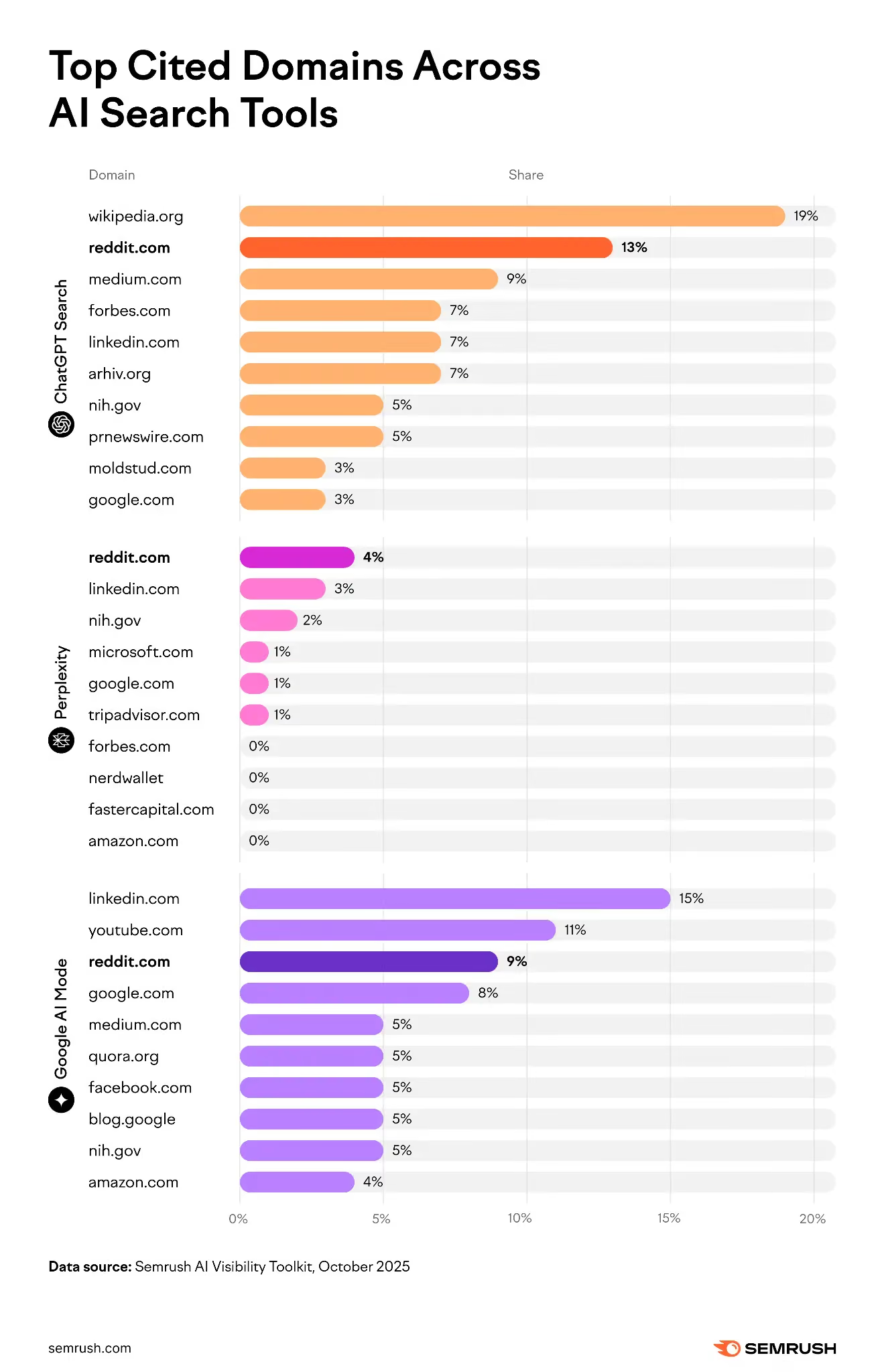
If Reddit is missing from your SaaS SEO audit, you are overlooking an important source of buyer validation and AI-retrievable discussion.
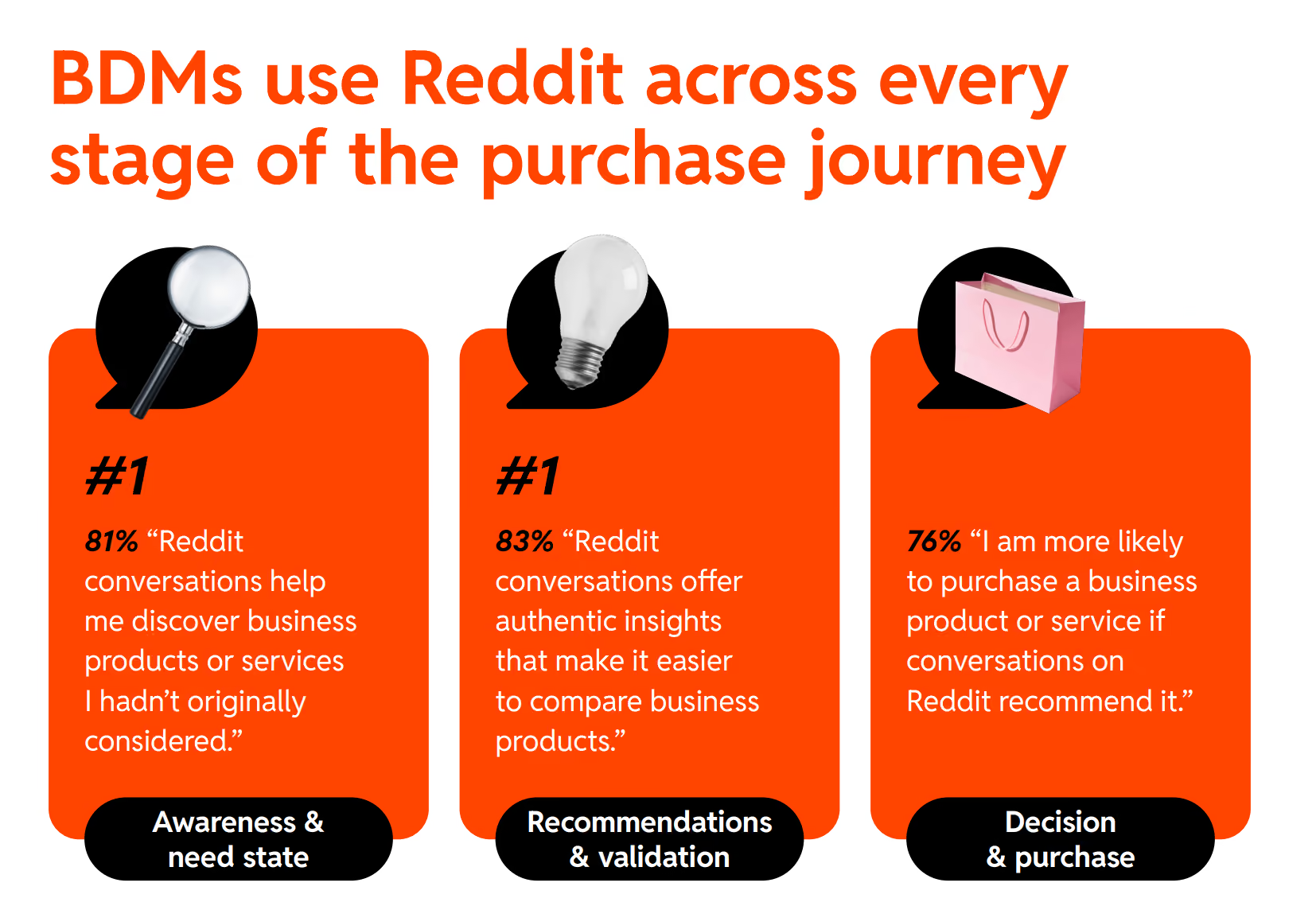
Our Reddit Marketing service uses disclosed, value-first participation rather than anonymous promotion or manufactured engagement. We help clients contribute through branded accounts and identifiable employees or executives who clearly state their affiliation. Where the company has the resources and audience to sustain one, we also help develop an owned subreddit around genuine community participation.
The goal is to answer relevant questions honestly, participate where the company has useful experience, ask for genuine product feedback, and recommend alternatives when the product is not the right fit. These conversations influence buyer decisions directly and create useful material that AI platforms may retrieve.
That's how clients like Reporting Ninja and AutoRFP turned Reddit into a measurable acquisition channel. Not through blatant promotion that risks bans, but by consistently adding value.
{{cta-general="/cta/reddit"}}
YouTube
YouTube videos give search engines and AI systems rich, crawlable content through titles, descriptions, transcripts, chapters, and engagement signals. That content can rank in Google and YouTube Search, be cited in AI-generated answers, reinforce your topical authority, and create additional entry points to your brand across multiple search surfaces.
We recommend auditing your topic selection, titles, thumbnails, scripts, transcripts, chapters, internal links, descriptions, and the next step offered to viewers to ensure every video is engineered for clicks, watch time, rankings, and conversions.
Want to turn YouTube into an organic growth channel?
From click-worthy thumbnails and retention-focused editing to keyword-optimized scripts, our SaaS YouTube Marketing services helps companies build videos that generate authority, leads, and long-term organic growth, not just views.
Third-Party Sources
Your blog is a minority shareholder in your own reputation. The 2026 State of AI Search puts 85% of brand mentions in AI search on third-party sources:
- Industry publications
- Best-of lists
- Comparison articles
- Analyst mentions
- Review platforms
Modern AI search rewards brands that are talked about across the web, not just on their own website.
Audit high-intent best-of, alternatives, and comparison listicles before defaulting to broad link building. Prioritize pages that already rank for commercial queries, attract qualified referral traffic, appear in AI citations, or influence software shortlists. A strong placement can create buyer visibility, category association, a recommendation signal, referral traffic, and a backlink at the same time.
Our AEO listicle placement work focuses on earning credible inclusion in the pages already shaping software decisions. While traditional link building still supports authority, we aim to strengthen the wider category-visibility strategy rather than offer link building as the final objective.
{{cta-general="/cta/3rd-party-listicles-ai-brand-mentions"}}
Entity & Authority Signals
- Knowledge Graph presence
- Wikipedia pages
- Brand consistency across owned, earned, and paid media
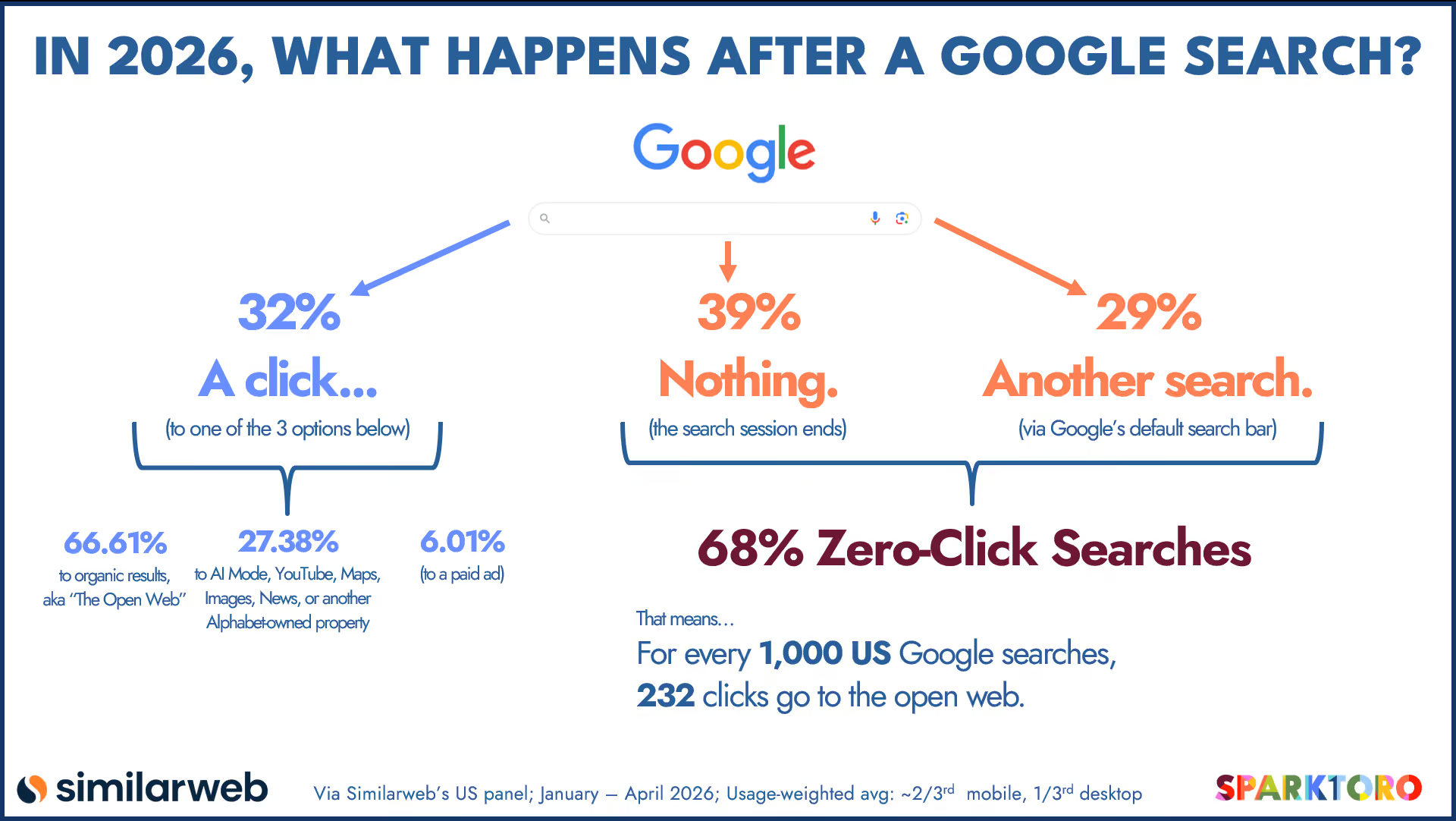
This framework exists because search behavior has changed.
SparkToro's research shows that 68.01% of Google searches ended without a click in early 2026.
Meanwhile, Semrush research has documented the continued expansion of AI Overviews across commercial and informational queries.
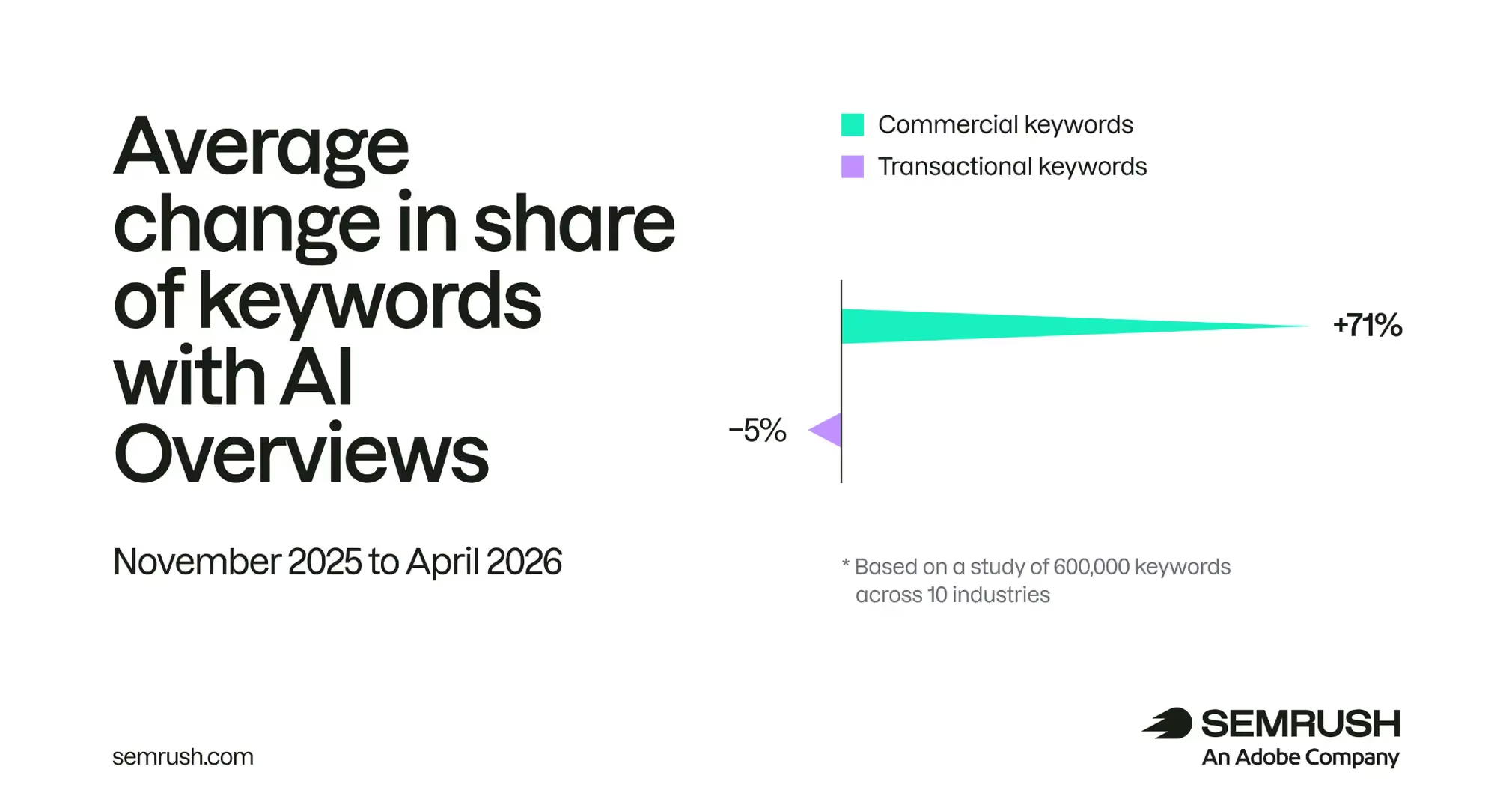
Which means: Visibility increasingly happens before the click. Successful SaaS brands appear everywhere: Reddit, AI-generated answers, LinkedIn, YouTube reviews, industry roundups. That repetition builds familiarity, and familiarity influences buying decisions.
{{protip="/pro-tips/saas-seo-audit-tip-9"}}
Framework #7: Competitive Visibility Audit
You can't judge visibility in a vacuum. This framework benchmarks you against the competitors actually winning your category, on Google and in AI answers.
It answers:
- Who actually owns your category?
- Where are competitors winning visibility?
- Which pages drive their growth?
- Which discovery channels are they investing in?
- Where are the easiest opportunities to gain share?
Our view: The SaaS companies winning organic discovery in 2026 work toward category ownership: becoming one of the brands buyers repeatedly encounter, understand, compare, and shortlist across Google, AI answers, Reddit, third-party listicles, review sites, and YouTube.
We compare your SEO efforts with your competitors to analyze:
- Keyword overlap
- Share of voice
- Backlink gaps
- AI citation visibility
- Third-party listicle presence
- Category positioning
- Review-site visibility
- Content velocity
A competitor may not outrank you in Google. But they might dominate Reddit discussions, AI answers, industry comparison articles, and YouTube reviews, etc.
{{protip="/pro-tips/saas-seo-audit-tip-10"}}
Framework #8: Measurement & Attribution Audit
The final framework focuses on attribution:
- GA4 setup
- Conversion tracking
- CRM attribution
- Demo attribution
- Pipeline reporting
- Assisted conversions
- Brand vs non-brand performance
- AI referral tracking
The goal: Connecting visibility to revenue.
A strong measurement framework should answer questions such as:
- Which pages generate pipeline?
- Which keywords influence opportunities?
- Which content drives demos?
- Which channels contribute to revenue?
- Which visibility investments deserve more budget?
Many SaaS companies can't answer these confidently. They can tell you traffic increased 40%, rankings improved for 35 keywords, impressions doubled. But not whether any of that moved revenue. That's a problem, especially for CMOs who need to justify budgets internally.
Attribution clarity turns a spreadsheet of problems into a roadmap for growth:
- What to invest in
- What to stop doing
- What deserves expansion
- What deserves optimization
{{protip="/pro-tips/saas-seo-audit-tip-11"}}
Our integrated SEO, AEO, and Reddit program is designed to turn that analysis into prioritized execution and leadership-ready reporting.
After partnering with Scalerrs, Stan Rymkiewicz, Head of Growth at Default, says:
"I can confidently say about 30% of our pipeline comes from AEO/SEO and AI search. In the last month we got over $300K in pipeline just from AEO/SEO for really no additional work."
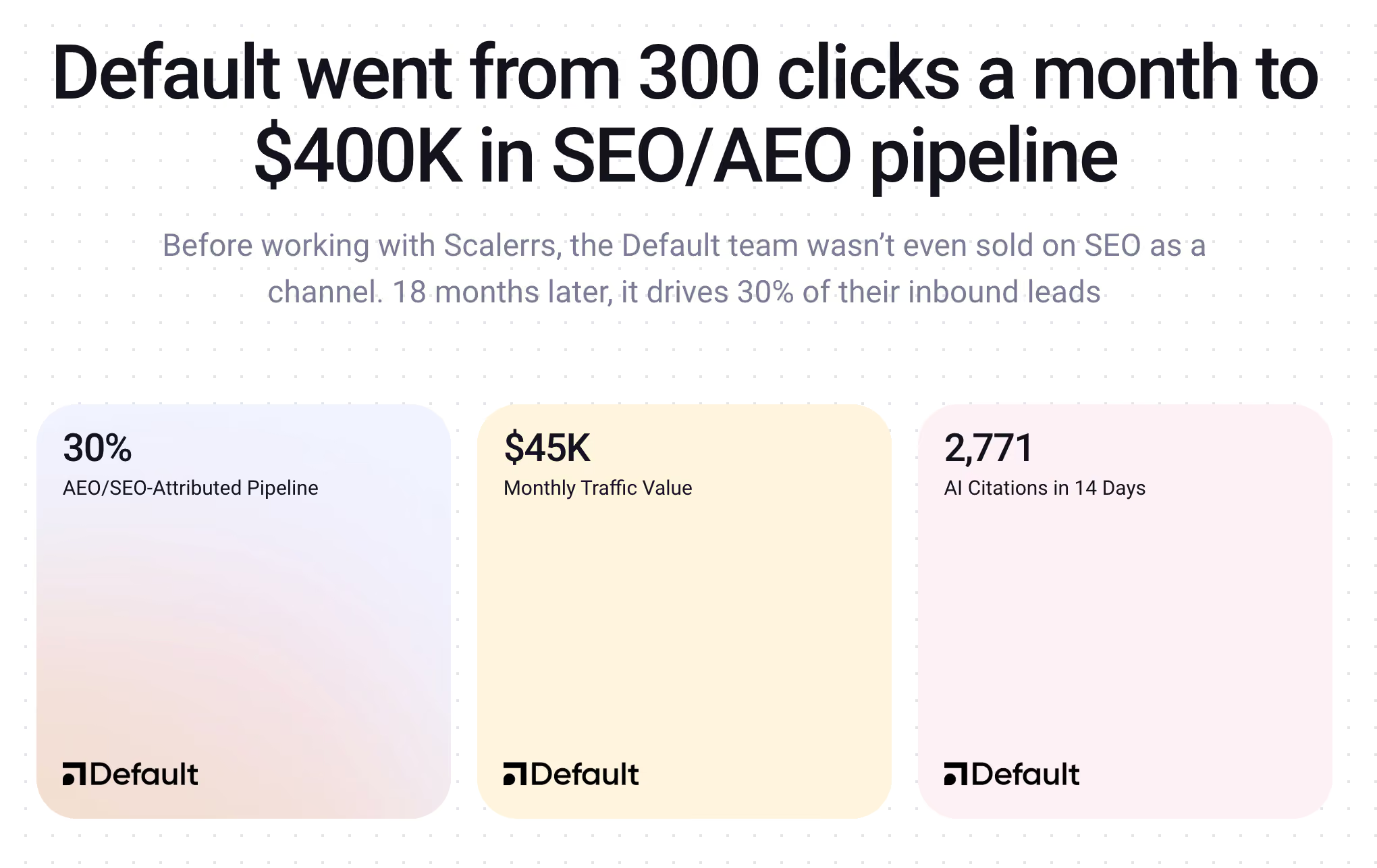
Want to see your SEO efforts boost pipeline, too? Book a free strategy call with our team. We'll show you where the gaps are and what to fix first.
{{cta-general="/cta/book-a-discovery-call-general-catch-all"}}
What High-Growth SaaS Teams Usually Discover
High-growth SaaS teams usually discover that their biggest organic growth constraint falls into one of four categories:
The reason we use an eight-part framework is simple.
SaaS companies often assume they know which problem they have. The audit reveals whether they're right. More often than you'd expect, the biggest opportunity sits somewhere completely different.
Our founder Jules Davies' SaaS SEO Playbook expands on how to prioritize high-impact opportunities and turn SEO into a predictable growth channel.
👉 View the SaaS SEO Playbook below, then bookmark it for your next audit.
SaaS SEO Audit Tools Stack
Here's the core tool stack our team relies on when auditing SaaS websites. The good news? Many of these tools are free to use!
Google Search Console: Best for understanding how Google sees your site
This is Google's own data. It tells you:
- What queries generate impressions
- Which pages are indexed
- Where click-through rates are weak
- Which pages are losing visibility
- Which technical issues Google is reporting
Some of the strongest audit findings come from pages that already rank.
For example: A page ranking in position four might generate thousands of impressions but a poor click-through rate. Improving the title, meta description, or search intent alignment can sometimes generate more traffic than creating entirely new content.
Search Console is also one of the best tools for identifying content decay. Pages with declining impressions over multiple months often deserve investigation before traffic losses become significant.
Screaming Frog: Best for crawlability, architecture, and technical audits
If we could only keep one SEO auditing tool, Screaming Frog would probably be it.
Screaming Frog gives you a crawler's view of your website. It helps answer questions such as:
- Can search engines access important pages?
- Are there broken links?
- Which pages are orphaned?
- Are metadata and canonicals configured correctly?
- Where are redirect chains creating unnecessary complexity?
- Which pages are wasting crawl budget?
{{protip="/pro-tips/saas-seo-audit-tip-12"}}
Sitebulb: Best for visualizing technical SEO issues
Sitebulb overlaps with Screaming Frog in several areas, but its visual reports make complex technical issues easier to understand.
For larger SaaS websites, Sitebulb helps visualize:
- Crawl depth
- Internal linking structures
- Indexation problems
- Redirect chains
- Architecture weaknesses
It’s useful when presenting audit findings to stakeholders who don't live inside SEO tools every day.
Ahrefs: Best for competitive visibility and content opportunities
Most teams use Ahrefs for keyword research. But during an audit, competitor analysis is where Ahrefs becomes most valuable.
We use it to understand:
- Which keywords competitors rank for that you don't
- Where competitors are earning backlinks
- Which pages attract the most organic traffic
- Which content formats dominate your category
- Which bottom-of-funnel opportunities remain uncovered
The fastest wins: keywords where multiple competitors rank, intent is commercial, your product fits, and you have no dedicated page. Those gaps generate more pipeline than another TOFU article.
PageSpeed Insights: Best for performance auditing
Google has spent years telling website owners that user experience matters. Core Web Vitals are one of the clearest signals of that priority.
PageSpeed Insights helps identify:
- Slow-loading templates
- Render-blocking resources
- Large JavaScript bundles
- Mobile performance issues
- Core Web Vitals failures
For SaaS websites built on modern frameworks, performance audits frequently uncover opportunities tied to JavaScript rendering, excessive third-party scripts, and bloated page templates.
GA4: Best for connecting SEO to revenue
Traffic alone doesn't tell you whether SEO is working.
GA4 helps connect visibility to outcomes.
During an audit, we look at:
- Organic conversion rates
- Demo requests
- Trial signups
- Assisted conversions
- Landing page performance
- User engagement by page type
{{protip="/pro-tips/saas-seo-audit-tip-13"}}
AI-visibility tools
Traditional tools can't tell you whether ChatGPT recommends you or whether you show up in AI Overviews. For that you need AI-visibility trackers: Profound, Peec AI, Promptwatch, and Ahrefs Brand Radar are some good options. They monitor buyer-intent prompts across LLMs and AI Overviews, then show whether you're cited, whether you're mentioned by name, and which sources feed the answers.
Full disclosure: AI Overviews change roughly every two days. And a SparkToro and Gumshoe.ai study found that ChatGPT returned the exact same brand recommendation list in fewer than 1% of repeated runs using the same prompt.
That’s why you should treat AI-visibility tracking as a continuous monitor, not a one-time snapshot, and why it should be measured as share of mentions rather than fixed rankings. We build this into every audit, because it's where your buyers now form their shortlists.
Our Recommended SaaS SEO Audit Stack
SaaS SEO Audit Case Studies
Frameworks are useful. But the real test of an audit is whether it uncovers insights that change outcomes.
And in our experience, this rarely comes from a single technical fix or a new content calendar. Identifying the bottleneck that's holding back the entire visibility system is what changes the game.
Here are three examples from our own clients:
HealthTech Startup: 288% organic growth by prioritizing the right pages first
The problem: A HealthTech startup came to Scalerrs with a brand-new website, just 15 blog posts, and minimal organic visibility. With limited resources, they needed to know which SEO opportunities would drive the biggest business impact.
What the audit found: The biggest opportunities were content around health conditions their product addressed, under-optimized product pages, and commercial search journeys competitors had overlooked.
What we did: We prioritized talking about relevant health conditions, optimized product pages, created educational and commercial content, launched interactive quiz pages, and expanded distribution through Pinterest.
Results: Within six months, organic clicks increased 288%, blog traffic grew 361%, and new content generated 1,433% more clicks. Interactive quiz pages were the standout performer, driving a 4,264% increase in clicks.
Takeaway: A good SEO audit doesn't tell you to create more content. It tells you which content to create first.
Korona POS: Recovering from a Google update and becoming visible in AI search
The problem: Korona POS had grown its website to ~45,000 monthly organic visitors through in-house SEO before a series of Google updates caused traffic and leads to fall. In a category dominated by Square, Shopify, and Lightspeed, the team needed to recover lost visibility while competing for high-intent commercial searches.
What the audit found: The website lacked a clear SEO structure. Commercial keywords were scattered across unrelated topics, existing content wasn't mapped to buyer intent, and there was no focused topical authority around the product categories that mattered most.
What we did: We audited the entire content library, identified 50+ high-intent "golden keywords," rebuilt and consolidated existing content, created new topical clusters around commercial POS terms, strengthened link authority, and optimized content for both Google Search and AI retrieval.
Results: Organic traffic increased 166%, monthly organic SQLs grew 136%, Korona achieved #1 rankings for multiple non-branded POS keywords, and earned citations in Google AI Overviews alongside Square, Shopify, and Lightspeed. The company also reached #2 AI search visibility with 4,001 LLM mentions across its category.
Takeaway: A good SaaS SEO audit identifies where buyer intent, topical authority, and AI visibility intersect, then builds a system around those opportunities.
Reporting Ninja: Turning SEO into a measurable acquisition channel
The problem: Reporting Ninja operates in one of the most competitive marketing analytics categories against larger players like Supermetrics, AgencyAnalytics, and Whatagraph. Despite investing in SEO previously, growth was slow, and it was difficult to understand which channels were actually driving signups.
What the audit found: The audit uncovered gaps in bottom-of-funnel content, opportunities to improve the on-site experience, and limited visibility into attribution. The team also identified AI search and Reddit as underutilized acquisition channels for their ICP.
What we did: We built ICP-focused commercial content, improved the blog experience and conversion paths, strengthened SaaS-relevant authority through targeted placements, and expanded into Reddit through disclosed, value-first participation in relevant communities. We also introduced attribution mechanisms that showed where new users were discovering and evaluating the product.
Results: Organic traffic grew 3x (4.2K → 12K monthly visitors), traffic value increased from $19K to $50K per month, and non-branded clicks rose 44% over three months. More importantly, new customers began self-attributing signups to AI search and Reddit.
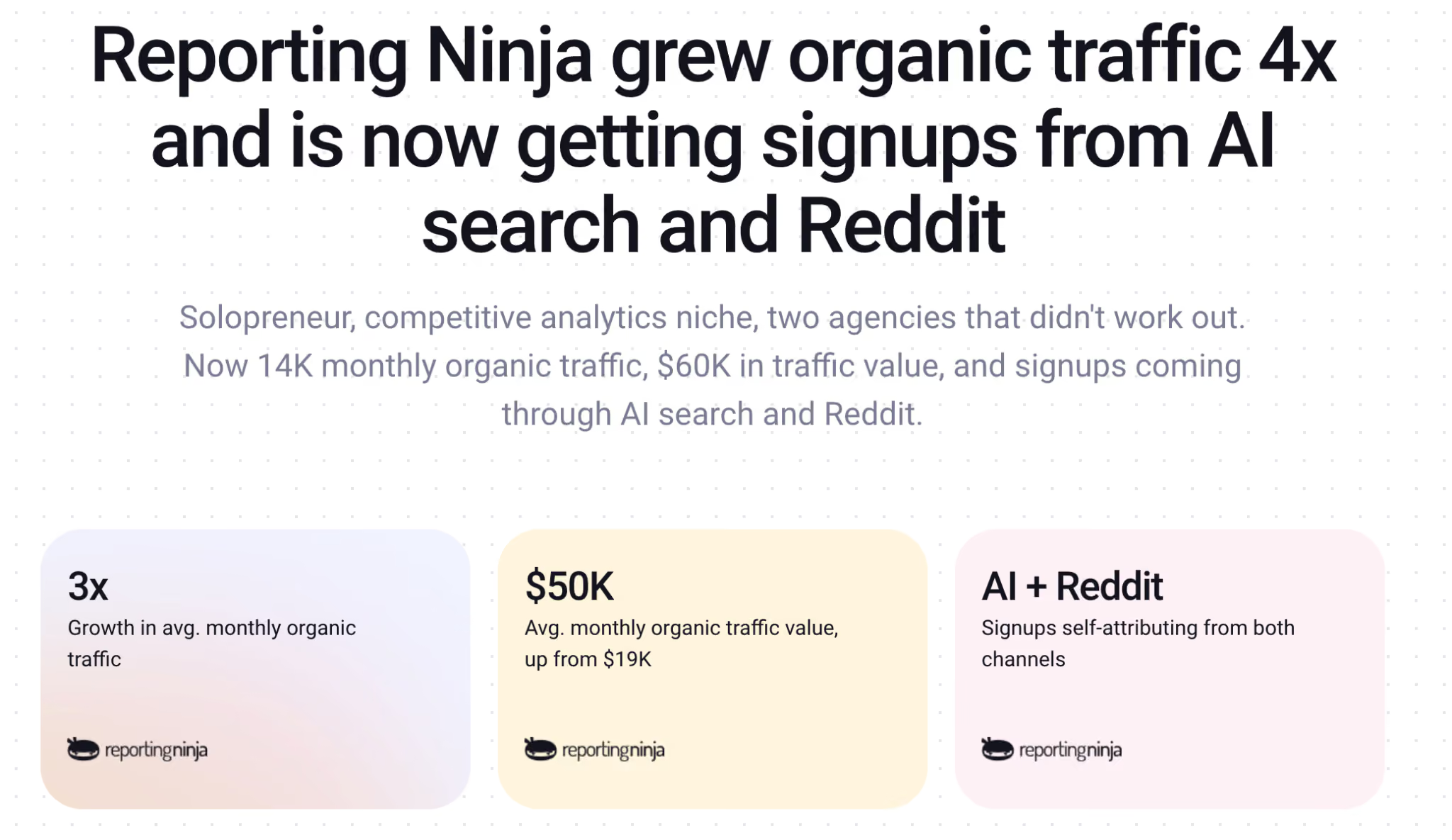
Takeaway: A content audit alone wouldn't have uncovered these opportunities. Improving conversion paths, attribution, and off-site visibility was just as important as improving rankings.
FAQs
- What's the difference between a SaaS SEO audit and a regular website audit?
A SaaS SEO audit evaluates technical SEO, content, conversions, buyer journeys, and visibility across multiple discovery channels. A standard website audit often focuses only on technical issues and rankings.
- How long does a full SaaS SEO audit take to complete?
It depends. Most comprehensive audits take between two and six weeks depending on website size, complexity, stakeholder interviews, and competitive analysis requirements.
- Can a SaaS SEO audit directly improve demo or trial conversions?
Yes. Many audits uncover conversion issues, weak CTAs, poor landing page alignment, and content gaps that affect trial signups and demo requests more than rankings themselves.
- Should SaaS companies audit AI-search visibility separately?
No. AI visibility should be included within the broader audit process. Buyers increasingly use ChatGPT, Perplexity, Gemini, Claude, and Google AI Overviews during software evaluation.
- When should a SaaS company consider professional SaaS SEO audit services?
Usually when growth stalls, traffic stops translating into pipeline, leadership needs clearer attribution, a migration or major architecture change is planned, or the internal team needs additional technical and execution capacity. Established SaaS companies may also need an external audit when a large content library, complex product structure, or multi-surface buyer journey has become difficult to evaluate internally.
Own Your SaaS Across Google, Reddit, & AI Search With Scalerrs
A SaaS SEO audit should do more than return a spreadsheet of errors. It should show which technical, content, conversion, AEO, and off-site visibility constraints are preventing your brand from being discovered, shortlisted, and chosen.
Scalerrs is a US-focused, SaaS-only SEO, AEO, and Reddit marketing agency with deep technical expertise in complex SaaS websites and product-led architectures. We use audits to prioritize the fixes most likely to improve qualified traffic, AI citations, demo requests, pipeline, and ARR influence.
The output is a defensible 90-day roadmap your internal team can execute or hand to a dedicated Scalerrs pod, supported by shared reporting and clear progress updates.
Ready to find the constraints holding back your organic growth?
Book a free SaaS SEO audit strategy session. We’ll review your visibility across Google, AI search, Reddit, YouTube, and the third-party pages shaping your category, then identify the first technical, content, conversion, and authority issues worth fixing.
Book a Discovery Call
Turn Organic Search Into Your #1 SaaS Acquisition Channel.

Let us scale your SEO channel for you.
reviewed onClutch
4.9 rating






Get Free Resources In Your Inbox
Get all of our FUTURE playbooks such as Figma files, checklists and SOPs directly into your inbox.

.avif)