


7 SaaS Marketing Challenges and How to Fix Them

Key Takeaways
- SaaS marketing gets harder at scale because channels multiply, acquisition costs climb, and buyers now research across Google, AI search, Reddit, and review sites before they book a demo.
- The most common marketing challenges that stall most B2B SaaS teams are: weak demand gen quality, inefficient paid scaling, thin organic strategy, fragmented messaging, low traffic-to-trial conversion, retention disconnected from marketing, and fractured visibility across AI and community surfaces.
- Scalerrs helped SaaS company, Default go from 300 organic clicks a month to $400K in SEO/AEO pipeline in 18 months using a strategic multi-surface visibility approach.
Why SaaS Marketing Becomes Difficult at Scale
SaaS marketing differs from traditional B2B models because it must sustain the unit economics of a recurring revenue engine. Scaling is difficult because efficient growth now replaces “growth at all costs,” requiring teams to balance acquisition with the constant need for retention marketing to protect ARR.
{{protip="/pro-tips/saas-marketing-challenges-tip-1"}}
The report also found that the median SaaS company now spends $2.00 in sales and marketing to acquire every $1.00 of new customer ARR—a 14% increase from the previous year.
Together, these trends leave marketing teams under increasing pressure to generate predictable pipeline from every acquisition channel.
To better understand how these pressures manifest, consider how marketing challenges and their business impact evolve across different growth stages.
If you've felt marketing get heavier as you've grown, this is why. Five forces sit underneath that shift, and each one tightens its grip as you scale.
1. Multi-Channel Complexity
Multi-channel complexity is one of the biggest reasons SaaS marketing gets harder at scale. Early on, one or two channels carry growth. Scale up and you're running SEO, paid ads, social, product marketing, and lifecycle marketing at once. Each adds its own data and its own way of counting a conversion, so attribution blurs.
2. Long and Non-Linear Sales Cycles
SaaS sales cycles are a byproduct of the subscription model; since the buyer is committing to a long-term relationship rather than a one-off service, procurement and security hurdles stretch across months.
Because ARR relies on these stakeholders, a campaign run in January may only impact pipeline in April, making it difficult to judge the immediate efficacy of conversion loops.
3. Increasing CAC Pressure
Rising customer acquisition cost (CAC) is the one most growth-stage teams feel first. It climbs as you scale, for predictable reasons.
You exhaust the cheapest demand first, then bid against more competitors for the same keywords, and ad platforms raise their floor as your category heats up. The math that worked at seed stage stops working at Series B.
4. Product Complexity and Expansion
As your product expands to capture more ARR, so does the marketing complexity.
Unlike a static service offering, a SaaS product is often a "living" suite where one homepage must now drive multiple product-led loops for different segments.
This expansion risks fragmenting the core story, as marketing must simultaneously sell the initial trial and the expansion value that keeps users from churning.
5. Competition Saturation
Competition saturation makes every channel harder to win as your category matures. Funded competitors pile into the same search results and ad auctions, review sites fill with alternatives, and the keywords you want all have 10 other companies bidding on them.
Early on you might own a niche term with little resistance. Grow into the head terms and you're up against bigger budgets and longer track records. This is why a SaaS SEO strategy that worked two years ago can stall.
Core SaaS Marketing Challenges (Complete Breakdown)
We’ve pinpointed seven challenges that frequently stall B2B SaaS growth. You’re likely juggling a few of these at once, and because they feed into each other, it’s better to tackle them one by one.
TL;DR — Sort out your early-stage foundations first. It makes solving the bigger, later-stage problems a whole lot easier.
Challenge #1: Demand Gen That Brings the Wrong Leads
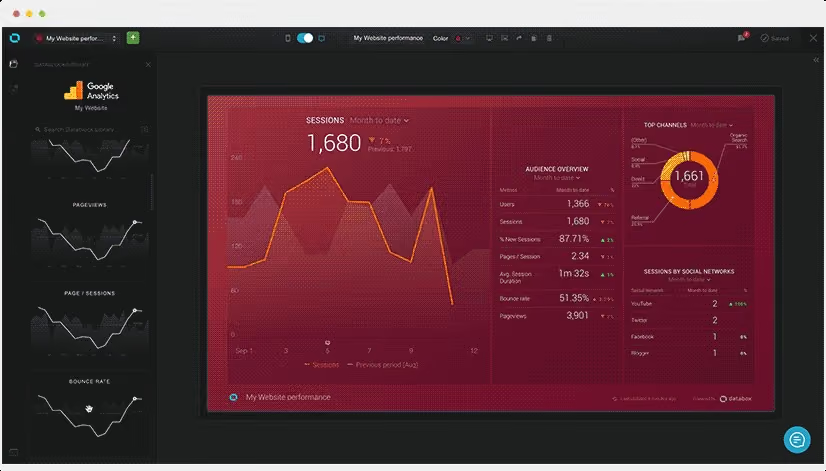
A lot of SaaS demand gen problems trace back to a single root cause: the team is measured on lead count, so it optimizes for the cheapest leads it can find. Those leads fill a dashboard and then go nowhere.
Source: DataBox
A common scenario of this happening is when the content team produces a free eBook. This (gated) eBook pulls in 500 downloads, sales calls them, and 480 turn out to be students, job seekers, or competitors. The campaign looked like a win in the dashboard and produced almost nothing in pipeline.
Common Mistake: Counting MQLs as the headline metric. A marketing-qualified lead that no salesperson wants to call is a cost, not a result. Tie marketing targets to qualified pipeline and the lead-quality conversation ends.
The Solution:
- First, write down the firmographic and behavioral traits of accounts that actually close, then filter your gating and scoring against them.
- Second, agree on a shared definition of a qualified lead with sales, in writing, and review it monthly.
- Third, route content and offers by intent, so a pricing-page visitor and a top-of-funnel reader get different next steps.
Our CRO checklist for B2B SaaS walks through the scoring and routing logic in detail.
Challenge #2: Paid Acquisition That Stops Scaling
CPCs rise every year, your best keywords get more crowded, and the same budget buys fewer clicks. Teams that depend on one or two paid channels feel this first.
When 70% of pipeline comes from paid search, a 20% CPC increase hits the entire business at once. There's no cushion. You're renting your demand, and the rent keeps going up.
We've watched teams hit a hard ceiling here: they double the budget expecting double the pipeline, and the second half of that spend lands on lower-intent clicks that never convert. The math that worked at $50K a month switches up at $100K.
Red Flag: Your blended CAC has climbed for three straight quarters and your channel mix hasn't changed. That's a sign you're scaling spend on a channel that has already hit diminishing returns.
The Solution:
- Grow owned demand that lowers your dependence on auctions. Organic search, AI search visibility, and community presence all generate leads that don't cost more every quarter.
- Keep paid for the high-intent terms where speed matters, and let compounding channels carry the volume.
The goal is a mix where no single channel can sink a quarter on its own.
Challenge #3. An Organic Strategy Too Thin to Compound
Plenty of SaaS teams publish content every week and still see organic traffic flatline. The posts are disconnected. They target random keywords, link to nothing, and never cover a topic deeply enough to rank.
Without a holistic organic growth strategy, every article starts from zero.
When you map a buyer's full set of questions and answer all of them with interlinked pages, search engines start to see you as the authority on that topic. One strong cluster outperforms fifty standalone posts.
The Solution:
- Start with a keyword map organized by intent, not volume.
- Group terms into clusters, create a pillar page plus supporting articles for each, and link them tightly.
- For larger libraries, our enterprise SaaS SEO approach covers how to scale this without losing quality.
If you want a quick audit of your current setup, the SaaS SEO checklist is a good starting point. As you’ll see in the case studies section below, Scalerrs has built these systems for B2B SaaS companies competing against far larger budgets.
Challenge #4. Messaging That Changes Shape on Every Channel
Inconsistent positioning makes the buyer journey confusing, and this is one challenge growing SaaS teams face.
Someone reads a Reddit thread, clicks to your blog, then hits a landing page that frames the product in unfamiliar terms. Every disconnect adds friction, and friction kills momentum at the moment a buyer is deciding whether to trust you.
Messaging drift is hardest to catch from the inside, because the people writing each channel already know what the product does.
The Solution:
- Have someone outside the team read your homepage, your top ad, and your sales deck back to back. If they describe three different products, your buyers see the same thing.
- A positioning document that defines your category, your differentiators, and your core proof points. Treat it as the single reference for ads, web pages, and decks.
Our guide on SaaS content marketing shows how to keep a growing content library on-message, and our content creation team produces against a fixed positioning brief so nothing drifts.
Challenge #5. Traffic That Doesn't Convert to Demos or Trials
High traffic with low conversion almost always means a mismatch. The visitor wanted one thing, the page offered another. A reader searching for a comparison lands on a generic feature page and bounces. The traffic looks healthy, and the pipeline stays empty.
The other common gap is onboarding. The same trial, set up two ways, ends in two very different places.
Conversion isn't only about the landing page. It runs from the first click through to the first moment of value inside the product.
The Solution:
- Audit the full path, fix the weakest link, then move to the next one.
- Match CTA to search intent. A bottom-of-funnel comparison page should offer a demo. A top-of-funnel guide should offer a related resource, not a sales call.
Asking for too much, too early is a common conversion leak we find.
Challenge #6. Marketing That Stops at the Closed Deal
In most SaaS orgs, marketing hands off at the closed deal and never looks back. That leaves the largest growth lever untouched. For a healthy SaaS business, expansion revenue from existing customers often outpaces new-logo revenue, and marketing can drive it.
When marketing stops at acquisition, churn becomes someone else's problem and expansion happens by accident. Onboarding emails go stale, feature-adoption campaigns never get built, and renewal conversations start cold. The compounding value of a customer base sits idle.
The Solution:
- Hire a lifecycle marketing expert to own the post-sale lifecycle the same way you own acquisition.
- Build adoption campaigns tied to product milestones, win-back sequences for at-risk accounts, and expansion offers timed to usage signals.
A team that hits 80% of its seat limit, for example, is a natural moment for an upgrade prompt, not a cold renewal call three months later. Net revenue retention becomes a marketing metric, not just a customer success one. The teams that do this turn their existing customer base into their most efficient growth channel.
Challenge #7. Fractured Visibility Across AI, Search, and Communities
Buyers no longer move in a straight line from a Google search to your site. They ask ChatGPT, read a Reddit thread, scan a review site, and check a third-party listicle before they ever type your domain.
In early 2026, 68% of US Google searches ended without a click, up from 60% in 2024, according to SparkToro.
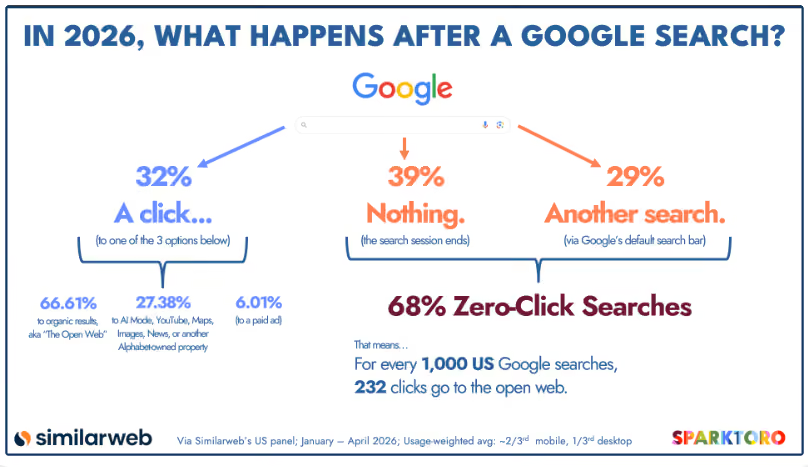
If an AI model summarizes your category and never mentions you, you've lost the buyer before the comparison even starts. Worse, you lose control of your own narrative.
The model describes your product using whatever sources it trusts, and if those sources are competitors or outdated reviews, that's the story your buyer hears.
This is why AI search optimization has become as important as traditional SEO.
The Solution:
- Multi-surface visibility. Optimize for AI search by earning citations on the sources models actually pull from.
- Build a strategic presence on Reddit, where buyers compare tools in the open and where AI models increasingly source their answers. We (at Scalerrs) earn our way into those threads by being useful first and pitching only when it fits, which is how the mentions stick instead of getting removed.
- Get into the third-party listicles that rank for your category.
Our Reddit marketing and YouTube work covers the community and video surfaces, and the AEO checklist for B2B SaaS lays out the steps to start earning AI citations.
First-touch attribution gets messier here. A buyer who first saw you in an AI answer and later searched your brand name will look like organic search in your reports.
The teams that win anyway are the ones that accept directional attribution and keep investing in presence everywhere buyers look, rather than waiting for a clean dashboard that AI search may never present.
How Top SaaS Companies Solve These Challenges
Most SaaS companies don't have a marketing problem, they have a system problem. The channels work, just not together. Here are the ways we've seen SaaS companies solve their marketing challenges by connecting their channels into one system:
Start with the ICP and highest-intent keywords
Before any content goes live, top teams map their ideal customer and the exact terms those buyers search right before they're ready to buy. Everything downstream points at those people. This is the same starting move we make with every client, and it's the habit that separates the best SaaS SEO agencies from the rest.
Pick two or three channels and own them
Spreading thin across eight channels produces mediocre results everywhere. Strong teams concentrate on the few channels where their buyers actually are, whether that's content, SEO, or link building, get great at them, then expand. Depth beats breadth until you have the resources for both.
Map every page to the buyer journey
Each page has a job tied to where the buyer sits. Awareness content answers questions, consideration content compares options, and decision content closes. When the map is clear, traffic flows toward pipeline instead of pooling at the top.
Optimize for AI search the way you optimize for Google
Top teams reverse-engineer which sources AI models cite for their category, then create content across those sources so they show up in AI answers. This is the highest-impact move available in 2026, and most competitors haven't started. Our SaaS SEO agency services treat Google and AI search as one connected effort.
Tie marketing to pipeline, not traffic
The teams that win report on pipeline contribution and revenue, not clicks. That single shift changes which projects get funded and which get cut. If you're weighing whether to build this capability in-house, our in-house vs agency comparison lays out the tradeoffs honestly.
Important SaaS Marketing KPIs and Metrics
You can't fix what you don't measure. From our work at Scalerrs, we've seen early-stage SaaS companies fly blind, running channels with no way to tell which ones drive pipeline and which just spend budget. The metrics below connect marketing to the numbers your board cares about. Many of these also serve as core SaaS SEO KPIs for measuring the business impact of organic growth.
The metrics below connect marketing to the numbers your board cares about. Track these, and the system problems above become visible long before they show up in a flat pipeline.
It helps to split these into leading and lagging indicators.
- Lagging metrics like CAC payback and net revenue retention confirm what already happened.
- Leading metrics like AI citation share, organic pipeline share, and free-to-paid conversion tell you where you're heading.
Watch the leading set weekly and the lagging set monthly. When a leading metric turns, you have time to act before it shows up in revenue, which is the whole point of measuring anything.
SaaS Marketing Challenges Case Studies
Two companies which have navigated common SaaS marketing challenges with stride are Default and Zapier. Here’s a peak behind the curtain at the strategies that delivered:
Default: From 300 Clicks a Month to $400K in SEO/AEO Pipeline
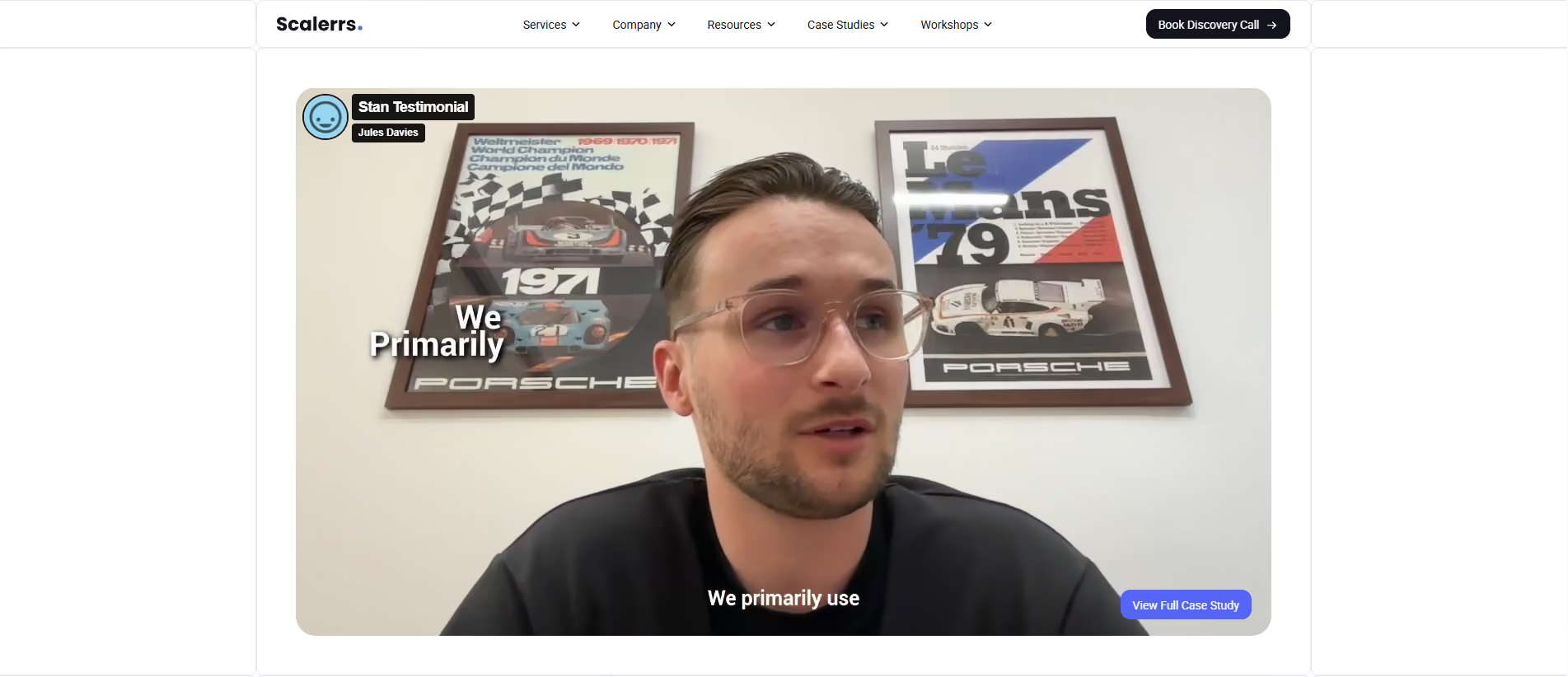
Default was the underdog compared to well-funded incumbents like Chili Piper and LeanData. Stan Rymkiewicz, Head of Growth, ran the entire function solo and wasn't immediately sold on SEO as a channel.
There was no owned-demand engine. Growth depended on outbound and a category where the biggest names had years of brand equity and budget. Organic visibility on Google and in AI search sat near zero.
The fix: Scalerrs mapped Default's ICP and highest-intent keywords, then shaped an SEO strategy around the category terms they could own, starting with bottom-of-funnel queries.
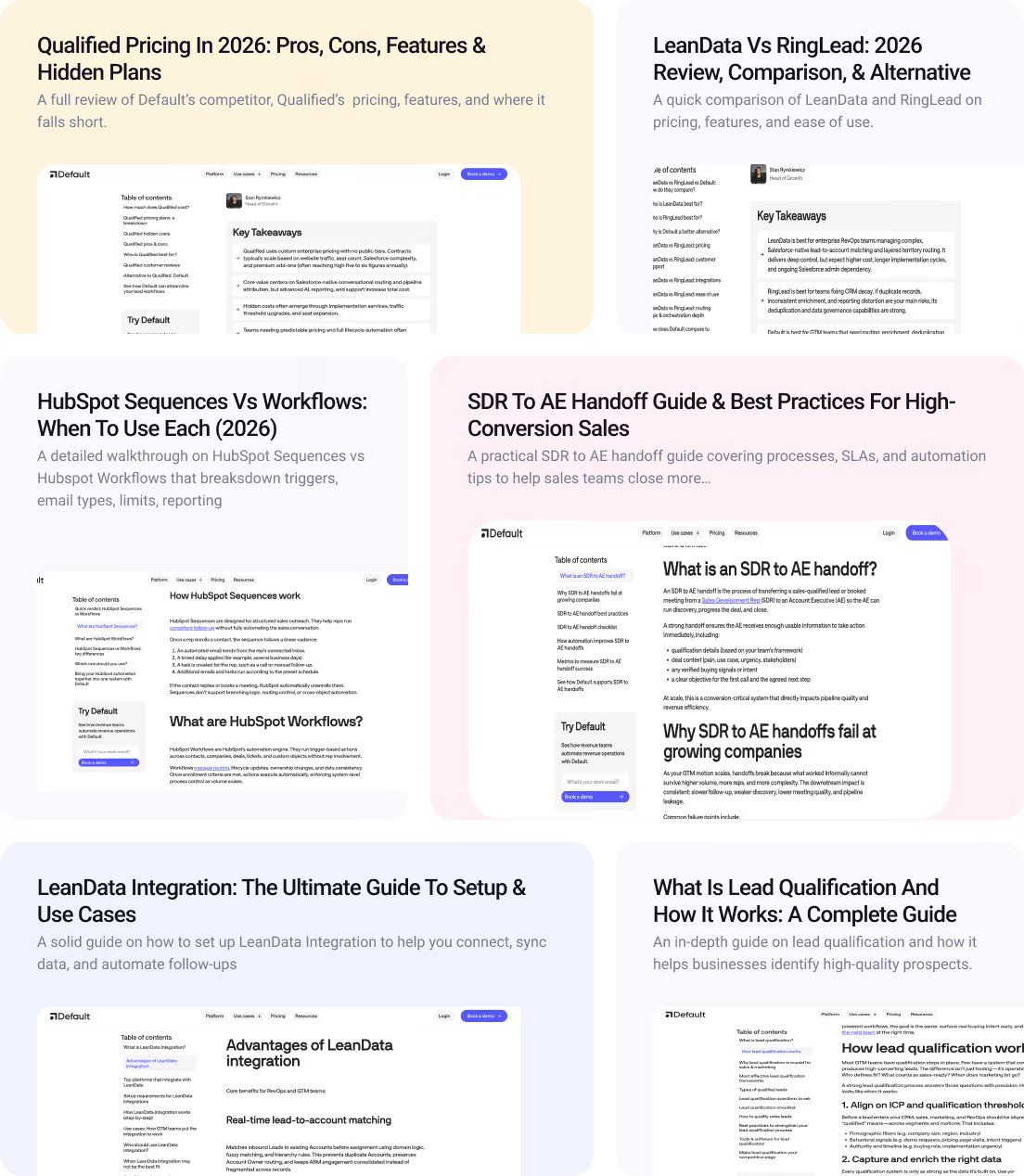
On the AI search side, we reverse-engineered which sources models pull from for their prompts, then created content across those sources.
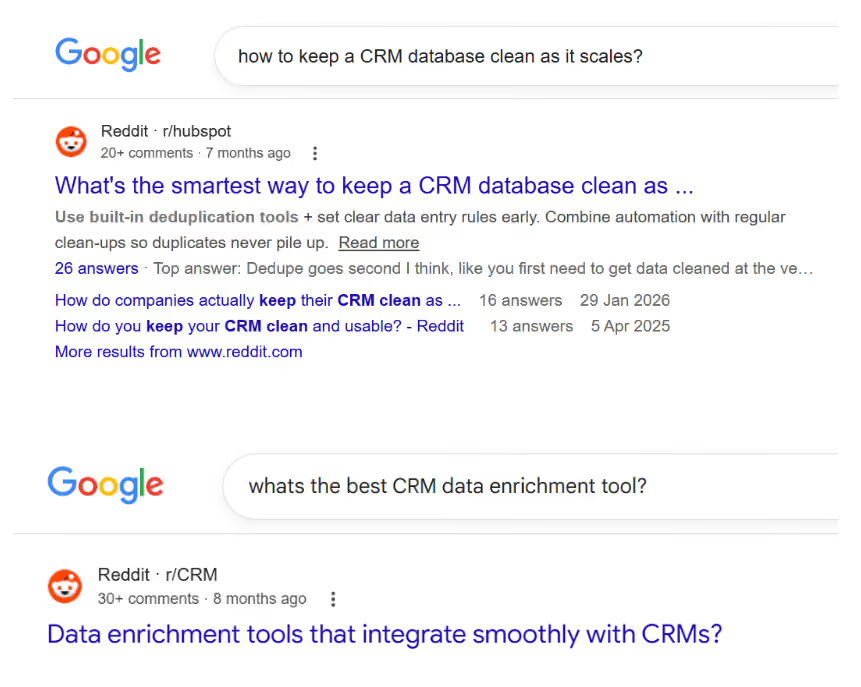
We earned links on high-authority SaaS domains and got Default into Reddit threads where buyers were already comparing routing tools.
The results: In 18 months, organic clicks grew from 300 to over 4,000 a month. SEO and AI search now drive 30% of total pipeline, including a single month with over $300K in organic-sourced pipeline.
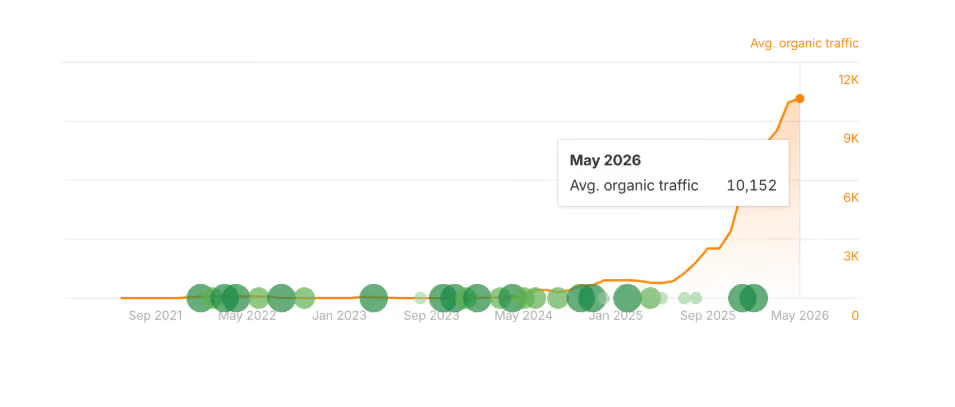
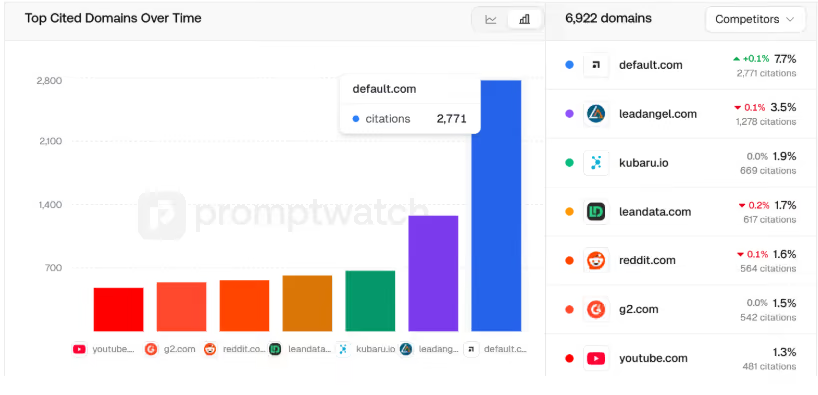
Monthly traffic value reached $45K, almost entirely non-branded, and Default became the top-cited domain in its category with 2,771 AI citations in 14 days.
In Rymkiewicz’s words: “I can confidently say about 30% of our pipeline comes from AEO/SEO and AI search. In the last month we got over $300K in pipeline just from AEO/SEO for really no additional work.”
Key takeaway: A focused system aimed at high-intent terms and AI citations can potentially beat incumbents with far larger budgets.
Zapier: Solving the Organic Traffic Challenge with Programmatic SEO
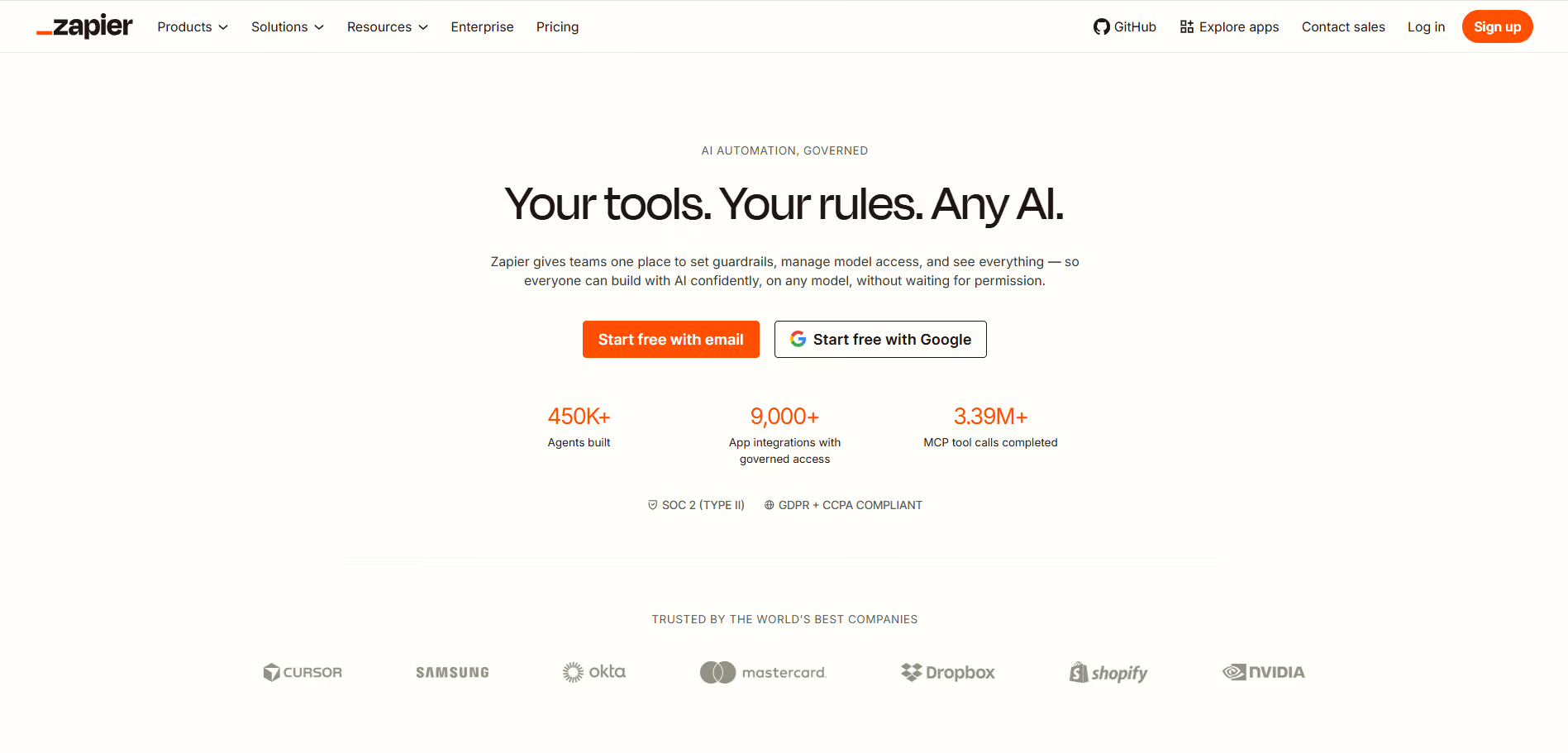
As an automation platform connecting thousands of apps, Zapier spotted an SEO opportunity. It could never write enough manual blog posts to cover the searches its buyers ran, because every app pairing was its own long-tail query.
The fix: Zapier created a programmatic SEO system to generate new content at scale. As the company documents on its own blog, it generated a dedicated page for each supported app and for every pairing of apps, using its existing integration database to populate templates.
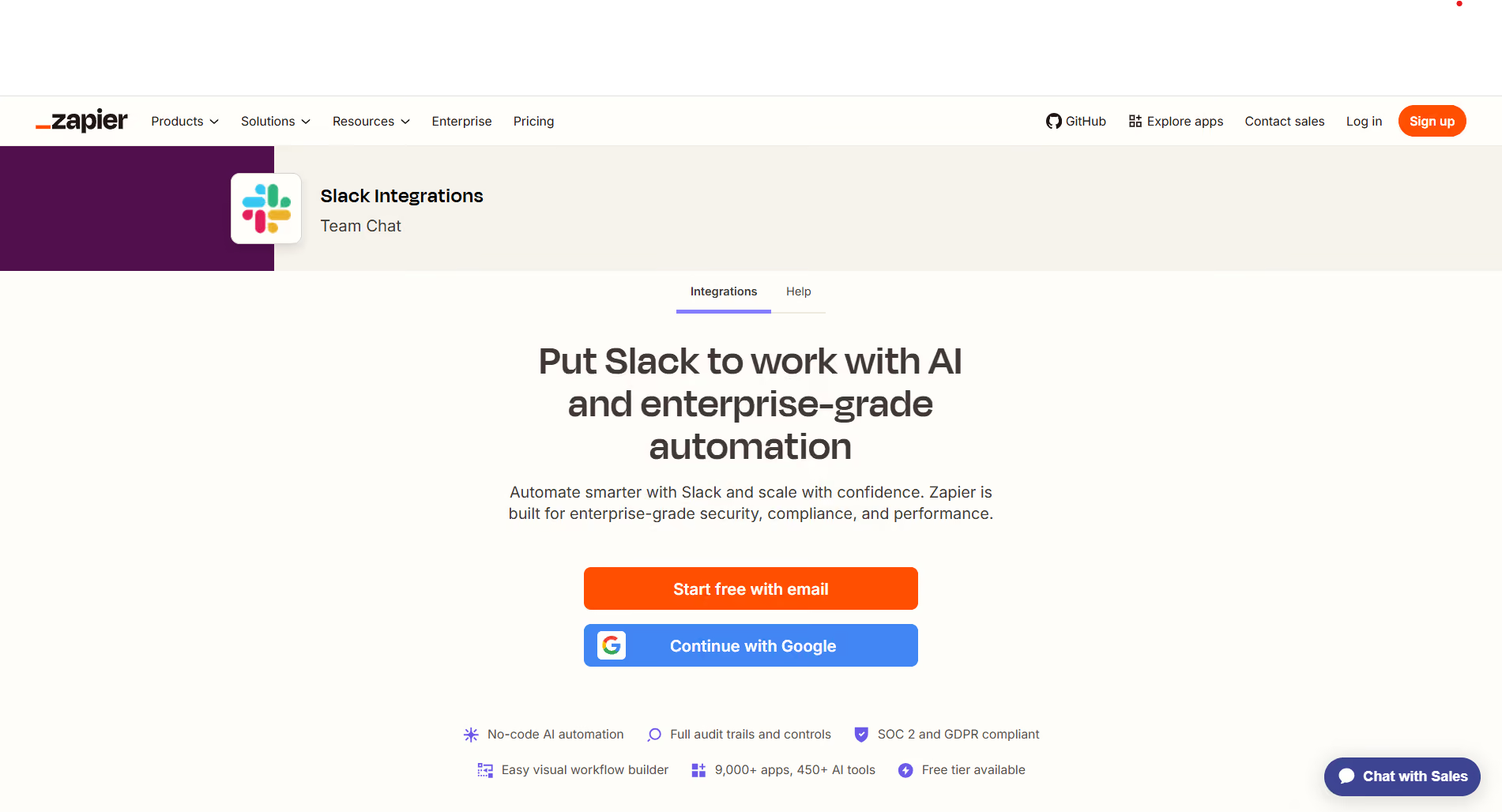
Each page answered an exact, high-intent query like connecting two specific tools, with setup steps and a clear call to action.
The results: The approach scaled to tens of thousands of pages that together pull in millions of organic visits a month, capturing demand at the precise moment of intent.
Key takeaway: When your product has structured data and clear intent patterns, a programmatic SEO program can answer thousands of long-tail searches that manual content never could.
The principle is the same one behind every fix in this guide. Build the system once, and it keeps working.
{{protip="/pro-tips/saas-marketing-challenges-tip-2"}}
FAQs
What is the biggest marketing challenge for SaaS companies?
It depends on your stage, but the fastest-growing one is fractured visibility across AI search, Google, and communities. Buyers now research across many surfaces before talking to sales, and brands that only show up in traditional search lose deals before the comparison starts.
How is AI search changing SaaS marketing?
AI search is moving discovery away from the open web. With most US Google searches now ending without a click, the brands that get cited in AI answers win the buyer's attention. SaaS marketing now has to earn those citations, not just rank in blue links.
How long does it take to fix a SaaS marketing system?
Most teams see early organic and AI search signals within three to six months, with pipeline impact compounding from there. Default reached 30% of pipeline from SEO and AI search over 18 months. The timeline depends on your category's competitiveness and how much foundation already exists.
Should SaaS companies focus on SEO or paid ads?
SaaS companies should focus on both SEO and paid ads. Use paid for high-intent terms where speed matters. Use SEO and AI SEO to lower your dependence on paid spend. Relying on paid alone leaves you exposed every time CPCs rise.
How do you measure SaaS marketing success?
By pipeline and revenue, not clicks. Track CAC, LTV:CAC, CAC payback, pipeline contribution, and increasingly AI citation share. These metrics tie marketing to the numbers your board cares about and surface system problems early.
Own Your SaaS Across Google, Reddit, and AI Search With Scalerrs
Every challenge in this guide comes back to one thing: a system that connects your channels to pipeline and puts your brand wherever buyers research.
At Scalerrs, we make B2B SaaS companies category leaders through multi-surface and Reddit marketing. We design marketing strategies for B2B SaaS that result in category ownership. From organic and AI search to Reddit and link building.
Book a discovery call and we'll map the fastest path to pipeline for your category.
Book a Discovery Call
Turn Organic Search Into Your #1 SaaS Acquisition Channel.

Let us scale your SEO channel for you.
reviewed onClutch
4.9 rating






Get Free Resources In Your Inbox
Get all of our FUTURE playbooks such as Figma files, checklists and SOPs directly into your inbox.

.avif)