


Programmatic SEO for SaaS: Framework & Examples (2026)

Key Takeaways
- Programmatic SEO (pSEO) uses page templates and structured data to publish hundreds of targeted pages at once, capturing long-tail demand at scale.
- The highest-value page types for SaaS pSEO are Integrations, comparisons, alternatives, use cases, and templates.
- Userpilot, Canva, G2, and Zapier all use programmatic SEO pages to scale organic traffic; from Userpilot's jump to ~100K monthly visits to Zapier's millions.
- Scalerrs combines the technical architecture behind SaaS pSEO with AEO, so page sets can scale cleanly, remain crawlable and indexable, and support visibility in ChatGPT, Perplexity, Claude, and Google AI Mode, not just Google rankings.
Programmatic SEO for SaaS produces windfall traffic growth. Yet, it remains underreported relative to its impact.
Regardless, some of the biggest SaaS companies like Zapier, Userpilot, Canva, and G2 have recorded outsized traffic and pipeline gains.
In this guide, we dig deep to uncover content marketing's best-kept growth secret.
You'll learn how pSEO works, how to build your first programmatic SEO pages, real SaaS examples, and how to measure success.
What Is Programmatic SEO?
Programmatic SEO is the practice of producing multiple web pages from a single template and structured dataset, so each page targets a specific keyword.
Instead of writing one page by hand, you map a repeatable query pattern, like "[tool] integrations" or "CRM for [industry]," then populate hundreds of pages automatically from a database.
Why Programmatic SEO Works So Well for SaaS Companies
SaaS products rarely exist in siloes. There are often different industries, use cases, and integrations, working together and each with its own search demand.
Here's why pSEO pulls more weight for SaaS companies specifically:
1. It Captures Long-Tail Demand at Scale
SaaS Programmatic SEO succeeds because search demand is splintered across longtail, low search volume keywords.
SparkToro's analysis of 332 million U.S. Google searches uncovered more than 320,000 unique query terms in its sample alone. It also noted that countless lower-frequency searches fell below its reporting threshold.
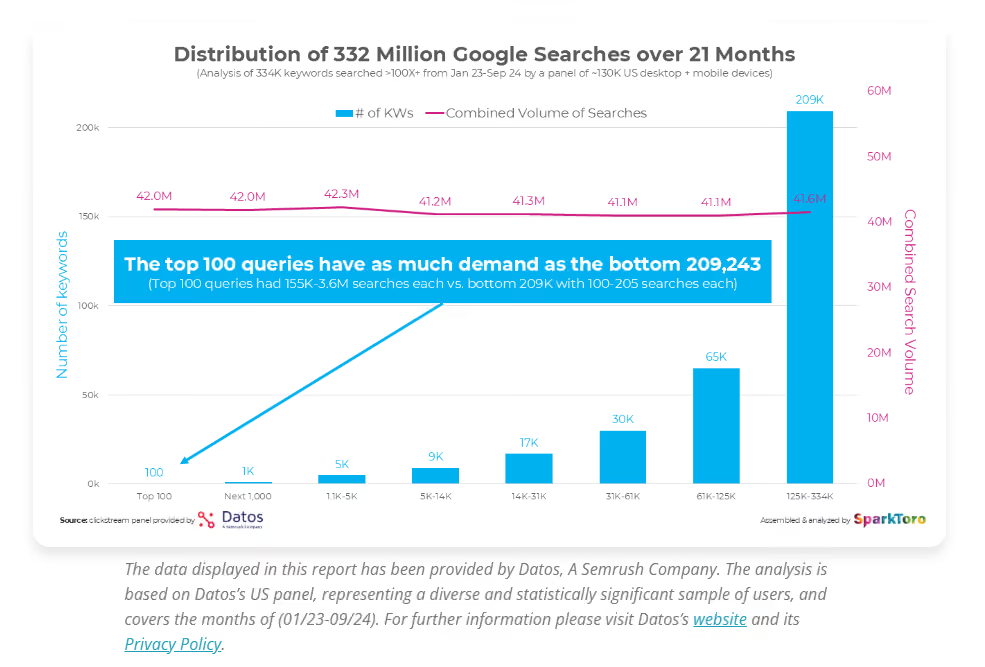
In other words, a significant share of search is spread across thousands of very specific queries.
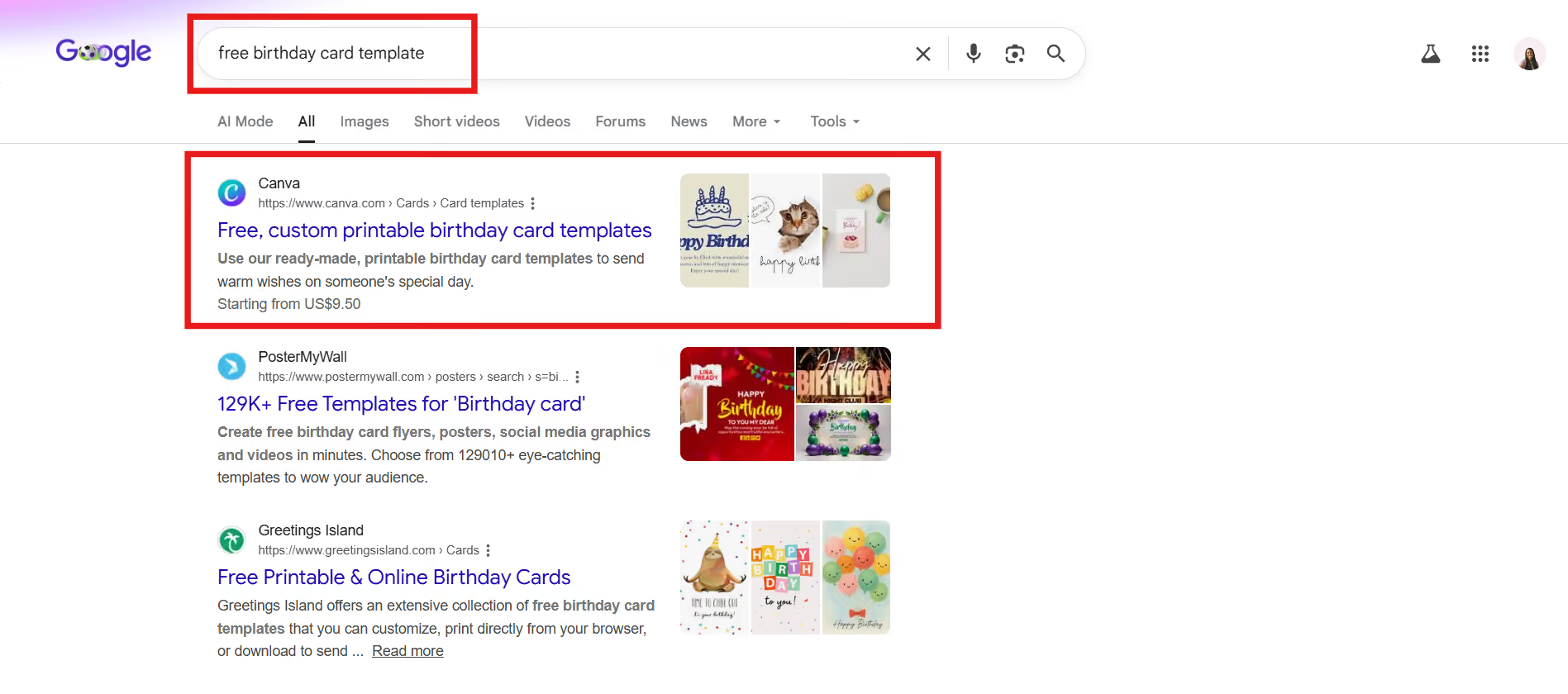
Let’s take an example from Canva. Search “free birthday card template” on Google and Canva surfaces among the top 3 ranking articles:
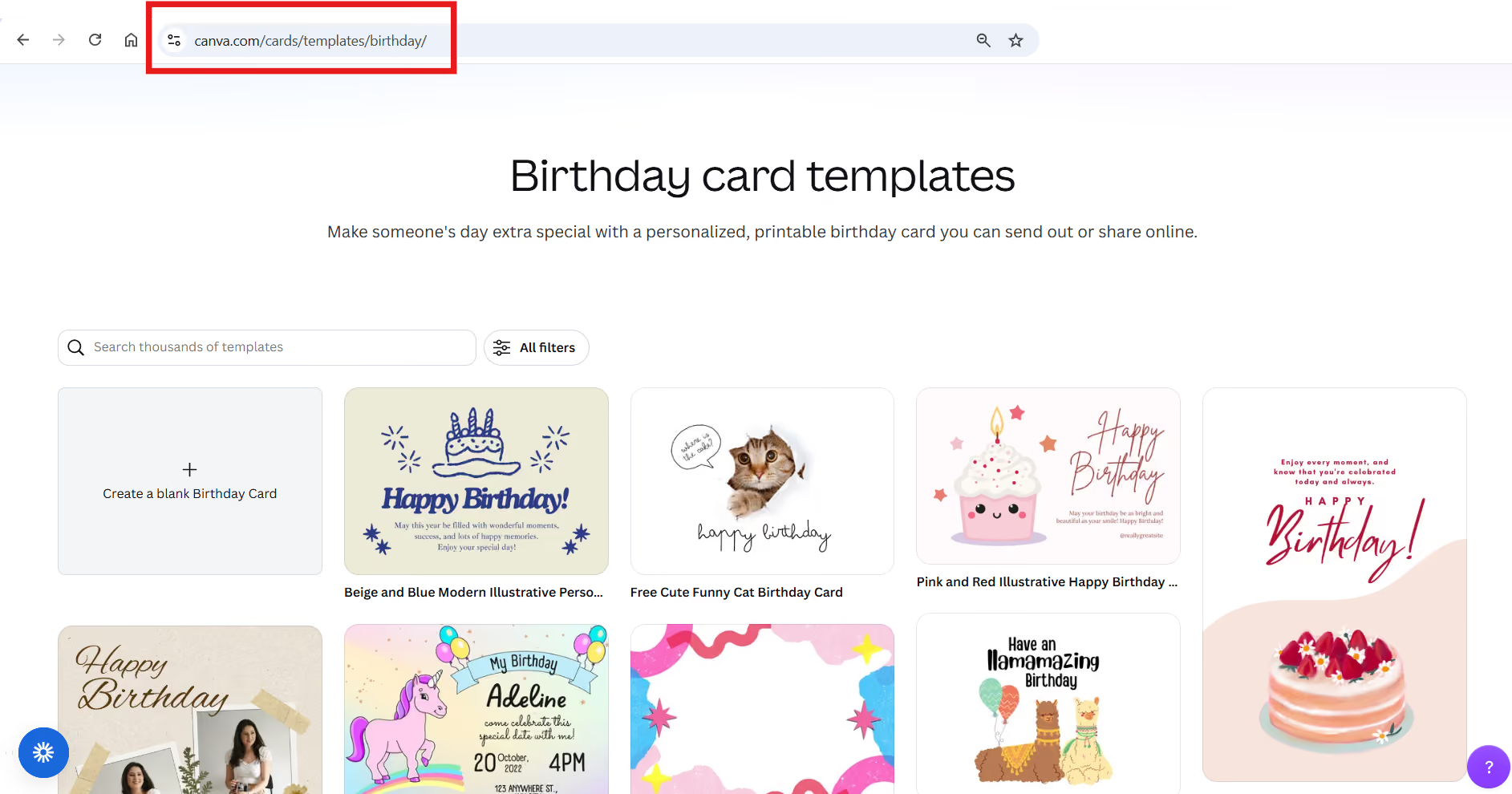
Click the link and you’ll see a programmatically generated page designed to rank and convert:
In SaaS, prospects use long tail queries to search for specific integrations, workflows, industries, templates, and use cases.
These queries may attract only a few searches per month individually, but they usually signal a shorter path to conversion than broader category keywords.
Programmatic SEO provides a scalable way to create pages for these niche searches, allowing them to capture traffic and buying intent that would be difficult to reach through manual content production alone.
2. Helps Expand Coverage Across Use-Case Search Intent
SaaS buyers don’t always search for a specific brand. Often, they discover brands by searching for the job they're trying to do:
- "automate invoice reminders”
- "Slack alternative for project management"
- "inventory tracking for retail"
Programmatic SEO lets you build a dedicated page for each use case, workflow, and feature, so your product shows up when intent is highest.
Done well, these pages double as product education, shortening the path from search to signup.
For product-led companies especially, use case content turns organic search into an acquisition channel.
{{cta-general="/cta/saas-content-marketing-playbook"}}
3. It Owns High-Intent Comparison and Alternative Searches
SaaS buyers use comparison and alternative queries when they’re ready to make a purchase decision.
Someone searching "[Tool] alternatives" or "Tool A vs Tool B" is in-market and evaluating options.
Programmatic SEO lets you systematically claim these searches across every relevant competitor and category, instead of writing comparison pages one at a time and missing dozens of variations.
When you search “G2 vs Gartner” on Google, G2’s programmatically produced page surfaces::
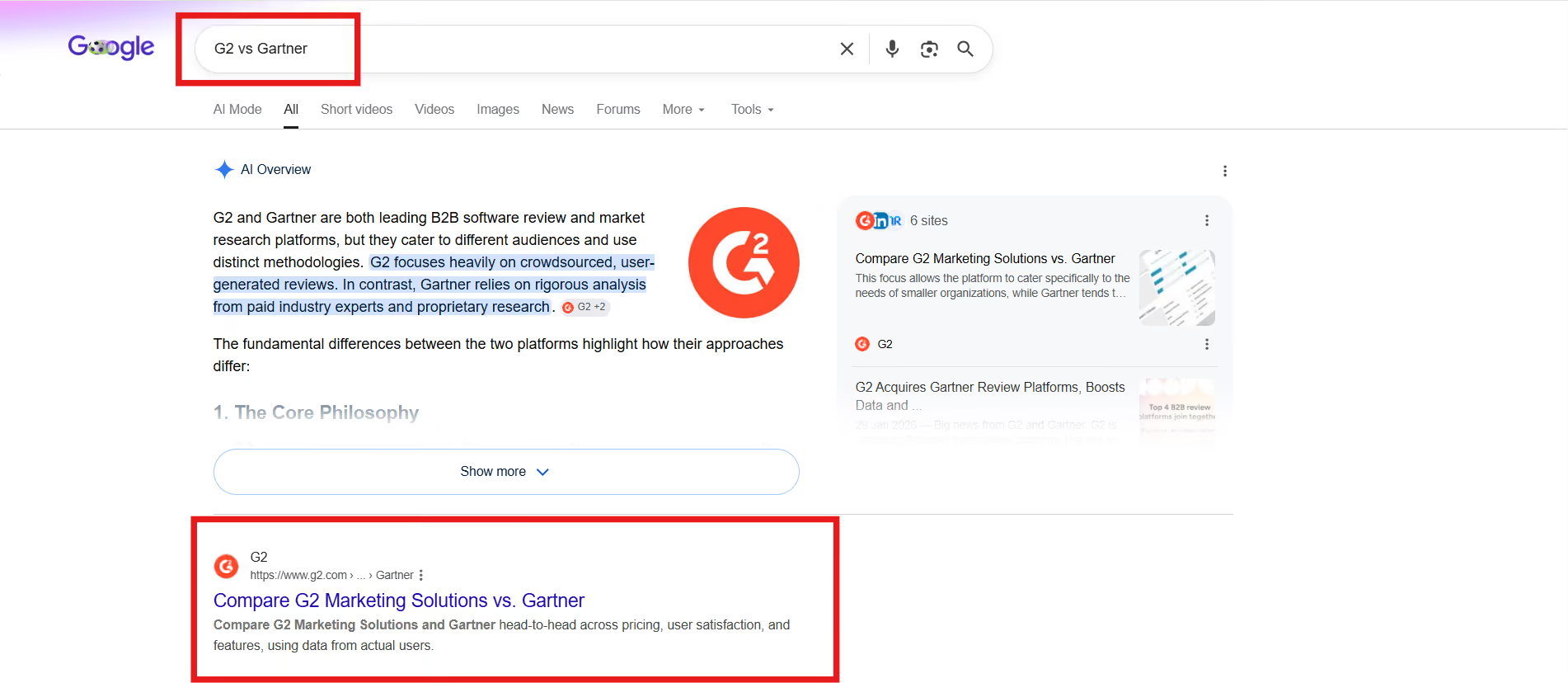
Click, and you’ll see:
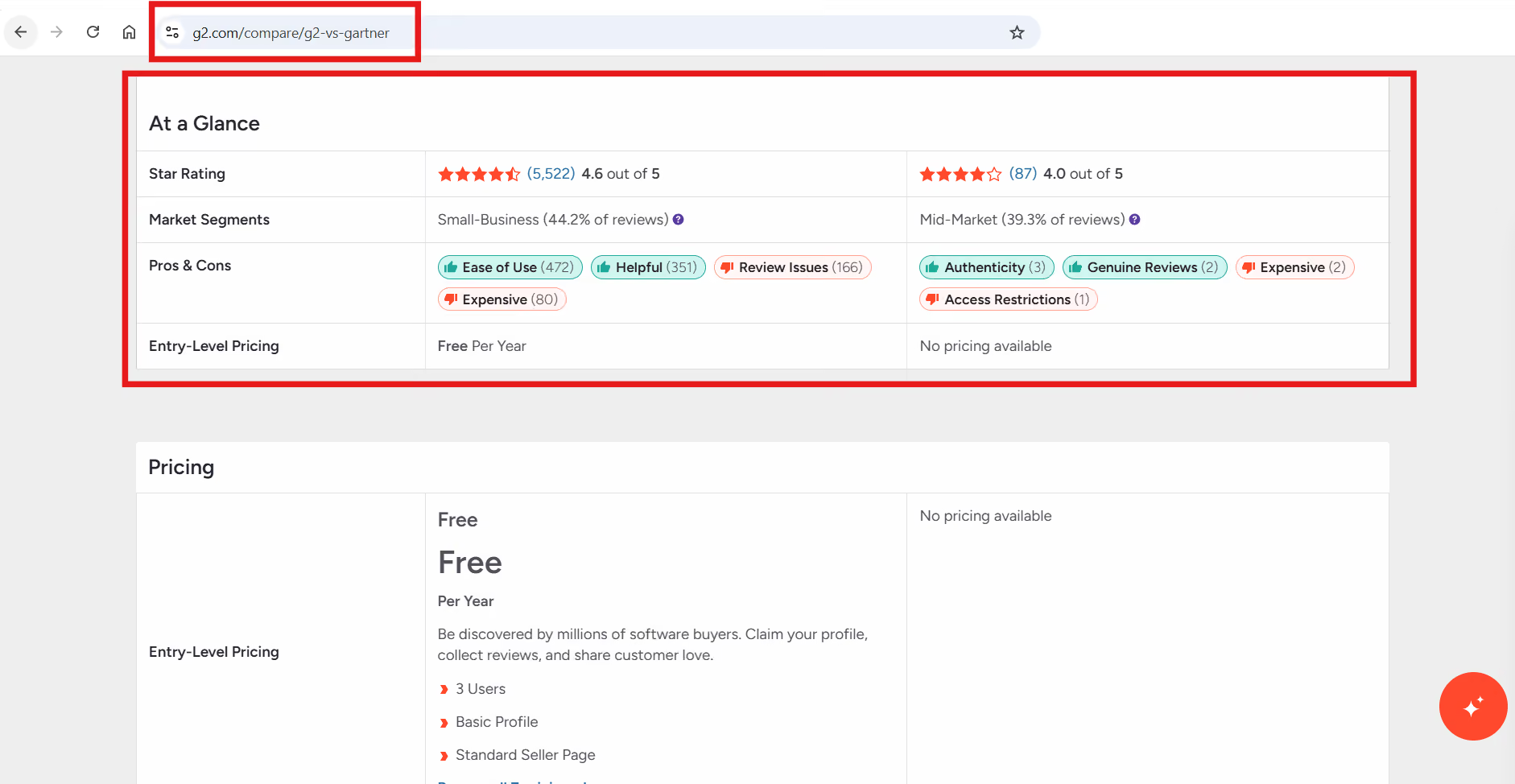
For SaaS, comparison and alternative searches are some of the highest-ROI real estate in organic search because searchers are disproportionately likely to sign up.
Owning these keywords also keeps competitors from defining the comparison narrative for you. The revenue impact is direct, which is why it's a core lever for any SaaS SEO agency focused on pipeline.
4. It Builds Industry and Vertical Hubs You Can Own
Most SaaS products serve multiple verticals, and each one searches differently. "CRM for law firms" and "CRM for real estate" are distinct searches with distinct buyers, even though the underlying product is the same.
Programmatic SEO lets you spin up an industry-specific hub for each vertical, signaling deep relevance to both Google and AI search engines.
Over time, this compounds into category ownership. Owning hundreds of useful, vertical-specific pages that share links with each other help you become the authoritative source on a topic.
Owning a category isn’t limited to ranking page one on Google. The Scalerrs team helps SaaS clients own their category across every surface buyers use, from Google to ChatGPT, Perplexity, and Reddit, not just search rankings.
How Programmatic SEO and AEO/GEO Content Work Together
Programmatic SEO is how you produce pages at scale. AEO (Answer Engine Optimization) and GEO (Generative Engine Optimization) are how you optimize those pages to get cited in AI.
Here’s the difference:
The takeaway? Build the pages programmatically, then make every one of them answer a question clearly enough that an AI engine wants to quote it.
Rather than treating programmatic SEO and AEO/GEO as separate initiatives, Scalerrs delivers them as one integrated content system. Every page is built for scalable organic coverage from day one while being structured to maximize its chances of appearing in AI-generated answers.
When Programmatic SEO Makes Sense (And When It Doesn't)
Although programmatic SEO makes sense for some companies, it’s not the best fit for everybody. Before committing budget, it's worth an honest look at whether your product and resources can support a successful program.
Who Is a Good Fit for Programmatic SEO?
Programmatic SEO is a good fit for companies that have a large universe of related keywords to target, alongside structured data to populate pages.
SaaS companies tend to check both boxes.
If your product serves multiple industries, supports multiple use cases or workflows, or connects to dozens of other tools, you can most likely do programmatic SEO.
Who Is Bad Fit for Programmatic SEO?
Programmatic SEO is mostly a bad fit for new sites with little link equity. Those will struggle to get hundreds of thin-ish pages indexed and ranked, and may trip quality filters instead.
Link equity is the SEO value and authority that a webpage passes to another page through hyperlinks, helping influence the linked page's ability to rank in search results.
If your business has limited search demand, relies on a handful of high-intent keywords, or can't generate unique value across a large page set, skip the programmatic SEO strategy.
Additionally, programmatic SEO is not a good fit if:
- You don't have structured data to populate pages (You'll end up with near-duplicate templates that don’t add value)
- You don’t have capacity to maintain quality, prune underperformers, and keep data fresh
- Your page types boil down to one or two patterns with thin variation
Before investing in programmatic SEO, use this table to help guide your decision making:
And then, pressure-test your readiness by answering this four questions:
- Do we have a repeatable query pattern with real search demand behind each variation?
- Do we have a structured dataset to fill each page with unique value?
- Does our domain have enough authority to get a large page set indexed and ranked?
- Who owns quality and maintenance after launch? If you can't answer all four confidently, start with a small pilot batch before scaling.
When in doubt, a traditional SaaS content strategy is the safer investment. The Scalerrs team will indicate when a traditional content strategy is the better bet, rather than selling you scale you can't support.
Types of Programmatic SEO Pages SaaS Companies Can Create
Once you've decided programmatic SEO fits, the next question is which pages to build. The right page types depend on your product, but a handful do most of the heavy lifting for SaaS.
Below is a quick reference, followed by a breakdown of the eight that matter most.
1. Integration Pages
Integration pages target searches like "Salesforce + Jira integrations" or "[Tool A] + [Tool B]," capturing buyers who want to know whether your product connects to the stack they already use.
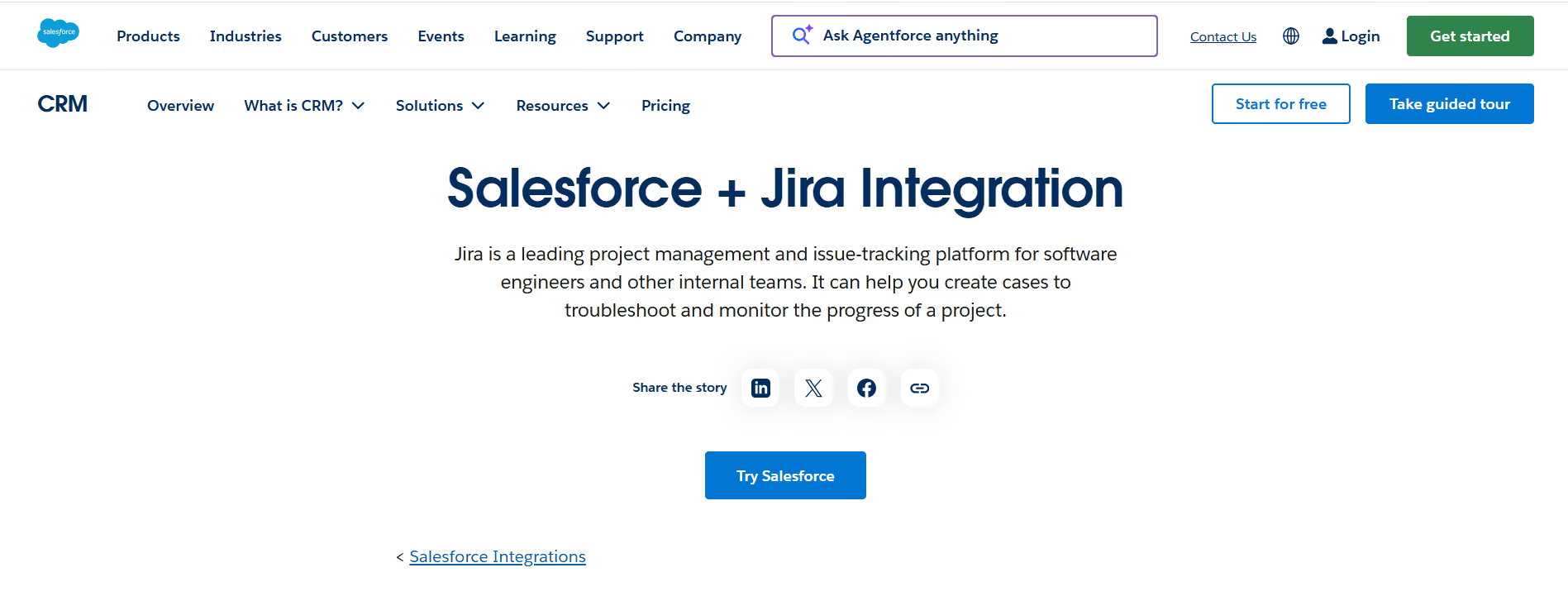
These types of programmatic pages scale because every integration in your ecosystem becomes its own page, all generated from a single template and a list of connected apps. Any product with a meaningful integration library can run the same play.
2. Comparison Pages
Comparison pages target "[Tool A] vs [Tool B]" searches, where the buyer is actively weighing options and close to a decision. They scale by pairing your product against every relevant competitor and alternative in your category, each combination becoming its own page.
Below is an example for the search query “Asana vs Trello”
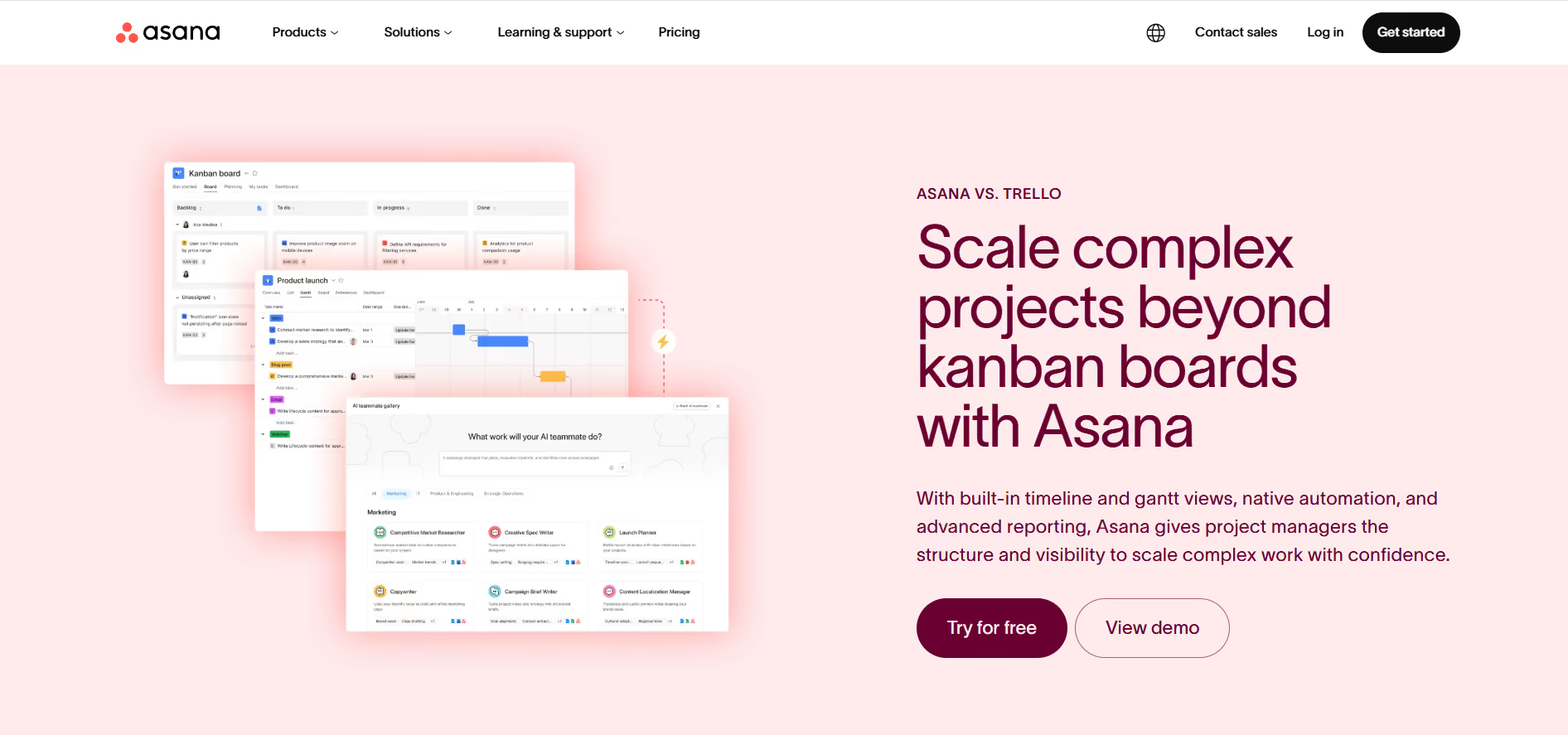
For SaaS challengers, owning these pages also means you get to frame the comparison on your terms rather than letting a competitor or third party define it.
3. Alternative Pages
Alternative pages capture "[Competitor] alternatives" searches, which signal a buyer who's unhappy with or evaluating away from an incumbent.
See this example of Userflow ranking Google page 1 for “Userpilot alternatives”. Scalerrs believes this is a programmatically created page:
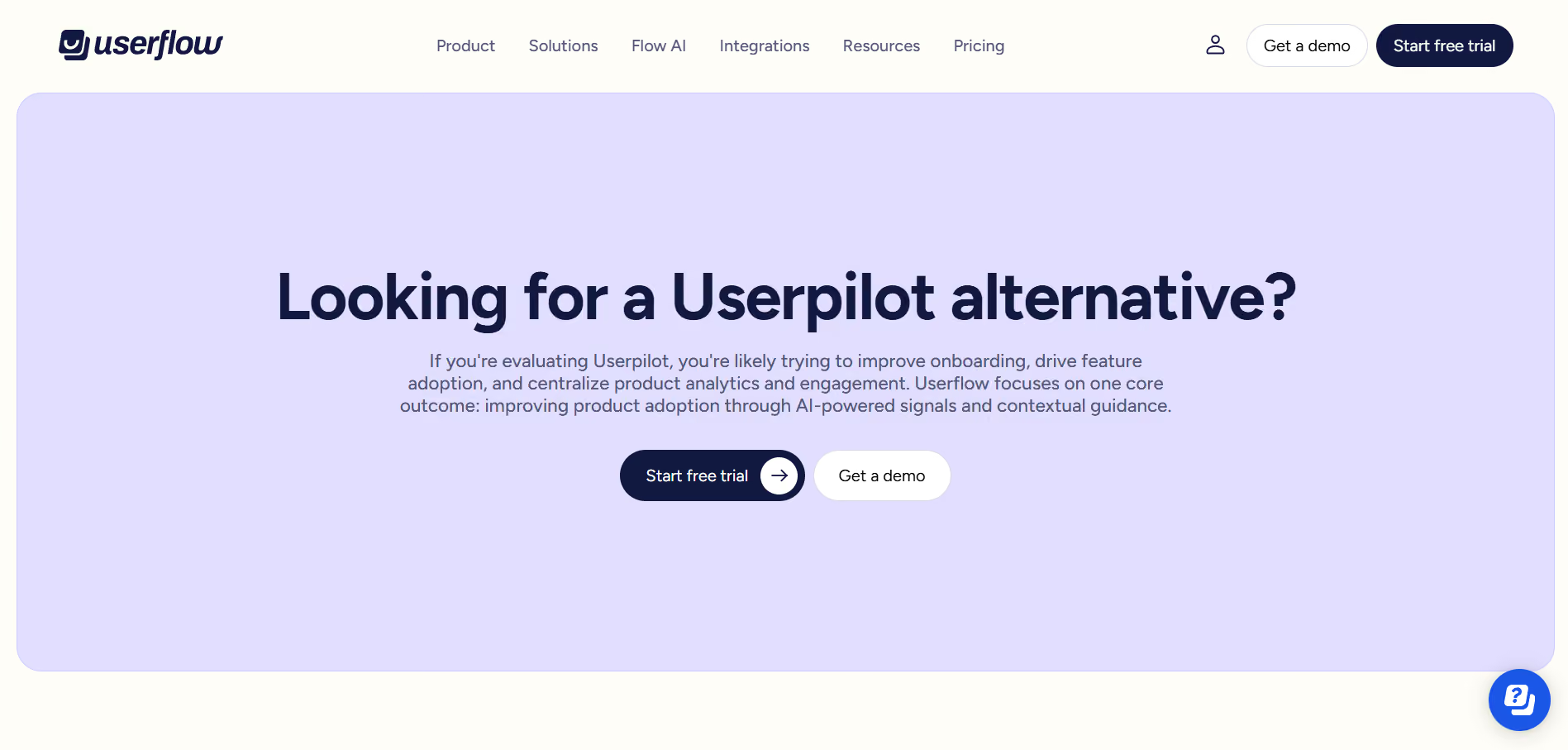
The trick with programmatically generated alternative pages is making each page an honest and well-structured comparison. A page that fairly acknowledges where a competitor wins earns more trust and more citations..
4. Use Case Pages
Use case pages target the job a buyer is trying to do, like "inventory management for retail" or "project management for remote teams." They meet solution-aware searchers who know their problem but haven't committed to a tool.
This is Gartner’s top-ranking pSEO page for when you search “inventory management for retail”:
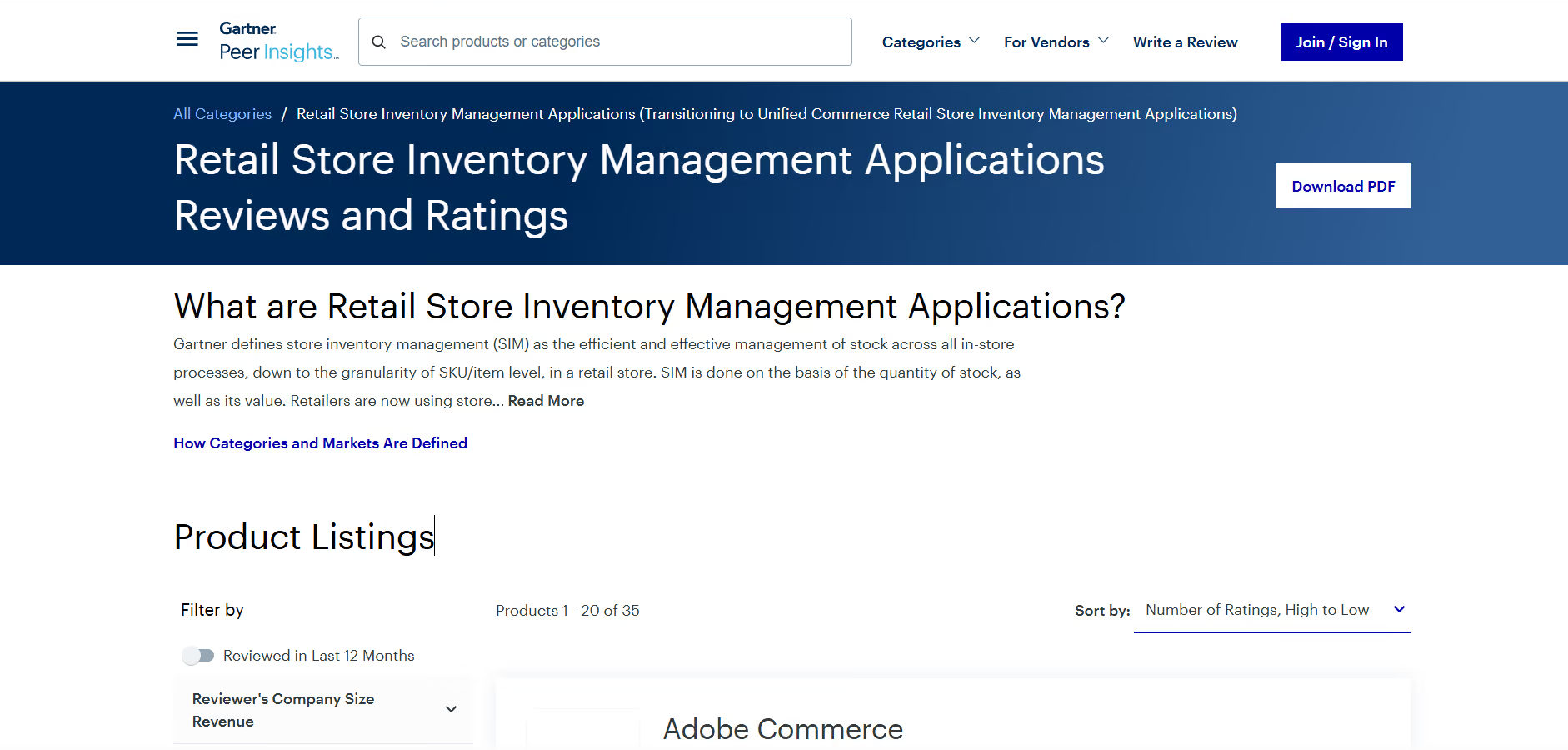
Because most SaaS products support many workflows, each use case becomes its own page, populated from a structured list of jobs your product handles.
5. Template Pages
Template pages target top-of-funnel searches like "invoice template," "proposal template," or "contract template," pulling in users who want a resource now and may convert into product users later.
When you search “invoice template” on Google, Adobe’s programmatically generated page is one of the top options:
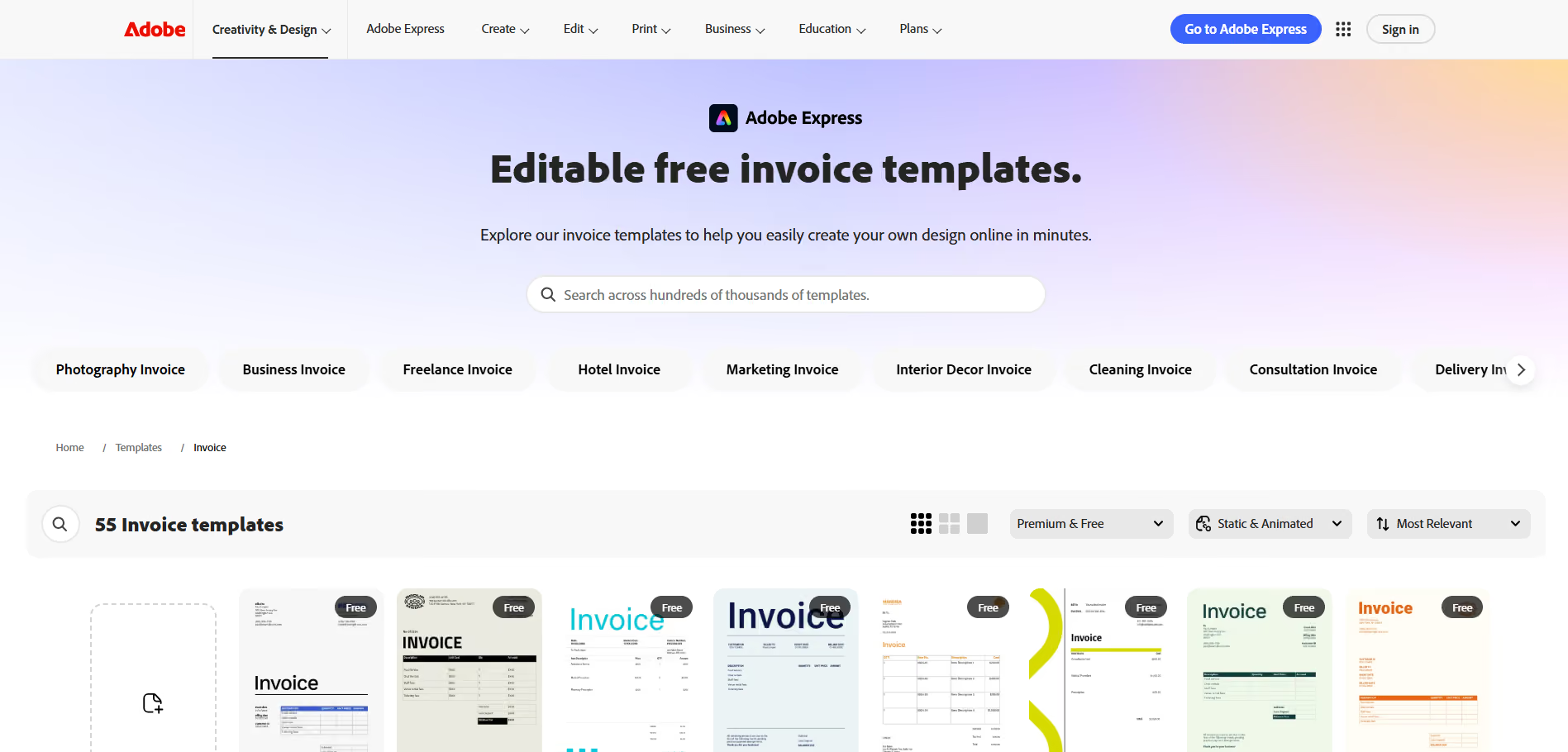
Template pages scale from a structured library of templates. And because they offer immediate value, they attract backlinks and traffic that feed broader domain authority.
More Types of SaaS-Specific Programmatic SEO Pages
Beyond the core page types above, your SaaS company can scale several other programmatic formats depending on your product and data. You can programmatically create:
- Feature pages: These target "[category] with [feature]" searches, like "CRM with AI lead scoring," capturing buyers shopping for one specific capability. Every feature in your product becomes its own page, generated from a structured feature list.
- Industry pages: These target vertical searches such as "CRM for law firms" or "scheduling software for dental practices," signaling deep relevance to a specific audience. They scale across every industry you serve and feed the vertical hubs that build category authority.
- Location pages: These target geo-specific searches like service availability or coverage by city, region, or market. They work best for SaaS products with location-dependent data, regional pricing, or local service angles.
- Calculator pages: These are interactive tools like ROI, pricing, or savings calculators that target high-intent "[x] calculator" searches. They convert well and tend to attract backlinks, since other sites readily link to a genuinely useful free tool.
- Marketplace or directory pages: These are listing pages such as app directories, partner listings, or template galleries, each scaled from a catalog of entries. They capture browsing intent and create a large, interlinked page set that compounds authority.
- Industry + use case combinations: These pair two structured dimensions for tighter targeting, like "inventory management for retail stores" or "scheduling software for dental practices." Combining variables multiplies your long-tail coverage while keeping each page specific and relevant.
- Glossary, definition, or terminology pages: These target informational searches like "what is churn rate?" and scale from a structured list of industry terms. They're strong for topical authority and especially valuable for AEO, since AI engines favor clean, well-structured definitions to cite.
{{protip="/pro-tips/programmatic-seo-for-saas-1"}}
5 Frameworks for Building Programmatic SEO Systems
Programmatic SEO pages are the output, but the system underneath is what determines whether you scale authority or just scale clutter. Here are the five frameworks that guarantee wins from your programmatic SEO programs:
1. Search Pattern Identification and Prioritization
Every programmatic build starts by finding repeatable intent structures, the "[product] for [industry]," "[Tool A] vs [Tool B]," and "[competitor] alternatives" patterns covered in the page types above.
Once you've mapped the patterns your product can credibly own, you can prioritize the build out phase. Not every pattern deserves to be built first, and trying to ship all of them at once is how teams end up with thousands of thin pages.
Score each pattern on three things:
- How much search demand sits behind the full set of variations
- How much structured data you already have to populate those pages with unique value,
- How strong the conversion intent is
A pattern that's high on all three, like comparison or alternative pages, earns priority over a pattern that's high-volume but low-intent.
From our experience working with SaaS teams, the highest-ROI first batch is almost always comparison and alternative pages, because the intent is closest to purchase. Our alternative page template is a good starting point for that first build.
2. Topic Clusters and Internal Linking
Topic clusters pair a broad pillar page with programmatic spokes, allowing you to own an entire category by expanding into every subtopic. Start with one cluster, validate its ranking, then replicate the pattern.
Internal linking is essential for flowing authority and ensuring crawlers discover your pages at scale. Avoid manual linking; instead, automate it within your template logic. For instance, automatically connect every '[Tool A] + [Tool B]' integration page to relevant comparison or alternative articles. This distributes link equity, improves crawlability, and strengthens topical relationships for AI engines.
3. Page Template and Structure
A good programmatic template defines a consistent, reusable layout so every page in a set shares the same structure while pulling in different data.
The common rule of thumb is that roughly 80% of a page is shared scaffolding and 20% is the unique, data-driven content that makes each page genuinely useful for its specific search.
Build the template to be component-based so design and content teams can iterate without rebuilding from scratch, which our SaaS blog UI kit is designed to support.
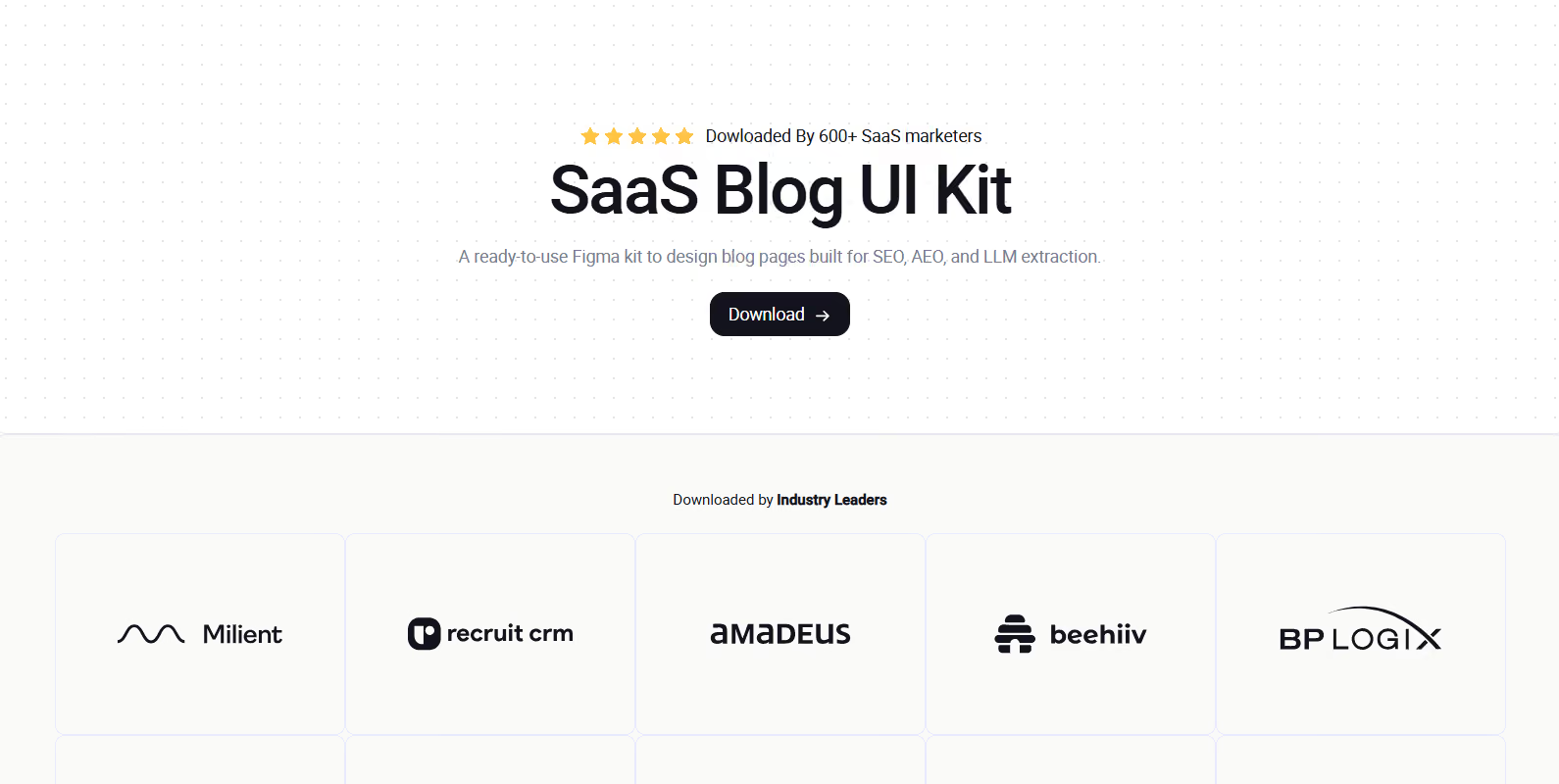
A clean, well-structured template with clear headings, a direct answer near the top, and scannable sections is exactly what gets pulled into featured snippets and AI citations.
{{protip="/pro-tips/programmatic-seo-for-saas-2"}}
5. Multi-Surface Distribution
Ranking in Google is no longer the whole game. Buyers now search across AI tools, communities, and video, and category ownership means showing up wherever they look. This framework extends your programmatic content beyond traditional SERPs into the surfaces that increasingly shape SaaS buying decisions.
- That starts with AEO, structuring pages so they're easy for ChatGPT, Google AI Mode, Perplexity, and Claude to understand, cite, and recommend. Pages built around clear entities, direct answers, and unique product knowledge are far more likely to appear in AI-generated responses than generic SEO content.
- Off-site, prioritize relevant best-of, alternative, and comparison listicles when those pages already influence buyer shortlists and AI recommendations. The backlink is useful, but it is only one outcome. The larger objective is referral visibility, stronger category association, and inclusion in the third-party sources buyers and AI systems use to compare vendors.
- Reddit supports the same strategy when participation is fully disclosed and useful. Engage through branded accounts or identifiable company thought leaders, state your affiliation, answer questions honestly, ask for genuine feedback, and build an owned subreddit when the audience warrants it. Scalerrs uses this disclosed, value-first Reddit marketing model to help SaaS brands contribute credible conversations that support buyer evaluation and may also provide useful source material for AI systems to retrieve.
This is where Scalerrs approaches programmatic SEO differently. Instead of treating content as a collection of pages designed to rank for individual keywords, we help SaaS companies build category ownership. Working through the AEO checklist for B2B SaaS is a practical way to begin making sure every programmatic page is citation-ready.
Put together, these five frameworks makes for a programmatic SEO program that delivers on traffic gains from traditional SEO, category ownership, and visibility across AI search.
Programmatic SEO Examples From SaaS Companies
The programmatic SEO strategy has helped prominent SaaS companies like Zapier, Userpilot, G2, and Webflow scale organic traffic. Here are two detailed examples of programmatic SEO for SaaS done right:
Zapier [Millions of Visits Per Month]
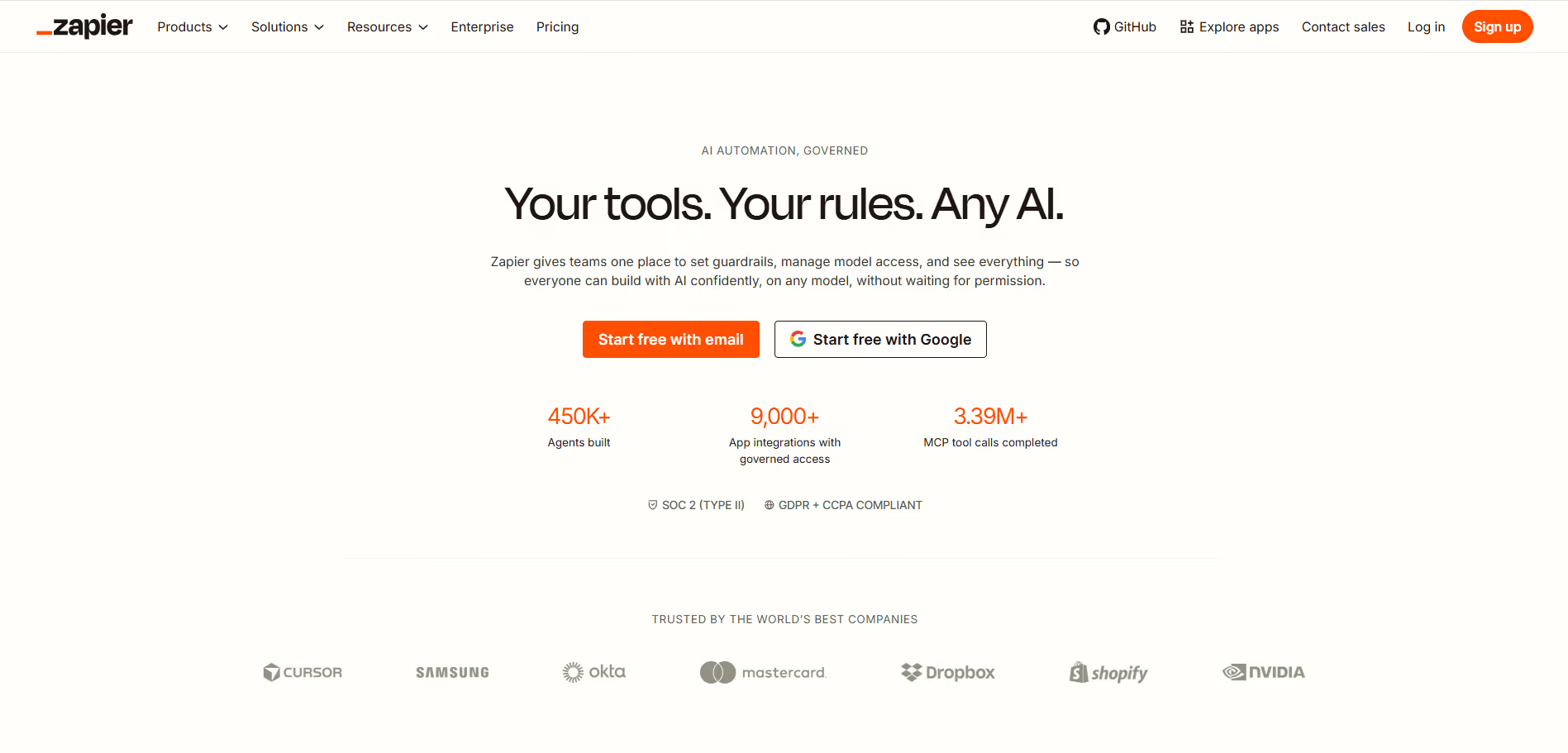
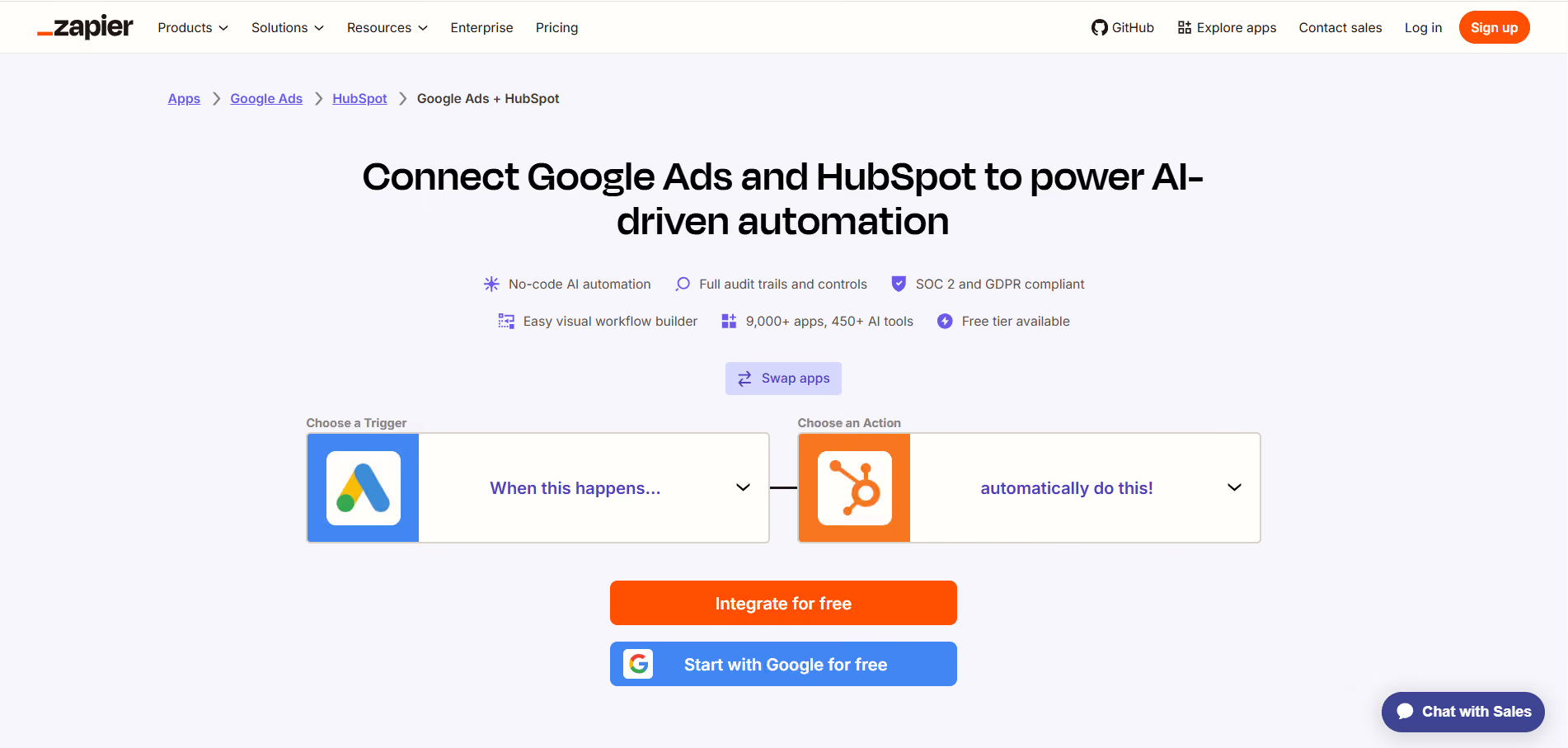
As of June 15th, 2026, Zapier has integrations with over 9,000 apps, and 666 AI tools. Underneath every integration is a potential Zapier user searching for a keyword like "how to connect Slack and Typeform”, or “how to connect Google Ads and HubSpot”
To capture these search queries at scale, Zapier built multiple templated page types from its structured integration data.
App profile pages for each individual tool, like this one here:
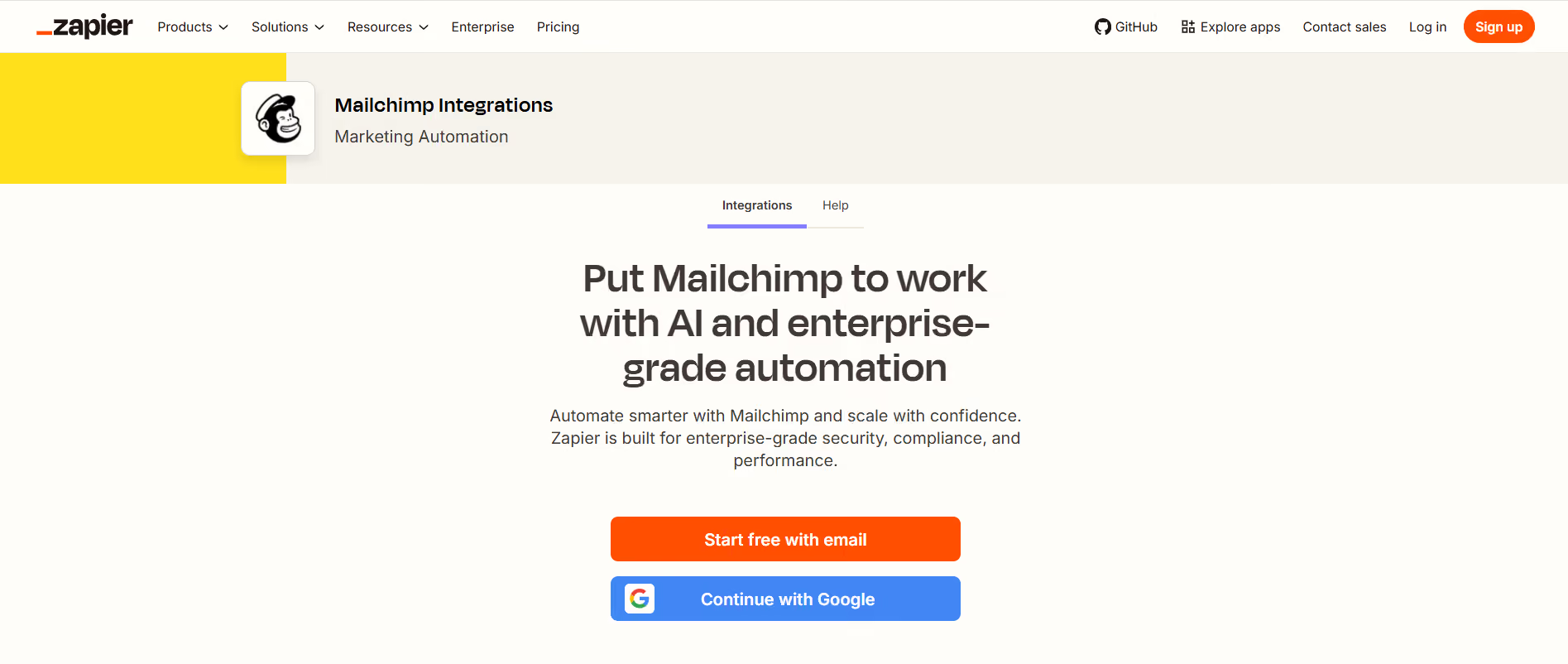
..And pairwise integration pages for every "[App A] + [App B]" combination. Like this one:
And this:
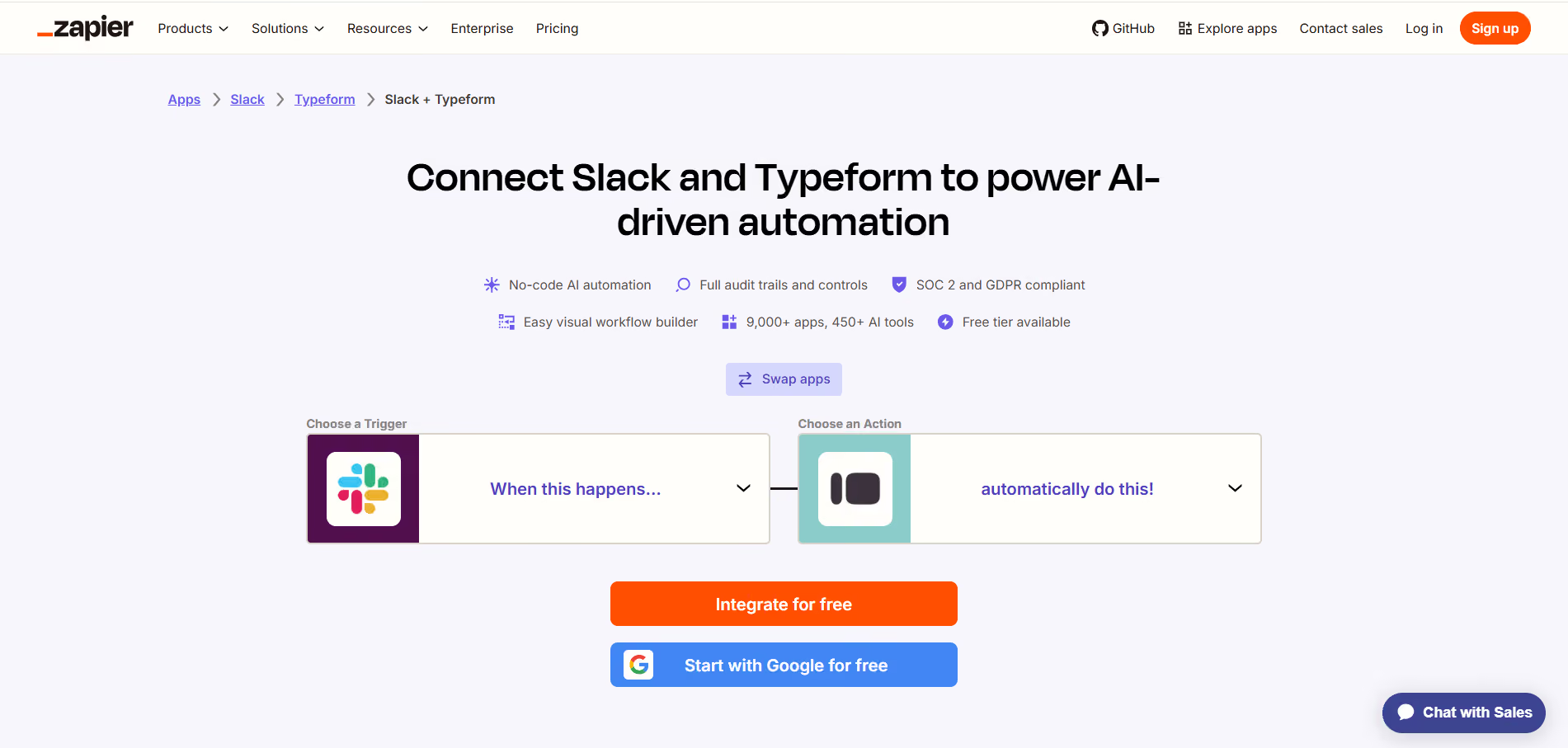
Over 25,000 of such pages were built in total and each page pulls in supported triggers, actions, and popular workflows automatically.
Outcome: These programmatic integration pages are one of Zapier's largest organic traffic drivers. They've helped the site grow into millions of monthly organic visits, ranking for millions of valuable keywords across its category.
If you sit on a large, structured dataset like an integration library, that dataset can give you several programmatic pages.
Userpilot [100k Monthly Clicks in 10 Months]
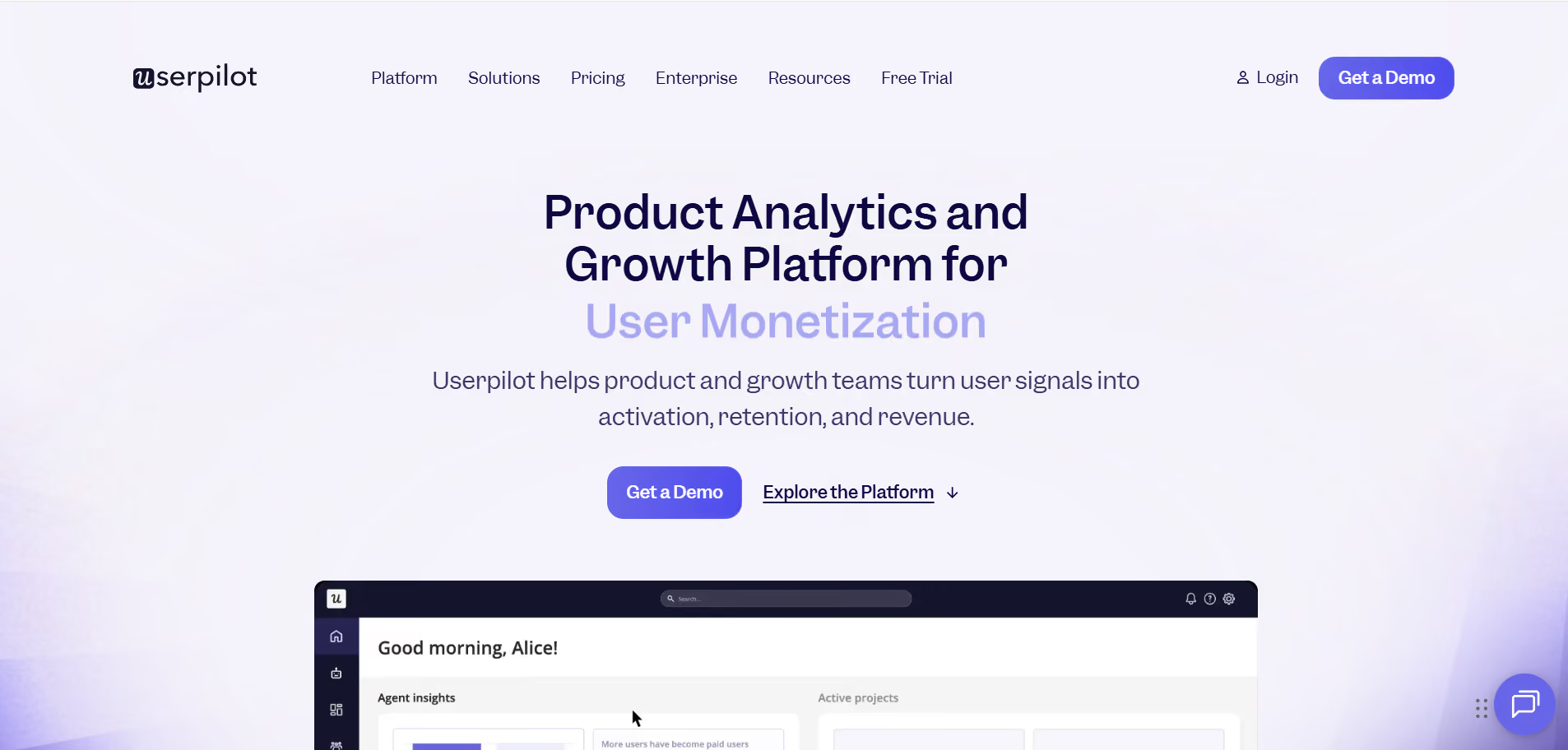
In 2022, Userpilot launched its first programmatic SEO program. The aim was to scale bottom-funnel demand around comparison and alternative searches like “best Userguiding alternatives” and “Heap competitors" without adding to the content team’s headcount.
To achieve this goal, Userpilot used eight templates, two databases, ten tools and ten use cases. With this workflow, they increased content production capacity from 40 posts per month to 735 posts per 25 hours.
Here’s an example of a programmatically created page:
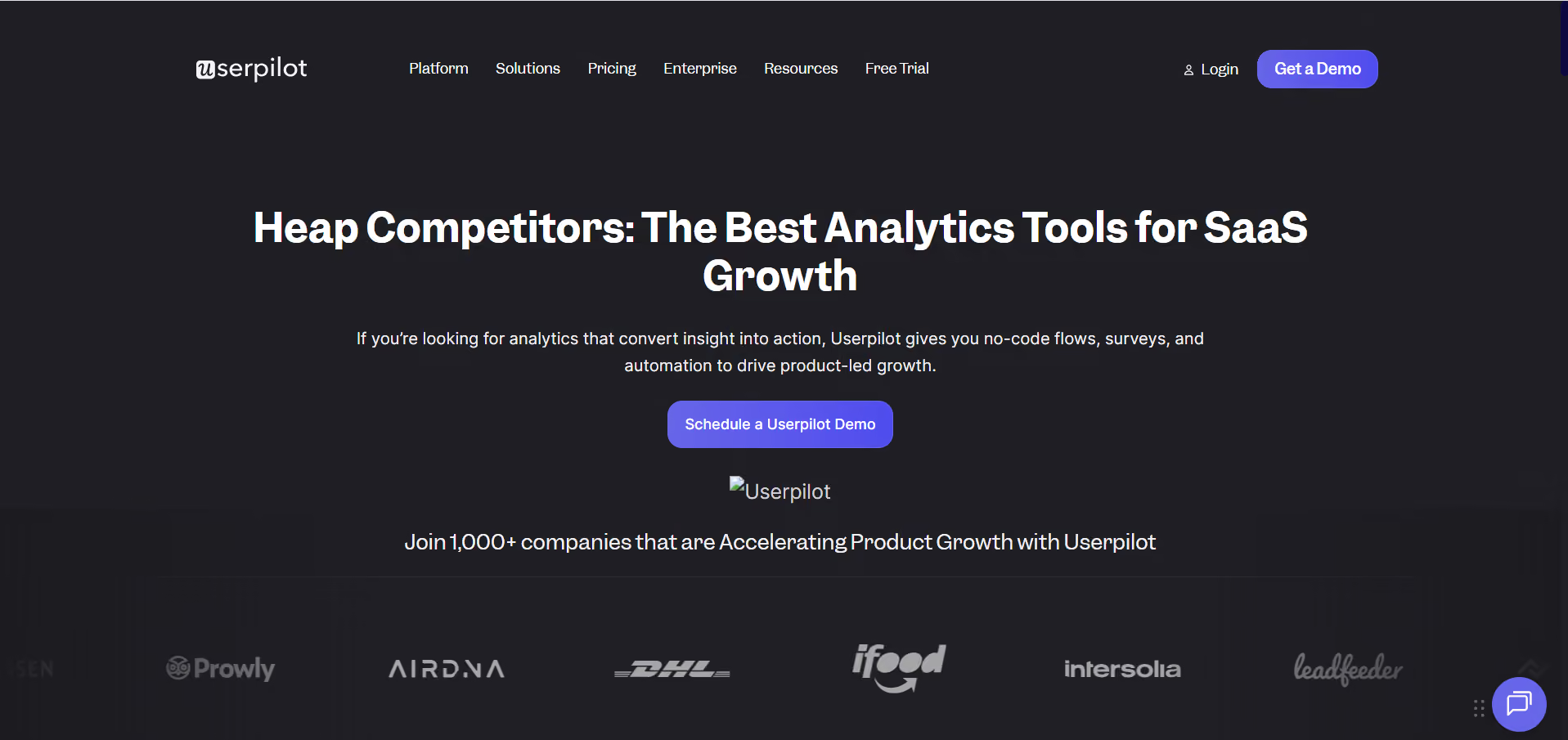
And another:
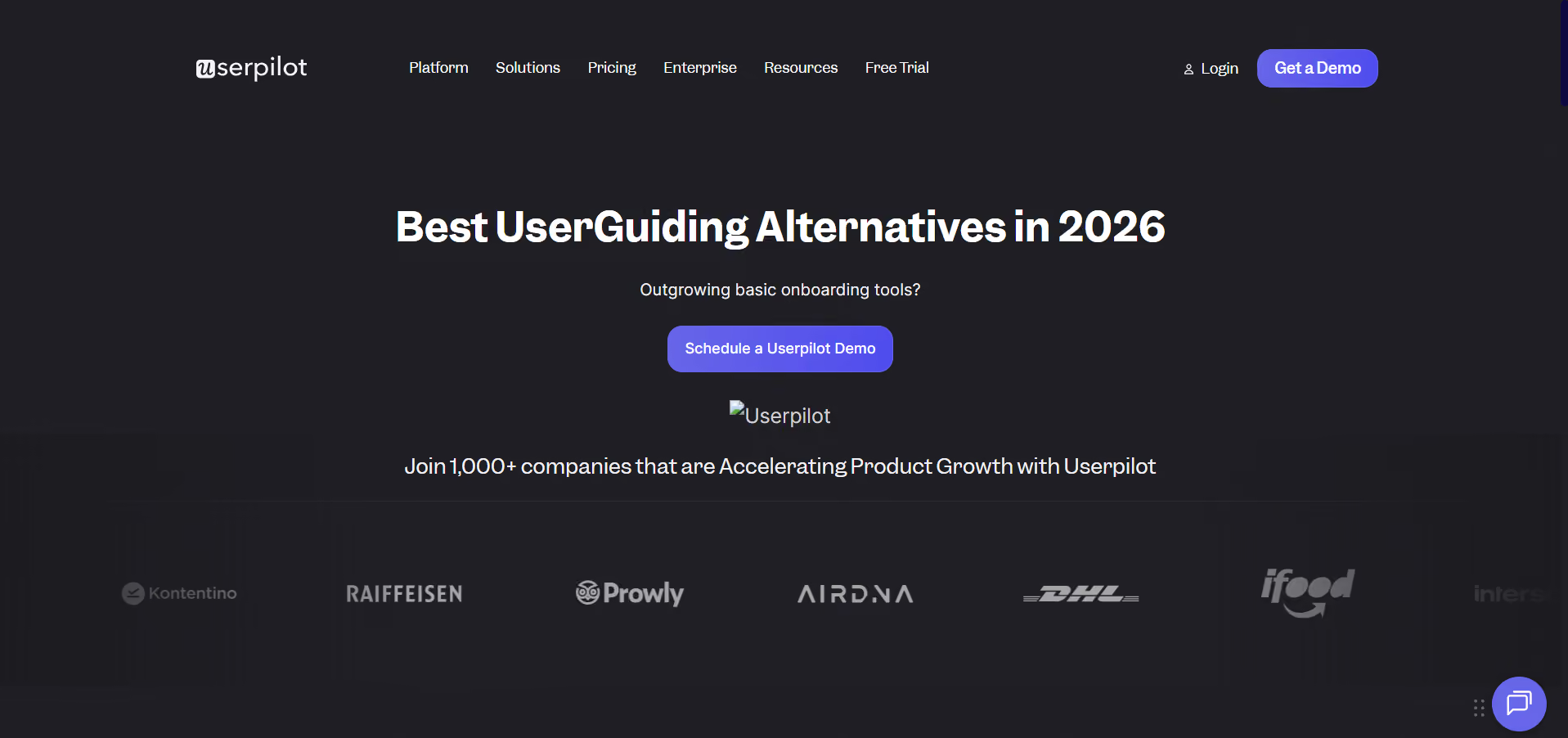
As Userpilot’s Vice President (VP) of Marketing Emilia Korczyńska has documented, the team used a spreadsheet database to auto-populate templated comparison and alternative articles.
This system paired with rigorous editorial briefs and Standard Operating Procedures (SOPs) helped content quality hold up at scale.
Outcome. After adopting programmatic content operations, Userpilot hit roughly 100,000 in just 10 months, with zero drop in content quality. Before the programmatic SEO play, Userpilot took three years to reach 25,000 monthly organic visitors.
With programmatic SEO, a small SaaS team can punch above its weight by pairing templates with oversight from an experienced content editor.
Most Series A+ SaaS companies already have the raw material for programmatic SEO: integration data, competitor comparisons, feature combinations, and customer use cases. What they're missing is the capacity to turn those assets into hundreds of high-quality pages.
That's where Scalerrs comes in. We build the technical pSEO system and editorial controls required to scale, then report performance by page set so SaaS marketing teams can see which patterns influence signups, demos, and pipeline. SaaS is all we do. See how we can help.
Common Programmatic SEO Mistakes to Avoid
Programmatic SEO fails more from execution than strategy. The same few mistakes show up again and again, and most are avoidable if you catch them early. Here are the four that sink the most builds.
- Publishing Thin, Near-Duplicate Pages
Every page needs genuinely useful content pulled from your data, not a find-and-replace on a template. If you can't make a page meaningfully different from its neighbors, don't build it. Our SaaS SEO checklist covers the quality bar to hit.
- Skipping the Human and Editorial Layer
Real expertise and editorial review are what keep programmatic content useful. Userpilot scaled to 100K monthly visitors precisely because it held its editorial standards while scaling volume. Quality control becomes increasingly difficult as content operations scale, whether you're relying on an in-house team or freelancers. That's where a SaaS content creation agency like Scalerrs stands out, combining technical pSEO architecture with dedicated editorial oversight to keep quality consistent.
- Building on Weak Foundations
Programmatic SEO compounds existing authority. It doesn't create it from nothing. Start with a small pilot batch, prove the pattern ranks, then scale. Build internal links and earn backlinks alongside the pages so they have equity to draw on. TuxCare's results show what scaling content on a strong foundation looks like.
- Ignoring Maintenance and Measurement
Without monitoring, you can't tell winners from dead weight. So track performance across the page set, refresh data to keep pages accurate, and prune the underperformers. That ongoing work is the difference between SEO that works for the business and one that just sits there, like the sustained growth in Reporting Ninja's case study.
Key Metrics for Measuring pSEO Success
A programmatic SEO campaign can rack up thousands of indexed pages and impressions while contributing nothing to revenue. Measure the metrics that connect pages to pipeline, and watch them at the page-set level rather than page by page.
The table below covers what to track and why each one matters:
Track these monthly, prune what underperforms, and double down on the patterns driving pipeline.
FAQs
1. How many pages should a SaaS company create with Programmatic SEO?
It depends on your data and demand, not a fixed number. Start with a pilot batch of 20 to 50 pages, confirm they rank, then scale only the patterns that earn traffic.
2. How long does Programmatic SEO take to show results?
Usually three to six months. Indexing and early rankings can appear within weeks, but meaningful traffic and pipeline take a few months of compounding, especially on younger domains.
3. Does Programmatic SEO still work now that AI search exists?
Yes, arguably more than before. AI engines pull answers from structured, well-organized content, which is exactly what a good programmatic system produces. Scalerrs builds each page around a clear question, a direct answer near the top, clean headings, and supporting data, so ChatGPT, Perplexity, Claude, and Google AI Mode can extract and cite it. That same structure also helps the page rank in traditional search, so you show up whether your buyer is Googling or asking an AI. Far from killing pSEO, AI search rewards it when the pages are built to be quoted.
Build SaaS Pages That Rank, Get Cited, and Convert with Scalerrs
Programmatic SEO for SaaS, if done right, can help capture long-tail demand. With pSEO, you can rank for multiple high-intent comparison and alternative searches, and even get cited by AI tools like ChatGPT and Claude. Done wrong, it produces hundreds of thin pages that never rank and never get cited.
Scalerrs’ programmatic SEO services combine technical pSEO architecture with AEO and the off-site surfaces that influence SaaS buying decisions, including disclosed Reddit participation and relevant third-party listicle placements. The objective is not page volume for its own sake. It is scalable category visibility tied to qualified traffic, demos, and pipeline. Book a demo and the team will map the highest-ROI programmatic page types for your product.
Book a Discovery Call
Turn Organic Search Into Your #1 SaaS Acquisition Channel.

Let us scale your SEO channel for you.
reviewed onClutch
4.9 rating






Get Free Resources In Your Inbox
Get all of our FUTURE playbooks such as Figma files, checklists and SOPs directly into your inbox.

.avif)