


13 Enterprise SEO Mistakes Limiting Your Search & LLM Visibility

Key Takeaways
- Enterprise SEO decides whether buyers find you on the surfaces they use to research. Google is only one of them now.
- Most enterprise mistakes come from structure rather than tactics. Fragmented ownership and split architecture break rankings and AI citations at the same time.
- The cost lands twice. You lose the click in Google, then lose the mention in the AI answer that replaced it.
- Category ownership across surfaces is what fixes it, because winning one surface no longer wins the buyer. At Scalerrs, we help B2B SaaS teams stand out on Google, AI search, Reddit, third-party listicles, YouTube, and Wikipedia.
Why Enterprise SEO Mistakes Are Different From Standard SEO Mistakes
A bad canonical on a 50-page site costs you a page. The same tag on a 50,000-page site costs you a section. With enterprise SEO, scale changes what a mistake is worth.
One Error Ships to Every Page at Once
Enterprise sites run on templates. Change one, and the change lands on every page using it before anyone reviews it.
Google says crawl budget becomes a real concern at 1 million pages changing weekly, or 10,000 pages changing daily.
Most enterprise SaaS companies pass that line without noticing, because the marketing site looks small. Add the docs, the help center, the changelog, and the customer directory, and you're there.
So the blast radius is never one page. It's one template times however many pages inherit it.
The Fix Needs Approval from People Who Don't Report to You
A title tag change on an enterprise site is five minutes of work, but can also be six weeks of queue.
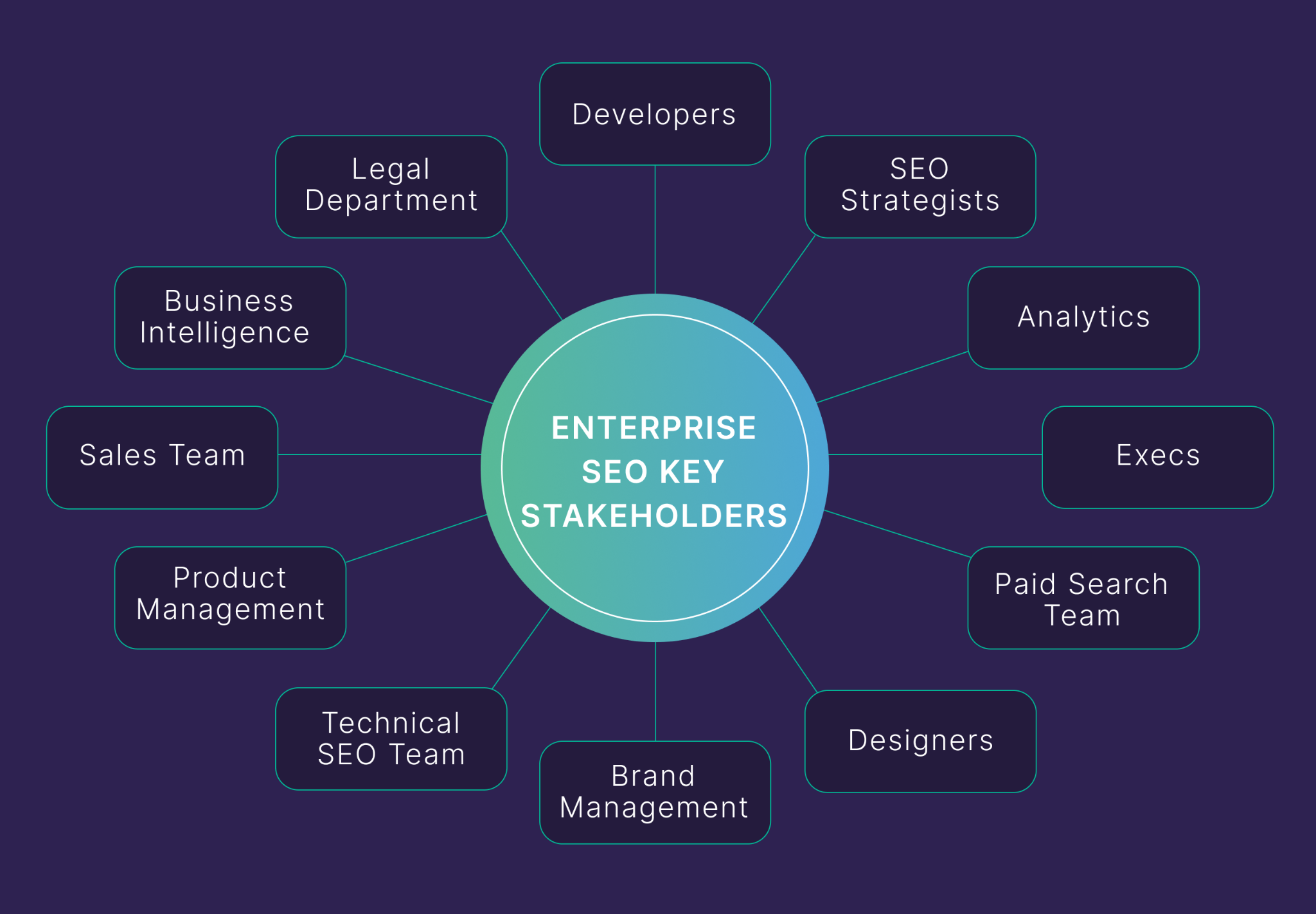
For many brands, engineering owns the deploy, legal reviews the copy, the brand owns the template, while regional teams own their own market pages.
None of them report to the person who found the problem, so an SEO fix can take months before getting approved.
Every Mistake Now Costs You Twice
Ranking in Google and getting cited in an AI answer are separate outcomes with separate inputs.
Ahrefs ran 15,000 long-tail queries through ChatGPT, Gemini, Copilot, and Perplexity, then checked where those cited pages ranked. Only 12% sat in Google's top 10 for the same prompt: ((28.6 + 8 + 6.1 + 8.6 + 8.2) / 5) = 11.9%.)
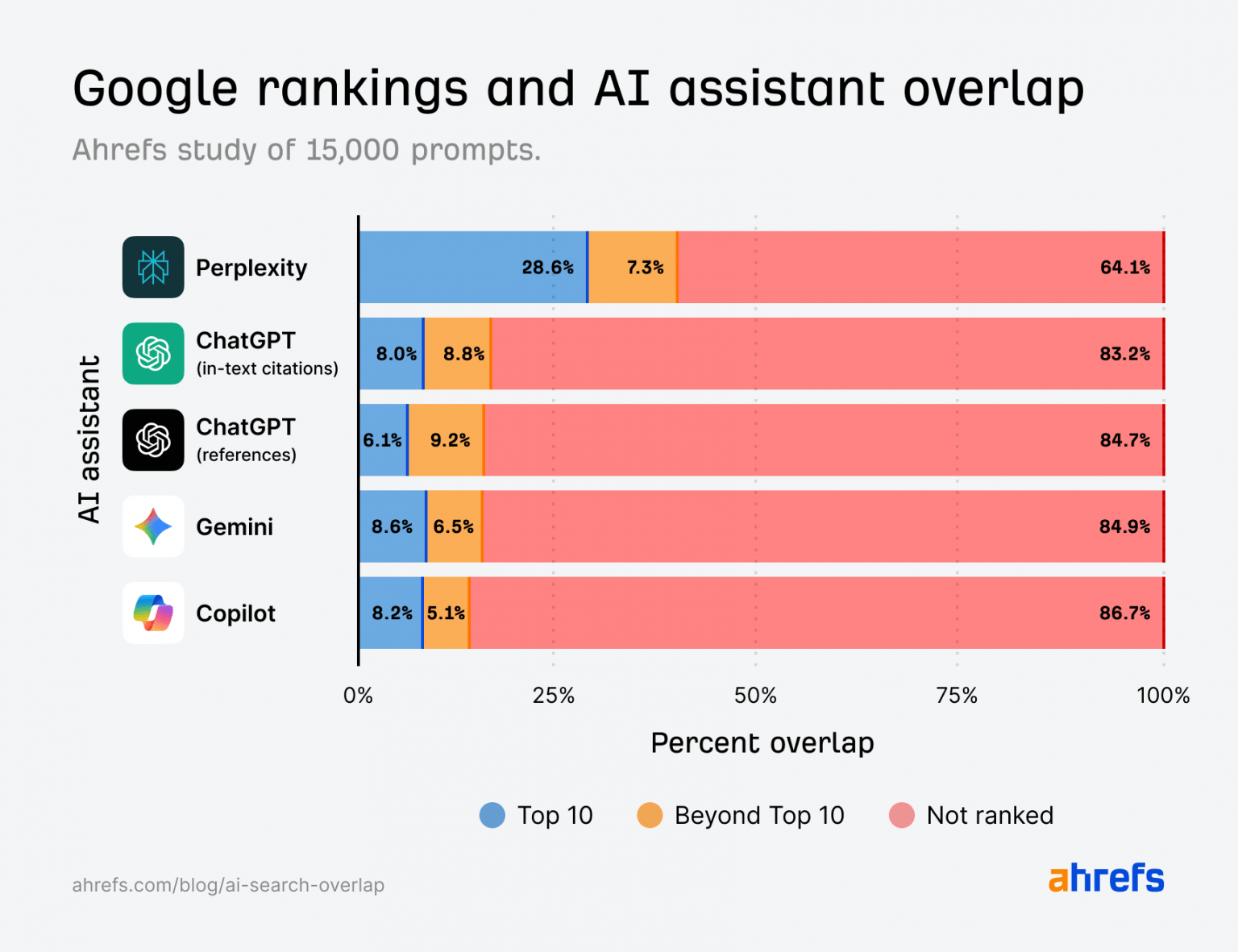
Which means fixing your rankings does not automatically fix your citation rate. They're different problems now.
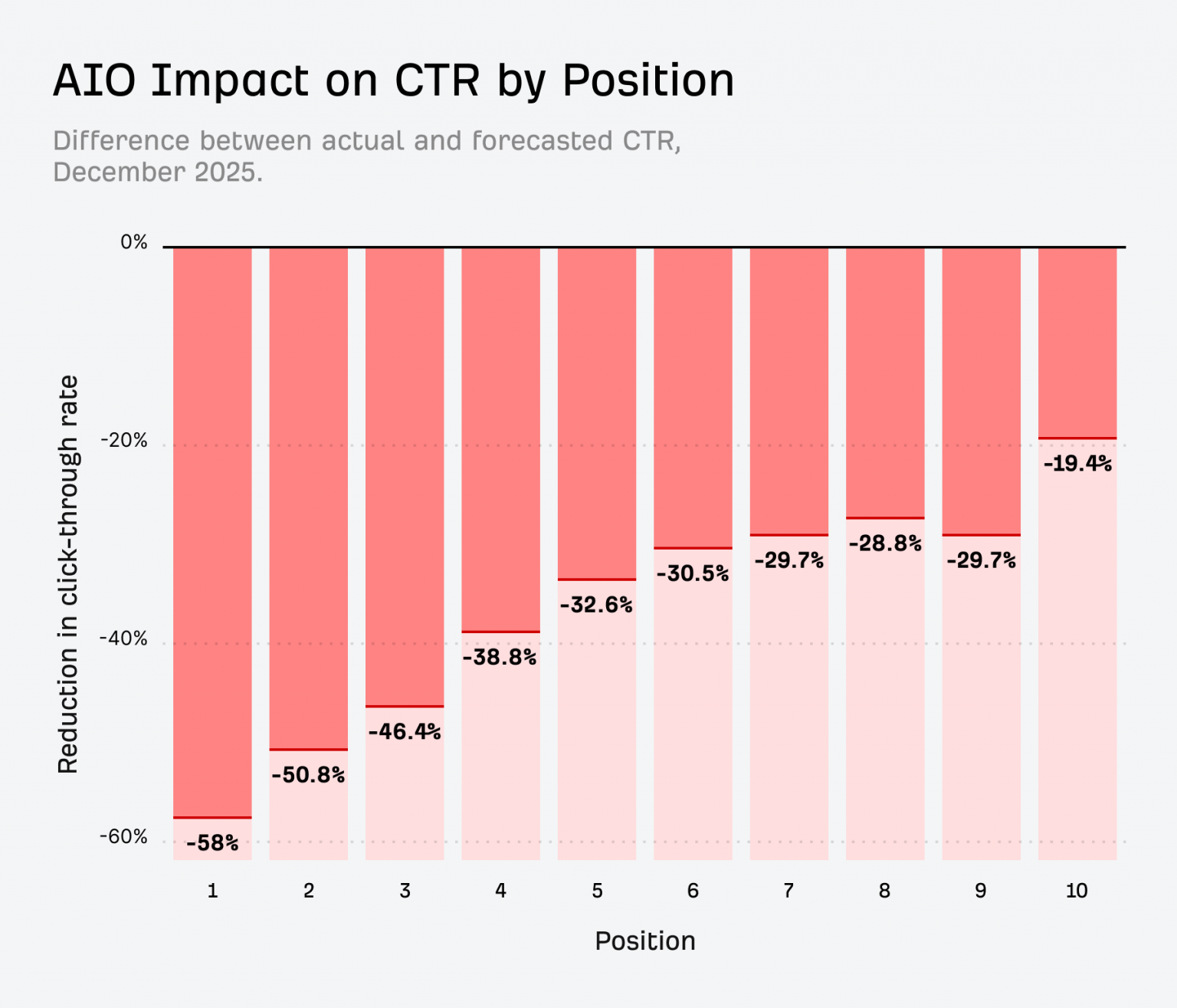
And the traffic you'd normally use to spot the issue is drying up on its own. AI Overview presence now correlates with a 58% lower click-through rate for the page ranking first.
Recovery Takes Quarters, Not Weeks
Google has to recrawl a URL space before it can judge it, and on a large site that recrawl runs for months. A migration that drops rankings in March is still costing you pipeline in September.
That's the argument for catching these errors before they slip in, which is what the rest of this article is about.
13 Most Common Enterprise SEO Mistakes
These are the ones we see most often across B2B SaaS accounts:
1. Fragmented SEO Ownership Across Departments
Here's the typical setup for most SaaS brands struggling with enterprise SEO:
- A SaaS SEO agency handles rankings.
- A content marketing agency writes the blogs.
- Someone in demand generation runs an AI visibility pilot.
- Web engineering owns the templates, and the docs team reports into Product.
Five groups. Five roadmaps. No shared definition of done.
The damage? Anything needing two teams never gets made, and your brand ends up described differently on every surface a model reads.
Fix it by naming one accountable owner per surface instead of per task. Someone owns Google. Someone owns AI answers. Someone owns Reddit. They can delegate the work, but the result is theirs. Then put all of it on one roadmap engineering can actually see.
At Scalerrs, we run SEO, AEO, and Reddit under one team, so there's no handoff for work to fall through. You get direct Slack access and a 30-minute response from whoever is on your project. That's the ideal SaaS SEO service in practice.
2. Ignoring AI Citations and Answer Engine Visibility
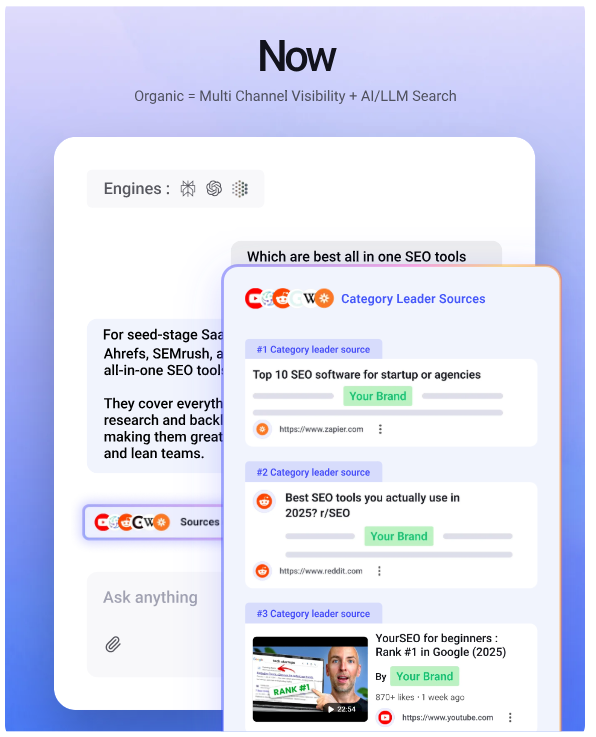
Your buyers are already asking ChatGPT, Perplexity, Claude, Gemini, Google AI Mode, and AI overviews about your category.
6sense surveyed nearly 4,000 B2B buyers and found 94% now use LLMs somewhere in the buying process. If you're absent from an AI answer, you're absent from the shortlist your buyers are making, and you'll never see it in Search Console.
What causes it is simple. AI visibility has no owner and no line in the budget. Gartner's 2026 CMO Spend Survey found CMOs allocating 15.3% of marketing budgets to AI while only 30% say they're ready to scale it.
Start by writing for extraction: question-shaped headings, the answer in the first sentence under each one, and creating comparison tables a model can lift whole.
Then fix how you're described everywhere else, because that's what the model grounds on. I share a 90-day roadmap for CMOs who want to start showing up in AI search on LinkedIn.
Our AEO service at Scalerrs targets citations in ChatGPT, AI Mode, Perplexity, and Claude, and we also build the entity layer underneath it for enterprise brands, including compliant Wikipedia pages that survive editorial review.
3. No Cross-Platform Presence Where Buyers Research
The pages winning your category are increasingly not even websites.
Ahrefs looked at over 3 million US queries to see which domains AI Overviews cite. YouTube took 22.9% and Reddit 18.5%. Wikipedia took 4.0%. G2, which compares software, didn't even make the top 50.
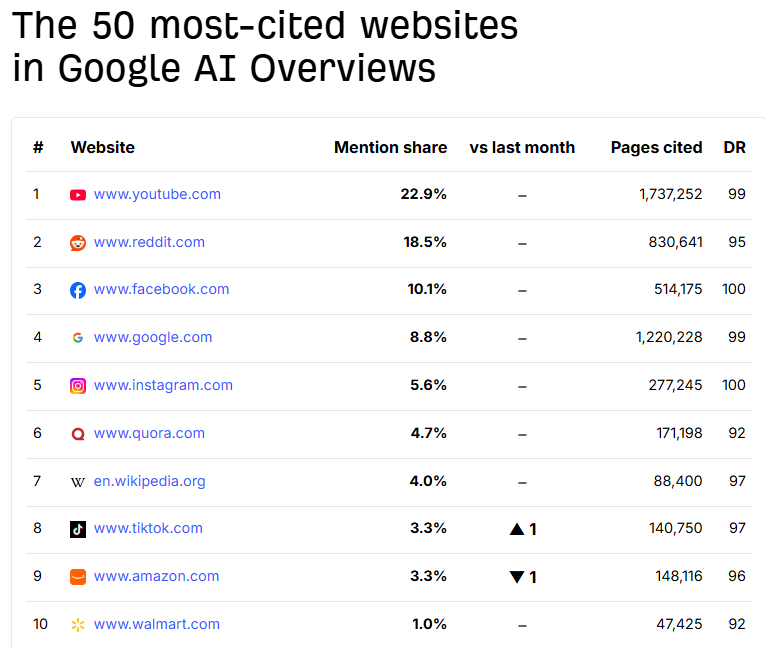
So roughly two in five citations go to two platforms most enterprise SaaS teams have no strategy for.
It's the same story in Google. SE Ranking tracked 482 posts across 135 subreddits and found Reddit holding 10.24% of Google's top 3 positions after the May 2026 core update, with its share of AI answers doubling to 4.5% by late June.
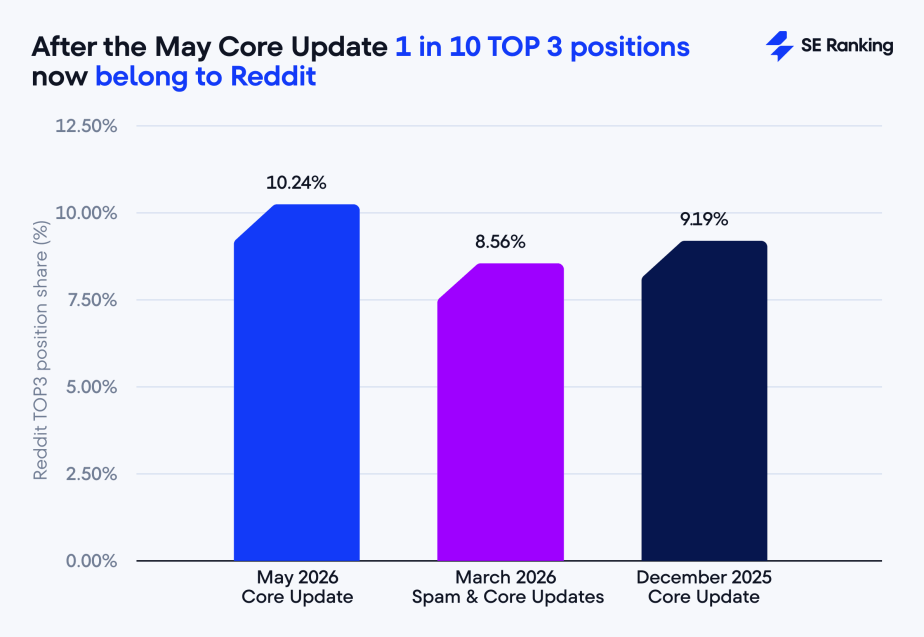
The cause is a measurement habit. You track your domain, so you only see your domain. The surfaces deciding the buyer's shortlist never appear in the dashboard.
Fixing it means earning presence on each surface on its own terms.
Good news, though: the bar is lower than it looks. Semrush analyzed 248,000 cited Reddit URLs across 217,000 prompts and found Q&A threads alone drove more than half of all citations.
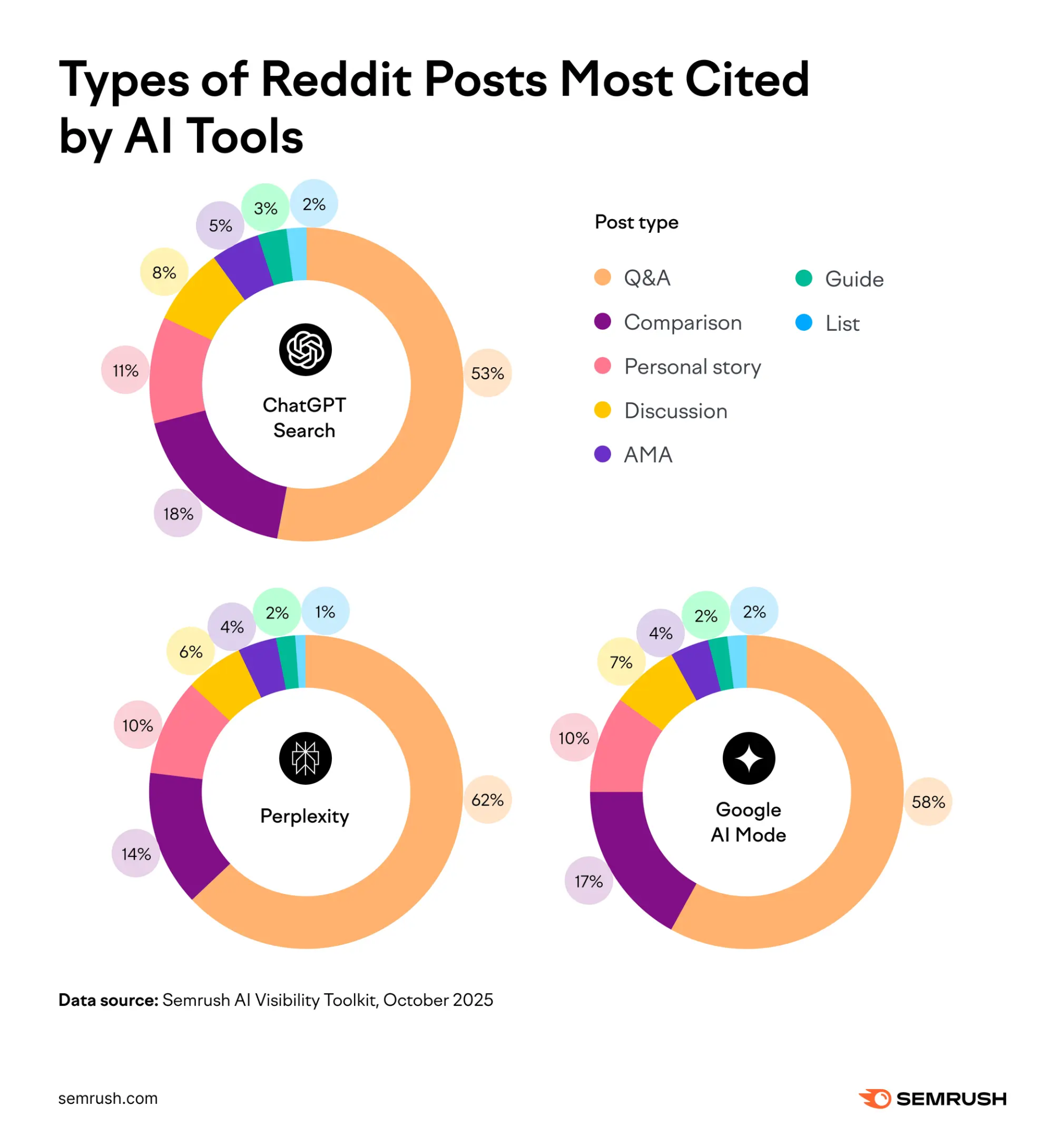
Plus, 80% of cited posts had under 20 upvotes, which means you don't need a viral thread. You need to pick the right question and answer it well; otherwise, Reddit can also punish you for the wrong approach. I cover the 8 Reddit mistakes to avoid making in this LinkedIn post.
At Scalerrs, we also run a Reddit Marketing service for enterprise SaaS brands. We post from disclosed accounts tied to real people, follow every subreddit's rules, and contribute helpful advice, sometimes without marketing your product. Alongside it, we run YouTube SEO and listicle placements so the sources models trust are ones that mention you.
4. Weak Third-Party Authority and White Hat Link Building
Links move Google. Mentions move the models. Most enterprise teams buy one and wonder why the other surface stays quiet.
Ahrefs studied 75,000 brands to see what correlates with visibility in ChatGPT, AI Mode, and AI Overviews. Branded web mentions scored 0.656 to 0.709. Backlinks landed around 0.19 to 0.25.
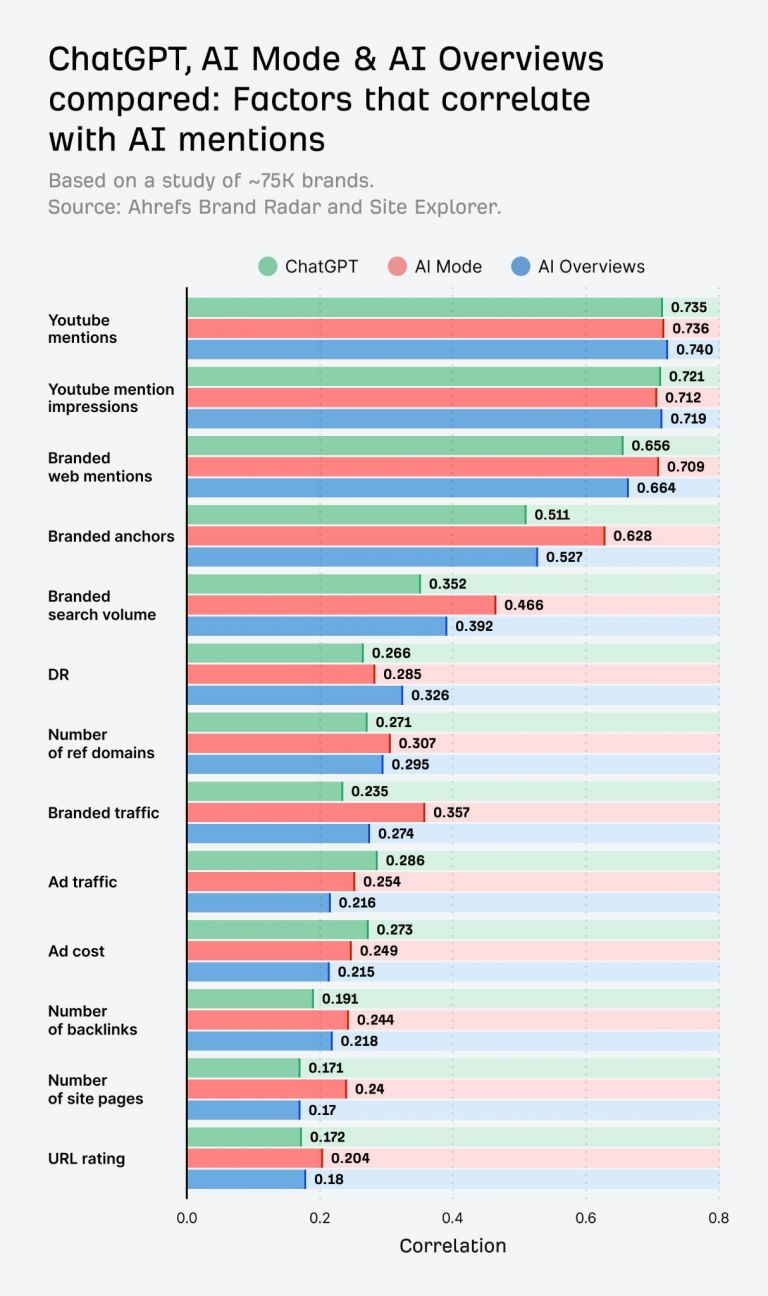
That isn't an argument against links. Rankings still need them, and correlation isn't causation. It's an argument that a link-only program leaves the AI half of your visibility untouched.
What causes the gap: link building gets measured in volume and DR, so nobody counts unlinked mentions or checks whether the sources models cite say your name at all.
Fix it by running both. Editorial placements for the rankings, and deliberate presence in the roundups, comparisons, and community threads that models pull from.
At Scalerrs, our link building team works from existing editor relationships, so placements happen without your team carrying the outreach.
5. Reporting Rankings Instead of Pipeline
Traffic dashboards have quietly stopped describing reality. Ahrefs found the correlation between clicks and impressions flipping from positive 0.425 to negative 0.352 as AI Overviews rolled out.
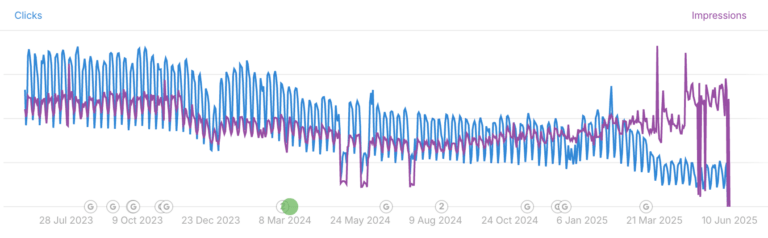
Impressions climb while clicks fall, so the chart pointing up is telling you the opposite of what's happening.
Meanwhile, Gartner has marketing budgets flat at 7.7% of company revenue.
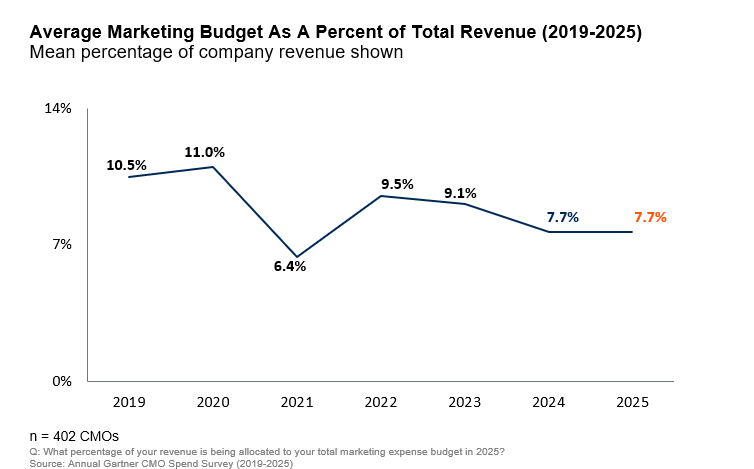
Flat budgets mean every line gets defended, and "we went from position 6 to position 4" is not a defense.
The cause is that the dashboard was built for the SEO team. Your CMO needs different numbers than your SEO manager, and handing up the technical view forces them to translate it themselves.
Report pipeline contribution, branded search lift, and share of AI citations. Those three survive a board meeting. Keep the technical KPIs for the people doing the SEO work.
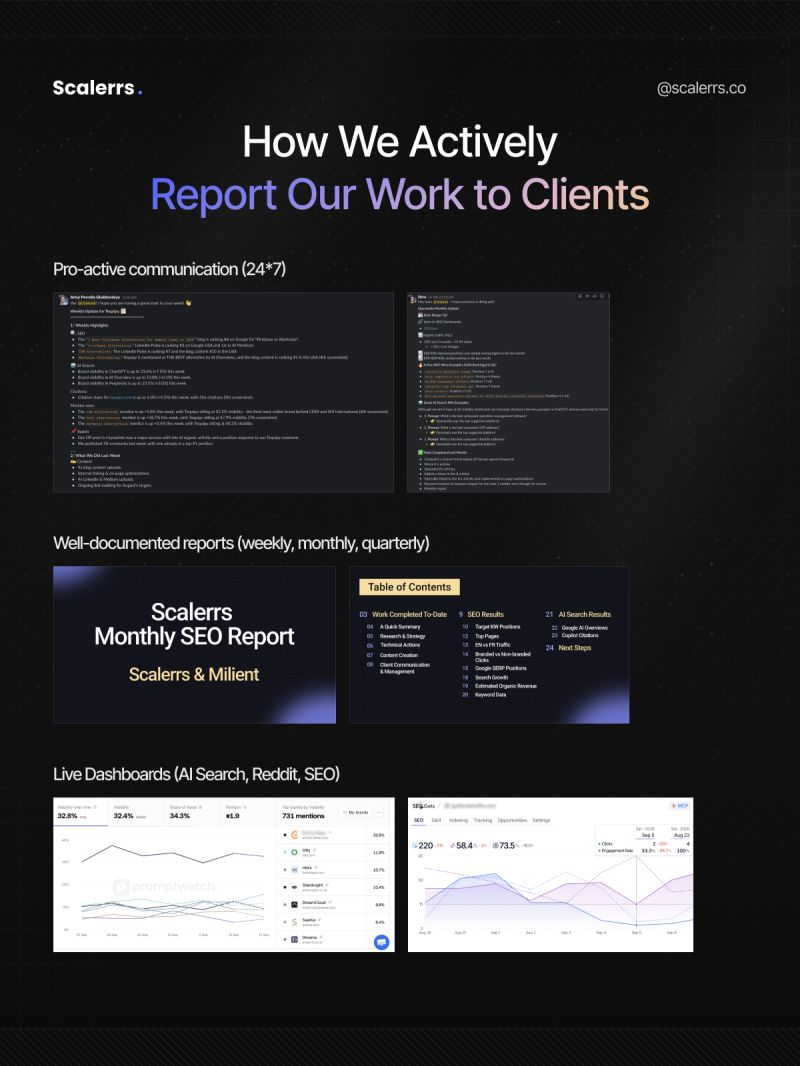
At Scalerrs, you get a live SEO and AEO dashboard covering traffic value, AI visibility across tracked prompts, mention rate, and share of voice, plus a live Reddit dashboard, weekly Slack updates, and quarterly reviews.
Want to see how we report SEO wins at Scalerrs? I share the gist on LinkedIn.
6. Content Strategy That Doesn't Map to Products or ICPs
Your calendar comes from a keyword list, so the content ranks for terms your buying committee never searches.
Ahrefs' 2023 scan of 14 billion pages found that 96.55% got no traffic from Google. Publishing volume has never been the variable that moves this.
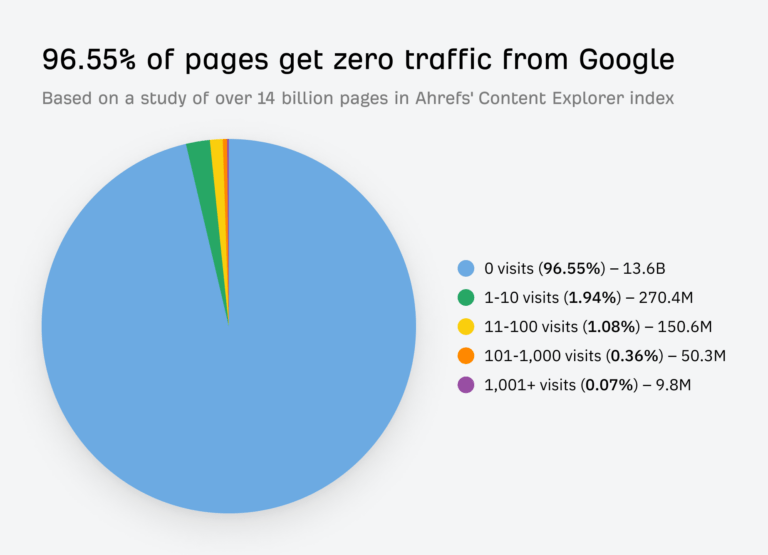
If keyword research happens once, at the top of an annual plan, then gets handed to whoever is writing–and nobody rechecks it against the product roadmap or the ideal customer profile (ICP)–the calendar drifts from what you actually sell.
Two things follow. Pages built from near-identical keywords compete with each other until Google picks one, and the pages that do rank pull in readers who were never going to buy.
You fix that by clustering around products and buyers instead of keywords. One cluster per product line, one page per job the buyer is trying to do. Then give each cluster an owner who rechecks it against the roadmap every quarter.
7. Ignoring Comparison and Alternatives Demand
Many enterprise brands leave the queries closest to a purchase to review sites.
6sense surveyed nearly 4,000 B2B buyers and found the winning vendor is already on the day-one shortlist 95% of the time, with buyers evaluating 5.1 vendors on average in 2025.
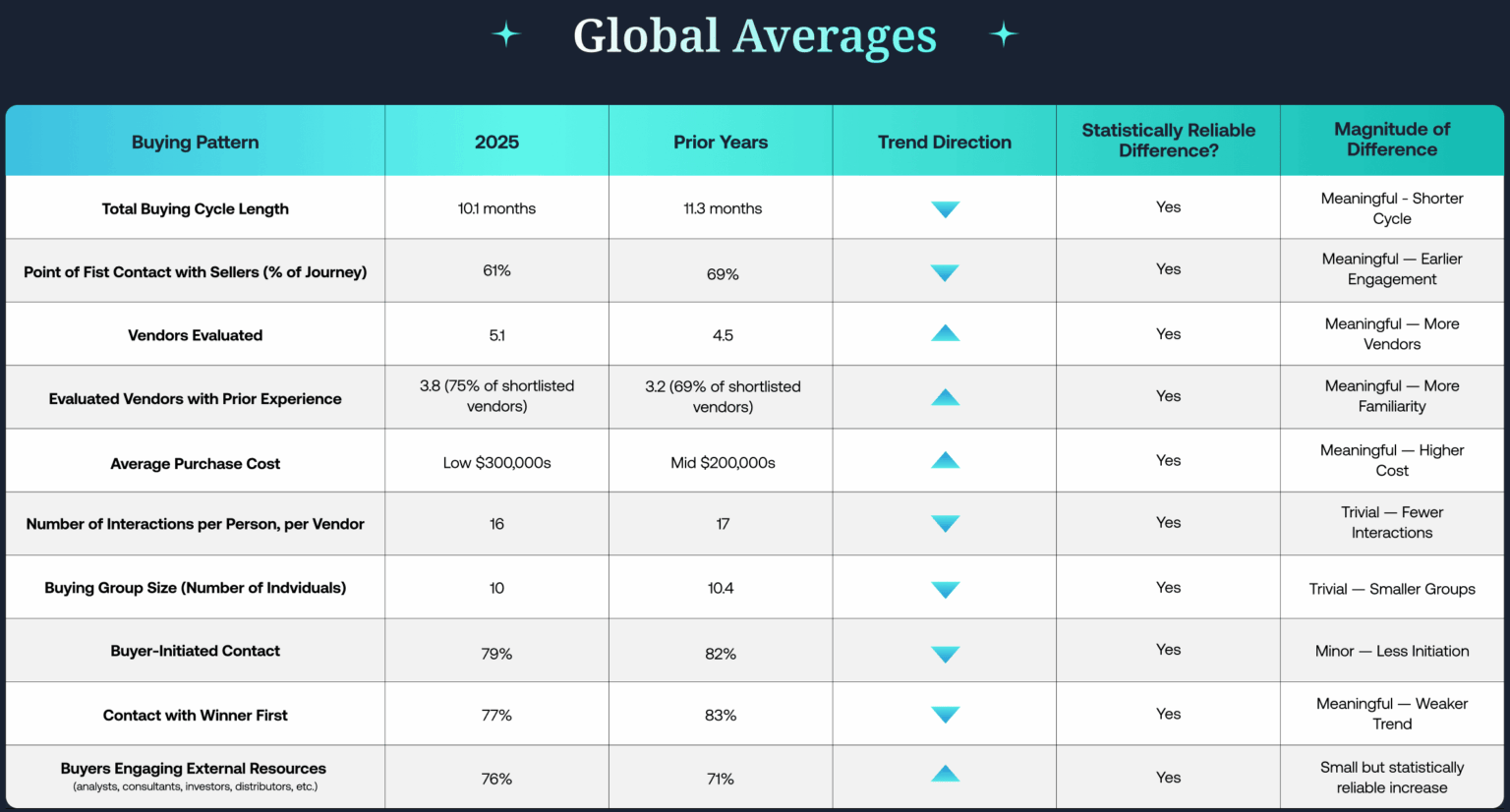
That shortlist forms while they read comparison pages, and most of those pages belong to someone else.
The cause is ownership again. Comparison pages read like sales collateral, so they sit with product marketing and never get built for search. Naming a competitor also needs legal sign-off at enterprise scale, which is enough friction to kill the page before anyone writes it.
So review sites and affiliate roundups take the query, and models cite those same pages when a buyer asks which tool is better.
To improve your enterprise SEO, build these pages for your brand like Morgen does below:
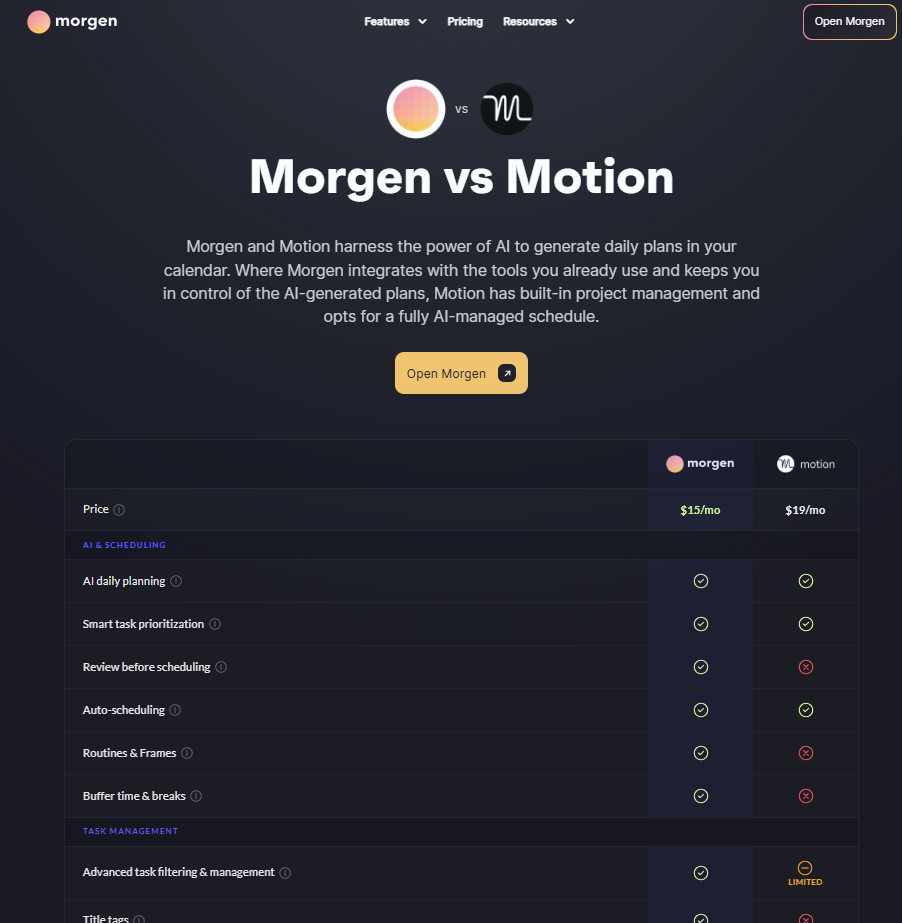
Aim for a page for every competitor you meet in deals, plus an alternatives page for each category term you're losing. Then add switching pages for the two or three competitors you beat most often.
8. Publishing Without Consolidation
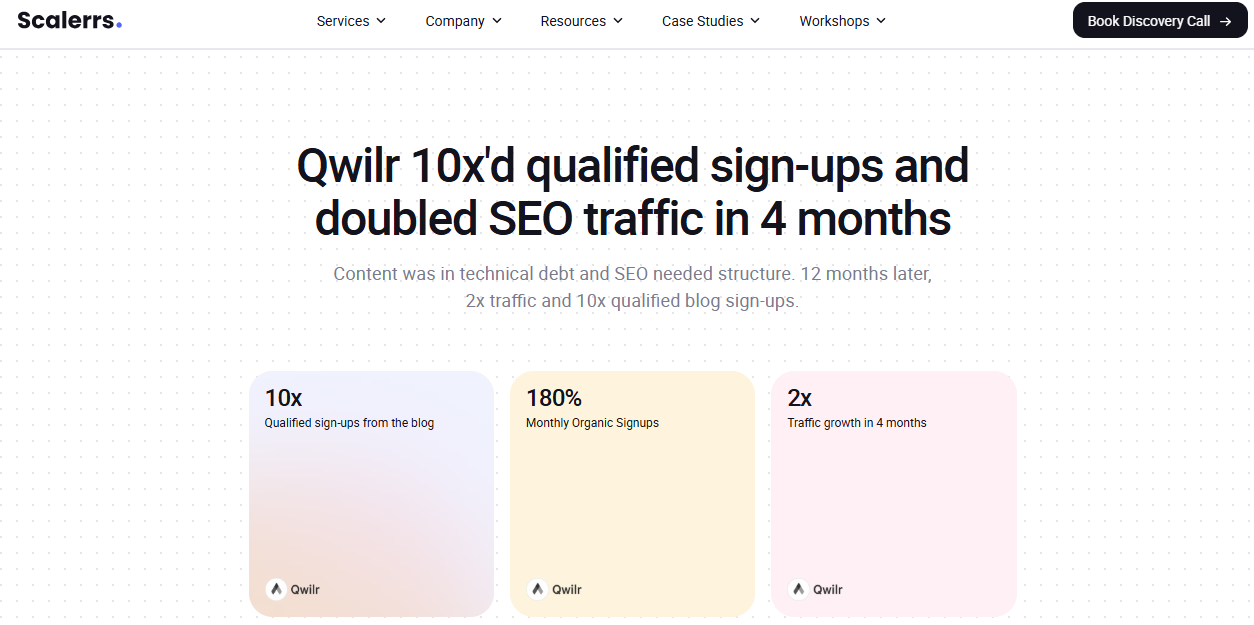
Enterprise libraries accumulate in a predictable way. Launch posts for products that no longer exist. Two versions of the same guide, written by teams who didn't know about each other. Regional pages that were translated once and never touched again.
Removal has no KPI, so nobody owns it. Publishing gets measured, pruning doesn't, and the library grows every quarter whether or not anything in it earns its place.
Google then has to choose between four pages of yours covering the same topic, and the models reading your site have the same problem. Neither can tell which one you'd call authoritative.
Fix it with a content audit before the next quarter's calendar gets approved. Merge the near-duplicates into the strongest URL, redirect what you cut, and leave one page standing per topic with a date on it.
9. Thin Programmatic Pages at Scale
Ten thousand template pages with one variable swapped will get read as spam.
Google’s spam policies define scaled content abuse as "many pages are generated for the primary purpose of manipulating search rankings and not helping users," and doorway abuse as pages "created to rank for specific, similar search queries."
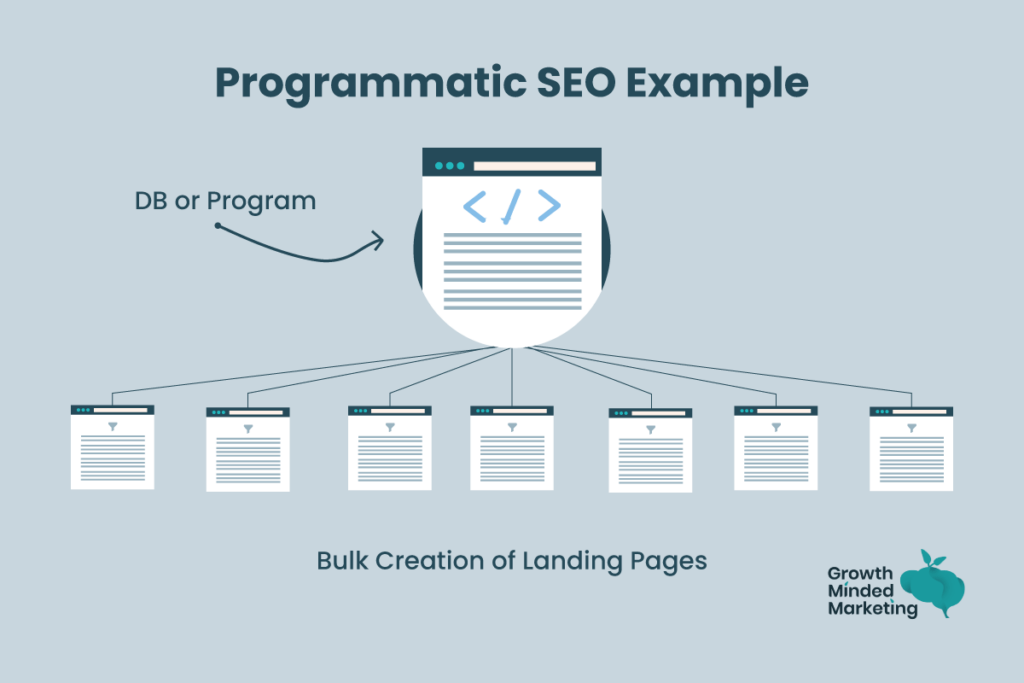
Programmatic pages are cheap to generate and easy to approve, which is the whole problem. The data behind them, a city name or an integration name, is often the only thing that changes from one page to the next.
Those pages are usually crawled once and left out of the index, and they eat the crawl capacity your product and comparison pages need. There's also nothing on them worth quoting, so they never appear in an AI answer either.
Give each page something only that page has, whether that's a real integration walkthrough, pricing specific to that market, or data you collected yourself.
10. Site Architecture Split Across Subdomains
Do your docs, help center, blog, and marketing site sit on four hosts, and nothing links them together?
The subdomain itself isn't the problem. Ahrefs makes the case that subdirectories aren't inherently better than subdomains, and Google has said the same thing for over a decade.
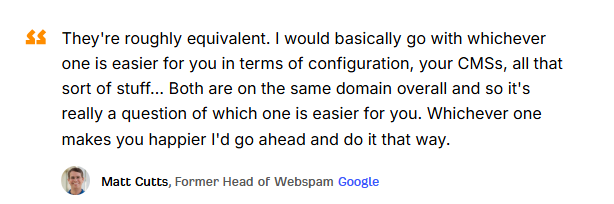
What decides performance is whether each section is internally linked as part of the main site.
At enterprise scale, it usually isn't. Docs belong to Product. The help center belongs to Support. The blog belongs to Marketing, and none of their templates point at each other.
Google then crawls those orphaned sections less and judges them on their own thin signals rather than the brand's. Models reading your site see separate properties describing what looks like separate companies.
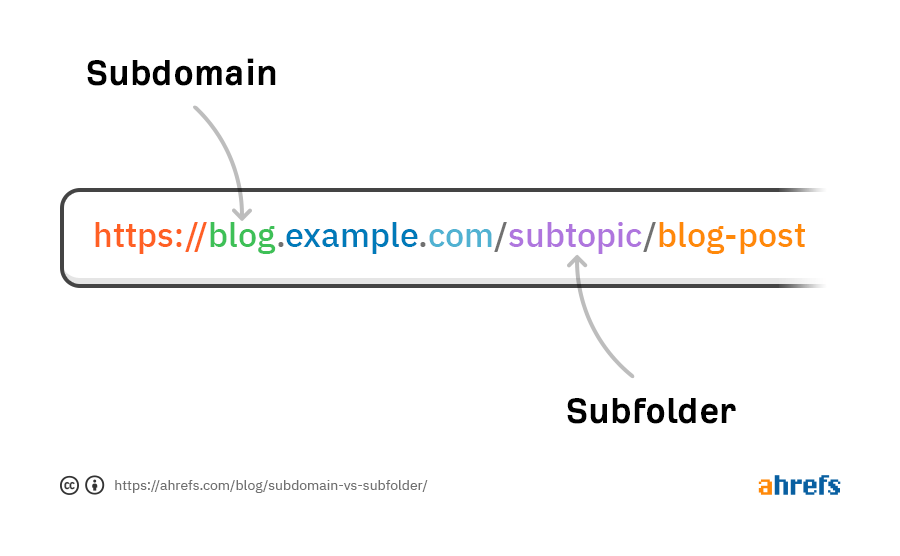
Fix the linking before you touch the hosting. Cross-link the sections properly and give them shared navigation and consistent naming. Only then is a migration to subfolders worth the risk of doing it.
11. Crawl Budget Spent on Low-Value URLs
Another mistake is when Google is spending your crawl allowance on filter combinations nobody searches for.
Google's own documentation says faceted navigation "can generate infinite URL spaces", and crawlers "typically access a very large number of faceted navigation URLs before the crawlers' processes determine the URLs are in fact useless."
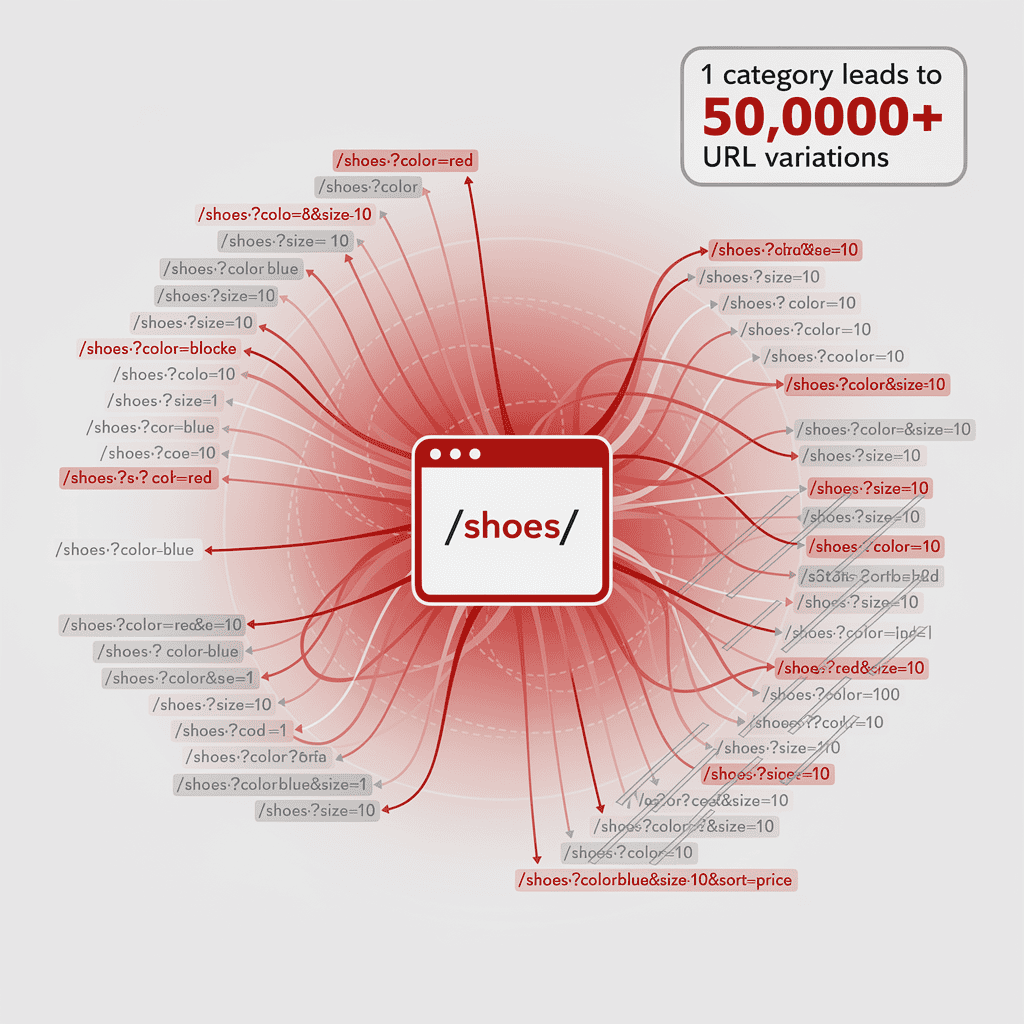
Parameters get added by product and analytics teams without anyone checking what they do to the URL space. Session IDs, sort orders, tracking parameters. Each one multiplies against the others, and the count climbs into the tens of thousands without a single new page being written.
So your new pricing page and your new comparison pages sit in the queue behind 50,000 filter URLs. New content stays undiscovered for longer, which costs more now than it used to, because a model can only cite what's already been crawled.
Block the parameters in robots.txt and canonical the filters back to the clean URL.
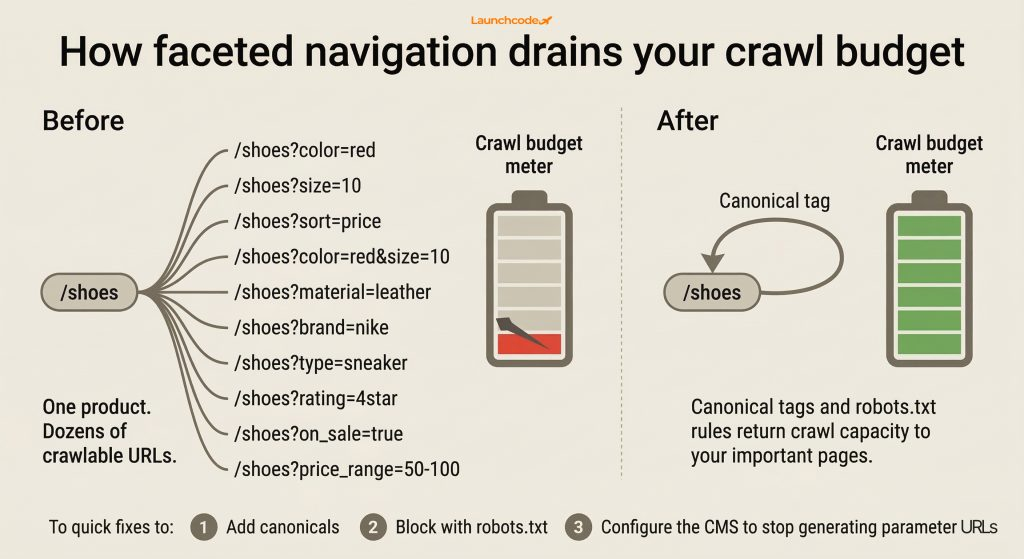
Then keep the sitemap to pages you'd defend in a review, and read Search Console's crawl stats each month to see where the budget actually went.
12. Legacy CMS Blocking Implementation
A common challenge enterprise SaaS brands face? They know the SEO fix, but their CMS won't let them ship it.
Why?
The platform was chosen eight years ago for editorial workflow, and search wasn't in the evaluation. Templates are locked. The head is managed by a plugin nobody maintains. Adding structured data means a ticket per page type.
So known issues stay live for quarters, and the markup that would make pages easy to parse never ships. The pages models can read most cleanly end up being the ones you never got to mark up.
If you’re in a similar bind, handle the tags and the markup at the layer above the CMS, and keep the replatform as its own project with its own budget and timeline. Rebuilding a CMS to fix title tags would instead turn a six-week problem into a two-year one.
At Scalerrs, our SaaS SEO service opens with a full technical audit covering foundational, E-E-A-T, and on-page checks, and every item on it has a named owner, us or you. Your engineers get a short ranked list of what only they can ship; we take everything that doesn't need a developer. And because we work with SaaS companies exclusively, that ranking reflects the pipeline each fix is holding up rather than how alarming it looks in a crawl report.
{{cta-general="/cta/book-a-discovery-call-general-catch-all"}}
13. Migrations Run as Design Projects
Another enterprise SEO mistake we see is when the redesign ships on the brand team's timeline, and search is consulted after the URL structure is already locked.
Search Engine Land documented what that costs. A news publisher moved to a new domain structure in January 2022 without completing the redirects and consolidation, and daily clicks fell from 15,000-25,000 to 2,000-4,000, roughly 90% year over year.
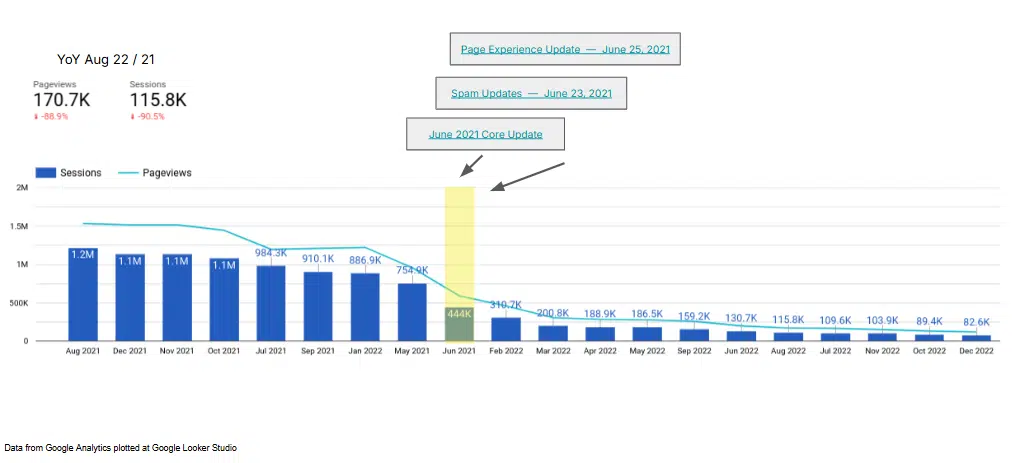
Traffic stayed there for more than a year. Brazil alone ended up with 513,369 pages crawled and not indexed.
SEO teams scope migrations as design and platform work, so the redirect map becomes a launch-week task instead of the thing the launch depends on. Template parity ends up as nobody's acceptance criterion.
The damage compounds now. Rankings drop for quarters while Google recrawls, and your citations reset alongside the URLs, because the source a model learned to quote returns a 404 or lands on a hub page.
Build the redirect map from a full crawl before the design gets signed off, and make template parity an acceptance criterion rather than a nice-to-have. Then crawl staging against production and hold the launch if the diff isn't clean.
A Quick Enterprise SEO Mistakes Checklist for Marketing Leaders
You don't necessarily need an audit to work out which of these you have. For now, you can ask your team these ten questions and find a starting point.
- Who owns AI visibility? If three people answer, nobody does.
- What did organic contribute to pipeline last quarter? A rankings answer is its own diagnosis.
- When did we last delete a page that contributes nothing?
- What does ChatGPT say when someone asks for the best tool in our category?
- How long does a title tag change take to reach production?
- How many competitor comparison queries do we rank for, and which sites hold the ones we don't?
- Which pages went live last quarter, and which product does each one sell?
- How many URLs does Search Console show as crawled and not indexed?
- What's in the definition of done for a template change?
- On the last migration, who signed off the redirect map before launch?
{{cta-general="/cta/seo-audit-checklist"}}
How to Build an Enterprise SEO Process That Prevents These Mistakes
Want to avoid the mistakes above in the first place? Here are four things to do:
Name One Owner Per Surface and Put Them on the Same Roadmap
Ownership by task is what produced the five-agency setup in mistake #1. Ownership by surface produces a name you can ask.
Those owners can delegate the work anywhere they like, as long as the outcome stays with them and their work sits on the roadmap engineering already reads rather than a parallel one nobody opens.
Price the Backlog in Pipeline, Not in Effort
Your SEO tickets lose to feature work because they get scored similarly.
Attach a number to each one instead: the pipeline at risk, or the pipeline it unlocks.
A canonical fix carrying $200K of at-risk pipeline stops reading as a small ticket, but as a priority, and that's the only argument that reliably moves a queue you don't control.
Move the Check Before the Deploy
Every mistake in this article costs less to prevent than to find.
A pre-merge review on template changes and a crawl difference on each release come to a few engineering hours a quarter.
Remember, recovering from the migration in mistake #13 took the Brazilian site twelve weeks of remediation after a year of lost traffic.
Review On the Cadence the Business Already Runs
Monthly, report pipeline contribution and citation share.
Quarterly, go across the full surface set and look at what moved, what regressed, and what shipped without a check.
Then bring the surface owners into annual planning rather than letting them submit a list into it, because that's the meeting where next year's roadmap gets decided.
FAQs
1. What is enterprise SEO?
Enterprise SEO is a large-scale search engine optimization strategy used by big organizations to improve their unpaid visibility and revenue across thousands or millions of web pages.
2. What is the biggest enterprise SEO mistake?
Fragmented ownership. Five teams each hold a piece of search, nobody owns the outcome, and any fix needing two of them to agree never ships.
3. How often should an enterprise website be audited for SEO?
A full audit quarterly, with crawl and index monitoring monthly. Anything touching templates or URLs needs to be checked at release rather than waiting for the next audit.
4. How do you prioritize enterprise SEO issues?
By pipeline at risk. One crawl error on a pricing page matters more than a hundred on pages no buyer ever reaches.
Fix Enterprise SEO Bottlenecks and Build Category Visibility With Scalerrs
Most of your competitors will keep treating these thirteen mistakes as separate tickets.
But now you know: better enterprise SEO depends on category ownership, and goes to whoever fixes the structure underneath all channels first.
We've done that work for 80+ B2B SaaS brands across Google, AI answers, Reddit, listicles, Wikipedia, and YouTube.
Book a discovery call, and we'll tell you which mistakes you're making and how to fix them.
Book a Discovery Call
Turn Organic Search Into Your #1 SaaS Acquisition Channel.

Let us scale your SEO channel for you.
reviewed onClutch
4.9 rating






Get Free Resources In Your Inbox
Get all of our FUTURE playbooks such as Figma files, checklists and SOPs directly into your inbox.

.avif)