


SaaS Inbound Marketing: A 2026 Playbook for Pipeline Growth

Key Takeaways
- SaaS inbound marketing brings buyers to you: useful content on the surfaces where they research software helps them evaluate your product and pick a trial or demo.
- Build your strategy in order: define your ideal customer profile (ICP), map buyer questions to keywords and prompts, then prioritize commercial pages before building supporting content that guides readers to conversion.
- Measure what leadership funds: track AI share of voice, non-branded clicks, organic pipeline, and acquisition costs alongside traffic.
- Category ownership ties it together: you need to become the brand buyers consistently find across Google, AI search, Reddit, YouTube, and third-party listicles. Scalerrs helps B2B SaaS brands build that category presence through one coordinated inbound program.
What Is SaaS Inbound Marketing?
SaaS inbound marketing attracts software buyers through useful content and helps them move toward a purchase. Buyers find you while researching a problem, and reach out once they're ready to evaluate. Compared to outbound:
Why Inbound Marketing Works So Well for SaaS
6sense found the winning B2B vendor was already on the buyer's Day One shortlist 95% of the time.
Meaning? If buyers don't know your brand before they evaluate, an inbound marketing strategy for SaaS companies is how you get on that list.
It Wins the Long Sales Cycle
Complex SaaS purchases involve several stakeholders with different concerns. Specifically, 13 internal stakeholders and nine external influencers, as per Forrester’s State of Business Buying research report.
The person pushing for your product internally may need a comparison page, while IT needs integration and security details. Create SaaS content that helps each person assess the product.
It’s More Efficient Than Paid, Events, and Outbound
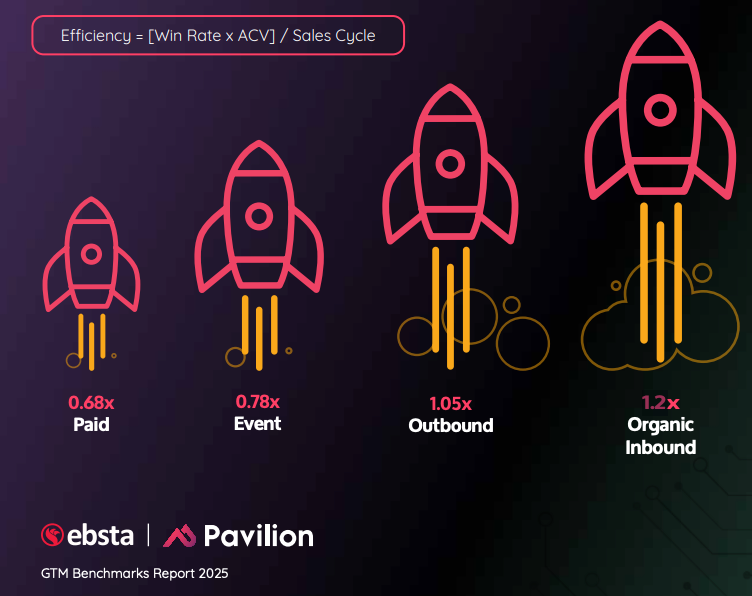
The 2025 GTM Benchmarks Report compares GTM motions directly. Its efficiency metric combines win rate, ACV, and sales-cycle length for various channels, showing organic inbound (1.2x efficiency) tops paid, events, and outbound, coming in second only to partner referrals at 1.3x efficiency.
It Compounds Across Buying Cycles
A single comparison page or guide keeps answering buyer questions long after it's published. Its production cost spreads across every buyer it helps, meaning inbound gets cheaper per customer as it matures. So, plan your SaaS marketing budget around assets that keep earning attention and furthering intent.
It Fits Self-Serve, Product-Led Buyers
SaaS buyers expect to try the product before talking to sales. Inbound routes them into free trials and product-led onboarding on their own terms.
And because they arrived searching for the problem you solve, they're already qualified by intent.
Benchmarkit’s 2025 B2B SaaS Performance Benchmarks, based on 500+ B2B SaaS companies, shows that acquiring new customers is getting more expensive.
Its 2024 data shows:
- Median new CAC ratio increased 14%
- Companies spent a median $2.00 in sales and marketing expense for every $1 of new customer ARR
As SaaS companies spend more to acquire each dollar of new ARR, channels that can compound without paying for every incremental interaction become increasingly valuable.
It Helps Retain Customers After the Sale
In SaaS, tutorials and onboarding guidance help customers use the product successfully after signup. Build that content around the tasks users struggle with and the features relevant to their goals.
The SaaS Inbound Marketing Funnel Explained
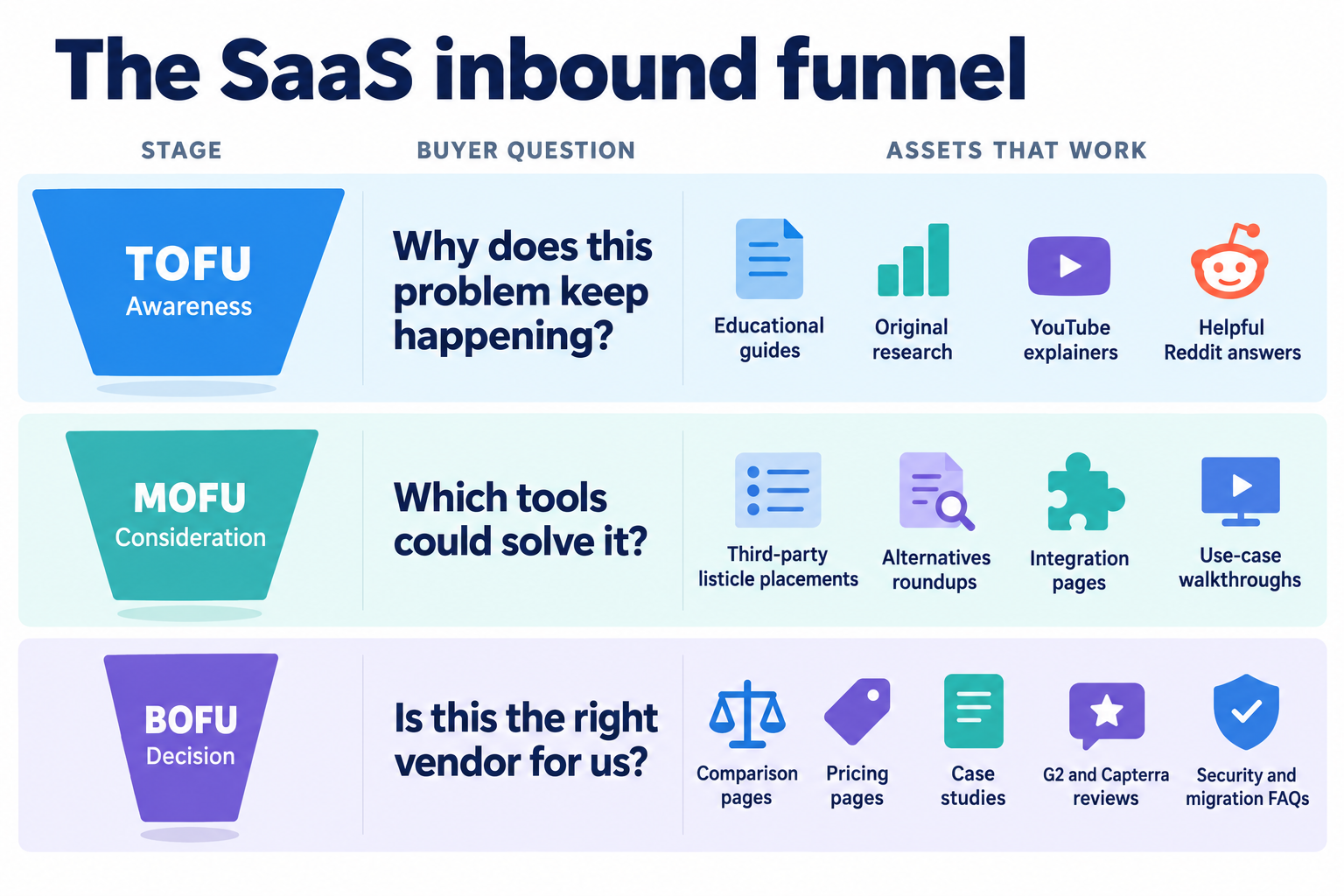
A SaaS inbound marketing strategy matches content to the decision your buyer needs to make.
Top of Funnel: Frame the Problem
At the top of the funnel (TOFU), buyers recognize a problem but may not know what would solve it. Answer the question that brought them to you before you introduce your product.
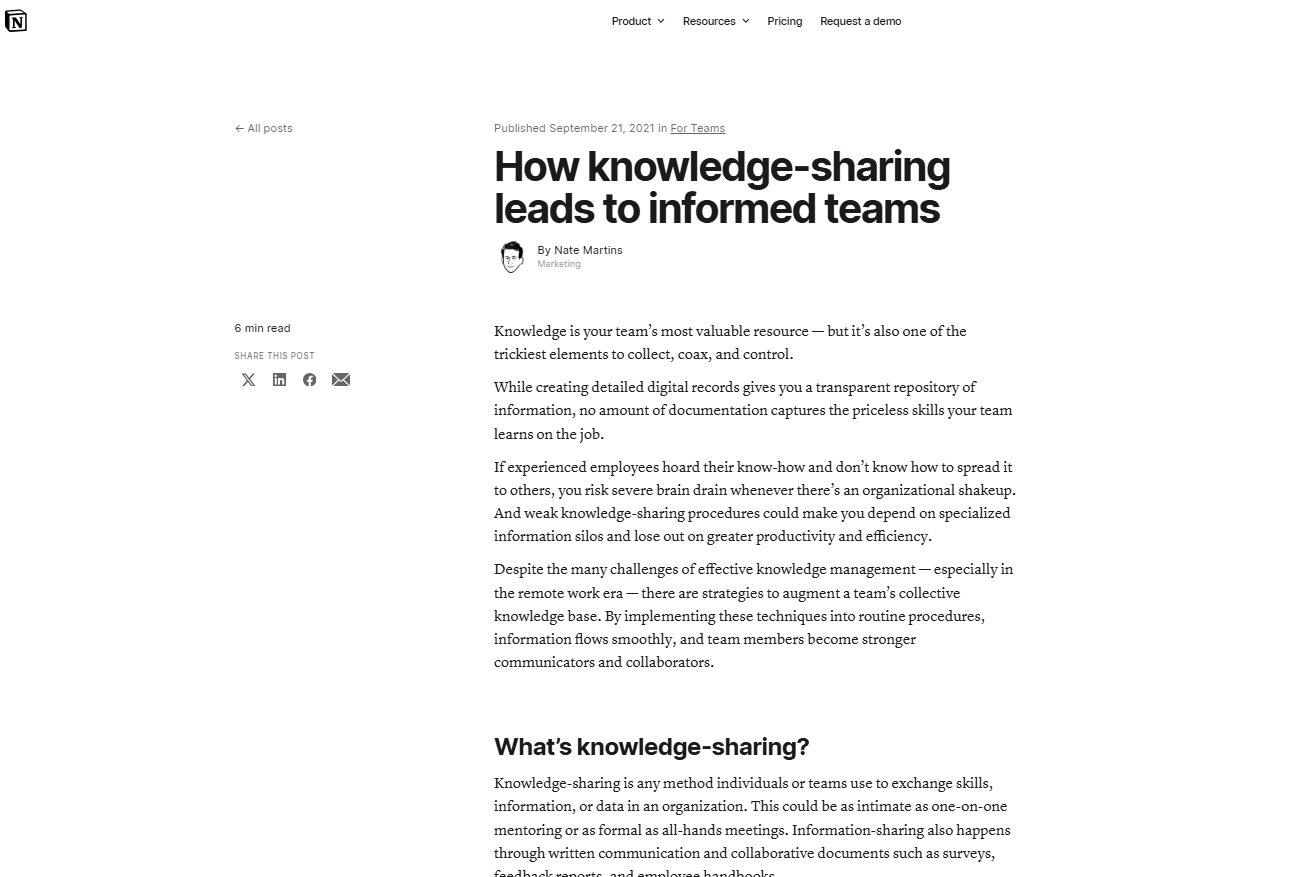
Example: Notion's "How knowledge-sharing leads to informed teams." The article addresses information silos and explains how teams can share knowledge more effectively. It gives readers useful guidance before introducing Notion as a way to apply it.
Middle of Funnel: Prove the Fit
In the middle of the funnel (MOFU), buyers are evaluating ways to solve the problem. Show what using your software would involve, including where the product has limitations.
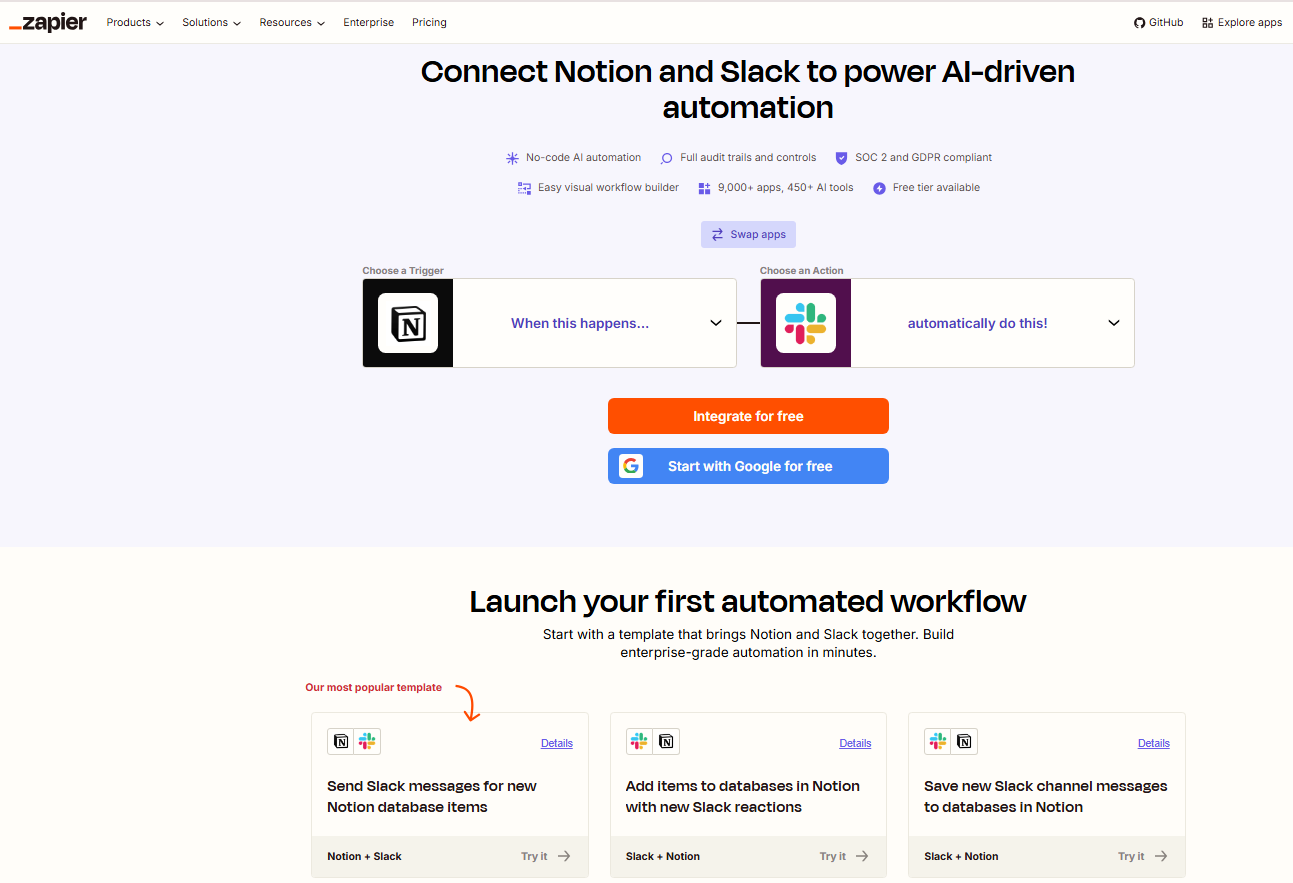
Example: Zapier's Notion + Slack integration page. Its trigger and action selectors let buyers explore how the two apps can work together. The page answers a specific evaluation question: "Can Zapier automate the workflow we need?"
Make your own evaluation content concrete, then offer a way to test the workflow or see it demonstrated.
Bottom of Funnel: Help Buyers Decide
At the bottom of the funnel (BOFU), buyers are deciding whether to commit. Address what could still stop them, such as a difference between two shortlisted products or uncertainty about implementation.
Example: Morgen’s comparison with Sunsama. The page leads with the difference in their planning approaches, then presents a side-by-side comparison and a “Get Started” button. It gives readers a concrete trade-off to assess alongside a route to try Morgen.
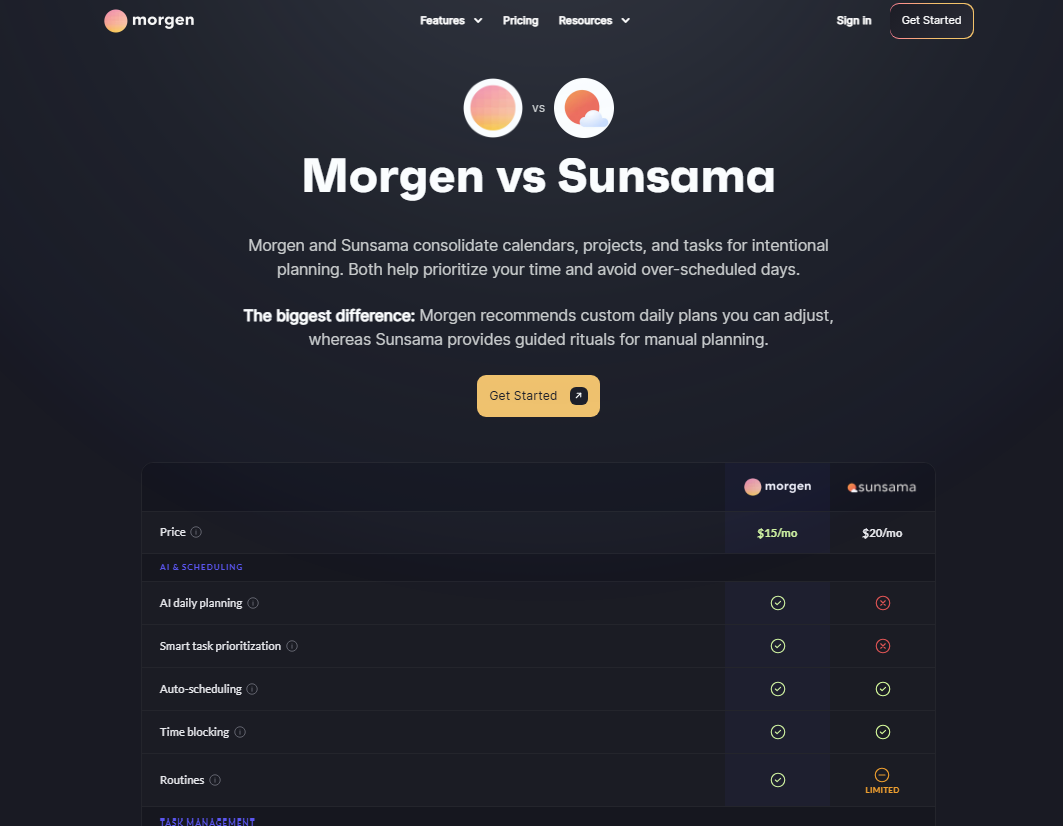
Build BOFU content around the objections buyers actually raise, and make the next step clear.
The 7 Channels That Power SaaS Inbound Marketing
Each channel reaches buyers at a different point in their research. Most also feed the AI answers they read before visiting your site.
1. Traditional SEO
Traditional SEO connects existing demand to pages that prove product fit and convert.
The 2024 Content Preferences Benchmark Survey showed 89% of B2B buyers downloaded and consumed content they found themselves. The modern SaaS buyer isn't waiting for a salesperson to introduce them to a problem or product. They're already researching, consuming, and sharing information before—or independently of—sales outreach. And each query shows how close they are to buying.
Rankings also feed AI visibility. Pages search engines don't surface rarely make it into AI Overviews, so it’s critical to get your SaaS SEO fundamentals right.
Our B2B SaaS SEO service covers technical SEO, keyword research, content, and on-page optimization for SaaS. We have deep technical expertise with product-led platforms and complex site architectures, and our reporting ties rankings to pipeline you can show leadership.
Book a strategy call with our team if you need a partner that makes traditional SEO work for you.
2. AEO and Third-Party Listicles
When a buyer asks ChatGPT or Google AI Mode for the best tool in your category, the answer names a few vendors. Answer engine optimization (AEO) is how you become one of them.
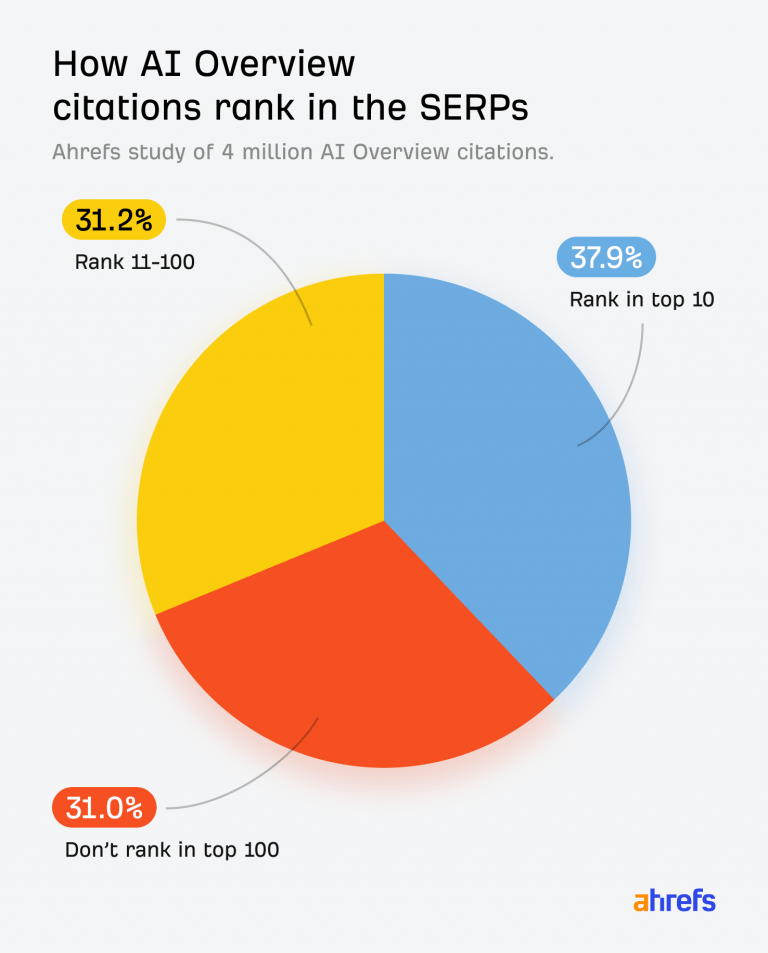
But SERP rankings alone aren't enough: an Ahrefs study of 863,000 keywords found only 37.9% of pages cited in AI Overviews ranked in the top 10 for that query.
Format matters too. In Wix Studio’s data, listicles earn the largest share of citations for commercial prompts.
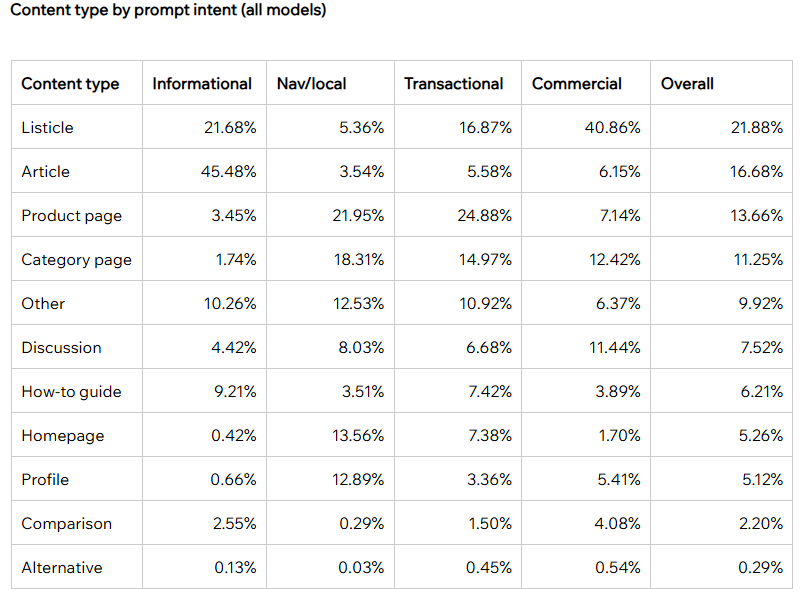
So, winning AEO means getting your brand into every source AI cites for your category, starting with the roundups buyers and models already trust. For brands that meet Wikipedia's notability rules, that also includes a compliant, neutral Wikipedia page.
Our AEO service starts with prompt research, then earns your brand placements in third-party listicles and the other sources AI cites. We track citations across ChatGPT, Perplexity, and AI Overviews, and report on the qualified leads AEO supports.
3. White-Hat Reddit Marketing
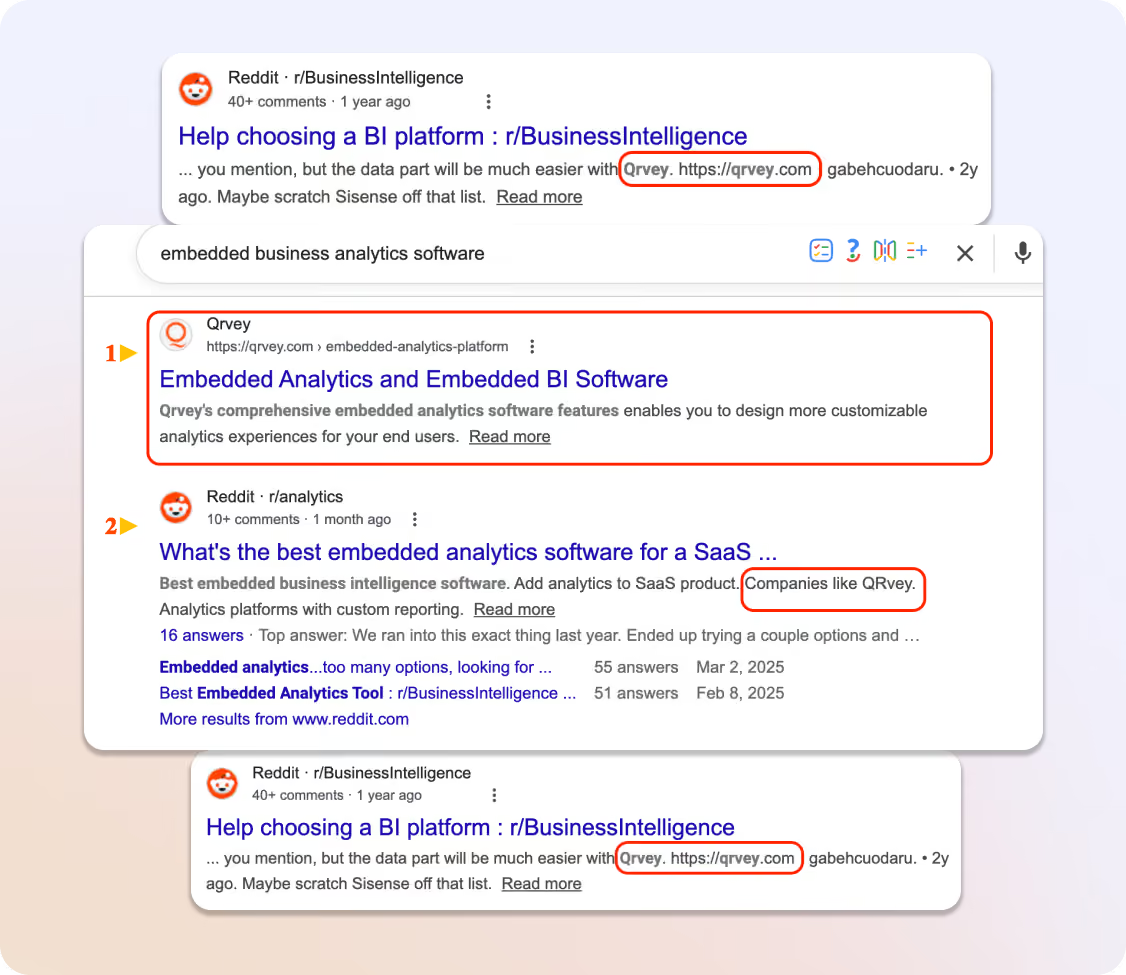
SaaS buyers use Reddit to check whether a vendor's claims hold up. Queries like "[category] reddit" or "is [product] worth it" come from buyers near a decision who want peer experience.
These discussions also feed AI search, and Ahrefs data shows how often:
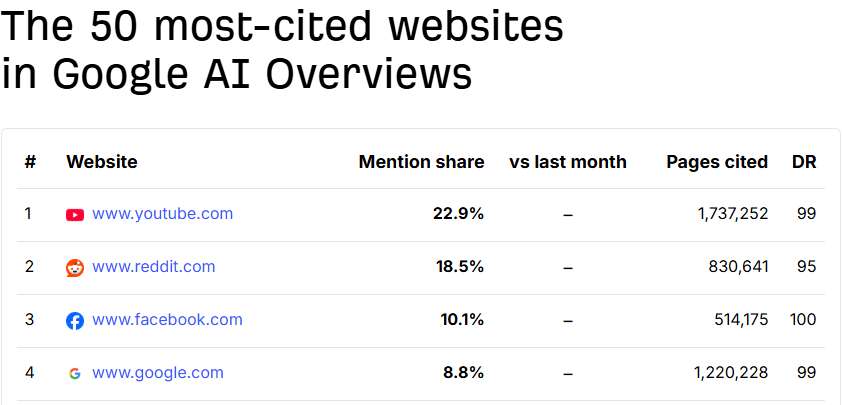
So, Reddit SEO for SaaS answers purchase objections in front of buyers who are already searching, and adds product context AI systems may retrieve when similar questions come up.
Our Reddit marketing service runs the white-hat playbook public companies use: client-branded accounts and identifiable employees with disclosed affiliations, answering the question before the product comes up. We also track where that activity lifts your visibility in AI answers.
4. Content Marketing
SaaS content is where a buyer's research turns into a shortlist.
Someone searching "[category] for [use case]" wants to know whether your product fits their workflow, and someone searching "[product] pricing" wants to know what they'd pay and what's included.
Content that satisfies those intents moves buyers toward a trial or demo, and clear, well-sourced answers give AI tools something specific to cite about your product.
Our content creation service handles briefs, writing, optimization, visual assets, and internal linking, with SaaS specialist content writers onboarded to your product, messaging, and style guide. Our workflows increasingly draw on internal tooling and automation to keep quality consistent at scale.
5. YouTube Marketing
YouTube serves the buyer who wants to see the product before signing up.
Searches like "[product] demo" or "how to [task] in [product]" show a buyer testing whether the workflow fits, and a walkthrough answers that faster than a feature page. The same tutorials help new users activate after signup.
Video also reaches AI answers, as YouTube is the top-cited source in Google AI Mode and AI Overviews.
Our SaaS YouTube marketing service plans videos around the searches your buyers run, then handles scripting, editing, and channel optimization. We track which videos send viewers to your trial or demo pages.
6. Link Building
Link building gives commercial pages the authority to compete for the queries closest to revenue. Terms like "[category] software" or "[competitor] alternatives" carry buying intent, so established competitors fight for them.
As Vladi Kriulin, Senior SEO Strategist at Scalerrs, explains, “Backlinks are what tell Google the rest of the internet trusts you. And in competitive spaces, that trust is the last mile."
For SaaS link building, send that trust to the pages targeting those terms, and vet each placement for audience fit before domain rating.
Scalerrs’ link building service earns editorial links from B2B SaaS publishers, vetted for relevance to your buyers before authority metrics. You approve every target and review every placement.
7. Email and Community
Most SaaS buyers don't convert on the first visit, and email and community keep them close until they do.
Lifecycle emails tied to product usage move trial users toward activation, such as sending an integration guide to someone who hasn't connected one.
A public community adds search value: branded subreddit threads answer queries like "[product] reddit" and give AI tools first-hand user discussion to cite. At Scalerrs, we set up and moderate branded subreddits as part of our Reddit service.
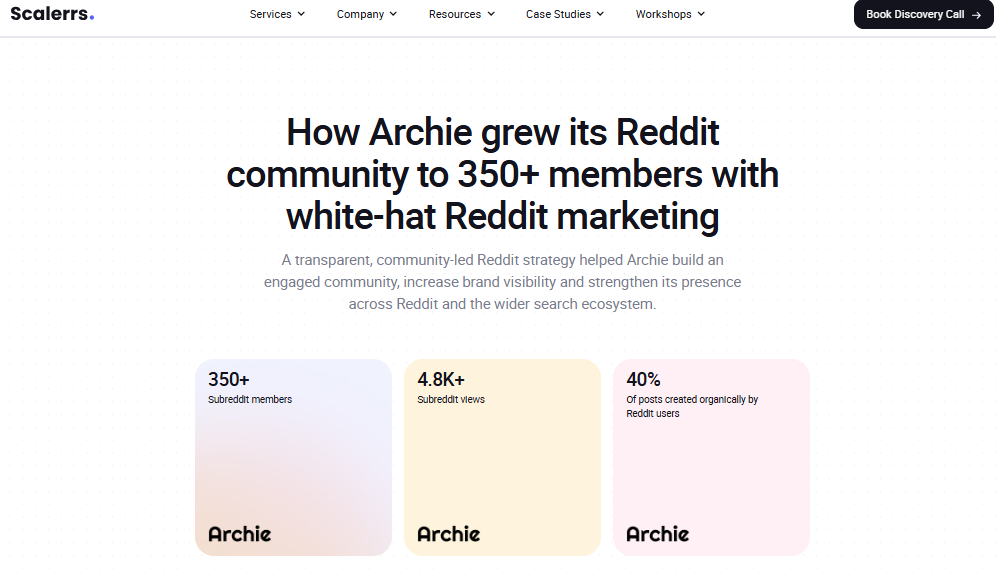
We built Archie's branded subreddit from scratch, and some prospects have since mentioned finding Archie through Reddit in sales conversations.
How to Build a SaaS Inbound Marketing Strategy From Scratch
Build these five steps in order, because each produces the input for the next.
Step 1: Map Your ICP, Keywords, and Prompts
Define your ICP and the problem that sends them searching. Then research the terms they search on Google and the questions they ask large language models (LLMs), from category terms to "[competitor] alternatives." Score each by how closely it maps to someone who can buy.
I break down how we approach SaaS keyword research on LinkedIn:
Every later step targets this list, so a vague ICP here misdirects everything after it.
What this looks like in practice:
Onymos sells software to US clinical laboratories, a niche market. We studied how those labs operate, audited existing content, and assessed each topic by search intent and fit with an Onymos buyer.
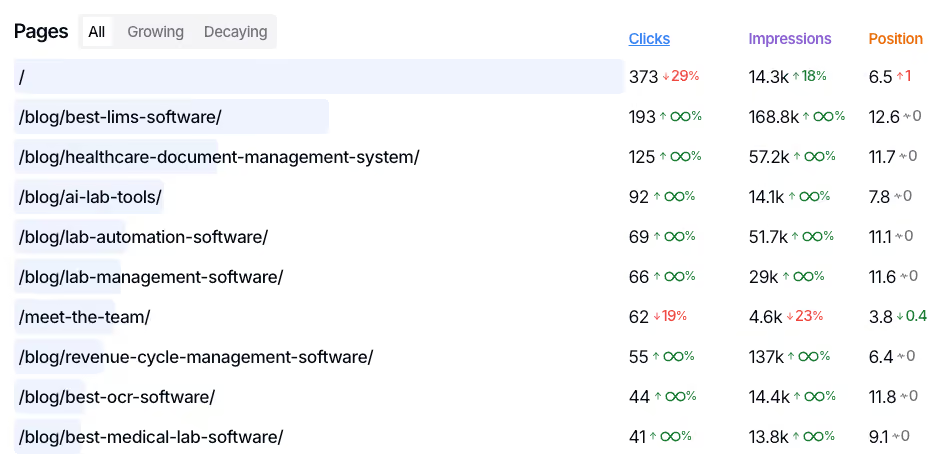
Within about five months of implementing a tailored strategy, organic impressions rose 327%, and Onymos appeared consistently in ChatGPT, Gemini, and Claude.
Step 2: Prioritize the Pages That Drive Pipeline
Map each keyword from Step 1 to a page type, then rank pages by how close they sit to revenue.
Comparison, alternatives, and pricing pages come first, because the people searching for them are close to choosing a vendor. Educational guides come next, built to link into those commercial pages and drive action.
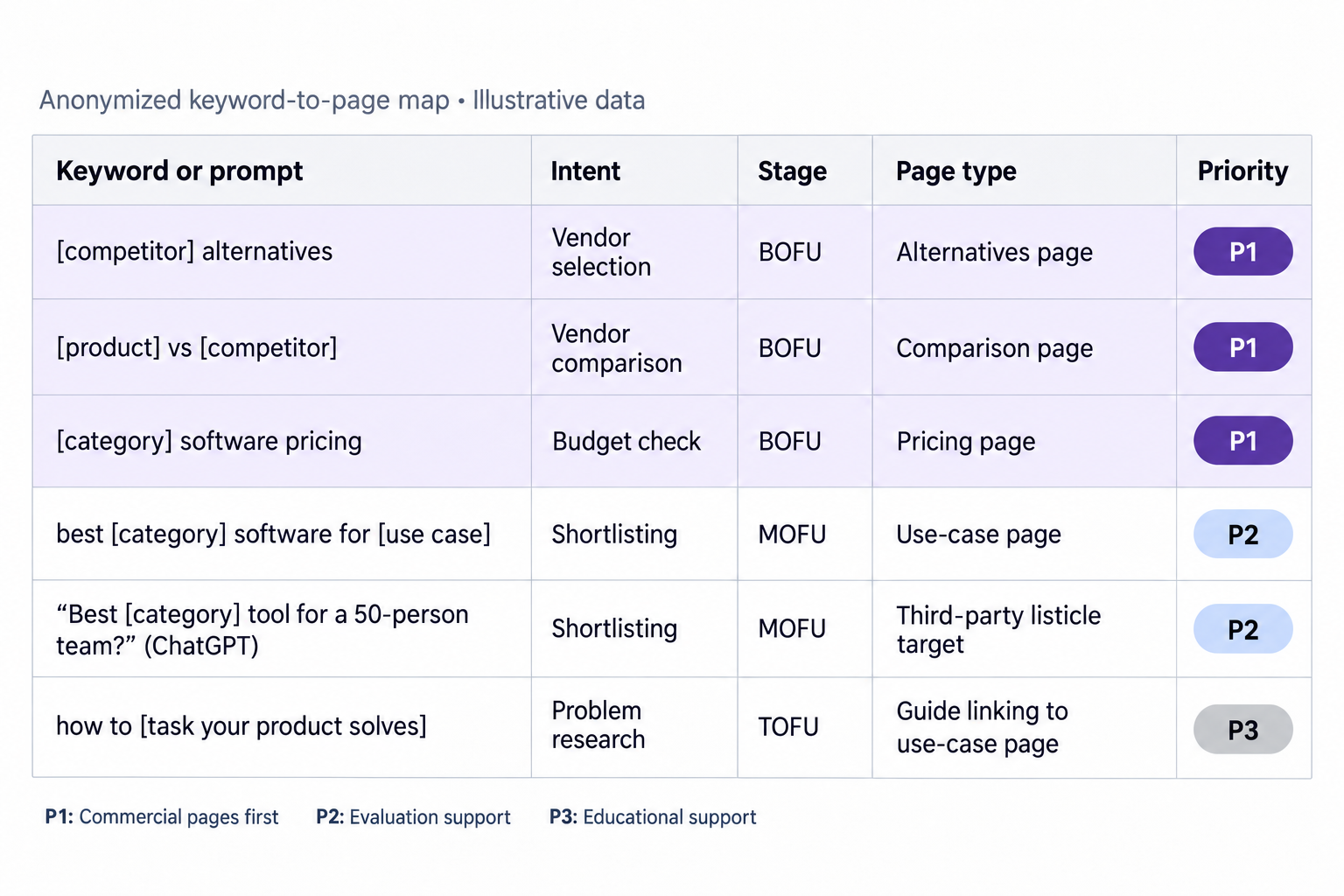
This order also sets your Step 4 targets, since links and listicle pitches need a strong page to point to.
What this looks like in practice:
AutoRFP ranked for "AI RFP software" but struggled to expand into broader terms like "RFP software" and "DDQ software."
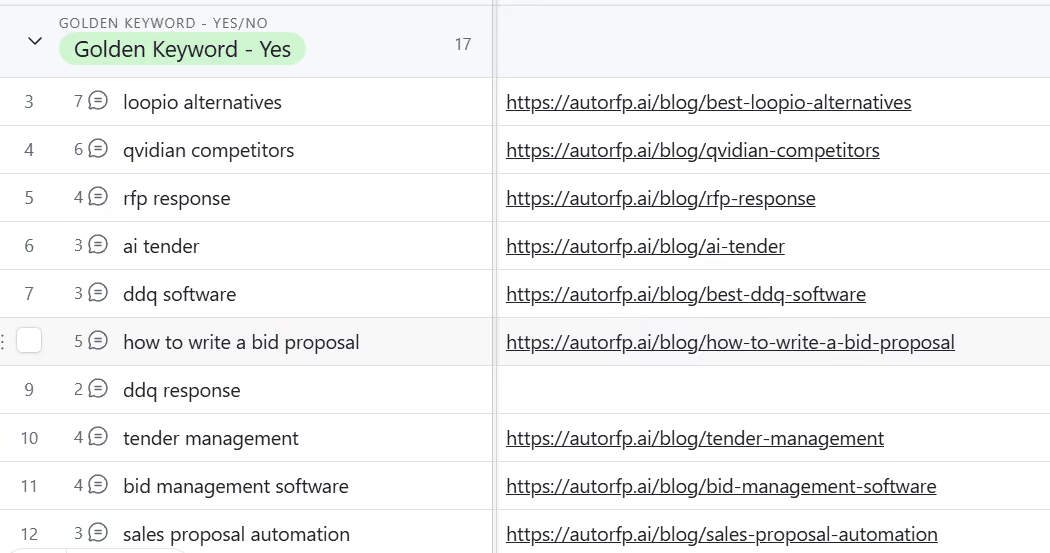
We started with bottom-of-funnel terms, then wrote content for those broader category and mid-funnel keywords. In three months, 76+ new keywords entered positions 1 to 10.
Step 3: Build Pages Structured for Google and LLMs
Build the Step 2 pages in priority order, and write each one for the buyer's decision.
Put the direct answer near the top, and back each claim with product detail or proof. Where buyers weigh options, use a comparison table. That helps buyers skim and gives AI tools clean passages to cite.
If you outsource production, vet content agencies on whether they write this way.
What this looks like in practice:
Default is an underdog in the crowded inbound lead routing category. We wrote content for Default’s ICP and structured it so AI search could pick up what Default does well.
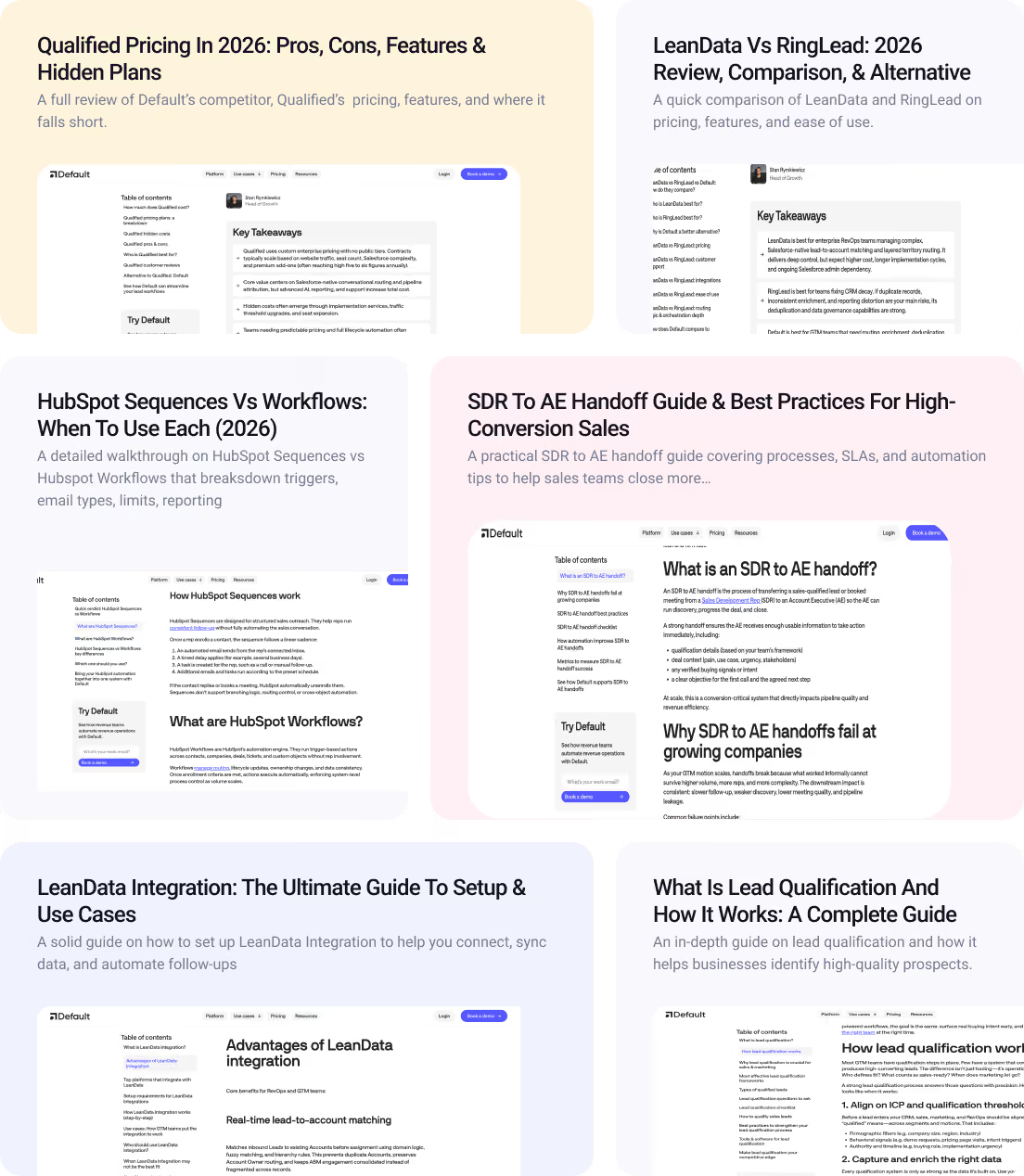
Head of Growth Stan Rymkiewicz now attributes about 30% of pipeline to SEO, AEO, and AI search.
Step 4: Distribute Across the Surfaces Buyers Trust
Start by distributing the priority pages built in Step 3, because every placement needs a destination worth landing on.
Build links to your priority commercial pages, pitch your brand into third-party listicles for your category, join Reddit threads that rank for your terms, and publish YouTube walkthroughs for "how to" and "[product] demo" searches. Start with the surfaces AI tools already cite for your Step 1 prompts.
What this looks like in practice:
We brought in link building for Qwilr only after its content was pruned and rebuilt around its ICP. Links then went to its most important pages, and we expanded its presence in third-party listicles.
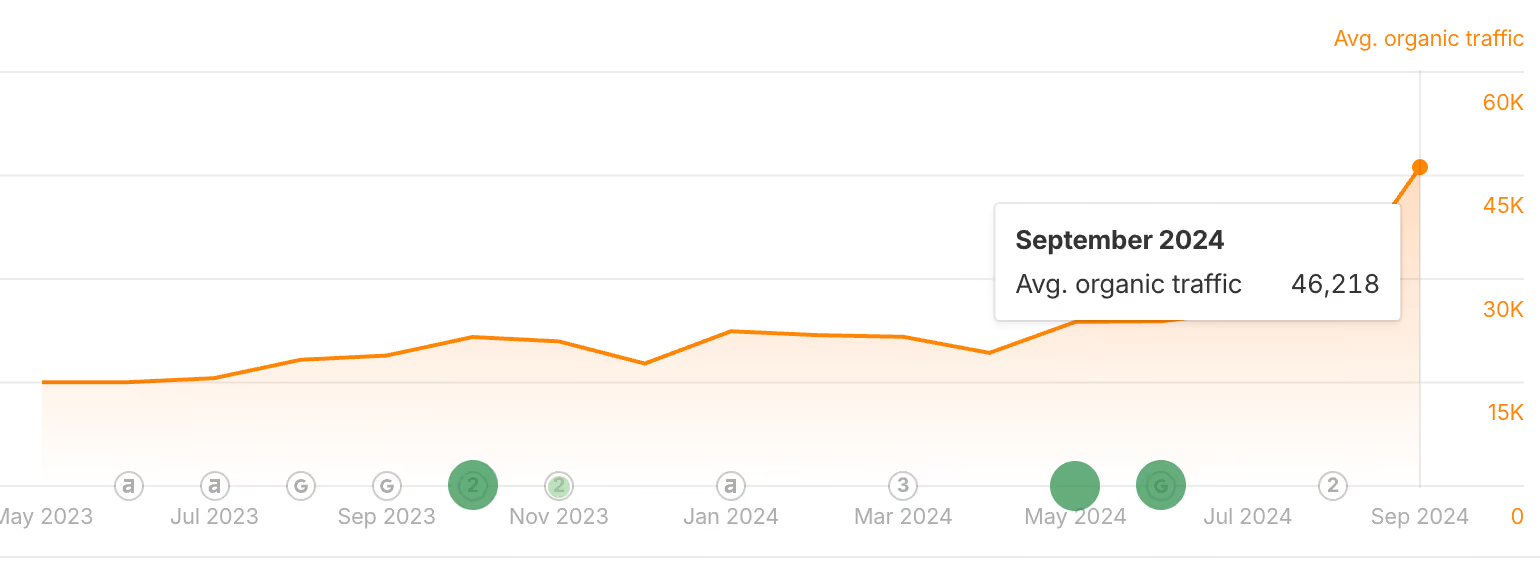
Over 12 months, the program grew qualified blog signups roughly 10x.
Step 5: Measure AI Citations Alongside Pipeline
Measure against the prompts and keywords from Step 1, then feed the results back into Steps 2 through 4.
Track AI citations for those prompts and rankings for your priority pages, then connect both to demos and trials. Many buyers who find you in an AI answer never click a link, so add a "How did you hear about us?" field to demo forms.
What this looks like in practice:
Pabau, another one of our clients, paired prompt tracking with self-reported attribution.
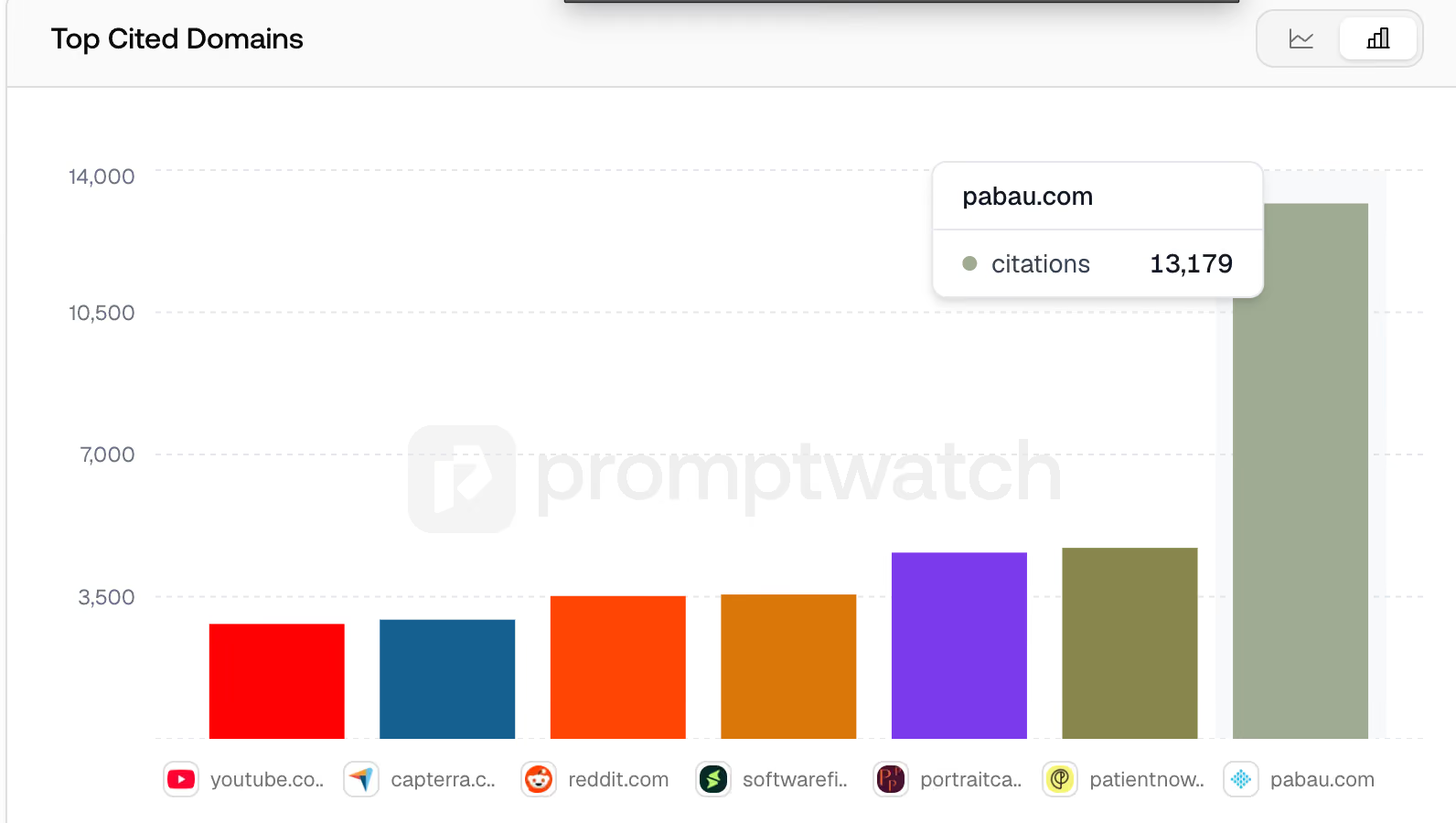
It became the most-cited domain across its tracked prompts, and 33% of its self-attributed leads now name AI search as their source, one point ahead of Google.
Our AI search study shows which citation patterns are worth tracking.
SaaS Inbound Marketing KPIs and Metrics That Matter
Traffic can fall while pipeline grows. These six KPIs show leadership what inbound contributes.
Real SaaS Inbound Marketing Examples
These three companies run inbound at very different scales: a bootstrapped team of 11, a platform serving 300,000 customers, and a one-person SaaS.
Tally: AI Search Became Its Biggest Acquisition Channel
Tally crossed $5M ARR in April 2026 with a team of 11 and no outside funding. Co-founder Marie Martens reports that AI search has overtaken its "Made with Tally" badge as the biggest acquisition channel, powered by a community that recommends Tally on Reddit.
Tally's onboarding survey asks new users where they found the product, including which AI prompts they used.
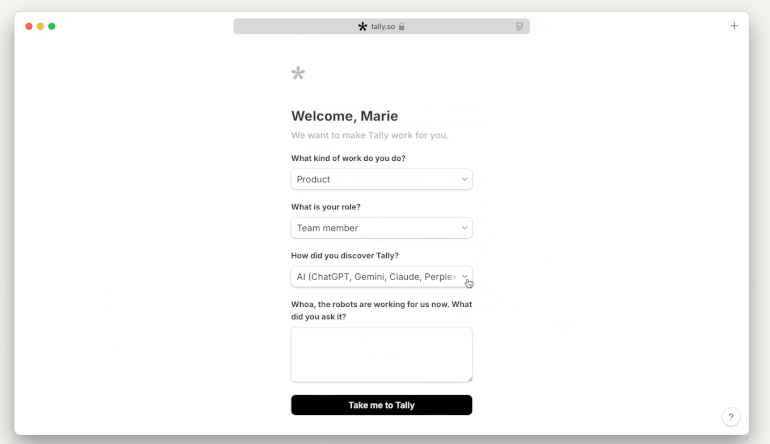
Copy that question. It shows which prompts already send you buyers.
Webflow: Structured Answers on Its Biggest Feature Pages
Webflow added FAQ sections with schema markup to six of its biggest feature pages, written to mirror how people ask about each topic.
The result was a 24% increase in SEO impressions and more than 300 new citations from ChatGPT and other answer engines.
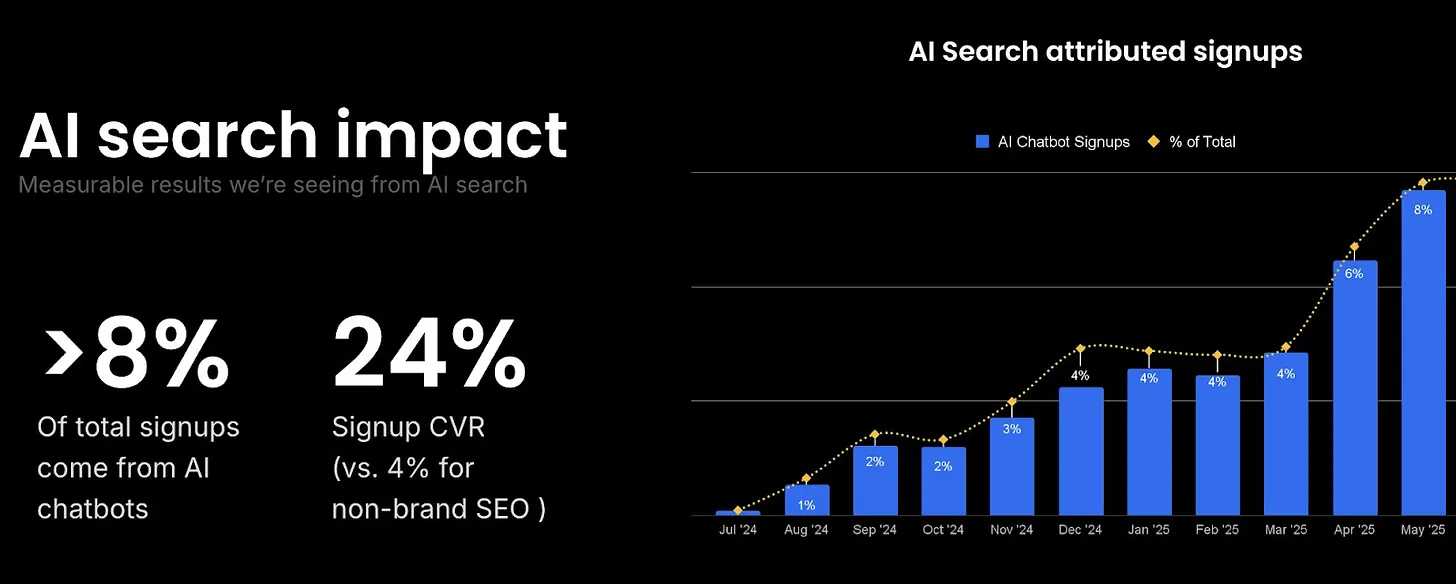
ChatGPT traffic converted at 24%, against 4% for non-brand search. Six times the rate.
Get the Webflow AI search case study for the full breakdown.
FAQs
1. How long does SaaS inbound marketing take to work?
Rankings and AI citations usually move within three to six months. Consistent pipeline tends to follow between six and 12 months, depending on how competitive your category is.
2. Is inbound or outbound better for SaaS?
If buyers already search for your category, lead with inbound. If you're creating a category nobody searches for yet, outbound creates leads while inbound builds demand.
3. Is inbound marketing worth it for early-stage SaaS?
Yes, once you have product-market fit and a clear ICP. Before that, you don't know which searches your buyers run, so content aims at guesses.
4. When should a SaaS company hire an inbound marketing agency?
When results plateau, or leadership wants AI search visibility your team can't deliver. See how Scalerrs compares to in-house teams, freelancers, and other agencies.
Start Building Your SaaS Inbound Engine Today
SaaS inbound works when every place buyers research leads to a page that converts, and you can trace the demos it produced.
Scalerrs runs SEO, AEO, Reddit, third-party listicles, content, link building, YouTube, and Wikipedia for B2B SaaS as one program built for category ownership.
Book a demo, and we'll show you where competitors are getting recommended ahead of you.
Reporting Ninja: One Founder, One Keyword Map
Reporting Ninja is run by a one person army—the founder who’s competing solo with Agency Analytics, Supermetrics, and Whatagraph. We ran their content, AEO, link building, and Reddit from one ICP and keyword map.
Between November 2025 and March 2026, average monthly organic traffic tripled from about 4.2K to 12K.
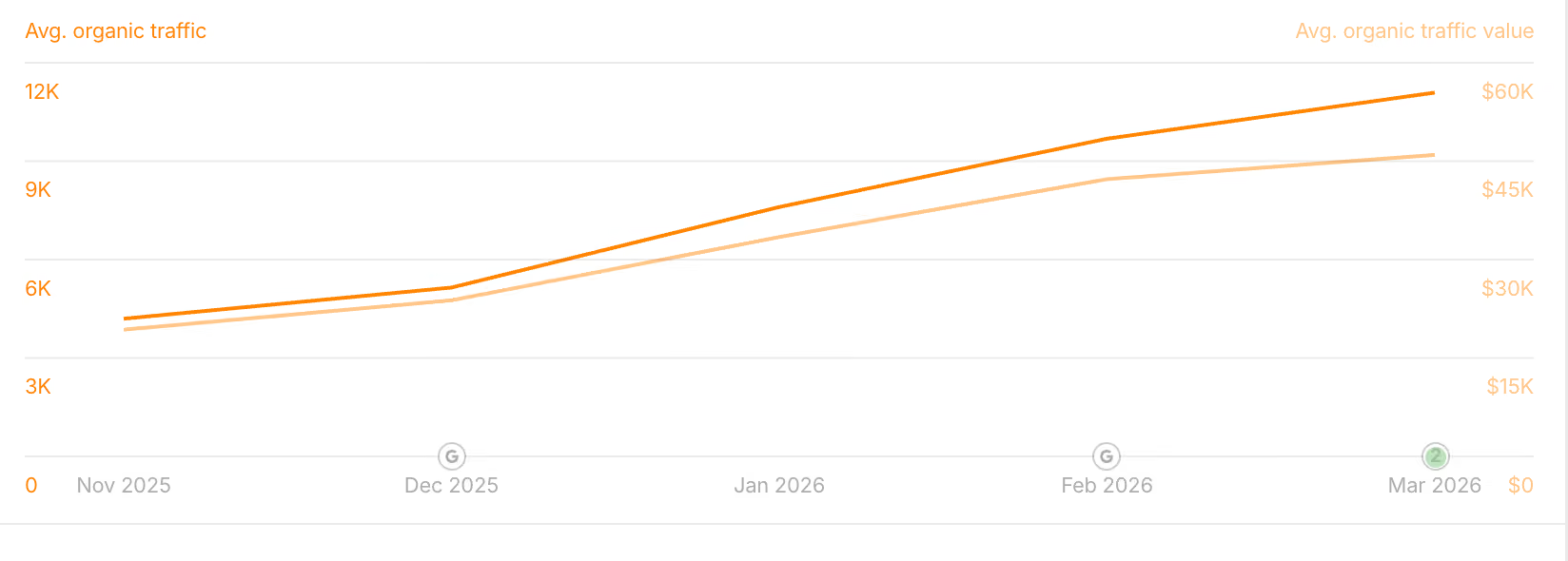
Non-branded clicks rose 44% over three months while branded share fell. That growth came from buyers new to the brand. Free trial signups now self-attribute to both AI search and Reddit.
Book a Discovery Call
Turn Organic Search Into Your #1 SaaS Acquisition Channel.

Let us scale your SEO channel for you.
reviewed onClutch
4.9 rating






Get Free Resources In Your Inbox
Get all of our FUTURE playbooks such as Figma files, checklists and SOPs directly into your inbox.

.avif)